La 347e réunion du Conseil de l'ESA s'est tenue dans un contexte particulier : celui d'un programme Artemis remanié par la Nasa, sans concertation avec ses partenaires européens. On attendait une réponse. Elle n'est pas venue. L'Europe spatiale a choisi la prudence, renvoyant les grands...
GOLDEN, Colorado – Here on Earth, centuries of accumulated engineering knowhow, hard-learned lessons, and societal evolution have shaped a robust framework of building standards that govern how we build and maintain buildings today.
But now, as humanity prepares to put in place a "sustained presence" on the moon, how do we guarantee the safety and integrity of structures built in an environment for which no such tradition exists?
At the 26th Space Resources Roundtable held June 2-5 on the campus of the Colorado School of Mines, one expert says what's needed is a lunar building code, the development of specific design criteria for the moon.
What's shaking?
Both NASA and China's space agency are planning to build habitats, landing pads, equipment shelters, and tall towers on the moon. But all that construction could be off to a shaky start, suggests Nerma Caluk, an engineer and lunar specialist for Skidmore, Owings & Merrill, an architecture and structural engineering firm in San Francisco, California.
Caluk said there's a need to leverage terrestrial building experiences.
"On Earth, structural systems rely on strong gravitational acceleration to resist seismic lateral forces through both foundation friction and overturning stability. However, on the moon, the gravitational field strength is reduced to just one-sixth of Earth's surface gravity," Caluk told Space.com.
Because seismic inertial forces are governed purely by a structure's mass rather than its weight, the lateral demand on a structure remains fully active while its gravitational restoring capacity is substantially diminished, Caluk added.
"Low-profile surface structures risk translational sliding across poorly characterized regolith interfaces, while taller vertical structures face significant overturning vulnerability, as the moon provides only a fraction of the gravitational restoring moment available in a terrestrial seismic environment," said Caluk.
Here on Earth, structural engineers routinely design typical building systems to yield, crack, and sustain permanent inelastic deformation during a design-level seismic event.
They intentionally leverage "inelastic energy dissipation" as the primary mechanism for managing seismic demand, Caluk said. But this design philosophy is fundamentally incompatible with a crewed lunar environment, she said.
Take for example a hatch distortion or pressure seal misalignment. They constitute a mission-critical failure, and any structural breach risks catastrophic depressurization, said Caluk.
An artist's rendering of a NASA Artemis moon base with development underway. (Image credit: NASA)
A group taking on the challenge of shaping guidelines on the building of lunar infrastructure is the aerospace division of the American Society of Civil Engineers.
The group's technical committee on space engineering and construction has crafted "Infrastructure Engineering, Design, Analysis, and Construction (LIEDAC) guidelines" for the moon, Caluk said, to tackle seismic issues imposed by moonquakes.
The LIEDAC guidelines, Caluk said, characterize the unique lunar hazard environment, classify operational consequences through a risk-categorization hierarchy, and establish target performance objectives "so that safe commercial development can proceed on a defensible technical basis."
Inherent uncertainties
Caluk also outlined a "Response Spectrum Analysis" supported by NASA Small Business Technology Transfer funding that looked at the inherent uncertainties of the lunar subsurface.
The output of the analysis has developed criteria emphasizing the necessity of a local geotechnical site investigation for all structures, regardless of their seismic design category.
"These investigations are critical for identifying and mitigating risks such as seismic slope stability, seismically induced total and differential settlement, and other geotechnical hazards that may be triggered or amplified by moonquake ground motions," she reported here at the School of Mines gathering.
Moreover, the framework that Caluk and her associates have pulled together, acknowledges that lunar site conditions are not yet fully understood on a global scale.
NASA envisions robotic rovers and astronauts working alongside one another to build structures on the moon. (Image credit: NASA)
Design practices
Not knowing ahead of time what lunar explorers may face is an unsure, shuddering proposition.
"Therefore, responsible design practices must account for this uncertainty through rigorous subsurface investigation whenever feasible," Caluk added. "By prioritizing localized data collection, engineers can ensure that structural foundations are robust enough to handle the unique physical properties of the lunar regolith and the specific seismic demands of the deployment site."
Caluk and her team members looked at the maximum considered moonquake, representing a more severe shaking level, to verify collapse prevention and ensure overall structural integrity under extreme lunar seismic events.
"NASA's deep institutional knowledge of human spaceflight operations and crewed mission safety," Caluk concluded, "provides the critical foundation upon which structural performance criteria for lunar infrastructure can now be formally established, with terrestrial engineering precedent offering a proven methodology for doing so even under evolving geotechnical and seismic data conditions."
NASA has announced a new commercial partnership for the next satellite headed to the Red Planet.
California-based Relativity Space will design, build and launch the spacecraft that carries NASA's Aeolus instrument suite to orbit around Mars, where the probe will be the first to provide daily measurements of the planet's global environment. Aeolus will collect data on Martian dust and cloud cover, winds and temperatures, according to a NASA release.
"Public-private partnerships like this are a force multiplier for science," NASA Administrator Jared Isaacman said in a statement on Wednesday (June 17).
The newly announced relationship, and others between NASA and private industry, is designed to allow the agency to concentrate its resources on important science discovery. "By pairing NASA’s world‑class instruments with commercial innovation and investment, we can deliver more science, more often, and reduce the time it takes to get essential data into the hands of researchers preparing for future human missions to Mars," Isaacman said.
Aeolus consists of four instruments, designed to work in tandem to create a complete picture of the Martian atmosphere and its behavior. In addition to refining scientific models for the Martian environment, NASA plans to use the data to reduce risks to future robotic and crewed missions landing on Mars' surface.
The science suite includes the Doppler Wind and Temperature Sounder (DWTS‑Ozone), in collaboration with GATS, designed to measure wind speeds and temperatures present up to 37 miles (60 kilometers) above the ground. The Thermal Limb Sounder (TLS), designed with Xiomas Technologies, will create vertical temperature profiles and provide data on atmospheric dust and cloud cover, while the Surface Radiometric Sensor Package (SuRSeP) collects compositional data on those clouds and dust, and tracks how the Martian surface absorbs, stores and releases energy, like heat. Finally, Aeolus' Wide‑Field Context Camera (WFCC) will take daily images to assess atmospheric activity across the whole of Mars.
Relativity Space's Terran 1 rocket successfully blasted off for its test flight but malfunctioned three minutes after liftoff. (Image credit: Relativity Space)
NASA is targeting 2028 for the launch of the Aeolus mission, which will be designed and built at NASA's Ames Research Center in California, where it will also be integrated on Relativity's spacecraft for testing ahead of launch. NASA has committed to support Aeolus' scientific operations for at least one Martian year (approximately 687 Earth days). However, the agency has historically extended its missions to Mars, when able.
NASA was recently forced to end operations of its MAVEN (Mars Atmosphere and Volatile Evolution) probe around Mars, after an anomaly led to a loss of communications with the satellite, but the spacecraft ran for more than a decade beyond its original one-year mission. The agency's only two active satellites orbiting the Red Planet are the Mars Reconnaissance Orbiter (MRO) and Mars Odyssey, which are both operating nearly two decades or more, respectively, beyond their initial mission timelines.
For its part, Relativity will be in charge of designing the Mars-bound spacecraft and will also be responsible for launch and for satellite operations in space. The company's pathfinder launch vehicle, the Terran 1 rocket, lifted off for the first and only time in March 2023, but it failed to reach orbit. The company then pivoted to development of the bigger, partially reusable Terran R rocket, which is expected to debut sometime later this year. Eric Schmidt, who served as Google CEO from 2001 to 2011, was appointed to lead Relativity in March 2025.
WALLOPS ISLAND, Va. — For over 20 years, NASA's Swift space observatory has been conducting prolific science in orbit, hunting for signs of gamma-ray bursts — the most powerful explosions in the universe. Now, it's falling to Earth, doomed to a fiery death by the end of the year as its orbit decays.
But maybe not.
NASA, it turns out, has a daring rescue mission in the works, something never before attempted in space: the Swift Boost mission. The endeavor calls for an untested spacecraft built by the Arizona company Katalyst Space Technologies to rendezvous and dock with Swift — something the observatory was never designed to do — before the observatory falls back to Earth.
NASA’s Neil Gehrels Swift Observatory is falling out of space. NASA has a daring plan to save it with a spacecraft built by Katalyst Space. (Image credit: NASA)
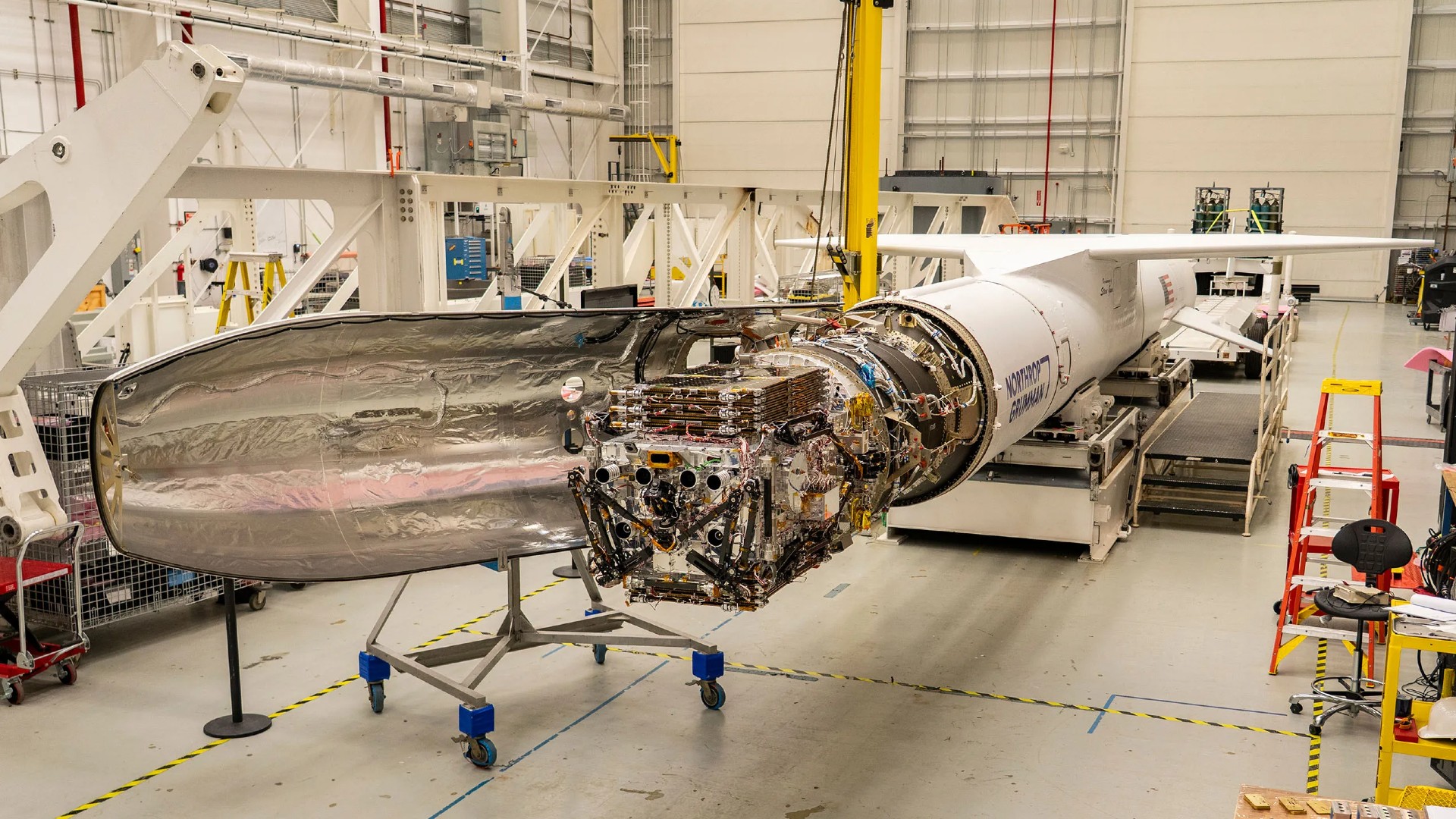
If all goes well, Katalyst's space tug (it's called Link) will lift the Swift observatory into a higher, safer orbit — one that will add years of life to the aging space telescope's mission. Liftoff is officially set for June 27, with Link launching on the last-ever Pegasus XL rocket, an air-launched booster built by Northrop Grumman.
"Frankly, I have to be honest: No one thought it was going to be possible," Shawn Domagal-Goldman, NASA's Astrophysics Division director, told reporters here on Wednesday (June 17). "No one thought we would get as far as we've already gotten today."
What stands out most is how quickly the mission came together.
NASA’s Neil Gehrels Swift Observatory, shown in this artist’s concept, orbits Earth as it studies the ever-changing universe. Launched in 2004, the space telescope's days are numbered as it is falling out of space. (Image credit: NASA’s Goddard Space Flight Center Conceptual Image Lab)
It was just in September 2025 that NASA picked Katalyst to build a spacecraft capable of boosting Swift on a budget of $30 million. That was nine months ago. And now, the finished Link spacecraft — with its three robotic arms, three main Hall thrusters and a suite of other instruments — is packed aboard its Pegasus XL rocket and tucked on the belly of its L-1011 Stargazer carrier plane for a trip to its launch site in the South Pacific's Kwajalein Atoll.
"In the last nine months, we have gone from a clean sheet to a spacecraft that is currently integrated on a rocket on an airplane, ready to go to Kwaj for launch," said Kieran Wilson, Link's principal investigator at Katalyst Space, on Wednesday. "This is an absolutely unprecedented development timeline for this program."
Yet that "swift" timeline, if you will, is essential if NASA is to rescue the Swift space observatory.
Katalyst Space's LINK robotic servicing satellite awaits encapsulation inside a Northrop Grumman Pegasus XL rocket on June 8, 2026, at NASA's Wallops Flight Facility in Virginia. (Image credit: NASA/Ron Beard)
NASA originally launched Swift (its full name is the Neil Gehrels Swift Observatory, after its late principal investigator) in 2004 on a $250 million mission to search the sky for gamma-ray bursts and other high-energy astrophysics phenomena in the cosmos. From its original orbit about 375 miles (600 kilometers) above Earth, Swift was a silent sentinel, ready to quickly pivot to new targets with unprecedented speed.
"Swift was designed to study gamma-ray bursts, short-lived flashes of high-energy light that release more energy in just a few seconds than the sun will in its entire lifetime," Swift principal investigator Brad Cenko told reporters Wednesday. "It's been extremely successful in this regard, detecting over 2,000 of these sources all the way out to the edge of the visible universe."
It was Swift that helped scientists confirm without a doubt that the heaviest elements we know of, including the shiny gold and platinum in the jewelry you're wearing right now, were forged by these explosive cosmic events, Cenko said. Swift was expected to last two years in orbit. It's well into its second decade now, and still in good health — well, except for that "falling out of space" part.
You see, Swift doesn't have thrusters, or a propulsion system of any kind. And over the years, an increase in solar activity — space weather from the sun — has puffed up Earth's atmosphere to create more drag on Swift than expected, pulling it down from its initial orbit.
Last year, the Swift mission team realized the space telescope was falling faster than expected. Without a rescue mission, Swift would crash to Earth by the end of this summer.
"It was okay for a generic spacecraft to come out of orbit," Domagal-Goldman said. "But this was not just any spacecraft. This is an observatory with unique capabilities for astrophysics … It is a swift observatory that can quickly pivot across the night sky to find things that go boom in the night."
"So we decided, yeah, we want to go save this one this time because of how special it is," he added.
Artist's illustration of Katalyst Space Technologies' Link servicing spacecraft approaching and capturing NASA's Swift space observatory on an orbit-boosting mission. (Image credit: Katalyst Space Technologies)
A lot has to go right for Katalyst's Link spacecraft to rescue Swift.
The 937-pound (425-kilogram) spacecraft will launch into an initial testing orbit on June 27 and perform a series of checkouts to ensure that its basic systems (three main engines, 16 reaction control thrusters, solar arrays, robotic arms) are all working properly.
"We'll have a commissioning period of a few weeks, after which we will begin maneuvers in order to approach Swift," Wilson said.
Once Link reaches Swift's orbit, it will perform a series of proximity operations, dock, and then raise the space observatory to its initial orbit over the period of a several months. If that goes to plan, Swift could be back to performing science by this fall, Cenko said. (The telescope has been in a low-power mode to preserve what orbit it can since February.)
If Link is successful, Swift could get another five or more years of life in space. Link, meanwhile, will detach and be intentionally deorbited (meaning it will fall to Earth on purpose) to end its mission.
"All this is challenging and risky," Wilson said. "There's a lot of spacecraft that have had far longer development cycles with far more funding behind them that have failed for mundane reasons."
A lot of simple things can go wrong.
For example, the solar arrays on Link might malfunction, Wilson said. Swift has been in orbit for so long, its protective insulation blankets may be as brittle as glass and break when Link's robotic arms grab on, he added.
Engineers from Katalyst stabilize their Link robotic servicing spacecraft as it moves into a vibration chamber at NASA's Goddard Space Flight Center on April 15, 2026. (Image credit: NASA/Scott Wiessinger)
And then there's the sun. It was increased solar activity that put Swift in its perilous situation. That activity is ongoing. In fact, Swift may be one big solar storm away from doom if the sun fires off a major storm before Katalyst's Link can reach it.
Swift is on track to fall below an altitude of 186 miles (300 km) by October. At that point, it may be too low for Link to reach the observatory. A surprise solar storm could accelerate that fall, but NASA remains hopeful.
"At the moment, we think we have several months where Swift will be at a sufficiently high altitude to give Katalyst folks a great chance to capture and boost us," Cenko said.
Katalyst is banking on the future need for spacecraft servicing and life extension in space. This week, the company raised $12 million in funding to develop an even more capable spacecraft called Nexus, which it plans to "expand satellite servicing to multi-orbit, multi-mission operations."
"Over the last decade or so, we've gotten very good at launching things into space," said Robert Lamontagne, Katalyst's vice president for strategic partnerships. "Katalyst is here really to kind of demark the end of that throwaway model, and the start of a new model."
The first test flight of a Nexus mission could launch in 2027. Its target: a U.S. Space Force satellite called Rooster in geostationary orbit22,236 miles (35,786 km) above Earth, much higher than the Swift observatory. That Nexus-1 mission will launch atop an Ariane 6 rocket next year.
One new mission is setting out to study menstruation in microgravity for the first time ever.
Forty-six years ago, NASA engineers asked Sally Ride if 100 tampons was the right amount to send with her for a six-day spaceflight. Though people laugh at that fact today, there has still never been any scientific study dedicated to studying menstruation in space. But a non-profit called Operation Period aims to change that. Led by Gen-Z researchers, this non-profit works to provide what its founder Manju Bangalore calls "menstrual freedom," which she says would mean everyone can have easy access to menstrual products. Meanwhile, the organization also aims to tackle the wider issues that leave people without such access in the first place. With its upcoming suborbital mission Operation Period-01 (OP-01), this ambitious team is taking their cause into microgravity. On OP-01, the mission's founder will launch to space to conduct the research themselves on a Virgin Galactic suborbital flight in 2027.
In conducting their work here on Earth, Operation Period found that "there were still some of those same gaps in spaceflight medicine," Manju Bangalore, the founder and executive director of Operation Period and research astronaut in training for OP-01, told Space.com. " I want all menstruators to be able to live life with their full dignity and reach their fullest potential, and that includes astronauts."
With a background in physics and astronomical engineering as well as with training in bioastronautics and having spent time working at NASA, Bangalore brings her love of space to this cause. She and Priya Abiram, the Director of Research at Operation Period's Redshift Lab, feel so strongly about their message, even 9 years since the pair founded their non-profit; in fact, with this mission, the two will become some of the youngest South Asian women to travel to space.
"On a personal level, I've always been fascinated by space and human space exploration. It's what's always excited me as a child, and I've kept that curiosity going," Bangalore said. "I didn't think those two missions would ever combine into this. It wasn't something I ever planned, but I'm very grateful to lead this historic mission to advance menstrual health in this way."
And just as this team is excited to bring their research into a suborbital environment, Virgin Galactic is excited to be expanding the range of microgravity science the non-profit supports. "This mission with Operation Period is a powerful example of how Virgin Galactic can continue to support real-time, in-flight scientific investigation into long-overlooked areas of human health, helping advance more inclusive and innovative exploration that delivers insight for both space and life on Earth," Virgin Galactic director of system analysis & research Amber Favaregh said in an emailed statement.
Recently, Operation Period expanded to include a research wing, and this mission will be conducted under that umbrella. The team was not yet able to share specific details on the exact protocol that will be conducted during the mission, information they said will be shared at a date closer to launch, but they did share the current issues that this research aims to begin to address.
Currently, astronauts typically choose to fully suppress their periods during their spaceflights, through hormonal IUDs or oral contraceptive pills. While that is a choice astronauts might continue to make in the future, without data to show the reality of dealing with a period in space, astronauts are left with fewer choices with their own bodies. Comprehensive data on menstruation in space will also be important if astronauts are to complete longer spaceflights or even extended stays on the moon. While the mission has not yet revealed its priorities and exactly what data it will collect, with such limited data on menstruation in space, there is a lot of knowledge to be gained.
While "the data that we have, although limited, says that it is generally safe to menstruate, in terms of long duration missions, we don't have quantitative data," Bangalore said. "We don't have enough data to continue to assist with patient resource allocation for mission planners."
Historic missteps like the "100 questions" moment with Sally Ride highlight an issue that could have big effects on future, longer-term missions. Sure, having a ridiculous number of backup products would ensure that there is no need unaddressed, mass considerations for spaceflight are extremely serious and future missions will need to have better data to know what will be needed in a microgravity environment.
And just like with other science in space, the research conducted in microgravity will also be used on Earth. The pair aim to collect menstruation data that will benefit astronauts as well as people back on our home planet. .
"I think on Earth, there's a lot of gaps right now in menstrual health research," Bangalore said. As just one example, she cited recent findings that menstrual product companies were reporting incorrect absorbency of their products because they were testing products with saline, which is very different from menstrual blood. "This was potentially leading to doctors to underdiagnosed heavy menstrual bleeding, which right now the stats say affects 20% of American menstruators," Bangalore said.
With this being the first mission of its kind, OP-01 will not answer every question that remains about menstruation and space, but it will bring data to a conversation decades in the making. "Our hope is to continue to iterate this research so that we can do future suborbital flights, as well as orbital flights, to continue to create larger data sets," Bangalore said. "I think the point of preliminary studies is to be able to know what questions to ask in the future, so we don't expect that this suborbital flight will solve everything or create all the data that we need, right, but we hope that this will be a good stepping stone."
Momentum for this research was actually sparked by many millions of views on a viral social media video in which Bangalore conducted an early version of a menstrual fluid dynamic experiment in a low-gravity environment aboard a parabolic flight.
This viral moment "ended up being a really cool kind of 'in' to continue talking about destigmatizing periods," she said. "Through that, I got to talk more about the gaps in spaceflight medicine, in terms of menstrual health."
Annie Easley at NASA's Glenn Research Center. (Image credit: NASA)
It's Juneteenth in the U.S. today (June 19), a federal holiday that commemorates the end of slavery in America.
Though the Civil War ended in April of 1865, it wasn't until June 19 that same year when Union soldiers officially enforced the law that all enslaved people would be free. But the end of slavery was only the beginning of the challenges soon to follow; for one, segregation between Black and white people in the U.S., both systemic and informal, persisted for years. And we still live in a time when active racism, and the consequences of prior racism, trickle into many aspects of society.
It indeed affected NASA; Black women at the agency were once discriminated against despite making serious contributions to the space program. Our image of the day today celebrates the accomplishments of one such woman, Annie Easley.
Who is Annie Easley?
In 1955, Annie Easley started working for NASA's predecessor organization, the National Advisory Committee for Aeronautics (NACA). Her job was to serve as a "human computer," which was a position unique to the time. (NACA was dissolved in 1958, and its duties and personnel were taken on by the newly created NASA.)
Human computers at NACA and NASA were women who worked as basically early versions of computer programmers. To be a human computer, you had to be extremely good at mathematics, performing reliable calculations on a consistent basis to aid space missions.
Eventually, though, NASA moved toward the use of machine computers more often; Easley transitioned along with the space agency, ultimately becoming a full-fledged computer programmer.
As NASA explains, Easley's career shifted once again as it progressed. After some time, she took a position as the space agency's EEO, or Equal Employment Opportunity, counselor. She worked with NACA/NASA for 34 years before retiring in 1989. She passed away in 2011.
The importance of NASA's human computers
Like Easley, many of NASA's human computers became computer programmers once the agency made the transition to relying more heavily on machine computers. They together performed hundreds of thousands of calculations for the space program.
Easley alone was able to develop code that was crucial in research of energy-conversion systems, which paved the way for hybrid vehicles like the Centaur upper-stage rocket. Down the line, this work of hers contributed to the 1997 launch of the Cassini spacecraft that headed to Saturn.
However, the story wasn't as golden as it sounds retrospectively. Though NACA started hiring white women as "computers" in 1935, the agency didn't begin allowing Black women to enter the workforce until 1943. And that was only due to a shortage of professionals because of World War 2. In fact, human computers at the agency were not called professionals but rather "subprofessionals," and they were regularly talked down to by men who worked at the organization.
Black women had it particularly bad: They had to jump through hoops imposed by both racism and sexism.
Easley was one of just four African Americans out of 2,500 employees at NACA when she was hired.
In a 2001 interview, Easley recalled her mother saying to her: "'You can be anything you want to. It doesn't matter what you look like, what your size is, what your color is. You can be anything you want to, but you do have to work at it.'"
SpaceX launched the latest batch of spy satellites for the U.S. government early Friday morning (June 19).
A Falcon 9 rocket lifted off from California's Vandenberg Space Force Base on Friday, at 4:50 a.m. EDT (0850 GMT; 1:50 a.m. local California time).
The launch kicked off a mission for the U.S. National Reconnaissance Office (NRO) called NROL-179.
SpaceX launched the NROL-179 mission for the U.S. government early Friday morning (June 19) from Vandenberg Space Force Base in California. (Image credit: SpaceX)
The NRO operates the United States' fleet of spy satellites. NROL-179 was the 14th mission dedicated to building out a new part of that fleet — a network the NRO calls its "proliferated architecture."
"To stay ahead of the competition and ensure it can continue to operate in a heightened threat environment, the NRO is modernizing its architecture in space and on the ground — delivering more capability faster with increased resilience," agency officials wrote in the NROL-179 press kit.
"A greater number of satellites — large and small, government and commercial, in multiple orbits — will deliver an order of magnitude more signals and images than is available today," they added.
SpaceX and Northrop Grumman build the "proliferated architecture" satellites. Information about the spacecraft is hard to come by; the NRO has not released details about their activities or orbits.
All of these satellites have reached orbit atop Falcon 9s flying out of Vandenberg, on California's central coast, with the first such mission launching in May 2024.
To plan, the Falcon 9's first stage returned to Earth a little less than eight minutes after liftoff on Friday, touching down at Vandenberg's Landing Zone 4. It was the third flight for this particular booster, according to a SpaceX mission description.
NROL-179 was the 71st Falcon 9 mission of 2026. Fifty-seven of the rocket's launches this year to date have been devoted to building out SpaceX's Starlink broadband megaconstellation in low Earth orbit.
Editor's note: This story was updated on June 19 with news of successful launch.
Russian cosmonaut Aleksandr Samokutyaev, who served twice as a crew member aboard the International Space Station (ISS), including during the final US space shuttle mission in 2011, has died at the age of 56.
With Samokutyaev's death on Wednesday, he becomes the first former ISS long-duration resident to die in the 26 years that the space station has been a home to 155 other cosmonauts and astronauts as expedition crew members. The cause of his death is unknown.
Portrait of cosmonaut Aleksandr Samokutyaev.
Credit:
Roscosmos
"The leadership and staff of the Roscosmos State Corporation extend their sincere condolences to the family and loved ones of Aleksandr Mikhailovich," officials with Russia's space agency said in a statement.
NASA’s Curiosity rover and its mission to investigate whether Mars could have ever supported microbial life have taken one step closer to achieving its goal, with one of the most significant discoveries in the ongoing search for evidence of life on the Red Planet.
While exploring Gale Crater, NASA’s robotic rover uncovered a sample in 2020 and, using a chemical technique, determined that 21 carbon-based molecules were preserved in the clay-rich sedimentary rock. This also included seven that had never been identified on Mars before.
While the discovery does not definitively point to life on the Red Planet, it does strengthen the case that Mars has the chemical conditions to support life.
According to scientists, the most remarkable aspect of the discovery is not the molecules themselves, but their preservation
“The actual organic components they found are not strong evidence for life,” said Texas A&M University astrobiologist and geobiologist Dr. Michael Tice in a statement. Tice acknowledged that these compounds may also have evolved through abiotic processes, including formation in meteorites or other non-biological pathways.
“These organics were likely preserved in the rocks for a very long time, possibly billions of years, despite radiation and other harsh conditions on Mars,” Tice said.
“It blows my mind.”
Building Blocks of Life
Organic molecules are critical building blocks of life, but they can also form through non-biological processes, such as geological reactions or meteorite delivery. Similar preserved compounds on Earth help scientists study ancient environments, and their discovery on Mars provides new clues about the planet’s billion-year-old history.
“Studying how those compounds vary between different rocks can tell a story of how life and environments changed,” Tice recently said in a statement issued by Texas A&M. “Finding organics stored in similar ways on Mars tells us that there could be similar stories preserved there as well.”
The findings also suggest that Martian rocks may contain evidence from a time before life began, a record of sorts that Earth’s past geology has mostly erased.
“It is even possible that some Mars rocks will tell us about times when there was no life there,” he said, with organics formed instead through prebiotic chemistry or delivered from space. “We do not have an equivalent record of such a time preserved on Earth.”
The findings build on earlier research by Tice and his team that identified possible biosignatures in Mars rocks studied by NASA’s Perseverance rover.
Tice suggests, “When we looked even closer, we saw things that are easy to explain with early Martian life but very difficult to explain with only geological processes.”
The rocks contained organic carbon and key elements connected to microbial energy sources, along with chemical patterns that may show redox reactions (processes often associated with life on Earth).
“With the right collection, we could find the next step in evidence for past life on Mars or learn about the kinds of processes that eventually led to life on our planet.”
Tice and his colleagues will continue their work exploring the Martian land.
“I’m continuing to study the record of early Martian evolution as part of the PIXL instrument team on the Perseverance rover,” he said.
“In addition, I’m comparing how organisms affected some of the oldest sediments on Earth — now preserved in rocks in South Africa—with the potential biosignatures we discovered on Mars.”
Using NASA’s Goldstone Solar System Radar and NSF’s Green Bank Telescope, astronomers from the University of California, Los Angeles, confirmed that the icy surface of Jupiter’s moon Europa scatters radio energy in an unusually strong and complex way not seen on rocky worlds.
A Chinese spacecraft has arrived at one of Earth's temporary "quasi-moons" and will soon attempt to land on the space rock to scoop up samples that will be returned to our planet next year. The ambitious mission could help researchers uncover secrets about Earth's main moon and provide clues that may benefit space exploration and planetary defense, experts say.
The mission's primary target is 469219 Kamo'oalewa — also known as 2016 HO3 or simply Kamo'oalewa — a near-Earth asteroid discovered in 2016 by astronomers at Hawaii's Haleakala Observatory. It likely spans somewhere between 130 and 330 feet (40 to 100 meters) across and is a "quasi-satellite" of our planet, meaning it's orbiting the sun right alongside Earth in a temporary partnership. (Kamo'oalewa means "oscillating celestial fragment" in Hawaiian.)
Tianwen-2 is predicted to have arrived at Kamo'oalewa on June 7 and inserted itself into an orbit alongside the asteroid, according to an unverified timeline shared by freelance journalist Andrew Jones, a leading expert on China's space program. Around a month later, on July 4, the probe is expected to descend upon the space rock to collect samples from its surface, potentially employing a never-before-seen drilling technique to do so. (The CNSA has not released an official timeline for the mission or shared any recent updates about its progress.)
If successful, the samples are expected to be returned to Earth on Nov. 29, 2027, according to the same timeline. At this point, Tianwen-2 will then slingshot around our planet and head farther out into the solar system for its secondary mission: to rendezvous with and study 311P/PanSTARRS — a peculiar object beyond Mars, which displays characteristics of both comets and asteroids — in 2035.
This photo of one of Tianwen-2's decagonal solar panels, captured in orbit, was the first image of the probe released by the CNSA. (Image credit: CNSA)
Samples from Kamo'oalewa could help answer many interesting questions, including the true origin of the object, which some experts believe may have broken off from the moon.
"What makes [this mission] extraordinary is that we don't yet know [the object's] composition or origin," Li Chunlai, a researcher with the Chinese Academy of Sciences' National Astronomical Observatories and chief commander of Tianwen-2's ground application system, said in a state-sanctioned video translated to English. "We'll only obtain definitive answers after completing our exploration."
What is Kamo'oalewa?
There are currently eight known quasi-moons orbiting the sun alongside Earth, following the most recent quasi-moon discovery in September 2025. Unlike the similarly named "minimoons," which are asteroids that are briefly captured by Earth's gravity for a few months or years at a time, quasi-moons are temporary satellites that slowly circle our planet but are never gravitationally bound to it.
This relationship can last decades, or even centuries. For example, experts think Kamo'oalewa has been accompanying our planet for at least 100 years and could remain alongside it for another 300 years before it starts to fall out of sync with our solar orbit.
On June 7, when Tianwen-2 was expected to arrive at Kamo'oalewa, the space rock was around 24.2 million miles (39.1 million km) from Earth. (Image credit: NASA/JPL/Small-Body Database Lookup)
"The way Kamo'oalewa moves with Earth is kind of like a dog that might tag along with you for a while on a long walk through the woods, but it's not your dog," Richard Binzel, a planetary scientist and asteroid expert at MIT, told Live Science in an email.
The Ferris-wheel-size space rock is one of the closest quasi-moons to us, with a minimum distance of around 2.9 million miles (4.6 million kilometers) from Earth, or around 12 times farther away than our actual moon. It is also one of the fastest-spinning quasi-moons, rotating around its axis every 30 minutes. But unlike other quasi-moons, which likely originate from the solar system's main asteroid belt, between Mars and Jupiter, our current best guess is that Kamo'oalewa is actually a piece of the moon.
This hypothesis is based on observations from 2021 that showed Kamo'oalewa absorbs and reflects light similarly to the moon, hinting that the space rock may be a chunk of lunar material ejected by a long-ago meteor strike. More recently, in 2024, researchers narrowed down the most likely impact crater from which the asteroid originated: the 13.6-mile-wide (22 km) Giordano Bruno crater, located on the far side of the moon. However, there is still a chance that Kamo'oalewa is a main-belt asteroid that just happens to look an awful lot like lunar material.
Kamo'oalewa (a.k.a. 2016 HO3) circles Earth but does not orbit our planet. This simulation shows its predicted movements relative to Earth over the next few centuries. (Image credit: NASA/Pheonix7777/Wikimedia)
"I am curious to find out the answer about its origin, since the debate on its [potential] lunar origin is still very open," Marco Fenucci, a mathematician at the European Space Agency's Near-Earth Objects Coordination Centre who has co-authored multiple studies on Kamo'oalewa, told Live Science. This mission should "definitely give us an answer to this matter," he added.
Scientists are also unsure whether Kamo'oalewa is a "solid monolithic rock," like the $100,000 quadrillion asteroid Psyche (the target of NASA's ongoing Psyche mission), or a "rubble-pile-like asteroid," such as Bennu or Ryugu, both of which have been explored by sample-return missions in recent years, Fenucci said.
Scooping up samples
Having arrived at Kamo'oalewa, Tianwen-2 will spend the next few weeks mapping the asteroid's surface at altitudes between 1,000 feet and 12.5 miles (300 m to 20 km) above its surface, according to limited mission details revealed by Chinese scientists in a January study. The resulting map will allow researchers to estimate the asteroid's density and work out the best landing spot.
On July 4, the probe is expected to swoop down and scoop up around 3.5 ounces (100 grams) of surface material, or regolith, from the asteroid, which is slightly less than what NASA's OSIRIS-REx mission managed to grab from Bennu. However, there are multiple ways this sampling process could play out.
If the asteroid is a pile of rubble, the probe will utilize a touch-and-go approach, which involves hovering just above the surface and using a robotic arm to reach out and grab the sample. This method was also used by OSIRIS-REx for Bennu and by Japan's Hayabusa2 mission, which scooped up samples from Ryugu.
But if Kamo'oalewa has a more solid surface, Tianwen-2 will attempt to land directly on the space rock and anchor itself in place before drilling into the asteroid. This has never been attempted before and could allow for longer contact time and "more controlled sampling," according to The Planetary Society.
Tianwen-2 will circle Kamo'oalewa at various altitudes in order to scan the space rock and figure out its best possible landing spot. (Image credit: Zhang et al. 2026)
After collecting samples, the probe will remain alongside the asteroid and conduct further analysis of its size, shape and trajectory.
In late April 2027, Tianwen-2 will depart Kamo'oalewa and begin the six-month journey back to Earth, where it will dump its samples in a return capsule that will fall to our planet's surface as the probe begins its long journey to rendezvous with 311P/PanSTARRS.
The return capsule will reenter Earth's atmosphere at around 27,000 mph (43,500 km/h), researchers wrote in the January study. That's slightly faster than the Orion capsule carrying the Artemis II astronauts traveled as it fell back to Earth in April.
What could we learn from Tianwen-2?
In addition to ending the debate over Kamo'oalewa's origin, samples from Tianwen-2 could reveal more about the solar system and our place within it.
For example, previously returned asteroid samples have helped to "tell us where Earth's water came from, how complex organic molecules were distributed in the early solar system, and how surface processes like space weathering alter asteroid properties over time," Fenucci said. These samples can also be used to "establish a link to known meteorites found on Earth" and help us learn more about these space rocks, he added.
Tianwen-2 launched into space May 28 on board one of China's Long March 3B rockets. (Image credit: VCG/VCG via Getty Images)
The proximity of quasi-moons and minimoons to Earth also makes them valuable assets for future space exploration missions. Some researchers have proposed using them as temporary bases or refueling stations that could serve as stops on the way to Mars or other faraway destinations. These objects "could become literal stepping stones for human missions to practice what it is like to leave the Earth-moon cradle," Binzel said.
One particular idea that scientists want to explore is whether water can be extracted from these objects. And if Kamo'oalewa is a piece of the moon, that could have implications for NASA's planned moon base. "Someday, it might be possible to extract that water to provide resources for thirsty astronauts or even generate usable rocket fuel from the hydrogen," Binzel said.
"Over the time scale of centuries, these kinds of objects have a chance of striking the Earth," said Binzel, who invented the Torino scale used to measure the impact potential of near-Earth objects. Therefore, a better understanding of space rocks like Kamo'oalewa "can prepare us in how to deal with a threatening object if one were ever discovered," he added.
One of the United States' most storied space launch sites has been cleared of its decades-old support towers, making way for modern rockets to use the pad. Space Launch Complex-6 (SLC-6) at Vandenberg Space Force Station is arguably better known for what did not lift off from there than for what did.
A series of demolition charges on Tuesday (June 16) brought down the access tower, mobile service tower, and what remained of the assembly building at SLC-6—pronounced "slick-six"—in Southern California. Once the location for the US Air Force's first effort to put humans into space and later, the West Coast launch site for the space shuttle, SLC-6 will next be used by SpaceX in support of Falcon 9 and Falcon Heavy missions.
Vandenberg Space Force Base personnel watch as the assembly building at Space Launch Complex-6 (SLC-6) is toppled on June 16, 2026, to make way for SpaceX's use of the site.
Credit:
Space Launch Delta 30/Tech. Sgt. Draeke Layman
"Space Launch Complex-6 represents six decades of American innovation and our unwavering commitment to securing space superiority," Col. James T. Horne III, commander of Space Launch Delta 30 at Vandenberg, said in a statement. "By modernizing this historic footprint in partnership with our defense industrial base, we are building directly upon the foundation of our pioneers."
In the relentless quest to uncover signs of life beyond Earth, scientists have turned their gaze towards the mysterious realms of ocean worlds—icy moons like Enceladus, Europa, and Titan. These celestial bodies harbor vast, hidden oceans beneath their frozen crusts, creating environments that could potentially support life. Yet, the challenge remains daunting: distinguishing genuine biological signatures from complex abiotic processes that could mimic these signals. A groundbreaking study recently published in Nature Astronomy proposes a sophisticated quantitative framework designed to rigorously evaluate these abiotic baselines on ocean worlds, shedding new light on how future life detection missions might navigate this delicate terrain.
Ocean worlds have captivated astrobiologists not merely because they contain liquid water, a fundamental criterion for habitability, but also because they offer diverse chemical environments where life as we know it might exist. However, confirming the presence of life requires more than spotting chemicals commonly associated with biology; it demands a nuanced understanding of how non-biological processes could generate similar signals, muddying the interpretative waters. The novel framework developed by Higgins, Chen, Warr, and colleagues provides an unprecedented approach to dissect this ambiguity, employing Enceladus as a primary example to demonstrate its utility.
At the heart of the study lies the challenge of interpreting isotopic measurements, particularly of methane (CH₄) and carbon dioxide (CO₂), molecules widely regarded as potential biosignatures due to their roles in Earth’s carbon cycle. The study scrutinizes the isotopic ratios of these molecules, expressed as δ¹³C values, which reflect the ratio of carbon-13 to carbon-12 isotopes. Traditionally, biological processes tend to prefer lighter isotopes, leading to distinctive fractionation patterns. However, the researchers highlight that uncertainties inherent in abiotic chemistry within Enceladus’ ocean and vent systems can produce isotopic signatures overlapping with those produced by biological activity, thereby defying straightforward interpretation.
The implication is profound: future missions that might measure δ¹³C in carbon-bearing molecules emanating from Enceladus’ plumes could misinterpret data, either falsely declaring a biosignature or overlooking subtle hints of life concealed beneath abiotic noise. The framework thus urges caution against over-reliance on isotopic biosignatures without a comprehensive assessment of the abiotic baseline. This is a pivotal insight that recalibrates how missions might prioritize scientific instruments and analytical strategies aboard orbiters or landers.
Complementing isotopic analysis, the study explores amino acid chirality as an alternative biosignature. Chirality, the “handedness” of molecules, is a hallmark of terrestrial biology, as living organisms almost exclusively synthesize left-handed amino acids. Nevertheless, the researchers caution that abiotic synthesis of amino acids on ocean worlds, influenced by factors such as radiation, mineral surfaces, and catalytic processes, could yield racemic mixtures or even chiral excesses unrelated to life. This ambiguity necessitates robust characterization of abiotic organic chemistry before interpreting chirality as a definitive biosignature in extraterrestrial contexts.
Another layer of complexity arises from the physical and geological attributes of the ocean worlds themselves. The study emphasizes that factors like internal temperature gradients, rheology (the deformation behavior of the icy shell and underlying materials), and lithology (rock types beneath the ocean) significantly influence abiotic chemical pathways. Understanding these properties with finer precision could narrow the range of isotopic and chemical signatures attributable to non-biological processes, thereby enhancing the confidence in detecting life.
Central to reducing the abiotic baseline uncertainty is the challenge of constraining the internal temperatures of ocean worlds. The framework points out that if internal temperatures can be pinpointed within a range of about 10 to 100 degrees Celsius, models of abiotic chemistry become markedly more predictive. Doing so would help delineate which molecular signals likely stem from hydrothermal activity and mineral interactions rather than biogenic outputs. This underscores the vital role of geophysical observations, such as gravity mapping, heat flux measurements, and ice shell thickness determinations, in complementing chemical analyses.
Transport timescales within the ocean and the overlying ice shell also feature as critical parameters. The timeframe over which molecules or small organic compounds travel from the ocean floor to the surface can alter their chemical and isotopic signatures dramatically. For instance, longer transport times may lead to isotopic exchanges or degradation processes that obscure the original biosignature signal. Hence, understanding ocean circulation patterns and ice shell permeability is integral to accurately interpreting any detected anomaly.
Expanding beyond Enceladus, the framework’s holistic approach is applicable to other ocean worlds such as Europa and Titan, each with their distinct environments and chemical contexts. On Europa, for example, the ocean’s interaction with a silicate seafloor and potential radiolysis-driven chemistry creates a different abiotic baseline compared to Enceladus. Titan’s complex organic-rich atmosphere and potential subsurface oceans add further layers of chemical diversity. The framework enables tailoring of life detection strategies and biosignature interpretations to these distinct habitats.
The study’s methodology can also inform future mission design, influencing instrument selection, sampling strategies, and data interpretation pipelines. By anticipating where abiotic ambiguity is most pronounced, mission planners can prioritize measurements that either better constrain abiotic baselines or provide multiple independent biosignature lines of evidence. This may include coupling isotopic data with mineralogical, geophysical, and molecular chirality information to build a more integrated and less ambiguous picture of habitability.
Furthermore, the framework embodies a precautionary principle against false positives and false negatives. Past and ongoing searches for life beyond Earth have grappled with ambiguous signals, from Viking’s methyl chloride controversy on Mars to debates over methane on the Red Planet. The ocean worlds’ complex chemistry and challenging environments elevate this problem, making a rigorous, quantitative approach like that offered by Higgins et al. indispensable in the life detection toolkit.
Importantly, this work illustrates the multidisciplinarity essential in astrobiology. Geochemistry, planetary science, biology, and physics converge to piece together the puzzle of extraterrestrial biosignatures. The framework’s integrated perspective exemplifies the collaborative spirit needed to interpret subtle clues from distant worlds and avoid the pitfalls of isolated or oversimplified analyses.
Looking ahead, technological advancements in both remote sensing and in situ exploration promise to enhance constraints on ocean world environments, thereby sharpening the framework’s applicability. For instance, sophisticated flyby missions or landers equipped with mass spectrometers, isotopic analyzers, and chiral detection capabilities may provide richer datasets. Simultaneously, laboratory simulations and terrestrial analog studies will refine models of abiotic chemistry and kinetics under relevant conditions.
The impact of this research extends beyond ocean worlds to the broader quest for life in the cosmos. The principles of robustly addressing abiotic baselines and embracing interdisciplinary data fusion can guide biosignature evaluation on exoplanets and other planetary bodies where life’s chemical fingerprints, if present, might be similarly elusive or confounded by non-biological processes.
In conclusion, the study spearheaded by Higgins and colleagues fundamentally reshapes our approach to biosignature interpretation on ocean worlds. By proposing a quantitative, comprehensive framework that weighs biosignature potential against carefully characterized abiotic backgrounds, it sets a new standard for rigor in the search for extraterrestrial life. As humanity’s exploration of the Solar System’s ocean realms advances, this framework will be pivotal in ensuring that claims of discovering life are grounded in unambiguous, scientifically defensible evidence.
Subject of Research: Evaluation of biosignature potential versus abiotic baselines on ocean worlds in the Solar System.
Article Title: A framework for evaluating biosignature potential against the abiotic baseline on ocean worlds.
Article References:
Higgins, P.M., Chen, W., Warr, O. et al. A framework for evaluating biosignature potential against the abiotic baseline on ocean worlds. Nat Astron (2026). https://doi.org/10.1038/s41550-026-02893-8
NASA will discuss an ambitious mission to boost the orbit of its Swift space telescope during a press conference today (June 17), and you can listen to it live.
An Ariane 6 heavy-lift rocket launched a record-breaking load to orbit early Wednesday morning (June 17), carrying a batch of Amazon Leo satellites to orbit.
At age 19, John McFall thought he might never walk again after his right leg was amputated above the knee following a motorcycle accident. Fast-forward more than two decades, and he is now on the verge of becoming the first physically disabled person in space.
McFall, 45, is a British surgeon and former Paralympic athlete who won multiple medals as a T42-class sprinter. In 2022, he joined the European Space Agency's (ESA) Fly! program, which aimed to see if a person with a physical disability could live and work in low Earth orbit. And in February 2025, he became the first member of the program to be cleared for a potential future mission to space.
More recently, on June 2, the U.K. government announced that McFall had been selected as a prospective member of the first crew to live on Haven-1, an upcoming commercial space station from U.S. company Vast that is scheduled to be the first of its kind in low Earth orbit, if it launches on time early next year.
If everything goes according to plan, the roughly 30-day mission will help answer a series of interesting questions about how living in space might be both challenging and advantageous for people with physical disabilities.
Live Science spoke with McFall about what it would mean to break new ground, wearing a prosthesis in space and how microgravity might uniquely affect him.
Harry Baker: How did it feel to get the news that you might be going to space next year?
John McFall: Awesome. Very awesome, very exciting. And it feels like we're one step closer to realizing this amazing opportunity and achieving this very exciting milestone in human space exploration.
HB: What would it mean to you personally to become the first physically disabled astronaut in space?
JM: To me personally, it doesn't make a difference. In terms of "what an achievement for me," I don't tend to think of it like that. However, I am very aware that the broader message that it sends to wider society about what people are capable of — whether they have a disability or not — is very interesting and powerful. So I'm proud to be a very small part of that movement, if you like, and the journey of making society a more tolerant and inclusive place.
McFall (far right) joined ESA in 2022. This photo shows him alongside some of his fellow Class of 2022 astronauts at an event in Paris the same year. (Image credit: JOEL SAGET / AFP via Getty Images)
HB: What advantages do you think your disability might give you in space compared with other astronauts?
JM: It's a good question because we don't actually know. We can hypothesize, but until we actually get into space and conduct some science that's specifically relevant to my disability, we won't know. But there are some theoretical benefits.
One is that when you live in microgravity, you get a shift of fluid from the lower part of your body up into the upper part of your body and your cranium. This can cause swelling of the optic disk, which can temporarily affect vision. It's called spaceflight-associated neuro-ocular syndrome (SANS), and it affects around 70-75% of astronauts. I would hypothesize that, having a reduced lower limb volume to start with, you're going to get a proportionally smaller fluid shift in microgravity, relative to your physiological capacity to process it, reducing the risk of things like SANS.
Another is that in microgravity, because you're weightless, you're not using your bones as much, and your body naturally resorbs them. So your bones get weaker and thinner. And one of the byproducts of this is that you have to excrete a lot of calcium, and you do this via peeing it out. As it [calcium] passes through your renal system, or kidneys, this causes an increased risk of kidney stones in microgravity. So again, having lower bone mass to start with — but retaining the same physiological capacity to metabolically process calcium — there is potentially a lower risk of kidney stones.
Haven-1 is scheduled to be the first ever commercial space station. It will launch in early 2027 and could host its first astronauts, including McFall, later the same year. (Image credit: ESA/Novespace)
So those are two small-but-hypothetical benefits of my particular disability in space. But the real answer is, we don't know until we do the science (i.e., urine samples, blood samples and eye examinations in orbit).
HB: How might space be more challenging for you than for other astronauts?
JM: Again, we don't know. The question is, do you really need both your lower limbs to help you stabilize and support yourself whilst your hands are doing tasks? And is having two legs useful in what we would call normal intravehicular operations [conducted inside the spacecraft], whether it be cargo operations, maintenance, this sort of stuff?
When we went through the feasibility initiative, trying to think of and work out all these scenarios, we couldn't really think of a disadvantage other than maybe having to work slightly harder.
HB: Will you be wearing a prosthesis in space?
JM: The plan is to wear a prosthesis. We deemed quite early on that wearing a prosthesis in a spacecraft would be a necessity, mainly at launch time. If there was an emergency that required me to get out of the spacecraft and get off the crew access arm and away from the launch site, it would be ideal wearing a prosthesis to do that.
But in space, we don't know whether it's going to be an advantage or be required for these intravehicular activities. Where I would definitely need to use one is on a long-duration mission where I need to exercise lots. I use a prosthesis to exercise on Earth, and I would use a prosthesis to exercise in orbit. However, short-duration missions [like this one] do not.
McFall won several medals as a T42-class sprinter, including a bronze at the the 2008 paralympic Games in Beijing. (Image credit: Andrew Wong via Getty Images)
The prosthetics I use are modular, so I wear a socket — that's what's left of my leg goes inside — and then the hardware, what we call the terminal device, is attached to the socket. What I would envisage doing is always wearing the socket, because that way, you maintain consistency. But [for] the terminal device itself, I have a quick-change adapter that you can just unplug the device, and you can take it off and, likewise, put it back in again.
It's "plug and play," if you like, and [it will allow me to] make assessments of whether it's useful or not.
HB: Will your prosthesis need to be specially made for the trip?
JM: Not really. We are certifying a number of prosthetic hardware items to fly, but they're all what we call "commercial, off-the-shelf items." So they're products that are widely available.
However, there are some very small changes that we need to make to make them compliant with the safety requirements of the space station environment and the spacecraft, such as fireproof tape around certain parts of the device or changing the hydraulic fluid so it's less toxic in case there is a leak.
We're also doing a small amount of redesigning to the shape of the foot to make it more ergonomic to interface with things like rails and straps inside the space station, because you often slip your foot under rails and straps.
HB: Could anything you learn from your mission help physically disabled people back on Earth?
JM: Yeah, I think so, certainly from a prosthetics point of view. There are prosthetic developments that we have made that will benefit other prosthetic users in the future.
I mentioned this quick-change adapter. We have revised or reengineered this particular device to perform in a certain way, which I think will have advantages for a whole range of lower-limb amputees. The socket technology — the interface between my stump and the prosthesis — is [also] going to be redesigned and potentially has very beneficial applications for lower-limb amputees again.
McFall was cleared to fly to space last year. Before then, he featured in the opening ceremony for the 2024 Paralympic Games in Paris (photographed). (Image credit: Mauro Ujetto/NurPhoto via Getty Images)
HB: Are you hoping to be selected for more missions in the future? And would you like to become the first physically disabled person on the International Space Station (ISS) or the moon?
JM: Yeah, absolutely. I hope that we use this opportunity to demonstrate that it is very feasible, and I hope that that would put me in line for selection of missions in the future.
I would love to, in the future, potentially spend longer in space, demonstrating that it's possible for someone with a disability to live and work in space and cope with everything that comes with that.
And absolutely, I would love to go to the moon. You know, someone with a lower-limb disability, when you propose that against walking on the moon, it's quite a powerful statement, and I would love to do that.
Editor's note: This interview has been condensed and edited for clarity.

 Login