Amazon now has hundreds of flight-ready satellites standing idle in Florida, waiting to join the company's low-Earth orbit Internet constellation, an Amazon official said Tuesday.
"They're built, and sitting in a payload processing facility waiting for trips to orbit," said Steve Metayer, vice president of Amazon Leo Production Operations, during a teleconference with reporters. "And we're currently manufacturing several satellites a day."
Metayer spoke on the eve of the company's next mission, during which an Ariane 64 rocket will launch three dozen Amazon Leo satellites into orbit from a spaceport in French Guiana. Liftoff is targeted for 7:53 am ET (11:53 UTC) on Wednesday.
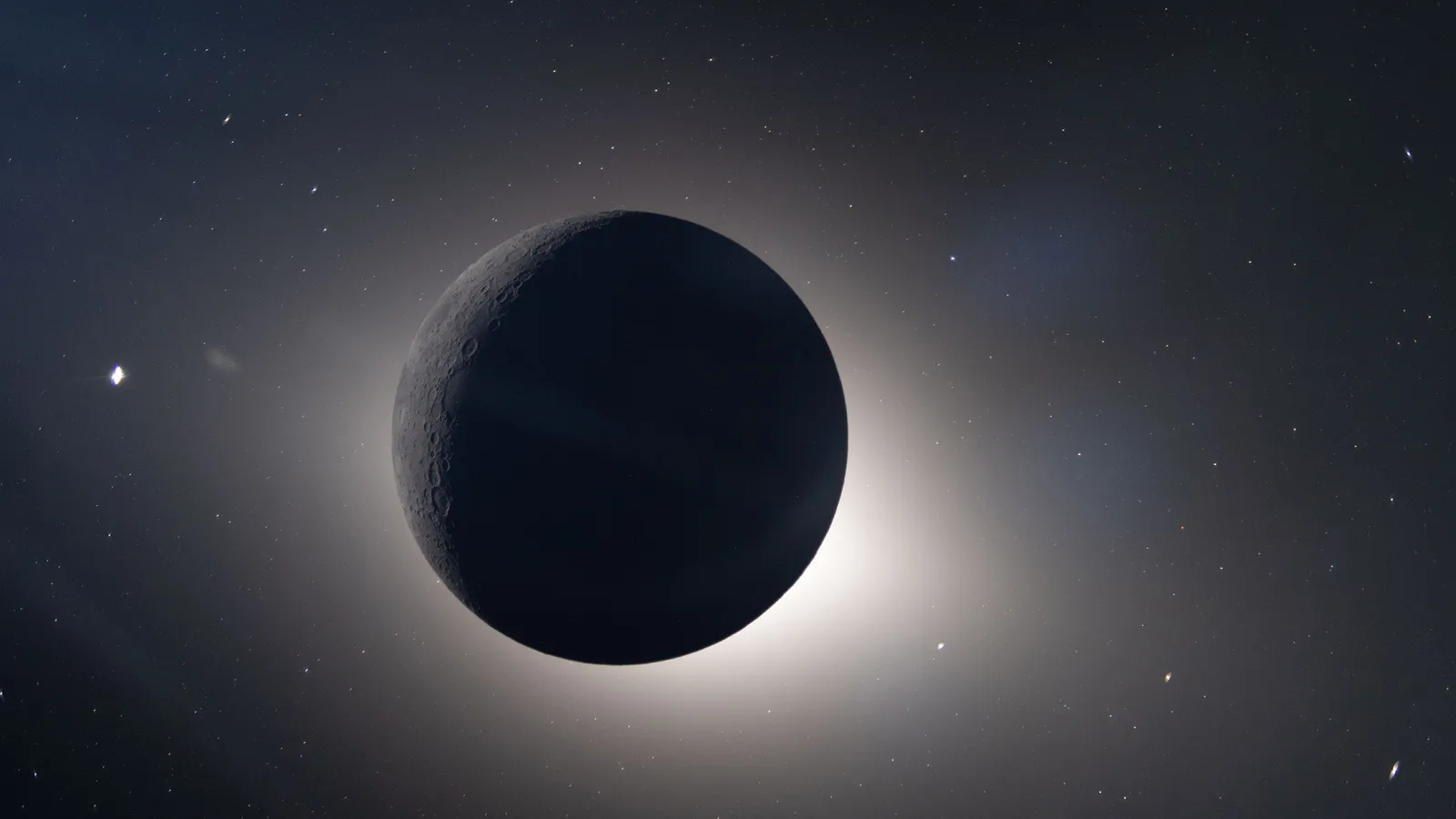
Today (June 17), for the first time in 11 years, people across North America will be able to look up in the daytime sky and see Venus temporarily vanish behind the faint crescent moon.
The rare skywatching spectacle can be viewed with the naked eye and recorded without any special equipment, as long as the weather cooperates — however, using a good pair of binoculars or a backyard telescope will make it much easier to see the faint light of Venus in the daytime sky. No matter how you go about skywatching, you must take great care not to stare directly at the sun while doing so.
During the event, known as a lunar occultation, the moon will briefly pass between Earth and Venus, which has been shining especially bright over the past few weeks while hanging out alongside Jupiter in the evening sky. As a result of the occultation, the hellish planet will appear to blink out of existence, before reappearing around an hour later, allowing for two separate skywatching experiences. The last time this happened was on Dec. 7, 2015, and you will not be able to see it again until 2029.
How to see Venus disappear
The occultation will be visible from the 48 contiguous U.S. states, as well as from large parts of Canada and some countries in the northern half of South America — assuming there are clear skies at the time of the event. (The latest forecast suggests that weather conditions will be most favorable along the West Coast.)
As with most skywatching events, such as solar eclipses, not everyone will see it at the same time. For example, people in San Francisco will observe Venus vanish at around 11:34 a.m. PDT, while those in Miami will watch the planet disappear at about 4:06 p.m. EDT (around 92 minutes later when disregarding time zones).
The duration of the occultation will also vary with location. For example, Venus will reappear after around 58 minutes for viewers in San Antonio, but people in Philadelphia will have to wait roughly 80 minutes to see the planet again.
The best place to watch both the disappearance and reappearance of Venus will be from within the shadow of a large tree or building. Blocking out the sun will not only make it easier to see both the moon and Venus but also reduce the risk of sustaining eye damage by looking directly at the sun.
If you are struggling to see the occultation, try using your phone camera to zoom in on the waxing crescent to better locate and record Venus, Spaceweather.com recommends.
What the June 17 lunar occultation will look like
During the event, around 11% of the moon will be faintly visible in the daytime sky, according to Sky & Telescope. Around three-quarters of Venus will be visible — although it will look like a single spot to the naked eye — so the planet will shine much brighter than the moon. The pair will be collectively located around 38 degrees from the sun in the sky.
Venus will vanish behind the side of the moon opposite the illuminated crescent and will take around 30 seconds to disappear completely. It will then reappear above the crescent, similar to the iconic "Earthrise" photos taken by lunar astronauts, such as the Artemis II crew. (The exact spot where Venus disappears and reappears will depend on where you are in the world.)
If you miss this occultation or fancy another skywatching spectacle, be sure to head back outside later the same day, around an hour after sunset, when Venus, Jupiter and Mercury will shine alongside the crescent moon as it passes in front of the Beehive Cluster (also called M44).
The California Institute of Technology (Caltech) has finalized design plans for the Deep Synoptic Array (DSA), an unprecedented radio observatory that will be the most sensitive radio telescope ever built.
Following a successful final design review funded by Schmidt Sciences, construction is slated to begin in a remote, radio-quiet valley floor located in Spring Valley, Nevada. The massive facility is engineered to survey the celestial sphere 100 times faster than any existing radio telescope, fundamentally altering how astronomers map the universe.
Historically, radio astronomy has faced a compromise between sensitivity and image clarity. Large single-dish telescopes excel at capturing incredibly faint cosmic signals but lack spatial resolution, while traditional multi-dish arrays take sharp photos but take longer to sweep wide areas.
The DSA resolves this layout bottleneck by deploying a sprawling constellation of 1,650 steerable satellite dishes, each measuring roughly 6.1 meters in diameter, distributed across a geometric grid spanning 20 kilometers (~12.5 miles) by 16 kilometers (~10 miles).
The ‘radio camers’ solution
Operating an array of this magnitude creates a staggering logistical obstacle: data volume. Combined, the 1,650 dishes generate raw electronic data equivalent to the entire current internet traffic of the United States.
To prevent a system crash, storing this information conventionally would require a multi-billion-dollar storage facility housing five million hard drives to hold roughly 100 exabytes of data.
To overcome this issue, Caltech researchers developed a specialized “radio camera” architecture. Utilizing an on-site network of graphics processing units (GPUs), the telescope automatically flags, cleans, and synthesizes the incoming streams of radio waves into finished, high-fidelity images in real time.
This pipeline immediately strips away raw data clutter, reducing the long-term storage footprint to just tens of petabytes per year. Furthermore, the electronics are kept highly stable through the use of specialized indium phosphide transistors that achieve exquisite sensitivity while operating at room temperature, eliminating the need for complex cryogenic cooling systems.
Cataloging a billion cosmic objects
The raw speed of the array will drastically reshape the catalog of known space phenomena. Over the last several decades, all global radio telescopes combined have cataloged approximately 20 million unique radio sources.
The DSA is projected to match that entire historical benchmark on its very first day of operational testing. Over its initial five-year all-sky survey window, the facility is expected to discover more than one billion previously unrecorded radio sources.
Led by Principal Investigator Gregg Hallinan, the telescope will provide critical open-source tracking data to help astrophysicists study fast radio bursts (FRBs), track moving pulsars, and observe black hole explosions. Project managers anticipate full construction to be finished with science operations commencing by 2029.
Pour observer les spectacles astronomiques que nous réserve le mois de juillet 2026, munissez-vous de notre carte du ciel. Ce mois-ci, Vénus traverse lentement la constellation du Lion, dominée par les étoiles Régulus, Algieba et Denebola.
At age 19, John McFall thought he might never walk again after his right leg was amputated above the knee following a motorcycle accident. Fast-forward more than two decades, and he is now on the verge of becoming the first physically disabled person in space.
McFall, 45, is a British surgeon and former Paralympic athlete who won multiple medals as a T42-class sprinter. In 2022, he joined the European Space Agency's (ESA) Fly! program, which aimed to see if a person with a physical disability could live and work in low Earth orbit. And in February 2025, he became the first member of the program to be cleared for a potential future mission to space.
More recently, on June 2, the U.K. government announced that McFall had been selected as a prospective member of the first crew to live on Haven-1, an upcoming commercial space station from U.S. company Vast that is scheduled to be the first of its kind in low Earth orbit, if it launches on time early next year.
If everything goes according to plan, the roughly 30-day mission will help answer a series of interesting questions about how living in space might be both challenging and advantageous for people with physical disabilities.
Live Science spoke with McFall about what it would mean to break new ground, wearing a prosthesis in space and how microgravity might uniquely affect him.
Harry Baker: How did it feel to get the news that you might be going to space next year?
John McFall: Awesome. Very awesome, very exciting. And it feels like we're one step closer to realizing this amazing opportunity and achieving this very exciting milestone in human space exploration.
HB: What would it mean to you personally to become the first physically disabled astronaut in space?
JM: To me personally, it doesn't make a difference. In terms of "what an achievement for me," I don't tend to think of it like that. However, I am very aware that the broader message that it sends to wider society about what people are capable of — whether they have a disability or not — is very interesting and powerful. So I'm proud to be a very small part of that movement, if you like, and the journey of making society a more tolerant and inclusive place.
McFall (far right) joined ESA in 2022. This photo shows him alongside some of his fellow Class of 2022 astronauts at an event in Paris the same year. (Image credit: JOEL SAGET / AFP via Getty Images)
HB: What advantages do you think your disability might give you in space compared with other astronauts?
JM: It's a good question because we don't actually know. We can hypothesize, but until we actually get into space and conduct some science that's specifically relevant to my disability, we won't know. But there are some theoretical benefits.
One is that when you live in microgravity, you get a shift of fluid from the lower part of your body up into the upper part of your body and your cranium. This can cause swelling of the optic disk, which can temporarily affect vision. It's called spaceflight-associated neuro-ocular syndrome (SANS), and it affects around 70-75% of astronauts. I would hypothesize that, having a reduced lower limb volume to start with, you're going to get a proportionally smaller fluid shift in microgravity, relative to your physiological capacity to process it, reducing the risk of things like SANS.
Another is that in microgravity, because you're weightless, you're not using your bones as much, and your body naturally resorbs them. So your bones get weaker and thinner. And one of the byproducts of this is that you have to excrete a lot of calcium, and you do this via peeing it out. As it [calcium] passes through your renal system, or kidneys, this causes an increased risk of kidney stones in microgravity. So again, having lower bone mass to start with — but retaining the same physiological capacity to metabolically process calcium — there is potentially a lower risk of kidney stones.
Haven-1 is scheduled to be the first ever commercial space station. It will launch in early 2027 and could host its first astronauts, including McFall, later the same year. (Image credit: ESA/Novespace)
So those are two small-but-hypothetical benefits of my particular disability in space. But the real answer is, we don't know until we do the science (i.e., urine samples, blood samples and eye examinations in orbit).
HB: How might space be more challenging for you than for other astronauts?
JM: Again, we don't know. The question is, do you really need both your lower limbs to help you stabilize and support yourself whilst your hands are doing tasks? And is having two legs useful in what we would call normal intravehicular operations [conducted inside the spacecraft], whether it be cargo operations, maintenance, this sort of stuff?
When we went through the feasibility initiative, trying to think of and work out all these scenarios, we couldn't really think of a disadvantage other than maybe having to work slightly harder.
HB: Will you be wearing a prosthesis in space?
JM: The plan is to wear a prosthesis. We deemed quite early on that wearing a prosthesis in a spacecraft would be a necessity, mainly at launch time. If there was an emergency that required me to get out of the spacecraft and get off the crew access arm and away from the launch site, it would be ideal wearing a prosthesis to do that.
But in space, we don't know whether it's going to be an advantage or be required for these intravehicular activities. Where I would definitely need to use one is on a long-duration mission where I need to exercise lots. I use a prosthesis to exercise on Earth, and I would use a prosthesis to exercise in orbit. However, short-duration missions [like this one] do not.
McFall won several medals as a T42-class sprinter, including a bronze at the the 2008 paralympic Games in Beijing. (Image credit: Andrew Wong via Getty Images)
The prosthetics I use are modular, so I wear a socket — that's what's left of my leg goes inside — and then the hardware, what we call the terminal device, is attached to the socket. What I would envisage doing is always wearing the socket, because that way, you maintain consistency. But [for] the terminal device itself, I have a quick-change adapter that you can just unplug the device, and you can take it off and, likewise, put it back in again.
It's "plug and play," if you like, and [it will allow me to] make assessments of whether it's useful or not.
HB: Will your prosthesis need to be specially made for the trip?
JM: Not really. We are certifying a number of prosthetic hardware items to fly, but they're all what we call "commercial, off-the-shelf items." So they're products that are widely available.
However, there are some very small changes that we need to make to make them compliant with the safety requirements of the space station environment and the spacecraft, such as fireproof tape around certain parts of the device or changing the hydraulic fluid so it's less toxic in case there is a leak.
We're also doing a small amount of redesigning to the shape of the foot to make it more ergonomic to interface with things like rails and straps inside the space station, because you often slip your foot under rails and straps.
HB: Could anything you learn from your mission help physically disabled people back on Earth?
JM: Yeah, I think so, certainly from a prosthetics point of view. There are prosthetic developments that we have made that will benefit other prosthetic users in the future.
I mentioned this quick-change adapter. We have revised or reengineered this particular device to perform in a certain way, which I think will have advantages for a whole range of lower-limb amputees. The socket technology — the interface between my stump and the prosthesis — is [also] going to be redesigned and potentially has very beneficial applications for lower-limb amputees again.
McFall was cleared to fly to space last year. Before then, he featured in the opening ceremony for the 2024 Paralympic Games in Paris (photographed). (Image credit: Mauro Ujetto/NurPhoto via Getty Images)
HB: Are you hoping to be selected for more missions in the future? And would you like to become the first physically disabled person on the International Space Station (ISS) or the moon?
JM: Yeah, absolutely. I hope that we use this opportunity to demonstrate that it is very feasible, and I hope that that would put me in line for selection of missions in the future.
I would love to, in the future, potentially spend longer in space, demonstrating that it's possible for someone with a disability to live and work in space and cope with everything that comes with that.
And absolutely, I would love to go to the moon. You know, someone with a lower-limb disability, when you propose that against walking on the moon, it's quite a powerful statement, and I would love to do that.
Editor's note: This interview has been condensed and edited for clarity.
Somewhere in the Chamaeleon constellation, six hundred and twenty years ago, a small dark planet about the size of Jupiter began to do something planets are not supposed to be able to do. It started eating. The material — gas and dust from a disc surrounding it, the same kind of debris field that ordinarily surrounds young stars rather than young planets — began falling onto the planet’s surface at increasingly extreme rates. By the time light from the event reached the European Southern Observatory’s Very Large Telescope in Chile in mid-2025, the planet was consuming approximately six billion tonnes of gas and dust per second. The accretion rate had increased by approximately eight times in just a few months. The planet, in astronomical terms, was binge-eating at a rate that had never been observed in any planetary-mass object before. The European astronomers who detected the event published their findings in The Astrophysical Journal Letters in October 2025, and the object they had been observing — Cha 1107-7626 — became the most extreme example yet documented of an emerging class of cosmic objects that blur the boundary between what counts as a planet and what counts as a star.
According to the European Southern Observatory’s official announcement of the discovery, Cha 1107-7626 has a mass between five and ten times that of Jupiter, sits approximately 620 light-years from Earth, and does not orbit any star. It belongs to a category of objects called rogue planets, or free-floating planetary-mass objects, which drift through interstellar space without being gravitationally bound to a parent star. The object is young by astronomical standards — approximately one to two million years old, compared to the 4.6-billion-year age of our own solar system — and still in the active formation phase, surrounded by a disc of gas and dust from which it is continuing to grow. The lead author of the study, Víctor Almendros-Abad of the Astronomical Observatory of Palermo at Italy’s National Institute for Astrophysics, characterised the discovery directly: “People may think of planets as quiet and stable worlds, but with this discovery we see that planetary-mass objects freely floating in space can be exciting places.”
What the accretion event actually was
The technical phenomenon being observed is called accretion — the process by which a young astronomical object increases its mass by pulling in surrounding material from a circumstellar or circumplanetary disc. Accretion is well-characterised in young stars, which routinely accrete material from their surrounding discs at substantial rates during their formation phases. Accretion in young planets is far less well-documented, partly because planets are far harder to observe than stars and partly because conventional planetary-formation models did not predict that planet-sized objects would undergo accretion events of stellar-like magnitude. The Almendros-Abad team’s observations of Cha 1107-7626 represent the most extreme example yet documented of stellar-style accretion behaviour in an object that falls below the mass threshold for being classified as a star.
The X-shooter spectrograph mounted on the VLT detected a marked brightening of the object in mid-2025, accompanied by spectral fingerprints — specific patterns of light emission and absorption — that indicated infalling gas was hitting the planet’s surface and creating a bright hot spot. The team had previously observed Cha 1107-7626 in earlier months of 2025 at substantially lower accretion rates. The dramatic surge between roughly April-May and June-August 2025 took the accretion rate from approximately 750 million tonnes per second to approximately six billion tonnes per second — an eightfold increase over a period of just a few months. As reported by Phys.org’s coverage of the ESO findings, the event also produced detectable changes in the chemistry of the disc surrounding the planet, with water vapour appearing during the accretion episode but not before — a phenomenon that had previously been observed during accretion events in young stars but never in any planetary-mass object.
What the discovery actually means
The implications run substantially beyond the specific case of Cha 1107-7626. The conventional dividing line between planets and stars has been understood in terms of mass: objects below approximately 13 Jupiter masses cannot sustain even the limited form of fusion (deuterium fusion) that defines a brown dwarf, and are therefore classified as planets. Cha 1107-7626 sits comfortably below this threshold. But the accretion behaviour the European team observed — the magnitude of the infalling material, the apparent role of magnetic fields in funneling that material toward the planet’s surface, the formation of a hot spot at the point of infall, and the changing chemistry of the surrounding disc — all of these are features that astronomers had previously associated specifically with young stars, not with planetary-mass objects.
The team’s interpretation, summarised in the ESO announcement, is that planetary-mass objects can possess strong magnetic fields capable of powering stellar-like accretion events. This is a substantive shift in the understanding of how planets and stars relate to each other across the lower-mass end of the stellar-substellar spectrum. As reported by Space.com’s coverage of the discovery, Almendros-Abad described the implications in stark terms: “This is the strongest accretion episode ever recorded for a planetary-mass object.” The boundary between “small star” and “large planet,” in light of the Cha 1107-7626 observations, appears to be less clean than the previous mass-based classification system had suggested.
How rogue planets exist at all
The broader category of rogue planets — free-floating planetary-mass objects without any parent star — has been one of the more striking developments in modern astronomy over the past 25 years. The first confirmed rogue planet was identified in 2000. Since then, multiple surveys have estimated that the Milky Way may contain billions of such objects, with some studies suggesting that rogue planets may actually outnumber the stars in the galaxy. They form in two main ways, depending on which population is being examined. The first formation pathway involves direct gravitational collapse of a small fragment of an interstellar gas cloud — essentially the same process by which stars form, scaled down to substellar masses. The second pathway involves planets that originally formed around stars but were subsequently ejected from their planetary systems by gravitational interactions with other planets, typically during the chaotic early phases of system formation.
Cha 1107-7626 appears to belong to the first category. Its young age (approximately one to two million years), its retention of a surrounding accretion disc, and its location within a known star-forming region in Chamaeleon all suggest that it formed in place rather than being ejected from a parent system. The team’s observations of stellar-style accretion behaviour reinforce this interpretation: the object appears to be forming through a process structurally identical to the way young stars form, just at a substantially lower mass scale. Whether this means rogue planets like Cha 1107-7626 should properly be reclassified as a kind of failed star rather than as a kind of unbound planet is a question that the discovery is now actively reopening in the planetary-formation community.
What comes next
The 2025 observations of Cha 1107-7626 are unlikely to be the last word on the object or its kind. As documented by CBS News’s coverage of the discovery, the European Southern Observatory’s upcoming Extremely Large Telescope, currently under construction in the Atacama Desert of Chile, is expected to substantially improve the ability to detect and characterise rogue planets — which are typically faint, cold, and difficult to observe with current instruments. The combined capabilities of the ELT, the James Webb Space Telescope, and the next generation of ground-based interferometers should allow astronomers to identify additional accreting rogue planets, monitor their behaviour over multi-year periods, and assemble a substantially more complete picture of how planet-scale objects can form, grow, and evolve without ever being attached to a star.
What the Cha 1107-7626 observations have already established is that the universe contains objects that conventional planetary classification did not quite anticipate. A 5-to-10-Jupiter-mass body, drifting alone in interstellar space, eating six billion tonnes of gas and dust per second, exhibiting magnetic fields and accretion behaviour previously associated only with young stars — this is the kind of object that does not fit cleanly into the previous taxonomic categories. The 620 light-years of space between Earth and Cha 1107-7626 mean that the accretion event astronomers detected in 2025 actually happened approximately six centuries ago, around the time the European Renaissance was beginning. Whatever is happening at Cha 1107-7626 right now, in the present tense of the planet itself, will not be observable from Earth for another 620 years. By the time the light arrives, the object — assuming it continues growing at anything like its current rate — may no longer be a planet at all.
In the profound depths of rocky planets like Earth and Mars, the precise chemical states of mantle minerals play a foundational role in shaping planetary evolution. Among these chemical states, the oxidation state of iron profoundly influences mantle melting behaviors, volcanic gas compositions, and ultimately, the nature of a planet’s surface environment. While the elemental presence of iron in the mantle is well-known, the subtle balance between its ferrous (Fe²⁺) and ferric (Fe³⁺) forms remains a challenging frontier to unravel, particularly under the extreme pressures and temperatures encountered in planetary interiors.
The early stages of planetary formation are marked by the existence of a vast magma ocean—a molten silicate layer blanketing the young Earth and Mars. During this epoch, the oxidation state at which iron integrates into forming minerals dictates subsequent mantle properties and evolution. Accurately determining the Fe³⁺ content in minerals crystallized within this magma ocean stands as a critical step toward understanding the oxidation dynamics that influenced core-mantle differentiation and surface volatile release in nascent planets.
A mineral of prime relevance in this context is majorite, a high-pressure silicate phase stable at depths ranging roughly from 500 to 600 kilometers within Earth’s mantle and near the base of the Martian mantle. Its stability under simultaneously high-pressure and high-temperature conditions makes majorite a significant reservoir for iron deep within these planetary interiors. Therefore, quantifying the Fe³⁺ concentration hosted within majorite under early magma ocean conditions bears directly on models of mantle redox evolution and volatile mobility.
Researchers at Ehime University’s Geodynamics Research Center have pioneered the synthesis of Fe³⁺-rich majorite coexisting with molten silicate magma at pressures around 18 gigapascals and temperatures between 2150 and 2200 degrees Celsius. Utilizing a multi-anvil apparatus capable of reproducing these extreme conditions, the team closely simulated the environment of the early magma ocean. High-precision X-ray Absorption Near Edge Structure (XANES) spectroscopy was then employed at the renowned SPring-8 synchrotron facility to accurately assess the valence state of iron within the synthesized majorite crystals.
The findings reveal an unexpectedly high Fe³⁺ content in majorite crystallized from the magma ocean, second only to bridgmanite, Earth’s most abundant lower mantle mineral. This marked enrichment in ferric iron suggests that early mantle minerals could accommodate significant oxidation capacity, challenging earlier assumptions that high-pressure silicates predominantly contain iron in the ferrous state. The implication is that the early mantle harbored more oxidized iron species than previously anticipated, impacting mantle viscosity, melting relations, and the capacity to store volatile elements.
Importantly, as mantle solids ascend toward shallower depths, phase transitions or mineral decompositions can liberate excess Fe³⁺ that no longer fits within the crystal structures. This released ferric iron potentially contributes to the generation of oxidized magmas, influencing volcanic gas emissions and surface oxidation states. Such a mechanism presents a plausible link between deep mantle oxidation states and the chemical makeup of magmas erupted at the surface, offering fresh insights into the geological histories of both Earth and Mars.
The study’s revelations offer a new lens through which to interpret the evolution of mantle oxidation state gradients over geological time. Understanding how iron’s valence shifts across depth-dependent mineralogical boundaries and during mantle convection cycles will refine planetary differentiation models and volatile cycling frameworks. The presence of Fe³⁺-rich majorite highlights a previously underappreciated redox reservoir deep within planetary interiors.
These results not only enhance our appreciation of Earth’s early differentiated mantle but also extend to Mars, where recent seismic and geochemical data point to a similarly complex mantle composition. The redox state plays an outsize role in Martian volcanic outgassing and atmospheric evolution, making this research vital for reconstructing Mars’ geochemical past and assessing its potential habitability.
From a methodological standpoint, the study exemplifies the power of integrating high-pressure experimental petrology with cutting-edge synchrotron techniques. The ability to recreate extreme planetary interior conditions and directly probe valence states in situ offers a transformative approach to addressing longstanding questions about deep Earth and planetary chemistry.
Furthermore, the recognition that Fe³⁺ can be abundant in magma ocean-derived minerals necessitates revisiting thermodynamic and geochemical models of mantle melting and evolution. Oxidation state strongly influences melting temperatures and mantle rheology, thereby controlling convection patterns and surface tectonics. Such feedbacks are essential to comprehend in the broader context of planetary habitability and evolution.
Ultimately, these insights pave the way for multidisciplinary endeavors bridging mineral physics, planetary science, and geochemistry. They underscore the dynamic interplay between deep Earth processes and surface conditions, revealing how the smallest changes in iron’s electron configuration resonate across planetary systems.
This breakthrough in understanding iron’s complex behavior under extreme conditions promises to guide future explorations of terrestrial and extraterrestrial geology. It sets new constraints on the interior states of rocky planets and sharpens our vision of how early planetary environments were sculpted by subtle shifts deep within.
Subject of Research: High-pressure mineralogy and mantle oxidation states in terrestrial and Martian planets.
Article Title: (Not explicitly provided in the original content.)
News Publication Date: (Not indicated in the original content.)
Web References: http://dx.doi.org/10.1029/2025JB033231
References: Journal of Geophysical Research Solid Earth
Image Credits: Hideharu Kuwahara
Keywords:
– Fe³⁺ in mantle minerals
– Majorite synthesis under high pressure
– Magma ocean oxidation states
– Mantle redox evolution
– XANES spectroscopy at SPring-8
– High-pressure experimental petrology
– Earth and Mars mantle comparison
– Ferric iron incorporation in majorite
– Oxidized magma generation
– Planetary interior chemistry
– Lower mantle mineralogy
– Planetary differentiation processes
Since it launched from Kennedy Space Center on April 1, 2026, we've been treated to some truly incredible photos of NASA's historic Artemis II mission, including a dump of 12,000 images captured by the crew. But a blurry snap, which shows the crewed Orion capsule as nothing more than a handful of black and white pixels, is a contender for the most impressive Artemis II photo — because it was captured by an Earth-based telescope more than 200,000 miles (320,000 kilometers) away.
This makes the photo a candidate for the longest-distance image of humans ever taken from Earth. (Images like the "Pale Blue Dot," which were taken from space, don't count.)
The trippy image, shared May 6 by the National Radio Astronomy Observatory (NRAO), was captured by the U.S. National Science Foundation Green Bank Telescope (NSF GBT) in West Virginia. NSF GBT consists of a 328-foot-wide (100 meters) radio dish on a circular rail, making it the world's largest fully steerable radio telescope. It played a key role in tracking the Orion capsule (nicknamed Integrity) throughout the Artemis II mission.
At first glance, the photo might not seem striking, but when you start to think about what you're actually looking at and the technology required to capture it, it becomes much more impressive.
The National Science Foundation Green Bank Telescope in West Virginia snapped the Artemis II crew from approximately 213,000 miles (343,000 km) away, shortly before or after their record-breaking slingshot around the moon. (Image credit: Main: GBO/NRAO; insert: JPL & NSF/AUI/NSF NRAO)
"There are four people in those pixels," Will Armentrout, a NSF GBT astronomer who helped track Artemis II, commented to his colleagues when they first saw the image, according to an NRAO statement.
Those four people were mission commander Reid Wiseman, pilot Victor Glover and mission specialist Christina Koch of NASA, as well as mission specialist Jeremy Hansen of the Canadian Space Agency — each of whom broke a different individual spaceflight record during the mission.
Astronauts Reid Wiseman (right), Victor Glover (bottom), Christina Koch (left) and Jeremy Hansen (top) traveled further from Earth than any other human in history when they went around the moon on April 6. (Image credit: NASA)
The NSF GBT team was also keeping a close eye on Artemis II and helped to accurately track the crew's progress during six-hour observation windows on each of the five days Integrity was closest to the moon. The telescope's extreme sensitivity and precision helped provide crucial data that will help NASA prepare for future Artemis missions, which aim to establish a base on the moon.
"With the GBT, we were able to track the movement of the spacecraft within 0.2 millimeters [0.008 inches] per second of what NASA calculated in its projections," Anthony Remijan, the NSF GBT's site director, said in the statement. "It's like having a speedometer in your car that can track your speed within 0.0004 decimal places per hour."
The Artemis II crew lifted off from the Kennedy Space Center in Florida on April 1 and landed just off coast of San Diego on April 10, having traveled a total of 695,000 miles (1.1 million km). (Image credit: NASA/Bill Ingalls)
This is a great example of how scientific institutions across the globe contributed to the mission.
"To get big things done like we're doing in this capsule … you need a big team behind you," Hansen said during an interview while on board Integrity.
This article was first published May 14, 2026.
Artemis II quiz: Is your knowledge of NASA's historic moon mission out of this world?
On the morning of May 5, 1961, Alan Shepard lay strapped on his back inside a capsule the size of a phone booth, breathing pure oxygen through a sealed pressure suit, waiting for a Redstone rocket beneath him to stop misbehaving. The countdown had already slipped past three hours. His bladder was full. The hatch was bolted shut. Mission control kept telling him to hold. Eventually, according to National Geographic’s reconstruction of the morning, Shepard told the engineers he was going to urinate inside the suit, and they let him.
The voltage sensors strapped to his chest and legs went briefly haywire. The cotton long johns beneath the silver pressure layer soaked through. The oxygen flow dried him out before liftoff. Fifteen minutes later he was the first American in space.
The episode is funny in the retelling and it almost always gets told as comedy. The serious part is what it exposed: nobody at NASA in the spring of 1961 had thought seriously about what a human body does over a four-hour hold inside a sealed suit wired to live electronics.
A 15-minute flight, a four-hour wait
Freedom 7’s mission was meant to be brief. Suborbital. Up and down. The capsule reached an altitude of 116.5 miles before splashing into the Atlantic, as Astronomy magazine’s day-in-history account records. Total flight time: about fifteen minutes.
The launch prep was a different story. Shepard had been awake since the early hours of the morning. He ate breakfast, suited up, and was sealed inside Freedom 7 in the pre-dawn dark, with the hatch bolted shut roughly two hours before the scheduled 7:20 a.m. launch. That window opened and closed without a liftoff.
Weather rolled in. A small inverter on the booster started acting up. An IBM 7090 computer at Goddard wanted to be checked. Each issue cost twenty minutes, then forty, then an hour. By the time the candle was finally lit at 9:34 a.m., Shepard had been horizontal in the capsule for more than four hours.
The plan was that he wouldn’t need to
There was no urine collection device inside the Mercury suit because the mission, as designed, did not require one. Fifteen minutes is shorter than most car commutes. The Mercury planners assumed the astronaut would empty his bladder before suit-up and be fine until splashdown.
What they did not plan for was the hold.
Shepard asked over the comm loop if he could get out and use the bathroom. The answer came back from the capsule communicator: no. Unstrapping him, opening the hatch, walking him down the gantry, suiting him back up, and resealing Freedom 7 would have cost hours and risked the whole mission. The Soviets had already put Yuri Gagarin in orbit on April 12, just three and a half weeks earlier. Every hour the U.S. delayed was another hour the rest of the world spent watching the Soviet Union look like the future.
Shepard pressed the question. According to the Smithsonian National Air and Space Museum’s account of the flight, no provision had been made for him to relieve himself, and the launch team eventually told him to go in the suit. The flight surgeons worried about the medical telemetry shorting out. The electrical engineers worried about the wires.
What the sensors actually did
The Mercury biomedical harness was not subtle. Shepard had electrodes on his chest reading heart rate, a respirometer at his face mask, and thermistors reading skin temperature at several locations including his lower torso and thighs. The wiring ran through the suit and into a connector at his waist that fed the capsule’s telemetry system.
When the urine pooled, the readings spiked. Heart-rate channels jumped. Skin-temperature numbers swung. The biomedical team at the Cape watched the trace and, briefly, lost confidence in what they were looking at.
The pure oxygen environment inside the suit then did what it does in a closed, ventilated space. It evaporated the moisture. By the time the engines lit, Shepard was uncomfortable but dry, and the sensors had settled back into something readable.
Forty-five million Americans watched the launch on live television, as the WDBJ7 anniversary recap notes. None of them knew. Shepard’s now-famous instruction to the launch team was broadcast in the clear. The other parts of that conversation were not.
The plumbing question, redesigned slowly
The popular telling of this story claims NASA redesigned every subsequent flight’s plumbing from scratch the next week. That overstates what actually happened. The fixes came in stages, and they were never as elegant as the rocket they were attached to.
Gus Grissom’s Liberty Bell 7 flight in July 1961 was the next Mercury launch and it, too, was suborbital and short. Grissom flew without a true urine collection device. By the time John Glenn was preparing to orbit the Earth in early 1962 — a flight that would last several hours — the problem could no longer be ignored. NASA engineers fitted Glenn’s suit with a modified condom catheter draining into a rubber collection bag strapped to his thigh. The design was crude. It leaked. Glenn used it anyway.
By the Gemini program, the urine collection assembly had become a standard suit component, with a one-way valve and a dump line that vented overboard. By Apollo, astronauts had dedicated devices for both liquid and solid waste, the latter being a now-infamous adhesive bag system that nobody on the lunar missions remembered fondly.
The through-line is that Shepard’s four-hour hold made the engineers stop assuming the human body would behave for the duration of the mission. Every long-duration assumption that followed — fluid management, electrolyte balance, the cooling garments under Apollo suits, the way modern spacewalk suits handle waste — traces back to the moment somebody at the Cape realized a flight surgeon’s planning chart did not survive contact with a real bladder on a real launch pad.
The pilot they nearly didn’t fly
The other thing the Shepard story exposes is how close the United States came to not flying him at all. NASA had originally planned a crewed Mercury launch in March 1961. A test flight with the chimpanzee Ham had revealed booster problems that Wernher von Braun insisted be fixed before a human was strapped on top.
That decision pushed the first crewed Mercury launch from March to May. In the gap, on April 12, Yuri Gagarin orbited the Earth. The Soviets had won the race to put a human in space, and they would have won it by a wider margin if von Braun had been less cautious.
Shepard was furious about the delay. He had been told privately in January that he was the choice for the first flight, beating out John Glenn and Gus Grissom. He spent the next several months training for a flight that kept slipping, watching Gagarin take the prize he had been promised.
When NASA finally announced his selection publicly days before the launch, Shepard was the most rehearsed astronaut in the program. He had run the fifteen-minute profile in the simulator more than a hundred times. He had not rehearsed the four-hour wait.
What carries down through the family
In December 2021, Shepard’s daughter Laura Shepard Churchley flew to the edge of space herself, on a Blue Origin New Shepard mission named for him. The launch experienced weather delays — delays of the same flavor, if not the same scale, as the ones that left her father stranded on the pad in 1961.
Her flight lasted about ten minutes. She wore a flight suit with modern moisture-wicking layers and the kind of plumbing options her father had been denied. She did not need them. The wait on the pad was short.
Why this story survives
There are more important facts about Alan Shepard’s flight. Freedom 7 proved that the Redstone-Mercury stack could put a human into ballistic flight and bring him home alive. It gave President Kennedy the political cover to commit, three weeks later, to a crewed lunar landing before the decade was out. It set the trajectory of American spaceflight for the next eight years and arguably the next sixty.
The plumbing story survives because it is the part of the morning that nobody planned. The trajectory was calculated to the second. The heat shield was tested to specifications. The retro-rockets were timed against tables. The bladder was not on anyone’s checklist.
That is what holds matter for. They are when the assumptions in the planning documents meet the body of the person inside the suit. Every long-duration mission since — Skylab, Mir, the ISS, the planned transit to Mars — is built on the recognition that a human inside a sealed system will, given enough time, do something the system was not designed for.
The archival footage from the launch shows Freedom 7 climbing on a pale exhaust plume against a Florida sky. The capsule looks impossibly small. The crowd on the beach looks impossibly close. The man inside is dry, just barely, and about to spend fifteen minutes earning the rest of the program’s future.
He landed in the Atlantic 302 miles downrange, was hoisted out of Freedom 7 by a helicopter from the carrier USS Lake Champlain, and reportedly asked for a glass of water.
John McFall lost his right leg in a motorcycle accident at 19, won a Paralympic bronze medal in Beijing, became an orthopaedic surgeon, and may now become the first person with a physical disability to live and work in orbit.
The proposed flight is not just a symbolic first. If it happens, McFall’s body and prosthesis will become instruments in a medical experiment that six decades of crewed spaceflight have barely begun to design.
The UK Space Agency has signed a memorandum of understanding with the California company Vast that could send McFall to Haven-1, the company’s planned commercial space station. The UK government says the agreement would have the UK Space Agency support Vast in seeking sponsorship to fund McFall’s flight, with Haven-1 scheduled for launch as early as 2027.
McFall could also fly on a private mission to the International Space Station with Vast. Either way, the science is unusually direct: what happens when a body that has already adapted to limb loss enters an environment where every body must relearn fluid balance, movement, heat transfer and load?
McFall was selected for the European Space Agency’s 2022 astronaut reserve and its Fly! feasibility study, which was created to understand and reduce barriers to spaceflight for astronauts with physical disabilities. ESA’s own profile notes that he was selected in November 2022 and took part in the Fly! study after the amputation of his right leg at age 19.
A physiological experiment with a sample size of one
Almost everything known about the human body in microgravity comes from people who passed astronaut medical selection under able-bodied assumptions. McFall’s possible flight puts pressure on that history.
Kirsty Lindsay, a physiotherapist and physiologist who works in spaceflight research, framed the question in an analysis published in The Conversation: what happens to a body that already moves, balances and bears load differently when gravity is removed?
The honest answer is that no one knows yet. That uncertainty is not a weakness in the story. It is the point of the mission.
Writer Arthur C. Clarke imagined an amputee commanding a space station decades before the first human spaceflight. McFall’s mission would turn that old fiction into measurements taken from a real body in orbit.
The fluid-shift problem
On Earth, gravity helps pull fluids toward the legs. In orbit, that vertical gradient disappears, and body fluids shift toward the chest and head.
That headward movement is one of the suspects in spaceflight-associated neuro-ocular syndrome, or SANS, a cluster of eye and vision changes seen in some astronauts after long-duration missions. NASA-linked summaries of SANS describe optic-disc edema, globe flattening, choroidal folds and hyperopic shifts in long-duration astronauts, while noting that the exact cause is still unresolved.
McFall has less lower-limb tissue for fluid to occupy. His fluid shift, and any knock-on effect on vision, may not match the patterns measured in crewmates with two intact lower limbs.
One person cannot settle the science. But one carefully monitored flight can give researchers a first real datapoint where there is now mostly inference.
A spine already under uneven load
Microgravity changes the spine because the usual axial load of standing and walking disappears. Astronauts can experience back pain in flight, and the relationship between spinal unloading, intervertebral discs and postflight reloading remains a live medical concern.
Research on intervertebral-disc damage and spaceflight has described herniated discs after missions and raised the possibility that astronauts may face increased risk when reloaded by re-entry, landing and gravity. The evidence is not simple, because many astronauts also have histories of high-G aviation exposure, but the risk is serious enough to shape medical monitoring.
Lower-limb amputees often move with asymmetry through the pelvis and trunk. Reviews of amputee gait describe spinal, pelvic and hip movement asymmetries, and clinical work has long connected those adaptations with back-pain concerns.
That makes McFall’s spine medically interesting before launch. The key question is not whether his body is fragile. It is how a body already adapted to uneven loading responds when loading disappears, then returns suddenly during landing.
Heat, sockets and the engineering of the body
Temperature regulation is another open question. In microgravity, buoyancy-driven convection is reduced, so warm air does not rise around the body in the ordinary terrestrial way.
That matters because thermoregulation is partly environmental. Airflow, clothing, body shape and equipment all influence how heat moves away from skin.
Then there is the prosthesis itself. A socket is not a generic attachment. It is an intimate piece of engineering, fitted to a residual limb whose volume can change with activity, fluid balance, heat and time.
Prosthetic-socket research has repeatedly treated fit as a central problem, because pressure, shear and small volume changes at the residual-limb interface can determine whether a limb is usable for hours or painful within minutes. McFall’s socket in orbit will be a biomedical instrument as much as a mobility device.
The UK government says the proposed mission would study human physiology, musculoskeletal adaptation, prosthetics in microgravity, and movement and balance in space. Those findings could feed back into lighter, more adaptable prosthetic designs on Earth.
Certification was an engineering problem, not just a medical one
Much of the work to clear McFall has been mechanical rather than philosophical. Engineers and flight surgeons had to ask whether his prosthesis, seat interface, emergency procedures and body mechanics could work during launch, docking, emergency escape and landing.
ESA selected McFall in 2022 for the astronaut reserve and Fly! study. The UK government says he later became the first person with a physical disability to be medically cleared for a long-duration mission.
That clearance does not mean the proposed Haven-1 flight is guaranteed. It means the old assumption that a lower-limb amputation automatically blocks an astronaut from long-duration orbital work has been tested and did not hold.
Space Daily has previously reported on McFall’s medical clearance and on parallel work testing prosthetic mobility in zero gravity.
What a sample of one can actually prove
A two-week flight by one astronaut will not produce statistically powerful conclusions about amputees in microgravity. It will produce something earlier and more basic: a baseline.
The fluid-shift data, spinal imaging, thermal readings, socket-fit logs and movement recordings would become the first entries in a dataset that does not yet exist.
Future missions could build on that baseline. Groups such as AstroAccess have already run parabolic research flights with disabled crews, and commercial stations may give researchers more chances to test bodies that were historically excluded from astronaut selection.
The Vast agreement was formally announced by the UK government as a partnership in which the UK Space Agency would help Vast seek sponsorship for McFall’s mission. Crew would travel aboard SpaceX’s Crew Dragon capsule on a Falcon 9 rocket.
SpaceNews has reported that the UK is treating the Vast partnership as a way to re-establish a sovereign human-spaceflight presence without building a full national human-spaceflight program. The science and the geopolitics are moving together.
McFall has been careful about the way the mission is described. He has said he wants to do the job well, not be treated as a stunt, and that he is happy to be a pioneer only if the work has value for space exploration and for people on Earth.
Tim Peake, the last British ESA astronaut to live aboard the International Space Station, called the agreement a landmark moment for inclusive human spaceflight. That framing is true, but it understates the harder scientific point.
For more than sixty years, space medicine has studied the orbital body through a narrow physiological template. If McFall flies, the next measurement will not begin with that template. It will begin with a residual limb, a socket, a spine under different history, and a body answering questions spaceflight medicine never had to ask.
For the first time, astronomers have distinguished between the morning and evening atmospheres of a single planet, revealing two remarkably different environments at its edges. WASP-121 b is a gas giant that orbits extremely close to its star, resulting in one hemisphere exposed to temperatures approaching 2,500 degrees Celsius while the opposite side remains in constant darkness.
WASP-121 b is part of a group of gas giants known as hot Jupiters. These massive planets orbit their stars in just a few days and eventually become locked in place by gravity. Tidal forces keep one side facing the star at all times, while the other side never sees daylight.
“WASP-121 b is particularly extreme,” said co-author Tom Evans-Soma of the University of Newcastle, Australia. “Average temperatures on the dayside hemisphere are around 2,770 Kelvin, while those on the nightside are closer to about 1,000 Kelvin.”
The difference in temperature between the two hemispheres, which is about 1,775 degrees Celsius, makes WASP-121 b one of the most thermally extreme exoplanets known. The regions at the boundary between day and night, called terminators, are where the planet experiences constant morning or evening conditions. Scientists expected these areas to have different atmospheric properties, but only with the precision of JWST could these differences be directly observed.
Mapping the Atmosphere
The researchers used a method based on the planet’s transit across its star to study these differences. As WASP-121 b passes in front of its star, it rotates by about 30 degrees, which means that different parts of its atmosphere can be observed during each transit. By tracking how infrared starlight filters through the atmosphere over time, the team reconstructed how temperature and chemical composition change across different longitudes.
“By measuring how starlight absorption changes as WASP-121 b rotates, we probe its atmosphere longitude by longitude,” said lead author Cyril Gapp of MPIA. The observations not only confirmed what models had predicted, but also showed that the differences between the two terminators are even greater than expected.
Two Different Skies
The evening side of the planet’s terminator absorbs more starlight than the morning side. Powerful eastward winds sweep heat from the scorching dayside toward the nightside, with the evening region getting the first blast of this warmth. This extra heat causes the atmosphere there to puff up, allowing it to absorb even more starlight, as the observations showed.
Chemical measurements backed up these findings. Carbon monoxide absorption increased as the hotter regions of the evening came into view near the end of the transit. Water showed a different pattern. Rather than simply decreasing with higher temperatures, the researchers interpret the result as evidence that water molecules in the upper atmosphere are breaking apart, likely due to the intense heat at the evening terminator. This points to a real chemical change, not just a shift in molecular location.
The Cloud Problem
The morning side shows a different environment. Although models predicted a difference between the two terminators, they did not fully explain why the morning side appears cooler and more opaque. The most likely explanation involves clouds that are unlike those on Earth.
At the morning terminator, air comes in from the cold nightside. Temperatures may be low enough for silicate and mineral compounds to turn into tiny particles, forming clouds that block infrared radiation from below. This makes the atmosphere appear cooler than it really is underneath.
When the team adjusted their models to account for these clouds, the results more closely aligned with their observations. Still, confirming exactly how these clouds form and behave will require more advanced modeling, as cloud formation and evaporation in such extreme environments remain a major puzzle in exoplanet science.
A Method Ready to Scale
WASP-121 b has been the subject of previous studies, but JWST now enables astronomers to examine its atmosphere in detail, section by section. This approach is now also available for use with other exoplanets.
The team has already found other ultra-hot gas giants with the right temperatures and orbits for similar analysis. Using this method on other planets will help astronomers compare atmospheric conditions and deepen our understanding of extreme planetary environments.
Austin Burgess is a writer and researcher with a background in sales, marketing, and data analytics. He holds an MBA, a Bachelor of Science in Business Administration, and a data analytics certification. His work focuses on breaking scientific developments, with an emphasis on emerging biology, cognitive neuroscience, and archaeological discoveries.
A major challenge to dark energy, the mysterious force believed to be driving the universe’s accelerating expansion, has been overturned by a new study. Astronomers say a new analysis has reinforced one of the most important discoveries in modern cosmology, finding that the universe is still expanding at an accelerating rate. The result counters a [...]
New simulations suggest Venus' extremely slow backward rotation may have been triggered by a high-angle collision with a fast-moving object roughly one-tenth its mass. The impact could have dramatically altered Venus' spin and melted nearly its entire mantle. Universe Today reports: Venus' bizarre and extraordinarily slow retrograde rotation on its axis has long puzzled planetary scientists. But in a new paper presented at the recent European Geosciences Union General Assembly in Vienna, the authors argue that their models indicate that a high angle moon-sized, high-velocity impactor likely triggered Venus's strange 248-day rotation. And it probably happened within the first 50 million years of Venus' formation. [...] The team found that an impactor that is about a tenth of Venus' mass hitting the planet at a high angle could drastically slow the early young planet's rotation.
Depending on the actual impact parameters, we can slow down a rapidly rotating early Venus to rotation rates that are that are compatible with long-term evolution towards a slow rotating planet, says [Cedric Gillmann, the paper's lead author and a planetary scientist at ETH Zurich]. Or even in some cases with large energetic impact that happen with a tangential impact that would even put planets early on in already a retrograde but faster rotation, he says. In the simulations, giant impacts expectedly produce surface magma oceans, the paper's authors note. Their relative depths vary depending on impact properties: from a shallow melt layer in the order of 100km thick to a fully molten mantle, they note. If the surface can radiate heat to space efficiently, the magma ocean cools down quickly, they write.
If Gillmann and colleagues are correct, Venus' likely impactor also melted some 99 percent of Venus' mantle. That is, the interior structure that extends between its core and crust. You will get rid of that impact heat pretty efficiently, and after a few hundred million years, you end up seeing an evolution that is very difficult to distinguish from a case where you don't have an impact, says Gillmann. What role the impact may have played in Venus' lack of plate tectonics, however, remains open for debate. But it's known that Venus' lack of a large-scale carbon recycling mechanism likely led to its current runaway greenhouse.
James Webb has revealed that the sunrise and sunset sides of WASP-121 b have surprisingly different atmospheres. Astronomers using the James Webb Space Telescope (JWST) have discovered striking differences between the morning and evening sides of the atmosphere of WASP-121 b, an ultra-hot gas giant located far beyond our solar system. The findings provide the [...]
A team of astronomers has found strong evidence that a star similar to our sun may have eaten one of its own planets. The star, known as TOI-5882, is located about 1,300 light-years from Earth. Researchers discovered that it contains an unusually high amount of lithium, a chemical element that may reveal a dramatic event […]
When JAXA engineers needed a self-deploying transformation mechanism small enough to survive the jolt of a lunar landing inside a metal sphere, they called Takara Tomy — the Japanese toy company behind the original 1984 Transformers line. The robot that came out of that collaboration, called SORA-Q, is eight centimeters across, weighs 250 grams, and spent roughly 100 minutes rolling across the Moon in January 2024. The full results of that mission, published in Science Robotics, suggest the future of planetary exploration may belong to swarms of tiny, cheap, autonomous machines working alongside larger spacecraft.
SORA-Q hitched a ride to the lunar surface aboard Japan’s Smart Lander for Investigating Moon (SLIM), which touched down on January 19, 2024, making Japan the fifth nation ever to soft-land on the Moon. What followed was an unusual experiment in miniaturization, autonomy, and — improbably — toy engineering.
A toy company’s quiet trip to deep space
SORA-Q is 8 centimeters across — about three inches — and weighs 250 grams. It was built by JAXA in partnership with Sony Group, Doshisha University in Kyoto, and Takara Tomy, the Japanese toy maker that produced the original 1984 Transformers line. The collaboration was not a marketing stunt. Takara Tomy’s decades of work on transforming mechanical toys gave the team a head start on the central engineering problem: how to fit a working rover inside a sphere small enough to survive the violent jolt of a lunar landing, then have it unfold itself into a functional vehicle without human help.
The result is a probe that arrived on the Moon as a metal ball, then split open into two hemispheres that act as wheels on either side of a central body, with a deployable camera mast and a small tail acting as a stabilizer. SORA-Q can move in two distinct gaits — a butterfly mode where both halves rotate together, and a crawl mode where they rotate independently to deal with inclines and rough terrain.
The name itself is a piece of marketing in miniature. Sora means universe in Japanese. The Q stands for question, quest, the Japanese word kyu (sphere), and the robot’s silhouette, which resembles the letter Q in the alphabet.
SLIM landed near Shioli, a 270-meter-wide crater inside the larger 98-kilometer-wide Cyrillus crater, in the lunar region called Mare Nectaris. The landing was precise — JAXA had nicknamed SLIM the Moon Sniper for a reason — but not clean. A thruster failure during descent left the lander resting nose-down on the surface, with its solar panels facing the wrong way.
That awkward posture is how SORA-Q earned its keep. After being ejected just before touchdown, the little robot transformed, rolled clear, and used its onboard cameras to photograph SLIM in its compromised orientation. Those images helped JAXA engineers diagnose what had gone wrong with the lander and plan a power recovery once the sun angle shifted.
SORA-Q itself ran for about 100 minutes — 20 to 30 minutes short of its expected lifespan — before communications cut out, most likely because the battery on its relay partner, LEV-1, ran down. During that window it captured 12 high-resolution images of the surrounding terrain. Some of the data was lost in transmission, but enough came back to validate the core engineering claims.
Why two robots, not one
One of the more interesting findings concerns how the two small rovers worked together. SORA-Q did not talk to Earth directly. Instead, it relayed its data through LEV-1, a slightly larger hopping robot also deployed by SLIM. LEV-1 then beamed everything home.
This is a meaningful architectural choice. It means SORA-Q could carry less radio hardware, less power, and less mass, because it offloaded the hardest part of communication — punching a signal across roughly 240,000 miles of space — to a partner. The trade-off is dependence: when LEV-1 went quiet, SORA-Q effectively went deaf.
The mission showed that such platforms can serve as independent explorers, capable of accessing environments beyond the reach of a primary large spacecraft. Small rovers are not replacements for the Perseverance-class vehicles NASA sends to Mars. They are scouts, helpers, and pinch-hitters for the places larger machines cannot fit.
Why miniaturization matters now
The next decade of lunar exploration is going to involve a lot of cramped, dangerous places. NASA’s Artemis program is targeting the lunar south pole, where Shackleton Crater alone is 21 kilometers wide and 4.2 kilometers deep. Permanently shadowed craters there may hold water ice — the single most valuable resource for any sustained human presence on the Moon — but they are exactly the kind of terrain where a billion-dollar rover cannot safely go.
A swarm of expendable, transforming probes the size of a grapefruit looks very different in that context. They are cheap enough to lose. They are small enough to drop into a vent or roll down a crater wall. And because they are autonomous — SORA-Q used onboard image processing to avoid obstacles without any input from mission control — they can operate in places where communication delays or terrain blockage make remote piloting impractical.
The communications problem is itself a major focus of agency work. NASA-funded efforts are underway to deploy 4G and 5G cellular networks on the lunar surface, including a Nokia Bell Labs experiment to link a lander to a rover. If those networks come online, small rovers like SORA-Q gain something they currently lack: a persistent, high-bandwidth pipe back to Earth that does not depend on a single fragile relay partner running out of battery.
The buddy-cop model of planetary exploration
SORA-Q makes the case for a hybrid architecture that already has precedent. NASA’s Perseverance rover on Mars carried the Ingenuity helicopter, which operated for nearly three years and completed 72 flights before rotor blade damage grounded it in January 2024. That pairing — a heavy, instrument-rich primary vehicle plus a light, expendable scout — has become a template.
SORA-Q extends the template to the ground. A future mission could land a conventional rover and release a handful of small transforming probes to investigate specific features in parallel: a skylight into a lava tube, a boulder field, the floor of a permanently shadowed crater. Some of those probes would fail. Some would lose contact. Enough would return data to make the mission worth it.
This is also how Japan has tended to operate in deep space. JAXA’s Hayabusa missions to asteroids have repeatedly used small, dispersed landers — including the MINERVA hoppers and the European MASCOT probe — as supplements to the main spacecraft. The agency’s appetite for these smaller, riskier, technically inventive platforms shows up across its program, including in the surprises that emerged when Hayabusa2’s asteroid target turned out smaller and faster than expected.
What a toy company contributed that an aerospace prime could not
There is something worth pausing on in the SORA-Q origin story. JAXA did not approach Takara Tomy because it ran out of aerospace contractors. It approached them because the specific engineering problem — a robust, lightweight, self-deploying transformation mechanism — is something the toy industry has spent forty years solving on consumer budgets.
Toys have to be cheap, durable, and assembled at scale. They have to work the first time, every time, in the hands of children. The transforming mechanisms inside a Transformer figure are a kind of compressed industrial knowledge about hinges, joints, and cam-driven motion that aerospace firms simply do not have at the same level of refinement.
A toy version of SORA-Q is available for purchase in Japan. It rolls around a living room and takes pictures of cats. Its lunar twin, built with the same core mechanism, is now part of the ongoing story of planetary exploration.
The dividing line between a toy and a spacecraft, it turns out, is thinner than most people assume — and Japan has spent the last decade quietly figuring out how to walk along it.

 Login