❌

Normal view

Real-life vampire birds hunt and drink blood in remote Ecuador

18 October 2026 at 13:04

When zoology professor Daniel Baldassarre traveled to the remote Galápagos Islands of Wolf and Darwin with two other researchers, getting there proved quite a challenge. With no beaches to land a boat on, they had to approach the islands’ cliffs in a small dinghy and wait for a lull in the waves before jumping onto sharp, black lava rocks.

But their efforts paid off. On that trip, they saw a bird that very few people have ever set eyes on in the wild: the vampire ground finch. These finches are only found on Wolf and Darwin, and feed on the blood of much larger birds called Nazca boobies that also live on the islands. 

Up close, Baldassarre and his colleagues noted the vampire finches’ blood-stained bills and their throats visibly engorged with blood. They also saw them in action. 

“We observed scores of vampire finches clamouring all over the backs, tails, and wings of boobies, opening up substantial wounds with their sharp beaks, and drinking their fill of blood,” they wrote in an article for The Conversation. 

Why only some birds drink blood

“Blood is a notoriously difficult food source to process and extract nutrients from, which probably partly explains why so few animals have evolved to feed on it,” Baldassarre tells Popular Science. He suspects that on these islands where freshwater is extremely rare, blood might serve as a water source for the finches. 

These two nazca boobies perform their species' mating call.
Two Nazca boobies perform their species’ mating call. Vampire ground finches feed on Nazca boobies on the remote Galápagos Islands of Wolf and Darwin. Image: Getty Images / inthedark72

It’s not the only component of the vampire finches’ diet, however. Based on unpublished data collected by Baldassarre and his colleagues, blood makes up about one-tenth of the vampire finches’ diet. 

“These finches are quite opportunistic, so they will eat just about anything they can find,” Baldassarre says. “We observed them feeding on everything from seeds to insects to broken seabird eggs.”

One theory is that vampire finches rely more on blood feeding in periods of extreme drought, when other resources are scarce. But more research is needed to see if this idea holds up in practice.

How this strange behavior evolved

Vampire finches weren’t always vampires, scientists think. The relationship between vampire finches and boobies probably started off with the finches eating parasites found on the skin and feathers of the boobies. This would have been mutually beneficial because it provided a cleaning service for the boobies and food for the finches.

But at some point in evolutionary history, in the process of picking off parasites, the finches started to create lesions on the boobies’ skin, and eventually began feeding on their blood.

Over time, their bills became more scalpel-like, perfect for making skin incisions. Their digestive system also changed. When Baldassarre and his colleagues studied the microbes found in vampire finches’ guts, they found that their gut microbiome was very different from that of other, non-blood-consuming finches on the Galápagos Islands, something they attribute to their unique diet. 

Until recently, vampire finches were considered a subspecies of the sharp-beaked ground finch (Geospiza difficilis). 

“But they have now been designated as their own species [Geospiza septentrionalis] because of the differences they have evolved because of blood feeding,” Baldassarre notes. 

small brown birds eats from flower.
Vampire ground finches on Wolf island have been seen drinking nectar from Galápagos prickly pear flowers and other flowers. Image: Peter Wilton / CC BY 2.0

How the boobies cope 

Baldassarre and his colleagues have seen vampire finches gang up on and kill nestling boobies,“but that was quite rare,” he points out. 

“In most cases, the finches seem to inflict just enough damage to break the skin and extract some blood, but not too much to harm the boobies significantly.” This is similar to many parasite-host relationships, such as fleas, ticks, and mosquitoes on mammals. “You can kind of think of the vampire finches as giant mosquitoes,” Baldassarre says.

As seen in a segment on vampire finches in David Attenborough’s documentary A Perfect Planet, the boobies seem to tolerate the vampire finches rather than chasing them away. There are likely a few reasons for this, Baldassarre says. 

“For one, as in large animals being bitten by mosquitoes, often the damage is minimal and not noticeable, so it doesn’t elicit a strong reaction. Also, the boobies sometimes have a vested interest in staying put and guarding their spot in the colony, or perhaps nest or nestlings, so may not want to fly away. Finally, the finches seem to target hard-to-reach areas on the boobies like the base of tail feathers, so it’s likely difficult for the boobies to deter them.”

I, for one, was feeling very sorry for the boobies being constantly hounded by these small vampire birds. Until I learnt that Nazca boobies practice something called “obligate siblicide,” which essentially means that the first-hatched chick routinely attacks and kills its younger sibling. It’s a harsh, bird-eat-bird world in the Galápagos Islands. 

In Ask Us Anything, Popular Science answers your most outlandish, mind-burning questions, from the everyday things you’ve always wondered to the bizarre things you never thought to ask. Have something you’ve always wanted to know? Ask us.

Related 'Ask Us Anything' Stories

The post Real-life vampire birds hunt and drink blood in remote Ecuador appeared first on Popular Science.

Does estrogen protect against dementia? And if so, who should take it?

14 September 2026 at 10:00

In women's reproductive years, their brains are exposed to high levels of sex hormones, and their neurons may come to depend on those hormones to function optimally. But leading up to and after menopause, the ovaries produce far less estrogen and progesterone, raising concerns that this drop in hormones may contribute to women's dementia risk.

"We think that the loss of those hormones at menopause renders those neurons more vulnerable to age-related cellular decline and pathologies like Alzheimer's," said Karyn Frick, a neuroscientist and professor of psychological and brain sciences at the University of Wisconsin-Milwaukee.

So, if falling hormone levels are a risk factor for dementia, could replacing those hormones help stave off the disease?

While the idea sounds logical on its face, studies that have looked at hormone replacement therapy (HRT) for dementia prevention have had mixed results. There are early hints that restoring estrogen during early menopause may protect brain health, but ultimately, more gold-standard clinical trials are needed to know for sure, experts told Live Science.

Support for estrogen protecting the brain

The idea that estrogen could help ward off dementia is plausible. Women are more likely to develop Alzheimer's disease than men are, and scientists think the loss of estrogen during menopause may be partly to blame, said Jennifer Bruno, an instructor of psychiatry and behavioral sciences at Stanford University.

Lab and animal studies buttress the idea that estrogen could protect brain health.

In the brain, estrogens act as neuromodulators, or chemical messengers that alter how neurons behave. Estrogen also helps neurons keep their shape. Estrogen loss in female mice triggers a drop in the number of dendritic spines ‪—‬ the small, bud-like bumps on neurons that receive chemical messages.

A molecule with purple and red bonds against a white background

An estrogen molecule. The body's levels of estrogen fluctuate in perimenopause, and they then dramatically decline and level off during and after menopause. (Image credit: theasis via Getty Images)

Researchers think that estrogen may help prevent the formation of the abnormal proteins — including one called amyloid beta — that accumulate, disrupt communication between neurons and ultimately kill cells in Alzheimer's disease. Amyloid beta is produced when a larger protein is cut the "wrong" way by an enzyme, Frick explained. Estrogen promotes the "normal" cutting of this protein, thus reducing amyloid beta, studies in lab mice show.

And estrogen may limit the buildup of a second Alzheimer's-related protein, called tau, by preventing the chemical processes that cause the tau proteins to clump together. This helps prevent the formation of tau tangles, a hallmark of Alzheimer's disease.

The hormone may also support brain health indirectly by improving sleep quality.

"It's well documented that menopausal women have difficulty sleeping, whether it's due to hot flashes or insomnia," Frick said. Estrogen can ease those nighttime hot flashes, thus helping menopausal women get more, less-fragmented sleep. Deep rest may help the brain clean out toxic proteins, while research shows sleep deficiency is linked to Alzheimer's disease.

Mixed results with estrogen-only HRT

HRT for menopause comes in two main forms: treatments that include only estrogen, and combined therapies with both estrogen and progesterone. The treatment has a complicated history.

HRT was popular in the 1990s but fell out of favor after results from the Women's Health Initiative study were published in 2002. That study identified various risks tied to both estrogen-only and combined HRT options, some of which have since been overturned by newer data.

That said, the Women's Health Initiative study found that estrogen-only HRT came with an increased risk of endometrial cancers, and later analyses have backed up this idea. That's why today, clinical guidelines recommend that women who have not gotten a hysterectomy take combined HRT, while estrogen-only options are reserved for those who have had their uterus removed. (The added progesterone counteracts estrogen's thickening effect on the uterine lining.)

For the subset of women who take estrogen-only HRT, observational data published in August showed that this form of the treatment was linked to a reduced risk of dementia. The study, published in the journal Neurology, found that women who took estrogen-only HRT were less likely to show Alzheimer's-related changes in the brain than women who didn't take any HRT.

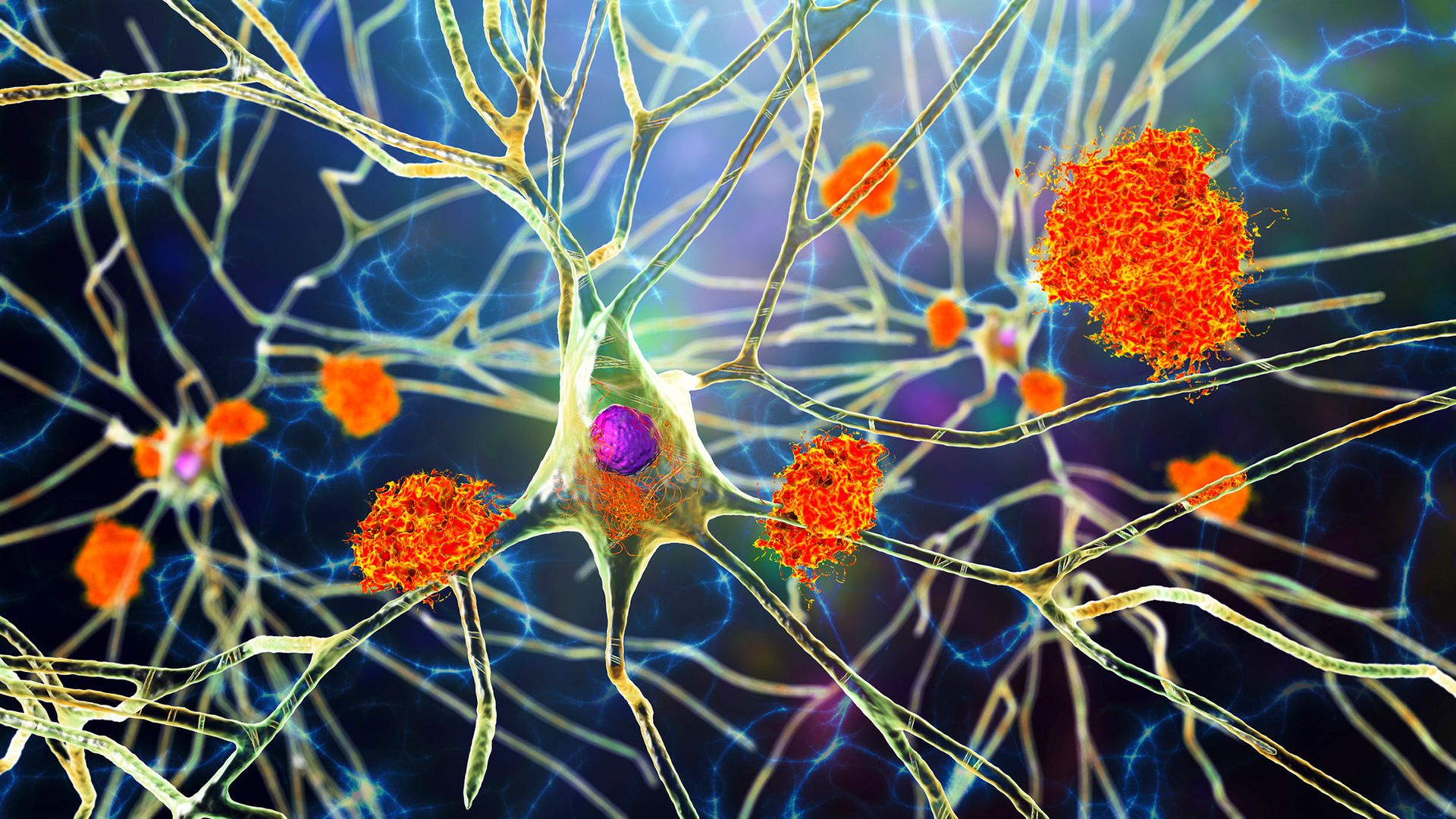
An illustration stringy neurons with orange cells on them.

Laboratory data suggest that estrogen may help prevent the formation and accumulation of abnormal proteins that are related to Alzheimer's. (Image credit: KATERYNA KON/SCIENCE PHOTO LIBRARY via Getty Images)

Estrogen-only HRT was also tied to better clinical outcomes: Treated women were less likely to be diagnosed with dementia, were less likely to show clinical and functional cognitive decline, and had better scores on memory tests, on average, compared with untreated women. These findings drew on two large, separate groups of older women, reporting data from 21,400 people in total, but they didn't include data on when each woman started HRT.

Whereas earlier studies of HRT and dementia risk relied on doctors' ratings of patients' symptoms, the Neurology study measured levels of Alzheimer's-related proteins in the brain after death. That's a more "definitive" marker of disease, said Bruno, a co-author of the study. However, the research was observational, so it can't say whether estrogen-only HRT directly causes the better brain outcomes the team observed, she stressed.

Although the Neurology study's findings are promising, they don't necessarily match the results of other studies of estrogen-only HRT and dementia. For example, a slightly larger observational study, published in 2023, found that estrogen-only HRT was associated with an increased dementia rate.

In that research, most of the women took a type of estrogen called estradiol, while Bruno's study included a greater variety of estrogens. That may have been the difference in the two studies' results, but teasing that out would require further study. Meanwhile, the conflicting findings muddy the waters of what estrogen-only HRT can do for brain health.

Does timing matter?

One big finding from the Women's Health Initiative study was that starting HRT — either estrogen-only or combined — after age 65 was associated with worse cognitive function and increased dementia risk, said Yuko Hara, director of aging and Alzheimer's prevention at the Alzheimer's Drug Discovery Foundation.

The same may not be true for people who start HRT earlier. For context, menopause starts around age 51 to 52, on average, and it's preceded by perimenopause, a transitional period when hormone levels begin to drop, typically around the mid-40s.

An observational study published in August in the journal Alzheimer's & Dementia found that starting HRT between ages 46 and 56 was linked to a reduced risk of dementia. That study did not differentiate between estrogen-only and combined treatment; it lumped all of the data together.

A close up of a person putting a patch on their arm.

Patches (pictured) are one form of systemic HRT. They deliver hormones through the skin and into the bloodstream. (Image credit: SVPhilon via Getty Images)

The protective link was especially strong in three groups: women with "surgical menopause," triggered by the removal of one or both ovaries; carriers of a certain variant of a gene called APOE that raises Alzheimer's risk; and women who had a relatively short time between their first period and menopause.

A 2024 meta-analysis of randomized controlled trials also found that HRT had a cognitive benefit for women with surgical menopause; that finding was tied mostly to estrogen-only therapies.

However, outside of that specific group, the idea of early HRT protecting brain health is far from settled.

Who might benefit, if anyone?

When it comes to using hormone replacement to protect brain health, the evidence isn't yet strong enough to recommend any kind of HRT as a way to protect the brain in all women, Hara said. Women who had one or both of their ovaries surgically removed are the exception to this rule.

"This is a distinct clinical population because the procedure can cause an abrupt, early loss of estrogen, rather than the gradual hormonal decline that occurs with natural menopause," Hara said.

For most women who have gone through natural menopause, "there is not enough evidence to recommend [HRT] specifically for preventing cognitive decline or dementia," she said.

HRT is not currently prescribed to prevent dementia — it is prescribed to ease menopause symptoms, such as hot flashes, night sweats and sleep disturbances. To settle the science on HRT and the brain, what's really needed is a well-designed clinical trial that follows women from perimenopause to postmenopause, Bruno said. That would reveal the effects of HRT on brain health and dementia risk more reliably than the studies done so far.

This article is for informational purposes only and is not meant to offer medical advice.

Help us improve Live Science Pro: We're always trying to make our content better. Leave us feedback about Pro here.

Why do cats lick each other?

13 September 2026 at 10:00

In a multicat household, it's common to see one cat licking another. When some people see this behavior, known as allogrooming ("allo" means "another individual"), they assume it's a sign of friendship.

But is that really the case? Are there hidden, more complex reasons for why cats lick each other?

While research into allogrooming is ongoing, scientists have suggested different explanations for why cats lick each other, including some social reasons and some more practical ones.

Social bonding or social tension?

The historical view, based on observations of free-roaming-cat colonies, was that allogrooming is a sign of affection and helps cats create and maintain bonds with other cats in their social group, perhaps by creating a shared group smell.

But a 1998 study of 25 cats living together in an indoor-outdoor enclosure poked holes in this theory. The study found that aggressive behavior showed up in about 35% of allogrooming sessions, which suggested that allogrooming might not be about friendship. Instead, the authors proposed, it may help to defuse a tense situation in a confined space, where an actual fight would be too risky.

Sign up for our newsletter

The words 'Life Little Mysteries' over a blue background

Sign up for our weekly Life's Little Mysteries newsletter to get the latest mysteries before they appear online.

To investigate, Morgane Van Belle, a cat behavior scientist at Ghent University in Belgium, and her colleagues analyzed videos of allogrooming from 53 two-cat homes. They concluded that allogrooming may have different social functions, depending on the situation.

The team noticed that the cats sometimes licked each other while huddling together and copying one another's body postures. In these moments, allogrooming probably helps strengthen social bonds, the researchers proposed. Most licking was directed toward the ears; this may help cats relax because the skin there is rich in sensory nerve endings, Van Belle said. Allogrooming produces a relaxing effect in other animals too. For example, it lowers the heart rate in horses and triggers the release of feel-good hormones in monkeys.

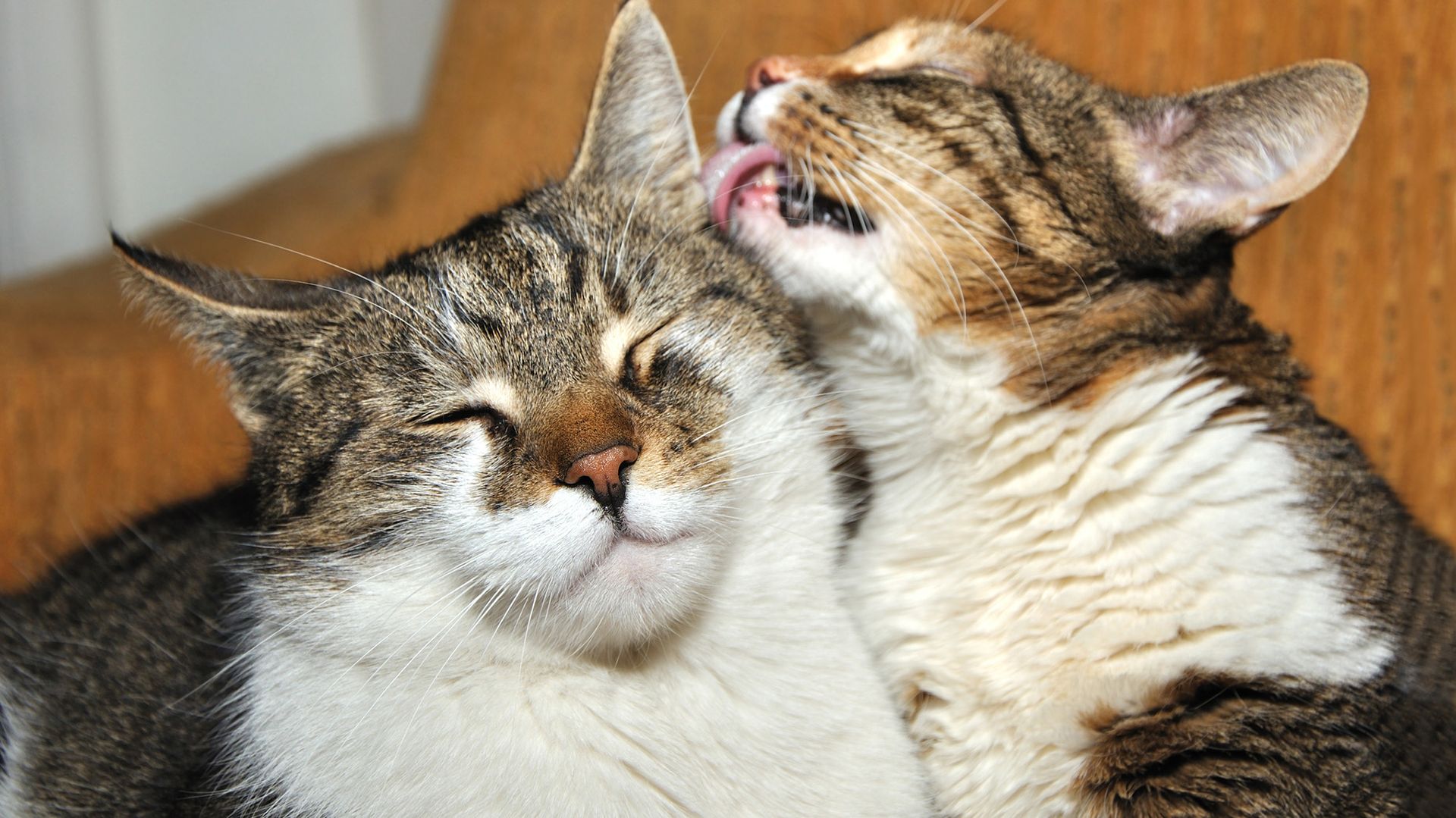
One brown-and-white cat licks another brown-and-white cat's ear.

Cats often lick the head and neck, especially the ears, of other cats. Ear-licking may help cats relax because the skin there is rich in sensory nerve endings. (Image credit: Madzia71 via Getty Images)

They also noted that allogrooming sometimes led to friendly wrestling, in which the cats grabbed each other with their front legs and tumbled around. This suggests that allogrooming may serve as a signal to start play.

In other situations, however, the researchers noticed that allogrooming was followed by behaviors linked to conflict, such as turning the ears backward, pawing, and biting. In these cases, one cat would stand or lean over the other, and both cats showed subtle signs of stress like lip licking, head shaking or self-scratching.

Based on these observations, Van Belle's team think that allogrooming may be an "appeasement signal" in fraught moments that could lead to conflict or injury, for example, when one cat wants to take over a sleeping spot already occupied by another. They think it possible that the licking helps to calm things down and keeps a spat from turning into a real fight. Similar behavior has been seen in meerkats, where subordinate individuals groom dominant ones to placate them.

Yet because this licking often targets the neck — the same area cats bite during fights — it also may signal a subtle aggressive threat, the researchers suggested.

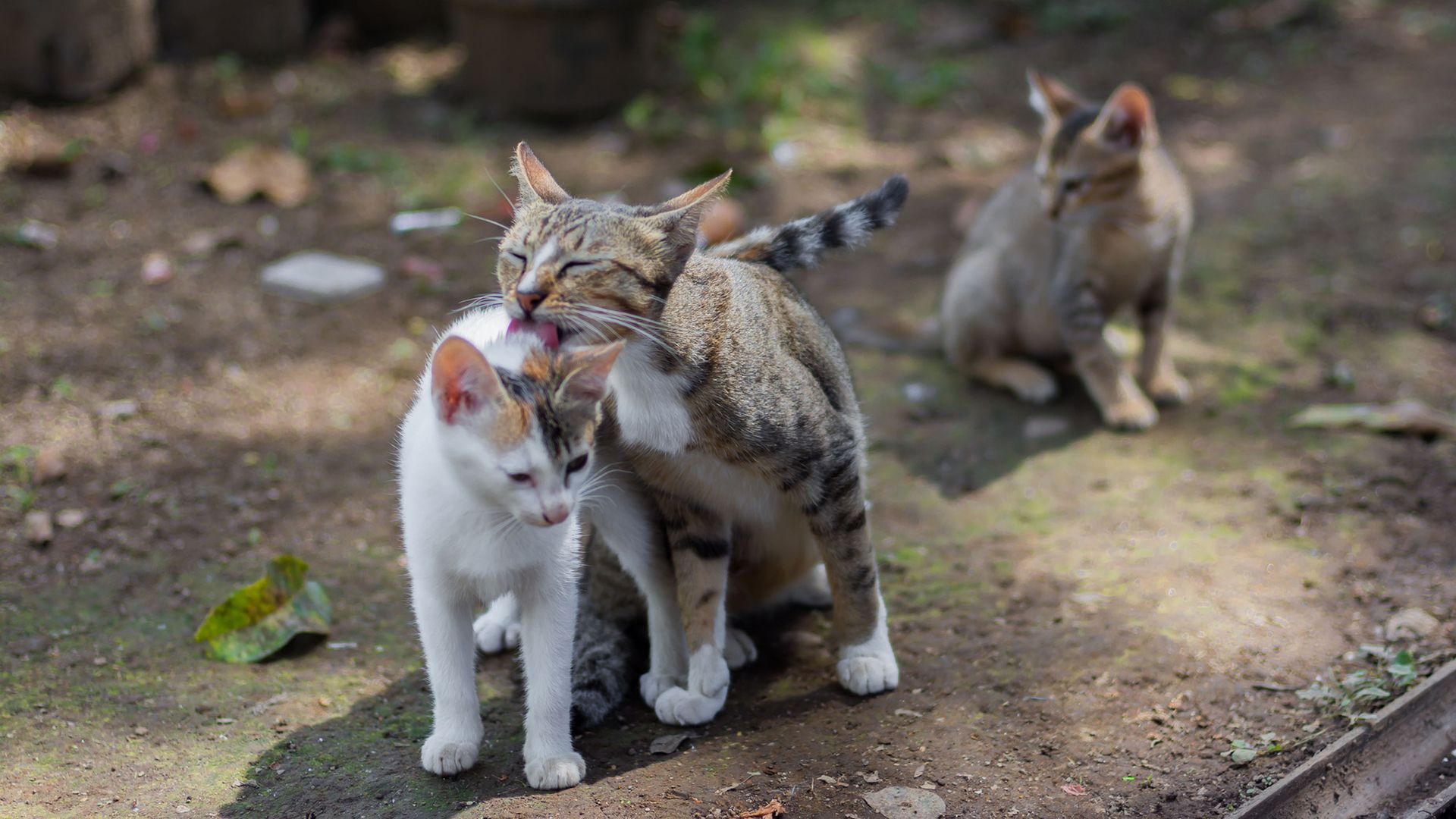
Three kittens who are outside are close together and licking each other.

It's possible that feral cats may have a different allogrooming pattern than pet cats do. (Image credit: Kriswanto Ginting via Getty Images)

Hygiene and grooming

Van Belle and her colleagues think that, beyond sending social signals, allogrooming may help with hygiene. After all, it's often aimed at the head and neck ‪—‬ the areas that are "least accessible for the cat itself during grooming," Van Belle said. Allogrooming is thought to have a hygienic function in other species too. For example, ants achieve colony-level hygiene by grooming heavily infected individuals more, and primates concentrate their grooming on body parts the recipient can't easily reach. When it comes to cats, however, more research is needed. Van Belle's study did not measure parasites, infections or skin cleanliness to see whether such grooming actually reduces dirt or bugs.

Dr. Terry Curtis, a veterinary behaviorist who has studied how often allogrooming happens, also thinks cats might groom each other for hygiene reasons. She wonders whether feral cats, who likely carry more fleas than house cats, might have a different allogrooming pattern.

The explanations proposed by Van Belle and colleagues are reasonable but not definitive, Curtis said. Because so many factors can shape a cat's behavior, she's skeptical that researchers will ever be able to say with real confidence exactly why one cat grooms another.

After working as a veterinary behaviorist for 25 years, Curtis has concluded it is often impossible to understand what's going on in a cat's mind.

"Congratulations, you got a cat," she said. "Let the mystery begin.”

How much of a cat fan are you? Find out by taking our cat quiz!

❌