Your favorite stretchy workout clothes may be much easier to recycle one day, thanks to a new type of elastic yarn that is as strong and stretchy as today's spandex-containing fabrics.
The yarn, described in a July 25 study in the journal ACS Materials Letters, is built entirely from polyethylene, the plastic used in milk jugs and single-use grocery bags. By contrast, most of today's stretchy fabrics blend spandex, a bouncy-but-weak polyurethane fiber, with a tougher fiber like polyester or nylon.
That combination gives clothes their stretch and durability. But because the fibers are chemically different, it's difficult and costly to separate them for recycling, and chemicals used to break down the fabrics are toxic. The result is that almost none of this material is recycled. An estimated 80% of textiles sold in the U.S. contain spandex, and most end up incinerated or in a landfill, study co-author Svetlana Boriskina, a research scientist in the Department of Mechanical Engineering at MIT, said in a statement.
To solve that problem, the MIT team turned to polyethylene, one of the world's most widely recycled plastics. For the yarn's stretchy core, the researchers created a soft, springy version of polyethylene akin to a rubber band. Around that core, they wound a second, stiffer polyethylene fiber, more like a fishing line, coiling it tightly the way a spring or a twisted phone cord is coiled. Because both materials come from the same plastic family, they don't need to be separated before they're recycled.
In laboratory tests, the researchers melted a spool of the yarn and respun it into new yarn 10 separate times. Each time, they tested its strength, and the recycled yarn performed just as well as the original in every case. In head-to-head tests, the new yarn even outperformed commercial spandex-polyester yarn in maximum load, meaning it could bear more force before breaking, according to the study.
The team has already shown that these lightweight polyethylene fibers can be engineered for other perks, too — like cooling, moisture wicking and stain resistance — building on their earlier work spinning polyethylene into wearable fabric. Even buttons, zippers and buckles could eventually be made from compatible plastics, so a whole garment could be melted down and remade without being taken apart first.
New images captured by the world's most powerful solar telescope have revealed something that was hiding in plain sight on the sun for 150 years: thousands of tiny whirlpools twisting across our star's surface. The ultra-detailed observations could help to explain some of the sun's most violent behavior as well as hint at the answer to a long-standing solar mystery.
The new time-lapse footage offers the first direct proof of a long-predicted phenomenon called Kelvin-Helmholtz instability. The effect itself isn't new to science; it's named for physicists Lord Kelvin and Hermann von Helmholtz, who described it in the 19th century. The physicists found that whenever two fluids slide past each other at different speeds, the friction between them, or shear, rolls into spiraling patterns. However, this is the first time this effect has been seen on the sun, where that shear plays out between neighboring streams of solar plasma.
Researchers captured the swirls using the U.S. National Science Foundation's Daniel K. Inouye Solar Telescope in Hawaii and then compared the images against computer simulations of the sun's visible surface, called the photosphere. The findings were published Aug. 5 in the journalNature.
A time-lapse view of the Inouye telescope's obseravtions of the sun. (Image credit: NSF/NSO/AURA/MPS )
The resulting time-lapse footage from the telescope is unlike anything solar physicists have captured before. It shows dozens of tiny vortices clustering along the edges of magnetic regions, some accompanied by delicate, dark stripes known as striations, according to a statement from the National Science Foundation. The telescope's resolution is sharp enough to pick out structures just tens of miles across — a scale so fine that the vortices had gone completely undetected until now.
When the researchers lined the images up against their simulations, the match was close enough — down to the average spacing between vortices — to confirm that they'd finally caught the instability in action.
Beyond the impressive visuals, researchers think these swirls may serve an important function. By constantly twisting and mixing the sun's magnetic-field lines, these vortices may play a part in building up the energy behind solar flares and coronal mass ejections.
The effect also might help to explain the long-standing mystery of why the sun's outer atmosphere, or corona, reaches temperatures of around 2 million degrees Fahrenheit (around 1 million degrees Celsius) while its surface remains hundreds of thousands of degrees cooler, Thomas Rimmele, chief technologist at the National Solar Observatory, said in the statement.
The team now plans to use computer programs to automatically track these vortices across future observations. This will help them measure exactly how much these swirls contribute to heating the corona and driving the explosive space weather that can disrupt satellites, communications and power grids on Earth.
See how much you know about the sun with our sun quiz!
Researchers have designed a material that can "program" the way it releases heat, paving the way for more efficient energy systems and, potentially, devices that store information using heat instead of electricity.
The design, described in a June 25 study in the journal Laser & Photonics Reviews, sidesteps a nearly 160-year-old rule of physics linking how materials absorb and emit heat. Under ordinary conditions, a material that's good at absorbing heat from one direction is equally good at emitting heat in that direction. This rule of reciprocity, first described by physicist Gustav Kirchhoff in the 19th century, has limited engineers' ability to control incoming heat independently from and outgoing heat.
In the new study, the researchers designed a theoretical device that could direct heat radiation in different directions and remember that setting even after the power was switched off.
The new device pairs two materials that don't normally work together. Using a magnetic field, the team broke the natural symmetry in a layer of indium arsenide — a material that absorbs and emits infrared light — so that radiation traveling in one direction behaves differently than radiation traveling the other way.
On top of that layer sits a grating made of germanium-antimony-tellurium (GST) — a phase-changing substance that can switch between two distinct physical structures and stay in whichever structure it's set to until it's deliberately switched again. Once the GST is set into position, it locks the directional difference of radiation in place and holds it there without needing continuous power, which is what lets the device's heat-directing behavior be "programmed."
"I was impressed by the elegant combination of magneto-optical nonreciprocity with a nonvolatile phase-change material," Juejun Hu, a professor of materials science and engineering at MIT who wasn't involved in the study, told Live Science in an email.
That's significant because earlier attempts at this kind of directional control typically worked only at steep angles, which made them impractical. It's "particularly noteworthy" that this device functions when radiation arrives just 3 degrees off an otherwise-straight line, making it far easier to fit into real-world optical systems, Hu said.
The researchers compared their design to computer memory, since it holds onto its programmed state after the power is cut. However, the device stores a material state rather than heat itself, Hu told Live Science. GST simply keeps its amorphous or crystalline structure without power, which preserves the programmed response.
For now, the device exists only on paper; it hasn't been built or tested. Still, Hu thinks it's realistic, since it relies on well-established materials and manufacturing methods. However, the GST layer is thick enough that switching it back and forth repeatedly would be difficult, though other materials could fix this problem. Once that hurdle is surpassed, Hu expects the first real-world use to be infrared sensing, where compact, direction-selective heat absorption is most directly useful.
Astronomers may have just found a first-of-its-kind phenomenon buried in the shadow of one of the Milky Way's most famous stellar explosions: two stars that died in separate supernovas, after spending millions of years orbiting each other.
Using 16 years of data from NASA's Fermi Gamma-ray Space Telescope, researchers detected high-energy gamma rays coming from a faint, previously overlooked supernova remnant called G189.6+3.3, which sits right beside the well-studied remnant IC 443 (nicknamed the Jellyfish Nebula). Their analysis suggests that the two remnants aren't just neighbors by coincidence. Instead, they may be the leftover wreckage of a binary star system, making this the first confirmed case of two supernova remnants traced to the same stellar pair.
"We weren't really looking for a binary supernova remnant," study first author Miltiadis Michailidis, an astrophysicist and postdoctoral fellow at Stanford University, told Live Science. The team originally set out to characterize G189.6+3.3, which had long been overshadowed by its brighter neighbor. IC 443 is one of the best-studied remnants in the galaxy and among the first ever confirmed to accelerate protons — one of the key ingredients thought to produce cosmic rays, the high-energy particles that constantly strike Earth's atmosphere.
By combining Fermi's gamma-ray data with X-ray, radio, ultraviolet and optical observations, the team teased out G189.6+3.3's faint signal and found something strange: Instead of glowing uniformly, its northern half was dominated by accelerated protons, while its southern half was dominated by electrons. It's the first time such a clean split has been spotted within a single remnant.
The explanation, they found, came down to the environment: The northern edge of the remnant presses against a dense cloud of hydrogen gas, which gives fast-moving protons something to collide with, thereby producing gamma rays, Michailidis said. The southern half lacks that dense material, letting a different, electron-driven process take over instead. Ultraviolet observations showed that the northern shock wave had slowed after slamming into the cloud, backing up that interpretation.
A dense cloud of hydrogen gas helped astronomers uncover clues that two neighboring supernova remnants may share the same origin. (Image credit: M. Michailidis et al. 2026)
Earlier work had already shown that IC 443 interacts with the same cloud, which implies that both remnants sit at roughly the same distance from Earth. To rule out coincidence, the researchers simulated 1 million hypothetical binary star systems and calculated how often two unrelated remnants would wind up this close together purely by chance. Depending on the method used, the odds came out to somewhere between 1 in 1,000 and 1 in 100. In other words, it's highly likely that the two supernova remnants are related.
The team also estimated when each star likely exploded, finding that the two blasts were probably separated by tens of thousands of years. That finding is consistent with one star in a binary pair going supernova first, with its companion following suit long afterward.
Rather than relying purely on computer models, astronomers can use this real-world system to test long-standing theories about how massive binary stars live, interact and eventually explode.
Michailidis said the team's next step is to search for similar binary remnant pairs elsewhere in the galaxy, to understand why this system has stood alone until now. He pointed to one particular payoff: Measuring the distance between two remnants' explosion centers can reveal how much energy a supernova actually released — a quantity that, until now, astronomers could only estimate from theory. "Now we can actually test it," he said.
Whale sharks may be the biggest fish in the ocean, but their feeding habits have remained mysterious. Now, new camera footage from the backs of these gentle giants has captured them doing something scientists rarely get to see: hunting for food far below the surface.
The footage reveals that whale sharks (Rhincodon typus) spend far more time feeding underwater than scientists realized and that they use a surprising variety of foraging techniques that had never been documented before.
The videos show whale sharks filtering food while cruising through open water, gliding downward as they feed during dives, climbing back toward the surface with their mouths still open, and cruising just above the seafloor to feed. Slow, steady underwater feeding turned out to be one of the sharks' most common activities.
Philip Motta, a professor emeritus of biology at the University of South Florida who was not involved in the study, said the videos provide "very valuable" new information on the variability of whale shark feeding behaviors, which have been poorly documented to date.
Cameras reveal whale shark feeding
Before this study, whale sharks had been studied from boats, from planes and by divers swimming alongside them. But those methods shared a blind spot: They could only follow the sharks when they were near the surface.
Earlier research had hinted that whale sharks spend a lot of time feeding out of view, at varying depths. In a 2020 study, researchers estimated that whale sharks may forage at these depths for up to 20% of the day and feed at the surface for less than 1% of their time.
In the new study, scientists strapped cameras directly onto the whale sharks, offering a rare shark's-eye view beneath the waves.
They deployed camera tags on 10 whale sharks at Ningaloo Reef in Western Australia and gathered more than 22 hours of footage from the sharks' own perspective. They combined that footage with a review of 106 previously published studies to build the most comprehensive catalog of whale shark behavior to date. Ultimately, they cataloged 36 distinct behaviors — 12 were related to feeding, and of those, six had never been recorded before. The findings were published July 21 in the journal Marine Biology.
Whale sharks can grow to 60 feet (18 meters) in length. And yet, this enormous fish survives on tiny prey — like krill, fish eggs and plankton — in tropical waters that are notoriously poor in nutrients. The ability to switch between so many feeding techniques may help to explain the long-standing puzzle of how such a large species can survive in these nutrient-poor waters.
However, even with a shark's-eye view, the cameras captured only part of the story. Whale sharks are known to dive hundreds of feet below the surface, where sunlight disappears and conventional cameras can no longer record.
"The most important new discoveries could be what these gentle giants are doing when they perform really deep dives," Motta said.
Betelgeuse, the bright reddish star that marks Orion's shoulder, has kept skywatchers company for thousands of years — and it may have had company of its own the whole time.
Astronomers say they've captured the clearest image yet of a faint star orbiting tightly around Betelgeuse, in what they're calling the strongest evidence so far that the famous red supergiant isn't flying solo. The find was announced by the European Southern Observatory (ESO) on Tuesday (July 28) and detailed in a new paper in the journal Astronomy & Astrophysics.
Betelgeuse, usually one of the top 10 brightest stars visible from Earth, naturally swells and shrinks as it pulses across a cycle of 400 days, according to NASA, which causes the star to wax and wane in brightness. But for decades, scientists have puzzled over an extra pattern: a slower dimming and brightening outside of this 400-day cycle that repeats roughly every six years.
Two independent teams — one led by astrophysicist Morgan MacLeod of Harvard University, the other by Jared Goldberg, a postdoctoral fellow at the City University of New York — each modeled that long-term wobble using decades of brightness and velocity data, and converged on the same explanation: the pattern comes from a hidden companion star, orbiting so close to Betelgeuse's bloated surface that it's nearly impossible to see.
However, their calculations suggested that there might be a moment, in December 2024, when that companion would swing far enough away from Betelgeuse that we might be able to photograph it.
So that December, a team led by Paris Observatory astronomer Miguel Montargès trained the European Southern Observatory's Very Large Telescope on Betelgeuse. They then spent months combing through the data, and the effort paid off: they found what looks to be this companion star, now nicknamed Betelgeuse B.
"The fact that we can still discover a nearby companion, more massive and brighter than the Sun, around such a well-studied star is remarkable," Montargès said in an ESO statement. "These are among the best moments in science: seeing something new, unexpected."
One surprise: the companion turned out to be beefier than expected. Scientists had guessed it was roughly as massive as our sun, but the new images suggest it's actually two to three times heavier — which also makes it brighter and easier to spot than predicted.
However, the researchers say they need one more image of this star. To be certain that the companion is really there, we still need to observe it in one year on the other side of the star, but there is very little space left for doubt,"adds Montargès.
If confirmed, the discovery could reshape how astronomers think about Betelgeuse's fate. As a red supergiant, it's in the final stage of its life and will eventually end in a supernova explosion — though pinning down exactly when is notoriously difficult, says Montargès. "The question is … whether this companion is going to have an impact on the evolution of the red supergiant," Montargès said.
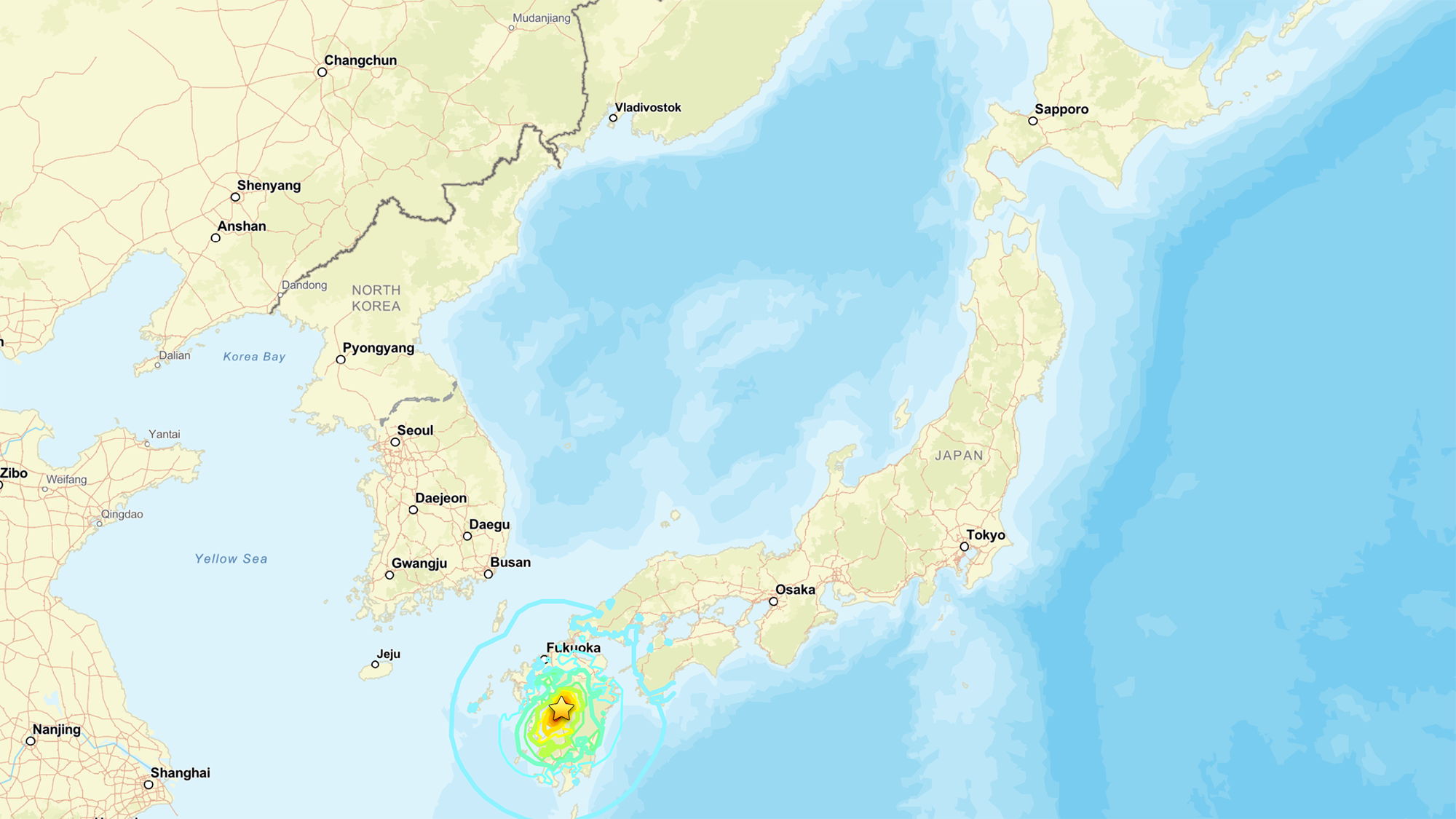
A powerful earthquake struck southwestern Japan Tuesday afternoon local time, collapsing part of a shopping mall, toppling a stone wall at the centuries-old Kumamoto Castle, and sending more than 150,000 people to evacuation shelters, the BBC reported.
The quake, which the U.S. Geological Survey (USGS) measured as a magnitude 6.8, hit at 4:27 p.m. local time near Kumamoto, a city of more than 700,000 people located on the island of Kyushu in southern Japan.
Thousands of homes lost power, and roads buckled across the region. The second floor of a shopping center collapsed, trapping shoppers inside, according to the BBC report; some of these people were evacuated and later hospitalized. A brief tsunami warning was issued and lifted within an hour.
A map showing the location of the July 2026 earthquake. (Image credit: National Tsunami Warning Center (ATWC), Pacific Tsunami Warning Center (PTWC), USGS National Earthquake Information Center, PDE)
The USGS measurement is different from the magnitude 7.1 reported by the Japan Meteorological Agency, "primarily because the agencies are reporting different magnitude types," the USGS reported. While Japan is looking at local magnitude, the USGS measured the moment magnitude, which is derived from the physical size of the fault rupture and gives the "most reliable estimate of earthquake size" for large earthquakes, since local-magnitude scales can lose accuracy once a rupture grows big enough, the USGS reported.
These measurements are helpful, as "different magnitude types capture different characteristics of earthquake source processes," the USGS noted. Local magnitude, for example, reflects how strongly the ground shook nearby, while moment magnitude reflects the total energy released across the fault.
Why this quake is scientifically interesting
Japan sits atop one of the most active plate boundaries on Earth, where the Philippine Sea Plate dives beneath the Eurasia Plate. That process, known as subduction, is responsible for the massive, tsunami-generating earthquakes that periodically strike offshore Japan, and it's been studied intensively for decades.
But Tuesday's earthquake didn't occur at the boundary itself. Instead, the rupture happened within the Eurasia Plate, more than 60 miles (100 kilometers) inland from where the plates meet, Jeffrey Park, a theoretical seismologist at Yale University, told Live Science. Roughly 90% of earthquakes happen at plate boundaries, where the constant grinding of two plates builds up stress until a fault gives way. Quakes that strike farther inside a plate — sometimes called intraplate earthquakes — are rarer and less understood, though scientists suspect that stress transmitted through the plate can reactivate old, dormant faults far from the boundary that produced it.
According to Park, the fault in Tuesday's earthquake moved in a way that suggests the plate tore horizontally as it was twisted by subduction occurring at an angle.
The USGS describes this event as shallow strike-slip faulting: the two sides of the fracture slid past each other horizontally, rather than one side thrusting up and over the other. This faulting style, combined with the shallow depth of just 6 miles (10 kilometers) down, points to the same type of rupture behind Kyushu’s deadly 2016 Kumamoto earthquake sequence.
That inland location is also why the quake didn't generate a damaging tsunami, despite the brief precautionary warning. Tsunamis are produced when a big event — such as an earthquake, volcanic eruption or landslide — displaces water; the force from that displacement then propagates as a wave.
Tuesday's rupture stayed entirely on land, so it never pushed the seafloor up the way offshore quakes do. That's why the tsunami risk stayed low, even with the brief precautionary warning. Still, an inland quake isn't automatically off the hook: if the shaking triggers a landslide that spills into the sea, that alone can generate a tsunami.
The depth mattered just as much as the location. The quake was shallow enough to concentrate its energy near the surface, which Park said explains the structural damage.
"Because it is shallow it will cause more structural damage than a similar-sized event that might occur deeper and offshore," he told Live Science in an email.
Earthquake country
Severalearthquakeshave already clustered in the area, and numerous aftershocks are expected over the coming days. Japan experiences roughly 1,500 earthquakes annually, making it one of the most seismically active countries on the planet — a byproduct of sitting at the junction of several tectonic plates.
To protect itself, Japan has spent decades — and learned from painful lessons from disasters like the 2011 Tohoku earthquake and tsunami — engineering a response system built for exactly this scenario.
Bullet trains are programmed to halt automatically the instant seismic sensors detect a major earthquake, a safeguard Park pointed to as a defining feature of the country's earthquake readiness. That automatic shutdown extends to other transit and utility systems, part of a broader early-warning network that alerts the public within seconds of a quake's detection, giving people crucial time to take cover before shaking arrives.
Japan's investment in its infrastructure may help to explain why, even after a magnitude 7 event near a city of 700,000, Japan's death toll and damage have historically been far lower than those from comparable quakes elsewhere in the world.
Search-and-rescue efforts are continuing in Kumamoto, with CNN reporting that between 20 and 30 employees remained unaccounted for at the Aeon Mall in Kashima Town, where the building’s second floor had collapsed. Firefighters were also working to reach the site and contain nearby fires.
A pod of killer whales has sunk another yacht off northwestern Spain, reinforcing a bizarre pattern of vessel encounters that has stretched on for more than six years along the Iberian coast.
In the incident, reported Friday (July 24), the whales destroyed the rudder of a 46-foot-long (14 meters) Swedish-flagged yacht off Galicia in northwestern Spain, forcing the two people aboard to send a mayday call. A Spanish coastguard vessel towed them to safety, Spain-based news outlet Sur in English reported.
The incident came after several other encounters in the same waters earlier that week, including one in which a pleasure craft called the Idem sank near Estaca de Bares, the northernmost point of the Iberian Peninsula. The ship sank after the killer whales, also known as orcas (Orcinus orca), destroyed its rudder. Both occupants were rescued.
That makes the Idem at least the eighth boat lost to these encounters since they began, according to groups that track the incidents. More than 700 interactions between orcas and vessels have been logged since 2020, ranging from a brief nudge to a multihour rudder-ramming session, according to the Atlantic Orca Working Group, the Spanish-Portuguese research collective that has coordinated data collection on the phenomenon from the start.
Researchers have identified roughly 15 individual killer whales involved in these incidents, out of an Iberian subpopulation of fewer than 50. The group is so small that the International Union for Conservation of Nature lists it as critically endangered, as it is dependent mainly on Atlantic bluefin tuna for its food.
The family-like cluster is thought to be led by a female known as White Gladis. That name comes from an early theory researchers themselves once floated: that White Gladis suffered some kind of traumatic run-in with a boat and that the encounter flipped a behavioral switch, with her being the first in the group to start ramming rudders.
Alfredo López Fernandez, a biologist with the Atlantic Orca Working Group, told Live Science in 2023 that this kind of defensive, trauma-driven origin was gaining traction among researchers at the time. But "defensive" isn't "vengeful" — and the idea has since curdled online into a punchier revenge story most scientists studying the population don't endorse.
So why do orcas go after the boats? Nobody knows for certain, but the leading explanation is simple: Orcas are some of the most social animals on the planet, and social animals pick up habits from one another the way trends spread through a friend group. Researchers describe the behavior as socially learned — young orcas appear to watch adults ram a rudder and then try it themselves, and the habit has spread through the group over time.
A 2022 study in the journal Marine Mammal Science found that the killer whales usually targeted sailing boats and often lost interest after striking the rudder and causing the boat to stop.
None of that makes the encounters any less disruptive for the people living through them. The standard guidance from authorities like the Maritime Safety and Rescue Society and the Atlantic Orca Working Group, refined over repeated encounters, is to cut the engine, drop the sails if possible, disengage the autopilot, and let go of the wheel entirely, giving the orcas nothing to push against. Boats that follow this protocol tend to sustain less damage than those that don’t.
Sailors are asked to report every encounter. Each one adds to the data scientists are using to try to solve a years-long mystery.
The 2026 Fields Medal, one of the world’s most prestigious mathematics prizes, has just been awarded to four pioneering young researchers — including mathematician Hong Wang, the third woman ever to win the prize in the 90 years since the award was established.
The Fields Medal is an award presented every four years to mathematicians under the age of 40 for their outstanding discoveries. The International Mathematical Unionannounced Thursday (July 23) that Wang, a professor at New York University, is among the four recipients of the 2026 medal for her work on a decades-old conjecture about how needles move in 3D spaces. .
The 2026 Fields Medal winners also include Yu Deng of the University of Chicago, who was recognized for connecting microscopic and macroscopic descriptions of gases; John Pardon of Stony Brook University, whose work solved major problems in topology and geometry; and Jacob Tsimerman of the University of Toronto, who developed powerful new techniques in algebraic geometry that have advanced progress on longstanding mathematical puzzles.
Wang joins an exceptionally small group of women to receive the Fields Medal. Iranian mathematician Maryam Mirzakhani was the first, in 2014, followed by Ukrainian mathematician Maryna Viazovska in 2022. No woman received the award at all in the nearly 80 years before Mirzakhani's win.
The four 2026 Fields Medal honorees. From left to right: Yu Deng, John Pardon, Jacob Tsimerman, and Hong Wang. (Image credit: ERIN BLEWETT via Getty Images)
Wang was recognized for her work on the Kakeya conjecture, a problem that asks how little space is needed to rotate a needle so that it points in every possible direction in three dimensions. Mathematicians had chased a solution for roughly 50 years.
Working with collaborator Joshua Zahl, Wang showed that if you track every direction the needle could point as a bundle of thin tubes, there's a precise trade-off between how thin those tubes are and how much total space they must occupy. Solving the puzzle required tools from harmonic analysis, a field that studies how complex shapes and signals can be broken down into simpler pieces.
The proof wasn't a triumphant moment for Wang, at least not right away. She and Zahl spent months checking their 127-page proof before making it public — and even then, Wang worried that their argument might be unclear. The paper nonetheless earned comparisons to a "once-in-a-century" result and set off a string of honors culminating in the Fields Medal, according to Quanta Magazine.
The 2026 Fields Medals were presented during the International Congress of Mathematicians in Philadelphia. The first Fields Medal was awarded in 1936. So far, 65 men have received the award.
Astronauts have grown a common crystal in space — but this extraterrestrial version is exhibiting a very uncommon behavior. Under a microscope, the crystal looks more like a tiny futuristic sculpture than something that formed naturally. The pyramid-like assembly curls in on itself in stair-stepped layers, seeming almost too orderly to be real. But according to scientists, the striking shape is what happens when gravity stops calling the shots.
The image, shared on July 18 by NASA astronaut Don Pettit, and accompanying video were captured aboard the International Space Station (ISS) and show potassium chloride crystals growing in microgravity — the near-weightless environment experienced in orbit.
Microgravity isn't quite zero gravity; astronauts experience a gravitational pull roughly a million times weaker than on Earth's surface, Anne Wilson, a professor of chemistry and biochemistry at Butler University, told Live Science. That reduction in gravity's tug has profound impacts on the human body, and, as the new image shows, completely changes how liquids and crystals behave as well.
"[Other] forces start to become far more pronounced than gravity forces," Wilson said, pointing to molecular attraction and polarity as two influences that suddenly take over once gravity fades into the background.
Those conditions enable potassium chloride — a common salt used as a sodium substitute in foods and sports drinks — to crystallize in ways that are nearly impossible to reproduce in a terrestrial lab.
On Earth, growing crystals eventually get heavy enough to sag, break or settle at the bottom of their container. But in microgravity, they keep growing outward from wherever they started.
Potassium chloride naturally forms cube-shaped crystals, Wilson said. In microgravity, those crystals grow mainly from their edges and corners instead of across their faces, leaving the center hollow and creating the striking pyramid-like structures seen in the image.
In microgravity, crystals experience "hopper growth," where the outer edges and corners grow at faster rates than the flat faces, creating a step-like appearance. This timelapse records their growth inside a thin water film. Look closely, and you will see the patterns emerge! pic.twitter.com/iSlqJvke1GJune 6, 2026
Scientists call this pattern hopper growth, and it isn't unique to potassium chloride (ordinary table salt forms the same way). As new corners emerge during growth, the crystal can change direction entirely, producing the elegant scrolling pattern visible in the new image.
While the crystal is visually stunning, the science behind it could prove just as valuable. Materials grown without gravity's interference often form with fewer defects, giving researchers a rare look at what a truly "ideal" structure looks like. This insight could help refine manufacturing processes for semiconductors and other advanced materials back on Earth.
For Wilson, images like this serve another purpose: inspiring curiosity.
"I love seeing videos of how things behave in space," she said. "Who would think that something as simple as potassium chloride could still be super cool?"
ISS astronauts spend a significant amount of their time conducting science experiments that would be near-impossible on Earth. Recently, astronauts used the space station’s newly upgraded Cold Atom Laboratory to create and study an elusive fifth state of matter called the Bose-Einstein condensate. And last year, researchers demonstrated how moss spores exposed to space for nine months on the outside of the ISS continued to grow after being returned to Earth.
Astronomers have found the strongest evidence yet that a rocky planet beyond our solar system has managed to hold onto an atmosphere — a crucial ingredient for life as we know it.
The discovery marks the first time scientists have detected an atmosphere surrounding a rocky planet orbiting in the habitable zone of another star, the region around a star where temperatures could enable liquid water to exist on a planet's surface. The findings, published July 16 in the journal Science, could help astronomers narrow the search for potentially habitable worlds beyond our cosmic backyard.
"It's absolutely exciting," Edward Schwieterman, associate professor of astrobiology at the University of California, Riverside, who was not involved in the study, told Live Science in an email. "We are getting closer to studying the atmospheres of worlds that could plausibly harbor life, with evidence of that life embedded in their observable spectra."
The planet, known as LHS 1140 b, lies about 48 light-years away from Earth and orbits a small, cool red dwarf star. At roughly 5.6 times Earth's mass, the exoplanet is classified as a super-Earth: a rocky planet larger than our own but much smaller than gas giants like Neptune.
It receives less than half the sunlight Earth gets, giving it an estimated surface temperature of around minus 53 degrees Fahrenheit (minus 47 degrees Celsius), according to previous estimates not accounting for an atmosphere. That makes the planet cold, but in the range astronomers consider potentially habitable.
Cosmic gas leak
Scientists have discovered thousands of exoplanets over the past few decades, including many rocky worlds. But determining whether those planets have atmospheres has proven far more difficult, because atmospheres around rocky planets are incredibly thin compared with those of giant planets, making them much harder to detect across vast cosmic distances.
Instead of looking for the atmosphere directly, the researchers behind the new study searched for a subtle clue that one existed: helium gas leaking into space. Using the WINERED spectrograph on the Magellan Clay Telescope in Chile, the team watched LHS 1140 b cross in front of its star and let a sliver of starlight filter through the planet's atmosphere on its way to Earth. As it did, the team looked for a tiny dip in the star’s light at the exact wavelength of infrared light that helium blocks — a telltale sign that gas was streaming off the planet and into space.
The prediction rested entirely on a mathematical model that had never been confirmed for a rocky planet. However, in September 2024, the team caught LHS 1140 b and a smaller, hotter neighboring planet, LHS 1140 c, transiting their star on the same night, less than 40 minutes apart. The researchers detected a clear helium signal from LHS 1140 b, while LHS 1140 c showed nothing.
NASA concept art depicting LHS 1140 b as a rocky super-Earth — a type of potentially habitable planet most similar to our own. (Image credit: NASA)
The contrast matters: LHS 1140 c orbits much closer to its star than LHS 1140 b does and receives roughly five times the radiation, yet it's also smaller and less gravitationally bound — conditions that should make any escaping gas easier, not harder, to spot. Finding nothing there suggests LHS 1140 c's atmosphere was stripped away long ago, while LHS 1140 b, sitting farther out in cooler, calmer conditions, has managed to hold onto its own.
The discovery addresses a question astronomers have been working to answer for decades.
"Twenty years ago we wondered whether other terrestrial-type planets even existed," study co-author Robin Wordsworth, a professor of Earth and planetary sciences at Harvard, said in a statement. "Then we learned they're common, and found some in the habitable zone. The next question was whether any of them had managed to keep an atmosphere. Now we know at least one has."
A step forward in the hunt for life
The find is especially notable because red dwarf stars like LHS 1140 can bombard nearby planets with high-energy radiation capable of stripping atmospheres away over time. Based on the star's estimated age of at least 3.1 billion years, the researchers say LHS 1140 b's atmosphere has likely persisted despite that bombardment, suggesting some rocky planets around these common stars can hang onto their atmospheres for far longer than once assumed.
But the researchers caution that detecting helium does not mean the planet is inhabited — or even that it is habitable. The observations reveal only the planet's thin upper atmosphere, not its full composition. Scientists still don't know whether LHS 1140 b has oxygen, carbon dioxide, water vapor or other gases that could make its surface more Earth-like and hospitable to life.
Instead, the discovery opens a new way to study distant rocky worlds.
"The study demonstrates that, at least in some cases, we will be able to begin characterizing the atmospheres of potentially habitable planets," Schwieterman said. "If only rocky planets orbiting Sun-like stars retained atmospheres, we might have to wait one to two decades for the launch of the Habitable Worlds Observatory to search for biosignatures on rocky planets. I'm certainly excited about what comes next!"
Future observations will aim to determine what the rest of LHS 1140 b's atmosphere is made of and investigate whether it may harbor oceans or other features associated with habitability.
An Early Bronze Age metalworker and shaman discovered over 200 years ago in a lavish burial near Stonehenge and long assumed to be male was actually female, a new genetic analysis reveals.
The results of the ancient DNA analysis of the "Upton Lovell Shaman," carried out by researchers at the Francis Crick Institute in London, break the previously held stereotype of Early Bronze Age women, according to a statement from the Wiltshire Museum, where the remains and grave goods are housed.
"It completely tears up previous assumptions," David Dawson, director of the Wiltshire Museum, told The Guardian. "We're so used to the assumption [that] men do everything, men are the leaders, men are the metalworkers. Here we have smoking gun evidence of a female metalworker. And metalworking was the space science of its day."
The nearly 4,000-year-old burial was unearthed in 1801 near the village of Upton Lovell, about 10 miles (16 kilometers) west of Stonehenge. The human remains were surrounded by an unusually rich tool kit containing stone axes, metalworking implements with traces of gold on them, a touchstone for testing metal purity by comparing streaks left by different metals, and pierced animal bones that were likely once sewn onto a garment as decorations, hinting at a ceremonial cloak.
The mix of high-status metalworking tools and objects thought to have ritual significance led archaeologists to interpret the individual as a spiritual specialist, earning the remains the nickname, the "Upton Lovell Shaman."
William Cunnington, the English archaeologist who excavated the burial mound, known as a barrow, noted at the time that, "from the largeness of the bones," the burial "appeared to be a stout man," according to the statement. For the next two centuries, the individual's assumed sex was male, with its museum display depicting a bearded male figure.
Among the grave goods were four fossil sponges hollowed out into cups, hinting that their owner was once a crafter. (Image credit: Wiltshire Museum)
The DNA analysis was originally intended to trace the individual's ancestry, but the results showed sex chromosomes of XX, instead of XY, catching the researchers off guard. To be certain, the team tested DNA from a tooth and a toe — and got the same answer each time, with no evidence that the grave held more than one person, according to the statement.
Other clues in the skeleton revealed more details about the individual. She stood around 5 feet, 4 inches (165 centimeters), which was unusually tall for a Bronze Age woman, and died at about age 45. She was robustly built, with arthritis in her right wrist but not her left — a pattern that fits years of the repetitive work with metalworking tools, the statement reported.
A 2022 study found that the individual was likely a skilled goldsmith who fashioned gold ornaments. This ability may have seemed magical during the Bronze Age,Susan Greaney, an archaeologist at the University of Exeter who wasn't involved in the study, told Live Science at the time.
"The ability to transform other objects by the delicate and skilled process of covering them with gold sheet may have been seen as a magical or ritual process, a secret method known only to a few people,"Greaney said in a 2022 email. "This research shows how metalworking was closely related to magical, ritual and religious beliefs."
This is not the first time an ancient elite individual has been mistakenly identified as male. For instance, an elite person from Sweden's Viking Age who was buried with weapons and strategy games was thought to be male but waslater verified to be female, and ahigh-ranking individual from Copper Age Spain was thought to be male until a DNA analysis showed they were female.
"We now have a whole new understanding of this burial, rewriting their story, breaking stereotypes, and putting women front and centre in our understanding of early Bronze Age society," Lisa Brown, curator of the Wiltshire Museum, said in the statement.
The findings will be unveiled Thursday (July 16) in a new exhibition on ancient DNA, "We Go Way Back," opening at the Francis Crick Institute.
A years-long malaria control campaign in the Brazilian Amazon nearly eliminated the disease from a city — but then cases rebounded. Now, scientists think they've uncovered why.
The campaign took place in northern Brazil during the construction of the Belo Monte Dam in the Xingu River, one of the largest hydroelectric dams in the world. From 2013 to 2017, the initiative slashed annual malaria rates from more than 1,200 cases to fewer than 60. But the program ended, and within a few years, infections had rebounded to more than 700 cases a year. This time, they were concentrated in the rural communities surrounding the river in the city of Altamira.
In a study published Thursday (July 9) in the journal GeoHealth, scientists analyzed 15 years of malaria surveillance records alongside satellite images of forests around Altamira. Earlier studies have pointed to deforestation and dam construction as a driver of malaria because they can provide habitats for mosquito larvae, which inhabit the forest edge. In Altamira, large stretches of rainforest have been cleared for cattle ranching, logging and settlement along the Xingu River in the decades since the region was first opened up by road-building, leaving a patchwork of cleared land pressed up against the remaining forest.
However, the study found that the malaria resurgence wasn't simply a result of how much forest had been cut down. Instead, cases tracked most closely with the forest edge, the boundary where intact forest meets cleared or open land. There, mosquitoes get everything they need to thrive: shade from the tree line, sunlit pools of standing water for their larvae, and people living or working close by.
The findings highlight how the environment contributes to malaria risk, suggesting that maintaining surveillance in these high-risk landscapes could be just as important as driving cases down in the first place.
"What made Altamira compelling was that the timing gave us something rare, close to a natural experiment," study co-author Eloise Skinner, an epidemiologist and postdoctoral research fellow at the University of Queensland in Australia, told Live Science in an email. The results of that natural experiment could help Brazil in its efforts to eliminate malaria from the country in the next decade, she said.
A program tied to temporary funding
The researchers tracked malaria trends before, during and after the construction of the Belo Monte Dam. Before construction began, malaria was already a persistent problem in the region; Altamira city alone reported more than 1,200 cases a year.
As thousands of workers moved in, local health authorities and the dam's developers rolled out an intensive control program that involved spraying insecticides indoors, using mosquito nets, and deploying rapid diagnosis and treatment when cases did emerge. The goal was to head off outbreaks spread by Nyssorhynchus darlingi, the mosquito that carries the malaria-causing parasite in the Brazilian Amazon.
Mosquitoes pick up the parasite that causes malaria by feeding on the blood of infected people, and they can then spread that parasite to others they bite. Treating infected people quickly can help break that chain of transmission.
Cases plummeted despite the influx of workers, but once construction wrapped up and the program lost its funding, malaria came back.
Nyssorhynchus darlingi, the mosquito that spreads malaria in the Amazon, breeds in partially shaded bodies of water. (Image credit: Sabrina Simon)
To understand what drove the resurgence, the researchers combined three streams of data. Case records came from Brazil's national malaria surveillance system and covered 150 health centers in Altamira over 15 years. The team layered on temperature, forest cover and rainfall data, since both shape how favorable an area is for mosquito breeding and how efficiently the malaria parasite develops inside mosquitos. Plus, they added an estimate of travel time between each cluster of cases and the nearest town, as a proxy for how easily people and the diseases they carry might move around.
From the observations, the forest edge consistently emerged as the strongest predictor of increased malaria cases. For every 1% increase in the perimeter of the forest edge, malaria cases rose by roughly 0.7%; for every 1% increase in Altamira's population, who are located at the forest edge, cases rose by about 1.4%.
The rebound wasn't evenly distributed. Before the dam was built, most of Altamira's malaria cases came from clusters inside the city itself. Afterward, that pattern flipped: by 2020, the roughly 700 annual cases were concentrated almost entirely in remote, rural clusters near forest edges. Meanwhile, Altamira's urban center stayed comparatively protected, much as it had during construction.
"When the funded program wound down, malaria came back to the communities that are hardest for the health system to reach," Skinner said. "The city stayed protected, most likely because fast diagnosis and treatment are easier to deliver and keep going in a town."
That leaves the same communities exposed twice over, Skinner said. The places that are already the hardest to reach with health services also sit where the ecological risk is the highest.
But this pattern could point to solutions. The resurgence didn't scatter unpredictably. It came back to the same kind of place — rural communities at the forest edge — each time. That's the kind of risk that can be anticipated in the future.
Brazil aims to eliminate locally acquired malaria by 2035. Skinner said Altamira's near elimination of the disease, and its rebound within a few years of the control program ending, is a warning for that effort. When a community contains a strong environmental driver for malaria, like forest-edge ecosystems, stopping a control program short is sure to let the disease climb back.
"Because the resurgence wasn't diffuse, we can predict where malaria is likely to return first," Skinner said. "The message for a 2035 goal isn't only that elimination needs sustained investment. It is that where the environment drives risk, that risk is predictable, and planning for it from the start is what lets the money go where it matters most."
Scientists have invented a soft robotic heart that could give them a new way to study a mysterious condition that accounts for roughly half of all heart failure cases.
This form of heart failure, called heart failure with preserved ejection fraction (HFpEF), is a condition in which the heart pumps out a normal amount of blood but becomes too stiff to relax and refill properly between beats. Over 3 million Americans have the condition, but researchers still don't fully understand why it develops, making it difficult to design treatments that directly target the disease.
The new device, described June 1 in the journal Nature Communications, is the first soft robotic heart model that can actively adjust how it responds to changes in pressure. It tightens or relaxes its artificial muscles, enabling researchers to control how stiff the heart becomes. This allows it to better mimic a diseased human heart.
Current laboratory models of HFpEF have drawbacks. Traditional "mock circulation loops" use rigid pumps and tubing to recreate blood flow but don't physically resemble a beating heart. Lab animals capture more realistic biology but are expensive and don't perfectly mirror human disease, said study co-author Thanh Nho Do, a biomedical engineer and associate professor at the University of New South Wales in Australia.
"HFpEF has been notoriously difficult to study and treat," Nho Do told Live Science in an email.
Earlier versions of the robotic heart could realistically recreate cardiac movement, but they followed present commands that didn't adapt to changing conditions. The new system attempts to solve that limitation by allowing the artificial muscle fibers to "feel" the pressure created by the fluid they are pumping and dynamically contract or relax against it.
That feedback is critical for reproducing HFpEF, in which abnormal stiffness — rather than weakened pumping — lies at the core of the disease.
The researchers built a silicone replica of the left side of the human heart and wrapped it in artificial muscle fibers made from rubber tubes reinforced with spring coils. The model continuously senses the pressure generated by the fluid flowing through it and adjusts the force of its artificial muscles in response. By changing how much the muscles resist being stretched as the heart fills, researchers can dial in different levels of stiffness.
Instead of modeling a single snapshot of HFpEF, the researchers recreated several stages of the disease's progression. In early stages, patients' hearts start to show impaired relaxation between beats, while in more advanced forms, the heat is so stiff that it can't adequately fill with blood before the next contraction.
"If we can model its progression pathway, we might be able to use models like ours to develop medical devices that interrupt that trajectory, rather than just treating end-stage disease," Nho Do said.
The researchers hope their new model might pave the way, but they emphasized that the work is an early proof of concept. Looking ahead, they hope to develop increasingly sophisticated robot heart models that can complement other data on HFpEF, including that from computer simulations, animal studies and clinical testing.
"We hope the biggest impact will be in understanding HFpEF mechanisms and improving the way we develop cardiovascular devices," Nho Do said.
The fragile and battered remains of an infant who lived about 6,000 years in Mesopotamia may be the oldest documented case of child abuse from the Middle East and one of the oldest known cases of its kind in the world, a new study finds.
Researchers unearthed the infant's remains in Syria, but at the time the infant died, sometime between 4200 and 3900 B.C., it was buried in Tell Brak, one of the world's earliest cities. It's possible that the difficulties associated with early urbanization played a role in the child's abuse, the researchers noted.
The team determined that, based on the infant's tooth development, the child was 6 to 9 months old at death. An analysis of the remains, which were interred in a children's burial ground within a Late Copper Age workshop district, revealed that the infant had four fractured ribs near the breastbone. The right thigh bone had abnormal growth, while both sides of the skull bore active, porous lesions. These injuries point to the bones being subject to intense and repetitive external forces, and the nature of the lesions don't fit easily with an accidental fall, the researchers said.
"Ribs shouldn't break" in such a small child, study co-author Aleksandra Grzegorska, a bioarchaeologist at the University of Warsaw, told Live Science. Although rib fractures are relatively common in adults, they suggest child abuse in young infants, she said.
In the study, published May 21 in the International Journal of Osteoarchaeology, Grzegorska and her colleagues systematically ruled out other explanations for the injuries, including rickets, scurvy, birth trauma and violent coughing from illnesses such as tuberculosis. Vitamin deficiencies were unlikely, the researchers noted, given that ancient Mesopotamia had ample sunlight and fresh produce due to the fertile land between the two rivers. Birth-related fractures typically heal within weeks in infants, and bone density and growth measurements for the baby matched those of its peers from that time, indicating that the child didn't have an underlying skeletal condition.
To gauge how unusual the injuries were, the team compared the infant to other children excavated from the same burial area. None of the other youngsters with substantial rib preservation showed similar fractures, making the infant's injuries an outlier in the local population.
It appears that the infant likely experienced "caregiver-induced violence," Grzegorska said. This term is used because the evidence can't identify who caused the harm or confirm intent, Grzegorska said. "We don't want to point fingers at any specific individual," she said, noting that in many ancient cultures, multiple family members, not just parents, helped raise children.
Other clues that might shed light on the infant's injuries are missing from this case, she added. Unlike modern clinicians, bioarchaeologists can't interview a living patient or bystander, or examine soft tissue that might reveal more about the abuse. The partially healed state of the fractures suggest the infant survived for some time after the injuries were inflicted, Grzegorska found — an indication that the trauma was not immediately fatal.
Around the time the infant died, Tell Brak was transforming into a city, so the authors suggested that the stresses of early urbanization and possibly less support from extended kin could have contributed to the violence. Centuries after the infant died, upheavals related to city building appear to have led to mass deaths that were likely caused by violent conflict, Grzegorska noted.
Documented cases of child abuse remain exceptionally rare in the archaeological record, with only a handful previously identified in places such as Egypt, France and Lithuania.
The European Space Agency's (ESA) Euclid space telescope has spotted 31 previously unknown quasars dating to the universe's earliest chapter, including the two oldest ever found.
The discoveries, described July 6 in the journal Astronomy & Astrophysics, more than double the number of known quasars from that primordial era and could help astronomers unravel one of cosmology's biggest mysteries: how supermassive black holes grew so enormous so quickly after the Big Bang.
"It's a big step towards understanding these fascinating objects on a more fundamental level," Antonio La Marca, an ESA research fellow on the Euclid team, said in a statement.
Quasars are among the brightest objects in the universe. They form when gas and dust spiral into a galaxy's central supermassive black hole, heating up and releasing enormous amounts of energy that can outshine the galaxy itself. Each of the two most ancient quasars detected in the new study shone with the light of a trillion suns, according to the researchers.
Euclid spotted the quasars while surveying the distant universe. Twelve of them have redshifts of 7 or higher, meaning their light has traveled for more than 13 billion years and dates to the universe's first 770 million years. Two of the objects, with redshifts of 7.77 and 7.69, are the most ancient quasars ever identified, shining just 670 million years after the Big Bang, when the universe was only about 5% of its current age.
"These early quasars date back to the Universe's infancy," Daming Yang, an astronomer at Leiden University in the Netherlands and first author of the new study, said in the statement. "By finding and studying them, we can better understand how these enormous systems formed and grew so quickly — one of the greatest mysteries in astrophysics."
Finding quasars from the early universe has long been difficult because they are rare and incredibly distant. Until now, astronomers had identified only the brightest examples, making it difficult to understand the broader population during this early era. Euclid's wide-field survey is changing that by detecting fainter quasars across huge swaths of the sky.
The latest discoveries represent only a fraction of what the telescope is expected to find during its six-year mission, which will cover more than one-third of the total sky once complete. Mounted with a pair of instruments that see in visible and near-infrared light, Euclid is currently assembling the largest-ever 3D map of the universe. Scientists expect the survey to uncover hundreds of similarly ancient quasars, providing an unprecedented look at how the universe's earliest galaxies and supermassive black holes evolved.
Euclid has also taken some time to study the nearby universe, revealing more than 60 million individual stars packed into the Milky Way's center in a sparkling image released in late June.
Deep in a limestone cave on Turkey's Mediterranean coast, archaeologists have uncovered evidence that Neanderthals and the modern humans who moved in later left behind surprisingly similar traces of their daily lives — evidence that they hunted the same animals, crafted the same stone tools and collected the same type of seashells.
The findings, published Monday (July 6) in the journal PNAS, feed into some of the biggest questions in human evolution: How similar were the cultures of Neanderthals and Homo sapiens, given that we're so closely related? And did we share information with one another?
A series of archaeological finds over the past few decades, including the new paper's finding that the two had similar cultural practices, suggests that Neanderthals and H. sapiens behaved far more similarly in the Middle East than once assumed.
The new evidence comes from Üçağızlı II Cave (pronounced Ooch-ah-UHZ'-luh), on a stretch of coastline just north of Syria that served as a prehistoric corridor between the Levant (an area of land east of the Mediterranean) and Eurasia. Although the team found only teeth and a partial jawbone within the cave, they were able to distinguish between the remains of Neanderthals and H. sapiens by analyzing the internal structure of the fossilized teeth. Meanwhile, they dated the sediment at the site using optically stimulated luminescence, a technique that reveals how long ago buried mineral grains last saw sunlight.
The team found that the Neanderthals had lived within the cave between approximately 77,000 and 59,000 years ago, while H. sapiens stayed there between about 59,000 and 47,000 years ago. Despite the different time periods, the layers from both of these periods show "substantially uniform hunting-gathering strategies and lithic technology," showing how similar the Neanderthals and H. sapiens were in their hunting-gathering strategies and stone-tool use, the team wrote in the study.
The research team performs excavations at the Üçağızlı II cave site in 2024. (Image credit: KyotoU/Naoki Morimoto)
What's more, Neanderthals and H. sapiens got raw materials, such as flint, from the same local sources and hunted the same prey: wild goats (Capra aegagrus), fallow deer (Dama mesopotamica), roe deer (Capreolus capreolus) and wild boar (Sus scrofa). Layer after layer also turned up 29 shells of a small marine snail, Columbella rustica, carried into the cave not for food but seemingly as ornaments. Some were pierced as if meant to be strung, and one shell dating to the Neanderthal occupation showed signs of deliberate heating that altered its color.
"Our findings indicate a deep level of cultural interaction," study co-author Naoki Morimoto, paleoanthropologist at Kyoto University, said in a statement. "These two distinct but closely related human groups were not just adapting to the same environment: they were probably sharing symbolic preferences."
That pattern breaks from findings at Mandrin Cave in France, where Neanderthals and modern humans are thought to have alternated occupation in distinct pulses from about 56,800 and 41,500 years ago, but did not leave evidence of a continuous culture. Instead, it echoes evidence from Tinshemet Cave in Israel, where researchers recently reported similar signs of shared behavior between the two groups tens of thousands of years earlier, from about 130,000 to 80,000 years ago.
A view of Turkey's Üçağızlı II Cave, which housed Neanderthals and Homo sapiens at different times. (Image credit: KyotoU/Naoki Morimoto)
Üçağızlı II Cave in Turkey and Tinshemet Cave in Israel suggest that even though there was a "biological" turnover as the caves went from being occupied by Neanderthal groups to modern humans, there weren't major cultural turnovers, too.
"Rather, we hypothesize that the two human species that coexisted in the region were in contact and shared cultural aspects," the researchers wrote in the study.
"A fascinating region"
Sites like these are forcing a rethink of how these two types of human were culturally related to each other, April Nowell, a Paleolithic archaeologist at the University of Victoria in Canada who was not involved in the new study, told Live Science in an email. "By demonstrating cultural continuity and elevated levels of interaction, sites such as Tinshemet and Üçağızlı II are changing what we thought we knew about Neandertals, Homo sapiens and other contemporary Homo groups … a fascinating region just got even more so!" she said.
But that cultural continuity only heightens the mystery of how modern humans and Neanderthals interacted, with Neanderthals eventually going extinct around 40,000 years ago. Two types of human can't occupy the same ecological niche indefinitely, Nowell noted, and some research into Neanderthal cognition suggests Neanderthals were less-flexible thinkers than modern humans, with more limited capacity for language and less of the kind of self-awareness and creativity that may have given H. sapiens an edge. (However, there is pushback against the idea that Neanderthals weren't as cognitively complex as H. sapiens.)
If the archaeological record at sites like Üçağızlı II shows this much overlap in behavior, Nowell said, the real differences between the two may be ones the fossil record simply hasn't revealed yet.
The authors noted that many big questions remain, including when and where these shared cultural practices took place and whether these cultural similarities happened because modern humans mated with Neanderthals.
Ongoing and future excavations at sites like Üçağızlı II Cave may help to answer these questions and build a "more comprehensive picture of human evolution and cultural development during the Late Pleistocene," the team wrote in the study.
How much do you know about our closest relatives? Find out with our Neanderthal quiz!
Astronomers have spotted an ancient galaxy shining through the cosmic fog of the early universe, revealing a detailed view that was thought to be impossible.
Using NASA's Hubble Space Telescope, along with data from the James Webb Space Telescope (JWST) and the European Southern Observatory's Very Large Telescope (VLT), researchers detected "ionizing" ultraviolet photons — energetic light capable of stripping electrons from hydrogen atoms — coming from the galaxy, called MXDFz4.4. It's the earliest such detection on record, arriving only around 250 million years after the end of a major cosmic transition called the Epoch of Reionization, the researchers explained in a study published June 23 in The Astrophysical Journal.
For hundreds of millions of years after the Big Bang, the space between galaxies was filled with a fog of neutral hydrogen gas that blocked this kind of light. Over time, radiation from the first stars and galaxies ionized that gas, clearing the fog and letting light travel freely across the universe — a process astronomers are still working to fully understand.
"This was thought to be impossible," Ilias Goovaerts, a postdoctoral fellow at the Space Telescope Science Institute (STScI) in Baltimore and first author of the new study, said to Live Science. "What’s really special about this galaxy is that it’s getting through so much of the intergalactic medium [the ionized plasma between galaxies]. It’s the furthest away so it has the most intergalactic medium to get through."
What makes MXDFz4.4 unusual is its combination of size and star-formation rate. The galaxy is roughly 100 times smaller by area than the Milky Way, yet it forms stars around 10 times faster, packing a large number of massive young stars into a compact space. According to Goovaerts, that crowding effect helps the galaxy punch clear channels through its surrounding gas, letting ionizing light escape both the galaxy and, eventually, the murky space between galaxies. The team estimates that somewhere between half and all of the galaxy's ionizing light is escaping.
The discovery, made in October, came about somewhat by chance. While preparing an unrelated funding proposal just days before a major deadline, Goovaerts examined an existing, deep Hubble image to check whether anyone had looked for this kind of signal there before. Within a couple of hours, he had a promising signal. "It was very, very quick from us having the idea to me going, okay, there’s something here and this is exciting," Goovaerts said. "We were excited from day one, but then it took months for it to mature and to extract all the properties about the galaxy."
An illustration of the galaxy MXDFz4.4 as it appeared roughly 1.4 billion years after the Big Bang, when the Era of Reionization was drawing to a close. (Image credit: NASA, ESA, Leah Hustak (STScI))
The finding relied on an unusually rich set of observations: an extremely deep Hubble image taken from 40 hours of observations; JWST imaging across many wavelengths, used to characterize the galaxy's stars and star-formation history; and one of the deepest spectra ever taken of a single patch of sky, gathered over roughly six days of observing time with the VLT's Multi-Unit Spectroscopic Explorer instrument. That spectrum confirmed the galaxy's distance through its Lyman-alpha emission line — which serves as a "hydrogen fingerprint," or a glow given off by excited hydrogen gas, that astronomers can use to measure cosmic distance and time.
No other galaxy from this early period had previously shown detectable ionizing light, making MXDFz4.4 one of a kind so far, study co-author Marc Rafelski, deputy mission head for the Hubble Space Telescope at STScI, noted in the statement. .
Researchers say bursts of vigorous star formation like the one seen in MXDFz4.4 may have played an important role in clearing the early universe's hydrogen fog and that more galaxies like it are likely still waiting to be found.
Two lumps of potato discovered in a roughly 500-year-old Inca storage room in Peru are a rare find: freeze-dried potatoes predating the Spanish invasion, a new study finds.
These freeze-dried potatoes, known as chuño, were once a backbone of the Inca Empire's food supply and a product so fragile that they almost never turn up at archaeological sites.
The new discovery, made along Peru's arid south coast, is only the second time chuño has been recovered from an Inca site, researchers reported in the new study. It is concrete evidence that the empire directed one of its most important food sources hundreds of miles from the Andes, down to the Pacific Ocean.
Chuño is made by repeatedly exposing potatoes to nighttime frost and daytime sun until nearly all their moisture has evaporated, leaving a lightweight, long-lasting vegetable that can be stored for decades. This technique works only at high elevations where hard frost occurs regularly, so chuño had to be produced in the mountains and then transported using llama caravans, often hundreds of kilometers, to feed people living elsewhere in the empire.
The Inca used the same drying method to preserve meat, producing a product called "charki"— the source of the English word "jerky," study principal investigator Lidio Valdez, an adjunct professor in the Department of Anthropology and Archaeology at the University of Calgary, told Live Science in an email.
In the new study, published May 1 in the Journal of Field Archaeology, Valdez and study co-author Katrina Bettcher, an independent archaeologist, reported that the chuño was found alongside an Inca pottery fragment and a broken spindle whorl, a tool used to spin fibers, such as raw wool, into yarn or thread.
The discovery happened during the 2024 field season at Tambo Viejo, an Inca provincial center in the Acarí Valley, where an archaeological team had worked for several years. Inside a small storage room, the team uncovered a clay pot sunk into the dirt floor, its top half long gone. As researchers scooped soil out of the broken pot, they reached its bottom.
"Almost at the base of the vessel, the two samples of freeze-dried potatoes were found," Valdez said. "They showed me without knowing what they were, and right away I said: chuño!"
Llamas were used across the Inca empire to transport food and other items. (Image credit: Photo by L.M. Valdez)
Potatoes are roughly 80% water, and they typically rot within a week at lower, warmer elevations — making them a poor food choice for long-distance storage. Valdez said freeze-drying was likely discovered long before the Inca rose to power in the 15th century, perhaps when potatoes that were accidentally exposed to frost at a high elevation became dried out and people realized the result was still edible.
Because chuño can be made only above roughly 11,800 feet (3,600 meters), the samples at Tambo Viejo must have traveled down from the highlands, most likely via a llama caravan along the Inca road network, Valdez said.
"Chuño being a light product probably also made its transportation easier," he added.
The two freeze-dried potatoes survived thanks to the Acarí Valley's extremely dry conditions, which help preserve organic remains that would otherwise decay — the same conditions that have previously yielded naturally mummified guinea pigs (Cavia porcellus) in Valdez’s previous work at the site.
Beyond its archaeological importance, the ancient preservation method has lessons for today. "We still have so much to learn from the people of the past," Valdez said. "Food security is a main concern, even in our times; yet we waste food, perhaps more than at any time in human history."
Relatively few Inca sites along Peru's coast have been systematically excavated, and Valdez expects more evidence of chuño — and the long supply lines that carried it — to surface as archaeologists keep digging.

 Login