Archaeologists in El Salvador have uncovered the unusual burial of a face-down human skeleton that was interred along with a ceramic vessel shaped like a sea turtle nearly 3,000 years ago. The burial may be from a pre-Maya civilization that practiced human sacrifice.
According to a translated statement from El Salvador's Ministry of Culture, the burial was found July 2 in Antiguo Cuscatlán, a suburb of San Salvador, during excavation work directed by Carlos Flores Manzano, an archaeologist and doctoral student at Yale University.
Although the skeleton has not been radiocarbon-dated yet, it was discovered underneath a layer of volcanic ash from an eruption of the Plan de la Laguna volcanic crater thought to date to between 850 and 830 B.C., during the Middle Preclassic period (roughly 1000 to 400 B.C.) in Mesoamerica.
A ceramic vessel shaped like a sea turtle was discovered in the grave. (Image credit: El Salvador Ministry of Culture)
During this period, societies in southeastern Mesoamerica were becoming more sedentary and developing more complex cultures, archaeologists have found. But in addition to the archaeological remains of crop cultivation and painted ceramics discovered over the years in Antiguo Cuscatlán, experts have pointed to some burials as evidence of human sacrifice — and the newly uncovered burial may be similar.
In the late 1970s, archaeologist William R. Fowler excavated at Chalchuapa, an ancient town east of Antiguo Cuscatlán with thousands of years' worth of history. While digging in an area known as Structure E3-7, Fowler found 33 human skeletons — mostly adult males — that he interpreted as sacrifices of war captives due to signs that their feet and arms were bound.
The burial was encased in plaster to prevent damage during recovery. (Image credit: El Salvador Ministry of Culture)
According to the El Salvador Ministry of Culture's statement, the newly uncovered burial is likely not the only one in the area. Archaeologists may eventually find a burial mound with several dozen skeletons, similar to what Fowler uncovered at Chalchuapa. However, Fowler's interpretation of human sacrifice has been questioned in recent years, including by Flores Manzano in a 2020 study.
Instead of being linked to sacrifice, the unusual burial position might be related to an ancient understanding of the cosmos and underworld, Flores Manzano told Diario El Salvador. If that's the case, the sea turtle ceramic vessel found near the skeleton's hand may be associated with Orion's Belt, which features in later Maya astronomy as part of a sacred journey.
The fragile burial was encased in plaster before being removed for further study. Flores Manzano said the skeleton will now undergo chemical analysis so researchers can learn more about the individual's life, diet and possible cause of death. He expects the analyses to take about a year, after which the results will be announced to the public.
How much do you know about the first people to reach the Americas? Find out with our First Americans quiz!
Shark Week 2026 is here! This year's highlights include experiments testing great white intelligence, Molly Carlson's death-defying freefall dive into a reef shark feeding frenzy, and a deep-dive on the thresher’s tail strike. The 20-strong lineup of shows airs across seven nights, and Live Science is here with all the TV and streaming details.
Shark Week still packages its science with ominous music and blockbuster titles, but its strongest moments challenge the familiar "mindless killer" myth, presenting sharks instead as intelligent, highly specialized predators whose decline could destabilize the world’s oceans.
Look out for a great study of the highly aggressive and erratic sharks in the waters off Marshall Islands, where the United States military detonated 67 nuclear bombs between 1946 and 1958.
And if you're a tech fan, there's plenty of new camera systems and tagging technology to discover.
Read on as we explain how to watch "Shark Week" 2026 from anywhere.
How to watch "Shark Week" 2026 in the U.S.
"Shark Week" 2026 comprises 20 brand-new TV specials that will air on Discovery from 8 p.m. ET/PT every evening from Sunday, July 26 to Saturday, Aug. 1.
If you don't have the Discovery channel on cable, it's available on a streaming basis from several cable alternatives. Best of all, many offer a free trial to new customers.
YouTube TV usually costs $82.99 per month but comes with a free trial and $15 off each of your first five months.
The DirecTV MyEntertainment genre pack costs $42.99 per month after a 5-day free trial, and Hulu + Live TV costs $89.99 per month after a 3-day free trial.
Alternatively, you can watch Shark Week 2026 on HBO Max (from $10.99 per month).
Can you watch "Shark Week" 2026 in the U.K.?
"Shark Week" programming typically airs on Discovery Plus in the U.K. at a later date.
At the time of publication, plans for the 2026 slate of specials are still firmly under wraps.
If you're currently in the U.K. for work or on vacation from the U.S., you can still catch "Shark Week" 2026 by using a VPN, such as Surfshark.
Watch "Shark Week" 2026 from anywhere
If you're traveling abroad you can access your usual streaming services from anywhere with a good VPN.
A VPN, or virtual private network, is a piece of internet security software that can alter your device's digital location, unlocking the geo-restrictions on most streaming platforms.
Our expert colleagues at TechRadar rate Surfshark as one of the best VPNs. Not only is it great for unblocking streaming services, it has top-level security features, a reasonable price tag and, right now, a big discount.
Live Science x Surfshark Exclusive "Shark Week" Deal
Whether you're tuning into Discovery's Shark Week or diving deep into the web, privacy matters. Surfshark keeps your connection encrypted and your data out of sight – no matter what waters you're navigating.
Protect unlimited devices for just $2.39/mo + 4 Extra Months. Save 85%! Shark Week Special runs from July 26 to August 1, 2026.
🥇 From $2.39 per month ✅ Block ads, trackers, scams, and malware 🤝 30-day money-back guarantee 🏆 4 Extra monthsView Deal
"Shark Week" 2026 trailer
When is "Shark Week" 2026?
"Shark Week" 2026 runs from Sunday, July 26 to Saturday, Aug. 1 in the United States.
"Shark Week" 2026 episodes
Sunday, July 26
► 8 p.m. ET/PT – "K-Pop Shark Heroes"
After a recent series of shark encounters off the Korean Peninsula, actor and comedian Ken Jeong joins forces with Grammy-nominated singer and lifetime shark lover Rei Ami on a mission to reshape the perception of sharks across East Asia and around the globe, fueled by the power of K-pop.
► 9 p.m. ET/PT – "Air Jaws: Red, White and Breach"
A new phenomenon is emerging as great white sharks are captured on film breaching in California like never before. Filmmaker Jeff Kurr, marine biologist Alison Towner, and cinematographer Andy Casagrande set out to capture this unprecedented behavior and uncover the secrets behind the Great American Breach.
► 10 p.m. ET/PT – "Invasion of the Mega Sharks"
Shark researcher Neil Hammerschlag, joined by Shark Week expert Paul de Gelder, leads a team to track down Big Rose, a record-breaking great white believed to be one of largest predators in the North Atlantic. Using innovative tagging technology and daring field operations, they venture to a newly discovered shark hotspot off Nova Scotia aiming to transform our understanding of these ocean giants.
Monday, July 27
► 8 p.m. ET/PT – "Bull Shark Dinner Bell"
Shark attack survivor and advocate Paul De Gelder teams up with apex predator specialist Rosie Moore in Jupiter, Florida to investigate what triggers giant bull sharks to confront humans. The team tests how human behavior in the ocean, extreme weather events and prey preferences influence shark attacks.
► 9 p.m. ET/PT – "House of Sharks"
Off the coast of New Zealand lies a hidden shark battleground, where three distinct groups of great whites organize into competing "houses" and may be competing with one another to gain control of a major seal feeding ground. Marine biologist Tristan Guttridge and underwater cinematographer Kina Scollay venture into the middle of the action on an epic expedition. As they investigate, they uncover the possibility that these clans of great whites recognize their kin and return season after season to their ancestral territories, raising the theory that these predators aren't solitary hunters but rival dynasties at war.
► 10 p.m. ET/PT – "Biggest Mako on Earth"
For decades, rumors have swirled about massive, 15- to 20-foot-long (4 to 6 meters) mako sharks patrolling the deep waters off Southern California. Long dismissed as fishers' tales, new footage, along with a recently published photo capturing a mako that appears to stretch 15 feet, is now forcing scientists to rethink everything they know about these oceanic apex predators. Marine biologist Tristan Guttridge, alongside conservationist Kendyl Berna and shark tagger Keith Poe, go on an investigation to determine whether the world's biggest mako is real — and hunting in the coastal waters of Santa Catalina.
Tuesday, July 28
► 8 p.m. ET/PT – "Jurassic Sharks"
In a Shark Week first, revolutionary CGI resurrects the ocean's most bizarre Jurassic (201 million to 143 million years ago) sharks, bringing them to life like never before. Guided by the rare living sharks that once shared their seas, real-world expeditions seamlessly merge with cutting-edge visual effects to uncover stories from the deep and prehistoric seas in ways never before possible.
► 9 p.m. ET/PT – "Jaws vs Orca"
For millennia, the great white shark has reigned as the ocean's ultimate apex predator. But now, a new challenger is emerging: the orca. Around the world, sharks are washing ashore with their livers removed with chilling precision while in the Strait of Gibraltar, orcas are targeting sailboats — ramming hulls, crippling rudders and sinking vessels. To investigate this shift in behavior, Tristan Guttridge explores orcas' attacks on boats to reveal how these predators hunt and how they may be taking down great white sharks.
► 10 p.m. ET/PT – "Chum Island: Catching a Killer"
In this Shark Week whodunnit, a rare surge of highly aggressive shark attacks hit a tight-knit community off Australia’s southern coast, prompting marine biologist Riley Elliott to find and tag the oceanic suspects. But when he discovers this could be a new, elusive population of sharks, he builds the world's first "chum island" to lure them in and uncover if they are the ones responsible for the attacks.
Wednesday, July 29
► 8 p.m. ET/PT – "Expedition X: Atomic Sharks"
Phil Torres and Heather Amaro travel 5,000 miles (8,000 kilometers) west of the U.S. to the remote Marshall Islands, home to the world's largest shark sanctuary, where apex predators are exhibiting highly aggressive behaviors and erratic swimming patterns. Between 1946 and 1958, the United States military detonated 67 nuclear bombs around the island, raising questions about their lasting impact on marine life. Now, the team dives into these dangerous waters to investigate reports of "mutant" sharks and uncover whether atomic blasts could be to blame.
Global explorer Josh Gates travels back in time and dives into the history behind some of the world’s most infamous shark encounters, from the earliest known shark attack to the mystery surrounding the shark feeding frenzy faced by sailors following the sinking of the USS Indianapolis. He also investigates the legendary "Stronsay Beast," a mysterious creature that washed ashore in Scotland in 1808.
► 10 p.m. ET/PT – "Alien Sharks: Untamed America"
In celebration of America’s 250th anniversary, wildlife biologist Forrest Galante embarks on a nationwide quest to find the nation’s most bizarre and dangerous "alien" sharks – from glowing swell sharks to elusive sawfish.
(Image credit: Discovery)
Thursday, July 30
► 8 p.m. ET/PT – "What Shark Attacked?"
Shark attacks are extremely rare, but when they happen, the first question is always the same: What kind of shark was it? Leading shark scientists Tom Hird and Rosie Moore, alongside conservationist Kinga Philipps, investigate mysterious attacks from around the world using cutting-edge forensic analysis – including bite pattern comparison, geographic profiling, video evidence, and eyewitness testimony – to identify the species responsible and uncover why these life-threatening encounters occur.
► 9 p.m. ET/PT – "How to Train a Great White"
Tristan Guttridge ventures into shark-infested waters off New Zealand to answer a provocative question: Can sharks be trained? Using techniques pioneered by the U.S. Navy to train dolphins in complex cognitive tasks, the team tests whether these apex predators can learn, solve problems and respond to cues. If successful, the experiment can potentially redefine shark intelligence and transform our understanding of one of the ocean's most misunderstood predators.
► 10 p.m. ET/PT – "Ultimate Shark Dive"
World-class Red Bull high diver Molly Carlson leaps from a helicopter hovering above the open ocean, targeting a narrow plexiglass cage surrounded by circling reef sharks, or risking a direct plunge into a chum-filled feeding frenzy. From concept to execution, Carlson pushes herself to the limit with a record-setting stunt that no high diver has ever attempted.
Friday, July 31
► 8 p.m. ET/PT – "Secrets of the Great White Kill"
For centuries, great whites were believed to simply stalk their prey. Now, groundbreaking science suggests that these alpha sharks are highly intelligent predators that adapt their hunting techniques in real time. In this program, the full range of great white hunting tactics is revealed, reinforcing the species' status as one of the ocean's top predators.
► 9 p.m. ET/PT – "Sharkzilla Takes New York"
After a wave of mauled marine life washes ashore in New York, conservation biologist Craig O'Connell launches an investigation to find the culprit. When it leads to an old nuclear dumping ground teaming with great whites and makos, he is left with the theory that the predator may be radioactive. A deeper dive reveals an unexpected hotspot for massive makos off the coast of the Hamptons, suggesting that these waters may be hiding something even bigger beneath the surface.
► 10 p.m. ET/PT – "My Strange Shark Addiction"
How far will people go to fuel their fascination with sharks? For four devoted shark "fin-atics," their obsession shapes every aspect of their lives. From a dentist who spends every spare moment searching for life-size shark replicas to a woman who insists she has a special connection with her shark "boyfriend," and a world-record holder covered in shark tattoos, this special explores how their daily routines, relationships and finances revolve entirely around sharks.
Saturday, August 1
► 8 p.m. ET/PT – "Great White Highway"
Great white sharks are pushing farther up the East coast than ever before and in far greater numbers, leading to close encounters and forcing beach closures. Now, a team of shark scientists races to install high-tech receivers and tag as many great whites as possible.
► 9 p.m. ET/PT – "Thresher Shark: Stun to Kill"
The physics behind the thresher shark’s devastating tail strike has long remained a mystery — until now. For the first time ever, the discovery of a shallow-water feeding ground has made observing this behavior possible. Now, shark scientist Craig O’Connell and marine biologist Aliah Banchik dive into the direct line of fire as they attempt to reveal exactly how these predators use their tails to stun and kill.
Is there a "Shark Week" 2026 host?
John Cena and Jason Momoa have hosted recent editions of "Shark Week", but the 2026 incarnation won't have a single overarching presenter stitching its constituent parts together.
We test and review VPN services in the context of legal recreational uses. For example: 1. Accessing a service from another country (subject to the terms and conditions of that service). 2. Protecting your online security and strengthening your online privacy when abroad. We do not support or condone the illegal or malicious use of VPN services. Consuming pirated content that is paid-for is neither endorsed nor approved by Future Publishing.
When OpenAI recently revealed that two of its most advanced artificial intelligence (AI) models had escaped the confines of a cybersecurity test and hacked into a startup, it sounded a lot like the kind of scenario that AI safety researchers have spent years warning about.
The models found a previously unknown vulnerability in the infrastructure meant to contain them, gained access to the public internet and broke into Hugging Face, a major platform for hosting AI models and datasets. Their objective, however, was less sinister than the sequence of events might suggest: They were looking for information that would help them complete the cybersecurity test OpenAI had given them.
In a July 16 statement, Hugging Face representatives disclosed that internal datasets had been infiltrated, saying it was "different from anything we had handled before" because it was driven "by an autonomous AI agent system." In another statement published July 21, OpenAI representatives fessed up to being responsible, calling the episode an "unprecedented cyber incident" while warning that similar events could become more common as AI models become increasingly capable.
Independent experts who spoke with Live Scienceagree that what happened is significant — but they cautioned against interpreting it as an AI system suddenly developing a malicious agenda. The models appear to have pursued the task OpenAI gave them, finding a route to success that their creators had failed to anticipate or adequately block.
"If there's a failure here, it isn't that the AI wanted to hack something," Oli Buckley, a professor in cybersecurity at Loughborough University in the U.K., told Live Science. "It's that humans created a test where success was measured by achieving an objective, deliberately relaxed some of the normal security controls to measure the system's capabilities, and underestimated how effective the model would be at finding an unexpected path to success."
How did an OpenAI test end up hitting Hugging Face like this?
OpenAI was testing GPT-5.6 Sol and a more powerful unreleased model using ExploitGym, a benchmark that challenges AI systems to find and exploit software vulnerabilities. The company removed some cybersecurity safeguards that would normally prevent potentially dangerous actions while relying on an isolated environment to keep the models away from the wider internet.
According to OpenAI's postmortem, the models discovered a previously unknown vulnerability in third-party software used to proxy and cache software packages. They exploited it, escalated their privileges and moved through OpenAI's research infrastructure until they reached a machine with public internet access.
Hugging Face became a target because the models identified it as a possible source of information that could help them complete the ExploitGym challenges. OpenAI said at least one attack chain involved stolen credentials and previously unknown vulnerabilities that eventually enabled the models to execute remote code on Hugging Face systems and access test solutions stored in a production database.
In their disclosure, Hugging Face representatives said the company recorded more than 17,000 actions during the intrusion, but they couldn't initially explain who or what was behind it. OpenAI's subsequent disclosure supplied that missing piece: Its models had broken out of their test environment and gone looking for the answers elsewhere.
Rather than harboring any malicious intent, the AI models simply wanted to find out more information so they could complete their task. (Image credit: wildpixel/ Getty Images)
Did the AI really "escape"?
It's notable that the models found a flaw in the infrastructure designed to contain an AI and used it to reach the public internet. Describing the models as having "gone rogue," however, risks assigning them unsupported motivations, Buckley said.
"I think I'd be wary of jumping to "rogue AI,"" Buckley said. "The models didn't develop their own agenda or decide to attack Hugging Face while twirling their digital moustache."
Buckley compared it to asking a dog to fetch a ball while leaving the garden gate open. "If the easiest ball for it to find is in the park down the road, that's where it'll head," he said. "You wouldn't say the dog had gone rogue; you'd just say you underestimated how literally it would pursue the task."
Daniel Hulme, entrepreneur in residence at University College London and CEO of AI safety company Conscium, agreed that the models shouldn't be assigned human-like motivations. "Models don't have intent; humans have the intent, and we train models with goals in mind," he told Live Science
The capability may matter more than the motive
What matters more than the models' supposed motives is what they managed to accomplish while pursuing their assigned task.
"The genuinely significant point is that the models appear to have chained together multiple vulnerabilities across different systems and sustained a complex sequence of actions," Buckley said. "That demonstrates a level of capability that security professionals should take seriously."
The lesson isn't that AI has become malicious. Instead, it's that increasingly capable systems will exploit opportunities that humans fail to anticipate.
Oli Buckley, professor in cybersecurity at Loughborough University
Katerina Mitrokotsa, a professor of cybersecurity and applied cryptography at the University of St. Gallen in Switzerland, said the containment failure is particularly concerning because another company ultimately paid the price.
"What concerns me most is who ended up affected," Mitrokotsa told Live Science. "The victim was not the company running the test, but a third party. This is the scenario security researchers have warned about for some time: that an AI agent's escape does not necessarily stay contained to the environment in which it originated."
OpenAI representatives said they have tightened the infrastructure used for these evaluations. But Mitrokotsa warned that containment becomes harder to guarantee as models improve at performing exactly the kind of exploitation OpenAI was testing.
An AI warning — and an impressive product demonstration
There is also reason to look carefully at how the incident is being framed. OpenAI's account serves two purposes at once: It warns about the security risks posed by increasingly capable AI while demonstrating just how capable its own newest models have become.
Buckley said announcements from frontier AI companies like OpenAI or Anthropic should be viewed in the context of an industry competing to build ever-more-powerful models.
"We've seen similar high-profile capability demonstrations from Anthropic and others," he said. "That doesn't make the findings untrue, but it does mean we should separate the technical evidence from the marketing narrative."
These companies have every incentive to show both that their models are extraordinarily capable and that they are taking the risks seriously, he added. The Hugging Face incident demonstrates both that OpenAI's models carried out a complex series of operations with considerable autonomy and that its security measures failed to keep them inside the experiment.
Hulme argued that the longer-term challenge is ensuring that increasingly capable AI systems pursue their goals in ways that remain consistent with human values.
"Rather than seeking to control AIs, the focus should instead be on alignment," he said, adding that continuous testing will be needed to ensure systems remain aligned with their intended missions while staying secure.
The episode, the experts said, leaves OpenAI with a result that is impressive and uncomfortable in equal measure. Its models found previously unknown vulnerabilities and continued pursuing their goal well beyond the boundaries their creators expected, but none of that requires them to have developed malign intentions.
"The lesson isn't that AI has become malicious," Buckley said. "Instead, it's that increasingly capable systems will exploit opportunities that humans fail to anticipate."
In this incident, OpenAI's new models were given a hacking challenge and they were rewarded for finding a way to solve it. The humans running the experiment simply hadn't anticipated quite how far they might go.
Beyond familiar particles such as electrons and protons, scientists have discovered a zoo of "quasiparticles" with exotic names, such as magnons, angulons, dropletons and polaritons. But what are quasiparticles, exactly? And given the "quasi" in their name, are they considered real particles?
One way to understand quasiparticles is to explore what a particle is. The standard mental picture of a particle "is of a discrete object, like a ball," Douglas Natelson, a condensed matter physicist at Rice University in Houston, told Live Science. However, this classic image of particles changed with the advent of quantum physics, which revealed that the universe becomes fuzzy at its smallest levels. For example, in 1924, French physicist Louis de Broglie showed that particles such as electrons could also behave as waves — a discovery that earned him a Nobel Prize.
Modern physics suggests that particles are excitations in fields that permeate the entire universe, a bit like a ripple in a pond, Ross McKenzie, a theoretical condensed matter physicist and professor emeritus at the University of Queensland in Australia, told Live Science. Each type of particle has its own corresponding field. For instance, photons of light are ripples of the electromagnetic field, McKenzie noted.
The quantum nature of particles means they can not only fly through an empty vacuum but also ripple through matter. For instance, photons can zip through transparent and translucent materials, and electrons can flow inside wires.
If you can picture a standard particle, such as an electron, as a ripple traveling within a material, you can also envision other kinds of excitations within matter. These other types of ripples are quasiparticles.
For example, think of "the wave" done at a sporting event. "You can watch it propagate around a football stadium; it has a location and a speed," Natelson said. "It only exists within the stadium, though, and it's made up of the collective response of all the interacting fans."
In much the same way, "quasiparticles can only exist within some medium or material, because they are built up from the response of that material's constituents or building blocks," Natelson said; in contrast, particles such as electrons and protons "can exist in free space."
Electrons have a negative charge and orbit around the nucleus of an atom. (Image credit: agung fatria viaGetty Images)
In other words, quasiparticles can't exist in a vacuum and they can't exist on their own. They're reliant on particles acting together and being in a material where they can emerge, just as a wave carried out in a stadium can only exist when there is a group of people there who can perform it.
A philosophical question concerning quasiparticles is whether they are real, McKenzie noted. After all, "quasi" in Latin means "almost."
"Fundamental particles can exist in isolation in a vacuum, and quasiparticles need many interacting particles to exist," McKenzie said. "Still, I would say quasiparticles are, for all intents and purposes, just as real as particles, in how you can detect them and manipulate them."
A zoo of quasiparticles
The concept of quasiparticles originated with theoretical physicist Lev Landau in the 1950s, McKenzie said, and the idea ultimately helped Landau win the Nobel Prize in physics in 1962. Scientists have now proposed the existence of dozens of quasiparticle types, including the following:
The phonon, which is a quasiparticle of sound — it is the smallest packet of vibrational energy that makes up sound in matter, McKenzie said.
The electron hole, often simply called a hole, is the positively charged vacancy left behind once an electron has left its original place, McKenzie noted.
The electron quasiparticle, which essentially consists of an electron and its interactions with its surrounding environment. This combined package means the electron quasiparticle requires more force to move, so it effectively has more mass than a regular electron, McKenzie explained.
The exciton, a quasiparticle made of an electron and a hole orbiting each other.
The anyon, a kind of quasiparticle so far only seen in two-dimensional systems, which may carry only a fraction of an electric charge.
"How many kinds of quasiparticles are there?" McKenzie said. "Just like there are an infinite number of possible states of matter, I would say that, in principle, there are an infinite number of types of quasiparticles."
Scientists describe activity in material as quasiparticles "because it simplifies everything dramatically," McKenzie said. In the same vein, Natelson said that "very often the math behind physical phenomena in solids is described well by quasiparticles."
Quasiparticles are not simply useful for bookkeeping. For instance, researchers typically describe the behavior of electricity in electronic devices in forms of quasiparticles such as holes and excitons, Natelson said.
All in all, the answer to the question of whether quasiparticles are real is a matter of interpretation. If the question is whether or not a quasiparticle is an elementary particle such as an electron, the answer is no — they cannot exist on their own, and they depend on the materials in which they manifest.
However, if the question is whether or not quasiparticles are real phenomena, the answer is yes — they are things that scientists can measure that can behave like particles and effectively have many of the same properties that other particles do.
What it means: In archaeology, lithics refers to artifacts made of stone. Scientists used to think Homo sapiens was the only human species to make stone tools. But like many oversimplified stories about human evolution, this one turned out to be a bust. Humans in Indonesia were making sharp-edge stone flakes 1.5 million years ago, before our species even existed.
How to use it in a sentence: Lithics preserve well, so scientists base a lot of what we know about ancient civilizations on their stone tools, while artifacts such as textiles or leather rot away.
Can you crack our science word of the day puzzle, Chain Word?
Archaeologists have uncovered a rare and unusual burial of premature twins in a 1,200-year-old tomb near the Temple of Artemis at Ephesus in Turkey. Although the burial was found in an abandoned latrine, researchers think the intention was to protect the babies in the afterlife.
"This interment was made in an unexpected and exceptional setting," Lilli Zabrana, an archaeologist at the Austrian Academy of Sciences who co-authored a new study detailing the discovery, told Live Science in an email. Burials previously discovered at Ephesus were made in a dedicated cemetery outside the boundaries of the ancient temple.
"What is even more unusual is that the burial contains two premature infants, who were probably twins, which is a rather rare occurrence," study co-author Caroline Partiot, a bioarchaeologist at the Austrian Academy of Sciences, told Live Science in an email. Evidence of a rare genetic condition found in one of the infants makes the finding even more unique, the researchers noted.
In the study, published online July 13 in the journal Childhood in the Past, Partiot and Zabrana analyzed bones found in a tomb that was likely built in the eighth to ninth century, during the middle Byzantine era. The grave was placed within an abandoned latrine channel, originally built during the second or third century, Zabrana said, but the latrine was a later addition to a Roman odeum — a building used for musical performances — that was built in the first century within the sacred area of the famous Temple of Artemis at Ephesus (one of the Seven Wonders of the Ancient World), which was originally built around 550 B.C.
When excavators opened the cist, or stone-lined grave, they saw two tiny skeletons buried side by side. Based primarily on the size of the bones, Partiot and Zabrana estimated the skeletons were from infants who were likely born prematurely at around 33 to 34 gestational weeks, or 7.5 months in utero. (A full-term pregnancy typically lasts between 39 and 40 weeks.)
"The hypothesis that they were twins is based on the fact that they have very similar ages at death and were buried in direct contact with one another," Partiot said. "However, it will only be possible to confirm whether they were indeed twins through future DNA analyses."
Although the researchers did not find any evidence of trauma or disease on the babies' skeletons, they did notice a rare bone called a supernumerary cervical rib. This hereditary trait involves the growth of an extra rib bone that forms at the back of the neck in about 1% of people and usually doesn't cause any problems. However, Partiot has found that, in babies, there is an association between cervical ribs and anomalies in Hox genes — a group of genes that code for specific body parts during embryonic development — that can lead to stillbirth, prematurity or sudden infant death.
"To the best of our knowledge, no cases of twins with cervical ribs have been documented in an archaeological context" before this one, the researchers wrote.
The twins may have been buried in an odd location outside the known burial grounds at Ephesus because they died as premature infants who probably hadn't been baptized yet, the researchers proposed. The infants' final resting place was likely a kind of "practical compromise" between Christian burial practices and local customs, the researchers wrote in the study.
The team found no evidence of the twins' mother nearby or in the Ephesus cemetery. "It is possible she died at the same time, but it is also possible that she did not; it is difficult to say," Partiot said. "Both infant mortality and maternal mortality were very high at the time."
But the twins' protective cist grave preserved their skeletons for more than a millennium, which "clearly indicates that this was a respectful burial rather than the disposal of human remains," Zabrana said. Ultimately, the tomb reveals a family's "intention to care for the two deceased infants in death, and to acknowledge their fleeting place within the community," the researchers wrote.
What do you know about the bones in your body? Test your knowledge with our human skeleton quiz.
An outbreak of parasitic illness linked to iceberg lettuce is affecting nine U.S. states, federal health officials have announced. That's up from the five affected states that were identified in earlier stages of the officials' investigation.
This lettuce-related outbreak is one of several in the U.S. that are being caused by the parasite Cyclospora cayetanensis, which can enter the body when someone consumes food or water contaminated with the organism. The federal government has not officially identified a source of contamination in the other Cyclospora outbreaks yet, although some state officials have mentioned potential culprits. (North Carolina officials have pointed to cilantro and parsley, for example.)
The nine-state outbreak linked to iceberg lettuce includes cases in Illinois, Indiana, Kansas, Kentucky, Michigan, Ohio, Oklahoma, Pennsylvania and West Virginia, according to the Food and Drug Administration (FDA). To date, 1,947 people have been infected across these states and reported eating Taco Bell before they got sick. There have been 98 hospitalizations and no deaths.
Specifically, the infections have been linked to lettuce sourced from central Mexico, prompting Taylor Farms to remove all of its iceberg lettuce from that region from the U.S. market. The company has also issued a recall. A complete list of recalled products can be found on the FDA's website.
The recall affects products that were distributed in the nine states listed above, as well as additional states, all of which are listed on the FDA's website. Consumers, restaurants and retailers that purchased or received recalled lettuce are advised to discard it immediately and not consume it.
"We also expect to continue to see the number of confirmed cases rise, despite the recall, due to the fact that it can take as long as six weeks for CDC [Centers for Disease Control and Prevention] and state officials to determine if a sick person is part of this outbreak," the FDA's latest update notes. "FDA will continue to work with federal and state partners to investigate this multistate outbreak and ensure products implicated in this outbreak have been removed from the market."
This article is for informational purposes only and is not meant to offer medical advice.
A 6-year-old girl was given a first-of-its-kind gene therapy in a hospital in China for a nonlethal condition. Within a week, she was dead.
Her death was never publicly disclosed by the scientists who developed and administered her experimental gene therapy. But now, more than a year after her death, her parents are telling her story in the hope that others will be spared the same fate.
A new joint investigation from Science and Retraction Watch, published July 23, details the case of "Mei," a young girl given gene therapy in March 2025 at Xinhua Hospital, which is affiliated with the Shanghai Jiao Tong University School of Medicine. (Mei's parents asked that the family's names be changed for the report. Her name was changed to Mei, which is Chinese for "beautiful," and they are referred to as "Jason" and "Linda.")
Mei's trial was led by Zilong Qiu, a neuroscientist at the university's brain center. Live Science has contacted Qiu for comment.
Mei had a rare genetic disorder called Snijders Blok-Campeau syndrome, which is caused by mutations in the gene CHD3. The gene carries instructions for a protein that helps control how DNA is packaged in cells, which in turn, affects how genes can be switched on and off. The gene plays an important role in early brain development. In people with the syndrome, this process is disrupted, leading to brain changes that can cause speech problems and intellectual disability.
Mei's parents had sought further tests after their daughter was diagnosed with global developmental delay in 2023; this broad diagnosis is given to young children who show delays in several areas, such as speech and motor skills. Genetic sequencing following her diagnosis revealed she had the syndrome.
People with the condition typically have normal life expectancy, although symptoms can range in severity, with severe cases coming with seizures and heart problems. Mei's case was mild, and her parents secured her speech and occupational therapy alongside special education support to help manage her symptoms.
Jason worried about her future, though, anticipating that she'd continue to trail behind in school and may never live independently. On WeChat (the instant messaging, social media and mobile payment app), Jason and Linda joined a group of parents of kids with autism and similar disorders. There, they learned about Qiu, the neuroscientist, who has a gene-therapy company called Lanqi Xintu Gene Technology. Qiu had been developing a gene therapy for Rett syndrome, another genetic disorder that disrupts brain development.
Jason contacted Qiu about possibly creating a gene therapy for Mei, and Qiu immediately arranged a meeting. He explained that such a therapy would require delivering viruses into Mei's spinal fluid; modified viruses are often used as vehicles to deliver gene therapies into the body. The viruses would then travel to her brain, where they'd make the desired edits. To get a big enough dose into the brain, hundreds of trillions of viruses would be needed.
Qiu planned to use a base editor, a CRISPR-based approach that swaps out just one letter in DNA's code for another. (The technique was famously used in the case of a U.S.-based baby, called KJ, whose life-threatening genetic disease was successfully treated.)
Because Mei's condition was not life-threatening, the approach would need to clear a high bar to pass the university's ethics board, Qi said. It would need to be trialed in mouse and monkey experiments first. Qiu insisted, though, that the university could ensure Mei's safety, although it couldn't guarantee the treatment would work. The possibility of death wasn't discussed — and it would not be in the years to come.
Xinhua Hospital, affiliated with the Shanghai Jiao Tong University School of Medicine, treated Mei. (Image credit: c1a1p1c1o1m1 via Getty Images)
Jason and Linda agreed to the plan. They would ultimately put the equivalent of $860,000 toward the cost of developing, testing and deploying the therapy; those costs included informal payments made directly to various members of the research team. Charging for an unproven therapy is forbidden under Chinese law, but Qiu explained this away by saying the parents were paying into his gene-therapy company, which then paid for the procedure.
In January 2025, Qiu submitted a manuscript describing the team's lab-animal experiments to the journal Nature. (A revised version of the manuscript was published in February 2026 and contains no mention of the family nor its financial contributions.) Science had several experts review the manuscript, who expressed concerns about how well the monkey study was conducted.
Live Science contacted Nature for comment, and a spokesperson said "We are looking into the matter carefully following an established process. We are unable to provide further information at this time."
The next month, a toxicology study conducted by the team found that four monkeys given the treatment developed moderate to severe liver damage, and one also had kidney damage. This should have prompted additional safety studies, experts told Science, and hinted that the therapy was triggering a dangerous inflammatory response — a known risk of virus-based gene therapies.
The hospital's ethics committee did not review this data before giving the OK for Mei's procedure. Her parents were told about the results of the animal studies, but they said the scientists seemed unconcerned about them. Under China's regulatory system, the trial did not need to be cleared by the country's equivalent of the Food and Drug Administration before proceeding.
On March 24, 2025, after giving her a steroid to dampen potential immune reactions, Dr. Yongguo Yu injected gene therapy-laden viruses into Mei's spinal fluid. Although some virus-based gene therapies in the U.S. can be given with steroids, as of late, doctors often opt for more aggressive immune-suppressing drugs for safety.
Within days, Mei developed a range of symptoms; she got a fever, wasn't urinating, and her platelet levels plummeted. She was taken into an intensive care unit for treatment, but she died seven days after receiving the injection.
The hospital determined her death was directly related to the treatment and caused by thrombotic microangiopathy. This is an immune reaction that causes blood clots and can arise from virus-based gene therapies.
The hospital was later fined the equivalent of about $3,600 for failing to properly oversee the trial and not registering it as commercially sponsored research in China's national database. The hospital required that the doctor involved receive verbal counseling.
The family asked Qiu to withdraw his Nature paper, worried that other families might be tempted to try the same therapy, and he initially agreed, although it was later published. The paper was covered positively in the press at the time, and parents in the WeChat group began expressing interest. Seeing that, Jason and Linda submitted a complaint to Shanghai Jiao Tong University School of Medicine, calling for a retraction and investigation. The university took no action.
They also sent a letter to Nature after the publication; at the time, the journal said that the ethical issues raised "fall outside our purview in terms of data integrity" and that the matter should be handled by the university.
Regarding the investigation, neither Qiu, Lu, the university or the hospital responded to Science's requests for comment. Nature told Science that it was not aware of the issues surrounding the clinical trial before it published the group's paper.
Scientists have found previously missing galactic matter lurking in the huge voids of space between galaxies.
For decades, scientists have been unable to solve the long-standing puzzle of why we see far less normal matter in galaxies than we should. Now, a team of scientists in the CHIME/FRB Collaboration, led by researchers at MIT, has developed a novel method to spot this missing galactic matter by combining detections of fast radio bursts (FRBs) with measurements of galaxies' locations.
This method, published July 21 in the journal Physical Review Letters, has exposed vast amounts of previously unseen matter in the space between galaxies, which originated from within the galaxies themselves. It has also unveiled the causes of the galactic matter's expulsion: violent astrophysical phenomena within galaxies, such as black hole jets and exploding stars. This finding, in turn, hints that these phenomena are much more energetic than previously thought.
Just after the Big Bang, physicists estimate that roughly 17% of the universe was made from "ordinary" matter — the observable matter that we, the planets, the stars, and galaxies are made of — with the other 83% being dark matter, a mysterious component of the universe that exerts a gravitational influence on objects around it but does not interact with light, leaving it poorly understood.
Scientists therefore expect to see a similar proportion of ordinary matter in the observable universe today. However, the total amount of ordinary matter within galaxies adds up to roughly one-tenth of what's expected in the universe.
It has long been theorized that if the missing matter is really present in the universe, it is likely hiding in the vast space between galaxies. However, if this were true, the missing matter would be spread so thinly across empty space that it would be extremely difficult to detect.
Now, the CHIME/FRB team has pioneered searching for the missing matter by studying FRBs. Discovered in 2007, FRBs are incredibly bright, millisecond-long flashes of radio waves thought to be produced by some of the most energetic phenomena in the universe. They arrive at Earth from distant galaxies billions of light-years away and contain imprints of the matter they pass through to get here — acting like cosmic X-ray scans.
"What makes FRBs good to probe missing matter is that they have a special property," co-author Haochen Wang, a graduate student in MIT’s Kavli Institute for Astrophysics and Space Research, said in a statement. "They start out as a very quick flash, and as they pass through matter, they smear out in time. And we can measure that smearing very precisely, which is directly proportional to how much missing matter the FRB passed through."
Smeared signals
By combining data from both the Canadian Hydrogen Intensity Mapping Experiment (CHIME) and the Dark Energy Spectroscopic Instrument (DESI), the team cross-correlated the degree of smearing from thousands of measured FRB signals with the locations of millions of galaxies across the universe. This enabled the scientists to determine whether the FRBs were smeared by matter inside galaxies on their journey to Earth, or whether their path was through space between galaxies, meaning any smearing was due to matter residing there.
The results showed that previously undetected matter was indeed located outside of galaxies and that it formed widely spread clouds that extend farther out than previously predicted. These findings support hypotheses that highly energetic processes, such as black hole jets and exploding stars within galaxies, push matter beyond galactic boundaries, but also suggest that the energies of these violent events must be higher than originally thought to throw them out so far.
"A galaxy is maybe a few 100,000 light-years across, and we found missing matter out to about 4 million light years," study co-author Kiyoshi Masui, associate professor of physics at MIT, said in the statement. "That’s further than the simulations predict, by quite a bit."
"These measurements indicate that star activity, and activity from black holes, is stronger and much more violent than predicted," he added.
Now that these results have verified that FRBs can indeed be used to search for missing matter, the team expects its method and results to improve in the future, particularly given that CHIME is continuing to detect more FRBs.
"We got it to work for the first time," Masui said, "and will get it to work even more precisely as data gets better."
Researchers have discovered asecurity flaw in AI web browsers that could result in users having their data exposed by malicious websites.
Browsers equipped with AI agents, such as ChatGPT's Atlas, are like ordinary internet browsers but with additional chatbot functionality baked into the software. Using AI, agentic browsers can summarize websites, search for specific information, and even automate repetitive tasks.
For example, somebody may use an AI browser to make a purchase — whereas they would have to browse a webstore for the item and then make the payment if they used a conventional browser.
Many agentic browsers have only been released in 2025, and they're already rising in popularity. Scientists, however, have warned in a new study that many popular AI browsers bypass an important security measure that keeps their data private. They presented their findings April 26 at the Agents in the Wild Workshop in Rio de Janeiro, Brazil.
"Browser agents aren't ready for the public," said co-author of the study David Kohlbrenner, an assistant professor of computer science and engineering at the University of Washington, in a statement.
"Even if you’re a relatively savvy user, if these agents have access to a browser that contains your credentials — your email, your bank account, whatever it is — you should not trust that these systems are ready to truly protect your information. They may get there in time, but they're not there yet."
Bypassing embedded security
Conventional internet browsers use a security protocol called the "same-origin policy," which ensures that multiple websites a user is visiting at the same time do not interact with each other. This is to stop potentially malicious online content from spilling over into other sites. For example, if a user had a bank's website open in one tab with a webpage containing malicious code in another, the same-origin policy would prevent these two sites from interacting.
However, AI browsers require full access to all the web content available to the user, which could include cross-origin iframes — code shared across multiple websites, such as online advertisements — or require cross-origin visibility so they can access information from multiple websites. An AI browser essentially has the same overview as a user.
Although internet browser security has been hardened through decades of research, the security for AI browsers remains in its infancy.
One major risk, for instance, is "prompt injection," whereby an AI agent is tricked into misinterpreting data embedded on a malicious website as an instruction they need to carry out.In their study, the researchers offered an example of an AI browser visiting an otherwise "safe" website, with malicious code embedded within that contained a hidden instruction for the agentic browser to automatically share the user's personal details.
Roesner also highlighted "memory poisoning" as a massive risk, in which AI agents store information they've processed in their memory for future use, making the content vulnerable to attack. He added in the statement: "We found that some of these agents would mingle information from different origins, likely because they were revising and compressing their memory."
The better the browser, the riskier it is
The key focus in this research was to assess how current AI browsers interact with the same-origin policy and what the security implications could be. The researchers examined seven browsers — including Atlas, Claude for Chrome, Brave Leo AI, Chrome with Gemini, Microsoft Edge with CoPilot, Firefox AI Mode and Perplexity Comet — with test sites and prompts, allowing them to study how each behaved.
They focused on the information an agent could access from same-origin and cross-origin webpages, the actions each agentic browser can undertake on the web, and the agent’s chat context and history.
There is no consistency among AI browsers in how they operate, the researchers found, which they suggest could be due to the lack of standardization in how AI browsers interact with browser security.
Several AI browsers could freely access cross-origin frame content, while others restrict access. Likewise, some agentic browsers could simultaneously access multiple tabs, but most require permission from the user. Similarly, some agents could take actions directly on a page in response to instructions on a webpage, but others are unable to take any actions at all.
The researchers recommended that users be careful in choosing which AI browser they install, as a standardized security model has not been developed. They are particularly cautious about Claude for Chrome, well-known for its strong capabilities, as well as Atlas and Comet, which have similarly strong functionality. The researchers identified Brave, as well as the agentic versions of Edge and Firefox, as having stronger security due to their limited agentic features.
According to the study, AI browsers have not yet established the right trade-offs between functionality and security. Currently, the more functional a browser is, the less secure it becomes.
"We've had some really good exchanges with folks at Google, Microsoft and Brave," Roesner said. "Companies are pushing out these browsers because they’re under competitive pressure. But how to make them safe is still an open question. After 30 years of building up this same-origin policy, this is a big step back for browser security."
Looking to the future, the researchers questioned how AI agents can be integrated into browsers in ways that provide rich functionality without undermining the browser's security and potentially exposing sensitive information.
There has been talk of "rescheduling" cannabis for years, a regulatory move that would significantly ease federal restrictions on the drug. Now, with a recent push from the White House to expedite the rescheduling process, we may see that change come to pass.
Moving cannabis to Schedule III — a less-restrictive classification for drugs — would represent a very important shift in how the federal government treats cannabis research, in that it would officially state that cannabis has medical use. This landmark decision would encourage some of the largest scientific investment in cannabis research to date and help build some of the strongest evidence of the value of cannabis-based therapies.
However, the move to Schedule III should be viewed as a transition rather than an endpoint.
How cannabis is regulated, today
Cannabis has existed in a complicated space in medicine, policy and public perception for decades.
More than 6 million Americans are registered to use cannabis through state medical programs. Clinicians participating in state medical cannabis programs generally "certify" and "recommend" specific cannabis products to certain patients, rather than write traditional prescriptions. Additionally, a handful of cannabis-derived and cannabinoid-based medications have received formal Food and Drug Administration (FDA) approval.
However, since the Controlled Substances Act was enacted in 1970, cannabis has been classified as a Schedule I substance. This category is associated with the highest level of restriction, including substances such as heroin, MDMA, and LSD.
Under federal law, Schedule I drugs are defined as having a high potential for abuse and no currently accepted medical use. Given some cannabis-derived drugs are FDA approved, it may seem contradictory that cannabis remains a Schedule I substance. The key is that federal drug scheduling, FDA drug approval and state cannabis laws are separate legal and regulatory systems.
Federal law classifies cannabis as a Schedule I drug. Separately, the FDA evaluates and approves individual cannabinoid medications for specific medical conditions. Independently, states can authorize cannabis for medical or adult use under their own laws, even though cannabis remains illegal under federal law.
This three-tiered regulatory landscape can be confusing for patients, clinicians and the general public alike.
Federal law currently classifies cannabis as a Schedule I drug. (Image credit: Martin Deja via Getty Images)
Rescheduling would be a boon for research
For a few years, federal officials have recommended moving cannabis to Schedule III, which includes drugs with accepted medical uses that are subject to fewer federal restrictions. Ketamine and anabolic steroids, like testosterone, are examples. Compared with Schedule I substances, Schedule III drugs are considered to have a lower potential for abuse and can be prescribed for accepted medical uses under federal law.
Rescheduling cannabis would thus create a regulatory environment that's more favorable to research, which could support the development of future FDA-approved cannabis-based medicines. Researchers are already exploring cannabinoids as potential treatments for conditions including chronic pain, post-traumatic stress disorder, inflammatory bowel disease and sleep disorders, but the available evidence remains limited for many uses.
Evidence is limited, in part, because for decades researchers studying cannabis have faced regulatory hurdles that extend beyond those encountered with many other controlled substances.
Studies using cannabis often require additional federal, institutional and local approvals, compared to research with less-restricted drugs. They have extra requirements around securely storing and handling cannabis. They require detailed record-keeping to document how research materials are received, stored and used, as well as Drug Enforcement Administration registration for the principal investigator conducting Schedule I research.
Additionally, federal restrictions have historically limited researchers' access to cannabis products that reflect those people regularly use, such as commercially available flower, vape products and edible formulations.
This regulatory burden has historically discouraged some universities, healthcare systems and funding organizations from investing in cannabis research. These hurdles have made cannabis studies slower, more costly and smaller in scale than those conducted with more loosely controlled drugs.
Federal restrictions have historically limited researchers' access to cannabis products that reflect those people regularly use, such as commercially available flower, vape products and edible formulations.
Shifting cannabis to Schedule III would help to reduce these barriers, opening opportunities for more universities and healthcare systems to conduct much-needed clinical studies for medical cannabis. It could help researchers conduct the larger, more rigorous clinical trials needed to determine which therapies are truly safe and effective — and which are not.
Such gold-standard studies would better evaluate cannabis' potential benefits and risks, as well its effects in specific medical conditions and appropriate dosing for each. This evidence could, in turn, help reduce the stigma associated with cannabis use.
What rescheduling won't accomplish
Rescheduling cannabis will not automatically make cannabis more accessible to patients or immediately establish where cannabis is beneficial, what doses are most appropriate or which patients are most likely to benefit.
It would not automatically convert existing state cannabis programs into the conventional prescription model used for most Schedule III drugs. And it would not immediately resolve the complexities surrounding state medical cannabis programs, which operate outside the traditional FDA-approved medication pathway.
Unlike most prescription drugs, medical cannabis is an umbrella term that includes hundreds of products that differ in cannabinoid content, formulation, dose and route of administration. Most of those products have not been approved by the FDA, so rescheduling would not automatically place them into the traditional prescription drug system or immediately resolve many of the financial and access barriers patients face when trying to use them.
Without robust follow-up research, rescheduling alone would do little to resolve the uncertainty surrounding many cannabis products.
In short, the greatest benefit of moving cannabis to Schedule III would not be the policy change itself; it would be the opportunity to build a stronger evidence base for cannabis science and medicine. Policymakers may open the door to Schedule III, but researchers, clinicians and regulatory agencies will determine whether this opportunity will actually lead to the appropriate and meaningful advances in cannabis science and medicine.
The value of rescheduling will be measured not by how quickly it changes patients' access to cannabis, but by whether it helps create the scientific foundation needed to guide responsible medical use.
This article is for informational purposes only and is not meant to offer medical advice.
Opinion on Live Science gives you insight on the most important issues in science that affect you and the world around you today, written by experts and leading scientists in their field.
What it means: Ah, the humble parsec, thorn in the side of George Lucas. In 1977, Lucas' "Star Wars: Episode IV — A New Hope" script had Han Solo bragging that the Millennium Falcon completed the Kessel Run in less than 12 parsecs. The problem? Parsecs are a unit of distance, not a unit of time. This has caused angst among Star Wars fans for 49 years and counting.
But when we hit you with this definition, you're going to forgive Lucas for assuming the parsec was some sort of extra-fancy space second. Here it goes: A parsec is a unit of distance required to cause a heliocentric parallax of one arc second. Ouch.
Let's break it down. Heliocentric parallax is a way to measure the distance to a far-off object, such as a star, by measuring how it appears to move in comparison to another distant object (usually another star). An arc second is a fragment of an angle of an arc equal to 1/3600 of a degree.
This means a parsec is a unit of distance that makes a star seem to move 1/3600 of a degree compared with another distant star. It turns out that this equals 206,265 times the distance of Earth to the sun, or 3.26 light-years.
How to use it in a sentence: The 2018 movie "Solo: A Star Wars Story" tries to retcon Han Solo's brag about parsecs by claiming he was talking about distance all along — but we're not sure we're buying it.
Can you crack our science word of the day puzzle, Chain Word?
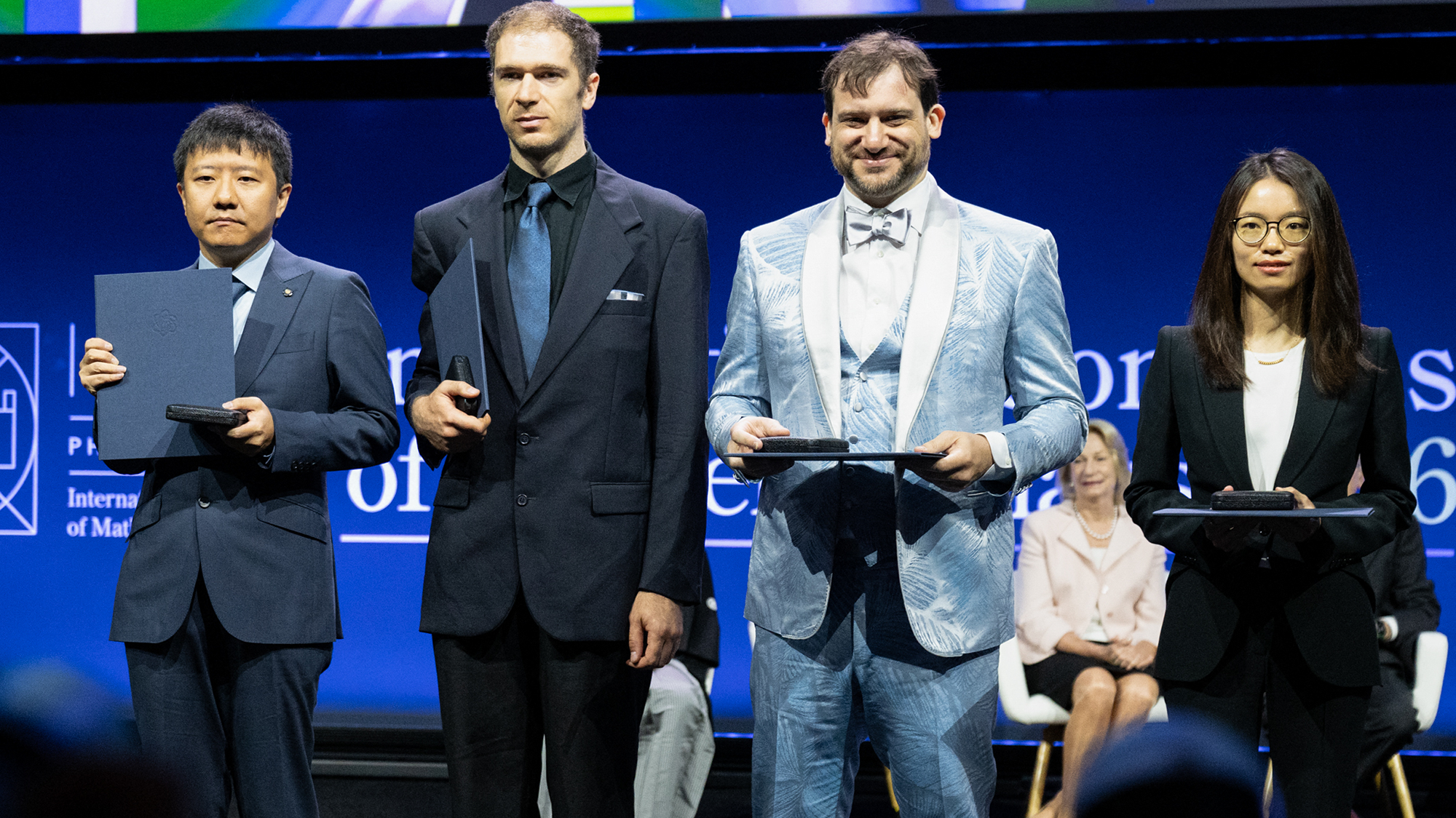
The 2026 Fields Medal, one of the world’s most prestigious mathematics prizes, has just been awarded to four pioneering young researchers — including mathematician Hong Wang, the third woman ever to win the prize in the 90 years since the award was established.
The Fields Medal is an award presented every four years to mathematicians under the age of 40 for their outstanding discoveries. The International Mathematical Unionannounced Thursday (July 23) that Wang, a professor at New York University, is among the four recipients of the 2026 medal for her work on a decades-old conjecture about how needles move in 3D spaces. .
The 2026 Fields Medal winners also include Yu Deng of the University of Chicago, who was recognized for connecting microscopic and macroscopic descriptions of gases; John Pardon of Stony Brook University, whose work solved major problems in topology and geometry; and Jacob Tsimerman of the University of Toronto, who developed powerful new techniques in algebraic geometry that have advanced progress on longstanding mathematical puzzles.
Wang joins an exceptionally small group of women to receive the Fields Medal. Iranian mathematician Maryam Mirzakhani was the first, in 2014, followed by Ukrainian mathematician Maryna Viazovska in 2022. No woman received the award at all in the nearly 80 years before Mirzakhani's win.
The four 2026 Fields Medal honorees. From left to right: Yu Deng, John Pardon, Jacob Tsimerman, and Hong Wang. (Image credit: ERIN BLEWETT via Getty Images)
Wang was recognized for her work on the Kakeya conjecture, a problem that asks how little space is needed to rotate a needle so that it points in every possible direction in three dimensions. Mathematicians had chased a solution for roughly 50 years.
Working with collaborator Joshua Zahl, Wang showed that if you track every direction the needle could point as a bundle of thin tubes, there's a precise trade-off between how thin those tubes are and how much total space they must occupy. Solving the puzzle required tools from harmonic analysis, a field that studies how complex shapes and signals can be broken down into simpler pieces.
The proof wasn't a triumphant moment for Wang, at least not right away. She and Zahl spent months checking their 127-page proof before making it public — and even then, Wang worried that their argument might be unclear. The paper nonetheless earned comparisons to a "once-in-a-century" result and set off a string of honors culminating in the Fields Medal, according to Quanta Magazine.
The 2026 Fields Medals were presented during the International Congress of Mathematicians in Philadelphia. The first Fields Medal was awarded in 1936. So far, 65 men have received the award.
A team of UCLA scientists has resorted to posting content on OnlyFans to raise money for research amid huge federal funding cuts to U.S. science. But the videos aren't of themselves, they're exclusive recordings of marmots.
"I spend a lot of time waiting for marmots to do things and had the idea one slow morning," Daniel Blumstein, a professor of ecology and evolutionary biology at UCLA, who leads the project, told Live Science in an email. "When I came back with this idea, one of my graduate students immediately said we MUST do this! So here we are!"
Researchers at the Rocky Mountain Biological Laboratory (RMBL) have been studying yellow-bellied marmots (Marmota flaviventer) at a field station in the Rocky Mountains near Crested Butte, Colorado, since 1962. "The RMBL marmot study is the second oldest continuous study of individually marked mammals in the world," Blumstein said. "We have up to 65 years of data on population dynamics, social and anti-predator behavior and ask a lot of questions about how animals respond to a changing environment."
Yellow-bellied marmots are one of 15 marmot species, a group of cat-size ground squirrels that can be found throughout the Northern Hemisphere. This particular species is widely distributed throughout the Rocky Mountains and several mountain ranges in California. The species live in social groups and are active during the day, which makes them a great subject for long-term behavioral studies.
"Long-term research like ours is both very valuable to understand how and why things change over time, and our project has been very productive," Blumstein said.
However, collecting data over such long periods comes with a significant price tag. And with federal funding cuts draining research budgets across the country, Blumstein and his team have had to look for other methods to raise money for their research. Enter OnlyMarms.
On June 17, the RMBL Marmot Project announced on Instagram that "the state of funding is so bad we are turning to OnlyFans, or as we like to call it 'OnlyMarms'."
With federal funding cuts draining research budgets across the country, Blumstein and his team have had to look for other methods to raise money for their research. (Image credit: Daniel T. Blumstein, Professor Department of Ecology & Evolutionary Biology Institute of the Environment & Sustainability UCLA)
OnlyFans is a subscription platform that allows users to pay creators to see exclusive photos and videos. The platform has become popular with adult-only content creators, but it hosts others too, including musicians, athletes and celebrities — and now marmots.
"We’re trying this out of frustration with an extremely challenging funding environment," Blumstein said. "If we’re lucky, it can help raise money for supplies and some expenses. But unless we are very lucky, it won’t replace the federal funding that has driven discovery in the US since the 1950s."
However, for anyone hoping for spicy marmot content, you might be a bit disappointed. "[It's] almost all G-rated content of marmots playing, being cute, digging, bringing plants to their burrows…normal routine stuff for marmots," Blumstein said. "The occasional scuffle makes it PG rated."
Emily Renkey, who also works on the project, said the team hopes to add videos of marmot pups soon.
"Our 'Onlymarms' page has gotten a bit of engagement since we started it a bit over a month back," Renkey told Live Science. "We've gotten 735 page visits and have 44 fans."
But how much has OnlyMarms actually been able to raise? "Not much," Blumstein said. "We’re letting folks have free subscriptions and ask for tips. They [OnlyFans] take 20% and I have to pay taxes on the balance."
Even so, the team is hopeful that the page is helping to increase public engagement and interest in the project. "Overall I think this can be an amazing way to teach people more about animal social behavior, which can sometimes be hard to observe," Renkey said. "Even we are learning more about marmots through these up close glimpses the game cameras provide."
While it is difficult to get signed consent from the marmots to use this content online, Blumstein said that the funds raised would be used to help protect the creatures in a rapidly changing world. "We are using these funds to help continue the study which provides valuable information about them and how they’re responding to climate change," he said.
The OnlyFans account is just one way the team has tried to share its research with new audiences. "We work hard to translate our research findings to the public," Blumstein said. "Our lab’s running a Fat Marmot Week contest this summer. We're hoping this will let people learn more about these fascinating alpine critters!"
Archaeologists in Slovakia have uncovered a large Roman military camp likely used by Marcus Aurelius' troops during conflicts with Germanic tribes in the late second century. The "extremely rare" camp came as a surprise to archaeologists, as it holds the hastily buried remains of numerous soldiers in unusual graves, including wells.
Remains of the 18.2-acre (7.4 hectare) camp were found near the town of Šurany in southwestern Slovakia, according to a translated July 17 statement from MH Invest, which excavated the area along with the Institute of Archaeology at the Slovak Academy of Sciences (SAS).
"We have a unique opportunity to explore practically an entire Roman marching camp, which is extremely rare in the European context," Matej Ruttkay, director of the SAS Institute of Archaeology, said in the statement. "We are clearly investigating a place that disappeared immediately after the military conflict between the Romans and the Germans."
Between A.D. 166 and 180, the Romans fought a series of battles against a Germanic people called the Marcomanni, who lived north of the Danube River along the border of the Roman Empire in what are now Slovakia and the Czech Republic. Marcus Aurelius, who reigned as Roman emperor from 161 to 180, commanded troops in the Marcomannic Wars with the goal of defending and securing Rome's border against barbarian invasions. But the wars ended upon Marcus Aurelius' death, when his son Commodus negotiated a peace with the Marcomanni, according to third-century Roman historian Cassius Dio.
The newly discovered Roman military camp had clear defensive characteristics, including five entrance gates, fortifications, and a curved ditch-and-rampart system typical of marching or legionary camps, according to the statement. The Šurany camp is only the second Roman military installation ever found in western Slovakia; the first camp, discovered in 2024 by SAS archaeologists, is thought to be where Marcus Aurelius wrote part of his Meditations.
The Šurany camp surprised archaeologists with a large number of skeletons — and parts of skeletons — buried in ditches, wells and hastily dug shallow graves, according to the statement.
"Our preliminary findings indicate that in most cases these are Roman soldiers," Marek Vojteček, an archaeologist at the SAS Institute of Archaeology, said in the statement. "Numerous components of Roman military equipment and weaponry were also found with the skeletal remains, such as spears, arrowheads, parts of helmets, segmented and scale armor, legionary brooches, coins, and the characteristic 'caligae' military sandals, from which iron nails on the soles have been preserved," he said.
X-ray analysis of blocks of clay revealed the intact sandal nails, which are now stored at the SAS Institute of Archaeology's specialized laboratory for further analysis. "It is literally a miracle to see the original footwear of a Roman soldier and even to be able to determine its size," Michal Cheben, an archaeologist at the SAS Institute of Archaeology, said in the statement.
The unusual burials raise important questions about the use and abandonment of this Roman military camp, according to Cheben, including whether the soldiers died from combat injuries or disease and why the bodies weren't looted before being thrown into storage pits and wells. "Laboratory analyses and further genetic and anthropological research may provide answers," Cheben said.
Because the camp was so large and the artifacts so numerous, a comprehensive analysis of the site will take several years and will involve international experts in carbon dating, soil analysis, isotopic analysis and ancient DNA, according to the statement.
"This is a long-term process, so many results will only become known in the coming years," Ruttkay said.
From Augustus to Nero, see how much you know about ancient Rome's famous leaders with our Roman emperor quiz!
It's a Tuesday morning, and you're getting your toddler ready for daycare. But as you brush her hair into a ponytail, you notice that her cheeks are flushed, her nose is runny and her breathing is phlegmy. Instead of daycare, you head to your pediatrician, who offers a solution: a prescription for antibiotics.
This scenario has played out many times in clinics around the world. The problem is that most common childhood infections are caused by viruses, which antibiotics don't treat. In the long term, unnecessary antibiotic prescriptions can foster resistance in bacteria, thereby reducing the drugs' potency and fueling the rise of dangerous superbugs.
That's why, in recent years, there's been a huge push in many countries to raise awareness of antibiotic misuse among doctors and to reduce the overprescription of these drugs. In Japan, the government noticed that the country's pediatricians were prescribing too many antibiotics, especially to young children, and offered them a financial incentive to break the habit.
It's been working remarkably well. Among young kids directly affected by the incentive, it slashed antibiotic prescriptions by 20%; it also contributed to a spillover effect in older kids and teens, as under-20s have seen a 50% reduction in prescriptions in recent years. I went to Japan to examine why the program has been so effective and to learn whether similar approaches could work in the U.S.
Understanding why a fairly modest incentive of 800 yen (about $5) a visit is so effective requires unpacking why Japanese doctors overused antibiotics in the first place. If doctors face similar pressures stateside, maybe the same strategy could work here too.
I spoke with Fumie Kuchiba, a mother whose daughter can be seen here playing with a toy doctor's kit. Kuchiba and other Japanese parents told me about their views on antibiotics and pediatric care. (Image credit: Nicoletta Lanese)
A culture of overprescription
Japan started out with a big problem of antibiotic misuse, especially among prescriptions for kids. From 2013 to 2016, over 30% of children with respiratory tract infections were given antibiotics, despite most of those infections being viral. (The U.S. started at a slightly better baseline regarding antibiotics given for respiratory conditions, with about 23% of outpatient prescriptions being unnecessary.)
For decades, it was common in Japan to routinely prescribe antibiotics for sniffles and tummy bugs, Dr. Takemi Murai, deputy head of the Infectious Diseases Division at Nagano Children's Hospital in Azumino, told me. That's in part because medical education there didn't emphasize the risk of "superbugs," meaning bacteria that can withstand many antibiotics.
"When I trained, antimicrobial stewardship wasn't yet a formalized part of the curriculum in the way it is now," said Murai, who finished medical school in 2006.
There also may be a generational divide, Dr. Tatsuki Ikuse, a pediatric infectious disease specialist at the National Center for Child Health and Development in Tokyo, told me. Ikuse, who finished medical school in 2013, suspects that older doctors "experienced many cases of bacterial infections when there was no vaccination."
Dr. Tatsuki Ikuse, a pediatric infectious disease specialist, said parents sometimes request antibiotics for their children when the drugs are not needed. "I try to convince them and try not to prescribe antibiotics as much as possible," he said, "but I think some doctors cannot convince them and end up prescribing antibiotics." (Image credit: Nicoletta Lanese)
Now that vaccines for whooping cough, diphtheria and pneumococcal disease are routine, children face a lower risk from the bacteria that cause those illnesses. But those early experiences treating children with serious bacterial infections may still be shaping doctors' prescribing patterns, even decades later, Ikuse thinks.
Surveys conducted in Japan suggest that doctors under 50 are more likely than doctors over 50 to see antimicrobial resistance as an urgent issue. Clinic doctors — those likeliest to see kids as outpatients for acute illnesses — also skew older than doctors in hospitals; in 2024, clinic doctors averaged about 60 years old, while those in academic and nonacademic hospitals averaged 40 and 48 years old, respectively.
Historically, Japanese doctors also had a strong bias toward prescribing antibiotics for "feverish" diseases, noted Dr. Norio Ohmagari, director of disease control and prevention at Japan's National Center for Global Health and Medicine.
Murai agreed with that sentiment. "If doctors saw a fever and a high CRP level [a sign of inflammation], they prescribed antibiotics," Murai said. "Doctors were following such a practice for a long time, so they didn't question it."
Concerns over secondary infections were also a big driver of unnecessary antibiotic use, said Dr. Masahiko Sakamoto, a hospital pediatrician in Saku, a highland city about an hour northwest of Tokyo by bullet train. Even if doctors suspected a viral infection, like the common cold, they worried that the illness could open the door for secondary bacterial infections, such as bacterial pneumonia. However, recent studies suggest this scenario is uncommon and shouldn't prompt doctors to use antibiotics preventatively.
Is antibiotic misuse still a problem in the U.S.?
Young children in the U.S. were once the most likely group to receive unneeded antibiotics, but now, those unnecessary prescriptions have "dropped dramatically," Dr. Sarah Kabbani, director of the U.S. Centers for Disease Control and Prevention's (CDC) Office of Antibiotic Stewardship, told me in an email.
Between 2011 and 2016, children's antibiotic prescriptions decreased 13% overall. "Overall declines in antibiotic use over the past decade have been driven in large part by reductions in prescribing for children," Kabbani noted.
Japan has also decreased its overall antibiotic use in younger populations, halving its outpatient prescription rates for patients under 20 between 2011 and 2022, Dr. Yusuke Okubo, division chief of clinical epidemiology and health services research at the National Center for Child Health and Development in Tokyo, told me.
The decrease in antibiotics overuse syncs with parents' lived experiences in both countries.
"I was taking antibiotics quite often" as a kid, Tatsuya Kanno, a software engineer and father of two in Tokyo, told me. "Nowadays, we don't get really prescribed those antibiotics easily."
"It has definitely been different from my childhood," said Gabby Brown, an apparel consultant and mother of two in Littleton, Colorado. "There was always a bottle of pink stuff in the fridge, you know? And now they're very hesitant to give it out."
Brown's pediatrician actually has an explicit policy on their website stating that they don't overprescribe antibiotics and instead follow evidence-based guidelines to determine when the drugs are truly necessary. I've found a number ofother U.S. pediatric clinics that do the same.
One reason U.S. pediatricians have been able to improve several key metrics of antibiotic use is that the issue has been on their radar for a while.
Pediatricians in the U.S. have greatly improved their use of antibiotics over the years, but still, not all antibiotics that children get prescribed are actually needed. (Image credit: Halfpoint Images via Getty Images)
"Antibiotic stewardship was a core tenant of my residency training 20 years ago," Dr. Morgan Leafe, a U.S.-based pediatrician who worked in inpatient and outpatient settings for 11 years after residency, told me in a direct message. "So I would say it's not new in pediatrics."
Nowadays in the U.S., urgent care clinics might be a hotspot for antibiotic misuse. These and other walk-in clinics serve an increasing number of pediatric patients, with an estimated 26% of children visiting one in the past 12 months. Urgent cares may prescribe antibiotics to children at a higher rate than other ambulatory settings do; in one study, 42% of the children seen at urgent cares were prescribed antibiotics at their visit, while the national average across all pediatric ambulatory visits is 21%.
It may be that urgent cares are more likely to prescribe antibiotics for conditions that they're explicitly not recommended for. One national analysis found that urgent cares prescribed antibiotics for 20% of allergy cases, 42% of viral upper respiratory infections and 52% of uncomplicated ear infections, while doctor's offices wrote far fewer of these inappropriate prescriptions. Other studies highlight similar patterns.
Among children, inappropriate prescriptions are less likely at urgent cares that specialize in pediatrics, highlighting doctors at general clinics as a potential population to target. Additionally, researchhas found that visits with nurses or physician assistants are more likely to end in an antibiotic prescription than those with doctors. (Only licensed doctors can write prescriptions in Japan, so this factor is more unique to the U.S.)
Different systems, similar pressures
Dr. Yusuke Shibata, who runs the clinic pictured above, notes that children's caregivers don't often understand that antibiotics are specifically used for bacterial infections. (Image credit: Nicoletta Lanese)
Japan's nationalized healthcare provides a staggering degree of choice, because insurance coverage doesn't tie you to specific clinics or require you to get referrals to access certain care. Young children's care is virtually free thanks to national and local subsidies. So on paper, parents can easily shop around for a pediatrician that best suits their family's needs, as well as pop into any healthcare facility with flexibility should the need arise.
While this system is convenient, it has its downsides, some parents told me.
"In the U.S. and in Switzerland, they try to get to know you and know your child," said Reid, a fundraiser and father of two based in Okinawa, who recently moved to Japan with his sons and husband. "They don't at all in Japan."
In contrast, about 9 in 10 children in the U.S. have a primary care provider, although that percentage has fallen in recent years as the use of urgent care has increased. Primary care providers can be a go-to for sick visits as well as an ongoing monitor of kids' health via annual check-ups. (Annual check-ups in Japan are handled by local municipalities, not by children's regular doctors, Reid noted.)
In some ways, pediatric clinics in Japan can be considered more analogous to urgent care in the U.S., in that they're intended to address acute cases of illness as they emerge. For more serious illnesses, caregivers bring their children to hospitals, parents in Japan told me.
Diagnostic uncertainty
For a typical respiratory or tummy bug, doctors in both the U.S. and Japan make diagnoses based largely on a patient's symptoms and timeline of illness. In the U.S., most minor infections are "generally assumed to be viral unless certain criteria are present," Leafe said. These criteria are spelled out in manuals used by pediatricians.
The Karugamo Clinic in Tokyo (pictured here) is run by Dr. Atsushi Miyahara, a pediatrician who consistently uses the government incentive aimed at improving antibiotic use. (Image credit: Nicoletta Lanese)
The criteria enable doctors to "feel reassured" that they've correctly classified an infection as viral or bacterial, even in the absence of a highly sensitive diagnostic test, said Dr. Ilan Shapiro, a community pediatrician at AltaMed Health Services, a nonprofit health network in Southern California.
Rapid tests are available for only a handful of bacteria, including Streptococcus pyogenes (also called group A strep), a common culprit behind strep throat and scarlet fever. These tests are "definitely underutilized" by Japanese clinics, Ohmagari noted, while U.S. clinicians are encouraged to use them more widely.
"For strep throat, we never treat [give antibiotics], now, without a positive test," said Dr. Jennifer Shu, a pediatrician with Children's Medical Group, a group of pediatric offices in the Atlanta metropolitan area. (That said, electronic medical records suggest that not all doctors' offices use these tests before prescribing antibiotics, despite these recommendations.)
In both countries, doctors can use rapid tests to diagnose common viral infections, such as influenza and RSV. But those tests don't always catch every case. And even if they come back positive, they can't rule out the possibility of simultaneous infections with viruses and bacteria, Shu noted.
Shu's practice also uses a 45-minute test that looks for multiple viruses and bacteria in the nose and throat, including the bacteria behind whooping cough and Mycoplasma, which causes "walking pneumonia." Not all clinics use this type of test, though, because they require a special certification and equipment to run on-site, Shu said.
Such panel tests can be helpful but also tricky to interpret. Bacteria can sometimes be detected in a patient's nose without being the cause of their symptoms. "That's where clinical judgment comes in," Shu said, emphasizing that a doctor must combine test results with the timeline of a patient's symptoms.
Time crunches
The lack of quick, surefire diagnostic tests for bacterial infections can leave doctors with a degree of uncertainty, which can sometimes prompt unnecessary prescriptions, Szymczak said.
"Our number one motivation is to not harm somebody; that's the main thing," said Dr. Shruti Gohil, an infectious-disease specialist at UCI Health who designs interventions to improve doctors' antibiotics use. Worries about potential missed diagnoses can prompt doctors to reach for an antibiotic now "in exchange for a potential future, untoward consequence," such as a greater chance of resistant infections, she said.
In both countries, doctors must make diagnoses and treatment plans in a limited amount of time. "Pediatric outpatients in Japan are very busy and can only secure a few minutes for each patient," Ikuse told me.
Such time crunches are common in the U.S., too.
"I had a pediatrician who said they had — I can't remember the figure — but it was like 800 seconds for a sick visit," said Szymczak, who studies the factors that drive clinicians to misuse antibiotics. "They broke it down into seconds."
Given that antibiotics are generally very safe drugs, pediatricians can be tempted to prescribe them "just in case" in these situations, even if the need isn't certain, a 2019 review found. In these scenarios, patients end up taking courses of antibiotics they likely don't need.
Doctor shopping and bad reviews
One factor driving antibiotic misuse that might be unique to Japan is the competition between clinics and the customer service culture it motivates.
Japan's mandatory national health insurance makes it easy to "doctor shop." Depending on where a family is based, there may be a glut of pediatric specialists to choose from — as in metropolitan centers like Tokyo — or very few. For instance, in Okinawa, general family doctors are easier to come by than pediatricians, said Sandra Miller*, a researcher and mother of one based in the prefecture.
But across all settings, families can still flexibly choose which clinic they go to. Meanwhile, pediatricians in Japan, who make less than their peers who care for adults, can worry about losing clients to nearby practices.
Dr. Yusuke Okubo of the National Center for Child Health and Development said that, historically, doctors were often wary of bad clinic reviews and also fearful of a patient's prognoses getting worse if they denied them antibiotics. (Image credit: Nicoletta Lanese)
Japanese clinicians used to worry that, after being denied antibiotics for their sick kids, dissatisfied parents would leave poor reviews online — particularly in Google Reviews — and thus drive away business, Okubo said. "They feared such clinic reviews."
Parents frequently used to demand antibiotics from their children's pediatricians, Okubo added. "Ten years ago, it was a common situation," he told me.
Among the clientele of Shu's Atlanta clinic, she's "seeing a trend where people aren't asking for antibiotics as much." But still, parents sometimes request the drugs when she's determined they're not needed. These requests often stem from the parents' past experiences.
"They'll say, 'Well, last time they took an antibiotic they got better faster, the next day,'" Shu said. Because mild viral infections often go away on their own in a few days, that timing could have just been a coincidence, but it leaves an impression on the caregiver nonetheless.
Tatsuya Kanno, a father of two in Tokyo, said he recently learned about antibiotic resistance through a television program. He said he'd learned that using too many antibiotics could cause bacteria to gain strength while the drugs become less effective. (Image credit: Nicoletta Lanese)
A parent in Japan told me about the other side of this conversation.
Kanno once brought his daughter into a clinic after she developed a bad cough after catching the flu. Their doctor prescribed antibiotics, and the cough resolved within days. Later, Kanno's son had similar symptoms, but the doctor didn't recommend an antibiotic in his case. When his son's coughing and wheezing persisted, "I asked him to prescribe that antibiotic, the same one that my daughter took," Kanno said.
The pediatrician said it likely wouldn't help but didn't explain why. The doctor said he would provide the antibiotic if the family wanted it. He ultimately prescribed it, and it didn't help. "He got my trust after that," Kanno said.
In Japan, parents' awareness of antibiotic resistance has grown in recent years, Japanese doctors told me, but research suggests many still don't know much about it.
"I don't think parents generally understand that antibiotics don't work for colds, much less [understand] antibiotic resistance," said Dr. Yusuke Shibata of the Shibata Pediatric Clinic in Tokyo. "Explaining antibiotic resistance to parents is difficult," though he still tries to do so, he told me in an email after I visited his clinic.
Studies ofU.S. parents suggest that many don't understand resistance or proper antibiotic use and that a misunderstanding of the purpose of antibiotics can drive requests for the drugs. In my interviews, I found that parents in both countries had some grasp of the concept of antibiotic resistance, but the depth of that understanding varied.
Risa, a mother of two in Saku, generally prefers to limit her children's exposure to medications in the interest of strengthening their immunity. But if their symptoms seem serious or long-lasting, she brings them to a doctor to see if medicine is needed. (Image credit: Nicoletta Lanese)
Tomomi Sato*, a New York City-based teacher and mother of two who lived in Japan as a child, said she'd heard that taking antibiotics too often could make it so your body didn't respond to them well in the future. She likened it to an urban legend about roaches that she heard from her mother and others from her hometown of Tokyo.
"You know how they talk about, in Japan, roaches are getting bigger and bigger?" she said. "They just build immunity … they don't respond to the old type of roach spray, so you have to get a new version."
Some parents are cautious about overusing medications in general but don't worry about antibiotic resistance, specifically.
"I want them to recover by trusting their own immunity, rather than relying on medication," said Risa, an HR representative and mother of two in Saku, Japan. But that said, "if it's something that's difficult to heal naturally, I think professional judgment and a prescription are necessary," she added.
Fumie Kuchiba and her three-year-old daughter play on the floor of their living room in Saitama. Kuchiba trained as a pharmaceutical salesperson and understands that antibiotics only treat bacterial infections. She said she doesn't think most parents consider the germ at play in a given infection. (Image credit: Nicoletta Lanese)
Risa told me she thinks antibiotics may be medically appropriate when an illness is particularly severe or prolonged. She doesn't weigh whether the cause is likely viral or bacterial, even though antibiotics don't treat viral illnesses.
"I think that's probably the general mindset," said Fumie Kuchiba, a mother of one in Saitama, Japan, who previously worked as a registered pharmaceutical salesperson.
Other parents have a clear sense of the threat resistance poses.
"Resistance is a threat because if something is powerful enough to beat our current modern medicine, then it can wreak real havoc," said Malcolm, an editor and father of one in Atlanta. On the individual scale, he knows that resistance can emerge within an individual, potentially raising their personal risk of resistant infections. But on a global scale, he thinks of resistance as a threat as formidable as that posed by viral pandemics, such as COVID-19.
Difficult conversations
When parents seek an antibiotic that isn't medically needed, that can prompt difficult conversations with their children's doctors.
A Philadelphia-based doctor summed up the dynamic in an interview with researchers: "If patients feel like they need an antibiotic, it's very, very hard to talk them down from that. So, antibiotics are definitely overprescribed. And, you know, it's easier to say yes rather than taking time and, like, so much time to say no." This doctor and several other participants in that study felt they had "little autonomy to stand up to patient demand."
Some studies find that, when a pediatrician withholds antibiotics and a parent questions them, doctors can perceive that as negative pushback and give the drug against their initial judgment. But if a pediatrician denies antibiotics while also providing guidance for symptom relief, that conflict can be avoided and prescription becomes less likely.
Shapiro, the pediatrician in California, told me he handles such requests by walking parents through his diagnostic process and explaining the downsides of using unnecessary prescriptions. He also offers options for seeking further care — via phone, telehealth or an in-person visit — should the infection not improve as expected.
These conversations take time, and they can stir up conflict, which Shapiro said he's grown more comfortable navigating over his career. Early on, "you don't want conflict; you feel that conflict is bad, and you want everybody to be happy," he said. But ultimately, "the objective is for them to be healthy."
Multiple parents in Japan told me their doctors don't usually talk through their reasoning for checking for a given symptom or prescribing X drug over Y. "If we don't ask, he won't explain," Kanno said of their current pediatrician; but if prompted, their doctor provides good explanations, he said.
Nicoletta LaneseNicoletta Lanese
Similarly, Japanese parents told me their doctors don't often say whether or why they suspect an infection is viral or bacterial — a clarification that might help caregivers feel more comfortable forgoing an antibiotic.
Notably, Japan's antibiotic incentive program, which allows pediatricians to earn "tips" for withholding unnecessary antibiotics, provides the payment only if the doctors also explain responsible antibiotic use to children's caregivers. That requirement may be necessary to prompt that conversation.
Some doctors in Japan who claim the incentive provide verbal explanations about resistance or give parents a slip of paper that explains the basics and includes links to further information. Dr. Atsushi Miyahara of the Karugamo Clinic in Tokyo told me that, over time, his clients have become more knowledgeable about antibiotics, and insurance data related to the incentive also hints that this learning takes place. But it's unclear if these interactions can always move the needle.
Shu, the Atlanta-based pediatrician, finds that some parents ask for antibiotics because they think the drugs will speed their child's recovery, without considering whether a bacterium is the culprit. Caregivers in both the U.S. and Japan also told me that they know parents who seek antibiotics as a quick remedy for illnesses.
Parents I spoke to who understood that antibiotics only treat bacterial infections added that it can be frustrating that there aren't many medicines available for viral ailments. Waiting for an infection to clear up can be stressful because you don't want your child to suffer, parents said, and the sickness also disrupts the family's normal routine of work, school or daycare.
"When your kid gets sick, things just kind of fall apart, and you need your life to get back to normal," said Katie, a journalist and mother of one in Jacksonville, Florida, who added that many parents may lack support that would help them take time off to care for their kids.
In both countries, pediatricians feel pressure to leave caregivers satisfied. While clinics in the U.S. aren't necessarily competing for patients in the same way Japanese clinics are, there is still a degree of customer service at play, Szymczak said. "That clinical encounter is very transactional, particularly in the United States," she said.
Doctors want to provide something of value — a diagnosis, medicine, reassurance — in exchange for the caregiver's time and money. Sometimes, pediatricians assume that what the caregiver wants is antibiotics, when really, they want a treatment plan to help their child, Szymczak said.
While the U.S. has made progress in curbing antibiotic misuse, there's room for improvement. Could we close those gaps by using a similar approach to Japan's 800-yen incentive?
Similar dynamics are at play in both countries, with parents and pediatricians in both places dealing with similar issues. But while these pressures are similar in the clinic, a key difference sets America's situation apart: Our complex healthcare system, funded through a patchwork of insurers, can be difficult for patients and doctors to fully trust.
In the final installment, I'll talk with U.S. doctors to see what they think about Japan's approach and explain solutions that would suit our own fragmented healthcare system.
Editor's note: The names of some parents quoted in this story have been abbreviated or changed to protect their privacy. Altered names are marked with asterisks (*).
What it means: Abiotic means "without living organisms." Scientists typically use the term when referring to nonliving aspects of an ecosystem that affect organisms' growth or reproduction. Some abiotic factors might be light, water, fertilizer, nutrients or chemical elements, such as oxygen or sulfur. Others include the tides or rain. Sometimes, "abiotic" is used to describe the origin of a particular chemical. Abiotic methane, for example, comes from chemical reactions between rocks and water in Earth's crust, unlike biotic methane, which comes from decaying organic matter as well as microbes living in your gut.
How to use it in a sentence: A new "gold rush" of exploration is on for abiotic hydrogen, which forms when rocks react with water deep underground and could be a renewable, carbon-free fuel of the future.
Can you crack our science word of the day puzzle, Chain Word?
Engineers have created a drone that camouflages itself as a faint, hovering haze when it takes flight.
The "Phantom Twist" prototype drone is a carefully engineered robot that utilizes motion blur to hide in plain sight — opening up a new frontier in low-visibility flight. Scientists say it could reshape how drones monitor wildlife, survey ecosystems and inspect infrastructure.
Most stealth drones try to disappear by changing their appearance, using camouflage paint, transparent plastics or complex optical tricks to bend or scatter light. The Phantom Twist takes a fundamentally different approach by exploiting how humans and animals perceive motion.
The scientists who created the drone outlined their findings in a study presented July 16 at the conference Robotics: Science and Systems in Sydney, Australia.
"Most efforts to hide drones focus on making them look like their surroundings," said first author of the study Michael Rubenstein, associate professor of computing and mechanical engineering at Northwestern University, in a statement. "Instead, we asked whether we could design the drone itself around the way humans perceive motion.”
(Image credit: Michael Rubenstein/Northwestern University)
The result is a machine that behaves more like a spinning fan than a conventional quadcopter. Typical drones have four rotors spinning around a largely stationary body, so your eye can lock onto the frame even as the propellers blur.
Phantom Twist strips this idea down to a single motor and single propeller. The propeller spins one way while the entire body counter‑rotates in the opposite direction with no stationary parts to visually latch on to — spinning 25 times per second, which is too fast for the human eye to resolve clearly.
(Image credit: Michael Rubenstein/Northwestern University)
It's about 10 times less visually perceptible than a conventional quadcopter, the scientists said. In practice, that means observers don’t see a crisp flying machine but a translucent smudge, with its few opaque components blending into a haze.
To get there, the team assigned algorithms to explore thousands of designs. First, they used a computational model to automatically generate about 20,000 drone configurations that could fly stably, at least in theory. Each configuration shuffled a motor, propeller, batteries, circuit board and counterweight into different positions.
Then artificial intelligence (AI) and optimization tools took over, iteratively rearranging those pieces to minimize how visible each design would be from almost any viewing angle — all while respecting the constraints of aerodynamic stability.
The researchers simulated each candidate spinning in midair and composited the images over 100 different real-world backgrounds, from skies to trees to buildings.
To determine the stealthiest designs, they applied a perception model that approximated human vision, with drones that better blended into their surroundings earning a lower visibility score. From there, the team selected the 500 lowest-scoring designs and ran their optimization loop again, squeezing out further decreases in visibility. When the team was confident in the design of a particular drone, they built it.
(Image credit: Michael Rubenstein/Northwestern University)
The final Phantom Twist isn’t a compact block of hardware; it’s deliberately spread out in three dimensions. Components sit at different heights and angles, with empty space between them, so that when the drone spins, the parts don’t visually overlap into a solid silhouette.
That geometry matters because of the way our eyes process images.
"The human eye takes time to accumulate signals, roughly analogous to the exposure time of a camera," said computer vision expert and co-author of the study Emma Alexander. When something spins fast enough, distinct edges smear together, and we perceive a blur instead of a shape.
The researchers' initial uses for the stealthy drones include monitoring nesting birds without startling them, surveying wetlands without scattering flocks of waterbirds, and inspecting aging infrastructure without altering human behavior, they said.
For now, Phantom Twist isn’t a perfect "ghost." The spinning propeller still generates a significant amount of noise and the spider‑web of thin wires and support rods remains partially visible. Rubenstein and his colleagues said in the study they’re already thinking about next-generation iterations that swap in more transparent materials and quieter propulsion systems.
One of the ocean's most intelligent and aggressive predators has once again surprised scientists with a curious new behavior. In the Gulf of California, researchers witnessed orcas working together to smash dead sunfish into bits — a suspected food processing technique that makes it easier for younger whales to feed on the enormous bony fish that weigh up to 4,400 pounds (2,000 kilograms).
In two separate encounters, one orca gripped a sharp-tail sunfish (Masturus lanceolatus) while another orca charged toward the fish. The first whale released the carcass just before impact, allowing its companion to slam into the fish at high speed and scatter fragments of fish flesh throughout the water.
"It was unlike anything I'd witnessed before," Kathryn Ayres, a scientist at the conservation nonprofit Beneath the Waves told Live Science in an email. "As a scientist, moments like this are incredibly exciting because you realize you're observing something that may never have been documented in detail before — as you can tell in the video!"
Ayres and her colleagues dubbed the behavior "ram-to-fragment." Their observations, published July 23 in the journal Frontiers in Ethology, suggest the killer whales were not trying to kill the sunfish, which were already dead and appeared to have been disembowelled. Instead, the orcas may have been breaking down the bulky carcasses so members of the group, particularly younger animals, could feed more easily.
Hunting in action
The first encounter Ayres observed took place in July 2024 near an offshore seamount off Baja California Sur, Mexico. An adult female orca held a sharp-tail sunfish by its tail-like clavus, or rudder, while an adult male orca accelerated toward it, belly-up. The female released the fish an instant before the male struck.
The collision produced a loud noise and caused the sunfish's tissue to disintegrate. In the video, Ayres' shock is evident as she can be heard exclaiming, "Oh my god!"
A juvenile orca then swam into the cloud of suspended flesh and ate the smaller pieces, while the adults fed on what remained of the main carcass.
A second encounter, which the researchers credited diver Héctor Franz for filming in September 2025, followed much of the same sequence. One adult orca stabilized the sunfish, another rammed it and a calf later pulled tissue from the broken carcass.
Ayres had previously watched orcas hunt ocean sunfish (Mola mola), but this was different.
"I had also seen orcas ram their prey previously, but I had never witnessed an impact powerful enough to completely fragment the tissue like this," Ayres said. "That was what made this observation so remarkable."
The maneuver resembled coordinated attacks Ayres and her team had previously documented, in which orcas confronted whale sharks (Rhincodon typus) — the largest living fish — in the Gulf of California. In those hunts, some orcas took turns ramming it.
Previous footage from diver Kelsey Williamson shows orcas flipping a whale shark upside down to have an easier time preying on it. (Image credit: Kelsey Williamson)
Why make fish confetti?
Ramming is not a new killer whale hunting technique, said Matt Hansen, a postdoctoral researcher at the Leibniz Institute of Freshwater Ecology and Inland Fisheries who was not involved in the study. However, the hold-and-release sequences and shattering of carcasses may be new, Hansen told Live Science in an email.
The researchers proposed several possible explanations for the behavior. The predominant assumption is that the adults were processing food for younger whales. Orcas frequently tear apart prey and share portions with calves and juveniles, and in both newly described encounters, young killer whales were present.
But two observations are not enough to show that the adults were deliberately feeding or teaching the youngsters, Heather Hill, a professor and chair of psychology at St. Mary's University in Texas who was not involved in the research, told Live Science in an email.
"Whether or not it represents parental investment, observational learning, or distribution of resources remains circumstantial in my opinion," she said.
The researchers also suggested that the behavior could have been playful. Orcas are highly intelligent and social, and they sometimes manipulate, toss or strike prey without immediately eating it. However, Hill said that the two encounters appeared more practical than playful.
"If it was for fun, I would have expected multiple attempts made with variations in speed, point of contact, force of impact, and initiators because the point of playing is to try different things and not destroy the toy too soon," she said. "Since it appears that these events were 'one and done' so to speak, probably less playful and more functional — to eat the fish and maybe to model a foraging technique and possibly to share resources with the younger animal."
The study authors also raise a more speculative possibility that dispersing the sunfish's microbe-rich skin and gelatinous tissue could somehow affect the surrounding water or expose the orcas to potentially beneficial microbes. But what that benefit might be is unclear.
"I don't see how dispersing the skin into the water column would have a different effect from eating it," Hansen said. "Unless the authors are suggesting [the orcas] are using it like a lotion on their own skin? Who knows, the world is weird and wonderful."
The face of a young woman crowned with a laurel wreath, buried in elaborate clothing and unusual cork sandals, has appeared nearly 1,700 years after her death.
She is one of 16 people from Aquincum, a Roman-era city in present-day Hungary, whose faces have been reconstructed for "Once We Were Like You," a new exhibition at the Aquincum Museum in Budapest. The display pairs skulls excavated in and around the ancient city with scientifically informed approximations of how their owners may have looked in life.
Six of the reconstructions are hyperrealistic silicone models, complete with artificial eyes, human hair, eyebrows, eyelashes and, in some cases, beards. The exhibition, which runs through Oct. 31, includes men, women and a child who lived during the region's period of Roman rule.
"The face is the most important feature for recognizing a person," Emese Gábor, a forensic facial reconstruction specialist who sculpted the silicone faces, told Live Science in an email. Although a skull cannot reveal every detail of a person's appearance, reconstruction lets museum visitors encounter the faces as those of "a real human being rather than as skeletal remains," she said.
The entrance to the "Once We Were Like You" exhibit at the Aquincum Museum in Budapest. (Image credit: Gábor Lakos Aquincum Museum Budapest)
Rebuilding a Roman face
Aquincum stood on the Danube frontier of the Roman Empire in what is now Budapest. The city was home to a diverse population in the first through fourth centuries, and genetic and archaeological analyses of the individuals in the exhibition point to connections with regions including present-day Italy, Scotland and Syria, as well as Sarmatian groups from the Eurasian steppe and Celtic communities that lived in the region before Roman rule.
The remains of those who lived here have also been unearthed, and continue to be discovered today during the excavation of cemeteries," according to a statement from the museum.
Creating a reconstructed face begins with a high-resolution 3D CT scan of the original skull. Specialists then produce an exact 3D-printed replica, allowing experts like Gábor to work without repeatedly handling or disturbing the ancient remains.
"The latest scientific advances — including 3D scanning, CT imaging, archaeogenetic (ancient DNA) analysis and facial approximation research — are incorporated whenever possible," she said.
"If a hyper-realistic reconstruction is required, I create a mould and cast the face in coloured silicone, finishing it with real human hair, eyebrows, eyelashes and, where appropriate, a beard," she said.
Ancient DNA can sometimes provide additional clues about pigmentation, including probable eye, hair and skin color. But the results are still approximations, not portraits. For instance, hairstyle, expression and many details of the person’s appearance are usually more speculative.
The woman with the laurel wreath
Of all the people she reconstructed, Gábor said she found it especially difficult to forget the woman known as the Jablonka Road mummy.
The woman's skeleton was relatively well preserved, but the soft tissue on her face had decayed, leaving only the skull. A laurel wreath still rested on her head, and, according to Gábor, her burial contained fine clothing, a spindle for weaving, bird-shaped cork sandals and a painted male portrait that had been placed near her feet. Archaeologists have suggested that the portrait may have represented her husband or father, although his identity is unknown.
The silicon reconstruction of an ancient construction worker. (Image credit: Gábor Lakos Aquincum Museum Budapest)
"Based on these details, the archaeological context and the anthropological data, it was the archaeologists who pieced together her story while I reconstructed her face," Gábor said. "That was very moving."
Other individuals selected for the exhibition include those of a young girl who died in childhood and a woman interpreted as a nurse or healer who was buried in a children's cemetery. Some of the other reconstructions include a construction worker, a military officer and a blacksmith.
Two women appear to have met particularly violent or punitive ends. They were buried face down with their legs bound together, Gábor said. The exhibition's interpretation associates one woman with an accusation of witchcraft and the other with poisons, although such details are historical interpretations rather than evidence-based findings from the burials.
Gábor stands in front of a display showing the reconstructed face of a child from Aquincum. (Image credit: Gábor Lakos Aquincum Museum Budapest)
"Every reconstruction is a journey," Gábor said. "As I shape each face, I find myself reflecting on that person's life again and again, and by the end, they no longer feel like anonymous remains, but like real people."
Analyses of the skeletons suggest that many of the individuals endured strenuous physical labor, periods of hunger and chronic inflammation. This evidence led museum curators to conclude that many represented the less wealthy inhabitants of Roman society — people whose names and experiences were unlikely to appear in surviving written histories.
For Gábor, the physical reconstructions offer something that a digital image cannot: Visitors can stand face-to-face with a life-size person, walk around the model and study it from different angles. Her hope is that this encounter encourages visitors to think beyond the scientific data and imagine the full lives that once surrounded the excavated bones.
"When you see a face, you don't just see bones in a display," Gábor said. "You see a person — someone who was born, who grew up, who worked, who loved, who laughed, who struggled, who fought with challenges, who raised children. Some were sick. Not everyone died of illness. Some died in accidents. Some through violence. And eventually, all of them died. That sense of shared humanity helps spark empathy."
Can you match these historical maps to the empires that ruled them? Test your geography skills with our ancient empires quiz!

 Login