❌

Normal view

New type of superionic water ice observed for the first time

16 October 2026 at 09:00

A new phase of solid superionic ice has been created for the first time in the laboratory. By heating a tiny sample of ultrapure water while compressing it to extreme pressures, physicists at the French Alternative Energies and Atomic Energy Commission (CEA) succeeded in forming an ice phase that features a hexagonal close-packed (hcp) structure and liquid-like hydrogen diffusing through a solid lattice of oxygen atoms. This demonstration could help us better understand the structure of ice giant planets such as Uranus and Neptune, which may harbour this form of ice deep within their interiors.

Unlike water’s familiar liquid, vapour and ice phases, superionic ice can only exist when water is subjected to tens or even hundreds of GPa of pressure at temperatures above 1000-2000 K. Under these conditions, theory predicts that hydrogen ions (protons) diffuse so readily through empty sites in water’s oxygen lattice that the material’s ionic conductivity may exceed 100 Siemens per centimetre, making it almost as conductive as metals. The melting temperature of this form of ice is also extremely high, reaching several thousand kelvin as new ice structures develop that feature a close-packed oxygen lattice.

Diamond anvil cells and X-ray diffraction spectra

To create super-high pressures in the laboratory, researchers typically use diamond anvil cells, which are tiny cavities in which samples are tightly compressed between the tips of two opposing diamond surfaces. In the new work, a CEA team led by physicists Alexis Forestier and Gunnar Weck added two high-thermal-conductivity cup-shaped discs made of boron-doped diamond to the diamond anvil surfaces. This set-up enabled them to apply pressure while heating their 12 micron-sized sample uniformly with lasers, thereby avoiding the large temperature gradients that complicate measurements in conventional diamond anvil cells.

Forestier, Weck and colleagues heated their sample of ultrapure water from 300 to 2630 K while applying pressures between 80 and 229 GPa. Thanks to the Extremely Brilliant Source’s sub-micron beam – part of the ID27 beamline at the European Synchrotron Research Facility in Grenoble – they were able to obtain high-quality X-ray diffraction spectra despite the small size of their sample. According to the CEA researchers, these spectra clearly showed a new hexagonal close-packed (hcp) phase of superionic ice emerging alongside a previously observed face-centred cubic (fcc) phase across a pressure range of 130-200 GPa and temperatures above 1800 K.

A link to Uranus and Neptune

The discovery brings the total number of superionic phases of water to three, with the other being the body-centred cubic phase first observed in 2016. But that’s not all. Forestier, Weck and colleagues say that their results, which they report in Physical Review Letters, could also help explain the magnetic fields of Uranus and Neptune.

Unlike the Earth’s magnetic field, these fields are skewed and off-centre with respect to the planets’ axis of rotation. These properties have led scientists to hypothesize that instead of being generated by the motion of molten iron in the planet’s core (as on Earth), the magnetic fields of Uranus and Neptune could arise from conductive superionic warm dense ice (composed of water, ammonia and methane) in the planets’ outer third.

“The experimental observation of this new hcp superionic phase now provides a rationale for incorporating its mechanical properties and ionic conductivity into these models of planetary interiors,” Forestier says. “Indeed, this phase can coexist with the fcc superionic phase and become more stable at higher pressures (above 150–200 GPa), and so probably exist deeper within the inner shell of these ice giants.”

The researchers’ next step will be to precisely define regions of the phase diagram where pressure and temperature are stable; map out the transition lines between the different phases (molecular and superionic); and understand how the new hcp phase behaves as it melts. This will help confirm whether these phases are stable and present within Uranus and Neptune, Forestier tells Physics World.

“We also want to obtain more direct experimental signatures of superionic behaviour, beyond the thermal expansion we observed,” Weck adds. “Brillouin spectroscopy measurements, for example, could reveal anomalies in the speed of sound, strengthening the evidence for proton diffusion.”

The post New type of superionic water ice observed for the first time appeared first on Physics World.
Low-level clouds could make wind farms more efficient

14 October 2026 at 15:20

Low-level sea clouds can make offshore wind farms more efficient, say researchers at the University of Twente in the Netherlands. This increase in efficiency is due to atmospheric mixing effects that shrink the wake of slower air behind nearby turbines, and the team say it could help wind farm designers make the most of ambient conditions.

Scientists have known for decades that multiple wind farms can be significantly less efficient than a single, isolated one. This is because air slows down as it moves through turbine blades, creating a wake that impairs the performance of wind farms downstream. This slow-air wake may extend for tens of kilometres, and in extreme cases it can even stretch beyond 100 km. “How quickly the wake recovers depends on how effectively atmospheric mixing pulls air from the stronger wind above and on the sides,” explains Davide Selvatici, a physicist who co-led the research with his colleague Richard Stevens.

In their latest study, which appears in PRX Energy, Selvatici and Stevens show that the presence of low-level stratocumulus clouds can enhance this mixing via a process called radiative cooling. This occurs when air at the top of a cloud radiates heat into space and becomes cooler, much like the ground does on a clear night. Because cooler air is denser than the surrounding air, it sinks, generating an enhanced downward motion that intensifies atmospheric turbulence. This ongoing mixing helps sustain the cloud by drawing moisture up from the surface below.

Fully three-dimensional simulations

To piece together this picture, Selvatici and Stevens needed to accurately model the turbulence in cloud tops and the way that air flows through a wind farm. They used large-eddy simulations to study how low-lying clouds impact the length of a wind farm’s wake. They also performed high-resolution simulations of stratocumulus-topped boundary layers across a range of atmospheric conditions: clear skies, cloudy skies without radiative cooling; and cloudy skies with radiative cooling.

These simulations are fully three-dimensional, and Selvatici explains that creating them meant solving equations within the model to determine how wind moves in all three directions, while also incorporating changes in temperature, water vapour and liquid water suspended within the cloud. For this, they relied on the Navier-Stokes equations (the standard equations used to describe the movement of fluids such as air) with some modifications. “We use an extended set of equations to include the effects of heat and moisture and to represent the energy and momentum extracted by the wind turbines under local wind conditions,” Selvatici explains.

“Effects can be significant”

The pair’s results indicate that the effects of cloud-top cooling can be significant. When these effects are present, the mean wind speed within a wake returns to approximately 90% of the incoming wind speed about 17 km beyond the end of the wind farm. In simulations without cloud-top cooling, however, the mean wind speed remained below 90% even 32 km beyond the end of the farm.

“Clouds are inherently coupled to the atmosphere, making it difficult to isolate their effects, but by comparing simulations with and without cloud-top cooling, we identified cloud-top cooling as an important process for wind farm wake recovery,” Selvatici explains.

Since wind farm power production increases with the cube of wind speed, even a modest reduction in wind speed can have a considerable effect, he adds. The problem is that most existing wind-farm models either simplify cloud-related processes or exclude them altogether. “Our results demonstrate that these should be taken into account,” says Stevens, “particularly in regions with frequent low-level clouds as over the North Sea, where many wind farms are found and where the annual cloud coverage is higher than 30%.”

Stevens adds that a better understanding of these effects could improve wind farm design and inform how far individual wind farms should be placed from each other. However, Selvatici notes that they’re not yet able to offer definite practical advice. “We cannot conclude whether wind farms should indeed be placed closer together in cloudy regions because our simulations represented idealized conditions,” he says.

The post Low-level clouds could make wind farms more efficient appeared first on Physics World.

Titanium-polymer metamaterial floats in water

7 October 2026 at 09:00

Open-cell metallic structures are widely employed in the aerospace industry and in biomedical applications that require materials to be extremely light as well as strong. In marine infrastructure, however, their usefulness is limited because water quickly fills their interconnected open pores, preventing them from floating even though their bulk density is much lower than that of water.

Engineers in Australia and France have now developed a way around this problem. By combining so-called architected metals with a lightweight polymer foam, they created lightweight, strong, open-cell titanium structures that can float in water, overcoming the density limitation of previous materials while retaining structural performance.

“The innovation opens a new design space for marine structures, vehicles and rescue equipment where we need strength, low weight and buoyancy all at the same time,” says Ma Qian, a materials engineer at the RMIT University in Melbourne who co-led the research.

Beyond Archimedes

According to Archimedes’ principle, an object will float if its effective average density is lower than that of the fluid surrounding it. With open-cell materials, however, it’s more complicated. Because these interconnected frameworks of struts, thin plates or curved surfaces contain interconnected open voids that can fill with water as well as closed voids that cannot, they may fail to float even when their bulk densities (ρbulk) are well below that of water.

In the new work, which is detailed in Advanced Materials, Qian and colleagues at RMIT’s Centre for Additive Manufacturing and the Conservatoire National des Arts et Métiers in France developed an alternative measure of density that incorporates only the water-excluding parts of a structure. If the value of this “skeletal density” ρskeletal is lower than that of the surrounding liquid, then the structure will float even when water flows through all its interconnected open pores.

The team used this new measure to design a structure based on a recently-developed type of metallic open-lattice metamaterial called a hollow-strut lattice (HSL). Unlike conventional solid-strut designs, HSLs contain millimetre- or sub-millimetre-sized channels within their struts. These channels make them stronger than conventional solid-strut lattice materials of the same density, but that isn’t their only attraction. The presence of such channels also means that materials can be injected into them without compromising the HSL’s open-cell architecture – something that is impossible in traditional structures. Thanks to this feature, Qian explains, appropriately designed hybrid HSLs can float in water while remaining permeable.

Foam and titanium

The researchers made their open-cell hybrid lattice metamaterial by injecting expandable polyurethane (PU) foam, which has a density of 0.08–0.11 g/cm3, into a HSL structure made from a titanium alloy, Ti-6Al-4V.  At the macro level, Qian explains that the foam completely fills the hollow titanium struts, and microscopic analyses reveal continuous, defect-free interfacial bonding between the foam and the inner walls of the struts, while the foam’s own heterogeneous, closed-cell microstructure incorporates pores ranging from ∼10 µm to 200 µm in size. “The closed-cell PU foam limits water ingress into the internal strut channels while the external open-cell architecture remains permeable, so safeguarding marine buoyancy without notable density gain,” Qian says.

A team of researchers in front of equipment
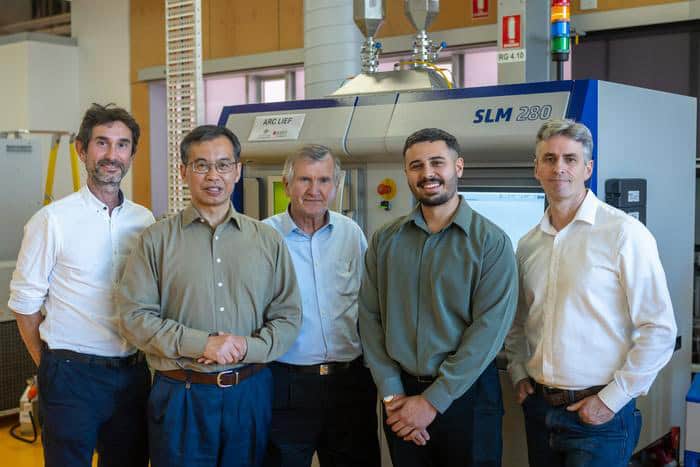
The project team: Andrey Molotnikov, Ma Qian, Milan Brandt, Jordan Noronha and Martin Leary at RMIT’s Centre for Additive Manufacturing. (Courtesy: Sara Tan, RMIT)

The RMIT team submerged both unfilled and foam-filled titanium alloy HSLs in freshwater for more than two months. As expected, all the unfilled HSLs sank when immersed, regardless of strut diameter. The researchers then immersed the materials in natural seawater (which has a measured density of 1.03 g/cm3, slightly higher than the 0.997 g/cm3 they measured for freshwater) over a period of two weeks. They found that the hybrid structures stayed afloat over the experimental period and lost only about 0.15 % of their mass, suggesting they are resistant to corrosion. They also found that the foam-filled HSLs have a higher specific strength than commonly employed marine materials such as high‑density polyethylene and 316L stainless steel.

While the most immediate uses for these new materials will be in seafaring vehicles, lightweight floating structures and rescue equipment, Qian thinks they could have wider applications. “The open-cell architecture allows different materials to be integrated within the same structure,” he tells Physics World. “For example, a biodegradable magnesium scaffold could potentially be combined with a hydrogel containing growth factors for controlled therapeutic delivery during bone regeneration. And in aerospace applications, a hollow-strut titanium lattice might be integrated with a carbon-fibre-reinforced polymer to create lightweight, stiff hybrid structures.”

The researchers now plan to further develop their technology and are seeking collaborations with potential commercial partners. “We want to assess its viability for larger marine applications, including autonomous underwater vehicles and floating platforms and investigate long-term performance under realistic marine conditions,” Qian says. “We also plan to introduce our concepts into our advanced manufacturing and design courses at RMIT to help engineering students and researchers develop new ideas in this emerging field.”

The post Titanium-polymer metamaterial floats in water appeared first on Physics World.

Exciton wavefunctions come into view

1 October 2026 at 09:00

Physicists have experimentally reconstructed the quantum probability distribution of an exciton for the first time using super-fast spectroscopy. By simultaneously capturing the spatial and momentum spreads of these short-lived quasiparticles, the work adds to our understanding of how excitons evolve in complex materials. According to members of the research team, this improved understanding could lead to advances in organic photovoltaic devices.

When light shines on materials such as insulators and semiconductors, the energy from these incident photons can sometimes promote electrons in the material to higher energy bands, leaving behind positively charged holes. The electron and hole can then bind together, forming a neutral excited quasiparticle known as an exciton.

Excitons play a key role in light harvesting in optoelectronics devices, but their quantum mechanical structure has proved notoriously difficult to study. Among other reasons, this is because the excited electrons decay back to their original states within just picoseconds (10-12 s), and standard spectroscopic techniques are not fast enough to simultaneously probe the spatial dimensions of the quasiparticles’ orbits and their momentum profiles within that time limit.

Photoemission orbital tomography

In the new work, physicists led by Peter Puschnig of the University of Graz, Austria, together with colleagues at Marburg University and Forschungszentrum Jülich in Germany, got around this problem thanks to a technique called time-resolved photoemission orbital tomography (trPOT). This technique combines pump-probe photoemission spectroscopy with momentum microscopy and offers resolution at the femtosecond (fs, 10-15 s) scale, making it well-suited to capturing the exciton wavefunction.

Puschnig and colleagues began by applying an ultrashort normal-incidence laser pulse with an energy of 2.35 eV to an organic semiconductor called alpha-sexithiophene, which is employed in optoelectronic applications such as solar cells. This pulse generated the excitons. The next step was to eject the electrons from these excitons using a second, linearly polarized laser pulse with a relatively high energy of 21.7 eV. This process is known as photoemission.

“If we then measure the energy and direction of the ejected electrons, theoretical models allow us to infer their quantum-mechanical state,” Puschnig explains. “And by varying the time between the first and second laser pulses, we are able to obtain snapshots of the exciton at different times after its creation.”

The team found that the exciton in the sexithiophene films initially extends over a distance of approximately 1.5 nm, or roughly three molecules. Within 400 fs of its creation, though, its size contracts by about 25%. “What makes this particularly exciting is that we are not just measuring an energy or lifetime but are also gaining access to the quantum-mechanical wave function of the exciton itself, including its spatial structure and phase,” Puschnig says.

Coordinating demanding experiments and theory

Puschnig says the idea for the experiment grew out of the team’s earlier work on photoemission orbital tomography (POT), including a 2021 proof-of-principle study showing that it could be extended into the ultrafast regime. “The main challenge was coordinating demanding experiments and theory: producing well-defined molecular films; transporting them under ultra-high vacuum from Jülich to Marburg in a vacuum suitcase; performing ultrafast photoemission measurements; and carrying out computationally intensive ab-initio calculations in Graz to interpret the data,” he adds.

The work, which is detailed in Physical Review X, provides a new way to study excitons directly in real space and follow their quantum-mechanical evolution in time. According to the researchers, it could help us understand how excited states evolve into charge-separated states in the donor/acceptor systems that occur in organic photovoltaics, where the electron and hole can begin to separate after photoexcitation.

The researchers say their next goal is to move from the relatively simple exciton they studied to more complex systems. “We want to observe how charge-separation processes are controlled by the molecular and electronic structure of a material,” Puschnig tells Physics World. “Doing this will be particularly interesting because charge separation is the crucial step between absorbing a photon and generating a usable electrical current in an organic solar cell.”

The post Exciton wavefunctions come into view appeared first on Physics World.

Single-photon measurements confirm Richard Feynman’s vision of quantum mechanics

25 September 2026 at 09:20

Physicists have confirmed the two foundational postulates of Richard Feynman’s path-integral approach to quantum mechanics in a real-world experiment for the first time. This comes nearly 80 years after Feynman first published his path-integral formulation, which describes the time evolution of quantum systems.

Fundamental thought experiments, such as Schrödinger’s cat, the Einstein–Podolsky–Rosen paradox and the quantum double-slit experiment have always been important for developing the theories of quantum mechanics. As technology improves, some thought experiments have been realized in the lab, confirming many aspects of quantum theory. However, thought and real experiments thus far have not addressed the fundamental question: how do quantum systems evolve between initial and final states? This question, explains Shi-Liang Zhu of South China Normal University in Guangzhou, lies at the heart of Feynman’s path integral postulates for his famous propagator equation.

The postulates, first proposed in 1948, have never been directly tested – despite their foundational role in modern physics. Indeed, the path-integral formulation has been critical for the development of fields ranging from quantum field theory to cosmology and has provided a unified framework that connects quantum mechanics with classical physics through the principle of least action. The path integral’s predictions also underpin modern quantum science, from condensed matter physics to quantum statistical physics.

As quantum theory was developed, several “pictures” emerged of how a quantum system evolves with time – including the Schrödinger and Heisenberg pictures. The Schrödinger equation, the Heisenberg equation and the Feynman propagator equation are formally equivalent formulations of quantum mechanics, explains Zhu. “However, while the first two are typically treated as fundamental postulates, the Feynman propagator equation is derived from two underlying postulates. This derivational asymmetry makes experimental tests of Feynman’s postulates particularly compelling.”

Not a simple sum

The first postulate is that a quantum particle does not travel along a single trajectory when moving from point A to point B; and instead every probable path contributes to its trajectory. The second postulate is that all possible paths have the same probability (or equal-magnitude amplitudes) and differ only by a path-dependent phase factor. This is very different from simply summing all the probabilities as in classical physics.

At time ti, explains Zhu, a particle is localized at xi with its wave function denoted as ψ(xi, ti). The probability of the particle reaching xf at time tf is therefore determined through all possible paths connecting points A at (xi, ti) and B at (xf,tf). The j-th path contributes a probability amplitude ϕj.

Feynman postulated that the probability P of the particle reaching xf at time tf equals the absolute square of the sum of probability amplitudes ϕj for all paths. As mentioned, all these contribute equally in magnitude, with each contribution’s phase being given by the classical action (in units of the Planck constant, ħ).

“We have now directly measured the probability amplitudes ϕj of more than 1.4 million possible paths taken by single photons in an optical system,” says Zhu. “We did this by dividing the region between the starting point A and the end point B into a  grid of points. We connected adjacent points by line segments and then measured the propagator for each segment. In total, there are 175 possible paths.”

The results from this experiment, which is detailed in Science Advances, validate the first postulate  with a mean absolute percentage error of 4.45% and a fidelity of 94.9%. They also confirm the second postulate with 94.7% fidelity.

Reconstructing millions of path amplitudes

The paper’s first author Yong-Li Wen notes: “because there were so many possible paths that the photons could take, the primary challenge in our experiments was to achieve sufficient accuracy to reconstruct millions of path amplitudes, since even marginal errors in individual propagator measurements accumulate multiplicatively, destroying phase coherence and rendering the reconstructed path distribution nearly random.

“We overcame this problem through four key technical advancements: amplifying the signals; designing a customized high-precision imaging system; implementing real-time normalization via a reference beam to correct for photon fluctuation errors; and making sure the set-up was mechanically stable on the nanoscale.”

These innovations improved single-photon propagator fidelity from 87.6% to 98.5%, something that allowed the team to resolve the global structure of path amplitudes with unprecedented precision.

The work establishes a powerful experimental framework for investigating path integrals in quantum systems, Zhu tells Physics World. “By confirming that quantum probabilities arise from path interference and that phases are governed by classical action, we provide experimental evidence supporting the view that quantum paths reflect physical reality rather than being mere mathematical artefacts.”

The high-precision propagator methodology could also be used to study quantum-to-classical transitions and decoherence mechanisms, where understanding the role of interfering paths is essential, he adds. And it could be extended to probe fundamental phenomena such, as entangled histories and indefinite causal order across multiple space–time points.

Beyond fundamental physics, the technique may make quantum simulations of complex condensed matter and quantum field theory phenomena, including instantons and magnetic monopoles, easier. “Perhaps most excitingly, by enabling precise propagator measurements in diverse environments, this framework could eventually be extended to interacting systems and curved space–times, allowing for valuable experiments with artificial quantum systems,” says Zhu.

The post Single-photon measurements confirm Richard Feynman’s vision of quantum mechanics appeared first on Physics World.

Einstein’s equivalence principle put to two new tests

21 September 2026 at 14:00

A new quantum test of the weak equivalence principle performed on the China Space Station using cold atom interferometry is the most precise to date, yielding an uncertainty of 2.8 x 10⁻⁸ and a test result of around –2.7 x 10⁻⁷. Meanwhile, a separate team in Israel, Germany and the UK has measured an object’s quantum phase in freefall in the laboratory and confirmed that Einstein’s equivalence principle holds here too.

The weak equivalence principle (WEP), or the “universality of freefall”, is an important pillar of Albert Einstein’s general theory of relativity, in which mass and gravity are intimately linked to the curvature of space–time. The WEP states that, in the absence of other forces, all objects fall with the same acceleration under the influence of gravity regardless of their mass or composition. In other words, gravitational mass (the m in F = GMm/r2, where F is the gravitational attraction between two masses placed a distance r apart and G is the gravitational constant) and inertial mass (the m in F = ma, where a is the acceleration produced by the force F) are the same.

Precisely measuring this principle is crucial since any detected violation could point to new physics. It is also important for continuing to corroborate the theory of general relativity, which may be incomplete because it appears to be fundamentally incompatible with another well-tested theory: quantum mechanics. Today, tests of the WEP using macroscopic bodies have reached extraordinary precision – at the 10−13 level on Earth and 10−15 in space. These latest studies investigate the principle in the quantum realm.

Cold atomic interferometry

Conventional interferometry works by splitting a coherent beam of light and then recombining the different components at a detector. If the two components are in phase when they recombine, the interference is constructive and the two components reinforce each other. However, if the two components are out of phase, they cancel each other out, leading to a characteristic pattern of bright and dark fringes. Atomic interferometry is similar but relies on beams of atoms rather than beams of light.

Cold atom interferometry (CAI), which is atomic interferometry at ultracold temperatures of just above absolute zero, has found applications in inertial sensing and fundamental physics research. It also turns out to be a powerful technique for testing the WEP.

There is a problem with using CAI on Earth, however, because our planet’s gravity limits the interference time of the atom beams to just a few seconds. Experiments in microgravity allow this time to be extended to minutes, but because the resolution of a WEP test scales inversely with the square of the interference time, even longer interference times are needed to achieve the required precision (10−17 or more). This necessitates a permanent microgravity environment, something that is only possible in space.

Clouds of billions of 85Rb and 87Rb atoms

In the new work, detailed in Science Advances, a team of physicists led by Mingsheng Zhan from the Chinese Academy of Sciences, Hefei National Laboratory and Wuhan Institute of Quantum Technology sent their experiments to be performed onboard the China Space Station, using the cold atom interferometer installed on its High Microgravity Level Research Rack. This instrument contains clouds of billions of 85Rb and 87Rb atoms that interfere when probed with counterpropagating Raman lasers reflected by a piezo tilt mirror.

The China Space Station
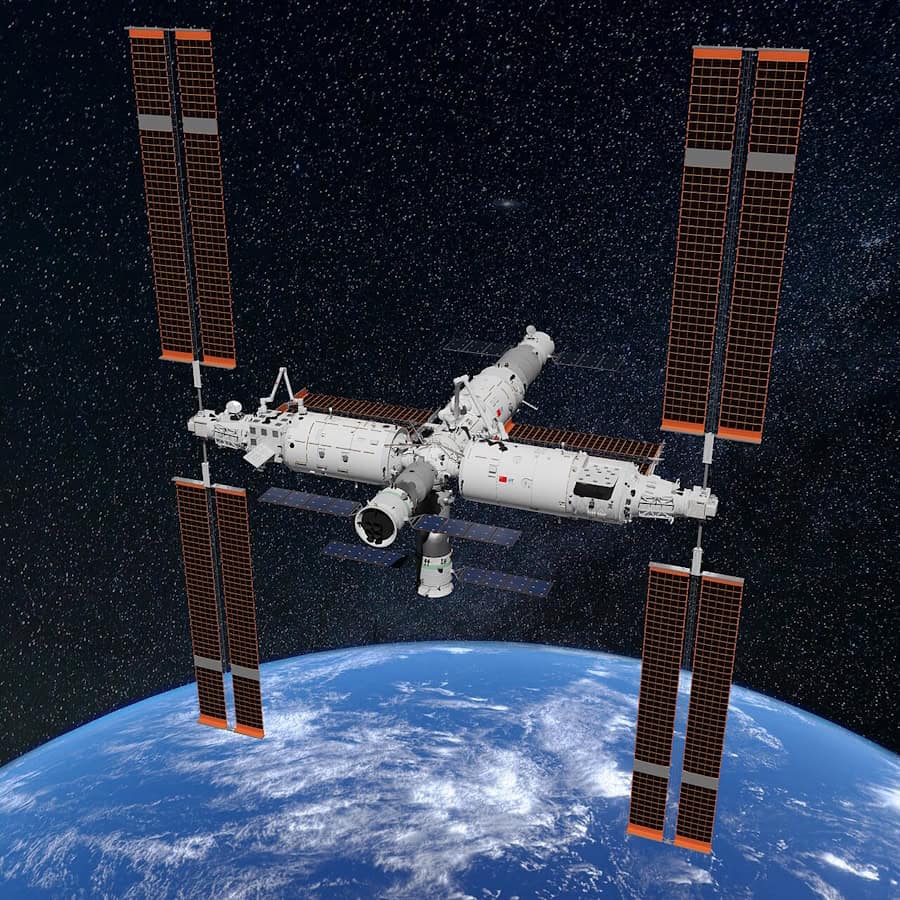
Permanent microgravity environment Rendering of the China Space Station. (Courtesy: CC BY-SA 4.0/Shujianyang)

By exciting and detecting the fluorescence of the isotopes sequentially at slightly different times, the researchers obtained two sets of symmetric interference images, one from the 85Rb atoms and one from the 87Rb atoms. Measuring the differential phase of these images – after suppressing the residual acceleration of the space station and effects from vibrations – allowed them to calculate the difference in the acceleration between the two isotopes in the vertical, freefalling direction.

After running their experiment for 280 days, during which time the researchers acquired more than 9700 pairs of interference fringes, they obtained a test result of around –2.7 x 10⁻⁷, after correcting for errors.

“We believe that our technique will have a significant impact,” says Zhan. “First, it demonstrates that an integrated interferometer meeting the requirements of in-orbit operation is possible, giving the community confidence to continue with even more technically demanding space-based interferometry experiments that aim for ever increasing precision. The technology developed in this project will also itself help advance atom-interferometry-based instruments, such asinertial navigation systems.”

Measuring an object’s quantum phase in freefall

Meanwhile, physicists at the Ben-Gurion University of the Negev, the University of Ulm and the University of Oxford have also used CAI, this time to measure an object’s quantum phase in freefall. They confirm that the effect is the same as predicted by Einstein’s equivalence principle (EP), which states that for an observer in freefall, gravity should locally disappear.

In their work, also detailed in Science Advances, the researchers used a completely novel version of the CAI technique that they call the Quantum Galileo Interferometer (QGI) – in honour of Galileo Galilei’s discoveries regarding the laws of freefall. The experiment, which was carried out at Ben-Gurion University, again makes use of clouds of 87Rb atoms cooled to just above absolute zero.

The researchers began by applying microwave pulses to put the ultracold atoms – which were placed 113 µm below the surface of an atom chip containing current-carrying wires that produce magnetic field gradients – into a quantum superposition. This meant that each atom effectively travels along two different paths at once. One part of the atomic wave responded to the magnetic fields such that an applied upward force exactly counteracted the downward pull of gravity and the wave was held stationary in the apparatus – that is, static relative to Earth. This part of the wave is referred to as the reference atomic wave (or wavepacket). The second part of the wave was sent upwards in a ballistic trajectory.

A magnetic cannon and parachute

Realising this ballistic trajectory, affected only by gravity, required a “magnetic cannon” and a “magnetic parachute”, explains Ron Folman, who is one of the leaders of this study. “After the short-duration magnetic cannon, we switched this part of the wave into a state that is almost unaffected by the magnetic field so that it could fall freely under gravity. And at the end of the fall, we used another precisely controlled magnetic pulse to stop the relative motion between the two waves and reunite the two parts so that they interfered with each other.”

That interference allowed the researchers to measure the tiny difference in quantum phase accumulated while one was falling and the other was held still — two frames that may be referred to as the Einsteinian and the Newtonian frames, respectively. This means that when both parts of the wave have the same velocity, the transformation between the wavefunction in a Newtonian (laboratory) frame of reference and the wavefunction of the same object in an Einsteinian frame that freefalls with the same acceleration, involves a transformation phase known as a gauge phase.

According to their experiments, the gauge phase measured by the researchers is the same as the one predicted when Einstein’s EP is applied to such a quantum wave, so confirming the principle for these quantum objects and at these low masses and energies.

“Some members of our team,” notes Folman, “including Nobel laureate Sir Roger Penrose, expect this co-existence between general relativity and quantum mechanics to break for objects with higher masses. Indeed, the Ben-Gurion University group is now repeating the same experiment with nanodiamond particles to test this hypothesis,” he tells Physics World.

The observation, says study co-leader Vlatko Vedral at Oxford University’s department of physics, constitutes a fundamental test of the interface between quantum theory and gravity. “The connection between these two pillars of modern physics remains one of the most important open questions in physics, and it is thus of paramount importance to understand the phenomenon of freefall and the EP in the quantum domain.”

The post Einstein’s equivalence principle put to two new tests appeared first on Physics World.

Microbes may survive at the Moon’s south pole

18 September 2026 at 12:50

The Moon’s polar regions may be less hostile to microbes than previously thought. This is the new finding from researchers at NASA and the University of Maryland in the US who say that future crewed missions to the lunar south pole will have to be carefully thought out to limit the unintended transfer of Earth life forms.

High ultraviolet radiation and temperatures make the Moon’s surface a harsh place and not somewhere bacteria and other micro-organisms can easily survive. This is particularly true for the equatorial regions, where all previous crewed missions have been sent. Things might be quite different at the lunar poles, however, since sunlight strikes these high-latitude regions at a low angle because of the Moon’s minimal tilt to the Sun of 1.5°. The result is long permanent shadows where it is cooler. The moonscape is also as rugged here as elsewhere with mountains and hills, which also cast shadows, and deep craters protected from the Sun’s heat and ultraviolet flux. These conditions allow for water ice too.

Because of these unique properties, future crewed missions, such as NASA’s Artemis IV, are scheduled to go to the Moon’s south pole, which has also been identified as a possible future location for a human outpost. The polar regions have already been observed by spacecraft such as ESA’s SMART-1, India’s Chandrayaan, Japan’s Kaguya and NASA’s Lunar Reconnaissance Orbiter. These provided a wealth of information that will be used to prepare future missions.

The problem is that no matter how stringent the sterilization procedures are prior to take-off, the astronauts on these missions will take microbes from Earth with them. Indeed, humans carry millions of microbes on their skin and even more in their bodies.

Landing sites for Artemis IV

To investigate whether microbes could survive in the polar regions, the researchers, led by Prabal Saxena, who works at NASA’s Goddard Space Flight Center, and Stefano Bertone at the University of Maryland, modelled how bacteria and fungi commonly found on human skin would behave in the environment of three candidate landing sites for the upcoming Artemis IV mission. The researchers began by making highly resolved spatial maps of the topography in these regions that included ruggedness, slopes and shadowing effects. They also modelled the UV exposure and temperature in these regions to identify specific locations where micro-organisms could survive for at least 24 h.

They obtained seasonal temperature data on length scales of 240 m from measurements by Lunar Reconnaissance Orbiter’s (LRO) Diviner. As for estimated regional UV (≤320 nm) fluxes, these were gleaned from averaged illumination maps with a pixel scale of 60 m based on topography derived from LRO Lunar Orbiter Laser Altimeter (LOLA) measurements.

“Since the temperatures at the lunar poles are rarely high enough to kill bacteria and low temperatures can preserve microbes on Earth, UV radiation is generally likely to be more dangerous in these regions, says Saxena. “We therefore analysed UV fluxes at finer spatial scales using a technique called ray tracing, and for some regions, included optical effects such as reflection and refraction as sunlight hits the Moon’s surface, leveraging updated LOLA-based topography maps on a scale of 5 m/pixel.”

Understanding how sunlight behaves at the poles is crucial, he adds. “Since the Moon has a very small axial tilt, the Sun appears to hover just above the horizon here, so even small hills and rocks can prevent light from reaching lower-lying ground, creating small, shadowed areas protected from UV rays.”

Up to seven days survival

The simulations revealed that the bacteria and fungi studied could survive in certain niches for up to or potentially beyond seven days. One particular fungus, the Aspergillus, is particularly resistant to UV radiation and could potentially survive in 15 to 30% of the areas assessed, even those that receive some sunlight during the lunar winter. The reconstructions also showed that all five microbes in this study, Bacillus, Deinococcus, Staphylococcus, Aspergillus and Fusarium could possibly survive in certain areas of the De Gerlache Rim’s permanently shaded regions, including when scattered UV light is incorporated into the simulations.

Survival does not mean growth (which requires active metabolism and potential reproduction), however, stresses Saxena. Indeed, surviving microbes are in a dormant, so-called cryptobiotic state and would only grow if the conditions were amenable to life – which is not the case for the Moon as we currently understand it.

“Cells may also be dead,” he tells Physics World, “but even dead cells may persist in the environment as another potential source of contamination.”

The work could apply beyond the Moon, he says. Indeed, a number of different airless bodies such as Mercury, Ceres, some asteroids and comets and exoplanets that may have similar properties could also have potential survivable niches for microbial life. Understanding how these niches may exist, how life may be transferred to them and how human exploration may leave its mark will all serve as a key testbed for future potential human exploration of Mars, which likely has far more habitable environments.

“We need to understand what was there before us, because when we search for signs of life beyond our planet on these bodies, we will want to make sure it’s not stuff we brought,” says Saxena.

The research is described in Science Advances.

The post Microbes may survive at the Moon’s south pole appeared first on Physics World.

Metasurface optical device boosts nonlinear frequency conversion

17 September 2026 at 09:30

By combining a band-structure engineered multi-quantum-well heterostructure with a nanostructure known as a metasurface, physicists in Austria and the US have created a device that can efficiently transform light into different frequencies – including those at technologically important near-infrared wavelengths. Their technique, which boosts nonlinear frequency conversion, could help in the development of smaller and more efficient components for telecommunications, quantum information transfer and other photonics technologies.

Nonlinear frequency conversion is an optical process in which a material is used to generate light of a different frequency to that incident on the material. It is now routinely employed in a wide range of photonics devices that rely on frequency mixing, ultrafast signal processing, broadband and pulsed light sources, and high-speed light modulation. It is also used to generate entangled photon pairs for quantum communication. One common type of frequency conversion, and the one used in this new study, is second-harmonic generation. Here, two input photons are combined to produce one photon with twice the energy.

Efficient nonlinear devices require light with high electric field strengths and materials that respond to these intense electromagnetic fields by producing a light polarization that is not directly proportional to the applied field. “Only a handful of such nonlinear crystals exist and these have complicated structures with weak nonlinearities, which means they require high optical powers to make photons interact with each other,” says Marcus Ossiander from the Institute of Experimental Physics at TU Graz in Austria, one of the authors of the new study published in Nature Nanotechnology. “While, new such crystals emerge from time to time, their structure is fixed, which dictates which light wavelengths they work at and how efficiently.”

Asymmetrically coupled multi-quantum wells

Recently, a group of researchers at the University of Texas at Austin in the US, led by Seth Bank, also an author of this latest study, succeeded in creating an optical nonlinearity not via a new crystal structure but by growing a semiconductor metamaterial made from nanoscale layers of gallium arsenide and aluminium gallium arsenide. These layers contain multiple quantum wells that are asymmetrically coupled to each other.

The quantum wells confine electrons in one dimension while allowing them to move freely in the other two dimensions, something that has the effect of restricting their energy levels into discrete, quantum states. Since they are asymmetrically coupled, the electrons end up mainly moving in one direction when exposed to light. This so-called “one-way street leads to increased nonlinear electron oscillations, allowing light waves to interact with each other extremely efficiently and exceed naturally occurring nonlinearities.

Ossiander and his colleagues, including Federico Capasso at the Harvard John A. Paulson School of Engineering and Applied Sciences (SEAS), have now added a second, two-dimensional metamaterial atop the first one. This metasurface, which consists of titanium dioxide pillars, each several hundred nanometres in size, precisely creates the particular light polarization required to deflect incoming light so that it scatters along the one-way street. This enhances the interactions between light waves even further and so increases the intensity of light in the structure.

An extra lap

Researchers have known for a while now that metasurfaces are extremely good at resonantly trapping light and increasing the interaction of light with matter. Usually, the process is straightforward, explains first author Pernille Undrum Fathi, who works in Capasso’s group: you implement a resonant metasurface, and it enhances, for example, the nonlinear effects that you are aiming for.

“The new material sent us for an extra lap, however, because, during our experiments, we discovered that the designable second-order nonlinear susceptibility tensor element (the required incident polarization) is different to that of conventional materials,” she says. “Therefore, when we shone light at exactly normal incidence, the metasurface–material combination generated light waves whose polarizations cancelled each other out completely, so annihilating any enhanced optical nonlinearity.”

However, the researchers found that tilting the sample by just 0.3° broke this symmetry and solved this challenge. Indeed, they were able to increase the effective nonlinear conversion of the light to three orders of magnitude higher than that for a non-patterned heterostructure. The effect is also higher than previously reported values for comparable devices at near‑infrared wavelengths.

“Nonlinear optics are ubiquitous in modern science and technology, with examples including the generation of light at new frequencies (where lasers might be unavailable), all-optical signal processing and the generation of entangled photon pairs for quantum communication,” Ossiander tells Physics World. “Enhancing the fundamental processes enabling this technology will allow for much more efficient, compact devices and enable new measurements that would previously be impossible.”

Metasurfaces offer an excellent route to control and enhance the interaction of light with matter, and the team was intrigued to find out what could be made possible when combining these materials with nanostructures, adds Fathi.

“Working with new materials of course comes with additional uncertainty, and we spent a lot of time learning about and understanding the mechanisms of these new structures and how the particular nonlinear tensor elements of this material interact with the resonant modes introduced by the metasurface,” she says.

“The material we studied is very interesting but also complex,” adds Ossiander, noting that the reseachers believe they can learn how to make even better use of the designer nonlinearity in it by further investigating its fundamental properties. “Indeed, there is a new publication in Optica by Bank’s group on how to improve the multi-quantum-well material even more.”

The post Metasurface optical device boosts nonlinear frequency conversion appeared first on Physics World.

‘Vacuumtronics’ could help make better superconductors

15 September 2026 at 12:00

Vacuum fluctuations can enhance superconductivity in a bulk material. This is the new finding from researchers in China and the US who have put forward the concept of “vacuumtronics”. This is a new way to tune superconductivity without chemically altering a material, applying pressure to it or driving it with intense light.

In quantum electrodynamics, a vacuum is not empty but is host to fluctuating electromagnetic fields in which pairs of virtual particles are continuously being created and annihilated. Such vacuum fluctuations are thought to be responsible for phenomena like the Lamb shift, spontaneous emission and the Casimir effect.

In recent years researchers have been looking into the possibility of exploiting these fluctuations to change the properties of bulk matter. This is challenging because the fluctuations are extremely weak and produce little measurable change in macroscopic quantum states. They can, however, be amplified by a factor of 100 or even more using structures like resonant cavities. Indeed, such enhanced vacuum fields have already been exploited to modify material properties like chemical reactivity, topological states and conductivity.

In theory, vacuum fluctuations could be used to modulate superconductivity too, but until now this had never been demonstrated in an experiment.

Split-ring resonant “dark cavity”

In the new work, an experimental team led by Changgan Zeng and Guanghui Cheng at the University of Science and Technology of China (USTC), partially embedded the layered superconductor niobium diselenide (NbSe2) inside a specially designed near-terahertz split-ring resonator, referred to as a “dark cavity”. The researchers then systematically compared the superconductivity of the NbSe2 outside and inside the cavity by measuring the resistance of the material as a function of temperature.

They found an increase of up to 5.4% in the superconducting critical temperature, Tc, of NbSe2 within the cavity compared with regions outside it, even although both samples came from the same NbSe2 flake.

Higher current and field

The researchers say they also observed substantial increases in the critical current and critical magnetic field near Tc. This is exciting, says Cheng, because the cavity is dark: no light shines on the material and no energy is actively pumped into it. “Instead, the effect arises from the ever-present electromagnetic fluctuations of the quantum vacuum.”

One of the challenges in the experiments, he explains, was to distinguish between genuine vacuum-fluctuation effects from more mundane explanations, such as sample inhomogeneity, strain or device fabrication-related effects. He says he and his colleagues invested considerable effort in control experiments to rule these out.

Zheng and Cheng’s theorist colleagues Qingdong Jiang from Shanghai Jiao Tong University and Frank Wilczek from the Massachusetts Institute of Technology (MIT) department of physics developed a theoretical model to explain the underlying mechanism behind the effects observed. Within a Ginzburg–Landau framework, they put forward the hypothesis that the superconducting state exchanges virtual photons with the dark cavity, which lowers the energy of this state and thereby strengthens superconductivity. And, when the characteristic energy of the cavity mode matches the low-energy superconducting fluctuations, the NbSe2 device exhibits resonant enhancement, producing the peak in superconductivity enhancement, explains Jiang.

Wilczek adds “In most practical physics experiments, the vacuum serves merely as the passive stage on which such phenomena play out”. “Our work shows that the background itself can become an actor – engineered to strengthen superconductivity and reshape the behaviour of quantum matter.”

The work establishes quantum-vacuum engineering as a new non-invasive way to tune superconductivity, Zeng tells Physics World. “Although the temperature enhancement we demonstrated is modest, it is a proof-of-principle for what could become a broadly applicable approach. It could be relevant to superconducting circuits, quantum sensors and other quantum devices, where non-invasive control of superconducting properties would be particularly valuable. More broadly, such engineered vacuum fields could also be used to control states of matter other than superconductivity.”

The China–US team says it would now like to further enhance the effect through improved cavity and material design and continue to investigate the underlying microscopic mechanisms in collaboration with theorists.

The post ‘Vacuumtronics’ could help make better superconductors appeared first on Physics World.

A hybrid energy system for heating, cooling and generating electricity

14 September 2026 at 10:00

Researchers at the Karlsruhe Institute of Technology (KIT) in Germany and Stanford University in the US have developed an energy-collecting device that can simultaneously cool, produce electricity and generate heat. In their prototype, a radiative cooling layer reached 6.5 °C below ambient temperature while a solar collector generated electricity and reached nearly 111 °C.

“The new system could be installed on the roofs and facades of buildings to provide these three energy services at once,” says Gan Huang, who is head of the Hybrid Solar Technologies lab at KIT. “It could also be attractive for AI data centres that need both intensive power and cooling at the same time.”

As many of us have experienced, summer in the northern hemisphere has been particularly hot this year – a situation that is only likely to worsen in the future as the effects of climate change take hold. With this warming will come the increased need for air conditioning to cool down buildings. The problem is that current compression-based systems consume a lot of electricity and produce large amounts of CO2.

Passive daytime radiative cooling

A potential alternative is passive daytime radiative cooling (PDRC), in which heat is continuously exchanged between objects at different temperatures by absorbing and emitting thermal radiation. When the heat absorbed by the material is less than the energy radiated to outer space, it can cool down during the day – even without electricity.

Our planet naturally experiences this effect by radiating heat out to space. This allows it to cool down at night because its temperature (of around 300 K) is much higher than that of outer space (around 3 K) and there is no incident solar irradiation from the Sun at night.

A good PDRC material needs to satisfy several criteria. For one, it must reflect sunlight strongly at solar spectrum wavelengths (of 0.3 to 2.5 µm) to avoid it heating up. It also needs to emit heat strongly in the long-wave infrared (LWIR) wavelengths (of 8–13 µm) where the atmosphere is more transparent to infrared radiation, so that it can lose energy to the cold sky. Over the past decade, researchers have succeeded in developing a wide range of PDRC materials, including multilayer nanophotonic emitters, single-layer polymers on reflectors and porous ceramics. However, conventional PDRC systems cannot harvest the coldness of outer space and solar energy from the same surface at the same time.

A hybrid PDRC and photovoltaic-thermal collector

In the new work, which is detailed in Cell Reports Physical Science, the KIT researchers made a hybrid PDRC and photovoltaic-thermal collector. The emitting layer in the device, which is transparent, consists of a silica substrate coated with the silicone polymer polydimethylsiloxane. This layer allows sunlight to pass through while simultaneously emitting heat as LWIR radiation through the atmospheric window. Beneath the transparent emitter, a Fresnel lens concentrates the transmitted sunlight onto the (gallium arsenide-based) photovoltaic-thermal collector mounted on a two-axis solar tracker. This is where electricity is generated.

In outdoor experiments performed during the day, the prototype simultaneously achieved cooling of up to 6.5 °C below ambient temperature, an electrical power density of 60.6 W/m² and heating up to 110.8 °C. “This is exciting,” says Huang, “because it shows that the hot Sun and the cold universe can be harvested together, rather than treated as separate resources as has been the case until now.”

The main challenge was ensuring that the solar collector became hot while the radiative cooler stayed cool, he explains. “We achieved this by concentrating the transmitted sunlight onto a much smaller solar collector underneath the transparent cooling layer, so reducing thermal interference between the hot and cold parts in the device.”

The team is now busy improving the efficiency and practical design of its system. “We are already working on a better optical design, improved thermal management and more efficient solar cells,” reveals Huang.

“The Sun is not the only renewable energy resource in the sky, the coldness of outer space is another,” he says. “We believe there are many exciting possibilities for a new generation of energy systems if we learn how to manage both these together.”

The post A hybrid energy system for heating, cooling and generating electricity appeared first on Physics World.

Non-reciprocal interactions keep particles in collective motion

11 September 2026 at 10:00
Illustration of non-reciprocal interactions
Breaking action–reaction symmetry Non-reciprocal interactions occur when one particle influences another more strongly than it is influenced in return. This figure shows how unequal electrohydrodynamic attraction between differently sized particles generates non-reciprocal interactions and self-propelled particle pairs. (Courtesy: Yutaka Sumino, Tokyo University of Science, Japan)

Attractive interactions between particles do not necessarily lead to these particles aggregating. This is the new finding from researchers at the Tokyo University of Science in Japan who say this behaviour comes from non-reciprocal interactions amongst particles of different sizes that exert unequal forces on each other. These interactions could serve as a general design principle for creating active matter with a structure that continuously reorganizes rather than simply relaxing towards a static state.

Nature abounds with examples of active matter, with some well-known examples being flocks of birds, fish and insects, sheets of biological cells and swarms of bacteria. Researchers have been trying to copy this collective behaviour and make synthetic active materials – such as self-propelled colloids and dense phases of mechanically driven biopolymers – in the laboratory. Before such applications see the light of day, however, they need to first understand the fundamental physics of these systems.

In their new study, a team led by Yutaka Sumino and Kiwamu Yoshii of Tokyo University of Science’s department of applied physics, came across a system in which colloidal particles interact through electrohydrodynamic flow. “We found that mixing particles of two different sizes in such a system completely changed the collective behaviour of these particles,” explains Sumino. “Instead of forming increasingly large crystal-like aggregates, as is the case for particles with the same size, the system remained highly dynamic.”

The physicists’ experiment involved suspending polystyrene colloidal particles with radii of 1 and 1.5 µm in water and confining them between transparent indium tin oxide-coated electrodes. This set up allowed them track more than 10,000 particles and quantitatively analyse their dynamics for more than an hour, as opposed to just a few minutes in previous such studies.

Newton’s third law holds

When the researchers applied an alternating electric field to the system, they observed electrohydrodynamic flows around the particles, the strength of which increased strongly as the size of the particles became bigger. The electrohydrodynamic-mediated attractive interactions therefore became asymmetric, they explain, something that causes larger particles to attract smaller ones more strongly. This imbalance leads to non-reciprocal interactions, meaning that a larger particle pushes a smaller one, but a smaller one doesn’t push back.

While the effective interaction between the particles appears to break Newton’s third law, it doesn’t because there is no violation of momentum conservation, explains Sumino: momentum is transferred to the surrounding fluid through the induced flows and is ultimately dissipated through friction with the substrate.

The researchers also observed that particles of different sizes spontaneously pair together to form asymmetric structures with a distinct front and tail. These pairs behave as self-propelled units and move through the suspension – even though individual particles cannot propel themselves. As more self-propelled pairs form, they assemble into larger clusters, but these clusters do not continue growing into large aggregates and instead repeatedly fragment, rearrange themselves and reform. Importantly, they note: “the larger particle tends to be at the front of these moving pairs. This head-heavy size asymmetry, together with excluded-volume interactions, promotes the fragmentation of larger clusters and thereby prevents continuous coarsening”.

Sumino and Yoshii combined their experiments with numerical simulations, thereby identifying non-reciprocal pair motion as the microscopic origin of this behaviour.

The results, they say, suggest that non-reciprocal interactions can serve as a general design principle for creating active materials with structures that continuously reorganize rather than simply relaxing toward a static state. “An interesting aspect,” explains Sumino, “is that self-propulsion does not need to be built into each individual particle: it can emerge collectively from non-reciprocal interactions between particles that do not self-propel on their own.”

If such interactions can be controlled externally, they could provide a way to design microscopic systems that collectively gather, transport, fragment or mix materials, he tells Physics World. “Possible directions include programmable active materials and microrobotic systems, although these applications are still some way off.”

Reporting their findings in Physical Review Letters, the researchers say they would now like to understand how general this non-reciprocal mechanism is and whether the same principle – collective activity emerging from non-reciprocal interactions – can be transferred to other experimental systems. In the system studied in this work, the strength of the non-reciprocity depends on parameters such as particle size, composition and the applied electric field. By systematically tuning these parameters, they aim to explore what other types of collective states can be generated and whether transitions between them can be controlled.

“A more detailed hydrodynamic analysis of the system is also needed to develop a quantitative understanding of the interactions and ultimately predict the collective motion of the colloids,” says Sumino.

The post Non-reciprocal interactions keep particles in collective motion appeared first on Physics World.

How far ahead can we predict the weather?

10 September 2026 at 13:00

What will the weather be like tomorrow, or next week or, indeed, in a month’s time? Today’s numerical weather predictions can easily answer the first two parts of this question, but they fall short beyond about 14 days. New work on predictability limits by scientists at the University of Miami and the NOAA Cooperative Institute for Marine and Atmospheric Studies (CIMAS) say that this maximum could be extended to around 129 days – but probably no further. Whether this limit can be reached in practice, however, will depend on future improvements in forecasting technologies, they say.

Numerical weather prediction was developed in the late 1940s. Indeed, it was one of the first major applications of electronic computers. As these have advanced, so have the predictions. Indeed, thanks to ever more sophisticated mathematical models capable of analysing increasing amounts of observational data, we can now predict, for example, when hurricanes will occur as far as eight days in advance – something that was deemed impossible even a few decades ago. But how far ahead can such predictions be made?

Previous attempts to determine this predictability limit have largely relied on analysing the behaviour of very small perturbations in the atmosphere. These tiny errors, however, are inaccessible either observationally or via numerical modelling, explains Zoltan Toth of the NOAA who led this new study together with his colleague Wei Zhang. “These past studies therefore had to make some assumptions about the behaviour of the small errors, and these assumptions are necessarily somewhat arbitrary.”

Analysing the energetic balance of the atmosphere

The method developed by Toth, Zhang and their colleagues makes no reference to this error behaviour and instead goes back to analysing the energetic balance of the atmosphere, which continually absorbs solar radiation on the molecular level. In their approach, the researchers began by considering how our planet’s atmosphere would behave as a closed system, the deterministic dynamics of which preserves information about its initial state, assumed to be perfectly known. In theory, such a hypothesis would allow forecasts of the atmosphere’s behaviour right out to infinity. This is not possible in reality, they explain, because the atmosphere is obviously not a closed system: it receives and emits radiation. In the real atmosphere, the phases of photons in sunlight are completely random and cannot be determined, injecting quantum-scale uncertainty into the atmosphere.

These unknown quantum characteristics act as noise and destroy any retained information, beginning first of all on the smallest scales, explain the researchers. As these scales become bigger, noise eventually affects all parts of the system. When the total energy in the atmosphere is entirely replaced, the ability to make any prediction is completely lost.

“Using the relatively well-measured quantities of total energy in the atmosphere and the incoming and outgoing solar radiation fluxes at its upper boundary, we estimate that the range of skilful forecasts could potentially be extended from 14 days as at present to 129 (±7) days at the most,” explains Toth.

Very different from the mainstream discourse

“This result is very different from the mainstream discourse about atmospheric predictability, which to this day is strongly influenced by early publications in the field,” adds Toth. “More recently even, the authors of a 2018 article in the Bulletin of the American Meteorological Society speculated on whether current forecast systems are reaching their limits for when it comes to predicting tropical cyclones. In 2020, we argued that this limit is at least decades, if not much farther away.”

The theoretical foundation for the new methodology to determine the time limit of predictability is rather simple, he says. “At its core is a conceptual realization, which came to us intuitively. This is that the energy turnover time (that is, the time it takes for all energy in the atmosphere to be replaced by incoming solar radiation) is equivalent to the upper limit of predictability.”

While there is no complex mathematics involved, Toth notes that he and his colleagues had to find a way to describe the technique in a readily understandable way – something that was not easy, he admits, given the complexity of the subject.

Looking ahead, the researchers, who detail their present work in Advances in Atmospheric Sciences, are now looking into several other independent ways to estimate the limit of predictability. “There is no doubt, this limit has a theoretical feel to it,” Toth tells Physics World. “Yet there are a number of very practical implications for both traditional equation- and AI-based modelling of the atmosphere following on from the theory of predictability that we are also exploring in a series of ongoing studies.”

The post How far ahead can we predict the weather? appeared first on Physics World.

Skyrmion topology makes long-distance optical communications more robust

10 September 2026 at 08:11

Researchers at the University of the Witwatersrand (Wits) in Johannesburg, South Africa, have succeeded in harnessing a relatively unexplored property of light – its topology – to robustly transfer information through the atmosphere. The work could advance the development of more reliable long-distance optical communications, including space-based ones, and connect remote and underserved communities worldwide.

Their work is detailed in two separate studies, one based on classical and the other on quantum optics. These studies show that the topological information can remain remarkably robust – even when the states of light carrying this information are subject to the severe distortions caused by atmospheric turbulence. Instead of relying entirely on increasingly sophisticated hardware or computational algorithms to correct atmospheric distortions before or after light transmission, the new concept provides a fundamentally different way of thinking about robust optical communication in complex environments, such as air or water, they say.

Both studies are based on the same fundamental idea: creating an optical topological structure known as a skyrmion in a light field and testing whether it remains robust when it passes through a distorting environment, explains Andrew Forbes, who is head of the Structured Light Lab at the Wits School of Physics. Skyrmions are quasiparticles with a two-dimensional, knot-like structure and were first observed in magnetic materials. They have, however, recently been seen in electromagnetic fields and the electric field of light waves. Here, the swirling structures are created by twisting the polarization or spin vectors of light in space so that every polarization is found exactly once, twice, three times and so on – the count being the skyrmion number. Skyrmions are topologically stable, which means that external perturbations do not affect them in any way.

Real-world test

In the first study, Forbes and colleagues used laser light with a wavelength of 532 nm shaped into various vectorial beams using a spatial light modulator and a modified Mach–Zehnder interferometer to generate optical skyrmions with skyrmion numbers of 1, 2 and 3. These numbers, which are always whole integers, describe how twisted the vortex-like structure of the skyrmion is. They then sent the laser light through a 270-m-long real-world free-space optical link located on Wits’ Braamfontein campus in the centre of Johannesburg.

The researchers measured the topology of the skyrmions with a Stokes polarimetry setup and found that the skyrmion number remains robust in a wide variety of atmospheric conditions, ranging from “calm, cool morning air to the highly erratic and intense distortions at midday” when it is hotter. “This result holds true even when the vectorial polarization of the underlying laser beam has been highly scrambled by atmospheric turbulence effects – and was therefore unrecognizable,” says Forbes.

In-built correlations

In the second work, the team created the topology through the in-built correlations between two photons entangled in their optical angular momentum (OAM). The OAM quantum states are not themselves stable in distorting environments and the information they encode is easily lost. The researchers investigated the robustness of a skyrmion with a skyrmion number of 1 in a controlled laboratory environment by studying photons in media with varying levels of turbulence.

The result? Despite local distortions, the skyrmions maintained topological numbers close to 1. This, they say, suggests the topological number is fundamentally decoupled from modal crosstalk induced by the turbulence and the spreading of an individual photon’s OAM.

Despite the very different physical systems, both experiments reveal a similar result, says Forbes: the conventional properties of optical fields can be strongly degraded by distortions, while the topological information encoded in those states remains remarkably robust. Together, the two works demonstrate that topology can be harnessed in both classical and quantum optical systems as a robust carrier of information in very different communication and information-processing scenarios.

Robust protection

Topology is a concept that appears throughout physics, from fundamental particle physics to magnetism and condensed matter systems. In many of these systems, explains Forbes, topology comes with a physical protection mechanism – such as an energy barrier – that explains why a topological structure is resistant to external disturbances. In optics, however, the situation is rather different. Optical topologies can be created and manipulated with relative ease, but their robustness is not necessarily guaranteed by any particular underlying physical protection mechanism. “We therefore wanted to address a fundamental question: how robust is optical topology when light encounters a real-world, highly distorting environment?

“The atmosphere provides a particularly interesting testbed because it is highly relevant to optical sensing and communications and represents an extreme case where the distortions vary rapidly both in space and time,” he tells Physics World. “Demonstrating robustness in this setting was therefore both a fundamental test of the dynamics and resilience of optical topologies and an indication of its potential practical value.”

Hurdles and challenges

One of the major challenges was simply doing precision optical experiments outdoors, he adds. “We had to contend with the unpredictability of nature: changes in sunlight and temperature, wind, rain and even the thermal expansion of buildings, which can affect optical alignment, making it difficult to maintain stable measurements over long periods.”

Another hurdle to overcome was to find a way of measuring the optical topology itself. Existing methods to do this can be quite sensitive to experimental noise and imperfections, so the researchers say they had to carefully distinguish genuine changes in the optical channel from apparent changes introduced by the measurement process. Ultimately, this meant developing new ways to both obtain and process the experimental data so that they could reliably track the topological properties of the light despite the noise that was present.

Applications include free-space optical, satellite and space communications, and linking remote or underserved communities, where atmospheric turbulence and the lack of physical infrastructure can present significant challenges, says Forbes. “More broadly, topology could be useful beyond communication,” he adds. “Indeed, its underlying robustness could potentially be exploited for optical sensing, information processing and other applications where light has to propagate through complex or noisy environments.”

The quantum experiment adds another possibility, he notes. “We know that entanglement decays in real-world conditions that are not pristine.  Our work shows that despite this, the quantum information stored in the topology remains intact.  This may allow us to distribute information across a quantum network in a more reliable and robust manner.”

Looking ahead, the Wits researchers say they will now assess whether the robustness they have observed extends to other kinds of challenging environments, such as underwater and biological tissue, where scattering, birefringence and other phenomena can be much more prevalent than in the atmosphere.

“We also want to develop detectors and techniques for measuring optical topology,” says Forbes. “Improving how we characterize these structures will be important for moving from proof-of-principle experiments towards practical applications.

“Finally, we would like to actually exploit the robustness of the topology we have identified in high-speed communication experiments. This means implementing realistic communication protocols and investigating how much information can be reliably transmitted using a ‘topological alphabet’.”

The post Skyrmion topology makes long-distance optical communications more robust appeared first on Physics World.

Cling film helps stamp two-dimensional materials onto patterned surfaces

9 September 2026 at 09:00

Since the discovery of graphene over two decades ago now, two-dimensional (2D) materials have revolutionized almost all areas of science and technology thanks to their unique properties compared with bulk materials. These include high electronic conductivity, high mechanical strength, transparency and flexibility, to name just a few. The problem since the beginning, however, has been to produce sheets of these materials large enough for real-world applications and, importantly, to be able to transfer them onto other substrates without cracking the sheets. A team of researchers in Amsterdam, the Netherlands, has now succeeded in doing just this, with the help of an unexpected material – kitchen cling film. Their work could help in the continuing development of next-generation electronic and optoelectronic devices.

“The method we developed allows us to, for the first time, pick up, transfer and place large (roughly 1-mm-sized) 2D layers on almost arbitrarily patterned surfaces,” explains Jorik van de Groep of the 2D Nanophotonics group at the UvA-Institute of Physics, who led this research study. “Being able to do this is crucial since it enables the integration of 2D materials with structures like larger electronic devices and photonic coatings. Most importantly, the transfer is no longer probabilistic (as were most other methods) but has a near-unity yield.”

In the early days of 2D materials, researchers obtained micron-sized mono- or multi-layers of these structures by mechanically shaving off, or exfoliating, flakes from the bulk material using sticky tape. This was first famously done for graphene, a sheet of carbon just one atom thick. More recently, a technique known as gold-assisted exfoliation has allowed them to produce high-quality centimetre-sized layers of technologically important materials like transition-metal dichalcogenides (TMDCs) and transfer these onto flat glass surfaces.

For the field of nanophotonics in particular, explains van de Groep, we need to be able to transfer large-area 2D materials onto both flat and patterned substrates – such as those with electrical contacts and optical coatings on them, for example – if we are to fabricate functional devices. The problem is that existing transfer techniques are limited in this respect.

Kitchen cling film to the rescue

The Amsterdam team – which also includes researchers from UvA’s Van ‘t Hoff Institute for Molecular Sciences, ARCNL and AMOLF – has now developed a simple method that allows them to reliably transfer both large-area monolayers of TMDCs and hexagonal boron nitride/monolayer heterostructures onto patterned or non-patterned substrates, ranging from flat surfaces to high-aspect ratio and low adhesion patterned interfaces. In their process, which is detailed in ACS Nano, they used low-density polyethylene (LDPE), or kitchen cling film, an inexpensive and widely available polymer that has a low melting temperature.

In their work, the researchers transferred a gold-assisted-exfoliated large-area monolayer of the TMDC tungsten disulphide (WS2) from a silica (SiO2) substrate to another target SiO2 substrate. They began by fabricating a stamp made of a heat-resistant half-sphere covered by LDPE cling film. They then mounted the stamp on an xyz-micron precision stage and moved it slowly towards the WS2 monolayer, which was heated to 70 °C, at a speed of 0.5 µm/s until it contacted with the LPDE.

“We used force sensors in the stage to measure the forces involved during the stamping procedure, both in the plane of the 2D material (Fx and Fy) and perpendicular to it (Fz),” explains van de Groep. “This not only offers better control and repeatability of the transfer, it also provides crucial information on the contact and friction dynamics throughout the process.”

During initial contact with the substrate, the normal force (Fz) increases to 120 mN, at which point the researchers stop moving the stamp. Once it has contacted the monolayer, they heat the system to 140 °C. This induces a phase transition at which the LDPE melts, so allowing it to strongly adhere to the monolayer. They then cool the ensemble back down to 70 °C to solidify the LDPE. Finally, they pull off the monolayer from the LPDE with the stage moving at 0.5 µm/s and clean it to remove any polymer residue.

Material retains its good photoluminescence properties

To assess how the transfer process affects the monolayer, the researchers imaged it before and after the procedure. Before transfer, cracks covered 8% of the material. This figure increased to 14% after, with the cracks mainly generated at the edge of the stamp contact area. “As such, the procedure only modestly increases the cracked area fraction and largely preserves the monolayer topography,” says van de Groep. “More importantly, the material retains its good photoluminescence properties.”

The new work could help 2D materials scientists working in a variety of different fields to build larger and more complex devices. “Already, we are using it to develop atomically thin optical elements, optical modulators, single-photon emitters and other optoelectronic devices,” van de Groep tells Physics World. “Also, and more fundamentally, the method we have developed could allow for the fabrication of complex heterostructures of interest for quantum materials.”

The Amsterdam team is now busy optimizing its method further by, for example, building a humidity-controlled environmental enclosure around the stamping setup. “2D materials and the (van-der-Waals) adhesion between them strongly depends on the surface chemistry and, as such, on the relative humidity during the stamping procedure,” explains van de Groep. “We’re also working on additional methods to characterize the thickness of the materials in situ, that is, during the stamping process.”

The post Cling film helps stamp two-dimensional materials onto patterned surfaces appeared first on Physics World.

Antineutrino detector could monitor spent nuclear fuel for clandestine activity

3 September 2026 at 12:00

Scientists have measured antineutrino emissions from spent nuclear fuel for the first time, demonstrating that monitoring efforts need not stop when the reactors do. This is important because although independent nuclear safeguarding agencies have long used antineutrino emissions to glean information on reactor operations, previous detection schemes only worked when the reactors were running. Now, however, members of the Double Chooz collaboration have shown that it is possible to detect residual antineutrino emissions during a complete reactor shutdown – including from spent fuel stored in cooling pools.

Like neutrinos, antineutrinos are tiny, nearly massless fundamental particles that come in three flavours: electron, muon and tau. The largest human-made sources of electron antineutrinos are the reactor cores of nuclear power plants, which produce them via beta decay of neutron-rich fragments that are primarily generated during the fission of heavy elements such as uranium and plutonium.

Because antineutrinos interact so rarely with other particles, their emissions cannot be shielded and their signatures cannot be altered. They can also be detected some distance from the power plant itself. All these features make them valuable for nonintrusive nuclear reactor monitoring. Indeed, the idea of using antineutrinos to provide real-time information about the fissile content of a reactor core – and thereby detect illicit production of material that could be used in nuclear weapons manufacturing – dates back to the 1970s.

When a reactor is shut down, long-lived fission products (found in burnt fuel assemblies that remain in the reactor core, as well as assemblies that were previously removed and stored in nearby cooling pools) continue to decay, producing a residual neutrino flux. However, this residual signal is only around 1% as strong as the signal from an operating reactor. It also lies in a region of the energy spectrum that is strongly affected by background activities.

Measuring the residual neutrino flux and its energy spectrum

In the new work, which is detailed in Physical Review Letters, a team led by Thierry Lasserre and Anthony Onillon from the Max-Planck-Institut für Kernphysik (MPIK) in Heidelberg, Germany, succeeded in measuring the residual neutrino flux and its energy spectrum despite these difficulties. They obtained their data from the Double Chooz neutrino detection experiment, which is located near the two 4.25 GWth cores of the Chooz B nuclear power plant in the French Ardennes. This experiment uses a pair of detectors – labelled “near” and “far” and located around 400 m and 1.05 km from the cores – to study a fundamental parameter called the 𝜃13 neutrino mixing angle that describes how neutrinos transform between different types as they travel.

The Chooz plant uses a pair of pressurized water reactors, each of which contains 205 fuel assemblies consisting of roughly 600 kg of enriched uranium dioxide (mainly 238U with a few percent of 235U). During operation, these reactors also produce additional fissile isotopes, 239Pu and 241Pu, through neutron capture and subsequent decay processes involving 238U. In a typical cycle, they operate at full power for over a year and are then shut down for six to eight weeks for refuelling. During this time, some of the spent fuel assemblies are removed and transferred to storage pools in a nearby building.

The Double Chooz neutrino detector consists of more than 30 m3 of liquid scintillator, which is a material that emits short, double flashes of light when an antineutrino hits it. The outer part of the detector is shielded from the background radiation of the surrounding mountain rocks by 15 cm of demagnetized steel for the far detector and 1 m of water for the near detector. The inner part of the detector is shielded by a thick layer of mineral oil. Finally, an outer “muon veto” consisting of segmented scintillator modules positioned above the detector eliminates contributions from cosmic muons that can mask the signal from the antineutrinos.

Over 100 events observed

The researchers collected their data in 2017 when both of Chooz’s reactors were simultaneously shut down for 24.4 days for refuelling and maintenance. This unusual double shutdown was long enough for the team to obtain the statistics and low background signals needed to extract, for the first time, a quantitative residual reactor antineutrino spectrum.

After accounting for muon veto-induced dead time, the researchers clocked up 17.2 days of measurements for the near detector and 22.2 days for the far detector. While they analysed data from both, they mainly focused on the near detector because it is closer to the reactor cores and spent fuel pools and is therefore more sensitive to the residual antineutrino flux.

In the 1–3 MeV range, where the residual neutrino signal is strongest, the researchers observed 106 ±18 events, which represents a 5.9 σ excess over the background. This value, they say, is in very good agreement with the 88 ±7 events predicted by detailed simulations of the remaining nuclear fuel inventory and the decay of long-lived fission products.

According to the researchers, this result had a long gestation period: “In 2003, the IAEA safeguards met with the neutrino community and raised a question: could antineutrinos also provide information on spent nuclear fuel?

“The main difficulty has been detecting the faint residual antineutrino signal. This meant obtaining data during periods when both Chooz reactors were simultaneously off, very low and well-controlled detector backgrounds, and a detailed simulation of the irradiation and cooling history of relevant fuel assemblies.”

The researchers hope that their result will become a robust benchmark for agencies and experimenters designing detectors for specific spent-fuel monitoring applications. “Such monitoring is feasible and could provide an independent, non-intrusive complement to reactor-status and spent fuel inventory,” they tell Physics World, though they add that “it will not necessarily be easy, compact or inexpensive to implement.”

The post Antineutrino detector could monitor spent nuclear fuel for clandestine activity appeared first on Physics World.

Plasmonic metamaterial makes a photonic time crystal

3 September 2026 at 09:00

Researchers in France and Germany have created the first all-optical photonic time crystal. The nanostructure could be used to make ultrafast optical computers and amplifiers, frequency converters and perhaps even new types of lasers that work in the terahertz range.

Photonic crystals are nanostructured materials with a refractive index that varies on a length scale comparable to the wavelength of light, producing a phenomenon known as a photonic bandgap. This gap affects how photons propagate through the material in a way that resembles how a periodic potential in semiconductors affects the flow of electrons by defining allowed and forbidden energy bands. In the case of photonic crystals, light in certain wavelength ranges can pass through the material, but other wavelengths cannot.

Photonic time crystals (PhTCs) are similar to this, except their properties vary periodically in time, not space. Among other adjustments, this means that instead of photonic bandgaps, they host momentum bandgaps. These gaps are special in that light waves whose momenta fall within them grow exponentially in time.

Optical modulation at THz frequencies

PhTCs show much promise for applications like new types of tuneable lasers and ultrafast frequency converters, but controlling their photonic properties has proven very difficult. This is because these properties need to be modulated very strongly and on ultrashort timescales – on the order of the temporal period of the light itself.

Producing such extremely fast modulations is a key goal for scientists working in a branch of highly nonlinear optics known as time-domain photonics. Previously, their efforts have paid off in the microwave frequency range using PhTCs containing electrical circuits, but all-optical systems have proven elusive.

A team of physicists led by Yannis Laplace of the Ecole Polytechnique in France has now made a PhTC with properties that can be optically modulated at terahertz (THz, 1012 Hz) frequencies. The new PhTC is made from a type of photonic crystal known as a plasmonic metamaterial: an artificially engineered nanostructure consisting of micron-sized cavities made of gold atop an insulating layer and a semiconductor material based on indium and antimony. The cavities trap photons between the gold and semiconductor layers, and surface plasmons – collective, coherent oscillations of conduction electrons that interact very strongly with light – then keep them on the surface of the semiconductor.

Working with scientists from the Collège de France and the Helmholtz-Zentrum Dresden-Rossendorf (HZDR) in Germany, the researchers applied pulses of THz light from the TELBE light source at the HZDR’s ELBE accelerator to their structure. They found that they could use this intense multi-cycle THz light field to modulate the material’s optical properties over timescales of just picoseconds.

Towards new types of lasers in the THz range

“This study builds on previous work in my group related to the development and study of tuneable plasmonic metamaterials in the THz range as a means to create functional devices to control light-matter interactions in this range,” Laplace says. “One of the central questions in our work was to determine if the temporal modulation of the metamaterial would be strong and fast enough.

“By developing a theoretical model in collaboration with our colleague Marco Schiró and his team at the Collège de France that reproduced the experimental observations remarkably well, we showed that the system presented the characteristic spectroscopic signatures expected for a PhTC and provided an explanation for the behaviour of the photons therein.”

The researchers, who detail their work in Nature, also found that the ultrafast temporal modulation reduced the dissipation of photons within the metamaterial by half and they are now looking to reduce these optical losses even further.

“The THz frequency range lies at the junction between electronic and photonic technologies and is historically less developed than these two,” Laplace explains. “With the THz PhTCs that are now achievable, we hope we can soon develop devices like THz amplifiers, frequency converters and maybe new types of THz lasers in this range, hence contributing to the closing of the so-called ‘THz gap,’” he tells Physics World.

The post Plasmonic metamaterial makes a photonic time crystal appeared first on Physics World.

No show again for mirror neutrons

31 August 2026 at 09:40

Could a mirror world – in which every type of elementary particle has a corresponding mirror particle – exist in parallel to our ordinary world? For now, the answer is probably no, but in exploring this question, physicists at the Ultracold Neutron (UCN) Physics Group at the Paul Scherrer Institute (PSI) in Switzerland, say they have refuted this hypothesis with the best precision yet. Their work, which involved looking for so-called neutron-to-mirror-neutron transitions, also excludes mirror neutrons as potential components of dark matter, the mysterious substance thought to make up over 25% of the universe’s mass. Dark matter has never been detected directly, but its existence is inferred through observed gravitational interactions.

Theoretical physicists put forward the idea of a mirror world as long ago as the 1950s to address problems related to parity symmetry conservation in particle physics. Here, a set of mirror particles would exist as exact duplicates of their ordinary particle counterparts except that their so-called handedness would be reversed. In this picture, particles like the electron e, proton p and neutron n have mirror partners denoted by e′, p′ and n′. These mirror particles would have almost the same mass as the ordinary particles.

Not easy to detect

Finding proof for the existence of this mirror matter is important as it could account for dark matter – provided that during the evolution of the universe mirror matter was cooler than ordinary matter. Mirror matter is not easy to detect, however, because mirror particles are predicted to interact with ordinary matter in only two ways. The first is via the force of gravity and the second is through the rare oscillation of neutral particles such as neutrons that “mix” with their mass-degenerate mirror partners. This, explains Bernhard Lauss, one of the physicists at the PSI’s Center for Neutron and Muon Sciences who led this new study, means that ordinary neutrons might, on very rare occasions, turn into their mirror particles and simply “vanish” from our world. The time period up to this event is known as the n−n′ oscillation time, and afterwards a neutron could even reappear as if out of nowhere.

Neutron-to-mirror-neutron mixing has been predicted to have an n−n′ oscillation time as small as few tens of seconds, but it is not easily detectable because it is suppressed by environmental factors such as the presence of ordinary and/or mirror matter or of ordinary and/or mirror magnetic fields.

In recent years, researchers have been trying to reduce these environmental effects by studying neutrons cooled to extremely low temperatures. There are only a few laboratories around the world that can produce such ultracold neutrons at high regular flux. One is the Institut Laue–Langevin (ILL) in Grenoble, France, and another is the PSI.

Unexplored regions

The results from a series of experiments at the ILL in the past 20 years conducted at various magnetic fields were interpreted as being anomalous signals in the range of magnetic fields at which n−n′ oscillations could take place, thereby rekindling interest in the existence of mirror neutrons. More recently, the nEDM collaboration at PSI excluded a big part of this magnetic field range, but some magnetic field regions remain unexplored.

In the latest work, Lauss together with his colleague Géza Zsigmond and co-workers from PSI, the ETH Zurich and the Jagiellonian University in Krakow used ultracold neutrons from the PSI UCN source produced via a technique called superthermal moderation in a deuterium crystal cooled down to a temperature of 5 K. The researchers trapped these neutrons in a non-magnetic vessel made of stainless steel under vacuum. They were able to trap an unprecedented number of neutrons – on the order of 25 billion in all – something that allowed them to significantly improve the sensitivity of such experiments. A set of eight rectangular coils surrounding the storage vessel was used to generate a magnetic field that could be precisely controlled and scanned over two orders of magnitude, from 5–109 µT.

The team released around 1.5 million neutrons from the storage vessel into a gas-electron-multiplier based UCN-detector every six minutes to count how many neutrons remained in the tank after being stored there for 200 s. The researchers repeated the process over a period of several months, gradually varying the strength and flipping the direction of the magnetic field to scan all the relevant fields over which oscillations between neutrons and mirror neutrons are expected to occur. Finally, they performed complex computational simulations on the EULER cluster at the ETH Zurich to predict theoretical probabilities of n-n’ transitions that they then compared with the neutron losses they measured.

New limits set

The result? The researchers say they saw no evidence for such oscillations under the tested conditions. This finding, explains Lauss, means that there is a “very high probability” that previous speculations about the transformation of neutron particles into their mirror counterparts can be ruled out and that new limits for the n−n′ oscillation time constant have now been set. “Indeed, we have excluded the parameter space previously claimed for potential signals to 99.98 %,” he explains.

“The result therefore also excludes mirror neutrons as relevant dark matter particles,” Lauss tells Physics World.

Despite the existing limits already being very tight, Lauss, Zsigmond and their colleagues say they now plan to study the n−n′ transitions theoretically expected at zero mirror-magnetic fields to establish even more stringent limits. “Improving sensitivity further will be very challenging though, and perhaps even impossible,” admits Zsigmond. “A twofold increase, for example, will require 16 times more neutrons because the sensitivity of the experiment scales with the fourth root of the neutron counts.”

The post No show again for mirror neutrons appeared first on Physics World.

Betelgeuse is not alone

21 August 2026 at 12:00

Astronomers have found the best evidence yet for a companion star to Betelgeuse, the brightest star in the constellation Orion. Based on data obtained by the SPHERE instrument on the European Southern Observatory’s Very Large Telescope (VLT) in Chile, they say this companion may be responsible for the red supergiant star’s periodic changes in brightness, which have puzzled scientists for decades.

Betelgeuse is a red supergiant star located about 548 light-years away. As the 10th brightest star in the night sky, it is generally visible even in locations with substantial light pollution. However, its brightness varies over a period of roughly 420 days, superimposed on a longer 2200-day modulation.

For decades, astronomers have suspected that some of these variations could be caused by a companion star that modifies the distribution of cosmic dust that Betelgeuse produces and expels. These changes in cosmic dust would, in turn, change the amount of its light that reaches us here on Earth.

A few years ago, two studies (published in The Astrophysical Journal in 2024 and 2025, but available as preprints beforehand) predicted that in December 2024, this companion star would be at its greatest distance (maximum elongation) from Betelgeuse, making it easier to detect. To take advantage of this opportunity, researchers led by Miguel Montargès of the Observatoire de Paris – PSL, France, requested observing time on the VLT. Although the same studies predicted that the companion would not be massive enough to be detectable with current instrumentation, Montargès and colleagues nevertheless hoped to place upper limits on its stellar parameters.

A difficult analysis

The astronomers used the SPHERE instrument on the VLT to image light from the region where the companion was expected to be, followed by advanced post-processing techniques originally developed to search for exoplanets. Betelgeuse’s brightness and large angular size made this analysis difficult, explains Montargès, but he and his colleagues were nevertheless able to gather enough data to identify a “Betelbuddy” with a confidence of 6σ. As Montargès points out, this is better than the previous upper limit of 1.5σ reported by astronomers at NOIRlab in 2025, and above the usual 5σ threshold that constitutes an “observation” or “discovery”.

Despite this, the astronomers say that before they can be certain that they have really detected a companion that it is indeed gravitationally bound to Betelgeuse, they will need to perform additional observations next year. At that point, they will attempt to confirm the companion’s presence by observing it half a period after the initial detection, on the other side of the red supergiant. “We will then continue observing it to get a precise characterization of its orbit (semi-major axis, eccentricity and inclination, among other parameters),” Montargès says. “These will be required to understand the past and future evolution of the system.”

What happens next

As a mature supergiant star, Betelgeuse is expected to undergo a supernova explosion at some point. The presence of a companion star could affect how this process plays out, and even dictate when the eventual explosion occurs. “It is clear to me that this companion detection will now trigger a wave of new studies on the evolutionary status of Betelgeuse,” Montargès says. “Depending on past, present and future interactions between the two stars, the supernova could possibly be advanced or delayed.

“Betelgeuse is a star that has been observed throughout history,” Montargès continues. “It was even depicted in prehistoric paintings, yet we are discovering one of its fundamental characteristics only now.”

And that is not all: “30% of red supergiants in our galaxy show the type of light variations that led to the discovery of Betelgeuse’s companion,” he tells Physics World. “We may have opened a new avenue to find such binary systems, when the primary star is an evolved star like Betelgeuse.”

The new study is detailed in Astronomy and Astrophysics.

The post Betelgeuse is not alone appeared first on Physics World.

Colliding molecules reveal their ‘cone of reaction’

21 August 2026 at 09:00

For a chemical reaction to occur, atoms and molecules need to collide. However, not every collision produces a reaction. If the atoms and molecules are not favourably aligned with each other, nothing will happen. The “point of impact” of the colliding entities is also important, and it is hard to control because it requires confining the reactants along precise paths.

A team at the University of Graz, Austria, has now shed fresh light on this question by observing molecular coupling reactions on a single-crystal surface. “For the first time, we have been able to directly observe in real space and with single molecules which collision geometry must be met for a successful reaction,” explains Leonhard Grill, a physicist at Graz who co-led the study with post-doctoral researcher Matthew Timm. “Importantly, our experiment covers all geometric aspects of a reaction, namely, the precise location at which the reactants ‘touch’ each other upon collision, the ‘impact parameter’ (that is, how far the collision is from the reactants’ centre of mass) and the orientation of the reactants.”

Based on these observations, the researchers concluded that reactions only occur within a so-called “cone of reaction” that is defined by the colliding particles contacting at a specific point and a certain angle. This finding could lead to a better understanding of chemical reactions at the atomic scale and, ultimately, to ways of controlling and optimizing them.

Control of impact parameters

Grill and Timm used a scanning tunnelling microscope (STM) to project a molecule of difluorocarbene (CF2) onto a target radical (BTFyl) anchored to a copper surface. This set-up enabled them to control the impact parameter by launching the CF2 molecules directly and in a straight line along different atomic rows on the surface. They were also able to control the orientation of the BTFyl target by rotating it around its anchor point.

The researchers observed that reactions mainly occur when the CF2 approaches the BTFyl target on the same copper row to which the target is bound. This didn’t happen often. In fact, only six of the 79 collisions they observed – corresponding to a narrow range of impact parameters – resulted in a chemical reaction, and reactions did not happen at all when the orientation of the CF2 and the BTFyl deviated by more than 15 °.

“Controlling the impact parameter was for a long time considered to be the ‘forbidden fruit’ of reaction dynamics because of the technical difficulties to control it,” explains Grill. “The main challenge for us was how to do such experiments with relatively large molecules, which can have many adsorption orientations on the surface.”

A new view of collisions

Grill believes that the study’s findings could change the way we view collisions between reactants. “The new picture we have gleaned concerns not only the impact parameter, so where one reactant has to collide with another, but also the orientation of the involved compounds,” he tells Physics World. “If the reactants become larger and also have various side groups, understanding the cone of reaction might become even more important to understand, control and predict reaction rates.”

The researchers, who detail their work in Science, say they are already studying similar systems to assess whether the behaviour they observed can be generalized. In a related article, Jonas Björk of Linköping University, Sweden, suggests that further measurements could reveal how molecular structure, reactive sites and environment shape reaction pathways, enabling more predictive control of surface chemical transformations. “They could also enable single-molecule studies of how chirality influences chemical reactivity by directly controlling the handedness and orientation of reactants,” he adds.

The post Colliding molecules reveal their ‘cone of reaction’ appeared first on Physics World.

Upconverting colloidal quantum dots bring ‘colour vision’ to the infrared

20 August 2026 at 12:06
Infrared visualization Wearable eyeglasses. (Courtesy: Fu et al., Sci. Adv. 12, eaed0245 (2026))

Most people can perceive different colours in the visible range of the electromagnetic spectrum – at wavelengths between about 400 and 700 nm. However, our eyes cannot see infrared radiation, let alone perceive infrared “colours”. But now a team at China’s Beijing Institute of Technology has created colloidal quantum dot-based light upconverters that convert the infrared to the visible while preserving the spectral notion of colour. These nanostructures can be incorporated into wearable eyeglasses and, more ambitiously, could someday be implanted directly into the retina.

Photoreceptors in mammalian eyes contain light-absorbing pigments consisting of opsins and their covalently linked retinals. Infrared light at wavelengths greater than 700 nm cannot be absorbed by these photoreceptors, so when such light reaches the retina no corresponding electric signal is sent to the brain. Seeing infrared radiation could reveal otherwise invisible features and improve night vision, which relies on infrared light.

In recent years, researchers have made great strides in developing materials that capture photons with lower energies (in the infrared, for example) and re-emit them as photons with higher energies (typically visible or ultraviolet light). This process is known as upconversion, and the emitted light is said to be anti-Stokes shifted. This has led to the development of photoreceptor-binding upconversion nanoparticles that convert infrared light into visible emissions. These have been injected into mouse eyes and have been used to create wearable lenses for humans – with nonlinear upconversion projecting infrared-transformed visible light onto the cornea. While effective, these applications are limited to the narrow near-infrared (NIR) spectral range.

Confined electrons

Now, a team led by Ge Mu and Xin Tang studied a structure made up of semiconducting mercury telluride (HgTe) colloidal quantum dots (CQDs) atop an organic light-emitting diode (OLED). The OLED contains two light-emitting layers, one red-light-emitting and one cyan-light-emitting. Because of the small size of the CQDs, the electrons in them are confined in all three directions. This means that the electrons are restricted to discrete and separate atomic-like energy subbands rather than having access to a continuous band of allowed energies as they would in a bulk material.

When the CQDs absorb photons with infrared wavelengths, spanning the NIR to short-wave infrared regions, they produce excited carriers (electrons and holes) that then travel from their different energy levels into the OLED. This is a seamless process because the OLED is designed so that its electronic bands align with the sub-bands of the HgTe. When either the light intensity or the wavelength of the incident infrared light changes, explains Tang, the excited photocarriers are transported and recombined in the different emissive layers of the OLED thanks to the hole-trapping barriers that were engineered in these layers. The result is infrared-to-visible-light (red and cyan) upconversion.

Semi-transparent wearable eyeglasses

As a proof-of-concept, the researchers integrated their upconverter into lightweight, semi-transparent wearable eyeglasses and found that they can project multispectral infrared light onto the retina without affecting normal vision, so allowing the wearer to see infrared light as well as visible light. Indeed, a wearer can detect infrared light at wavelengths greater than 2 μm with a luminance of over 700 cd m−2.

Looking ahead, Tang says that the upconverter could be bound to light-sensitive proteins in the retina and so serve as an implantable next-generation retinal bionic photoreceptor. This structure would transform infrared light into visible light emissions that stimulate light-sensitive proteins on retinal neurons to bypass damaged photoreceptor cells and potentially restore visual function across both the visible and infrared.

This full colour upconverter has been a long-term project in my group, Tang tells Physics World. “Starting from an efficient single-colour upconverter, we then successfully demonstrated colour-tuneable OLEDs and Si-/Ge-/CMOS-integrated upconverters. And with our recent progress on the understanding of interfacial carrier transport between quantum dots and colour-tuneable OLEDs, we have now demonstrated this new full-colour upconverter.”

The latest work is detailed in Science Advances.

The post Upconverting colloidal quantum dots bring ‘colour vision’ to the infrared appeared first on Physics World.

❌