A protein called TRAILshort may act as a central immune brake that limits T-cell responses and CAR-T therapy. Cancer cells can weaken the immune system by producing a protein that prevents its most important defenders from attacking. Mayo Clinic researchers have identified how this protein works, revealing a possible target for treatments designed to improve [...]
Fatigue, troubles du sommeil, brouillard mental… Vous l’avez certainement constaté ces dernières semaines, la chaleur met notre corps et notre cerveau à rude épreuve. Récemment, des chercheurs ont alerté sur une conséquence méconnue des fortes chaleurs : le déclenchement ou l’aggravation de...
Mercury is the smallest planet in the Solar System, but most of the distance from its centre to its surface passes through metal. NASA puts the radius of Mercury’s metallic core at about 2,074 kilometres, compared with a planetary radius of 2,440 kilometres. That is roughly 85 per cent of the planet’s radius.
The percentage needs reading carefully. It describes radius, not volume, and it does not mean the remaining 15 per cent is all crust. NASA estimates that Mercury’s combined rocky mantle and crust are about 400 kilometres thick. There is also evidence that part of the core remains molten or liquid, which helps explain how such a small world still generates a magnetic field.
I find the surface consequence more revealing than the ratio itself. As Mercury lost interior heat, the planet contracted. Its rigid outer shell had to fit around a slightly smaller interior, so parts of the crust broke and were pushed over neighbouring ground. The result is a global population of long, curved cliffs that record the cooling of the planet below them.
A small planet built around a large core
Mercury’s bulk density is second only to Earth’s among the planets. Yet Earth gains much of its density from the intense pressure produced by its greater mass. Mercury is genuinely rich in metal for its size.
Its internal arrangement is not simply a solid iron ball wrapped in stone. Measurements of Mercury’s gravity, rotation and magnetic field from NASA’s MESSENGER spacecraft indicate a layered interior, including a metallic core that is at least partly liquid. The exact composition and boundaries of those layers remain subjects of active modelling.
The reason Mercury ended up with so much metal is also unsettled. Proposed explanations have included the loss of rocky material during an early collision, extreme heating near the young Sun and formation from unusually metal-rich starting material. None has closed the case by itself. The core size is measured far more securely than the story of how it formed.
Cooling turned contraction into cliffs
Materials generally contract as they cool. On Mercury, that gradual loss of interior heat reduced the planet’s volume enough to deform its outer shell. Because the crust could not slide neatly into a smaller sphere, compression forced blocks of rock up and over one another along thrust faults.
Planetary geologists call many of the resulting landforms lobate scarps. “Lobate” describes their rounded, lobe-like shape, while a scarp is a steep slope or cliff produced by fault movement. These are not mainly cliffs carved by rivers, waves or glaciers. They are the surface expression of crustal shortening.
The scale can be hard to read in spacecraft photographs with no trees or buildings for comparison. NASA reports that the largest scarps extend for hundreds of kilometres and rise more than 1.5 kilometres in places. A traveller approaching one would face a landform longer than many terrestrial mountain ranges, even though Mercury’s entire diameter is only 4,880 kilometres.
MESSENGER found a larger contraction than expected
Mariner 10 revealed Mercury’s great scarps during three flybys in 1974 and 1975, but it photographed less than half the planet. MESSENGER changed the picture after becoming the first spacecraft to orbit Mercury in 2011.
Using global photographs and topographic measurements, the mission team mapped almost 6,000 ridges and scarps. A 2014 analysis concluded that Mercury’s radius had decreased by as much as seven kilometres as the interior cooled, a substantially larger contraction than researchers had inferred from the incomplete Mariner 10 coverage. NASA’s global map of those structures shows them spread across the planet rather than confined to one basin or hemisphere.
Seven kilometres is small beside Mercury’s present radius, about three-tenths of one per cent. Across a whole planet, however, that change is enough to build thousands of faults and folds. The cliffs are an accumulated record of strain, not evidence that the planet suddenly collapsed.
Some faults may be geologically young
The broad contraction began billions of years ago. The harder question is when it stopped, if it has stopped at all.
During MESSENGER’s final 18 months, the spacecraft flew lower and returned sharper images. Researchers identified small, crisp scarps that should not have survived for billions of years under constant impacts from meteoroids. A 2016 study interpreted some as younger than 50 million years, a short interval in planetary geology.
A later 2023 paper in Nature Geoscience, led by Benjamin Man, mapped small troughs called grabens on top of larger contraction structures. The researchers identified 190 examples they regarded as certain. They measured them at roughly 10 to 150 metres deep, generally less than one kilometre wide and tens of kilometres long.
The team estimated that the grabens were about 300 million years old or younger because continued impact debris would otherwise have softened or buried such shallow features. Their distribution was consistent with prolonged contraction and activity on the larger faults into geologically recent times.
This is evidence, not a direct measurement of a fault moving today. The 2023 result is one study, not settled consensus about present activity, and no seismometer has yet recorded a Mercury-quake. The careful claim is that the planet appears to have cooled and contracted for much longer than an old, small world might suggest.
BepiColombo is almost ready to take the next look
MESSENGER ended with a planned impact on Mercury in April 2015. The next orbital investigation is now approaching. According to the European Space Agency’s current mission schedule, BepiColombo’s European and Japanese orbiters are due to enter Mercury orbit together on 21 November 2026 and separate in December.
The mission carries a laser altimeter, cameras, a magnetometer, radio-science equipment and instruments designed to examine surface composition and temperature. Combining topography with gravity and magnetic measurements should improve estimates of the core’s structure and Mercury’s rocky shell. Higher-resolution surface observations may also reveal whether the smallest scarps and grabens are more widespread than MESSENGER could see.
BepiColombo will not make billions of years of cooling easy to reconstruct. It will give researchers a second global orbital dataset, collected with different instruments, for testing whether Mercury’s thin shell is still adjusting to the metal-rich world beneath it.
The cliffs make the interior visible
Mercury’s core cannot be photographed directly, and the planet’s surface gives few obvious hints of an interior that fills 85 per cent of its radius. The cliffs connect the two. Their lengths, heights, ages and fault geometry preserve part of the history of heat leaving the core and mantle.
That history is still incomplete. The measured contraction is real, the young-looking structures are real, and the possibility of present tectonic activity remains open. Mercury’s grey surface is not merely an old impact record. It is also the outer skin of a planet that has spent billions of years fitting itself around a slowly cooling core.
A steady daily routine may quietly protect the body from pain, depression, and the damaging effects of disrupted sleep. A University of Missouri study suggests that a predictable routine may support physical and emotional health by helping the body keep time. Rather than focusing only on sleep, the researchers examined the broader pattern of activities [...]
AI agents are escaping cybersecurity testing environments and reaching real-world systems, raising questions about whether safety infrastructure, industry standards and regulation can keep pace with increasingly powerful models.
Voyager 1’s power test came back at the end of July, and by Kareem Badaruddin’s own account it went about as well as an engineer could hope. Badaruddin is the Voyager project manager at NASA’s Jet Propulsion Laboratory, and what he’s describing is the early stage of an attempt to do for Voyager 1 what a nearly identical procedure just did for its twin, Voyager 2: buy a dying power supply another year of science, on a spacecraft nobody can reach, touch, or send a spare part to.
I wrote a while back about the sliver of plutonium that’s kept both Voyagers running for close to half a century, and this is really that same story arriving at its next decision point. Voyager 1 needs the fix worse than Voyager 2 did. It has less power in reserve, it’s already lost more of its original instruments, and in February this year it came close to tripping its own emergency shutdown during a routine manoeuvre. Whether the fix behaves the same way on Voyager 1 as it did on Voyager 2 is, as of this week, still an open question, and NASA’s own engineers have said they’re not entirely sure of the answer.
A tighter margin than its twin ever had
Voyager 1 currently has two working science instruments left: a magnetometer and a plasma wave subsystem. Voyager 2 has three. Both spacecraft launched in 1977 with ten identical instrument sets, mostly built for flybys of Jupiter, Saturn, Uranus and Neptune that wrapped up decades ago, and both have been shedding instruments ever since, in an order the mission’s engineers settled on years in advance.
Voyager 1’s most recent loss came in April, when NASA switched off its Low-energy Charged Particles experiment, the instrument that had measured ions, electrons and cosmic rays almost continuously since launch. The shutdown wasn’t part of the planned sequence running ahead of schedule. It was prompted by an unexpected power dip during a roll manoeuvre on 27 February, one that brought Voyager 1 close enough to its automatic undervoltage fault protection that engineers chose to retire the instrument rather than risk a shutdown they hadn’t chosen themselves. A small motor inside the instrument, using half a watt, was deliberately left running, specifically so the whole thing could be switched back on if the power situation ever improved.
The same design, a different spacecraft
The fix both probes are attempting is nicknamed the Big Bang inside the mission, and the name refers to how it’s done rather than what it does. Rather than switching off one low-priority load at a time, engineers turn off several ageing devices at once, tape recorders and heaters that had been drawing power for decades, and replace them in the same moment with lower-power alternatives, all while keeping the spacecraft’s electronics above the temperature at which they’d fail for good. On Voyager 2, the swap went ahead in July and freed up close to ten watts a year, enough to keep its three remaining instruments running for at least another year.
Voyager 1 is next, and this is the part I find genuinely interesting rather than just procedurally interesting. Badaruddin has said plainly that although the two spacecraft were built to the same design, the team has observed real differences between them after forty-nine years of separate flight. That’s not a small caveat. It means a fix that worked cleanly on one twin isn’t guaranteed to work the same way on the other, even though the hardware started out identical. Voyager 1 is also farther out, more than 25 billion kilometres from Earth compared with Voyager 2’s roughly 21 billion, which means a command takes close to a day to arrive and just as long for confirmation to come back.
What the next few weeks decide
The power test Voyager 1 passed at the end of July checked whether the swap would draw more electricity than expected. The next hurdle is a thermal test, provisionally scheduled for the end of August, which checks whether the spacecraft’s temperature holds inside safe limits once the swap is made, since a heater or an electronic component that drops too cold in interstellar space doesn’t recover. If that goes well, the actual implementation on Voyager 1 follows, on the same cautious timeline that governs everything the mission does now, where a single command takes close to a day just to arrive.
There’s a genuinely hopeful detail sitting at the end of all this. If the fix frees up enough power on Voyager 1, NASA has said there’s a real chance the Low-energy Charged Particles experiment could be switched back on, not replaced, the same physical instrument, resuming measurements it’s been taking since 1977. I don’t want to overstate that. It depends on results NASA hasn’t published yet, and the agency has been careful not to promise it. But it’s the kind of small reversal that doesn’t happen often in a mission that has otherwise been a long, one-way process of turning things off.
What I’d watch next
Two dates sit ahead of each other on the calendar. The thermal test is due by the end of this month, and Voyager 1 is separately expected to cross one light-day from Earth in mid-November, a distance at which a signal travelling at the speed of light takes a full day to arrive. Neither date guarantees anything about the other. But together they’re a reasonable way to think about where this mission actually is: still capable of a genuine engineering surprise, still adding distance every second, and still, forty-nine years on, being managed one careful decision at a time by people who can’t see it, can’t touch it, and have learned to work within that.
The SNP gave £227,386 to a charity so it could set up a 'conversion therapy' helpline that LGBT people at risk of being converted could call. It got just four calls, meaning each call cost the Scottish taxpayer £56,846.50.
Une pénurie de soja ferait grimper le prix de la viande et fragiliserait l’élevage français, très dépendant des importations. Mais elle pourrait aussi accélérer la transition vers une alimentation moins carnée et plus locale.
Canada-based BTQ Technologies and the Industrial Technology Research Institute (ITRI) have completed the first milestone in a multi-year program to validate a new chip architecture designed to accelerate post-quantum cryptography.
The Quantum Compute-in-Memory (QCIM) architecture is being developed as part of a broader chip roadmap led by BTQ and ICTK. The technology is intended to provide hardware-based cryptographic acceleration for devices and systems that will need protection against future quantum computers.
The companies say the results could support future applications across military systems, industrial equipment, automotive technology, IoT devices, Physical AI and connected infrastructure.
Architecture validated in 28-nanometre environment
The first phase of the collaboration focused on validating the QCIM core under demanding operating conditions. The architecture was tested within a TSMC 28-nanometre design environment, where researchers evaluated its ability to accelerate cryptographic operations while maintaining functional correctness.
The tests covered algorithms associated with FIPS 203, 204 and 205, which form part of NIST’s emerging post-quantum cryptography standards. The architecture is also being designed to support additional algorithms as security requirements and standards evolve.
BTQ describes QCIM as a soft IP cryptographic accelerator capable of supporting both conventional and post-quantum cryptographic functions in a compact, low-power design.
The key concept is to perform cryptographic operations inside the memory subsystem rather than moving data between separate processing and memory components. This approach is intended to reduce data movement, latency and power consumption.
Furthermore, the architecture is also designed to be “crypto-agile,” allowing it to support different cryptographic algorithms as requirements change.
From post-quantum algorithms to real-world hardware
The development is part of a collaboration involving three different areas of semiconductor expertise. BTQ is contributing its cryptographic architecture, while ICTK provides secure semiconductor and physical unclonable function capabilities. ITRI is contributing semiconductor design, integration and validation expertise.
The companies say the completed milestone reduces technical uncertainty around the QCIM architecture and provides a foundation for moving toward broader system integration. The next phase will focus on module-level integration, verification and validation. This work will examine how the QCIM core can be incorporated into larger chip and system architectures while maintaining performance, interoperability and functional correctness.
“The results demonstrate that the QCIM architecture can accurately and efficiently accelerate multiple NIST-standardized post-quantum cryptographic algorithms under demanding conditions while maintaining the flexibility required to respond to evolving security standards,” said Olivier Roussy Newton, CEO and chairman of BTQ Technologies.
The technology is being targeted at applications where long-term security, device authentication and efficient cryptographic processing are particularly important, including edge computing, industrial systems, secure elements and AI-enabled devices. BTQ also expects to ship test chips to selected customers and strategic partners by the end of the year for performance and functional validation.
Dr. Chih-Cheng Lu, manager of ITRI’s Electronic and Optoelectronic System Research Laboratories, added that the next stage will build on the current results through additional integration and verification.
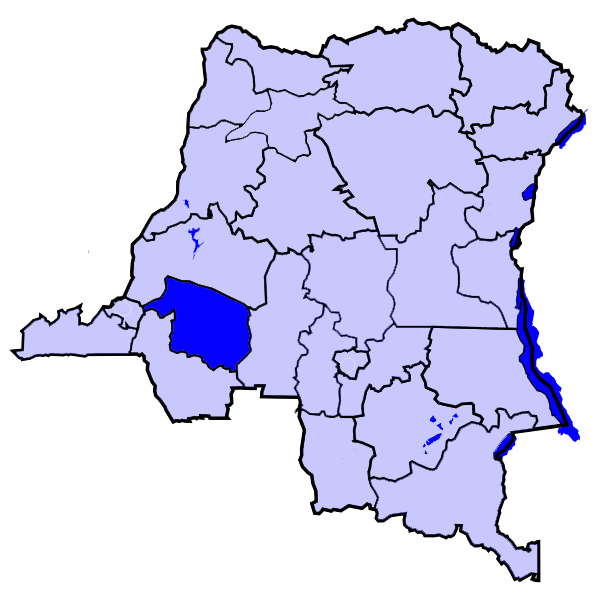
According to provincial health authorities in Kwilu province, in western Democratic Republic of the Congo (DRC), 419 cases of cholera, including 30 deaths, have been recorded since the beginning of June in four health zones.
Following Bandundu and Kikongo, the health zones of Mokala and Ipamu have also recorded cases of cholera. To date, the outbreak remains active in these two zones, while no new cases have been reported in Bandundu and Kikongo.
In the Bandundu health zone, 212 cases have been reported, including 14 deaths. More than 198 people who received care have been declared recovered and discharged from health facilities.
In Kikongo, 166 cases have been recorded, including 8 deaths. More than one hundred patients have also been declared recovered, while no new cases are currently reported in this health zone.
However, the situation remains worrying in Mokala and Ipamu, where health teams are continuing interventions to contain the spread of the disease.
According to health authorities, the consumption of unsafe water from the Kasai River is one of the main factors contributing to the transmission of cholera in the region.
Water chlorination is among the main measures taken in the affected areas. Operations are being carried out in Piopio and Panu, in the Mokala health zone, and in Kinkole, in the Ipamu health zone.
The response to this epidemic is supported by both the central government and the Kwilu provincial government. Water treatment supplies, personal protective equipment for healthcare workers, and disinfection equipment for infected sites have been provided to the teams involved in combating the epidemic.
According to the Africa CDC, since the beginning of the year, more than 33,000 total cases and 943 deaths.
Outbreak News Today is a reader-supported publication. To receive new posts and support my work, consider becoming a free or paid subscriber.
One of the world’s most ambitious neutrino experiments, the Deep Underground Neutrino Experiment (DUNE), is being built to catch some of the universe’s most elusive particles, but finding those fleeting signals may soon involve artificial intelligence.
As the massive detector takes shape a mile underground in South Dakota, researchers are developing AI systems to sort through huge amounts of data, identify neutrino interactions, spot signs of a stellar explosion and even detect problems inside the detector.
This could fundamentally change how scientists run a particle-physics experiment at DUNE’s scale.
For instance, instead of waiting for conventional analysis to work through enormous amounts of data, AI could identify important events in near real time and direct researchers toward the signals most worth investigating.
“These approaches are going to really accelerate DUNE in terms of the commissioning process and the sensitivity of the experiment to reach our full discovery potential,” Sowjanya Gollapinni, a representative from DUNE, said.
Can AI read ghost-particle tracks?
Neutrinos are notoriously difficult to study. Trillions pass through our bodies every second, yet they interact so rarely that detecting them requires an enormous detector and an intense neutrino beam.
Fermilab will generate a powerful neutrino beam that will travel to a detector at the Sanford Underground Research Facility in South Dakota, where huge chambers filled with liquid argon will record the tiny traces left when neutrinos collide with argon atoms.
Keeping so much argon in the right state is itself a huge engineering challenge. Each of DUNE’s two planned far-detector cryostats will eventually house about 17,000 tons of liquid argon, kept at roughly −300°F. The massive cryogenic containers must keep the argon cold enough for the detector to work.
However, the problem does not end when a neutrino is detected. Every interaction can produce several particles, each leaving a trail through the argon.
Scientists must work backward through those tracks to determine where the collision occurred, what particles were created, and what the original neutrino’s energy and direction were.
Fermilab researchers have already spent years testing whether machine learning can make this process faster. The MicroBooNE experiment was among the first high-energy physics experiments to use deep neural networks to analyze images from a liquid-argon detector. DUNE is now taking that approach much further.
“We are going to have very high resolution, almost photographic-quality images of these interactions. Which is great, but also brings challenges such as making reconstruction more difficult because we see such fine detail.” ,” Leigh Whitehead, an AI expert at DUNE, said.
An AI lookout for exploding stars
DUNE’s AI will also be searching for something far rarer—a supernova in our galaxy.
When a massive star collapses and explodes, neutrinos escape from its interior and can reach Earth before the burst of light becomes visible. This gives scientists an unusual opportunity to study the violent processes occurring inside a dying star.
DUNE’s giant liquid-argon detector is being built in part to capture neutrinos from astrophysical events such as nearby supernovae.
An AI trigger will continuously monitor DUNE’s detector for the telltale pattern of a supernova neutrino burst. If it finds a promising signal, the system is designed to preserve data from 10 seconds before to 100 seconds after the candidate event.
This could give astronomers an early warning, allowing telescopes to turn toward the exploding star while its light is still arriving.
The neutrinos themselves could reveal what the explosion leaves behind — potentially a neutron star or a black hole. This makes DUNE part particle detector, part cosmic early-warning system.
AI could become DUNE’s technician
There is another problem hidden inside DUNE’s enormous scale, which is keeping the detector running. Thousands of components must operate together underground, and operators need to respond quickly when something goes wrong.
Researchers are therefore investigating whether a large language model could search through records of previously solved problems and point operators toward relevant fixes.
Machine learning could eventually go a step further by recognizing patterns that indicate a detector anomaly before an actual failure occurs.
This approach, therefore, reflects a broader push to use AI throughout particle-physics experiments, where increasingly complex facilities are producing more data than conventional methods can easily handle.
Building an AI-powered physics experiment
DUNE will eventually produce petabytes of data, making fast and reliable analysis essential. Researchers are developing AI tools alongside the detector while working with national laboratories and universities to build the computing infrastructure needed to handle that flood of information.
The collaboration now includes more than 1,500 scientists and engineers from over 35 countries and CERN, while also training the next generation of researchers.
The AI systems will need to be developed and tested alongside the experiment, but if they work as intended, DUNE could become a model for how AI helps scientists operate massive experiments and find rare signals hidden in overwhelming amounts of data.
Long before chemistry was a formal science, humans were experimenting with substances to solve problems, cure illnesses and make money. In his book "The Age of Alchemy: How Early Innovators Shaped Modern Chemistry" (Profile Books, 2026), author Kit Chapman, a science journalist and honorary researcher at Falmouth University in the U.K., traces how this ancient, protoscientific tradition shaped the world.
From our ancestors' early use of fire to some accidental — and disastrous — pyrotechnics in the 14th-century French court of Charles VI, Chapman reveals how early innovations across the world paved the way for modern science.
Hannah Osborne: The book is full of brilliant historical anecdotes that bring all of these alchemy breakthroughs into context. What was your favorite one and why?
Kit Chapman: I mean, you can't go wrong with a man trying to turn his own urine into gold, I think. Hennig Brand [who accidentally discovered phosphorus in the 17th century] was one of my early touchstones. I've known about this story for a while. I've always thought, "How can I get this into a book? What's the link?" Obviously alchemy provides this fantastic base. He bankrupted two wives to try and fund his 1,500-gallon [5,700 liters] urine habit — and then he gets something [phosphorous], against the odds.
This is the first element we can actually put a name to. This is the first person we can say actually discovered a chemical element, and it's an alchemist in the purest sense of the word. Then, of course, he tries to keep it secret. He sells it, eventually, to a friend, and his urine goes on tour around Europe, showing the kings and queens this glowing pee, before suddenly, [chemist and philosopher] Robert Boyle actually works out exactly what's going on.
That, to me, sort of encompassed everything I was hoping for in the book. There's a fantastic story there that's about human connection. There's the unraveling of mythology, and theology and belief, and starting to look at science. But there's also real practical stuff going on there. He didn't know what he was doing. He just didn't know why he was doing it, and that I found fascinating.
HO: You make the point that these people weren't thinking, "Oh, I'm going to do chemistry." How important is that for understanding how these early innovations shaped modern knowledge of how things work?
KC: I think that's essential. We often look at science as something separate from the real world, and one of the things that I really wanted to do with this book was to illustrate that science is going on in every profession. It's going on in every home, continuously; it's going on in our bodies continuously. It's everywhere.
Science is a way to understand what's going on in the world. It is not a separate thing from culture, from belief, from trade, from globalization, from discovery, from just getting on with life. I wanted to bring in the potters, the weavers, the bakers, the urine salesmen — which was an entire thing that I didn't really know I had to go down. I found it fascinating.
And, of course, [there are] artisans. When we start looking at the first actual chemistry that's being done, it is people trying to create beautiful works of art, perfumes, things like that. It moves away from survival and into this ecstatic beauty, and that, to me, encompasses what I love about the history of science. It's bringing all of these threads together and making discoveries not necessarily where we think we're going to find them.
HO: You mentioned the beauty of it all, and the perfume. One of the chapters I really enjoyed was the first chemist who was a female perfume maker in ancient Assyria.
KC: Tappūtī Bēlet-ekallim. The fascinating thing is that the only reason we know her name is that she put it down in cuneiform. She wrote it down. She may well have been a slave; perfume makers were often slaves. She was certainly a woman who was working in the palace. She was working with another woman whose name, unfortunately, we've lost to time.
What I find fascinating is that we now have this person who was one of the working class, one of the underdogs, slaving for a week to make this potion that she wrote down because the recipe is incredibly detailed. And we remember her name, but we have no recollection of the lord or lady that she was actually making it for. It's kind of class warfare throughout the centuries.
HO: I found the extreme sort of secrecy really striking — that so many of these ancient texts were lost because they were being hidden. But then you also have the fall of civilizations, so we've lost all this knowledge.
KC: It's this combination of, as you mentioned, hiding the recipes because they are trade secrets. If you look at the first alchemy book that we actually know of — "Physika Kai Mystika" — it literally translates as "natural and secret questions" or trade secrets. These were craftsmen, and, of course, they didn't want to share it with rival craftsmen. If you've got a really good recipe for making something look like gold, you want to keep that to yourself.
They use these code words — and that went all the way through into what we think of as alchemy, that sort of Renaissance period where they're talking about taking the fiery sword from the belly of the dragon, which is just wonderful and descriptive.
But you also have things like Emperor Diocletian destroying the texts in Alexandria in 300 A.D. Why did he do it? Because it was a matter of survival for him. Twenty-five of his predecessors were murdered by their own guards or died of plague and things like that — horrible fates. He wanted to avoid that, and the idea that [someone] could turn something into gold terrified him. It would debase his currency, so it always brings in that politics. It brings in human nature and human curiosity.
HO: Do you think there are still things we're yet to discover from alchemy from the past?
KC: Yeah, without question. Whether or not we're going to discover some kind of new, groundbreaking technology that's going to change the world, I can't see that happening. But the one thing we could see is the use of natural products in a way that we hadn't necessarily thought [of].
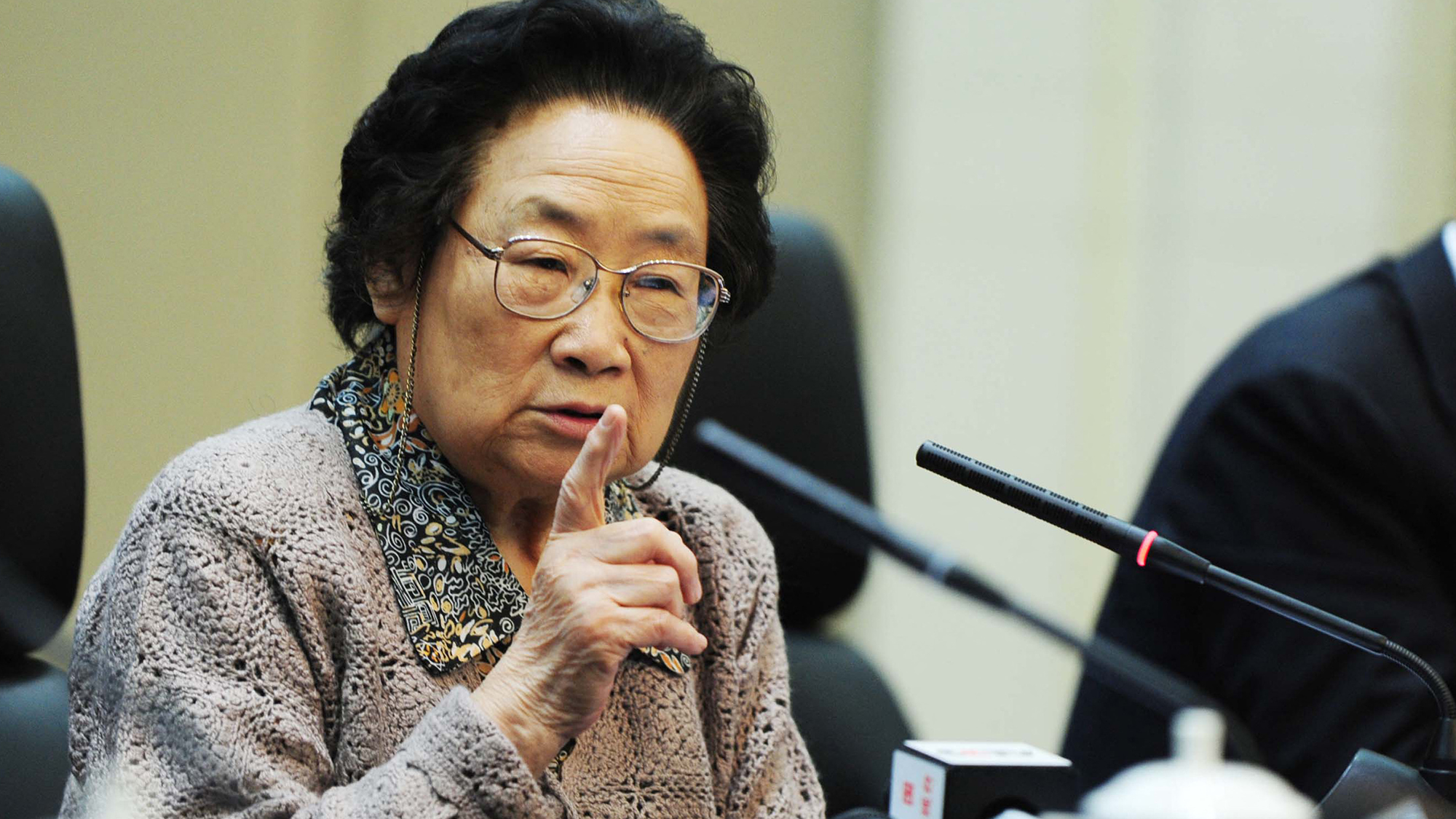
A great example of that is [Nobel Prize-winning chemist] Tu Youyou and the discovery of artemisinin compounds [from the] qinghao [plant], which comes from a Chinese alchemist's herbal remedies book, essentially 1,700 years ago. The fact that the best defense we have against malaria, the best antimalarials possible, comes from this ancient alchemical source indicates that there's probably more to find.
Nobel Prize winner Tu Youyou (Image credit: STR / Stringer via Getty Images)
There is almost certainly more to find in terms of how they [ancient alchemists] used recipes, how they would try and make gold. Their understanding of the world is something that we don't necessarily have a full grasp of, and we're still piecing it together. There's some wonderful work being done by Matteo Martinelli and others looking at the history of, particularly of Western alchemy emerging in Egypt.
We also have things like Greek fire. We have a pretty good idea how they did it, but if you're looking for what the exact recipe [is], we're still not 100% sure.
HO: It's interesting now, watching modern equivalents taking place. We still, to an extent, try to guard our own knowledge.
KC: Yeah, we do, and I think it's actually a pernicious thing in science. We have this publish-or -perish mentality, which is that if we don't get the paper out first, obviously we lose the patent, but wider than that, we lose the kudos. There's this kind of necessity to kind of hide things. You hear about all kinds of shenanigans — a reviewer delaying a paper until their paper comes out, things like that, all this kind of naughtiness going on.
We've got to recognize that science has moved on certainly from the "Great Man" idea. We're now working collaboratively in teams. That is the only way that modern science gets done. The second, if there is one lesson from the book, it's that if you try and hide science, you delay progress.
If you look at the traditional story of science, we talk about Europe. Occasionally, we might bring in China. But India, Africa, Mesoamerica, South America, North America — every single continent was having scientific discoveries and developments.
The moment you actually start spreading ideas, the real ignition for me for the Renaissance and for what becomes chemistry, is the printing press. It's the fact that ideas can then be shared and accessed by everybody. The moment we start realizing that science is a global endeavor, that everyone can do it — man, woman, child, it doesn't matter your nationality, [it] doesn't matter your ethnic ethnicity, it's for everybody — the sooner we're going to start seeing some major progress that we otherwise wouldn't make.
HO: We see loads of the advances in chemistry and alchemy within civilizational melting pots. What were some of the biggest surprises to you when you were researching the book?
KC: One thing that really annoyed me was, looking through textbooks, you can look at who made zinc, and you come up with a name that came from the 1700s, or how platinum was discovered — that's a fantastic example. Platinum was discovered by a conquistador who noticed that some natives were wearing platinum. But, of course, he didn't discover it; it was discovered by the Indigenous populations.
The amount of science that came out of Mesoamerica, Central America, and the way that science was also being developed in India, it's just kind of completely overlooked. If you look at the traditional story of science, we talk about Europe. Occasionally, we might bring in China. But India, Africa, Mesoamerica, South America, North America — every single continent was having scientific discoveries and developments.
They weren't necessarily developments that we think of in terms of leading to chemistry, but they were dealing with social problems that they had at the time. They were tackling what was in front of them, and we always need to remember when we're looking at history to look at the context of the discoveries.
HO: Which breakthrough did you think was most impressive in terms of the materials or facilities that were available?
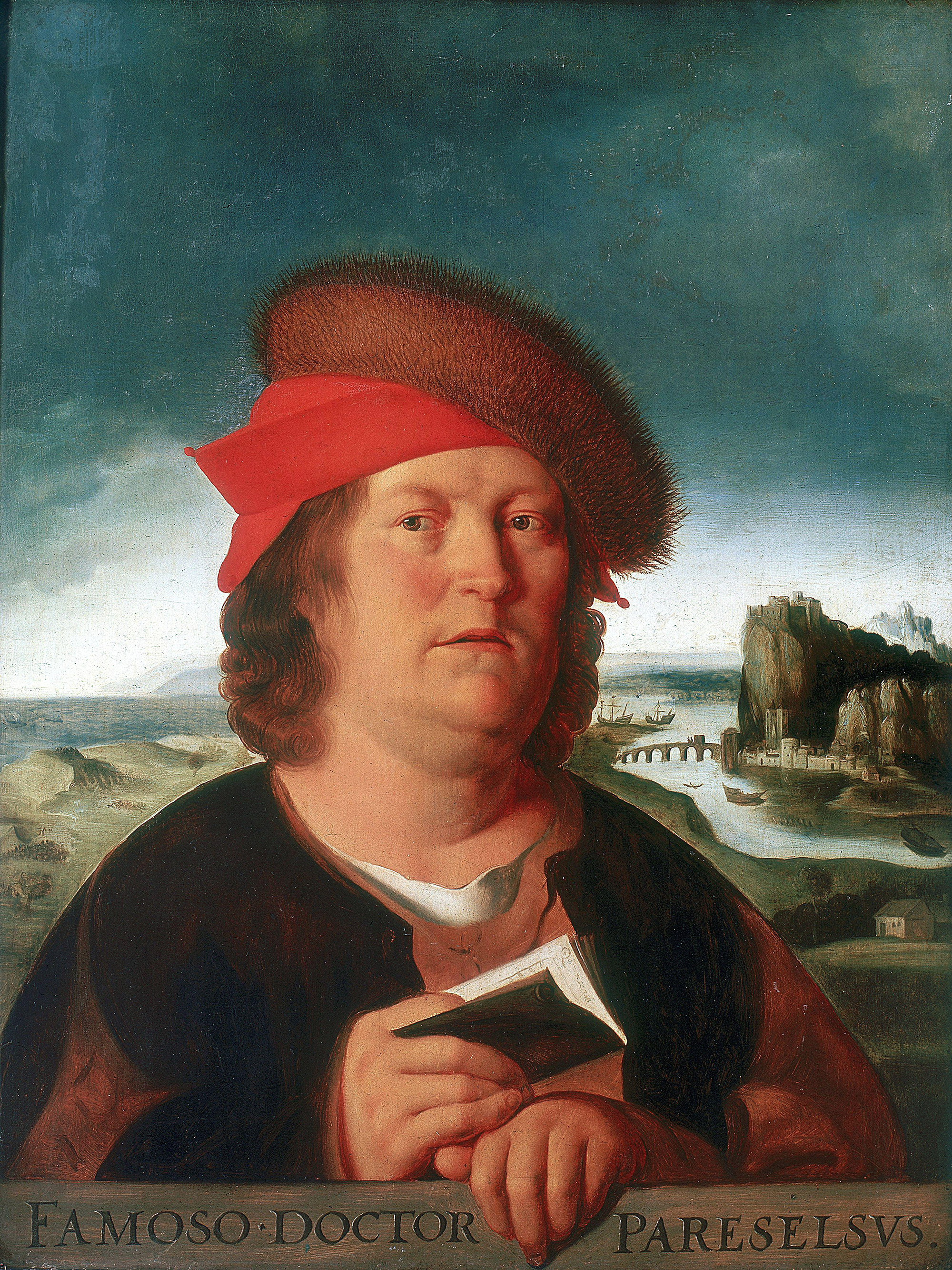
KC: One thing that I found sort of striking was, there's a chap called Paracelsus who is absolutely fascinating, absolutely bonkers. Paracelsus is, for me, the archetypical alchemist because he was certainly trying to revitalize medicine and get rid of humor theory and come up with all these ideas. [Editor's note: Humor theory is the idea that human health and temperament were related to four fluids in the body — black and yellow bile, blood and phlegm.] But he also believed that mermaids were real and that they were just out to steal men's souls.
A painting of Paracelsus. (Image credit: GL Archive via Alamy)
He was a drunk, he had a broadsword, and yet he's the guy that was able to combine what we think of as the traditional herbalist role and the doctors. At that point, doctors weren't even touching patients. They believed that the true skill of a medical man was that you didn't even need to examine a patient; you could just sort of look at them and you'd know what was wrong. He [Paracelsus] was able to say, "No, that's not right; you need to actually test things, and you need to try things." The moment we actually combine those two different threads together is when we actually started to get what becomes of modern medicine. The number of lives that saves is incalculable, so I think that that's one of the great moments.
The other one that always comes to me is Antoine Lavoisier in the French Revolution. He made several great discoveries — the fact that matter can only be changed; it can't be destroyed [at least at low energies]. The idea that if you take something, then obviously there's got to be components to that; you're not making it out of thin air. And coming up with a list of elements in the French Revolution or just before the French Revolution, unfortunately dies, from the guillotine [when Lavoisier was executed].
That, for me, was when we started to get true chemistry. That's when all of the magic is dispelled. I think he [Lavoisier] is, for me, the French equivalent of Isaac Newton. He's incredible.
HO: For you personally, throughout researching and writing the book, what was your biggest takeaway and what was the biggest surprise?
KC: My biggest takeaway is that science happens everywhere continuously through everyone. I traveled around the world for this book; I went to pretty much all of the continents. I didn't go down to Australia; that's about it. Wherever you go, there are discoveries being made. There are people who are trying to make their worlds better.
Science is not for this elite group; it's for everyone. One of the things I try to do with this book is to show people that even if you think that science isn't for you, it absolutely is; you're doing science continuously.
There've been so many [surprises]. One of the things — this is purely because of the way that I was taught and these inherent biases that we have — but it's so easy to overlook the role of women. When you start delving into the role of women in science … You've mentioned Tappūtī; we also have Mary the Jewess. Throughout the Renaissance, we have people like Caterina Sforza and [the] very famous Queen Christina of Sweden, which I didn't mention in the book because I just didn't have space.
The one shocker for me is this book "The Secrets of Isabella Cortese," which was a man pretending to be a woman to sell his science book. For me, [it] just kind of unravels this whole idea that science isn't for everyone.
This interview has been condensed and edited lightly for clarity.
profilebooks
The Age of Alchemy (Hardback)
"Age of Alchemy" is a fascinating and funny dive into chemistry long before chemistry existed. It captures the ingenuity of humans across cultures and time, revealing how ultimately the work of these early innovators would eventually meld into modern science.
A missão CHEOPS vai continuar a funcionar como uma espécie de laboratório orbital, ajudando a responder a algumas das perguntas mais antigas da humanidade: como se formam os planetas e quantos deles podem ser semelhantes à Terra.
Scientists have discovered China’s first known freshwater cave snail, an eyeless species so rare that only three living adults have been found. Deep inside a mountain cave in southwestern China, scientists found an animal that appears built for a world where sunlight never reaches. The tiny freshwater snail has no eyes, almost no color, and [...]
Whether you’re training hard, traveling often, or dealing with poor circulation, these are the best compression boots for anyone looking for better muscle recovery.
Antarctic guides walked away from their dream jobs after tourism’s environmental damage became impossible to ignore. “You’d see massive glacier calvings, and you’d just want to cry. But all the guests would be cheering. And you’d be like … ‘Can you not put two and two together?’” Those are the words of a former Antarctic [...]
A detective who helped jail a paedophile for 23 years has been sacked and placed on the same blacklist as rapists and murderers for criticising trans strip-search rules.
Artificial intelligence chipmaker Moore Threads Technology Co. said it plans to list in Hong Kong at an “appropriate time” after its shares have surged more than 420% since their Shanghai debut last year.

 Login

 A protein called TRAILshort may act as a central immune brake that limits T-cell responses and CAR-T therapy. Cancer cells can weaken the immune system by producing a protein that prevents its most important defenders from attacking. Mayo Clinic researchers have identified how this protein works, revealing a possible target for treatments designed to improve [...]