❌

Normal view

AI-based system developed to better detect toxic online content

16 June 2026 at 23:00
A Concordia-led team of researchers has developed a new artificial intelligence-based method of detecting toxic online content that is faster and more accurate than existing tools. The system is designed to ensure social media platforms can reliably prevent user-generated content they deem harmful from appearing online.

The Bougainville community in Panguna wants justice for mining’s ‘toxic legacy’

16 June 2026 at 22:35
Theonila Roka Matbob grew up next to what was — at the time — the world’s largest open-pit mine in Bougainville, an autonomous region in Papua New Guinea, operated by a subsidiary of Rio Tinto. This mine wrought environmental and social devastation on the community of Panguna for decades. And many of these impacts carry on today, says Roka Matbob, who is an Indigenous Nasioi woman and politician. With the help of Jubilee Australia and the Human Rights Law Centre, Roka Matbob was able to file a legal complaint with Australia’s National Contact Point for Responsible Business Conduct. As a result, Rio Tinto signed a memorandum of understanding with the Bougainville government to remediate the impacts of this mine. For this legal achievement, Roka Matbob was awarded the Goldman Environmental Prize. However, she is skeptical that remediation for these impacts will occur. She joins the podcast this week to tell the Bougainville story and what she wants people to understand about mining’s impacts on the autonomous region and her community. “ The Bougainville story is a result of Australia’s political decision through Papua New Guinea government now implemented on Bougainville and leaving behind a toxic legacy that is already been kind of fenced out, not to have a forum to talk about,” she says. “So my intention is for us to start telling this story.” Late last year, the Bougainville government signed another memorandum of understanding with an Indian metals company, Loyd’s Metals, to redevelop the Panguna mine. Roka Matbob says…This article was originally published on Mongabay

Catchment Lithology Shapes Antarctic Peninsula Carbon Balance

16 June 2026 at 22:34

In a groundbreaking study set to reshape our understanding of polar carbon dynamics, researchers have uncovered that the lithology of catchment areas along the Antarctic Peninsula plays a pivotal role in regulating the net carbon balance of these fragile ecosystems. This revelation not only challenges previous assumptions regarding carbon sequestration in polar regions but also highlights the complex interplay between geology and climate change in one of the planet’s most sensitive areas.

For decades, scientists have grappled with accurately quantifying carbon fluxes in polar environments due to the extreme conditions and limited accessibility. The Antarctic Peninsula, stretching northwards from the main Antarctic continent, represents a unique geophysical interface where ice, rock, and ocean converge. Prior research predominantly focused on biological and climatic factors controlling carbon balance but seldom accounted for the geochemical contributions borne from the underlying lithology. This new research sets a transformative precedent by rigorously dissecting how rock types influence carbon absorption and release processes, thereby painting a more nuanced picture of the peninsula’s carbon budget.

The study relied heavily on state-of-the-art field measurements coupled with advanced geochemical modeling to parse out the contributions of catchment lithology—essentially the rock makeup and mineral composition of drainage basins—to net carbon balance. Geological substrates act not only as passive backdrops but as active participants in biogeochemical cycles. Chemical weathering of silicate and carbonate minerals can sequester atmospheric carbon dioxide, while other rock forms may facilitate carbon release via mineral dissolution or hydrological transport mechanisms. The research team meticulously sampled various catchment zones along the peninsula, integrating data from frozen soils, sediment runoff, and meltwater streams to decode these lithological influences.

One of the most striking findings from the investigation was the spatial variability of carbon fluxes directly correlated with geological heterogeneity. Catchments dominated by silicate-rich bedrock exhibited higher carbon sequestration capabilities through rock weathering processes compared to those underlain by carbonate lithologies, which tend to release carbon dioxide during dissolution. This variability suggests that predictions of polar carbon dynamics need to incorporate detailed geological maps and lithological classifications for greater precision. Such insights could significantly improve climate models that currently struggle with polar region parameterization.

Moreover, the researchers illuminated the role of mineral weathering as a long-term sink for atmospheric CO2, contrasting the widely documented biological sinks such as phytoplankton blooms and moss growth. In particular, the slow yet persistent process of silicate mineral weathering draws down carbon dioxide, converting it into bicarbonate ions that are flushed into the ocean. This naturally occurring geological carbon pump could be particularly impactful in the Antarctic Peninsula where rapid glacial retreat exposes fresh silicate rock surfaces, enhancing weathering rates. These observations offer compelling evidence that geological processes may buffer climate change effects, at least regionally, by locking away carbon in mineral forms.

Intriguingly, temporal data spanning multiple melt seasons revealed that net carbon balance is highly sensitive to seasonal variations in temperature and hydrology, which themselves are modulated by lithological factors. For example, catchments composed of permeable volcanic rocks exhibited more pronounced meltwater infiltration, accelerating mineral weathering and carbon sequestration during warm months. Conversely, less permeable sedimentary formations tended to trap water and organic carbon within soils, affecting the timing and magnitude of CO2 fluxes to the atmosphere. This complex feedback between lithology, hydrology, and climate underscores the necessity of interdisciplinary approaches when assessing polar carbon systems.

The implications of these findings reverberate far beyond academic curiosity. As the Antarctic Peninsula experiences some of the fastest warming rates on Earth, understanding the controls on carbon balance is critical for forecasting future climate trajectories. If lithological variability leads to differential carbon sequestration zones, then localized geological disruptions caused by melting glaciers or human activity could substantially alter regional carbon budgets. This knowledge is paramount for policymakers designing effective climate mitigation strategies, particularly in sensitive high-latitude environments where carbon feedbacks may accelerate global warming.

In addition to geochemical and climatological impacts, the study also highlights the potential for emerging technologies such as remote sensing and machine learning to map lithological controls at unprecedented resolution. By integrating satellite imagery with field data, researchers can create predictive models that swiftly identify carbon hotspots and areas vulnerable to carbon loss. This approach holds promise not only for Antarctic research but for global efforts to monitor and manage terrestrial carbon stocks in the face of escalating environmental change.

Furthermore, the interdisciplinary team behind this research underscores the importance of collaboration across geology, ecology, and atmospheric science disciplines. Only through such synergies can the subtle yet powerful effects of geological substrates on biogeochemical cycles be fully appreciated. This holistic perspective marks a paradigm shift in polar science, encouraging future studies to transcend traditional boundaries between earth sciences and climate research.

The work also invites a reevaluation of how catchment-scale processes are incorporated into Earth system models. Historically, these models have neglected fine-scale lithological heterogeneities, instead favoring generalized assumptions about soil and sediment carbon storage. The evidence provided by this study advocates for embedding lithological parameters into model architectures, enabling more accurate simulations of polar carbon dynamics under variable climatic scenarios. Such advancements are vital for anticipating tipping points in Antarctic ecosystems where abrupt changes could trigger widespread carbon release.

As global attention intensifies on polar regions as bellwethers of climate change, the intricate connection between rocks beneath our feet and atmospheric carbon cycles comes sharply into focus. The Antarctic Peninsula serves as a natural laboratory, revealing that the geology beneath evolving ice landscapes is not merely inert background but an active, dynamic component influencing the Earth’s carbon footprint. These insights champion a new era where geosciences play a central role in unraveling planetary carbon mysteries and inform global climate stewardship.

To realize the full potential of these findings, continuous monitoring and expanded field campaigns will be indispensable. The study sets a benchmark for future Antarctic research by demonstrating how integrative methodologies can decode complex environmental phenomena. With accelerating climate pressures threatening polar ecosystems, unraveling the lithological control on carbon balance becomes not just an academic endeavor but an urgent imperative for humanity’s environmental resilience.

In conclusion, this landmark research elegantly reveals how the mineral composition and geological characteristics of Antarctic catchments exert profound control over carbon exchanges between land, atmosphere, and ocean. By amalgamating detailed geochemical analyses with ecological and climatic data, the study enriches our comprehension of polar carbon cycling and offers tangible pathways to improve global climate models. As the Antarctic Peninsula continues to reshape itself under warming skies, understanding the lithological underpinnings of its carbon dynamics will be essential for predicting its role in the Earth’s future climate narrative.


Subject of Research: Geology and carbon cycling in the Antarctic Peninsula catchments

Article Title: Catchment lithology controls net carbon balance along the Antarctic Peninsula

Article References:
He, S., Zhang, X., Hu, H. et al. Catchment lithology controls net carbon balance along the Antarctic Peninsula. Nat Commun (2026). https://doi.org/10.1038/s41467-026-74667-9

Image Credits: AI Generated

A new explanation for the mystery death of Botticelli's Birth of Venus model, Simonetta Vespucci

16 June 2026 at 22:30
A paper on new research into the cause of death of Simonetta Vespucci, model for the world-renowned Birth of Venus by Sandro Botticelli, has been published by researchers at Queen Mary University of London, Universita Campus Bio-Medico di Roma and the University of California in the journal Endocrinology, Diabetes & Metabolism.

Rain along the Gulf Coast could become the first named storm of the Atlantic hurricane season

16 June 2026 at 22:27
MIAMI (AP) — A cluster of storms along the Gulf Coast could become the first named tropical storm of the 2026 Atlantic hurricane season, the National Hurricane Center said. The storms threatened to bring heavy downpours that could lead to dangerous floods across southern states including Texas and Louisiana. The system was centered Tuesday afternoon about 55 miles (85 kilometers) south-southwest of Corpus Christi, Texas, according to a hurricane center advisory. National Hurricane Center director Michael Brennan said meteorologists are expecting the system to strengthen, possibly into a tropical storm by early Wednesday. But coastal areas could experience tropical storm conditions this week, even if the system doesn’t officially get a name, Brennan said. “The main hazard with these types of systems is largely the flooding from the heavy rainfall,” Brennan said. “And we could see potentially life-threatening flash and urban flooding across the Texas coast eastward into central Mississippi through Thursday. Prolonged rainfall may extend the flood threat into the weekend.” Tornadoes were possible from the upper Texas coast across southern Louisiana, Mississippi, Alabama and the Florida Panhandle, forecasters said. The storm’s maximum sustained winds were around 30 mph (45 kph) Tuesday, just shy of the 39 mph (63 kph) needed to be named a tropical storm. The system had a 70% chance of forming into a tropical cyclone over the next two days, the hurricane center said. Houston, where a World Cup match between Portugal and the Democratic Republic of the Congo is scheduled for Wednesday, has been under a flood warning since…This article was originally published on Mongabay

VivaTech : IA, drones, robots... et Sciences et Avenir

Robots humanoïdes, intelligence artificielle, souveraineté numérique... et Jeff Bezos. Du 17 au 20 juin, le plus grand salon européen de l'innovation se tient à Paris. Sciences et Avenir y organisera samedi une conférence consacrée aux deepfakes et aux nouveaux défis de l'information.

SE PREPAREM

16 June 2026 at 22:22

💾

USE O CUPOM SCHWARZA E GANHE ATÉ 30% DE DESCONTO EM TODO SITE: https://creators.insiderstore.com.br/SCHWARZA
#insiderstore

SE PREPAREM Na notícia de hoje: Uma teoria curiosa vem ganhando força nas redes sociais após publicações de internautas, influenciadores e da suposta vidente @PaladinRood. Segundo essas alegações, uma manifestação extraterrestre poderia ocorrer durante a final da Copa do Mundo, com base em previsões mediúnicas, profecias e supostos vazamentos relacionados a OVNIs.

Em maio de 2023, em Peruíbe (SP), uma testemunha registrou em vídeo um objeto alongado e brilhante voando a baixa altitude sobre a cidade.

Alienígena vivo mantido em cativeiro em Kapustin Yar, 1992.

Contato PROFISSIONAL: canaldoschwarza@gmail.com

Contato para palestras: juliana@vesperassessoria.com.br


Fontes:

https://www.ovnihoje.com/2026/06/14/videntes-preveem-aparicao-alienigena-na-final-da-copa-do-mundo/

@enigmas_fantasticos_

Subscription required? Newspaper paywalls scatter most readers but provide surprising value

16 June 2026 at 22:20
Paywalls are essential to the financial sustainability of news organizations, yet little is known about how readers respond when they encounter one. Do they subscribe, continue reading free content, look for ways around the paywall or leave the site altogether?

NASA’s Webb Catches Exoplanet Getting Roasted

16 June 2026 at 22:15
 
4 Min Read

NASA’s Webb Catches Exoplanet Getting Roasted

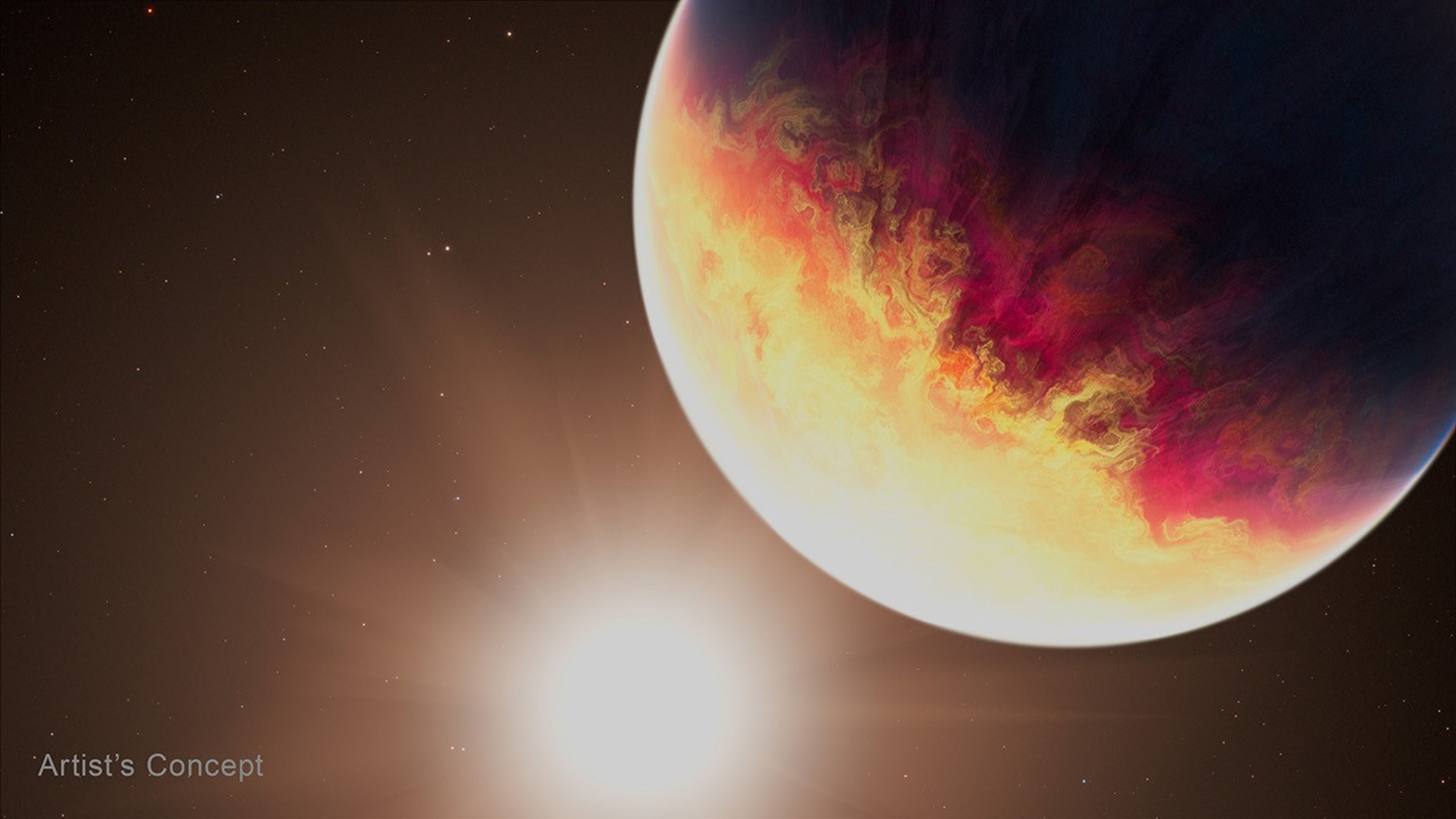
Illustration of a planet and a star, labeled artist’s concept at the bottom left. The planet fills more than a quarter of the image to the upper right, with the bright star to its lower left. The planet is white hot on the star side, fading to yellow that mixes with swirls of bright red across its middle, and eventually fading to black on the side most distant from the star. Distant stars dot the background of space, which is black near the edges of the frame.
This artist’s concept shows exoplanet HD 80606 b being “roasted” as its orbit approaches periastron, the point at which it is closest to its host star, which is similar to our Sun.
Credits: Artwork: NASA, ESA, CSA, Joseph Olmsted (STScI)

4 min read

NASA’s Webb Catches Exoplanet Getting Roasted

One well-done gas giant, coming right up! That’s the latest from researchers analyzing NASA’s James Webb Space Telescope’s observations of HD 80606 b, an exoplanet four times the mass of Jupiter with an extremely elliptical orbit that sweeps close by its Sun-like star. The research team is presenting their study and preliminary findings Tuesday at the 248th meeting of the American Astronomical Society in Pasadena, California.

“Hot Jupiters are already considered some of the most extreme exoplanets we know of, but even among that population, HD 80606 b is one of the most extreme,” said Tiffany Kataria, the study’s principal investigator at NASA’s Jet Propulsion Laboratory in Southern California. “We typically think of hot Jupiters as hot gas giants sitting right next to their stars, but this planet’s highly eccentric orbit creates a completely different beast.”

As the planet plunges close to its star, Webb shows its temperature skyrockets by 1,100 degrees Fahrenheit. Previous studies have shown that radical temperature swings can cause an exoplanet’s chemistry and clouds to change in real time. According to the research team, the dynamic conditions of HD 80606 b make the planet an ideal target to observe these changes with Webb’s powerful instruments.

Image: Artist’s concept exoplanet HD 80606 b

Illustration of a planet and a star, labeled artistu2019s concept at the bottom left. The planet fills more than a quarter of the image to the upper right, with the bright star to its lower left. The planet is white hot on the star side, fading to yellow that mixes with swirls of bright red across its middle, and eventually fading to black on the side most distant from the star. Distant stars dot the background of space, which is black near the edges of the frame.
This artist’s concept shows exoplanet HD 80606 b being “roasted” as its orbit approaches periastron, the point at which it is closest to its host star, which is similar to our Sun.
Artwork: NASA, ESA, CSA, Joseph Olmsted (STScI)

“Observing a planet like HD 80606 b is actually very efficient because its unusual orbit, with the corresponding swings in temperature and chemical composition, allow us to gather data under varying conditions in just hours and apply those findings to other hot Jupiters or more conventional exoplanets,” said Laura C. Mayorga, co-investigator on the study and an exoplanet astronomer at the Johns Hopkins Applied Physics Laboratory in Laurel, Maryland.

Measurements of temperature and chemical composition were done with spectroscopy, a technique scientists use to break light into its component colors to reveal information about the composition, temperature, motion, and physical properties of objects in space. The team used Webb’s MIRI (Mid-Infrared Instrument) for an extended observation of HD 80606 b before, during, and after its periastron, or closest pass by its star. During periastron, the planet also passed behind the star from Webb’s perspective in what’s known as a secondary eclipse. The observation was years in the planning, as scheduling the time to catch the planet at this point was complex given its extremely elliptical 111-day orbit, and Webb’s own restrictions on where it can look during specific times of the year, based on Earth’s position in orbit around the Sun.

Researchers say they have only begun to peel back the layers of an incredibly rich dataset, but they can clearly see a dramatic shift in the exoplanet’s temperature. “Webb has shown that the planet’s increase in temperature was even more extreme than we anticipated based on Spitzer data,” said Kataria.

In fact, the planet had already been dubbed the “roasted exoplanet” and even got its own poster in NASA’s popular series. NASA’s now-retired Spitzer Space Telescope laid the groundwork of infrared observations of HD 80606 b, showing that more detailed spectroscopic data from Webb would be especially compelling.

“Spitzer did amazing work on this exoplanet, and now Webb is building on that legacy by enabling us to drill down to distinguish specific chemical signatures like methane and carbon dioxide, which is just amazing progress,” said Ryan Challener, co-author and research associate at the Cornell Center for Astrophysics and Planetary Science. “There’s so much to learn from this one dataset here — we really are just getting started deciphering what Webb has to tell us.”

The James Webb Space Telescope is the world’s premier space science observatory. Webb is solving mysteries in our solar system, looking beyond to distant worlds around other stars, and probing the mysterious structures and origins of our universe and our place in it. Webb is an international program led by NASA with its partners, ESA (European Space Agency) and CSA (Canadian Space Agency).

For more information on Webb, visit:

science.nasa.gov/webb

Downloads & Related Information

The following sections contain links to download this article’s images and videos in all available resolutions followed by related information links, media contacts, and if available, research paper and Spanish translation links.

Related Images & Videos

Illustration of a planet and a star, labeled artistu2019s concept at the bottom left. The planet fills more than a quarter of the image to the upper right, with the bright star to its lower left. The planet is white hot on the star side, fading to yellow that mixes with swirls of bright red across its middle, and eventually fading to black on the side most distant from the star. Distant stars dot the background of space, which is black near the edges of the frame.

HD 80606 b (Artist’s Concept)

This artist’s concept shows exoplanet HD 80606 b being “roasted” as its orbit approaches periastron, the point at which it is closest to its host star, which is similar to our Sun.

Related Links

Este Artículo en Español – “Telescopio Webb de la NASA Detecta un Exoplaneto Asandose”

Read:  Webb’s Impact on Exoplanet Research

Watch:  How to Study Exoplanets: Webb and Challenges

Explore:  Eyes on Exoplanets

Print: The Roasted Exoplanet Poster

More Webb: News | Images | Science | Home Page

Share

Details

Last Updated
Jun 16, 2026
Contact
Media

Laura Betz
NASA’s Goddard Space Flight Center
Greenbelt, Maryland
laura.e.betz@nasa.gov

Leah Ramsay
Space Telescope Science Institute
Baltimore, Maryland

Hannah Braun
Space Telescope Science Institute
Baltimore, Maryland

The post NASA’s Webb Catches Exoplanet Getting Roasted appeared first on NASA Science.

Lawsuit demands accountability for Cerro de Pasco mining pollution in Peru

16 June 2026 at 22:14
A mine that has been operating for decades in the Peruvian Andes continues to contaminate the soil, water and air for thousands of people living nearby, according to a lawsuit filed last month. The contamination has displaced farming and livestock, the lawsuit said, while causing cognitive issues in children, among other public health concerns. Companies working at the Cerro de Pasco mine, located in Peru’s central highlands, need to be held responsible for the pollution and public health issues that have affected more than 100,000 people, according to Cerro de Pasco Mayor Julio Rupay Malpartida and public prosecutor Darwin Alejandro Ramón Yalico, who filed the injunction petition on behalf of the municipality. “[The] environmental contamination is on such a scale that it’s present in every corner of the city,” the lawsuit said, “a consequence of the accumulation of heavy metals and toxic substances.” The area has been home to mining activity since at least the 16th century, when the Spanish discovered silver deposits during colonization. More recently, the private company Volcan Compañía Minera took over the mines in 2000 and has overseen underground and open pit operations to extract silver, copper, zinc and lead, among other metals. The lawsuit also lists Volcan subsidiaries Óxidos de Pasco, Empresa Administradora Cerro and Empresa Minera Paragsha as defendants. The Cerro de Pasco mine from above. Image courtesy of SkyTruth/Flickr. CC BY-NC-SA 2.0 Some of the operation is located in the center of the city, with a population of more than 74,000. As a result, particulate…This article was originally published on Mongabay

Satellites Can Now Detect a City’s Hidden Vital Signs Before Humans Notice

16 June 2026 at 22:14
Network Technology Connects City NightA new satellite-based framework allows scientists to measure the changing rhythms of cities in near real time. Cities are often described as living systems, but until now that idea has mostly been a metaphor. Roads, buildings, parks, and neighborhoods change constantly, yet much of that activity is hard to see as it happens. By the [...]

Among the large new rockets Amazon was counting on, only Europe has delivered

16 June 2026 at 22:14

Amazon now has hundreds of flight-ready satellites standing idle in Florida, waiting to join the company's low-Earth orbit Internet constellation, an Amazon official said Tuesday.

"They're built, and sitting in a payload processing facility waiting for trips to orbit," said Steve Metayer, vice president of Amazon Leo Production Operations, during a teleconference with reporters. "And we're currently manufacturing several satellites a day."

Metayer spoke on the eve of the company's next mission, during which an Ariane 64 rocket will launch three dozen Amazon Leo satellites into orbit from a spaceport in French Guiana. Liftoff is targeted for 7:53 am ET (11:53 UTC) on Wednesday.

Read full article

Comments

© Amazon

France To Stop Certifying Products Without Quantum-Safe Encryption

By: BeauHD
16 June 2026 at 22:00
Starting in 2027, France's cybersecurity agency ANSSI will stop certifying security products that lack quantum-resistant encryption, effectively forcing government agencies and critical infrastructure operators to phase out older cryptographic systems. Reuters reports: Samih Souissi, ANSSI's chief of staff, said at the France Quantum conference that the agency would halt such certifications from 2027, and that businesses should be buying only quantum-safe products by 2030. ANSSI approval is required for use in French government agencies and critical infrastructure, making the policy a de facto phase-out of older encryption. "It's not only a technical issue," Souissi said. "It's a matter of governance, industrial planning, regulation, and sovereignty." The move reflects concern that attackers may store encrypted data now and unlock it later when quantum computers become strong enough to crack today's protections, a risk known as "harvest now, decrypt later."

Read more of this story at Slashdot.

Astrobotic unveils Griffin-1 lunar lander

16 June 2026 at 21:48
Griffin-1

Astrobotic showed off the lunar lander it plans to launch later this year that will be the vanguard of NASA’s new lunar base ambitions.

The post Astrobotic unveils Griffin-1 lunar lander appeared first on SpaceNews.

Astronaut Jessica Meir Assists With Hardware Updates for NASA’s Cold Atom Lab

16 June 2026 at 21:41
2 Min Read

Astronaut Jessica Meir Assists With Hardware Updates for NASA’s Cold Atom Lab

A woman in a black T-shirt with a headlamp affixed to her head and her hair floating up above her wears latex gloves to handle cabling that she’s working on. Wires, a laptop computer, and other equipment surround her.
PIA26725
Credits: NASA

Downloads

Astronaut Jessica Meir Assists With Hardware Updates for NASA’s Cold Atom Lab

JPEG (4.91 MB)

Description

NASA astronaut Jessica Meir inspects optical fibers while installing hardware updates to the agency’s Cold Atom Lab, or CAL, aboard the International Space Station on May 8, 2026.

About the size of a minifridge and operated from Earth, CAL chills atoms to temperatures below minus 459 degrees Fahrenheit (minus 273.15 degrees Celsius), so close to absolute zero that they form a large quantum object called a Bose-Einstein condensate (BEC) — a fifth state of matter distinct from solids, liquids, gases, and plasma. In a BEC, scientists can observe the quantum properties of atoms at a scale visible to the naked eye. For instance, atoms and particles sometimes behave like solid objects and sometimes behave like waves, a quantum property called “wave-particle duality.”

Managed by Caltech in Pasadena, NASA’s Jet Propulsion Laboratory designed, built, and operates Cold Atom Lab, which is sponsored by the Biological and Physical Sciences (BPS) division of NASA’s Science Mission Directorate at the agency’s headquarters in Washington. The BPS division pioneers scientific discovery and enables exploration by using space environments to conduct investigations that are not possible on Earth. Studying biological and physical phenomena under extreme conditions allows researchers to advance the fundamental scientific knowledge required to go farther and stay longer in space, while also benefiting life on Earth. 

To learn more about Cold Atom Lab, visit:

https://coldatomlab.jpl.nasa.gov/

The post Astronaut Jessica Meir Assists With Hardware Updates for NASA’s Cold Atom Lab appeared first on NASA Science.

❌