Reading view

Acridine Compound Binds VEGF, Cuts CAM Vascularization

In a groundbreaking advance that merges cutting-edge computational biochemistry with innovative biological experimentation, researchers have unveiled a promising acridine-derived small molecule capable of modulating vascular endothelial growth factor (VEGF) activity. This novel compound demonstrates a profound influence on angiogenesis, as evidenced by its remarkable capacity to reduce vascularization in the chick chorioallantoic membrane (CAM) model, a well-established in vivo system for studying blood vessel formation. The implications of this discovery ripple through the realms of cancer therapy, ocular diseases, and other pathological states driven by aberrant blood vessel growth.

VEGF holds a pivotal role as a signal protein that stimulates the formation of blood vessels during both normal physiological processes and pathological conditions such as tumor growth and retinopathies. Therapeutic strategies targeting VEGF have seen extensive development, yet limitations including drug resistance and side effects demand new molecular candidates. The recent study leverages sophisticated in silico methodologies—molecular docking, dynamic simulations, and binding affinity calculations—to identify and characterize a small molecule from the acridine chemical family that interacts intimately with VEGF, subtly altering its bioactivity.

The choice to explore acridine derivatives stems from their chemical versatility and known biological activities. These planar, heterocyclic compounds have historically been employed in medicinal chemistry, often displaying anti-cancer and anti-microbial properties. In the context of VEGF inhibition, the planar structure offers a potential to engage in pi-stacking and hydrogen bonding with amino acid residues critical for VEGF receptor binding, thereby competitively or allosterically modulating function.

In silico predictions yielded compelling data: molecular docking revealed a high-affinity binding site where the acridine derivative securely associates with VEGF, primarily through hydrophobic interactions augmented by selective hydrogen bonds. Such computational insights not only illuminate the structural basis of interaction but also guide the rational design of derivatives with enhanced specificity and potency.

Transitioning from computational work to biological relevance, the study employed the CAM assay to empirically evaluate the vascular inhibitory effects of the acridine molecule. The CAM, a highly vascularized extra-embryonic membrane of the developing chick embryo, serves as an indispensable model for angiogenesis owing to its accessibility, rapid growth, and close resemblance to mammalian vascular development. Application of the small molecule resulted in a discernible reduction of new blood vessel formation, validating the computational hypothesis and underscoring the therapeutic potential of the compound.

This synchronized approach—combining in silico modeling with in vivo CAM assays—represents a paradigm shift in drug discovery, optimizing resource efficiency while enhancing predictive accuracy. Moreover, the decrease in CAM vascularization indicates a direct functional impact on endothelial cells, potentially via inhibition of VEGF signaling pathways that govern endothelial proliferation, migration, and survival.

Understanding how this acridine-derived molecule impacts VEGF at the molecular level could redefine therapeutic strategies against diseases characterized by pathological angiogenesis. Tumors exploit VEGF-mediated angiogenesis to secure their nutrient supply, enabling metastasis and growth. Inhibitors that can selectively disrupt VEGF without off-target toxicity could offer a renaissance in anticancer treatment, overcoming resistance mechanisms that curtail current therapies.

In addition to oncology, proliferative diabetic retinopathy and age-related macular degeneration represent clinical arenas where VEGF modulation has transformed patient outcomes. Yet, current anti-VEGF agents often require frequent administration and pose risks including intraocular inflammation. A novel small molecule capable of sustained or enhanced efficacy may alleviate these burdens, improving patient compliance and safety profiles.

Furthermore, the pharmacokinetic properties intrinsic to acridine derivatives might facilitate advantageous drug delivery, including tissue penetration and cellular uptake, attributes vital for clinical translation. The planar aromaticity and modifiable side chains open avenues for chemical optimization, aiming to refine solubility, stability, and target selectivity.

The integration of advanced molecular simulations with experimental verification also sets a precedent for future small-molecule discovery. The ability to virtually screen vast compound libraries for VEGF interaction prior to costly biological assays accelerates the pipeline from concept to candidate. Such methodologies promise to expand the arsenal of antiangiogenic agents, potentially uncovering molecules that act synergistically or via novel mechanisms.

Notably, the research reinforces the significance of interdisciplinary collaboration, merging computational chemistry, molecular biology, pharmacology, and developmental biology. This multifaceted strategy enhances confidence in findings and facilitates a comprehensive understanding of small molecule–protein dynamics and their biological ramifications.

The study’s revelations extend an invitation to the broader scientific community to explore acridine derivatives’ potential beyond VEGF inhibition. With structural adaptability and diverse bioactivity profiles, these compounds may address other molecular targets implicated in inflammatory, infectious, or neurodegenerative diseases, where angiogenesis or protein–ligand interactions are pivotal.

As this acridine-based compound progresses towards clinical evaluation, it will be critical to scrutinize toxicological profiles, metabolic stability, off-target effects, and effective dosing regimens. The translational journey necessitates balancing efficacy with patient safety, a formidable yet attainable goal given the compound’s targeted action and promising preliminary data.

In conclusion, the synergistic study that couples in silico molecular modeling with the CAM assay sets a milestone in angiogenesis research. The identification of a small molecule that associates specifically with VEGF and demonstrates tangible reductions in vascularization heralds a new chapter in targeted therapeutic development. By refining our molecular toolbox against angiogenic diseases, this work not only expands scientific horizons but also holds promise for improving countless lives affected by disorders of vascular dysregulation.


Subject of Research: Interaction of an acridine-derived small molecule with VEGF to inhibit angiogenesis.

Article Title: Acridine-derived small molecule associates with VEGF and is linked to reduced CAM vascularization: a combined in silico and CAM study.

Article References:
Karmakar, S., Moulik, S., Ghosh, S. et al. Acridine-derived small molecule associates with VEGF and is linked to reduced CAM vascularization: a combined in silico and CAM study. BMC Pharmacol Toxicol (2026). https://doi.org/10.1186/s40360-026-01148-6

Image Credits: AI Generated

  •  

Genetic and Cell-State Evolution in IDH Gliomas

In a groundbreaking new study published in Nature, researchers have unveiled the intricate cellular landscape remodeling that underlies the progression of IDH-mutant gliomas, a prevalent form of brain cancer. By employing advanced single-cell RNA sequencing technologies and integrative computational analyses, the team dissected malignant cell states across different tumor grades and types, revealing a dynamic choreography dictated by genetic alterations and tumor microenvironmental interactions. This work not only enriches our understanding of glioma biology but also charts new avenues for targeted therapies aimed at halting tumor evolution.

The research delved into the abundance of malignant states by tumor type and grade, uncovering nuanced patterns that challenge previous assumptions. While most cell state distributions were similar across tumor types, oligodendrogliomas exhibited a notable increase in a neural progenitor-like (NPC-like) cell state, hinting at divergent differentiation pathways associated with tumor lineage. This observation was statistically robust, suggesting that lineage-specific programs might pre-condition these tumors to distinct malignant trajectories.

Tumor grade emerged as a powerful determinant of cellular state composition. Higher-grade tumors demonstrated a consistent decline in the differentiated astrocyte-like (AC-like) cell population coupled with an increase in mesenchymal-like (MES-like), undifferentiated, and proliferative cycling cells. This gradation vividly illustrates the stepwise dedifferentiation and heightened proliferative capacity that accompany malignancy intensification. Through rigorous validation using both bulk RNA deconvolution from TCGA and Glioma Longitudinal Analysis (GLASS) consortium data and external single-cell sequencing cohorts, these grade-associated shifts were confirmed as robust and reproducible across diverse datasets.

Spatial heterogeneity, often cited as a confounding factor in tumor biology, was scrutinized using spatially mapped single-cell data. Interestingly, malignant-state composition remained comparatively stable across distinct tumor regions within the same patient, indicating that cell state architecture is more profoundly influenced by temporal progression and genetic evolution than by spatial variation alone. This insight refines our understanding of intratumoral complexity and suggests that therapeutic strategies targeting specific states may achieve uniform efficacy within heterogeneous tumor masses.

Longitudinal analysis across treatment timelines brought to light profound cell-state dynamics associated with tumor recurrence. The investigators documented significant increases in MES-like, undifferentiated, and cycling states at recurrence, alongside a pronounced reduction in AC-like cells. This shift towards a less differentiated and more proliferative state mirrors the progression observed with increasing tumor grade, underscoring the parallelism between disease advancement and cell-state evolution. Intriguingly, these trends were observed across tumor types and persisted when restricted to primary astrocytoma diagnoses, highlighting their broad relevance.

A pivotal revelation emerged when correlating these cellular state changes with acquired genetic alterations associated with recurrence. Tumors harboring new genetic events such as hypermutation, enhanced somatic copy number variations, small deletions, and cell cycle disruptions exhibited greater increases in undifferentiated and cycling cell populations. This genetic crescendo was linked to an elevated stemness signature, emphasizing the coalescence of genetic instability with a more aggressive cellular phenotype. Conversely, MES-like state expansion appeared independent of these genetic changes, suggesting multiple pathways driving tumor plasticity.

Molecular distance metrics further corroborated the tight coupling between genetic alterations and transcriptional remodeling. Positive correlations between longitudinal mutational burden and transcriptional divergence encapsulate a model wherein genomic evolution fuels phenotypic heterogeneity. This co-evolution is substantiated by the finding that gliomas acquiring genetic aberrations concurrently display altered chromatin accessibility patterns, implicating coordinated genome-epigenome remodeling during tumor progression.

Validations within the GLASS cohort reinforced these inferences by demonstrating that recurrence-associated genetic shifts coincide with decreased differentiation and heightened proliferation signatures inferred from bulk RNA data. This multi-modal validation not only affirms the robustness of the observed trends but also exemplifies the power of integrative genomics in decoding tumor evolution.

Altogether, the study posits that IDH-mutant gliomas traverse a defined evolutionary trajectory marked by cellular dedifferentiation and increased proliferative vigor, tightly linked to the accumulation of genetic alterations. These findings bear critical implications for clinical practice, as they identify malignant cellular states as both markers and drivers of tumor progression, offering potential targets for therapeutic intervention aimed at intercepting the path to recurrence.

Beyond their immediate clinical impact, these revelations prompt a broader reevaluation of brain tumor biology. The stable spatial distribution of malignant states within tumors juxtaposed with temporal and genetic variation suggests that therapeutic timing and genomic context are paramount considerations in designing effective treatment regimens. Interventions targeting early evolutionary branches or restricting stem-like and cycling populations could substantially alter the course of disease.

Furthermore, the delineation of MES-like cells as a genetically independent population expanding in recurrence opens questions about the environmental or microenvironmental cues fostering this state. Disentangling intrinsic genetic drivers from extrinsic modulators could illuminate novel vulnerabilities exploitable by combination therapies.

The methodology underscoring this work leverages cutting-edge single-cell sequencing techniques, computational deconvolution methodologies such as CIBERSORTx, and gene set enrichment analyses, highlighting the synergy between technological advancements and biological inquiry. These tools enable a granular depiction of tumor ecosystems, revolutionizing our ability to track tumor evolution at unprecedented resolution.

Looking ahead, these insights pave the way for longitudinal monitoring of glioma patients through minimally invasive sampling coupled with single-cell profiling. Such approaches could inform adaptive treatment strategies tailored to real-time tumor state dynamics, ultimately improving prognosis and patient survival.

In essence, this study elegantly captures the complex, intertwined genetic and cellular transformations that sculpt IDH-mutant glioma progression. By elucidating the molecular underpinnings of malignant cell states and their evolution, it sets the stage for innovative therapeutic paradigms tailored to intercept the relentless advancement of these formidable brain tumors.


Subject of Research:
IDH-mutant glioma progression, malignant cell states, tumor grade, genetic alterations, and cell-state evolution.

Article Title:
Acquired genetic and cell-state changes in IDH-mutant glioma progression.

Article References:
Johnson, K.C., Spitzer, A., Varn, F.S. et al. Acquired genetic and cell-state changes in IDH-mutant glioma progression. Nature (2026). https://doi.org/10.1038/s41586-026-10612-6

Image Credits:
AI Generated

DOI:
https://doi.org/10.1038/s41586-026-10612-6

  •  

Ice Age Enigma: Taimering Mammoth Probably Processed by Early Hunters and Gatherers

In a remarkable archaeological breakthrough near Regensburg in Bavaria, Germany, a nearly 2.5-meter-long spirally twisted tusk belonging to a woolly mammoth (Mammuthus primigenius) was unearthed during routine construction work in Taimering. This discovery, made six years ago by the Bavarian State Office for the Preservation of Historical Monuments (BLfD), reverberates profoundly through the scientific community, offering an unparalleled window into the Ice Age fauna of Central Europe. Alongside the tusk, researchers uncovered over seventy additional bones and bone fragments predominantly from the mammoth’s ribcage, as well as hand and foot bones, though the long bones remain conspicuously absent. Experts attribute the exceptional preservation of these remains to millennia of conservation within the wet sedimentary environment, which staved off the deleterious effects typically inflicted by exposure and predation.

Subsequent paleontological analyses meticulously confirmed that all the bones and the tusk belong to a single, remarkably large but juvenile individual. The mammoth is estimated to have stood approximately three meters tall at the shoulder—indicative of the species’ impressive stature even before reaching full maturity. The spatial arrangement and pristine condition of the bones strongly imply that the animal perished in close proximity to the excavation site. Detailed surface examinations revealed the absence of evidence for transport by water or predation-induced disarticulation, suggesting rapid burial in the sediments of an ancient pond or a slow-moving tributary of the Danube River during the Last Glacial Maximum. Radiocarbon dating places this event between 27,000 and 25,000 years ago, embedding the specimen firmly within a critical temporal context.

One of the most striking revelations from the site involved the identification of anthropogenic modifications on the bones. Researchers discerned clear cut marks—most notably on the ribs—attesting to human butchering activities. Intriguingly, one of the broad rib bones appears to have served as a makeshift cutting board, further underscoring the direct interaction between Palaeolithic humans and this megafaunal giant. However, it remains unresolved whether humans hunted the mammoth or scavenged its carcass after natural death. The osteoarchaeological analyses led by Kerstin Pasda from the Friedrich-Alexander-University Erlangen-Nürnberg provide compelling evidence of deliberate exploitation but stop short of clarifying the exact nature of the encounter.

Pollen analysis by Dr. Philipp Stojakowits from the University of Augsburg provided vital environmental context, revealing a tundra-like steppe populated by herbaceous plants and scattered dwarf shrubs. This biome, commonly known as the Mammoth Steppe, was a complex and nutrient-rich ecosystem that stretched expansively across Eurasia during the peak of the last glaciation from 30,000 to 20,000 years ago. It represented a vast treeless habitat nestled between the retreating Scandinavian ice sheet and the southern Alpine glaciers, capable of sustaining diverse megafauna including woolly mammoths. The palaeoecological insights gleaned from these studies place the Taimering mammoth within an ecosystem marked by climatic extremes yet surprisingly rich biodiversity.

This discovery is of exceptional significance not only because mammoth remains are exceedingly rare in this part of Europe but also due to the scarce evidence of human presence in the region during this notoriously harsh glacial period. PD Dr. Gertrud Rößner, a leading paleontologist at the Bavarian State Collections of Natural History, highlighted the rarity of such finds in Central Europe, contrasting with more common discoveries in eastern Eurasia. Additionally, archaeologists Andreas Maier of the University of Cologne and Thorsten Uthmeier of the Friedrich-Alexander-University Erlangen-Nürnberg emphasized that prevailing climatic conditions likely forced Palaeolithic hunter-gatherers to seek refuge in more hospitable southern and eastern zones, rendering direct evidence of their activities exceedingly rare in Bavaria.

The collaborative scientific endeavor involved 14 specialists from a panoply of institutions including the Bavarian State Collections of Natural History, Friedrich-Alexander University Erlangen-Nürnberg, the Bavarian State Office for the Preservation of Historical Monuments, the Reiss-Engelhorn Museums, the Curt Engelhorn Center for Archaeometry in Mannheim, and several major universities across Germany. This interdisciplinary approach ensured comprehensive analyses employing advanced archaeological, palaeontological, and geological techniques, culminating in a robust reconstruction of the mammoth’s life and death against the backdrop of Ice Age Europe.

Such integrated research has immense implications. Beyond expanding the paleobiogeographical distribution of woolly mammoths, the site furnishes rare evidence of human predation or scavenging behavior in an environmental context generally considered hostile to sustained human occupation during the Last Glacial Maximum. The cut marks on the bones, coupled with contextual geological data, provide a rare snapshot into hominin subsistence strategies and adaptability under extreme climatic stress, critical for understanding human evolution and migration patterns during this epoch.

Moreover, the preservation of the mammoth’s tusk alongside the skeletal remains offers valuable material for ongoing studies related to the species’ growth patterns, physiology, and ecological niche. The tusk’s spiral curvature—a characteristic feature in Mammuthus primigenius—provides insights into the age and health status of the individual, while microscopic analyses of growth increments may yield data on environmental fluctuations and dietary intake. The care taken in meticulously extracting and preparing these finds at the Bavarian State Collections of Natural History underscores the scientific potential locked within these ancient relics.

Attention to the depositional environment has also yielded critical stratigraphic information. The wet-soil conditions responsible for the near-perfect conservation of the bones also hint at palaeo-hydrological dynamics of the region during the Ice Age. These insights are invaluable for reconstructing the geomorphology of prehistoric landscapes and understanding how megafaunal species interacted with their habitats, maneuvered across glacial terrains, and responded to rapidly changing environmental parameters.

In summary, the Taimering mammoth discovery challenges and enriches prevailing narratives about Ice Age Europeans and their megafauna. It bridges gaps between palaeontology, archaeology, and palaeoecology, providing a multidimensional view of an ancient world teetering on the edge of monumental climatic upheaval. This research not only celebrates a spectacular scientific find but also sets a new standard for interdisciplinary collaboration in Quaternary science, offering promising avenues for further revelations about the complex interplay between humans and their environment tens of millennia ago.


Subject of Research: Animals

Article Title: A cold case from the last Glacial Maximum: A partial mammoth skeleton from southern Germany (Danube Valley, Germany) – Part 1: Traces of human activity and archaeological context

News Publication Date: 3-Jun-2026

Web References:
http://dx.doi.org/10.1016/j.jasrep.2026.105839

Image Credits: Credit: BLfD

Keywords: Woolly mammoth, Mammuthus primigenius, Ice Age, Last Glacial Maximum, archaeology, palaeontology, human activity, butchering marks, Mammoth Steppe, palaeoecology, radiocarbon dating, Bavaria, Central Europe.

  •  

The Search for Simplicity : The Higgs Boson’s Self Coupling

When students first learn quantum field theory, the mathematical language the underpins the behavior of elementary particles, they start with the simplest possible interaction you can write down : a particle with no spin and no charge scattering off another copy of itself. One then eventually moves on to the more complicated interactions that describe the behavior of fundamental particles of the Standard Model. They may quickly forget this simplified interaction as a unrealistic toy example, greatly simplified compared to the complexity the real world. Though most interactions that underpin particle physics are indeed quite a bit more complicated, nature does hold a special place for simplicity. This barebones interaction is predicted to occur in exactly one scenario : a Higgs boson scattering off itself. And one of the next big targets for particle physics is to try and observe it.

A feynman diagram consisting of two dotted lines coming merging together to form a single line.
A Feynman diagram of the simplest possible interaction in quantum field theory, a spin-zero particle interacting with itself.

The Higgs is the only particle without spin in the Standard Model, and the only one that doesn’t carry any type of charge. So even though particles such as gluons can interact with other gluons, its never two of the same kind of gluons (the two interacting gluons will always carry different color charges). The Higgs is the only one that can have this ‘simplest’ form of self-interaction. Prominent theorist Nima Arkani-Hamed has said that the thought of observing this “simplest possible interaction in nature gives [him] goosebumps“.

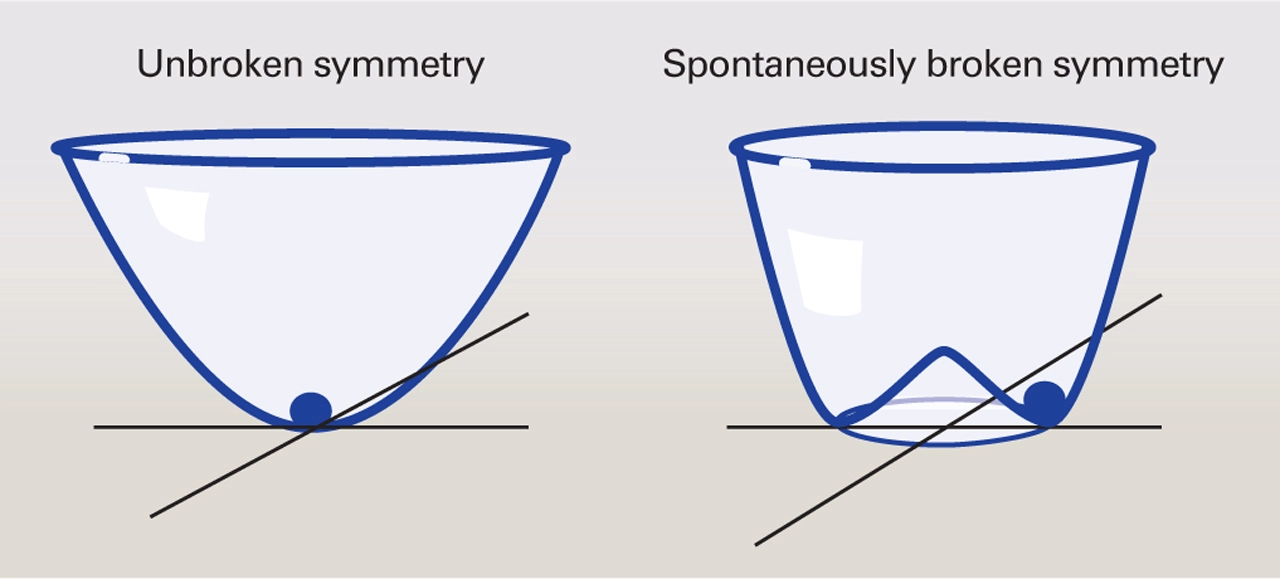
But more than being interesting for its simplicity, this self-interaction of the Higgs underlies a crucial piece of the Standard Model: the story of how particles got their mass. The Standard Model tells us that the reason all fundamental particles have mass is their interaction with the Higgs field. Every particle’s mass is proportional to the strength of the Higgs field. The fact that particles have any mass at all is tied to the fact that the lowest energy state of the Higgs field is at a non-zero value. According to the Standard Model, early in the universe’s history when the temperature were much higher, the Higgs potential had a different shape, with its lowest energy state at field value of zero. At this point all the particles we know about were massless. As the universe cooled the shape of the Higgs potential morphed into a ‘wine bottle’ shape, and the Higgs field moved into the new minimum at non-zero value where it sits today. The symmetry of the initial state, in which the Higgs was at the center of its potential, was ‘spontaneously broken’  as its new minimum, at a location away from the center, breaks the rotation symmetry of the potential. Spontaneous symmetry breaking is a very deep theoretical idea that shows up not just in particle physics but in exotic phases of matter as well (eg superconductors). 

A diagram showing the ‘unbroken’ Higgs potential in the very early universe (left) and the ‘wine bottle’ shape it has today (right). When the Higgs at the center of its potential it has a rotational symmetry, there are no preferred directions. But once it finds it new minimum that symmetry is broken. The Higgs now sits at a particular field value away from the center and a preferred direction exists in the system. 

This fantastical story of how particle’s gained their masses, one of the crown jewels of the Standard Model, has not yet been confirmed experimentally. So far we have studied the Higgs’s interactions with other particles, and started to confirm the story that it couples to particles in proportion to their mass. But to confirm this story of symmetry breaking we will to need to study the shape of the Higgs’s potential, which we can probe only through its self-interactions. Many theories of physics beyond the Standard Model, particularly those that attempt explain how the universe ended up with so much matter and very little anti-matter, predict modifications to the shape of this potential, further strengthening the importance of this measurement.

Unfortunately observing the Higgs interacting with itself and thus measuring the shape of its potential will be no easy feat. The key way to observe the Higgs’s self-interaction is to look for a single Higgs boson splitting into two. Unfortunately in the Standard Model additional processes that can produce two Higgs bosons quantum mechanically interfere with the Higgs self interaction process which produces two Higgs bosons, leading to a reduced production rate. It is expected that a Higgs boson scattering off itself occurs around 1000 times less often than the already rare processes which produce a single Higgs boson.  A few years ago it was projected that by the end of the LHC’s run (with 20 times more data collected than is available today), we may barely be able to observe the Higgs’s self-interaction by combining data from both the major experiments at the LHC (ATLAS and CMS).

Fortunately, thanks to sophisticated new data analysis techniques, LHC experimentalists are currently significantly outpacing the projected sensitivity. In particular, powerful new machine learning methods have allowed physicists to cut away background events mimicking the di-Higgs signal much more than was previously thought possible. Because each of the two Higgs bosons can decay in a variety of ways, the best sensitivity will be obtained by combining multiple different ‘channels’ targeting different decay modes. It is therefore going to take a village of experimentalists each working hard to improve the sensitivity in various different channels to produce the final measurement. However with the current data set, the sensitivity is still a factor of a few away from the Standard Model prediction. Any signs of this process are only expected to come after the LHC gets an upgrade to its collision rate a few years from now.

Limit plots on HH production in various different decay modes.
Current experimental limits on the simultaneous production of two Higgs bosons, a process sensitive to the Higgs’s self-interaction, from ATLAS (left) and CMS (right). The predicted rate from the Standard Model is shown in red in each plot while the current sensitivity is shown with the black lines. This process is searched for in a variety of different decay modes of the Higgs (various rows on each plot). The combined sensitivity across all decay modes for each experiment allows them currently to rule out the production of two Higgs bosons at 3-4 times the rate predicted by the Standard Model. With more data collected both experiments will gain sensitivity to the range predicted by the Standard Model.

While experimentalists will work as hard as they can to study this process at the LHC, to perform a precision measurement of it, and really confirm the ‘wine bottle’ shape of the potential, its likely a new collider will be needed. Studying this process in detail is one of the main motivations to build a new high energy collider, with the current leading candidates being an even bigger proton-proton collider to succeed the LHC or a new type of high energy muon collider.

Various pictorial representations of the uncertainty on the Higgs potential shape.
A depiction of our current uncertainty on the shape of the Higgs potential (center), our expected uncertainty at the end of the LHC (top right) and the projected uncertainty a new muon collider could achieve (bottom right). The Standard Model expectation is the tan line and the brown band shows the experimental uncertainty. Adapted from Nathaniel Craig’s talkhere

The quest to study nature’s simplest interaction will likely span several decades. But this long journey gives particle physicists a roadmap for the future, and a treasure worth traveling great lengths for.

Read More:

CERN Courier Interview with Nima Arkani-Hamed on the future of Particle Physics on the importance of the Higgs’s self-coupling

Wikipedia Article and Lecture Notes on Spontaneous symmetry breaking

Recent ATLAS Measurements of the Higgs Self Coupling

  •  

MuseRAG++ Boosts Multi-Modal Virtual Museum Interactions

In an era where digital transformation is reshaping the way we experience culture and history, a groundbreaking advancement has emerged at the intersection of artificial intelligence, virtual reality, and museum studies. The recent introduction of MuseRAG++, a deep retrieval-augmented generation framework, is poised to revolutionize semantic interaction and multi-modal reasoning within virtual museum environments. Developed by Y. Hu and detailed in a 2026 publication in Scientific Reports, this technology harnesses cutting-edge AI methodologies to create immersive, highly interactive, and intellectually rich virtual museum experiences that go far beyond traditional digital archives or 3D reconstructions.

At the heart of MuseRAG++ is the integration of retrieval-augmented generation (RAG) with deep learning architectures that enable an AI system to seamlessly combine vast repositories of knowledge with real-time generative capabilities. This allows virtual museum visitors to engage with content in unprecedented ways—posing complex questions about artifacts, artworks, or exhibits and receiving nuanced, contextually informed responses. The framework fundamentally shifts the paradigm of user interaction from passive consumption to an active, semantically-rich conversation with the virtual environment, thus enhancing visitors’ understanding and appreciation of cultural heritage.

One remarkable aspect of MuseRAG++ is its capacity for multi-modal reasoning, which means it can synthesize information across various data types including text, images, audio, and spatial metadata. This multi-faceted approach is vital for virtual museums where artifacts are not merely static objects but carry layers of historical, cultural, and aesthetic significance embedded across different senses and representations. By jointly interpreting these diverse data streams, the framework ensures that the AI can generate responses and narratives that are coherent and deeply aligned with the semantic meanings embedded in the museum exhibits.

The technical sophistication of MuseRAG++ lies in its dual use of retrieval mechanisms and generative neural networks. Retrieval components work by fetching relevant knowledge from large databases, which are then fed into generative models that construct coherent and contextually appropriate explanations or stories. This combination addresses a significant challenge in AI-driven museum interactions—how to balance factual accuracy with narrative richness. While purely generative AI might produce convincing but factually dubious content, MuseRAG++’s retrieval augmentation grounds its output in verified sources, maintaining both educational integrity and engagement.

Virtual museums have long struggled with enabling meaningful semantic interaction. Prior virtual museum implementations typically present users with digitized images, videos, or VR walkthroughs that provide information in static formats. MuseRAG++ transforms this passive information delivery into an exploratory dialogue where users can inquire about an artifact’s provenance, artistic techniques, historical significance, or the broader cultural context. This is achieved through natural language processing techniques that interpret user queries not at face value but in their full semantic complexity, recognizing subtleties like metaphor, inference, and thematic associations.

In practical terms, when a visitor pauses in front of a virtual painting, they might ask the system not only about the artist but also about the symbolism behind certain motifs or the socio-political climate during the painting’s creation. The MuseRAG++ framework processes these layered questions and generates responses that integrate visual evidence (the painting’s features), textual data (curatorial notes and academic papers), and audio descriptions to offer a rich, multidisciplinary narrative. This synergistic, multi-modal understanding sets a new standard for AI-enabled educational technologies in the cultural sector.

Moreover, MuseRAG++ has demonstrated remarkable adaptability across different types of museums—from art galleries and historical archives to science museums and natural history collections. Its architecture is designed to accommodate domain-specific knowledge bases, allowing curators and researchers to customize the retrieval databases to suit their institution’s unique collections and interpretive goals. This adaptability ensures that the technology can be widely deployed without requiring prohibitive retraining or reengineering, a critical factor for real-world adoption.

Another pivotal contribution of the MuseRAG++ project is its emphasis on user-centric design. The framework’s interface supports naturalistic conversational engagement, encouraging users to explore museum content through queries, comments, and even speculative questions. By supporting these forms of interaction, MuseRAG++ enhances user motivation, curiosity, and long-term retention of knowledge. Early trials have shown that visitors interacting with MuseRAG++ report a higher sense of connection with exhibits and a more profound intellectual engagement compared to conventional virtual tours.

The underlying data architecture tackles one of the biggest challenges in AI-enhanced museums—information overload. Museums hold enormous data in diverse formats, from catalog metadata and multimedia resources to scholarly annotations. MuseRAG++ employs efficient indexing and retrieval algorithms, ensuring that relevant data is surfaced quickly and accurately. Coupled with deep generative models that don’t simply regurgitate facts but weave them into compelling narratives, this approach achieves an ideal balance between breadth and depth of information.

Importantly, MuseRAG++ advances not only the visitor experience but also curatorial practices. For museum professionals, the system provides tools for augmenting exhibit narratives and experimenting with interpretive frameworks before deploying them to the public. The capacity to simulate visitor queries and tailor responses dynamically supports an iterative process of knowledge presentation, helping curators test which explanations resonate best or highlight underexplored exhibit facets.

The integration of multi-modal reasoning also supports new forms of accessibility. MuseRAG++ has been designed with inclusivity in mind, enabling the generation of descriptions and narratives that accommodate diverse sensory and cognitive needs. For instance, visually impaired users can benefit from richly detailed audio explanations that fuse visual, textual, and contextual information. This ability to bridge sensory modalities promises to democratize access to cultural heritage, making virtual museums not just a technological novelty but a platform for equitable knowledge dissemination.

From a technical perspective, the MuseRAG++ framework builds on transformers, attention mechanisms, and multi-modal embeddings. The retrieval module leverages state-of-the-art vector search techniques to locate semantically related documents, while the generative core is a fine-tuned large language model equipped to integrate multi-modal inputs. This sophisticated pipeline is designed for scalability and real-time responsiveness, ensuring smooth, conversational interactions even under heavy user demand.

Looking ahead, MuseRAG++ provides a foundational scaffold for future innovations in digital heritage. Researchers envision incorporating augmented reality features that blend AI-generated narratives with in-situ museum visits, as well as advancing emotional reasoning capabilities enabling empathetic interactions with cultural artifacts. The rich semantic interaction enabled by this system unlocks transformative potential not only for educational institutions but also for tourism, preservation efforts, and public engagement with history and art on a global scale.

In sum, Y. Hu’s MuseRAG++ signals a new epoch for virtual museums. By marrying deep retrieval-augmented generation with multi-modal semantic reasoning, it transcends traditional limits of digital cultural heritage, offering immersive, intellectually stimulating, and user-centered experiences. As cultural institutions increasingly embrace technology to engage audiences, MuseRAG++ stands out as an exemplar of how AI can enrich human understanding and appreciation of our shared artistic and historical legacy.

This landmark framework paves the way for museums to evolve from static repositories into dynamic, interactive spaces where knowledge is not only displayed but co-created through dialogue. The synergistic use of generative AI and knowledge retrieval points to a future where artificial intelligence serves as a sophisticated cultural mediator, deepening connections between people and the treasures of their past.

As MuseRAG++ continues to develop and gain adoption worldwide, its influence will expand beyond virtual galleries into educational platforms, research environments, and broader cultural applications. This research not only represents a technological breakthrough but also a cultural milestone, harnessing AI’s power to unlock new dimensions of semantic understanding and multi-modal interaction in the digital age.


Subject of Research:
Deep retrieval-augmented generation framework for enhanced semantic interaction and multi-modal reasoning in virtual museums.

Article Title:
MuseRAG++: a deep retrieval-augmented generation framework for semantic interaction and multi-modal reasoning in virtual museums.

Article References:
Hu, Y. MuseRAG++: a deep retrieval-augmented generation framework for semantic interaction and multi-modal reasoning in virtual museums. Sci Rep (2026). https://doi.org/10.1038/s41598-026-55700-9

Image Credits:
AI Generated

  •  

Ötzi and His Microbiome: Exploring a 5,300-Year-Old Human-Microbial Connection

In the heart of the Alpine glaciers lies an extraordinary archive of prehistoric biology—Ötzi the Iceman. Preserved for over 5,000 years at a steady -6°C and nearly 99% relative humidity, Ötzi’s remarkably intact body has long fascinated scientists exploring ancient human life. Recently, a team of researchers unveiled groundbreaking discoveries about the diverse microorganisms that have endured within and around this ancient mummy, shedding light on microbial evolution, preservation, and potential biotechnological applications.

Through a sophisticated combination of genetic sampling and microbiological analysis, the researchers succeeded in distinguishing microbial species that existed within Ötzi during his lifetime from those that colonized him after death. Samples were meticulously collected from both the mummy’s external environment—ice and meltwater inside his refrigeration chamber—and internal tissues, including preserved samples of intestinal tissue and stomach contents. Swab samples augmented these data to create a comprehensive microbial profile, tracing both ancient and modern microbial communities.

The study revealed genetic material from bacteria consistent with Ötzi’s original gut flora, tightly linking his microbiome to those of early human populations. This microbiota composition diverges markedly from that seen in modern industrialized societies, where such bacteria are rare or absent. This remarkable preservation offers an unprecedented glimpse into the microbial ecosystems inhabited by humans during the Copper Age, highlighting evolutionary trajectories and host-microbe relationships dating back millennia.

A particularly surprising discovery emerged from the analysis of yeasts inhabiting Ötzi’s skin, stomach contents, and internal meltwater. These yeasts are highly specialized and extant cold-adapted species, genetically related to strains found in the extreme environments of Antarctica. This affiliation strongly suggests that these microorganisms originated from the glacial setting surrounding Ötzi and have survived, likely in a dormant state, throughout his frozen journey across thousands of years.

What is equally fascinating is the presence of both heavily degraded, ancient DNA and well-preserved modern DNA within these yeasts. This duality indicates that the microbial environment surrounding Ötzi is not static but dynamic—continuously shaped by conditions within the preservation chamber. Frank Maixner, director of the Institute for Mummy Studies at Eurac Research, underscores this by describing Ötzi as more than a lifeless relic; instead, it is a living biological system wherein these yeasts persist and evolve under current conservation parameters.

Furthermore, the study casts new light on how past conservation efforts have inadvertently influenced microbial ecology on the mummy’s surface. For example, phenol, an antifungal agent applied to Ötzi after his discovery in 1991, appears to have selected for yeasts genetically equipped to metabolize phenol. This adaptation suggests that human interventions, even those aimed at preservation, can lead to ecological shifts favoring resilient microbial populations capable of exploiting introduced chemical compounds.

Mohamed S. Sarhan, the study’s lead microbiologist, affirms the unique nature of Ötzi’s microbiome, emphasizing its composition of ancient and newly introduced microbes. Such a complex microbiome challenges traditional notions that ancient microbial life inevitably succumbs to decomposition or becomes fully replaced over time. Instead, Ötzi provides a living laboratory where microbial continuity and evolution can be observed under stable preservation conditions.

Elisabeth Vallazza, director of the South Tyrol Museum of Archaeology, whose institution oversees the Iceman’s conservation, emphasizes the critical role of ongoing microbiological monitoring to safeguard against damage. Although conditions in the refrigeration chamber are currently stable, the researchers highlight that sustained efforts and further studies remain essential to ensure this invaluable specimen lasts for future generations to study and marvel at.

Marco Samadelli, an expert in conservation and a co-author of the research, notes that glacial mummies represent complex biological systems preserved in environments that are not yet fully understood. This investigation enriches existing knowledge about glacial preservation by identifying microbial processes and interactions that affect long-term biological conservation. Understanding these factors is crucial for improving preservation protocols globally.

Beyond its historical and archaeological importance, the discovery of cold-adapted yeasts associated with Ötzi opens promising new avenues for biotechnology. Microorganisms that can perform metabolic functions at low temperatures are highly desirable for energy-efficient industrial processes, such as low-temperature fermentation, which save resources and reduce environmental impact. These extremophile yeasts could serve as models or sources for developing novel bio-catalytic processes.

This detailed microbiome study of the Iceman also contributes to broader microbiological science by juxtaposing ancient human microbiomes with those resulting from modern interventions and environmental changes. The intermingling of age-old microbes with contemporary species paints a complex picture of microbial persistence and adaptability that extends far beyond the mummy itself, informing research into ancient diseases, human evolution, and microbiome-environment interactions.

In essence, Ötzi’s frozen microbiome is a testament to persistence and change, a biological time capsule that simultaneously preserves a microbial community from 5,000 years ago while reflecting thousands of years of environmental influence and recent conservation efforts. This unique interplay offers an unparalleled opportunity to deepen our understanding of life at the microscopic level over archaeological time scales.

The research was published in the esteemed journal Microbiome on June 3, 2026. By integrating multidisciplinary approaches involving molecular biology, archaeology, microbiology, and conservation science, this study underscores the potential hidden within ancient remains to revolutionize biotechnology and biological conservation strategies going forward.


Subject of Research: Human tissue samples

Article Title: The Iceman’s microbiome: unveiling millennia of microbial diversity and continuity

News Publication Date: 3-Jun-2026

Web References: 10.1186/s40168-026-02417-6

Image Credits: South Tyrol Museum of Archaeology/Eurac Research/Marion Lafogler

Keywords: Human microbiota, Human remains, Yeast strains, Human gut microbiota

  •  
❌