 Login
Login
Could Magnesium and TikTok's 'Sleepy Girl Mocktail' Actually Help You Sleep?
TikTok’s “sleepy girl mocktails” remind us how important magnesium is for sleep and health
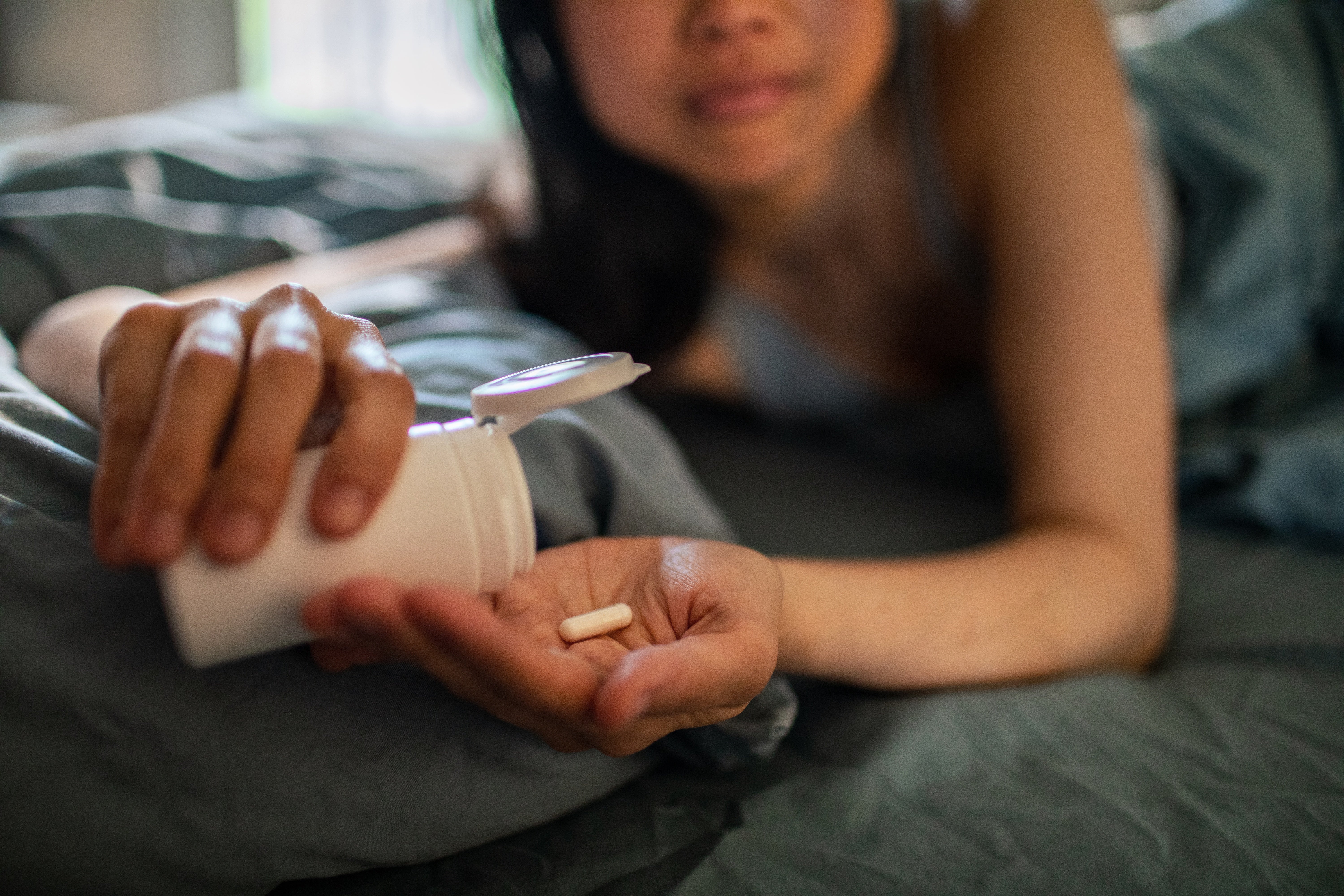
© vorDa/Getty Images

TikTok’s “sleepy girl mocktails” remind us how important magnesium is for sleep and health
© vorDa/Getty Images
Most people assume dreaming is something exclusive to sleep; however, a new study from the Paris Brain Institute suggests otherwise.
The study found that the strange, shifting mental experiences we usually associate with dreaming can also occur while we are awake. These episodes leave a measurable trace in the brain. The results, published in Cell Reports, challenge the common idea that dreaming and waking thought are completely separate experiences.
“Being awake is not synonymous with being attentive, fully aware of one’s surroundings, or able to act and think rationally,” said Delphine Oudiette, co-leader of the institute’s DreamTeam and senior author of the study. “We now know that there is a continuum between wakefulness and sleep, with intermediate states such as mind-wandering or mind-blanking, during which certain regions of the brain may be asleep.”
To investigate how the brain transitions from wakefulness to sleep, the researchers worked with 92 people who often take naps and could describe their thoughts when prompted. The experiment was based on a method used by Thomas Edison, who would fall asleep while holding a heavy object. When he drifted off, the object would fall and wake him up, allowing him to recall what he was thinking at the edge of sleep.
In this study, participants held a bottle as they became drowsy. If the bottle dropped or an alarm sounded, they were asked to describe what they had been thinking about in the last ten seconds. They also rated their experiences based on how strange, changeable, spontaneous, and awake they felt. Throughout the process, the researchers recorded their brain activity using an EEG. The researchers then used a clustering algorithm to group the mental experiences based on the data. This allowed the team to identify patterns in participants’ reports without imposing predefined categories.
The analysis revealed four distinct types of mental states, rather than the two categories people usually expect (awake and asleep).
One type consisted of quick, involuntary flashes of images or memories that seemed to come out of nowhere. Another was grounded in the outside world, with people noticing sounds or staying tuned in to their surroundings. A third was filled with strange, dream-like experiences, such as seeing tiny aliens or feeling ants crawling on the skin, with scenes shifting rapidly. The last type focused on logical, focused thinking, such as planning or mentally running through a schedule.
All four types of mental states were found at every stage the researchers measured, including when participants were fully awake, just falling asleep, or in light sleep. This means that dream-like thoughts can happen while awake, and logical thinking can occur during sleep.
One participant, who was fully awake, said she saw ants crawling over her body with crossword puzzles in the background. Another participant, who was asleep by all measures, spent that same time mentally planning the next day’s schedule.
“The mental states traditionally associated with dreaming can arise just as well when we are asleep as when we are awake,” said lead author Nicolas Decat, a PhD student at the Paris Brain Institute. “The content of our thoughts does not follow the boundaries between waking and sleep.”
The researchers also found a specific pattern in the brain linked to dream-like experiences. EEG data showed that the connection between the front and back parts of the brain, which are important for logical thinking and visual processing, became weaker during these states. When this connection is reduced, the brain seems less able to organize thoughts logically.
These results could help improve the diagnosis of some sleep disorders. For example, people with paradoxical insomnia often say they feel awake all night, even when sleep tests show they were asleep. Traditional methods typically rely on brainwave patterns, which do not always align with patients’ subjective experience.
Oudiette said the study suggests using mental content as a new way to diagnose insomnia. This approach may more closely match what patients actually experience each night and could eventually help identify objective markers of the condition.
Austin Burgess is a writer and researcher with a background in sales, marketing, and data analytics. He holds an MBA, a Bachelor of Science in Business Administration, and a data analytics certification. His work focuses on breaking scientific developments, with an emphasis on emerging biology, cognitive neuroscience, and archaeological discoveries.
Dreams can seem to occur at random, from everyday scenarios to unpredictable, surreal experiences. Now, a new study shows that our personal traits as well as real-life events and experiences actually shape what we dream about, creating patterns in our subconscious.
The study, published in Communications Psychology, analyzed thousands of dream and waking experience reports collected over four years. The researchers used natural language processing tools to quantify the structure of dreams. They found that personal traits like how often someone daydreams, their attitudes about dreams, and their sleep quality all influence dream content. Major shared life events, such as the COVID-19 pandemic, also impacted what people dreamed about.
“Our findings show that dreams are not just a reflection of past experiences, but a dynamic process shaped by who we are and what we live through,” said Valentina Elce, researcher at the IMT School for Advanced Studies Lucca and lead author of the study.
The main dataset included 207 adults aged 18 to 70 who kept a dream diary for two weeks. Each morning, they wrote down everything they remembered from the night’s sleep. Once a day, at a random time, they also recorded what they had been thinking about in the previous 15 minutes. This created a set of waking experience reports to compare with their dream reports.
In addition to the daily records, the researchers collected detailed information about each participant’s sleep habits, cognitive skills, personality, and psychological traits. By the end, they had gathered 1,687 dream reports and 2,843 waking reports from the main group, plus 351 dream reports from 80 people during the first COVID-19 lockdown in Italy in spring 2020.
These dream transformations weren’t the same for everyone. Participants who spent more time daydreaming during the day tended to have dreams that jumped rapidly from one scene to another. Those who placed more importance on dreams described them as more vivid and immersive. Sleep quality also played a role: participants who slept poorly showed different patterns in dream content when compared with those who slept better.
The lockdown dataset gave researchers a unique opportunity to see how a major external stressor, such as a pandemic, could affect dreams across an entire population.
Dreams recorded during the strict lockdown period were more emotionally intense and mentioned restrictions and limitations more often than dreams from later years. As people adjusted to the new situation, these differences faded. The results suggest that dreams reflect both our personal psychology and the social conditions we share.
The team used three large language models, LLaMA 3, ChatGPT-4, and ChatGPT-4 Turbo, to rate dream reports on 16 different features, such as mood, excitement, strangeness, social content, spatial details, and freedom of movement. They combined the scores from the three models and checked them against human ratings. The results showed that these language processing tools could analyze the structure of dream reports as reliably as trained human evaluators. This finding could have uses that extend far beyond this study.
“By combining large-scale data with computational methods, we were able to uncover patterns in dream content that were previously difficult to detect,” Elce said. “This opens new possibilities for studying consciousness, memory, and mental health in a scalable and reproducible way.”
Austin Burgess is a writer and researcher with a background in sales, marketing, and data analytics. He holds an MBA, a Bachelor of Science in Business Administration, and a data analytics certification. His work focuses on breaking scientific developments, with an emphasis on emerging biology, cognitive neuroscience, and archaeological discoveries.
When people cannot sleep well, they often look for quick solutions. Sleep medications are commonly prescribed, and one drug that has gained popularity in recent years is quetiapine. Although the medication was originally approved for schizophrenia and bipolar disorder, many doctors prescribe it in low doses to help patients with insomnia because of its strong […]
The post Common Sleep Pill May Create Hidden Risks for People with Sleep Problems appeared first on Knowridge Science Report.
In the high-stakes world of student athletics, where physical prowess and mental acuity are demanded in equal measure, sleep is often overlooked despite its fundamental role in performance and recovery. A groundbreaking qualitative study published in Scientific Reports in 2026, titled “Sleeping but struggling: a qualitative study of the lived experiences of sleep in student-athletes,” sheds unprecedented light on the complex and often paradoxical relationship between sleep and the lifestyles of competitive student-athletes. The research reveals that despite the critical need for restorative sleep, many student-athletes face significant challenges in achieving restful and sufficient sleep, resulting in a pervasive struggle that impacts both their academic and athletic endeavors.
The investigation, spearheaded by Wilson, De Martin Silva, Jones, and colleagues, delves deep into personal narratives and lived experiences, uncovering a multifaceted picture of sleep among student-athletes that transcends mere duration or frequency of sleep episodes. By employing a qualitative methodology, the authors avoid reductionist quantification in favor of exploring the nuanced subjective realities that shape sleep behaviors and attitudes. Their findings underscore that many student-athletes, while theoretically understanding the importance of sleep, find themselves trapped in a cycle where sleep is compromised due to competitive pressures, rigorous training schedules, academic responsibilities, and psychological stressors.
At the core of the study is an exploration of how the highly regimented training environments intertwine with academic timelines, leaving student-athletes vulnerable to chronic sleep deprivation. The researchers highlight that early morning practices and late-night study sessions create a fragmented sleep schedule, exacerbated by travel demands and social obligations inherent to collegiate athletics. This fragmentation not only reduces total sleep time but also disrupts sleep architecture—the balance between deep, restorative slow-wave sleep and REM sleep critical for memory consolidation and cognitive function.
Moreover, the study carefully examines how the physiological demands of intense training influence sleep quality. Muscle repair and hormonal regulation require undisturbed stages of sleep, particularly deep sleep, yet the physical fatigue experienced by athletes paradoxically can induce either hypersomnia or insomnia. Some athletes report difficulty in “switching off” after training due to heightened sympathetic nervous system activity, muscular discomfort, or mental agitation. These physiological factors compound the psychological stress of competition anxiety and performance expectations, creating a complex psycho-physiological barrier to effective sleep.
Mental health emerges as a pivotal theme intricately linked with sleep struggles. The authors identify that heightened anxiety, mood fluctuations, and stress related to both sport outcomes and academic demands contribute substantially to sleep disturbances. The stigma around discussing mental health in competitive athletic contexts often conceals these difficulties, prolonging sleep problems and increasing the risk for burnout. The study indicates that student-athletes frequently experience a sense of isolation in their sleep struggles, amplifying feelings of exhaustion and frustration.
Another critical insight from the research concerns the role of sleep hygiene and knowledge. Despite widespread awareness of sleep’s importance, practical application of sleep hygiene principles varies significantly among student-athletes. Factors such as irregular bedtimes, exposure to blue light from electronic devices, and caffeine consumption before bedtime undermine sleep onset and maintenance. Behavioral interventions, therefore, must be tailored to address the unique schedules and stressors of this population rather than relying on generic advice.
Interestingly, the study also reflects on cultural and institutional influences shaping sleep experiences. The competitive ethos pervasive in athletic departments often valorizes toughness and endurance, sometimes inadvertently framing sleep as a dispensable commodity in favor of training intensity and academic output. Coaches, trainers, and academic staff play vital roles in setting realistic expectations and fostering environments where sleep is prioritized equivalently to physical conditioning. Institutional policies and support systems can either alleviate or exacerbate sleep challenges, indicating a systemic dimension to the problem.
From a neurobiological perspective, the findings resonate with contemporary understandings of circadian rhythms and homeostatic sleep drives. Disruptions caused by travel across time zones, early training times, and social jet lag create misalignments in circadian timing, which in turn impact cognitive and physical performance. The authors emphasize the importance of circadian-aligned scheduling and strategic napping to mitigate these effects, advocating for evidence-based adjustments in training and academic routines.
The study contributes significantly to the discourse on athlete health by reframing sleep difficulties as a multifactorial phenomenon requiring multidisciplinary intervention. The authors propose an integrative model that incorporates physiological monitoring, psychological support, educational programs, and environmental adjustments. Such a holistic approach promises to enhance performance outcomes while safeguarding the long-term wellbeing of student-athletes.
Technological advancements in sleep tracking and biofeedback present promising tools for personalized sleep management in athletic populations. Wearable devices that monitor sleep stages, heart rate variability, and movement can offer real-time insights, enabling athletes and coaches to optimize training loads in relation to recovery status. However, the authors caution against overreliance on technology without accompanying behavioral and psychosocial support, which remain indispensable components of effective sleep health strategies.
The implications of this research extend beyond collegiate sports, shedding light on broader societal challenges related to youth sleep health amidst increasing demands on time and performance. The dual pressures of academic achievement and extracurricular excellence mirror the intensive schedules faced by many young adults, highlighting the urgent need to cultivate healthy sleep habits early in life. Public health initiatives, educational reforms, and community engagement can collectively foster environments conducive to restorative sleep.
Finally, the emotional resonance of the student-athletes’ testimonies captured in the study prompts a shift towards empathy-driven approaches in sports science. Recognizing sleep struggles as legitimate and shared experiences encourages open dialogue and de-stigmatization, fostering support networks that empower athletes. This human-centered perspective enriches scientific inquiry with lived reality, bridging the gap between research and practice in ways that can transform athlete care.
In conclusion, this seminal work by Wilson and colleagues marks a pivotal advancement in understanding the intricate and often contradictory experiences of sleep among student-athletes. By weaving together physiological, psychological, social, and institutional strands, the study provides a comprehensive portrait of why student-athletes are “sleeping but struggling.” The insights garnered not only inform targeted interventions but also stimulate a cultural shift towards valuing sleep as an indispensable pillar of athletic and academic success. As collegiate sports continue to evolve, integrating these findings promises to enhance the holistic health, resilience, and achievement of student-athletes worldwide.
Subject of Research: The lived experiences and challenges of sleep among student-athletes.
Article Title: Sleeping but struggling: a qualitative study of the lived experiences of sleep in student-athletes.
Article References:
Wilson, S.M.B., De Martin Silva, L., Jones, M.I. et al. Sleeping but struggling: a qualitative study of the lived experiences of sleep in student-athletes. Sci Rep (2026). https://doi.org/10.1038/s41598-026-55657-9
Image Credits: AI Generated
For many people, coffee is an essential part of daily life. Some start the day with a strong cup to wake up, while others enjoy coffee throughout the afternoon or even in the evening. Yet for decades, one question has sparked debate among coffee drinkers and scientists alike: does coffee interfere with sleep? The answer […]
The post Evening Coffee May Change Brain’s Sleep More Than You Realize appeared first on Knowridge Science Report.
