Reading view

Bernie Sanders Announces Plan to Seize Half of AI Industry for the Public Good

The hype surrounding generative AI has generated astronomical amounts of value, with tech companies raising tens of billions of dollars and many — including OpenAI and Anthropic — preparing to go public this year at sky-high valuations, in moves that will produce incredible wealth for their stockholders.

Whether the average Joe will ever directly benefit from all of this is looking dubious at best. That’s despite many of these tools relying on AI models that were trained on the creative output of millions of people, copyright be damned, the vast majority of whom have yet to see a single cent. Quite the contrary — many workers are facing a disastrous job market as a result of corporations stretching themselves thin through massive investments in AI.

Meanwhile, concerns continue to grow that the billionaire class is unethically enriching itself through the scheme, while shutting out the democratic process.

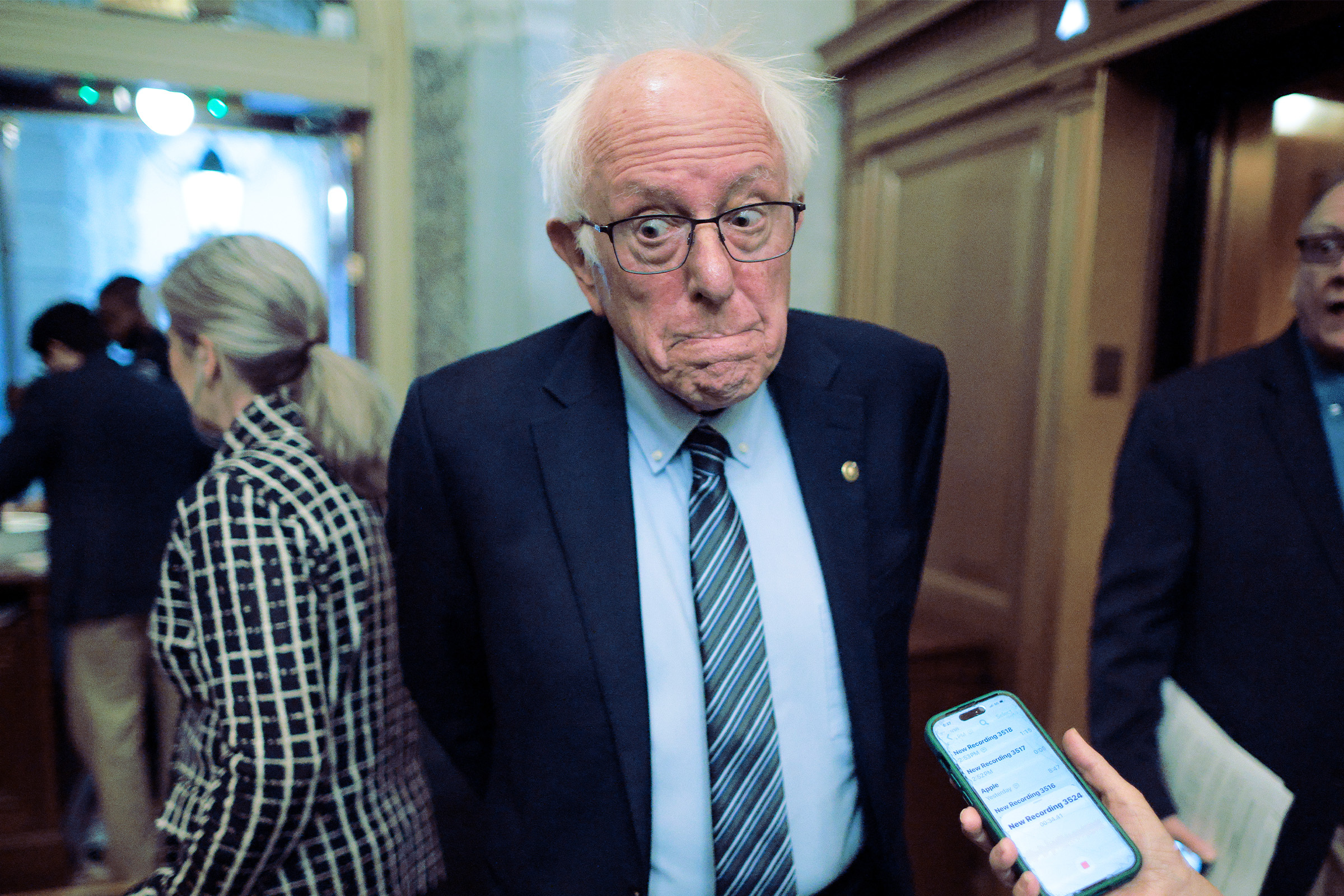
To independent senator Bernie Sanders (D-VT), that kind of injustice needs to end. In an essay published by the New York Times, Sanders argued for the creation of an “AI Sovereign Wealth Fund” that would be created through a “one-time 50 percent tax” on the stock of AI companies, including OpenAI, Anthropic, and xAI, to “give the public a direct ownership stake.”

In other words, Sanders is proposing to transfer half of the AI companies’ stock into a public fund — a one-time transfer as opposed to a tax on profits — which the government will manage. Generated revenues could be distributed as “direct payments to the American people.”

While many important details have yet to be ironed out, as Sanders admits, it would represent a massive shift and equity transfer — if his act were to pass, that is.

“The question, then, is not whether AI will change the world,” he wrote. “It will. The question is: Who will own and control that future? Who will benefit from it, and who will be hurt by it?”

Sanders argues such a fund would “give the public a direct role in determining the future of this technology,” while also guaranteeing that the “trillions of dollars potentially generated by AI are used to improve the lives of all of us — not simply to make the richest people in the world even richer.”

While chances of the senator’s idea surviving the Congressional approval process are likely slim — the AI industry holds immense influence over Congress — it’s a creative approach to an increasingly sticky problem. Even tech leaders, who have watched as the backlash to AI continues to grow, have turned their attention to possible solutions to address even greater wealth disparity caused by the emergence of AI.

Jeff Bezos recently argued that the bottom 50 percent of earners shouldn’t pay any taxes, while OpenAI CEO Sam Altman came up with a new concept called “universal basic compute,” which would provide free access to those who can’t afford costly AI tools. Meanwhile, SpaceX founder Elon Musk has called for a new take on universal basic income, uninspiringly dubbed “universal high income.”

Sanders’ sovereign wealth fund takes the idea a step further, giving Americans who don’t happen to be tech billionaires an opportunity to get in on the ground floor. The concept has already been “put into practice right here at home,” Sanders wrote, pointing to an Alaskan sovereign wealth fund that’s allowed residents to receive annual dividends through oil revenues.

“To start, the billions, if not trillions, of dollars generated by this fund would provide direct payments to the American people,” he wrote. “And as the fund generates more and more wealth, the proceeds would be used to ensure that every man, woman and child in our country has a decent and dignified standard of living, including health care, education and housing.”

More on Bernie Sanders: Unions Attack AI for Menacing Human Jobs

The post Bernie Sanders Announces Plan to Seize Half of AI Industry for the Public Good appeared first on Futurism.
  •  

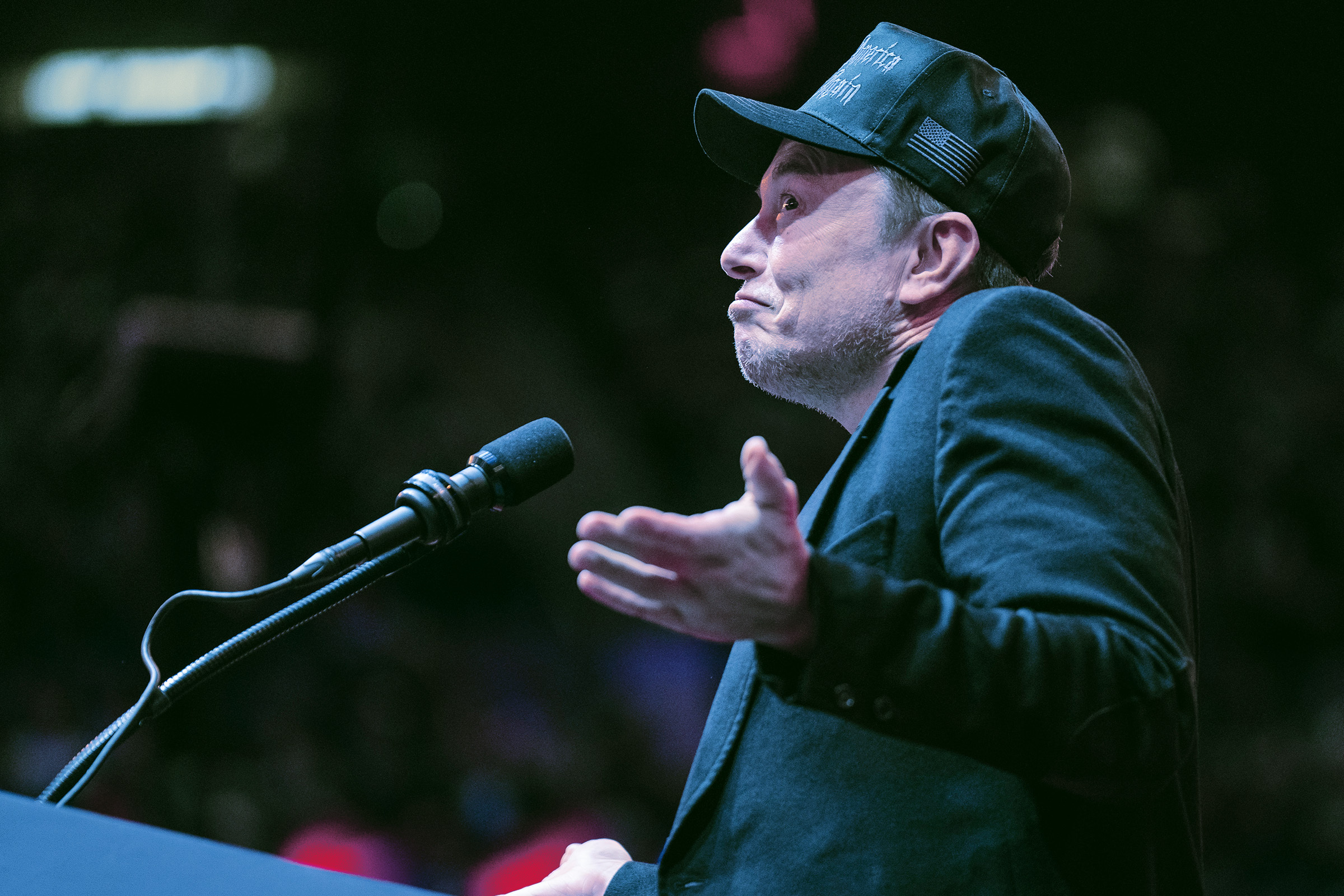
Elon Musk Says He Only Got Involved in Politics Because He Couldn’t Deal With Having a Transgender Child

Dismantling the federal government. Building a “MechaHitler” AI. Waging a war on Woke. Donating nearly $300 million to get Donald Trump reelected as president. What caused Elon Musk, once a liberal hero, to go down this path?

According to Musk: his estranged daughter, Vivian Wilson.

Doing what he does best — compulsively doomscrolling his own social media site, X — Musk responded to a fan’s post claiming he wouldn’t be the based, Nazi saluting hero that he is today if it weren’t for his daughter’s transition.

“We should never forget that if not for Vivian, Elon Musk never would have gotten involved, never would have purchased Twitter, Kamala Harris would be President and the Left-wing would have total instrumental control over the construction of Skynet,” the poster claimed.

“True,” Musk replied.

Musk might be being a little facetious here, but there’s no denying that he has a weird and unhealthy obsession with Wilson, who publicly came out as transgender in 2022, and her gender identity. He has tirelessly repeated the line that the “woke mind virus killed my son,” and claims that this is why they’re estranged — actually, she disowned him — and not because he regularly misgenders her or says she’s suffering a “tragic mental illness.”

Of course, Wilson’s perspective is pretty different. In interviews, she’s described Musk — who has 14 known children with at least four different  women — as an absent and “cruel” father who would constantly demean her for being feminine, including yelling at her for having a high-pitched voice.

In spite of that, Wilson says that Musk signed the paperwork giving parental consent for her to start the medical interventions to begin her gender transition. It seems totally out of character for him today, but it wasn’t that long ago, we should remind you, that Musk was proudly boasting about how LGBTQ friendly his company Tesla was, even telling bigots, “Don’t buy our car if that’s a problem.” Encapsulating his political about-face, Musk now claims that he was “tricked” into approving Wilson’s gender treatments.

All that being said, Wilson finds ascribing Musk’s villainous turn to her transition somewhat insulting, and implied that his reactionary sympathies were always there.

“It’s such a convenient narrative, that the reason he turned right is because I’m a f**king tr**ny, and that’s just not the case. That’s not what that does to people,” she said in a 2025 interview with Teen Vogue.

“Him going further on the right, and I’m going to use the word ‘further’ — make sure you put ‘further’ in there — is not because of me,” she added. “That’s insane.”

More on industrialists: Trump Shovels $4 Billion Directly to Elon Musk, Who Spent a Fortune Getting Him Elected

The post Elon Musk Says He Only Got Involved in Politics Because He Couldn’t Deal With Having a Transgender Child appeared first on Futurism.

  •  

AI Billionaires Are Starting to Get Scared

As it turns out, telling the world’s workers to prepare for a dystopia rife with poverty and alienation isn’t the smartest way to market your exciting new tech.

As data centers are shut down by angry mobs and AI surveillance cameras are ripped from their poles, the world’s tech billionaires and CEOs are waking up to the reality that the masses are, broadly speaking, not on board with their plan to automate the world with AI. It isn’t necessarily that working people want to stay shackled to the wage-based employment system, but that folks need those jobs to have any hope of eating, seeing a doctor, and sleeping with a roof over their heads.

Instead of the tone-deaf hype we once heard about AI’s potential, these rich and powerful figures are now moderating their messaging, calling for policy measures to help workers weather the AI storm — or perhaps head off a violent revolt led by the many who lost their jobs.

For example, Amazon executive chairman Jeff Bezos — whose net worth would take the average US worker 3.8 million years to earn on their own — recently shared his new belief that the bottom 50 percent of US earners should pay no federal income tax.

“You could double the taxes I pay and it’s not going to help that teacher in Queens,” he said, painting the federal income tax as the main hurdle for working-class families (though he’s started paying his share in recent years, Bezos paid $0 in federal income tax in 2007 and 2011, when he was already a multibillionaire.)

Elon Musk, meanwhile, has floated the idea of “universal high income,” a play on the well-known concept of universal basic income, where a government issues cost-of-living checks to the broader population (from what we can tell, the only difference is that Musk’s version would be driven by humanoid robots creating radical economic abundance).

OpenAI CEO Sam Altman has similar ideas, like a “universal basic compute” where everybody’s income corresponds to a share of his company’s revenue — which would also conveniently make ChatGPT the most important AI chatbot on the planet.

There’s also another option that none of them seem to be pushing: if AI is as disruptive as they say, there’s always the option to pull the plug. That they won’t even consider this choice suggests that their appeals to the toiling masses aren’t in good faith — which at this point should be obvious to just about everyone.

More on AI billionaires: New Website Detects Apocalypse If Billionaire Jets Start Fleeing en Masse

The post AI Billionaires Are Starting to Get Scared appeared first on Futurism.

  •  

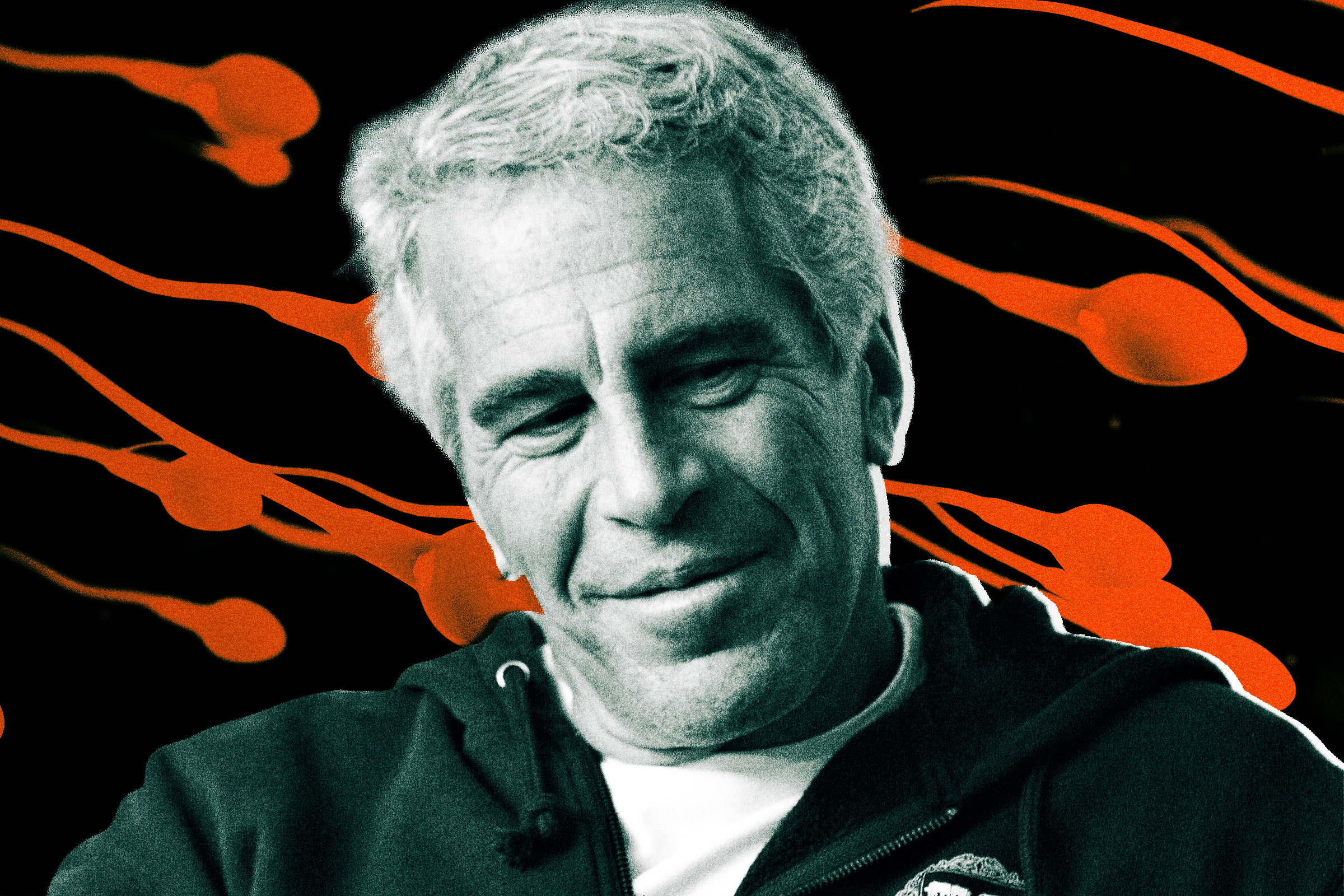
Jeffrey Epstein’s Biopreserved Sperm Is Missing

Today in news we regret having to deliver: Jeffrey Epstein’s missing sperm.

According to documents in the Epstein files released by the Justice Department and viewed by The New York Times, the deceased child sex criminal and accused sex trafficker kept his sperm locked up in a cryobank several years before he died — but its current whereabouts are unknown.

A sample of his secretions were deposited with the California Cryobank sometime before 2012, and he signed a new contract in 2016, with files showing emails he received notifying him of an upcoming renewal payment. 

Epstein, who pleaded guilty to child prostitution in 2008 and was charged with sex trafficking before his death in 2019, indicated that he didn’t want his sperm discarded if he died. Instead, according to a contract in the files, it should fall under control of his estate or other legal representative. However, it’s unclear if these instructions were honored.

CooperCompanies, which has owned California Cryobank since 2021, appeared tight-lipped about the ordeal, telling the NYT that it “does not currently store any samples associated with Jeffrey Epstein,” and answering no further questions.

Adding to the mystery, the document for the trust that Epstein left most of his money and possessions makes no mention of his sperm. Naomi Cahn, a law professor at the University of Virginia, said that disputes over his sperm would likely be handled under the laws of the US Virgin Islands, where Epstein’s notorious island was located, and where his estate is administered.

Storing sperm isn’t an uncommon practice. But on top of him being a convicted sex criminal and pedophile, Epstein’s motivations for doing so, we can safely infer, were pretty dark. He had a lifelong obsession with eugenics and using science to supposedly improve human genetics, an ambition he weaved with his racist beliefs. As part of that worldview, he also wanted to “seed” the human race with his DNA by impregnating multiple women at a time at his New Mexico ranch.

More on Epstein: Elon Musk Not Doing Well After Epstein Files Reveal

The post Jeffrey Epstein’s Biopreserved Sperm Is Missing appeared first on Futurism.

  •  

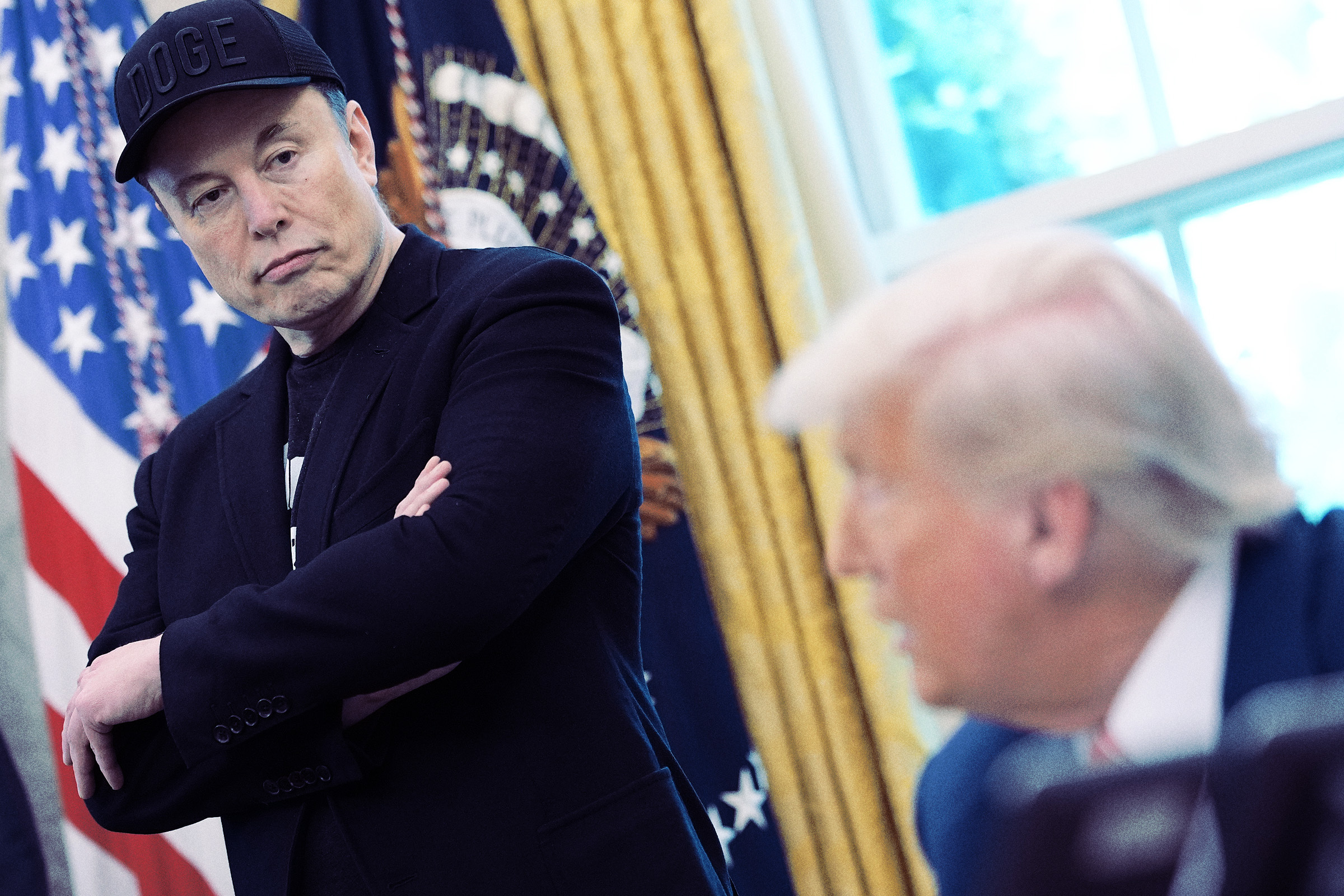
Trump Shovels $4 Billion Directly to Elon Musk, Who Spent a Fortune Getting Him Elected

Elon Musk spent just shy of $300 million supporting Donald Trump’s reelection in late 2024 — a full-throated financial commitment that appears to be paying off in a big way.

Musk’s space company SpaceX, in particular, has massively benefited from the duo’s on-and-off-again relationship, scoring billion-dollar deals with the government.

Most recently, Reuters reports, SpaceX was awarded a $4.16 billion contract with the US Space Force to develop detection satellites that can track and target airborne threats. Just days earlier, the military arm awarded the company a separate contract, worth $2.29 billion, to build a military communications network in low-Earth orbit to support ground-based operations.

Besides the impossible-to-overlook role of Trump and Musk’s cozy relationship, the timing of the announcement will raise plenty of eyebrows. SpaceX is expected to go public soon at a valuation of north of $1.75 trillion, a blockbuster IPO that could directly benefit from a government partner signing a flashy contract.

The latest threat detection contract is part of the Trump administration’s so-called Golden Dome missile defense system. While plenty of fundamental questions remain over its design, the network could cost well over $1 trillion to build out, according to experts, which would be far than the White House has estimated.

The threat detection satellite contract, called the Space-Based Advanced Moving Target Indicator, will see SpaceX develop what Reuters likens to an “interconnected system-of-systems” that collects and analyzes data from a host of different sources, from space-based sensors, to secure communication links.

Zooming out, cushy government contracts have long played a key role in the flourishing and very survival of Musk’s space venture. According to an analysis by the Washington Post last year, SpaceX had received $38 billion in government contracts, loans, subsidies, and tax credits, as of February 2025.

Given their budding relationship and the latest multibillion-dollar contracts, that number has already grown substantially — and will very likely continue to grow, especially as SpaceX looks to go public.

The company is also set to play a key role in the Trump administration’s efforts to return astronauts to the surface of the Moon, and was awarded a $2.9 billion contract in 2021 to build the requisite lunar lander.

More on SpaceX: SpaceX Announces Plans to Put Billionaire on First Rocket to Mars

The post Trump Shovels $4 Billion Directly to Elon Musk, Who Spent a Fortune Getting Him Elected appeared first on Futurism.

  •  

Meta’s AI Support Bot Is Giving Hackers Access to Other People’s Instagram Accounts Just by Asking

In March, Mark Zuckerberg’s Meta announced a new Meta AI support assistant feature on both Facebook and Instagram, providing users with a way to “resolve account problems” and help in taking down any offending impersonator accounts or scams.

Besides highlighting the tech industry’s seemingly insatiable appetite for automating customer service-level jobs with AI, the new feature appears to have backfired spectacularly. As 404 Media reports, the chatbot happily obliged when hackers asked it for access to high-profile Instagram profiles.

The ruse is shockingly simple: after matching the account owner’s geographic region using a VPN, the hackers asked the support chatbot to change the email address associated with the profile, thereby allowing them to successfully complete two-factor authentication. Worse yet, the vulnerability has been around for several months already, according to Telegram group messages reviewed by 404 Media.

“t’s either the new Meta Accounts Center glitching out or my Instagram account is being targeted in a hacking attempt,” former Meta researcher and self-proclaimed hacker Jane Wong wrote in a Threads post. “It appears that my password has been changed without my knowledge / I was not able to log in using my password.”

The exploit highlights glaring cybersecurity issues that continue to plague AI-powered chatbots. We’ve seen countless instances of large language model based tools being jailbroken, tricked into telling lies, or even hallucinate made-up company policies leading to plenty of confusion and even lawsuits.

Experts have also long warned against handing AI chatbots personal information, citing the risk of data leaks. Meta, in particular, has garnered a reputation for continuously treating user data with little care. In March, for instance, The Information reported that an in-house AI agent had caused a critical security incident at Meta, exposing sensitive user data to people without proper authorization.

While it’s unclear whether they were connected to the latest exploit, the news comes after several high profile Instagram accounts, including former president Barack Obama’s and Space Force chief master John Bentivegna’s, were hacked.

Hackers have been offering access to high-profile accounts in exchange for small amounts of money by using the vulnerability, per 404 Media.

Fortunately, Meta appears to have patched the issue, but considering the exploit was discovered months ago, the damage could be extensive.

More on Meta: Meta Workers Say They’re Seeing Disturbing Things Through Users’ Smart Glasses

The post Meta’s AI Support Bot Is Giving Hackers Access to Other People’s Instagram Accounts Just by Asking appeared first on Futurism.

  •  

Dick’s Sporting Goods Launches AI Personal Trainer to Fix Your Horrible Golf Swing

These days, retailers are increasingly hitching their wagon to the AI horse: big box stores like Target have issued guidance that they’re not responsible for any errant purchases its AI agent charges to your credit card, while chain restaurants like Taco Bell and Pizza Hut have forced AI into their services, with dismal results so far.

Now, sports retail giant Dick’s Sporting Goods is getting in on the hype with its own AI personal trainer. Called “Coach by Dick’s,” the system will be an AI agent meant to give athletes tips on upping their game, which will of course include targeted ads for new sports equipment, Retail Dive reported.

According to a Dick’s press release, the AI system “delivers immersive conversational experiences that go beyond transactional shopping, guiding athletes using timely, relevant data and adapting to their stated preferences, goals and behaviors.”

Built on the Adobe Brand Concierge platform, the whole thing goes live on the Dick’s mobile app in June, at which time athletes will be able to “access training pro tips and product education grounded in Dick’s sport knowledge.”

Whether you ask for advice improving your forehand, or for tips on navigating the basketball league you just joined, Coach by Dick’s is overtly geared toward getting you to the checkout line.

As Dick’s chief technology officer Vlad Rak said in the press release, “Coach by Dick’s helps guide athletes to the right product, the right fit, and trusted expertise so every interaction is personal to what they need.”

Needless to say, how this plays out in reality is anybody’s guess — especially where physical activity is concerned, where misinformation or improper training from an AI chatbot could easily lead to debilitating injuries. We’ll be watching.

More on AI in retail: New York’s Beloved Bodegas Are Filling Up With AI Slop

The post Dick’s Sporting Goods Launches AI Personal Trainer to Fix Your Horrible Golf Swing appeared first on Futurism.

  •  

Sports Betting Scandals Are Tearing College Football Apart

The rise of gambling platforms like DraftKings and Polymarket has supercharged a timeless phenomenon: sports stars ruining their careers by placing bets on their own games.

The latest case rocking the world of college sports is instructive. According to reporting from Fox News, Texas Tech star quarterback Brendan Sorsby is seeking an injunction in a Texas district court after the National Collegiate Athletic Association suspended him over hundreds of bets he’s placed throughout his four-year college football career, in direct violation of Association rules.

If granted, the court order would functionally allow Sorsby to play football during his senior year — while his lawsuit against the NCAA works its way through the courts.

Sorsby previously admitted to placing hundreds of bets worth some $90,000 through family members and friends, including on games he himself was playing in while at Indiana University and Texas Tech. He allegedly helped himself to a buffet gambling apps — according to court filings, Sorsby frequented books hosted by FanDuel, Underdog, Prize Picks, and Hard Rock Bet. After the allegations came to light, the young QB went so far as to check himself into gambling rehab for several weeks, CBS Sports reported.

“I want to be clear that I never bet to make money,” Sorsby wrote in his court statement. “Given the money I had and earned from NIL [name, image, and likeness], the total amount of money I made from 2022 to 2025 was not a big deal to me. I never kept track of my betting over time, but I’m pretty sure I lost more than I won.”

His case comes as college-aged men are increasingly losing themselves to gambling on sports betting apps and prediction markets like Polymarket and Kalshi, which are really just betting parlors by another name.

Back in January, the Associated Press reported that federal investigators had closed in on a massive scheme to rig games for bettors by exploiting students playing in the NCAA as well as the Chinese Basketball Association. In Fall of 2025, two separate investigations uncovered at least nine student-athletes who had manipulated their on-court performance to make sure certain bets hit. At the time, the NCAA said it was looking into 30 separate violations allegedly committed by current or former players.

Though the NCAA prohibits student athletes from betting on any game — whether they play in it or not — the culture around college sports is a breeding ground for gambling companies. Sportsbook advertise heavily in NCAA-adjacent spaces, for example, by partnering with broadcast networks like ESPN or even universities themselves.

In a society where college students are inundated with gambling ads — and prediction markets, not lawmakers call the shots — who’s really to blame when fledgling sports stars decide to join in on the fun?

More on sports: Fans Aghast as New York Jets Say They’re Switching to AI

The post Sports Betting Scandals Are Tearing College Football Apart appeared first on Futurism.

  •  

Authorities Alarmed as Mysterious Figures Emerge From Sewers

City officials were were left scratching their heads following two separate incidents involving mysterious individuals climbing in and out of manholes in Brooklyn.

As local Fox affiliate WPIX reports, at least eleven people entered the sewers in the Gravesend neighborhood in southern Brooklyn late Thursday night, only to reemerge three hours later. A separate group of eight people also climbed into the sewers in Williamsburg — several miles away — mere hours later, leading to even more questions over whether the two incidents were in any way related.

And no, as far as we can tell, the individuals aren’t the Teenage Mutant Ninja Turtles, the beloved fictional gang of anthropomorphic crime-fighting turtle brothers who call the sewers of New York City their home, despite netizens drawing plenty of comparisons.

Surveillance footage obtained by local publication the Flatbush Scoop, shows what appears to be a group of men climbing out of the sewer one by one, removing dirty gear, loading equipment into vehicles, and driving away.

🚨 SHOCKING FOOTAGE – BREAKING STORY IN FLATBUSH: A bizarre and developing situation is unfolding on McDonald Avenue between Kings Highway and Avenue S, near Kosher Corner Supermarket.

Video shows approximately six individuals emerging from a manhole at around 2:00 a.m. after… pic.twitter.com/afm3L7Vfe8

— Moshe Schwartz (@YWNReporter) May 29, 2026

Why anybody would want to spend time inside the city’s sewers, especially at such a late hour, remains a mystery. Were they perhaps trespassing to explore the area and record “urban exploration” videos for social media — or were they possibly hiding contraband?

Police officials have ruled out any apparent links to terrorism, according to CBS News, and no arrests have been made.

The New York City Department of Environmental Protection was not pleased, emphasizing that entering the sewers isn’t just illegal, it’s dangerous as well.

“Sewers can contain numerous hazards, including noxious and potentially deadly gases, unstable surfaces, flooding risks, and confined spaces,” an agency spokesperson told WPIX. “For these reasons, members of the public should never enter a pipe, drain, catch basin, manhole, or outfall.”

There’s precedent to the baffling incidents. Three people who climbed into the sewers in Brooklyn’s Bensonhurst neighborhood in April 2025 were eventually charged with burglary and criminal mischief.

“Last time I heard about this was ‘Ninja Turtles,” local resident Lou Venturelli told CBS at the time.

More on sewers: Explosive Russian Sewage Leak Spurts as High as High-Rise Buildings

The post Authorities Alarmed as Mysterious Figures Emerge From Sewers appeared first on Futurism.

  •  
❌