Reading view

Scientists Say They’ve Found Fungi That Turn Dead Martian Soil Into Fertile Cropland

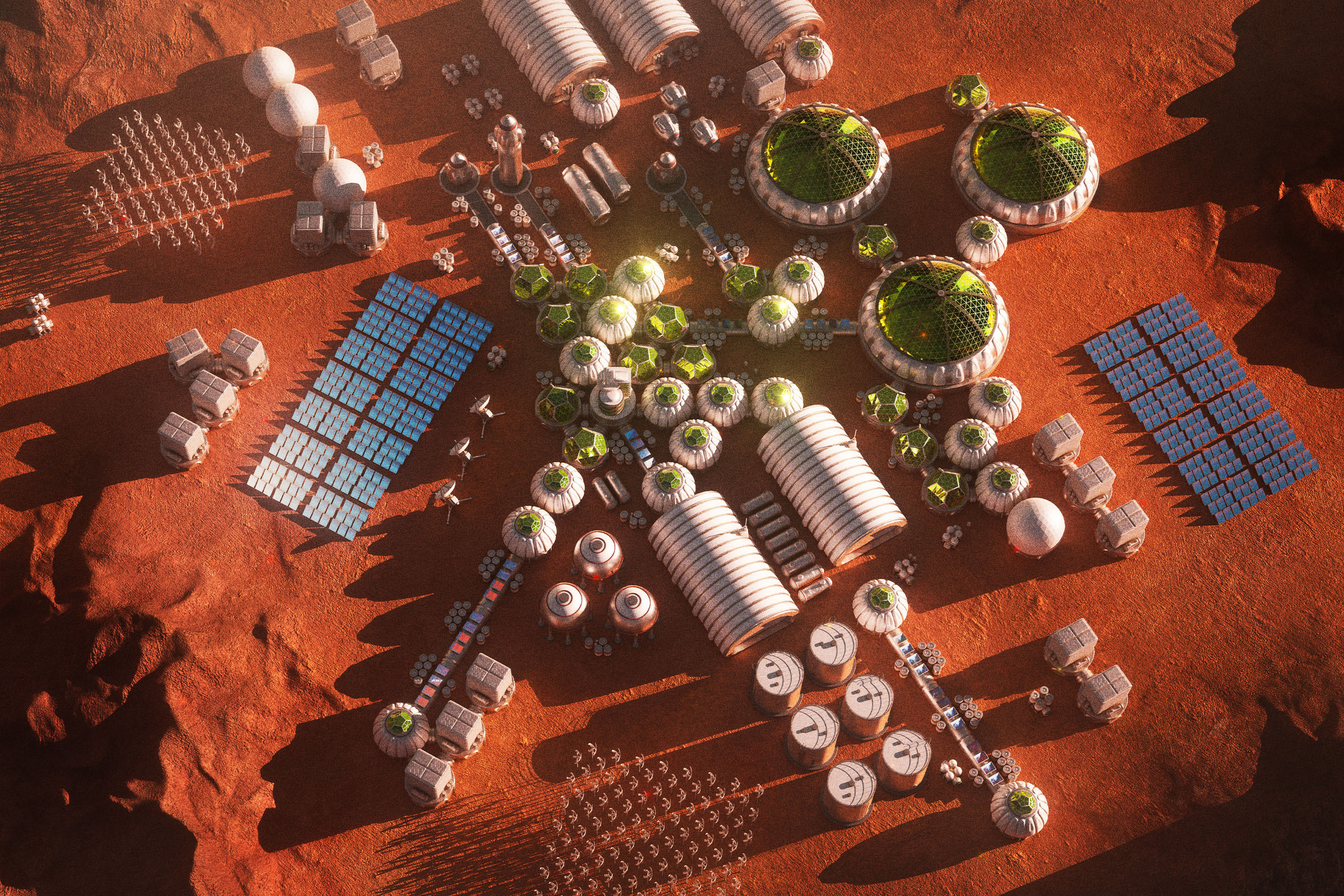
Once the first human settlers reach the surface of Mars, they’ll have to get extremely creative to turn the desolate and hostile environment into land that can support a permanent human presence. Like in Andy Weir’s blockbuster sci-fi novel “The Martian,” the local regolith would need plenty of manipulation to allow plants to grow.

But according to recent research, there may be much better alternatives to relying on biofuel and human waste, like the stranded protagonist in “The Martian.” As detailed in a paper published in the journal Frontiers in Astronomy and Space Sciences and spotted by Universe Today, an international team of researchers argue that special fungi could be used to convert the hostile Martian regolith into crop-friendly soil that could even be home to beneficial microbes and other organisms.

On their own, the researchers point out in their paper, regolith on the Moon and Mars aren’t exactly great candidates. They have a high alkaline pH, are riddled with toxic elements like aluminum and manganese, and are devoid of many important nutrients plants need to grow.

However, specific fungal species, such as trichoderma, a prevalent genus in soils here on Earth, have previously been shown to metabolize these toxic elements while also producing phosphates and other nutrients that are key to organic life.

Some extreme fungi, like Cryomyces antarcticus, which researchers have demonstrated can survive the harshness of outer space while strapped to the outside of the International Space Station, could be used to promote plant growth under “abiotic stress,” or negative impacts from environmental factors.

Other mycorrhizal fungi, species that are mutually beneficial to plant roots, can “enhance iron uptake, mitigate oxidative stress, and improve soil structure,” the researchers argue, in “mechanisms that may be applicable to regolith systems.”

Of course, plenty of questions remain whether Martian regolith will prove useful in growing plants on the surface of a hostile planet. We don’t know whether the final crops will be safe to eat or how they will react to radiation exposure, let alone how to validate the concept ahead of time, the researchers point out.

But anything that could sidestep the need to ship soil or other growing media all the way to Mars is worth looking into; it could potentially lower the costs enormously of future efforts to create a permanent presence on Mars.

And there are early positive signs that it may just work. Researchers at the University of Bremen and the German Aerospace Center successfully developed a algae-based fertilizer that can be produced exclusively with Martian resources — bringing us one step closer to growing food on Mars.

More on growing stuff on Mars: Scientists Identify Plant That Could Grow on Mars

The post Scientists Say They’ve Found Fungi That Turn Dead Martian Soil Into Fertile Cropland appeared first on Futurism.

  •  

Jeff Bezos’ Rocket Explodes Into Mushroom Cloud, Dealing Massive Blow to NASA’s Moon Plans

In what could turn out to be a huge setback for NASA’s highly ambitious plans to build a permanent Moon base, Jeff Bezos’ latest Blue Origin rocket erupted into a massive mushroom cloud on the launchpad last night.

During a wet dress rehearsal at the Space Force Station in Cape Canaveral on Thursday evening, the company’s New Glenn rocket exploded in dramatic fashion. Footage shows an enormous fireball engulfing the entire launch pad, a sight visible from far away.

It’s the very last thing NASA needed. Just days ago, the space agency announced a slew of “Moon base” missions to build out a permanent presence on the lunar surface — and they hinged on New Glenn rockets launching two of Blue Origin’s Blue Moon lunar landers that are delivering payloads, including rovers, there before the end of this year.

Even before Blue Origin’s latest setback, it was an enormously ambitious timeline. It’s unclear how the New Glenn explosion will affect NASA’s plans going forward, but it certainly doesn’t bode well, given the likely extensive damage to the surrounding pad.

“NASA is aware of the anomaly that occurred tonight at Launch Complex 36 involving Blue Origin’s New Glenn rocket at Cape Canaveral Space Force Station,” NASA’s administrator Jared Isaacman said in a statement. “Spaceflight is unforgiving, and developing new heavy-lift launch capability is extraordinarily difficult.”

“We will work with our partners to support a thorough investigation of this anomaly, assess near-term mission impacts, and get back to launching rockets,” he added. “We will provide information on any impacts to the Artemis and Moon Base programs as it becomes available.”

Bezos appeared distraught following the catastrophe.

“All personnel are accounted for and safe,” he tweeted around 10 pm Eastern on Thursday. “It’s too early to know the root cause but we’re already working to find it.”

“Very rough day, but we’ll rebuild whatever needs rebuilding and get back to flying,” he added. “It’s worth it.”

Even SpaceX CEO Elon Musk, who has a long history of butting heads with Bezos, struck an empathetic pose.

“Most unfortunate,” he tweeted. “Rockets are hard.”

The news comes just over a month after Blue Origin’s New Glenn rocket failed to deliver a communication satellite into a high enough orbit, turning it into nothing more than another piece of space junk.

The rocket and the firm’s Blue Moon lander are one of two options NASA is hoping to use to deliver astronauts to the surface of the Moon, alongside SpaceX’s Starship.

Unfortunately, Musk’s space company is similarly struggling to get its own rocket ready for prime time. Just yesterday, the Federal Aviation Administration announced it was grounding Starship and launching a “mishap investigation” after the company’s Super Heavy booster failed to reignite the majority of its thrusters before splashing down in the Gulf of Mexico on May 22. The second stage similarly erupted in a massive fireball after splashing down in the ocean.

“A return to flight of the Starship Super Heavy vehicle is based on the FAA determining that any system, process, or procedure related to the mishap does not affect public safety,” the regulator wrote in a statement.

More on New Glenn: Jeff Bezos’ Botched Space Launch Was So Bad It Could Threaten NASA’s Entire Moon Program

The post Jeff Bezos’ Rocket Explodes Into Mushroom Cloud, Dealing Massive Blow to NASA’s Moon Plans appeared first on Futurism.

  •  

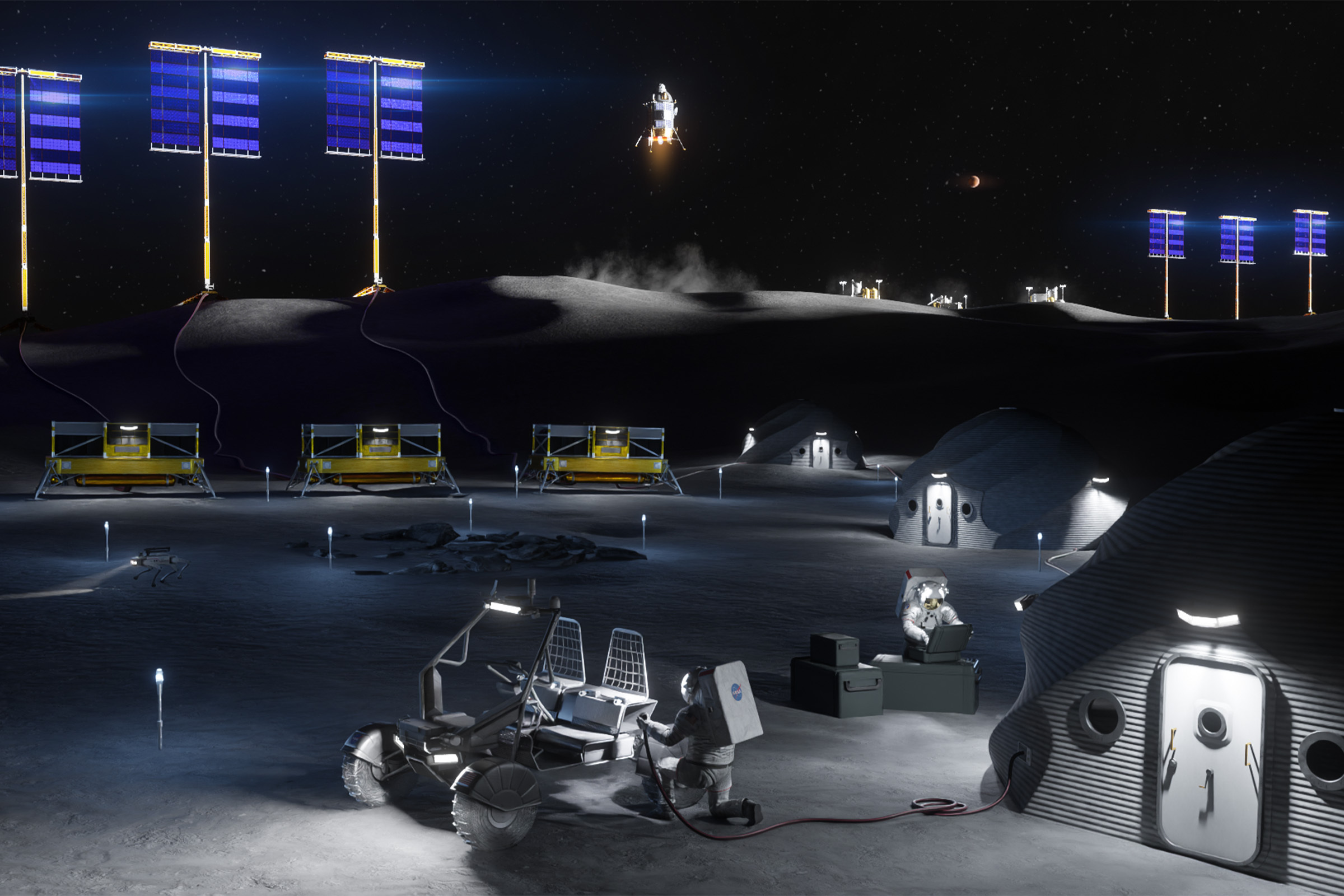
NASA Releases Sweeping Plans for Moon Base

NASA remains committed to developing a permanent presence on the Moon — space science budgets be damned.

During a Tuesday event, the space agency announced a slew of new contracts worth hundreds of millions of dollars for Moon base infrastructure including lunar rovers, as well as timeframes for upcoming development and exploration missions.

Before the end of this year, NASA wants to send two of Blue Origin’s Blue Moon lunar landers to the Moon’s surface to deliver two lunar terrain vehicles being developed by commercial partners Astrolab and Lunar Outpost.

Meanwhile, Firefly Aerospace, whose Blue Ghost lander successfully touched down on the Moon in March 2025, will develop drones to explore the rugged surface.

And that’s just the buildup to NASA’s Artemis 4 mission, the first planned crewed landing in over half a century, which is tentatively slated for 2028. Artemis 3, which was originally envisioned as a landing attempt, will now involve the testing of either or both Blue Origin’s lander and SpaceX’s Starship in low-Earth orbit sometime next year.

To call NASA’s plans for its Moon base ambitious would be a staggering understatement. For one, Blue Origin’s Blue Moon lander has yet to successfully deliver a payload into Earth’s orbit following a failed attempt last month. Getting to the Moon, softly landing, and releasing a robotic lander will likely prove far more difficult.

The agency laid out plans for three “Moon Base missions,” starting with a Blue Moon delivery of scientific instruments in “fall 2026,” followed by a delivery of “more than 1,100 pounds of cargo on Astrobotic’s Griffin lander,” including a rover.

The third mission, which is “also targeted for this year,” will deliver even more scientific payloads, including ones being developed by the European Space Agency and the Korea Astronomy and Space Science Institute.

“These missions are the first of more than a dozen missions that will be announced this year, each designed to generate operational data and reduce risk ahead of crewed Artemis surface activities,” the agency wrote in its writeup of Tuesday’s event.

The base itself will span hundreds of square miles, according to Moon base program executive Carlos Garcia-Galan. Drones, called MoonFall, will mark the perimeter of said base in what could inevitably be a highly contentious marking of territory.

MoonFall, an initiative led by NASA’s Jet Propulsion Lab, aims to land near the lunar South Pole by 2028. High-definition optical cameras attached to drones measuring roughly seven feet across and four feet tall will take detailed imagery of the base’s envisioned terrain far ahead of any crewed landings.

In a note, NASA administrator Jared Isaacman vowed that the US would “never give up on the Moon again” by building out its Artemis program.

“We are going back to the Moon, building the base, and doing the other things,” he wrote, referencing John F. Kennedy’s iconic 1962 speech about going to the Moon. “This is no longer something to read in the history books, you are making history.”

However, given the vast degree of complexity involved, successfully launching not just one but a whole slew of missions on the surface of the Moon before the end of 2026 could soon get a massive reality check. In other words, we wouldn’t be shocked to hear from even more delays as Isaacman’s NASA dials up the pressure to build out a permanent presence on the Moon.

If deadlines were to slip — which, given historical precedent, is far from out of the question — the US could be beaten to the punch by the end of this decade after all, as experts continue to warn.

“It would not surprise me at all if China gets there first,” Open University lunar scientist Simeon Barber told the BBC.

More on the Moon base: NASA Announces Gigantic Armada of Moon Launches to “Build President Trump’s Moon Base,” Starting Next Year

The post NASA Releases Sweeping Plans for Moon Base appeared first on Futurism.

  •  

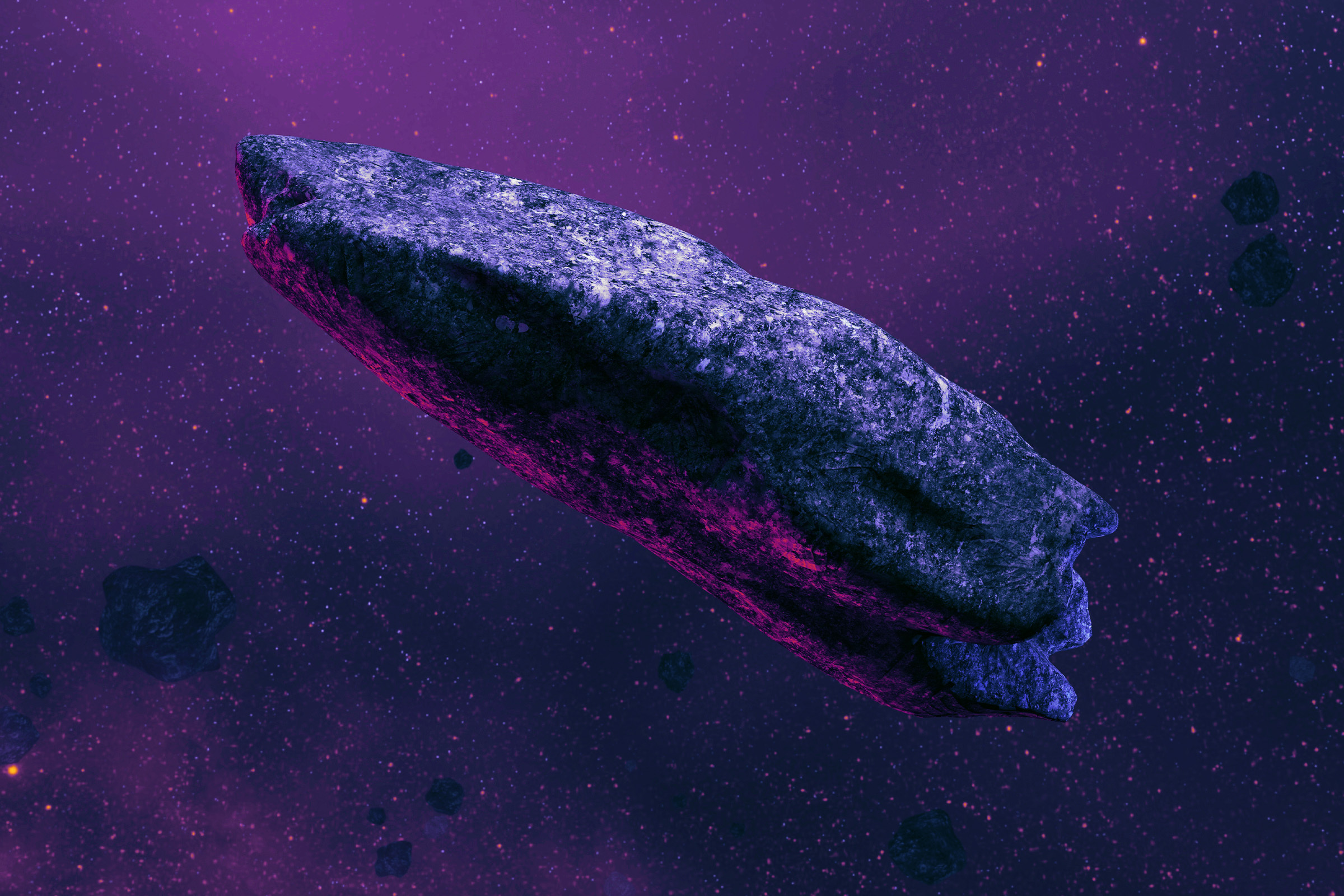
Scientist Suggests That 3I/ATLAS May Have Seeded Life as It Careened Through Our Solar System

A small group of scientists have long suggested that the seeds of life may have been distributed across the vast distances of space via cosmic dust, asteroids, or comets — a theory known as panspermia.

Some, including late astronomer and planetary scientist Carl Sagan, have gone as far as to raise the possibility that those seeds may have been deliberately spread to distant planets by intelligent civilizations.

It’s an intriguing albeit far-fetched hypothesis that most recently caught the interest of Harvard astronomer Avi Loeb. Following months of observations of mysterious interstellar object 3I/ATLAS, which came surprisingly close to a number of solar system planets during its brief visit last year, Loeb proposed that it could’ve been shedding the building blocks of life during its journey — or even have been designed to seed planets like our own intentionally.

In a recent blog post, Loeb suggested that extrasolar life could’ve survived the journey by being embedded inside the comet’s ice reservoirs, before being released near other planets in the solar system, likening it to a “dandelion flower shedding its seeds to be carried by wind towards a fertile ground.”

“In addition to natural origins, there is the possibility of directed panspermia, whereby an interstellar gardener seeded 3I/ATLAS on a fertilization mission targeting the habitable planets in the Solar System,” he wrote. “This would explain the rare alignment between the trajectory of 3I/ATLAS and the orbital plane of the habitable planets around the Sun, as well as the sunward jet with large fragments that plowed through the solar radiation and wind.”

Loeb previously painstakingly built a case around his widely disputed hypothesis that 3I/ATLAS may have been an alien spacecraft that was sent to visit us. His latest blog post suggests that the wealth of observational data strongly suggesting it was a comet made up of ice and rock has yet to fully weaken his resolve when it comes to the possibility that aliens are behind the interstellar visitor.

That’s not to say his new idea is a slam dunk. Panspermia itself remains a hotly debated subject among scientists, with many arguing that building blocks of life may have always been present on Earth. How such a process could play out in far more hostile environments in other parts of the solar system is an even bigger question.

Still, it’s a fascinating thought experiment with some vast implications — and should inspire us to actively seek answers by intercepting objects like 3I/ATLAS, Loeb argues.

“By directing a probe on a crash course towards the surface of these icebergs, we can diagnose the composition of the material they shed and infer whether it carries extrasolar life,” he wrote in his latest blog. “In case it does, the most pressing question is whether extrasolar life resembles life-as-we-know-it.”

“If so, perhaps life on Earth was seeded by an interstellar gardener,” he added.

More on 3I/ATLAS: Astronomers Discover Major Clue About 3I/ATLAS’ Origins

The post Scientist Suggests That 3I/ATLAS May Have Seeded Life as It Careened Through Our Solar System appeared first on Futurism.

  •  

SpaceX Announces Plans to Put Billionaire on First Rocket to Mars

The future of space travel is pay to play, but that might not be a bad thing.

During the final 15 minutes counting down to SpaceX’s aborted Starship V3 mission on Thursday, Elon Musk’s space company revealed a fascinating tidbit: the man who’s going to lead SpaceX’s first crewed mission to Mars.

Spotted by Gizmodo, broadcasters on the company’s live feed announced that crypto billionaire Chun Wang has been tapped to lead humanity’s first interplanetary human flight.

At first glance, Wang might seem like an unlikely candidate for such a monumental task. A software developer who dropped out of college, Wang made his fortune by developing one of China’s first and most successful Bitcoin mining pools — striking it rich just before the Chinese government shut all of that crypto stuff down in 2021.

However, his resume includes another space flight, SpaceX’s April 2025 Fram2 mission, which he personally funded in order to secure a spot as mission leader. Though the media made a spectacle of that brief trip, Christopher Combs, associate dean of research at the University of Texas’ Klesse College of Engineering and Integrated Design described it as a “notch above a gimmick, but not exactly a groundbreaking milestone.”

The Mars trip, which would take up to two years, would be a vastly greater challenge on the billionaire’s mind and body — though Wang seems pretty gung-ho about it.

“I can stare at the map view on airplanes all the way from takeoff through landing, so I think I’m going to enjoy the trip,” Wang told viewers on Thursday.

It’s unknown who else will be making the Mars trip alongside Wang, and whether or not he’s funding it. Either way, the prospect that a billionaire could be willfully catapulting himself around 140 million miles from Earth left some critics buzzing on social media.

“This is the first time I have been 100 percent behind a SpaceX decision,” journalist David Perry wrote on Bluesky. “I hope they launch really soon.”

Writer Dara Moskowitz Grumdahl joked that it’s a “great start.”

“But,” she concluded, “I think all the crypto billionaires should go, it’s important and will bring America hope.”

More on SpaceX: SpaceX Stock May Actually Be a Horrendous Investment

The post SpaceX Announces Plans to Put Billionaire on First Rocket to Mars appeared first on Futurism.

  •  
❌