Reading view

Mathematicians warn of AI threats to profession as industry encroaches

Mathematicians warned against rising tech industry influence in a declaration describing the many challenges that AI poses to mathematics research. The timing of the declaration comes two weeks after OpenAI publicized one of its AI models as having disproved an 80-year-old mathematical conjecture in geometry.

The declaration was developed by a working group of 16 researchers over eight months following a conference held at Leiden University in the Netherlands in September 2025. Published on June 2, 2026, the resulting Leiden Declaration on Artificial Intelligence and Mathematics has been endorsed by the International Mathematical Union—the international non-governmental organization that hosts conferences and oversees the most prestigious prizes in mathematics such as the Fields Medal.

“Mathematicians should find it quite striking that tech companies are suddenly interested in their work,” said Kevin Buzzard, a mathematician at Imperial College London, in a statement. “The Leiden Declaration is a well-thought-through response to what is currently happening, as AI continues to disrupt this space.”


Read full article

Comments

© Kenishirotie via iStock / Getty Images

  •  

Hackers duped Meta AI support chatbot to steal celebrity Instagram accounts

Meta’s AI support chatbot proved unusually helpful to hackers looking to steal and resell notable Instagram accounts—the hackers simply asking the bot to change the accounts’ associated email addresses while using VPN to mask their true locations.

Videos featuring the “shockingly easy” exploit have been circulating among Telegram groups for hackers and security researchers, according to 404 Media. The exploit allowed hackers to take over and flip valuable Instagram accounts worth hundreds of thousands of dollars on the gray market before Meta implemented an emergency patch on May 29. The Barack Obama White House account and the Chief Master Sergeant of Space Force’s account also posted pro-Iranian images and messages while they were temporarily compromised.

Attackers simply had to use a VPN to approximately match their location to the target Instagram account’s region, begin a password reset process, and then ask Meta’s AI support chatbot to change the email address associated with the account, according to 404 Media. It’s a very straightforward prompt injection attack.

Read full article

Comments

© Marcin Golba/NurPhoto via Getty Images

  •  

Hackers duped Meta AI support chatbot to steal celebrity Instagram accounts

Meta’s AI support chatbot proved unusually helpful to hackers looking to steal and resell notable Instagram accounts—the hackers simply asking the bot to change the accounts’ associated email addresses while using VPN to mask their true locations.

Videos featuring the “shockingly easy” exploit have been circulating among Telegram groups for hackers and security researchers, according to 404 Media. The exploit allowed hackers to take over and flip valuable Instagram accounts worth hundreds of thousands of dollars on the gray market before Meta implemented an emergency patch on May 29. The Barack Obama White House account and the Chief Master Sergeant of Space Force’s account also posted pro-Iranian images and messages while they were temporarily compromised.

Attackers simply had to use a VPN to approximately match their location to the target Instagram account’s region, begin a password reset process, and then ask Meta’s AI support chatbot to change the email address associated with the account, according to 404 Media. It’s a very straightforward prompt injection attack.

Read full article

Comments

© Marcin Golba/NurPhoto via Getty Images

  •  

Allegedly trashing Airbnbs to test robots puts startup in legal trouble

A San Francisco robotics startup is being taken to court by an Airbnb host who claims the company’s “robotic prototype testing” caused extensive damage to his home.

In the lawsuit filed on May 26, 2026, Sean Donovan is seeking more than $12,000 in damages from the Bay Area startup The Bot Company. The court case was first reported by SFGate, which also interviewed Donovan about the unprecedented mess he encountered after the startup’s employees supposedly rented his former childhood home through Airbnb.

The first clue that the guests were not typical tech startup employees needing a temporary crash pad came when Donovan was taking care of the trash during the guests’ stay. He told SFGate about seeing “bundles of wires” throughout the house and a robot he described as a 6-foot-tall “Roomba with treads” that also resembled the cybernetic Borg from the Star Trek universe.

Read full article

Comments

© Malte Mueller | Getty Images

  •  

Allegedly trashing Airbnbs to test robots puts startup in legal trouble

A San Francisco robotics startup is being taken to court by an Airbnb host who claims the company’s “robotic prototype testing” caused extensive damage to his home.

In the lawsuit filed on May 26, 2026, Sean Donovan is seeking more than $12,000 in damages from the Bay Area startup The Bot Company. The court case was first reported by SFGate, which also interviewed Donovan about the unprecedented mess he encountered after the startup’s employees supposedly rented his former childhood home through Airbnb.

The first clue that the guests were not typical tech startup employees needing a temporary crash pad came when Donovan was taking care of the trash during the guests’ stay. He told SFGate about seeing “bundles of wires” throughout the house and a robot he described as a 6-foot-tall “Roomba with treads” that also resembled the cybernetic Borg from the Star Trek universe.

Read full article

Comments

© Malte Mueller | Getty Images

  •  

Mystery GPS jammer in Iran becomes test for NASA satellites’ capabilities

NASA satellites designed to observe cyclone wind speeds and collapsing ice sheets have also proven capable of identifying the approximate locations of GPS jammers. That could help monitor high-risk areas for aircraft and ships navigating the growing prevalence of GPS interference worldwide.

Two different NASA satellite systems showed how they could locate a known but mysterious GPS jammer within several kilometers of its position in Iran, according to an experiment by Sean Gorman, CEO and cofounder of the location-based technology company Zephr.xyz that was detailed in the magazine GPS World. Such jammers use strong signals to overpower the weaker radio signals coming from US-operated GPS satellites and other global navigation satellite systems.

Such NASA satellites cannot perform “near-real time monitoring” or pinpoint the exact location of GPS jammers, said Clara Chew, principal scientist and lead of the GNSS systems and data team at the California-based satellite manufacturer Muon Space, who was not involved in the study. But Chew told Ars that identifying the approximate locations of GPS jammers “could potentially be helpful for flight planning” or for “indicating high risk areas for maritime shipping.”

Read full article

Comments

© NASA/JPL-Caltech

  •  

US scrambles to stop Internet users re-creating dead pilots’ voices

Pilots’ voices from the last seconds of a fatal cargo plane crash have been re-created by Internet sleuths using software and AI tools. The spread of reconstructed audio recordings has prompted a US government agency to suspend all public access to its database of civil transportation accidents—because federal law prohibits investigators from publicly releasing audio from cockpit voice recorders.

The US National Transportation Safety Board (NTSB) usually shares factual reports and evidence gathered from investigations of aircraft crashes and other civil transportation incidents. But on May 21, the NTSB announced that the online docket system containing such information was “temporarily unavailable” as it reviewed the publicly available materials that had enabled people to re-create cockpit audio recordings from aircraft disasters.

“​​The NTSB is aware that advances in image recognition and computational methods have enabled individuals to reconstruct approximations of cockpit voice recorder audio from sound spectrum imagery released as part of NTSB investigations, including the ongoing investigation of the crash last year of UPS flight 2976 in Louisville, Kentucky,” according to an NTSB statement. “The NTSB does not release cockpit audio recordings.”

Read full article

Comments

© National Transportation Safety Board

  •  

Trump wants $1B to protect White House ballroom from drones and other threats

President Donald Trump’s latest pitch for using taxpayer dollars to secure his White House ballroom featured a militarized building—including a rooftop hardened against drone strikes and a “drone port” that could potentially house military drones.

The remarks came on May 19 as Trump gave reporters a personal tour of the ballroom project that has already involved the demolition of the White House mansion’s East Wing. The president spoke of installing a rooftop drone base “for unlimited numbers of drones” operated by the US military as a “drone port that would protect all of Washington,” according to Reuters. He also highlighted a ballroom roof made from “impenetrable steel” that would supposedly be “drone-proof” against potential drone strikes.

To pay for such measures, Trump has been urging Republican lawmakers in the US Congress to approve $1 billion in taxpayer funding to provide a wide variety of “security adjustments and upgrades” for his ballroom project. The taxpayer-backed security enhancements would be separate from the $400 million construction cost for the ballroom project that has been funded by private donors, including companies such as Amazon, Apple, Coinbase, Comcast, Google, HP Inc., Lockheed Martin, Meta, Micron Technology, Microsoft, Palantir, Ripple, and T-Mobile.

Read full article

Comments

© Chip Somodevilla/Getty Images

  •  

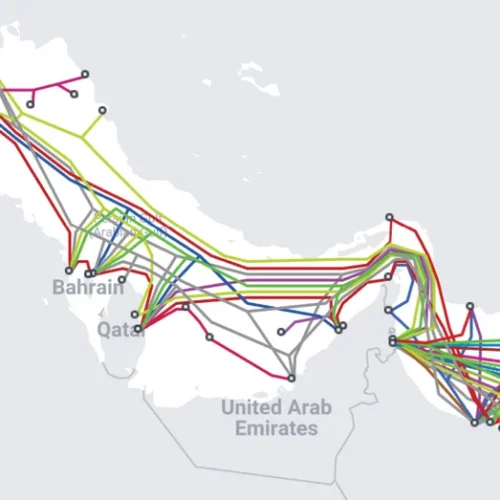
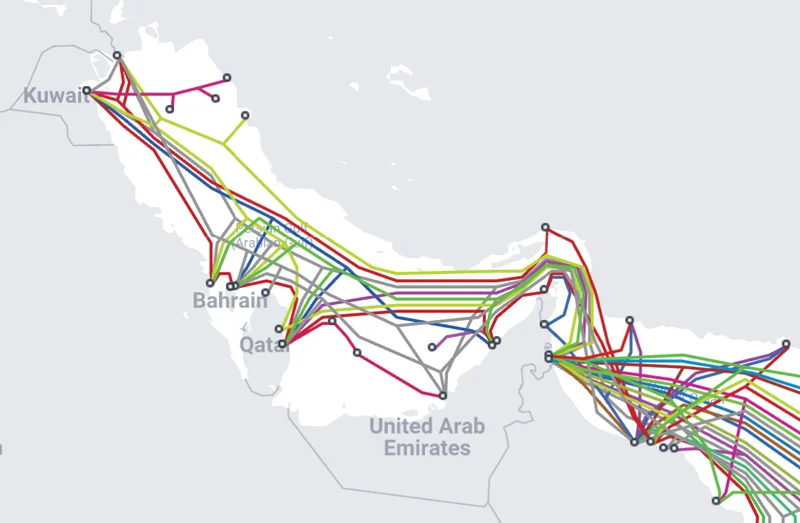
Iran demands Big Tech pay fees for undersea Internet cables in Strait of Hormuz

Iran claims it will charge US tech companies fees for using undersea Internet cables that run beneath the contested Strait of Hormuz shipping lanes. The war has already halted multiple projects and led to the suspension of cable repairs in the region—and the latest Iranian threats may accelerate efforts by Big Tech and Gulf countries to find alternative routes for bypassing the Strait of Hormuz’s digital chokepoint.

The latest assertions of Iranian authority over the Strait of Hormuz were announced in a brief statement by Ebrahim Zolfaghari, a spokesperson for Iran’s military and the Islamic Revolutionary Guard Corps. “We will impose fees on internet cables” Zolfaghari wrote in a May 9 post. It was not immediately clear how Iran might implement such fees or impose its rules on cable projects, given that the majority of routes pass through Oman-controlled waters.

But Tasnim and Fars, both Iranian state-linked media channels, laid out more detailed proposals on how Iran could charge license fees to US tech giants for the use and maintenance of undersea cables carrying regional Internet traffic, according to The Guardian. For example, the Tasnim plan described charging tech companies—specifically naming Meta, Google, Amazon, and Microsoft—license fees for cable usage while also claiming that Iran alone has the right to repair and maintain the subsea cables.

Read full article

Comments

© TeleGeography

  •  

Mystery GPS jammer in Iran becomes test for NASA satellites’ capabilities

NASA satellites designed to observe cyclone wind speeds and collapsing ice sheets have also proven capable of identifying the approximate locations of GPS jammers. That could help monitor high-risk areas for aircraft and ships navigating the growing prevalence of GPS interference worldwide.

Two different NASA satellite systems showed how they could locate a known but mysterious GPS jammer within several kilometers of its position in Iran, according to an experiment by Sean Gorman, CEO and cofounder of the location-based technology company Zephr.xyz that was detailed in the magazine GPS World. Such jammers use strong signals to overpower the weaker radio signals coming from US-operated GPS satellites and other global navigation satellite systems.

Such NASA satellites cannot perform “near-real time monitoring” or pinpoint the exact location of GPS jammers, said Clara Chew, principal scientist and lead of the GNSS systems and data team at the California-based satellite manufacturer Muon Space, who was not involved in the study. But Chew told Ars that identifying the approximate locations of GPS jammers “could potentially be helpful for flight planning” or for “indicating high risk areas for maritime shipping.”

Read full article

Comments

© NASA/JPL-Caltech

  •  

Startup offers free home cleaning—if it can record it all for robot training

A tech startup is offering New York City residents free home cleaning with a twist—it will send “professional cleaners” wearing cameras to record everything they do. All that data will supposedly be used to train AI-driven robots.

The unusual pitch comes from the German startup MicroAGI, whose website describes the company as a “team of engineers, researchers, and operators on a mission to accelerate embodied AI.” It began publicizing the free home-cleaning service run through its newly launched Shift app on May 28, with posts on social media sites such as X and LinkedIn featuring a video set to the upbeat piano notes of the Jay-Z and Alicia Keys song “Empire State of Mind.”

The Shift app website claims it “connects New Yorkers with free, trusted professional house cleaners” in exchange for recording “first-person cleaning footage to help train the next generation of household robots.” The “book a free cleaning” link directs clients to enter information such as a phone number, email address, and home address, along with access instructions, before booking an appointment that lasts an estimated two hours.

Read full article

Comments

© MicroAGI | Shift

  •  

Startup offers free home cleaning—if it can record it all for robot training

A tech startup is offering New York City residents free home cleaning with a twist—it will send “professional cleaners” wearing cameras to record everything they do. All that data will supposedly be used to train AI-driven robots.

The unusual pitch comes from the German startup MicroAGI, whose website describes the company as a “team of engineers, researchers, and operators on a mission to accelerate embodied AI.” It began publicizing the free home-cleaning service run through its newly launched Shift app on May 28, with posts on social media sites such as X and LinkedIn featuring a video set to the upbeat piano notes of the Jay-Z and Alicia Keys song “Empire State of Mind.”

The Shift app website claims it “connects New Yorkers with free, trusted professional house cleaners” in exchange for recording “first-person cleaning footage to help train the next generation of household robots.” The “book a free cleaning” link directs clients to enter information such as a phone number, email address, and home address, along with access instructions, before booking an appointment that lasts an estimated two hours.

Read full article

Comments

© MicroAGI | Shift

  •  

Mystery GPS jammer in Iran becomes test for NASA satellites’ capabilities

NASA satellites designed to observe cyclone wind speeds and collapsing ice sheets have also proven capable of identifying the approximate locations of GPS jammers. That could help monitor high-risk areas for aircraft and ships navigating the growing prevalence of GPS interference worldwide.

Two different NASA satellite systems showed how they could locate a known but mysterious GPS jammer within several kilometers of its position in Iran, according to an experiment by Sean Gorman, CEO and cofounder of the location-based technology company Zephr.xyz that was detailed in the magazine GPS World. Such jammers use strong signals to overpower the weaker radio signals coming from US-operated GPS satellites and other global navigation satellite systems.

Such NASA satellites cannot perform “near-real time monitoring” or pinpoint the exact location of GPS jammers, said Clara Chew, principal scientist and lead of the GNSS systems and data team at the California-based satellite manufacturer Muon Space, who was not involved in the study. But Chew told Ars that identifying the approximate locations of GPS jammers “could potentially be helpful for flight planning” or for “indicating high risk areas for maritime shipping.”

Read full article

Comments

© NASA/JPL-Caltech

  •  

US scrambles to stop Internet users re-creating dead pilots’ voices

Pilots’ voices from the last seconds of a fatal cargo plane crash have been re-created by Internet sleuths using software and AI tools. The spread of reconstructed audio recordings has prompted a US government agency to suspend all public access to its database of civil transportation accidents—because federal law prohibits investigators from publicly releasing audio from cockpit voice recorders.

The US National Transportation Safety Board (NTSB) usually shares factual reports and evidence gathered from investigations of aircraft crashes and other civil transportation incidents. But on May 21, the NTSB announced that the online docket system containing such information was “temporarily unavailable” as it reviewed the publicly available materials that had enabled people to re-create cockpit audio recordings from aircraft disasters.

“​​The NTSB is aware that advances in image recognition and computational methods have enabled individuals to reconstruct approximations of cockpit voice recorder audio from sound spectrum imagery released as part of NTSB investigations, including the ongoing investigation of the crash last year of UPS flight 2976 in Louisville, Kentucky,” according to an NTSB statement. “The NTSB does not release cockpit audio recordings.”

Read full article

Comments

© National Transportation Safety Board

  •  

Trump wants $1B to protect White House ballroom from drones and other threats

President Donald Trump’s latest pitch for using taxpayer dollars to secure his White House ballroom featured a militarized building—including a rooftop hardened against drone strikes and a “drone port” that could potentially house military drones.

The remarks came on May 19 as Trump gave reporters a personal tour of the ballroom project that has already involved the demolition of the White House mansion’s East Wing. The president spoke of installing a rooftop drone base “for unlimited numbers of drones” operated by the US military as a “drone port that would protect all of Washington,” according to Reuters. He also highlighted a ballroom roof made from “impenetrable steel” that would supposedly be “drone-proof” against potential drone strikes.

To pay for such measures, Trump has been urging Republican lawmakers in the US Congress to approve $1 billion in taxpayer funding to provide a wide variety of “security adjustments and upgrades” for his ballroom project. The taxpayer-backed security enhancements would be separate from the $400 million construction cost for the ballroom project that has been funded by private donors, including companies such as Amazon, Apple, Coinbase, Comcast, Google, HP Inc., Lockheed Martin, Meta, Micron Technology, Microsoft, Palantir, Ripple, and T-Mobile.

Read full article

Comments

© Chip Somodevilla/Getty Images

  •  

Iran demands Big Tech pay fees for undersea Internet cables in Strait of Hormuz

Iran claims it will charge US tech companies fees for using undersea Internet cables that run beneath the contested Strait of Hormuz shipping lanes. The war has already halted multiple projects and led to the suspension of cable repairs in the region—and the latest Iranian threats may accelerate efforts by Big Tech and Gulf countries to find alternative routes for bypassing the Strait of Hormuz’s digital chokepoint.

The latest assertions of Iranian authority over the Strait of Hormuz were announced in a brief statement by Ebrahim Zolfaghari, a spokesperson for Iran’s military and the Islamic Revolutionary Guard Corps. “We will impose fees on internet cables” Zolfaghari wrote in a May 9 post. It was not immediately clear how Iran might implement such fees or impose its rules on cable projects, given that the majority of routes pass through Oman-controlled waters.

But Tasnim and Fars, both Iranian state-linked media channels, laid out more detailed proposals on how Iran could charge license fees to US tech giants for the use and maintenance of undersea cables carrying regional Internet traffic, according to The Guardian. For example, the Tasnim plan described charging tech companies—specifically naming Meta, Google, Amazon, and Microsoft—license fees for cable usage while also claiming that Iran alone has the right to repair and maintain the subsea cables.

Read full article

Comments

© TeleGeography

  •  
❌