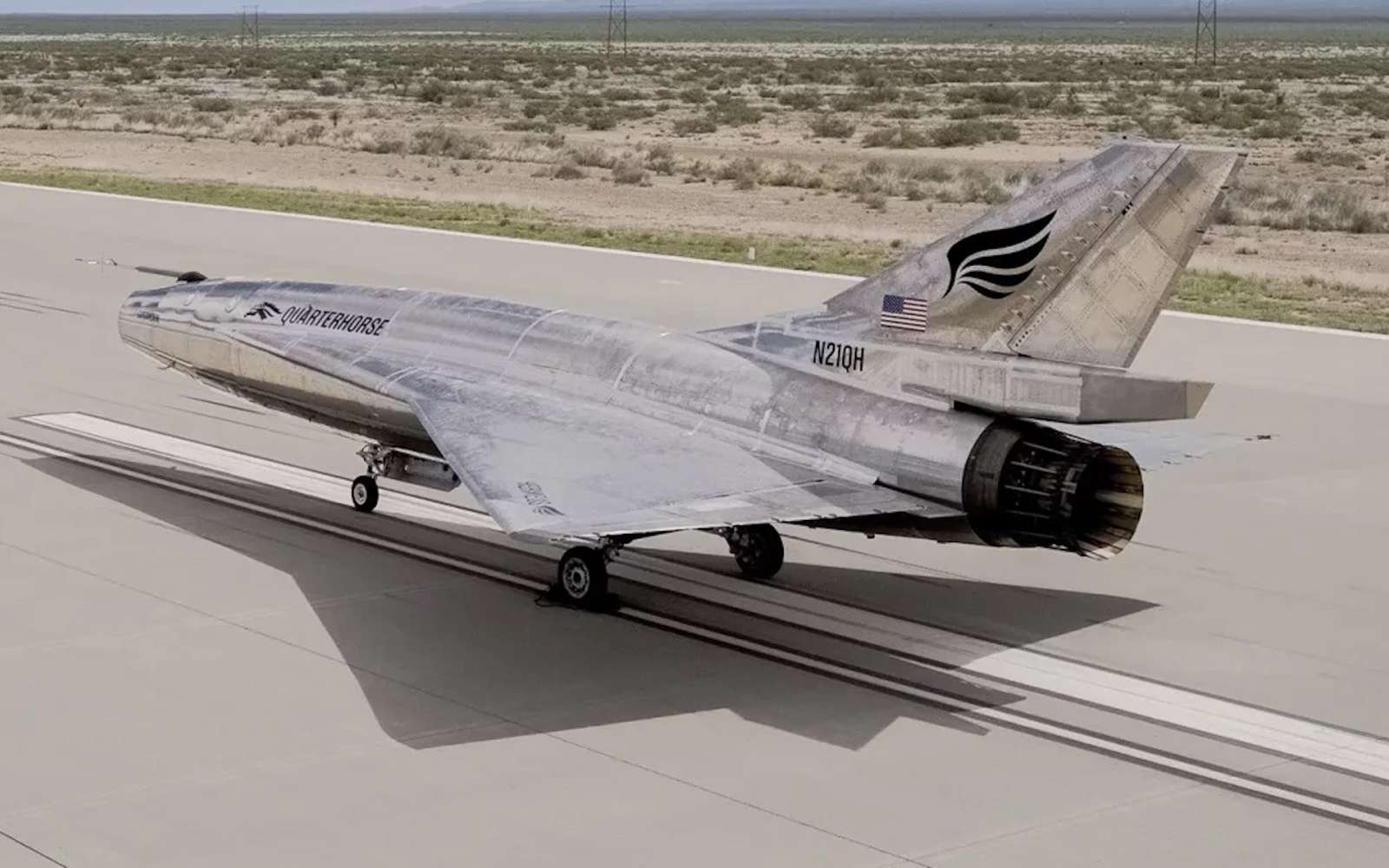
En aviation, on dit qu’un bel avion est un avion qui vole bien. Avec son allure élancée et son aile delta, le Quarterhose Mk2.1 vient de démontrer encore une fois cet adage en franchissant le mur du son avec grâce. Attention, car le vol supersonique n’est qu’une étape pour cet héritier du fameux...
Middle strike has become one of the defining phenomena of this war – not something conceived in the offices of military theorists, but a capability shaped directly by battlefield pressure. War rarely waits for an army to finish developing the weapons it needs. More often, it forces those weapons to be built in the middle […]
The United States Air Force is preparing to deploy an upgraded version of its ULTRA unmanned aerial vehicle to the Middle East for real-world testing. The platform, which features a glider-like design, will be evaluated in one of the world’s most heavily monitored and operationally active airspaces. This next-generation reconnaissance drone is expected to offer improved […]
Depois do sucesso de outras experiências imersivas, Lisboa recebe agora uma nova oportunidade para viajar no tempo sem sair da cidade, desta vez rumo às montanhas e mistérios do antigo mundo inca.
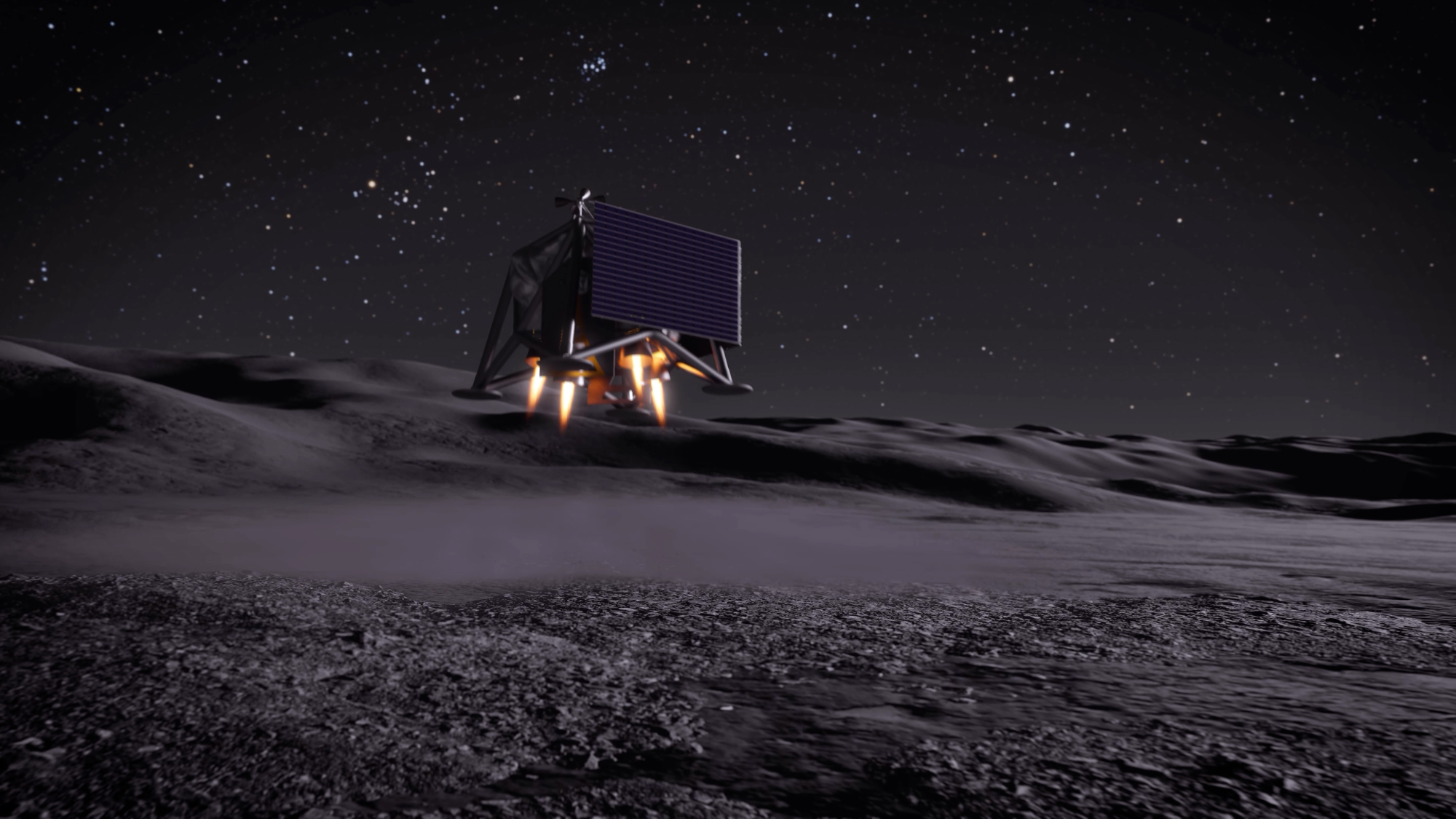
As NASA looks ahead towards Artemis III in mid-2027, the agency is sharing new details on several projects, including a future permanent moon base and a drone mission called MoonFall. The mission will send four drones to survey the surface of the moon’s South Pole to spot potential landing sites for future Artemis astronauts.
According to the update, the Jet Propulsion Laboratory (JPL) in Southern California has been developing the drone design and testing prototype hardware ahead of the scheduled 2028 launch. Each drone will land on the moon’s surface and gather high-resolution imagery of the terrain over the course of a single lunar day (up to 14 Earth days). After each drone’s last flight, its survive-the-night payload will continue to work for several months. Payloads that are designed to survive-the-night can endure the sub-zero temperatures of the lunar night, which can get as cold as -208 degrees Fahrenheit.
Each of the four drones should weigh about 550 pounds, and stand at four-feet tall and seven feet in diameter. They will use a Lunar Dashcam imaging system to create maps of the terrain. The drones will also be equipped with a laser retroflector array so that mission control can precisely locate the drones, a neutron spectrometer system to help determine how much (if any) subsurface water is present, and a spectrometer to measure radiation.
Texas-based Firefly Aerospace was selected to build the spacecraft that will transport the drones. Firefly’s Elytra spacecraft will carry the drones for a 45-day transit from the Earth to the moon. After entering lunar orbit, it will deorbit and perform a braking maneuver to send out the drones roughly 31 miles above the lunar South Pole.
No stranger to lunar exploration, Firefly Aerospace’s Blue Ghost lander became the first commercially built lander to reach the lunar surface in March 2025. While on the moon, Blue Ghost delivered 10 NASA instruments designed to gather lunar subsurface data and also snapped some beautiful images of a solar eclipse.
As of now, NASA and 66 other nations have signed the Artemis Accords. While not an international treaty, the Artemis Accords is an agreement for high-level principles of space exploration and provides a basic legal framework for exploring and developing the lunar surface during this century. However, the NASA-led Artemis group is in direct competition with an initiative led by China to explore the lunar South Pole and potentially extract its resources.
President Donald Trump’s latest pitch for using taxpayer dollars to secure his White House ballroom featured a militarized building—including a rooftop hardened against drone strikes and a “drone port” that could potentially house military drones.
The remarks came on May 19 as Trump gave reporters a personal tour of the ballroom project that has already involved the demolition of the White House mansion’s East Wing. The president spoke of installing a rooftop drone base “for unlimited numbers of drones” operated by the US military as a “drone port that would protect all of Washington,” according to Reuters. He also highlighted a ballroom roof made from “impenetrable steel” that would supposedly be “drone-proof” against potential drone strikes.
To pay for such measures, Trump has been urging Republican lawmakers in the US Congress to approve $1 billion in taxpayer funding to provide a wide variety of “security adjustments and upgrades” for his ballroom project. The taxpayer-backed security enhancements would be separate from the $400 million construction cost for the ballroom project that has been funded by private donors, including companies such as Amazon, Apple, Coinbase, Comcast, Google, HP Inc., Lockheed Martin, Meta, Micron Technology, Microsoft, Palantir, Ripple, and T-Mobile.
President Donald Trump’s latest pitch for using taxpayer dollars to secure his White House ballroom featured a militarized building—including a rooftop hardened against drone strikes and a “drone port” that could potentially house military drones.
The remarks came on May 19 as Trump gave reporters a personal tour of the ballroom project that has already involved the demolition of the White House mansion’s East Wing. The president spoke of installing a rooftop drone base “for unlimited numbers of drones” operated by the US military as a “drone port that would protect all of Washington,” according to Reuters. He also highlighted a ballroom roof made from “impenetrable steel” that would supposedly be “drone-proof” against potential drone strikes.
To pay for such measures, Trump has been urging Republican lawmakers in the US Congress to approve $1 billion in taxpayer funding to provide a wide variety of “security adjustments and upgrades” for his ballroom project. The taxpayer-backed security enhancements would be separate from the $400 million construction cost for the ballroom project that has been funded by private donors, including companies such as Amazon, Apple, Coinbase, Comcast, Google, HP Inc., Lockheed Martin, Meta, Micron Technology, Microsoft, Palantir, Ripple, and T-Mobile.

 Login
Login