Reading view

Phage Sponge Proteins Diversify to Block Host Immunity

In a remarkable advance at the frontline of microbial warfare, researchers have unveiled new dimensions in the strategy viruses employ to evade the sophisticated immune defenses of their bacterial hosts. The study, recently published in Nature Microbiology, highlights the unappreciated functional diversity of phage-encoded “sponge” proteins that neutralize bacterial immune signaling molecules. These sponge proteins act as molecular decoys that absorb and sequester crucial immune messengers, effectively nullifying the host bacteria’s defensive alarms and facilitating viral infection success.

Bacteria are not passive targets; they deploy intricate immune systems that rely on small signaling molecules to orchestrate complex antiviral responses. Cyclic oligonucleotide-based anti-phage signaling systems (CBASS), Thoeris, and Pycsar are among the best characterized in bacterial antiviral immunity. These systems produce specific cyclic nucleotide signals that trigger defense cascades to thwart the invading phages. However, phages have evolved proteins that “sponge up” these signals, effectively dampening the host’s immune activation before it can become lethal.

Before this study, three families of such sponge proteins—Acb2, Tad1, and Tad2—were known but their full range of activity and evolutionary diversity remained obscured. The new research breaks new ground by systematically examining 84 proteins representing the phylogenetic spectrum of these sponge families for their ability to target seven distinct immune signals from CBASS, Thoeris, and Pycsar systems. This comprehensive approach revealed novel binding specificities and expanded the known functional repertoire of these viral suppressors.

Previously, Acb2 proteins were only documented to counter CBASS signals. The researchers discovered variants of Acb2 capable of binding 3′cADPR, an immune messenger associated with Thoeris defense, thereby broadening the known spectrum of Acb2 activity. This finding reshapes the paradigm around Acb2 function, underscoring the remarkable versatility and adaptability of phage sponge proteins in neutralizing diverse bacterial immune outputs.

Beyond Acb2, the study uncovered entirely new sponge proteins with the ability to inhibit Pycsar and type IV Thoeris immunity by selectively binding cyclic UMP (cUMP) and N7-cADPR respectively, two signaling molecules previously unrecognized as sponge protein targets. This discovery reveals that phage evasion tactics extend into previously unknown signaling landscapes, suggesting evolutionary pressure to counteract every viable bacterial defense mechanism.

The molecular insights gained through crystallography and structural modeling shed light on the precise amino acid architectures that confer selective binding to these distinct cyclic nucleotides. These analyses illustrated how subtle variations in the protein folds create pockets finely tuned to capture specific immune signals, explaining how one family of sponges can diversify its target range without losing high-affinity binding. This structural understanding promises to inform the rational design of new antiviral tools and synthetic biology applications.

Phage sponge proteins exemplify nature’s ingenuity in biological conflict. By mimicking or capturing bacterial immune signals, phages undermine the communication necessary to mount a coordinated defense, effectively throwing a molecular wrench into the bacterial alarm system. Given the escalating interest in bacteriophages as complementary agents to antibiotics, understanding these immune-suppressing proteins poses both a challenge and an opportunity for future therapeutic development.

Intriguingly, the breadth of immune signals targeted signals the existence of more extensive and nuanced bacterial-phage arms races than previously appreciated. Where bacteria diversify their signaling molecules to enhance immune detection, phages reciprocally evolve versatile sponges tuned to their host’s specific signal repertoires. This co-evolution highlights a biochemical dialogue critical in microbiomes and infectious disease scenarios.

Furthermore, this research hints at the potential modularity of sponge proteins, which could be harnessed or engineered as molecular “sponges” to selectively bind nucleotides of interest outside immune contexts—such as in biotechnology, synthetic biosensors, or even therapeutic delivery systems. The detailed elucidation of their binding motifs opens the door to customized sponge proteins adapted for novel applications.

The study’s methodological rigor, utilizing a combination of biochemical assays, phylogenetic analyses, and high-resolution crystal structures, sets a new standard for comprehensive functional characterization of phage immune inhibitors. This integrated approach not only catalogs known and new sponge proteins but also pioneers an investigative blueprint applicable to other host-pathogen molecular interactions.

Critically, this discovery revises our understanding of bacterial immune evasion, illustrating the multiplicity and sophistication of phage counter-defense. It suggests a reevaluation of the co-evolutionary dynamics in microbial ecosystems and stresses the importance of considering these mechanisms in developing bacteriophage-based therapeutic strategies to circumvent bacterial resistance.

In sum, the functional diversification of phage sponge proteins as demonstrated in this landmark study dramatically deepens our grasp of microbial immune evasion. It exposes previously uncharted territory in the molecular chess game played between bacteria and their viral predators, illuminating both fundamental biology and translational frontiers. The expanding catalog of sponge proteins and their unique binding specificities is a critical reservoir for understanding microbial immunity and exploiting its vulnerabilities.

As the landscape of phage therapy and synthetic biology blurs, the insights from this research spotlight phages not merely as pathogens or tools, but as molecular engineers deft at subverting immune language. Their sponges, now more fully mapped and mechanistically understood, offer blueprints for manipulating cellular signaling pathways with precision—a molecular legerdemain with transformative potential.

Looking ahead, the challenge will be to unravel how these sponge proteins operate in complex microbiomes, where multiple bacterial species and phage types coexist, and to explore potential synergies or antagonisms among diverse sponge families. The groundwork laid here provides a crucial platform for such investigations, as well as for improving phage-based biocontrol strategies critical in medicine, agriculture, and environmental management.

Ultimately, the revelation that phage-encoded sponge proteins are multifunctional guardians against bacterial immune signaling is a testament to the complexity and elegance of microbial interactions. By outwitting the immune sentinels of bacteria, these phages carve out niches to proliferate, shaping microbial community dynamics and influencing evolutionary trajectories across Earth’s biosphere.


Subject of Research:
Diversity and functionality of phage-encoded sponge proteins targeting bacterial cyclic nucleotide immune signals.

Article Title:
Functional diversity of phage sponge proteins that sequester host immune signals.

Article References:
Hadary, R., Chang, R.B., Béchon, N. et al. Functional diversity of phage sponge proteins that sequester host immune signals. Nat Microbiol (2026). https://doi.org/10.1038/s41564-026-02352-0

Image Credits:
AI Generated

DOI:
https://doi.org/10.1038/s41564-026-02352-0

  •  

Embryonic tissues can behave like fluids or solids to reshape cell fate signals

Embryonic development is one of the most dynamic biological processes in nature. Cells and tissues organize and reorganize themselves following incredibly precise patterns, while remaining flexible and robust. Scientists are increasingly probing the role the physical properties of embryonic tissues—such as rigidity or stiffness—play in this process.

  •  

'Genetic brakes' reveal how embryos shape their limbs

Canadian scientists have made a significant advance in understanding the mechanisms that enable embryos to properly form their limbs, thanks to new research led by Université de Montréal medical professor Marie Kmita at the Montreal Clinical Research Institute (IRCM). In findings published in the Proceedings of the National Academy of Sciences, Kmita and her team highlight the crucial role of certain molecular systems that act as true "genetic brakes," ensuring that development proceeds correctly.

  •  

There’s Something Living Inside Fog, Scientists Find

There’s something living in the fog. Repeat: there’s something living in the fog.

It may sound like a twisted update to the classic John Carpenter film — or a log line for the new Apple TV horror series “Widow’s Bay” — but these low-hanging clouds are indeed rife with living bacteria, according to new research.

The findings, published in a study in the journal Environmental Microbiology, showed that fog is teeming with so much life that the researchers liken it to a vast aquatic ecosystem unto itself.

“We found that millions of bacteria inhabit… fog droplets,” coauthor Ferran Garcia-Pichel at Arizona State University, told USA Today

“When you take all of the droplets together, the concentration of bacteria is the same as in the ocean,” he added in a statement about the work.

The presence of bacteria in airborne water droplets isn’t a new revelation in itself. But the work helps elucidate what it is that bacteria do while suspended in fog and other clouds — something that wasn’t clear before — and the impact this has on the broader environment.

“There’s very limited knowledge about what kinds of bacteria are present in fogs, which are like clouds at the ground level,” lead author Thi Thuong Cao, a researcher at ASU, said in the statement.

To peer into this gloomy microscopic realm, the researchers meticulously collected air samples before, during, and after fog events. Since wind can blow fog banks away and confound attempts to get consistent samples, the researchers focused on a specific type called radiation fog that forms on calmer days when the ground cools and chills the air above it, allowing water droplets to condense close to the surface.

After assiduously collecting samples, the researchers found that only one percent of fog droplets contained bacteria. But a thimbleful of these droplets in all packs around ten million bacteria, which is nothing to scoff at. 

Some thrived more than others. The population of one bacteria called Methylobacteria, known for devouring simple carbon compounds including pollutants like formaldehyde, increased after fog events. A closer look showed that the bacteria were actively growing and multiplying.

“We observed them under the microscope to see that yes, the bacteria are getting bigger and they’re dividing, so there is growth,” Cao said. “We also found that they’re using the formaldehyde as food to support their growth.”

Garcia-Pichel said this marked a “mindset change” in how we think about fog. “If they are growing,” he said of the bacteria, “then the droplets are a habitat.”

From this habitat, bacteria could be influencing air quality, thanklessly sucking up pollutants. It’s a possibility that might give pause to calls to start collecting fog for drinking water, the researchers say.

“If we harvest fog, we are getting rid of our little friends in the air,” Garcia-Pichel said in the statement. “We don’t know if that’s going to make a big impact or not, but we should be considering that.”

More on biology: Scientists Intrigued by Chunk of Flesh That Refuses to Die After Several Years

The post There’s Something Living Inside Fog, Scientists Find appeared first on Futurism.

  •  

Epigenetic Changes Can Be Passed to Offspring Without Altering DNA in Animals

In the intricate dance of life’s blueprint, DNA has long been celebrated as the master code guiding organismal development and heredity. Yet, the regulation of gene activity—how genes switch on and off with exquisite precision across different cellular contexts and environmental cues—extends beyond the mere sequence of nucleotides. This regulation hinges on a complex layer of control known as epigenetics. Epigenetics encompasses chemical modifications of DNA and histone proteins that influence gene expression without altering the underlying genetic code. Among these modifications, DNA methylation, the addition of methyl groups to cytosine bases within the genome, has emerged as a pivotal mechanism modulating gene activity.

In vertebrates such as mammals, a robust epigenetic “resetting” occurs shortly after fertilization. This sweeping reprogramming strips away most inherited methylation marks, effectively erasing epigenetic memories acquired during the parents’ lifetimes and thus safeguarding embryonic development from potentially deleterious epimutations. However, this epigenetic reprogramming does not appear universal across the animal kingdom. In numerous invertebrates, including marine organisms like corals, worms, sea anemones, and sea urchins, this global erasure seems conspicuously absent, hinting at fundamental evolutionary divergences in epigenetic regulation.

A groundbreaking study recently explored these differences by experimentally disrupting DNA methylation in the starlet sea anemone, Nematostella vectensis, a cnidarian species that occupies a key phylogenetic position near the base of animal evolution. By selectively removing methylation marks within its genome, researchers sought to unravel methylation’s functional importance in an organism where typical epigenetic resetting is missing. Contrary to expectations, the anemones developed normally, even in the near complete absence of DNA methylation. This surprising resilience suggested that DNA methylation’s primary role might not be to orchestrate gene expression as traditionally envisioned.

Rather than broadly compromising gene regulation, the loss of methylation predominantly unleashed the activity of transposable elements—often referred to as “jumping genes” or selfish DNA sequences—that reside within actively transcribed genes. These genetic elements possess the capacity to move within the genome, potentially inserting themselves into critical coding or regulatory regions. If not tightly suppressed, such mobilization can disrupt gene function, precipitate genomic instability, and impair normal development. The discovery that methylation chiefly acts to restrain these disruptive elements underscores an ancestral genomic defense mechanism preserved across evolutionary epochs.

Dr. Alex de Mendoza, a leading expert in evolutionary epigenomics at Queen Mary University of London, highlighted the profound implications of these findings. Because invertebrate species like sea anemones lack the typical epigenetic cleansing during early development, abnormal methylation patterns can persist and transmit to subsequent generations. This epigenetic inheritance modulates gene expression profiles beyond what genetic code alone dictates, revealing an additional layer of heritable biological information. Such phenomena demonstrate how experimentally introduced epigenetic variation can traverse generational boundaries in animals, challenging the long-held tenet that only DNA sequence changes are heritable.

Delving deeper, the research offers a novel perspective on the evolutionary trajectory of DNA methylation. Initially, this modification appears to have evolved primarily as a genomic safeguard, protecting coding sequences from the disruptive capacity of transposable elements. Over time, in mammalian lineages, this molecular machinery was co-opted and expanded to execute broader developmental regulatory roles—acting to silence one X chromosome in females and regulate complex tissue-specific gene expression programs. The study thus illuminates how molecular systems adapt and diversify, transforming ancient genomic guardians into sophisticated regulators of vertebrate biology.

Moreover, the lack of full epigenetic reprogramming in cnidarians suggests these organisms possess an inherent capacity to maintain inherited epigenetic states, providing a reservoir of variation for natural selection to act upon. Such stable transmission of epigenetic marks without underlying genetic mutation may represent an unappreciated source of phenotypic diversity and evolutionary innovation. This challenges the paradigm that heritable biological change requires DNA sequence alteration, expanding evolutionary biology’s conceptual framework to include epigenetic mechanisms in shaping organismal adaptation.

This work also emphasizes the intricate interplay between epigenetics and genome integrity. Transposable elements constitute a significant fraction of animal genomes, and their regulation is paramount to preventing genomic chaos. DNA methylation emerges as a critical regulator, keeping these elements silenced, especially within gene bodies, where their disruptive potential is highest. The failure of this epigenetic control unleashes internal genomic parasites that can jeopardize normal gene function and organismal survival.

Intriguingly, the seemingly paradoxical normal development of methylation-deficient anemones underscores redundancy and plasticity in gene regulatory networks. The absence of overt developmental defects suggests that alternative mechanisms can compensate for lost methylation-mediated repression. This resilience hints at a genome architecture finely tuned through evolution to maintain stability even when key regulatory systems falter, underscoring the robustness of biological systems.

The study not only deepens our understanding of DNA methylation’s ancestral functions but also opens avenues for exploring how epigenetic inheritance influences ecological and evolutionary dynamics in marine ecosystems. Cnidarians represent ecologically vital keystone species; thus, their capacity to pass on epigenetic traits may impact resilience and adaptation in changing oceans, with implications for biodiversity and conservation.

Beyond evolutionary insights, the research sets a foundation for new epigenetic models that integrate heritable methylation patterns with genome defense and gene regulation. It challenges researchers to reconsider the boundaries between genetic and epigenetic inheritance and to explore how ancient molecular mechanisms continue to shape life’s diversity from sea anemones to humans. This deeper comprehension may ultimately inform biomedical approaches targeting epigenetic modifications in disease and developmental biology.

In sum, this landmark investigation redefines DNA methylation’s evolutionary purpose, positing that its primordial function was genome protection rather than gene regulation per se. The delicate dance between epigenetic marks, transposable elements, and genetic regulation emerges as a foundational axis steering animal evolution and developmental fidelity. As we dive deeper into epigenomes across diverse species, the revelations from humble sea anemones remind us that evolution often innovates by repurposing age-old molecular tools in unexpected, transformative ways.


Subject of Research: Not applicable

Article Title: Gene body methylation suppresses intragenic transcription and permits epigenetic inheritance in a cnidarian

Web References: 10.1038/s41559-026-03090-6

Image Credits: Karmannye Chaudhary

Keywords: Evolutionary biology, epigenetics, DNA methylation, transposable elements, epigenetic inheritance, cnidarian, genome stability, gene regulation, Nematostella vectensis

  •  

Redesigning an elusive bacterial enzyme into an efficient green catalyst

Industrial oxidation chemistry is a cornerstone of modern manufacturing, accounting for nearly one-third of all chemical industrial processes. While essential for making pharmaceuticals, dyes, and many specialty chemicals, industrial oxidation typically relies on high-temperature, high-pressure processes involving toxic oxidizing agents. This has motivated scientists to look into cytochrome P450 monooxygenases (P450s) as a compelling alternative.

  •  

Alien Life on the Exoplanet K2-18b is Already Disputed by Scientists

Recent claims of potential biosignatures on the exoplanet K2-18b have been challenged by researchers at the University of Chicago. Their analysis suggests that the detection of dimethyl sulfide may be inconclusive due to overlapping signals from non-biological molecules, emphasizing the limitations of current detection technology and urging caution against premature conclusions.

  •  

Have Aliens Already Terraformed Other Planets?

A research paper proposes that advanced alien civilizations might be terraforming planets and spreading life through panspermia. It suggests that similarities among clustered planets could indicate extraterrestrial life, while acknowledging the challenges in detecting such life. This approach sidesteps the fundamental questions of life's origins.

  •  

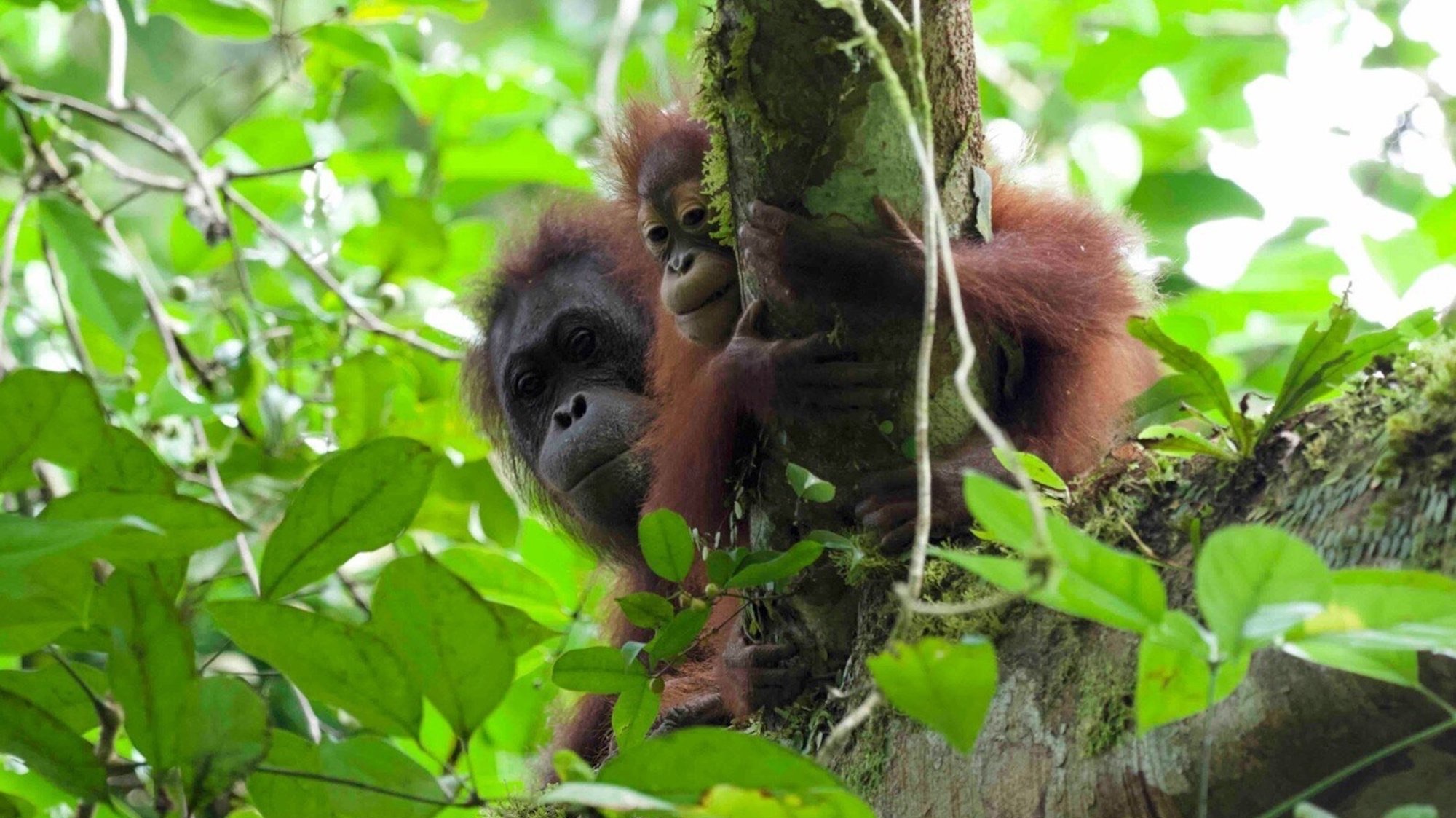
Orangutan poop holds surprising clues about how long they breastfeed

How do you determine how many months or years animal mothers nurse their babies? If you’re not in a rush and can observe this dynamic, you could supposedly stick around to see when the baby, mother, or both decide that they’re done. However, that could take years. A team of researchers investigating breastfeeding in orangutans recently opted for a different, perhaps surprising strategy—searching for particular proteins in poop. 

In a preliminary study published in the journal Communications Biology, researchers searched for milk‑specific proteins in the feces of wild Bornean orangutans (Pongo pygmaeus) living in the Danum Valley Conservation Area, in the Malaysian part of the island of Borneo. These proteins prove that he or she is continuing to drink breast milk.The practice of recognizing particular proteins in feces is called fecal proteomics and it can help scientists better understand what animals are consuming.

“Orangutans have a slow life history with one of the longest interbirth intervals and the lowest reported infant mortality rates among primates or even mammals,” the team wrote in the study. “Breastfeeding is a key factor in their life history because it possibly promotes offspring health and increases maternal interbirth intervals.”

The team gathered fecal samples for over two and a half years, and found milk‑specific proteins in all the 20 samples from orangutans less than six and a half years old. This indicates that the young great apes were continuing to breastfeed until they were at least that age. 

According to the team, these results are “consistent with the behavioral evidence as having one of the longest breastfeeding periods in mammals.”

What’s more, “milk intake was significantly correlated with higher levels of biological defense and probiotic bacterial proteins.”

In other words, the more milk a young orangutan drinks, the more probiotic intestinal bacteria it has and the sturdier its biological protections are. Such consistent and enduring breastfeeding probably helps the very high survival of orangutan babies and plays a role in their slow reproductive approach. 

Unfortunately, Bornean orangutans are critically endangered, and the paper highlights why their populations don’t rebound quickly after a decrease. Safeguarding what’s left of their rainforest habitats is crucial. 

The post Orangutan poop holds surprising clues about how long they breastfeed appeared first on Popular Science.

  •  

Antibiotic resistance turns up in Australian horses, raising new concerns about animal and human infections

Research into a common environmental germ that can cause severe infections in people and animals has raised concern that horses are starting to develop antibiotic resistance towards it. The University of the Sunshine Coast study examined the prevalence of the bug P. aeruginosa in Australian wild birds, native wildlife, livestock and domestic animals.

  •  

Budget-friendly, lab-grown steak with realistic texture

A team of Israeli scientists at the Hebrew University of Jerusalem has developed a novel method to significantly lower the production costs of cultivated meat. The new study demonstrates that preloading plant-derived cellulose scaffolds with growth factors supports the cost-efficient proliferation and differentiation of bovine stem cells. By binding these vital proteins directly to an anisotropic, directionally frozen framework instead of dispersing them in liquid media, this method achieves high-quality tissue development using up to 10 times fewer expensive factors. Upon multi-week cultivation and subsequent pan-frying, the cell-bound constructs show partially similar mechanical and visual responses to traditional sirloin cuts.

  •  
❌