Reading view

Intel: Our upcoming AI chip will be cheaper, run cooler than Nvidia, AMD options

Intel plans to ship an AI chip by the end of this year that uses cheaper memory and cooling technology than rival offerings from Nvidia and AMD, as the US chipmaker seeks to capitalize on a sharp turnaround in its fortunes.

Kevork Kechichian, who leads Intel’s data center group, told the FT that the company is “starting with the basics” as it tries to challenge its rivals in the booming market for semiconductors that power AI.

Its new “Crescent Island” graphics processing unit is designed to speed up “inference” tasks, the stage when a user makes their request, rather than the training of models, an area where Nvidia’s processors are dominant.

Read full article

Comments

  •  

Intel: Our upcoming AI chip will be cheaper, run cooler than Nvidia, AMD options

Intel plans to ship an AI chip by the end of this year that uses cheaper memory and cooling technology than rival offerings from Nvidia and AMD, as the US chipmaker seeks to capitalize on a sharp turnaround in its fortunes.

Kevork Kechichian, who leads Intel’s data center group, told the FT that the company is “starting with the basics” as it tries to challenge its rivals in the booming market for semiconductors that power AI.

Its new “Crescent Island” graphics processing unit is designed to speed up “inference” tasks, the stage when a user makes their request, rather than the training of models, an area where Nvidia’s processors are dominant.

Read full article

Comments

  •  

Intel stakes new claim in physical AI with robotics chips

Intel is invading the physical AI space with a reentry into the robotics market it quit many years ago amid financial struggles.

The robotics strategy is part of the company’s larger plan to establish AI on the “edge,” in which devices have the computing capability to run AI locally. Many devices lack AI capabilities and have to offload processing to the cloud.

The chipmaker said its Intel Series 3 processors are now in 130 edge AI and robotics designs. It also had a design win with SensoryAI, which provides technology for robots that include Ella, a robotic barista made by Crown Digital.

The company’s Core Ultra Series 3 processors are derivatives of chip designs intended for laptops. But Intel has achieved a level of power efficiency for long battery life that allows those chips to be adapted for handheld devices and laptops.

Intel also said it can build advanced robotics chips thanks to its latest manufacturing technologies.

For example, many robotic functions, such as computer vision and real-time controls, can be integrated into a single chip. Previously, functions like graphics and movement and control were distributed among different cores in a chip.

SensoryAI, for example, has a chip architecture that provides the robotic barista — which is more like a robotic arm — with AI capabilities, Intel said.

The main “Avatar” agent handles customers as the main “Ella” agent reasons and executes the task. If Ella encounters errors, it passes on the issue to a Guardian agent, which helps with the recovery. Some issues could include making sense of an order, or cups that might be stuck. 

The three agents are embedded in a single piece of Core Ultra Series 3 silicon.

Intel is displaying some of those robots at the Computex trade show in Taiwan. The company shared a video of a humanoid-style robot from the floor in a X.com post  

This is not Intel’s first attempt at the robotics market. Intel sold robotics chips and kits when it was a dominant chip player in the field, but curtailed efforts in 2021 after Pat Gelsinger took over as CEO and restructured the company to focus on manufacturing.

Robotics is now back on the menu under new Intel CEO Lip-Bu Tan, who replaced Gelsinger last year. He has restructured to company to focus on high-growth areas that can generate high returns.

A Morgan Stanley study last year indicated the robotics market could be worth $5 trillion by 2050 — and more than 1 billion humanoid robots could be in operation. 

Robots are seen to improve human productivity and manufacturing output. For example, they could help factories that are facing labor shortages or be used to complete tasks that are dangerous

However, challenges remain. There isn’t yet enough real-world data to train robots to do targeted work. And the AI models — generally called world models — they will need are still under development. 

Training robots to do a specific job requires a sequence of events to happen in succession without any errors. Companies are still training robots to spot and understand errors, analyze possible resolutions, and take the right corrective action.

  •  

Intel makes a bid for handheld gaming PCs with new Arc G3 processors

Most of the Steam Deck imitators on the market right now use AMD silicon, specifically the Ryzen Z-series chips. These are the same chips AMD makes for regular laptops, but with different power settings better suited to a compact handheld system. There are handhelds based on Intel silicon (MSI’s Claw is the main one), but Intel hasn’t yet tried making silicon marketed specifically for that purpose.

Today, the company is throwing its hat in the ring with two Intel Arc G-series processors, which will allow gaming handhelds to leverage the company's genuinely quite good Arc B-series integrated GPUs. Intel says that several Arc G-series handhelds will arrive "starting in June 2026, with broader availability throughout the year." These systems will include a new MSI Claw model, a Predator Atlas 8 from Acer, and a device from OneXPlayer.

Intel normally uses its "Arc" branding for integrated and dedicated GPUs, but in this case, the "Arc" brand encompasses the entire chip, including the CPU, GPU, NPU, and other components.

Read full article

Comments

© Intel

  •  

We're starting to see some PC makers respond to Apple's MacBook Neo

It seems fair to say that Apple's MacBook Neo took the rest of the PC industry by surprise. Companies are used to competing on price and features with $1,000-and-up Apple laptops like the MacBook Air and MacBook Pro, but their $600 and $700 models usually come with cut corners and compromises that are more noticeable than the Neo's. The CEO of Asus admitted to being surprised by the laptop's price (while simultaneously trying to downplay the Neo's value); a Microsoft-backed study comparing PCs to the MacBook Neo included several laptops that can't compete with the Neo's price unless they're deeply discounted.

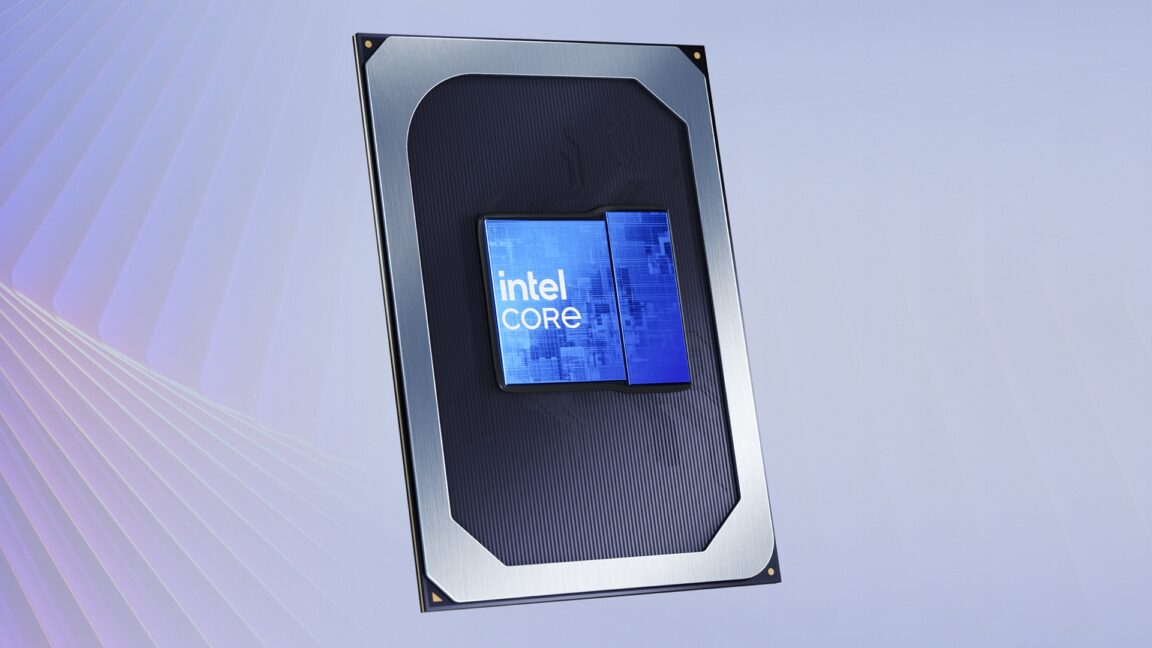
In the last couple of weeks, we've started to see a more intentional and targeted response to the MacBook Neo from PC makers. These mostly seem to revolve around Intel's low-end Core Series 3 processors, codenamed Wildcat Lake; while Intel's last few generations of low-end chips have mostly been rebrands of older and less power-efficient parts, Wildcat Lake is a new purpose-built budget chip that benefits from Intel's latest CPU and GPU architectures and its 18A manufacturing process. This should help these chips compete better with the Apple A18 Pro in the MacBook Neo.

Many early Wildcat Lake systems have already been announced, though not all have included a price tag, and several have only been announced for the Chinese market as of this writing. Lenovo is planning to launch some IdeaPad Slim models with the new processors, with some optional spec upgrades including 16GB of RAM and a 120 Hz high-refresh-rate display. Asus and HP have also announced some early products.

Read full article

Comments

© Intel

  •  

Intel makes a bid for handheld gaming PCs with new Arc G3 processors

Most of the Steam Deck imitators on the market right now use AMD silicon, specifically the Ryzen Z-series chips. These are the same chips AMD makes for regular laptops, but with different power settings better suited to a compact handheld system. There are handhelds based on Intel silicon (MSI’s Claw is the main one), but Intel hasn’t yet tried making silicon marketed specifically for that purpose.

Today, the company is throwing its hat in the ring with two Intel Arc G-series processors, which will allow gaming handhelds to leverage the company's genuinely quite good Arc B-series integrated GPUs. Intel says that several Arc G-series handhelds will arrive "starting in June 2026, with broader availability throughout the year." These systems will include a new MSI Claw model, a Predator Atlas 8 from Acer, and a device from OneXPlayer.

Intel normally uses its "Arc" branding for integrated and dedicated GPUs, but in this case, the "Arc" brand encompasses the entire chip, including the CPU, GPU, NPU, and other components.

Read full article

Comments

© Intel

  •  

We're starting to see some PC makers respond to Apple's MacBook Neo

It seems fair to say that Apple's MacBook Neo took the rest of the PC industry by surprise. Companies are used to competing on price and features with $1,000-and-up Apple laptops like the MacBook Air and MacBook Pro, but their $600 and $700 models usually come with cut corners and compromises that are more noticeable than the Neo's. The CEO of Asus admitted to being surprised by the laptop's price (while simultaneously trying to downplay the Neo's value); a Microsoft-backed study comparing PCs to the MacBook Neo included several laptops that can't compete with the Neo's price unless they're deeply discounted.

In the last couple of weeks, we've started to see a more intentional and targeted response to the MacBook Neo from PC makers. These mostly seem to revolve around Intel's low-end Core Series 3 processors, codenamed Wildcat Lake; while Intel's last few generations of low-end chips have mostly been rebrands of older and less power-efficient parts, Wildcat Lake is a new purpose-built budget chip that benefits from Intel's latest CPU and GPU architectures and its 18A manufacturing process. This should help these chips compete better with the Apple A18 Pro in the MacBook Neo.

Many early Wildcat Lake systems have already been announced, though not all have included a price tag, and several have only been announced for the Chinese market as of this writing. Lenovo is planning to launch some IdeaPad Slim models with the new processors, with some optional spec upgrades including 16GB of RAM and a 120 Hz high-refresh-rate display. Asus and HP have also announced some early products.

Read full article

Comments

© Intel

  •  
❌