Record-breaking box office for Backrooms and Obsession has opened the door for twentysomething YouTube creators as the industry rethinks what audiences want
At this time last year, the idea of a wide-release feature film-maker cutting their teeth on YouTube was, if not unheard of, certainly still a niche origin story. Siblings Michael and Danny Philippou had just released Bring Her Back, the follow-up to their surprise horror hit Talk to Me, to pretty-good reviews and OK box office; clearly they would continue to work, but the slightly diminished returns didn’t predict a YouTube explosion. Nor did the outright lousiness of Shelby Oaks, from longtime YouTube film critic Chris Stuckmann, when it premiered in theaters later in 2025. Generous horror-festival buzz died down as more people actually laid eyes on the movie; Stuckmann was an obvious enthusiast, and some saw promise in his first effort, but a clumsy found-footage pastiche without much emotional sense didn’t seem like the next big thing, either.
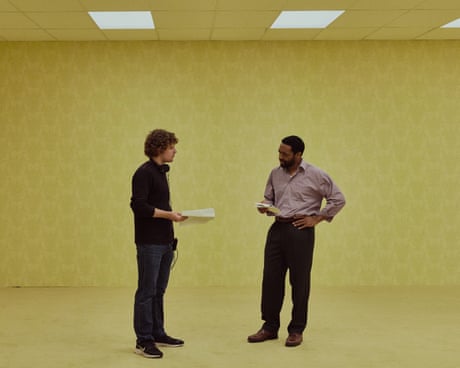
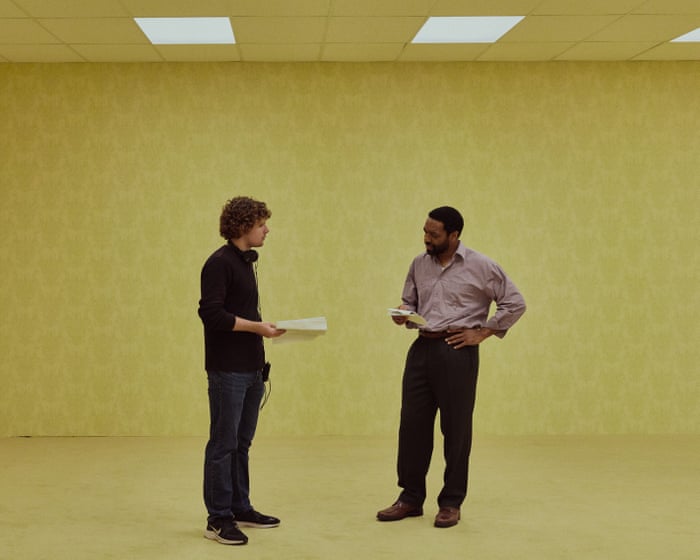
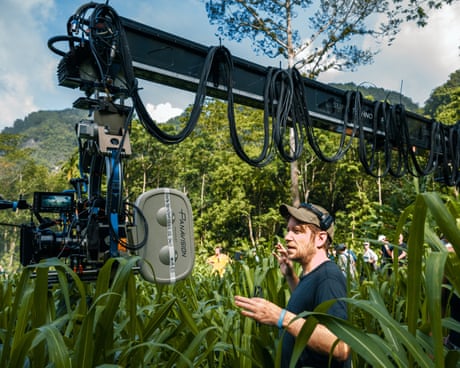
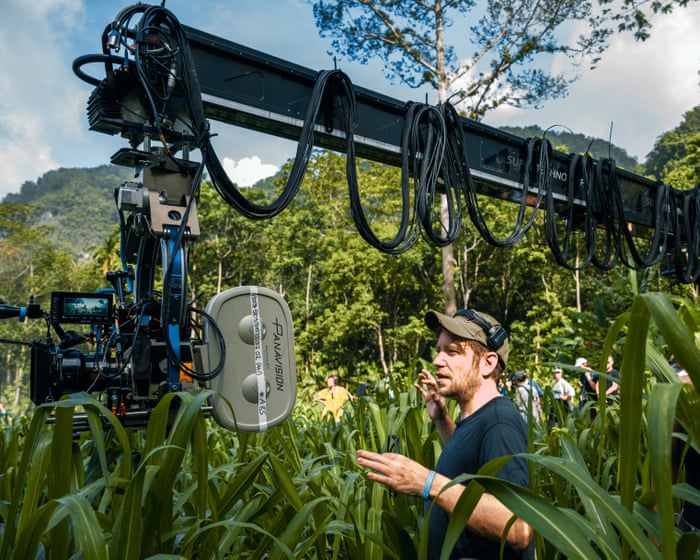
But in 2026, something has shifted. In January, YouTuber Markiplier self-released his adaptation of the video game Iron Lung to theaters, and it outgrossed any number of big-studio titles. Then Curry Barker, whose comedy sketches have been a YouTube fixture, unveiled his feature debut Obsession. The film, made for under a million dollars, has become the box office phenomenon of the summer so far, managing a virtually unheard-of feat when its second and third weekends actually outgrossed its first. Obsession is sharing multiplex space with Backrooms, directed by 20-year-old Kane Parsons, who previously brought the spooky internet meme to life in a series of YouTube shorts. Despite being set in a series of purgatorial, sparsely furnished, fluorescent-lit “liminal spaces”, it was the top movie at the North American box office this weekend, poised to become the biggest-grossing movie from distributor A24 in a matter of days. Backrooms also opened to bigger numbers than any number of starrier or bigger-brand 2026 titles like Wuthering Heights, Scream 7, The Devil Wears Prada 2 or the last Pixar movie. That makes three YouTube-trained film-makers who have presided over some of this year’s biggest and/or most surprising hits. With them have come countless social media posts about how YouTube, not film school, provides the real training tomorrow’s directors need.
Launching in the UK this month, this new pint-sized console revives the motion-controlled video game boom of the 00s – with better, safer tech
For a wonderful moment in the noughties, video games became a truly universal pursuit. As I witnessed my controller-phobic aunt swing a Wii remote and nail a tennis serve, while my great-grandmother furrowed her brow over sudoku puzzles on her Nintendo DS, it seemed my long-derided hobby had finally gone mainstream. The Nintendo Wii flew off the shelves, inspiring a wave of competitors such as the Xbox Kinect camera that encouraged people to play games by moving their bodies. But the tide turned: outside of still-niche VR gaming and the odd controller-waggler on the Switch, motion-controlled gaming has barely been seen for more than a decade.
Now, 20 years later, a new console is aiming to get the whole family flailing in front of the TV once again: the Nex Playground. Launching in the UK later this month, the first thing that struck me about this family-friendly device is just how tiny it is. The size of two and a half Rubik’s Cubes taped together, this impressively unintrusive device swaps cumbersome controllers for camera-controlled minigames, putting you and your family directly in the game. Using a wide-angle lens and AI-powered tracking tech, the Nex Playground offers over 50 games that track players’ bodies as they leap, flail and dance about the living room. It’s not hard to see the appeal.
The roots of AI in rightwing ideology is examined in Valerie Veatch’s enjoyable doc, including an array of colourful, often crazed, figures
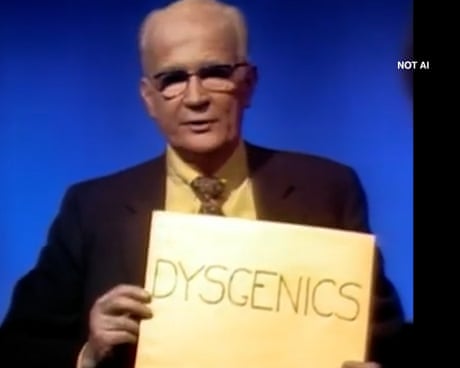
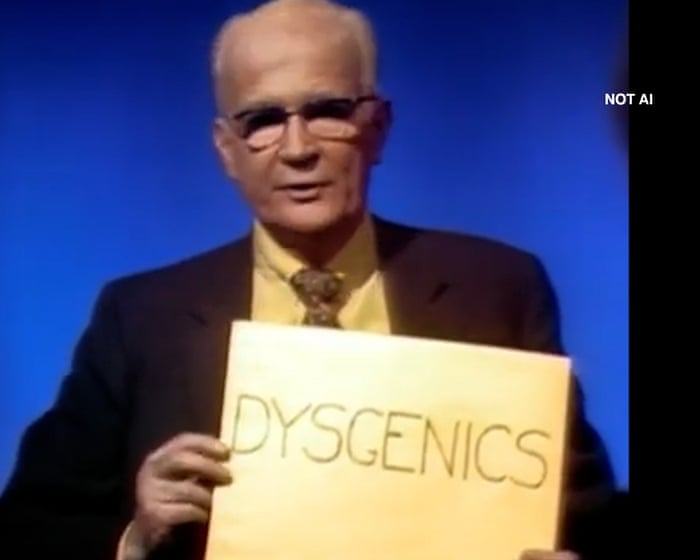
Director Valerie Veatch made her name with documentaries such as Love Child (about an online gaming-addicted couple whose child died of malnutrition) and Me at the Zoo (about American vlogger Cara Cunningham), films that explore the intersection of real-world subcultures and internet communities. Her latest continues in this vein, although its self-set remit is a bit broader, more urgent and germane to everyone right now: the pursuit of artificial intelligence, its dark history in eugenics and highly debatable utility today (despite the stock-market bubble pushing the value of a half-dozen companies towards the stratosphere).
The thrust of the film is largely polemic, guiding the viewer towards AI-sceptical conclusions one persuasive soundbite at a time. Nevertheless, it also serves as a very useful, straightforward primer on AI history, touching on a dazzling array of colourful, often crazed figures, including Victorian British eugenicist Francis Galton, Silicon Valley founding father and overt racist William Shockley and current-day jillionaire jerk Elon Musk. Sadly, the film is not so up-to-date that it covers Musk and former friend-turned-foe Sam Altman’s recent courtroom brawl, but that doesn’t detract from the thrust of Veatch and her interviewees’ arguments.
Landowner Carlos Roberto Simonetti gets three harvests per year from the corn, soy and cotton plantations on his 17,000-hectare (about 42,000 acres) farm called Fazenda Natureza Feliz, or Happy Nature, in the Brazilian state of Mato Grosso. Over the course of four years, he would also get what he calls a fourth harvest, this time from the forested areas of his property, located where the Cerrado savanna meets the Amazon Rainforest. That’s because Simonetti would receive regular payments for protecting native vegetation beyond what the law requires, as part of a pilot project for payment for ecosystem services (PES) run by the Amazon Environmental Research Institute (IPAM), an NGO, in the states of Mato Grosso and Pará. The program, called CONSERV, gives landowners financial incentives to keep the forest standing even in areas which they are legally allowed to clear. The pilot project, which initially ran between 2020 and 2024 on 23 different properties, protected 20,707 hectares (about 51,170 acres) of land in the Cerrado and Amazon biomes with funding from the governments of Norway and The Netherlands. Ongoing contracts funded by Soft Commodities Forum members – agribusiness companies committed to preserving the Cerrado – are protecting a further 7,000 hectares (about 17,300 acres) in the states of Mato Grosso and Maranhão. IPAM is now seeking to scale up the program without relying on donations. The risk of legal deforestation The idea for CONSERV goes back to 2016, when an internal IPAM report calculated that around 1.5 million hectares (3.7…This article was originally published on Mongabay
A mais recente experiência do Google Arts & Culture usa o modelo de geração de vídeo Veo para ir além dos limites da tela e animar quatro das mais famosas pinturas de Henri Matisse.
The disruptive force of artificial intelligence is engulfing the world of book publishing. In March, publisher Hachette Book Group pulled a forthcoming horror novel after online sleuths accused the author of using generative AI to write portions of the book — a charge that the author denied, blaming, instead, an acquaintance who edited the book. […]
Technology • Audio Engineering • Digital Entertainment The Sound Factor: Why Certain Casino Games Feel More Intense than Others Modern casino games use advanced sound engineering, frequency mapping, dynamic audio systems, and low-latency synchronization to create immersive digital experiences that feel emotionally intense and highly responsive. May 12, 2026 • 6 min read Sound design, […]
There is a reason so many online casino games reach backward before they move forward. For all the talk around speed, interface design, and mobile play, a huge part of the experience still comes down to atmosphere. Before a player notices mechanics, bonus features, or payout structures, they notice the world the game is trying […]
Tongits remains one of the most competitive and skillful card games, particularly popular among Filipino players. This game, rooted in strategy, memory, and decision-making, has extended its reach into the world of digital platforms like Tongits Go APK and GameZone (also referred to as GZone). These platforms allow players to improve their gameplay, sharpen their […]
Forty years ago, the future seemed just around the corner—and the vehicle that was going to take us there was NASA's Space Shuttle. Originally envisioned as part of a larger integrated space transportation system, the shuttle was billed as a fully reusable vehicle, totally unlike the one-and-done capsules of the fading Apollo era, capable of making monthly (and perhaps even weekly) ferry flights to low Earth orbit.
The loss of Challenger in January 1986—carrying educator Christa McAuliffe, who would have been the first private citizen in space—put the kibosh on all of that. The shuttle, while fantastically advanced, would never be the vehicle to help humankind slip all of our surly bonds, so to speak. Even operating at its most frantic peak in 1985 just before Challenger's loss, the shuttle hardware managed a maximum of nine flights in one calendar year; for most of the 1990s, it performed at five or six flights per year. Civilians in space—to say nothing of Big Bird—would have to wait.
Forty years ago, the future seemed just around the corner—and the vehicle that was going to take us there was NASA's Space Shuttle. Originally envisioned as part of a larger integrated space transportation system, the shuttle was billed as a fully reusable vehicle, totally unlike the one-and-done capsules of the fading Apollo era, capable of making monthly (and perhaps even weekly) ferry flights to low Earth orbit.
The loss of Challenger in January 1986—carrying educator Christa McAuliffe, who would have been the first private citizen in space—put the kibosh on all of that. The shuttle, while fantastically advanced, would never be the vehicle to help humankind slip all of our surly bonds, so to speak. Even operating at its most frantic peak in 1985 just before Challenger's loss, the shuttle hardware managed a maximum of nine flights in one calendar year; for most of the 1990s, it performed at five or six flights per year. Civilians in space—to say nothing of Big Bird—would have to wait.
Forty years ago, the future seemed just around the corner—and the vehicle that was going to take us there was NASA's Space Shuttle. Originally envisioned as part of a larger integrated space transportation system, the shuttle was billed as a fully reusable vehicle, totally unlike the one-and-done capsules of the fading Apollo era, capable of making monthly (and perhaps even weekly) ferry flights to low Earth orbit.
The loss of Challenger in January 1986—carrying educator Christa McAuliffe, who would have been the first private citizen in space—put the kibosh on all of that. The shuttle, while fantastically advanced, would never be the vehicle to help humankind slip all of our surly bonds, so to speak. Even operating at its most frantic peak in 1985 just before Challenger's loss, the shuttle hardware managed a maximum of nine flights in one calendar year; for most of the 1990s, it performed at five or six flights per year. Civilians in space—to say nothing of Big Bird—would have to wait.
Loryn Brantz created The Good Advice Cupcake for BuzzFeed years ago. The company licensed the character for a new Amazon series—made with AI—without her consent.
Some viewers were disappointed that the second season of House of the Dragon ended not with a bang, but a whimper. But the big battle sequence that season 2 set up will open season 3 with a bang, judging by the latest trailer, which has all the dragons, fire, and blood Westeros is known for.
(Spoilers for first two seasons below.)
As previously reported, the series is set nearly 200 years before the events of Game of Thrones, when dragons were still a fixture of Westeros, and chronicles the beginning of the end of House Targaryen’s reign. The primary source material is Fire and Blood, a fictional history of the Targaryen kings written by George R.R. Martin. As book readers know, those events culminated in a civil war and the extinction of the dragons—at least until Daenerys Targaryen came along.
Some viewers were disappointed that the second season of House of the Dragon ended not with a bang, but a whimper. But the big battle sequence that season 2 set up will open season 3 with a bang, judging by the latest trailer, which has all the dragons, fire, and blood Westeros is known for.
(Spoilers for first two seasons below.)
As previously reported, the series is set nearly 200 years before the events of Game of Thrones, when dragons were still a fixture of Westeros, and chronicles the beginning of the end of House Targaryen’s reign. The primary source material is Fire and Blood, a fictional history of the Targaryen kings written by George R.R. Martin. As book readers know, those events culminated in a civil war and the extinction of the dragons—at least until Daenerys Targaryen came along.
CONCEPCIÓN DE SOLUTECA, Honduras — In the 1970s, the Honduran government granted a piece of land in the mountains of Concepción de Soluteca to Roberto González’s parents. They duly grabbed a chainsaw and a machete to clear the forest. On the 12 hectares (30 acres) they received as part of a land reform, they planted corn, beans and bananas, the basic staple foods. It was a hard life up in the mountains, allowing the farmers and their families to just survive. There wasn’t much public infrastructure, and most children had to help with farmwork early on. This included González, who only attended elementary school for three years. When González inherited the land 20 years later, coffee cultivation was just taking off. Middlemen promised the farmers good money for the export crop, and the banks provided loans for cultivation. At first, this worked well, González, now 39, remembers. Coffee helped the farmers to generate income and improve living conditions. But it didn’t last long. They grew coffee much the same way they did other crops, without adequate soil or shade management. When harvests dwindled, they expanded their area, cutting the last standing forests and damaging water sources. Around 2012, they faced an outbreak of coffee rust, a fungal disease. It was a complete disaster: many farmers were thrown into poverty and forced to migrate. “We destroyed the foundations of our livelihoods, but it was out of ignorance; we just didn’t know better,” González tells Mongabay. Under the EUDR, coffee farmers step…This article was originally published on Mongabay
Speaking at Amazon’s AI on the Lot event, the Rogue One film-maker Gareth Edwards said ‘it’ll do anything you ask’ and ‘it’s going to be better than CGI’
Jurassic World Rebirth and Rogue One director Gareth Edwards has enthusiastically endorsed the use of generative AI in film-making, saying “it is a fucking genius at helping you” and “it’s going to be better than CGI”.
Edwards was speaking at AI on the Lot, an event in Culver City, California, organised by Amazon, and in remarks reported by the Hollywood Reporter said: “I can’t see a reason why you wouldn’t become interested in this stuff as a film-maker. It’s so clearly a tool that might be up there with the camera. It’s going to be better than CGI.”
 Login
Login