Login
Login
Dopo l'ipotesi di un terremoto, a fare chiarezza ci hanno pensato gli esper…
Dopo l'ipotesi di un terremoto, a fare chiarezza ci hanno pensato gli esperti dell’American Meteor Society

Earth Oddities • Strange Weather Phenomena • Desert Ecosystems • Go back to Strange Sounds Death Valley is experiencing a rare superbloom, a spectacular desert event in which vast numbers of wildflowers suddenly bloom across the valley floor after rare rainfall. This is the best flowering desert phenomenon in the driest place in North America […]
The post Death Valley Superbloom Explained: Why the Desert Suddenly Explodes With Wildflowers appeared first on Strange Sounds.
Earth Oddities • Strange Weather Phenomena • Global Dust Transport • Go back to Strange Sounds A massive Saharan dust plume has drifted across parts of Europe, hazing alpine views and coloring sunsets across the continent. But the most surprising part of the story is how the dust gets into the sky in the first […]
The post Saharan Dust Cloud Over Europe: How Desert Thunderstorms Launch Millions of Tons of Dust Into the Atmosphere appeared first on Strange Sounds.
Volcano Hazards • Lahars • Rain + Ash = Mudflow • Go back to Strange Sounds Heavy rain on Mount Merapi triggered a “cold lava” flood — a lahar — surging downriver, killing people and dragging vehicles. When intense rainfall hits ash-covered slopes, loose volcanic debris turns into a fast-moving slurry that can carry boulders, […]
The post Mount Merapi “Cold Lava” Flood: What a Lahar Is and Why Rain Makes Volcano Slopes Deadly (Mar 2026) appeared first on Strange Sounds.
Space & Beyond • Astronomical Event • Skywatching Alert • Related: Meteor, Fireballs and Comets Tonight, a total lunar eclipse turns the full Moon a deep copper-red — a classic “blood moon”. Despite the dramatic look (and dramatic naming), eclipses are recurrent, measurable, and predictable astronomy events, not omens. This post explains what’s happening, when […]
The post Total Lunar Eclipse Tonight: Blood Moon Timing, Visibility & Why Eclipses Aren’t Omens appeared first on Strange Sounds.
 A new method could improve cosmology research by analyzing supernovae together with the galaxies that host them. An international collaboration led by scientists at the Institute of Cosmos Sciences of the University of Barcelona (ICCUB) has created a new approach that may sharpen what researchers can learn about how the Universe expands and what dark [...]
 Scientists discovered that fog droplets can host living bacteria that grow and help remove harmful pollutants from the atmosphere, revealing fog as a surprisingly active microbial environment. Every breath you take may contain microscopic hitchhikers floating through the atmosphere. Scientists have known for years that bacteria drift through clouds and air currents, but new research [...]


NVIDIA's CEO Jensen Huang is set to take the stage for his GTC Taipei keynote at 8PM PT / 11PM ET. You can watch all the announcements here and embedded below. Rumors have been flying about what to expect from today's presentation, but the big one is the possibility of a partnership with Microsoft and a renewed Windows on ARM push. Microsoft has been teasing a "new era of PC" for its Surface lineup, and expectations are that new ARM processors from NVIDIA, dubbed the N1 and N1X, will be powering these yet-to-be-announced computers.
Microsoft actually tapped NVIDIA's Tegra ARM CPUs for the Surface RT way back in 2012. But that machine was la …
Attention creative souls! While NASA might feel like an exclusive den of scientists, engineers, and otherworldly athletes, the agency is reaching out to storytellers and artists via two new initiatives.
“As NASA pushes the boundaries of exploration and innovation for the benefit of humanity, the agency is looking for partners to share mission stories covering Artemis Moon missions, nuclear propulsion, aeronautics, and more,” NASA wrote in a press release. Since “journalists” aren’t mentioned in either of these calls for creatives, it would appear that NASA is seeking other means to keep people talking about its missions.
Specifically, they are seeking proposals from creatives including documentarians, songwriters, storytellers, and poets for projects about missions including Artemis III in 2027 and Space Reactor-1 Freedom to Mars in 2028, among others. Proposals are due by the end of June.
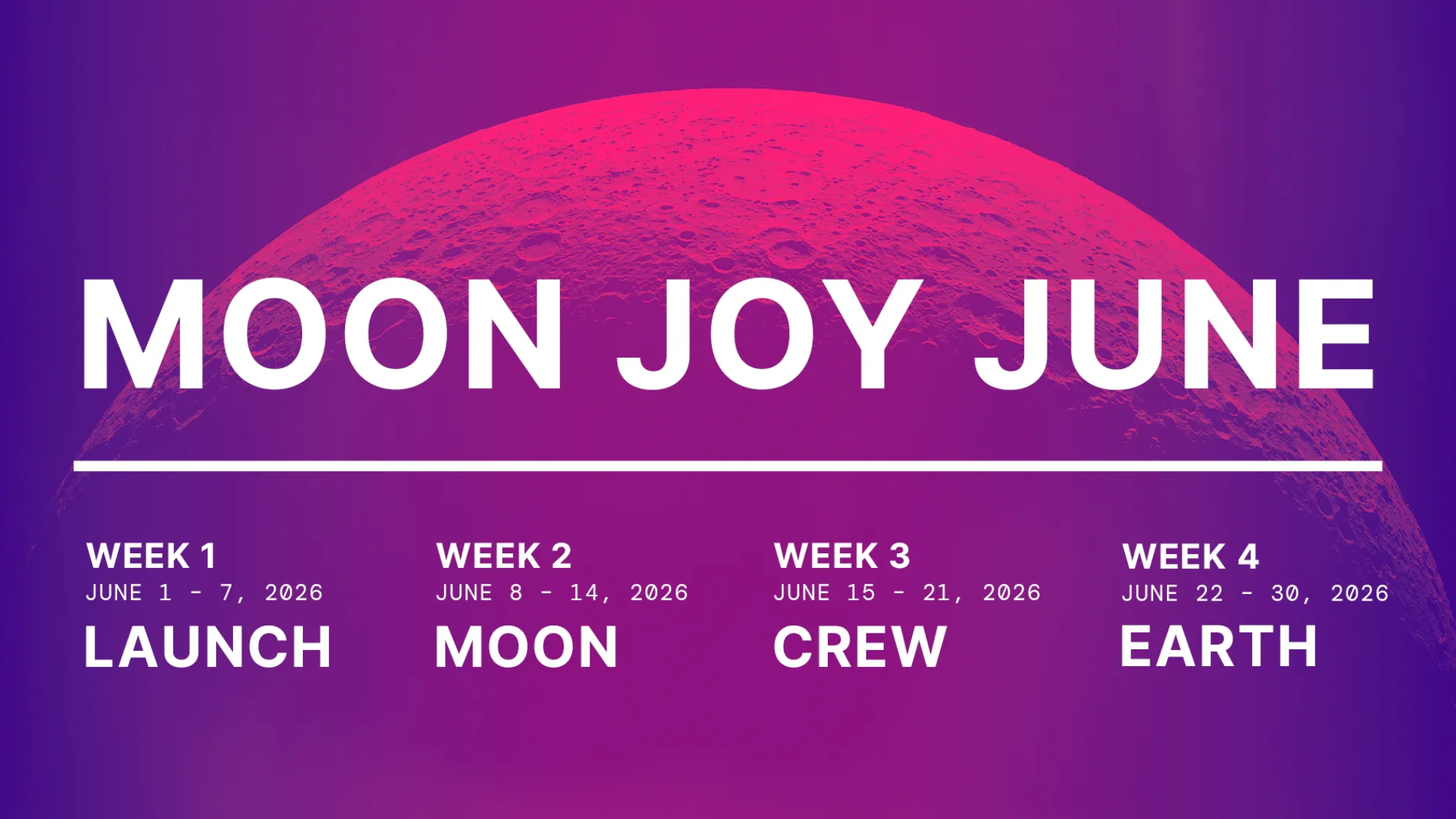
NASA is also launching another creative initiative called Moon Joy June.
“To keep the Moon Joy alive after the Artemis II mission, NASA is hosting a month-long art challenge on Instagram, Threads, and Tumblr. Each week during the month of June 2026, NASA will provide a prompt to inspire participants to make and share their artistic creations,” they explain in an FAQ page.
The prompts have already been released, so artists looking to participate can already start brainstorming. Week one’s prompt is “launch,” week two will be “moon,” week three will be “crew,” and week four will be “Earth.”
A note to the competitive-minded—the agency highlights that Moon Joy June is not a contest but an art challenge, meaning there will be no prize. And as if it could get any worse for type-A people, participants don’t actually have to follow the prompts. It seems like we’re in for a free-for-all artistic takeover of the three social media platforms.
Non-traditional art forms like nail art and latte foam art are also welcomed. In NASA’s words, “The sky is (not) the limit!”
The post How you can help NASA (even if you failed math) appeared first on Popular Science.