Reading view

490-Million-Year-Old Arthropod Fossil Fills Puzzling Gap in Fossil Record

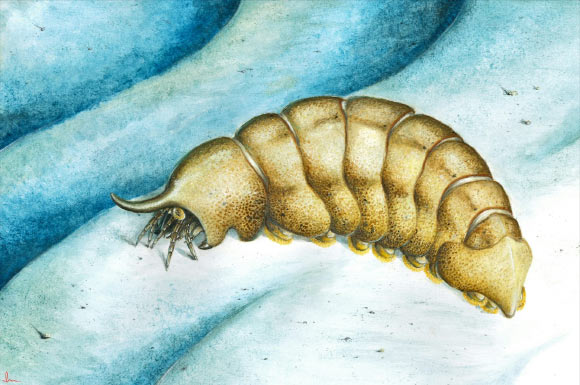
Life reconstruction of Magnicornaspis garwoodi. Image credit: Thomas Turner.

A new species of corcoraniid arthropod that lived during the Furongian epoch, between 497 and 487 million years ago, has been identified from an exceptionally preserved specimen found near Québec, Canada.

The post 490-Million-Year-Old Arthropod Fossil Fills Puzzling Gap in Fossil Record appeared first on Sci.News: Breaking Science News.

  •  

AST SpaceMobile Blue Origin bet hits turbulence

A Blue Origin New Glenn rocket exploded during a test, a potential blow to AST SpaceMobile and its launch schedule.

The New Glenn explosion yesterday (28 May) at Cape Canaveral in the US state of Florida will likely lead to lengthy investigations by the US Federal Aviation Administration (FAA) and NASA, which will sideline future launches.

In late 2024, AST SpaceMobile signed a multi-launch agreement with Jeff Bezos’ Blue Origin. It previously relied on SpaceX’s Falcon 9 rockets to launch its birds into orbit before attempting to branch out to the larger New Glenn models.

AST SpaceMobile has predicted an orbital launch cadence of roughly every one to two months this year through deals with multiple launch providers as it continues to target having approximately 45 birds in orbit by the end of 2026.

New Glenn’s seven meter-wide payload fairing is one of the few in the industry capable of accommodating the 2,400 square-foot phased arrays of AST SpaceMobile’s Block 2 BlueBird satellites, with the potential to carry up to eight per flight.

Fallout
“The New Glenn failure is a tough blow to AST which, due to the size of its satellites, has limited options for launch and New Glenn was by far the best option,” Chris Quilty, founder and CEO of research company Quilty Space told Mobile World Live (MWL), adding the company would now struggle to achieve its launch target for the year.

Tim Farrar, president at consulting company TMF Associates, told MWL the explosion has a “huge impact since this was the primary launch vehicle and it will take a year or more to rebuild the [launch] pad”.

“I think this pushes [AST’s] continuous commercial service back to 2028,” he added.

A representative for AST SpaceMobile stated the company’s near-term launches are unaffected.

“None of the missions planned for the next few months are scheduled with Blue Origin. Our satellites are designed to be launcher-agnostic, and we have agreements in place with multiple launch providers, giving us flexibility across our launch programme.”

BlueBirds 8, 9, and 10 are already at Cape Canaveral undergoing final processing ahead of a planned launch on a SpaceX Falcon 9 rocket next month.

A launch of AST SpaceMobile’s next-generation BlueBird 7 satellite from a Blue Origin New Glenn rocket last month fell short of the required orbit, resulting in its loss.

The post AST SpaceMobile Blue Origin bet hits turbulence appeared first on Mobile World Live.

  •  

Boldyn lobs MLS ground into digital era

Boldyn Networks’ US CCO Jason Caliento said the company is making good on pledges to boost the digital experience offered at Major League Soccer (MLS) venues after equipping a new stadium in the city of Miami with various connectivity technologies.

The company installed a platform of Wi-Fi 7, IPTV, audio, neutral host mobile and converged fibre infrastructure at the Nu Stadium in the Miami Freedom Park to deliver fresh services for fans and contribute to improved operation of the venue which opened in April.

Caliento highlighted an “innovative financial structure”, whereby Boldyn Networks handled the capital investment it plans to recoup through network operation and management duties.

He said the model provides “significant financial flexibility” and predicted it would become a key selling point for deals with other venues.

Aerial view of a brightly lit modern stadium surrounded by buildings, trees, and footpaths at night.

Boldyn Networks explained the Nu Stadium is a 26,700-seat facility located in a mixed-use development spanning 131-acres.

It installed more than 600 access points covering high-density Wi-Fi and mobile throughout the site. Cloud-based IoT platforms are providing real-time information on crowd behaviour, and the fibre element covers game streaming and display on more than 200 connected TVs.

The company highlighted mobile ticketing, from-seat refreshment ordering and access to interactive content as among the main benefits for fans.

Caliento said Boldyn Networks became an official supplier to the MLS in a deal struck in 2025.

The post Boldyn lobs MLS ground into digital era appeared first on Mobile World Live.

  •  

Fungi Bloomed Twice around End-Cretaceous Mass Extinction

The end-Cretaceous mass extinction was marked by both the Chicxulub asteroid impact and the ongoing eruptions of the Deccan Traps volcanoes.

By studying fungal microfossils in 66-million-year-old rock samples from the Denver Basin in Colorado, Johns Hopkins University microbiologists have confirmed that the dinosaur-killing asteroid impact triggered a worldwide fungal takeover, and uncovered a second, previously unknown ecological crisis just before it.

The post Fungi Bloomed Twice around End-Cretaceous Mass Extinction appeared first on Sci.News: Breaking Science News.

  •  

Toothless, Bipedal Crocodile Relative Lived in New Mexico 212 Million Years Ago

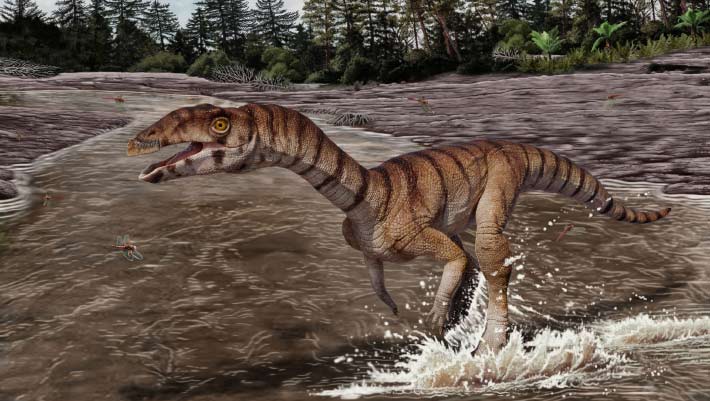
Labrujasuchus expectatus navigated the world on two legs with tiny arms and a toothless mouth tipped in a beak. Image credit: Jorge Gonzalez / NHMLAC Dinosaur Institute.

Paleontologists have described a new species of bipedal shuvosaurid archosaur from New Mexico, shedding light on a group of creatures that roamed North America during the Triassic period, more than 200 million years ago.

The post Toothless, Bipedal Crocodile Relative Lived in New Mexico 212 Million Years Ago appeared first on Sci.News: Breaking Science News.

  •  

SpaceX bags $2.3B US military comms deal

The US Space Force (USSF) handed SpaceX a $2.3 billion contract to deliver the backbone for a satellite communications network to connect a range of military platforms and sensors.

It stated the Space Data Network (SDN) backbone would use low Earth orbit (LEO) satellites to provide global connectivity to armed forces.

The USSF explained the SDN would function as “an integrated network, providing robust, resilient, high-capacity and low-latency data transport”.

SpaceX is required to deliver an operational prototype by the end of 2027.

USSF acting portfolio acquisition executive for space-based sensing and targeting Colonel Ryan Frazier said the backbone would use “the best of commercial innovation and delivers a strong foundation for the SDN mission”.

He explained the SDN itself “acts as a core communications layer” for USSF systems, providing continuous, secure connectivity. The backbone is to work alongside the US Space Development Agency’s transport layer to provide high throughput, low latency data backhaul.

The USSF stated its ultimate aim with the SDN programme is to “form a unified and open architecture to provide critical data transport for current and future Department of War missions”.

It noted it formed a consortium for industrial partners to help solve integration and architectural challenges associated with the programme.

The post SpaceX bags $2.3B US military comms deal appeared first on Mobile World Live.

  •  

Rare Ostrich-Like Dinosaur Fossil Found on Canadian Island

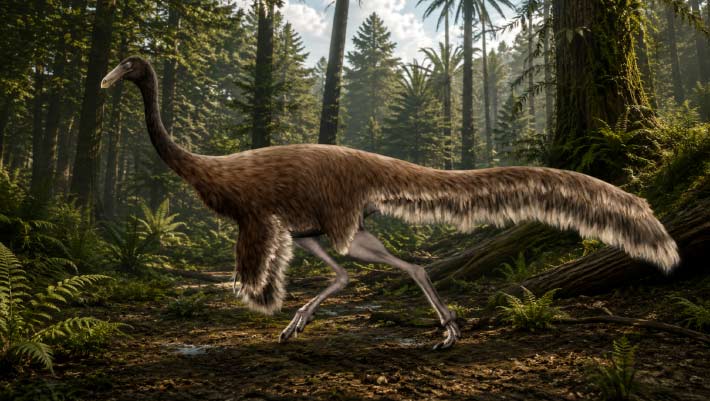
Life restoration of Quipalong henanesnsis, an ornithomimosaurian dinosaur that lived in what is now China during the Maastrichtian age of the Late Cretaceous, between 72 and 67 million years ago. Image credit: PaleoNeolitic / Sci.News.

Paleontologists in Canada say they have recovered a dinosaur tail vertebra from 75- to 80-million-year-old marine rocks on a small island off the coast of British Columbia, providing the clearest evidence yet that bird-like ornithomimosaurs once roamed the ancient Pacific coastline of North America.

The post Rare Ostrich-Like Dinosaur Fossil Found on Canadian Island appeared first on Sci.News: Breaking Science News.

  •  
❌