Reading view

Beans use an immune receptor to call in airstrikes on caterpillars

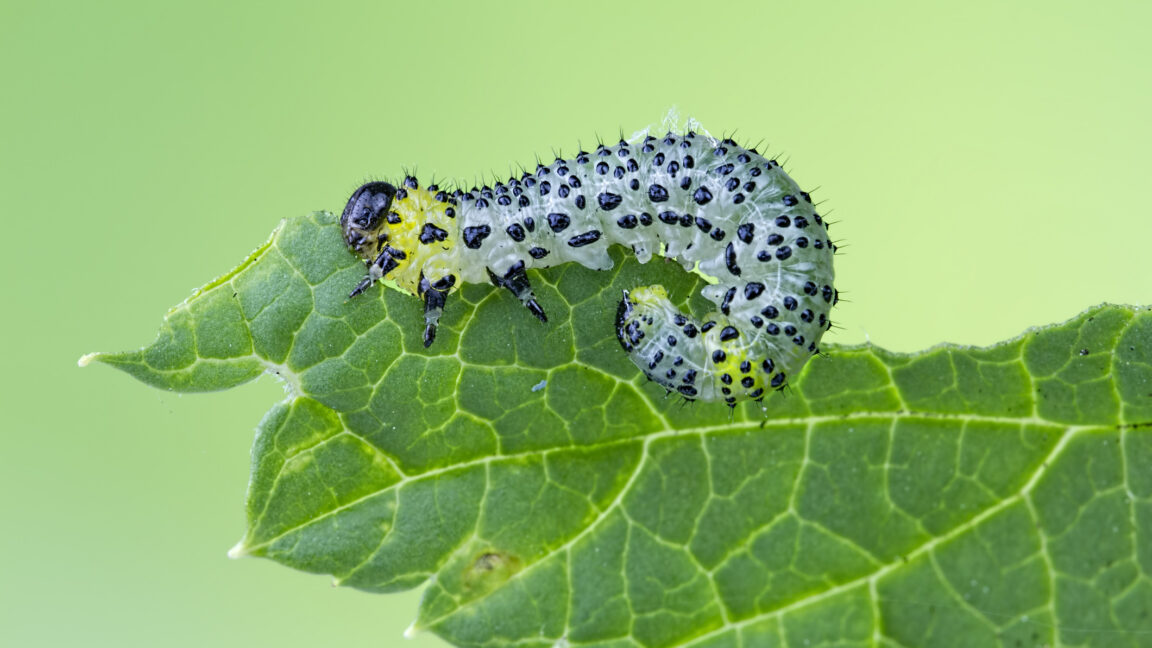
For decades, scientists have understood that plants can release volatile organic compounds—essentially airborne chemical signals—to attract the natural enemies of the things that eat them, like caterpillars. What we didn’t know was exactly how a plant translates the physical act of being eaten into a specific, predator-summoning distress signal.

“[One] thing we didn’t know is how the plant detects the caterpillar in the first place,” says Adam Steinbrenner, a biologist at the University of Washington. Now, after years of experimenting with common bean plants in the lab and in the agricultural fields of Oaxaca, Mexico, Steinbrenner’s team pinpointed a single immune receptor that orchestrates its anti-caterpillar defense system.

Drooling caterpillars

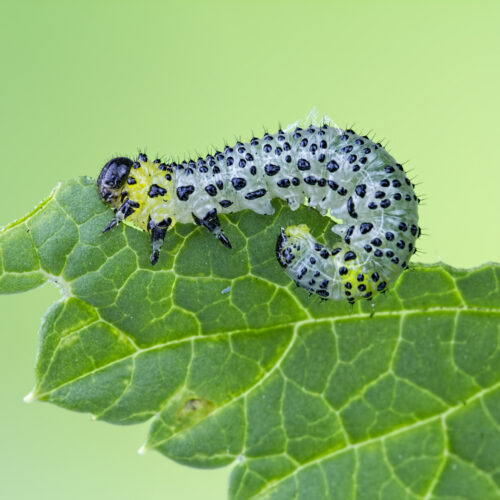
When an herbivorous insect like a caterpillar feeds on a plant, it introduces its saliva straight into the plant's damaged tissues. This saliva contains biological clues called HAMPs: herbivore-associated molecular patterns. One of the HAMPs molecules is a peptide called inceptin, and there’s an 11-amino acid fragment of inceptin named In11, as well. Both of them turn out to be a fragment of the ATP synthase found in chloroplasts—basically a piece of one of the plant’s own proteins. As the caterpillar ingests the leaf, its gut enzymes chop up the plant's cellular engines and their pieces, including In11, are regurgitated back onto the leaf’s surface, albeit at extremely small concentrations.
Read full article

Comments

© mikroman6

  •  

Beans use an immune receptor to call in airstrikes on caterpillars

For decades, scientists have understood that plants can release volatile organic compounds—essentially airborne chemical signals—to attract the natural enemies of the things that eat them, like caterpillars. What we didn’t know was exactly how a plant translates the physical act of being eaten into a specific, predator-summoning distress signal.

“[One] thing we didn’t know is how the plant detects the caterpillar in the first place,” says Adam Steinbrenner, a biologist at the University of Washington. Now, after years of experimenting with common bean plants in the lab and in the agricultural fields of Oaxaca, Mexico, Steinbrenner’s team pinpointed a single immune receptor that orchestrates its anti-caterpillar defense system.

Drooling caterpillars

When an herbivorous insect like a caterpillar feeds on a plant, it introduces its saliva straight into the plant's damaged tissues. This saliva contains biological clues called HAMPs: herbivore-associated molecular patterns. One of the HAMPs molecules is a peptide called inceptin, and there’s an 11-amino acid fragment of inceptin named In11, as well. Both of them turn out to be a fragment of the ATP synthase found in chloroplasts—basically a piece of one of the plant’s own proteins. As the caterpillar ingests the leaf, its gut enzymes chop up the plant's cellular engines and their pieces, including In11, are regurgitated back onto the leaf’s surface, albeit at extremely small concentrations.

Read full article

Comments

© mikroman6

  •  

Beans use an immune receptor to call in airstrikes on caterpillars

For decades, scientists have understood that plants can release volatile organic compounds—essentially airborne chemical signals—to attract the natural enemies of the things that eat them, like caterpillars. What we didn’t know was exactly how a plant translates the physical act of being eaten into a specific, predator-summoning distress signal.

“[One] thing we didn’t know is how the plant detects the caterpillar in the first place,” says Adam Steinbrenner, a biologist at the University of Washington. Now, after years of experimenting with common bean plants in the lab and in the agricultural fields of Oaxaca, Mexico, Steinbrenner’s team pinpointed a single immune receptor that orchestrates its anti-caterpillar defense system.

Drooling caterpillars

When an herbivorous insect like a caterpillar feeds on a plant, it introduces its saliva straight into the plant's damaged tissues. This saliva contains biological clues called HAMPs: herbivore-associated molecular patterns. One of the HAMPs molecules is a peptide called inceptin, and there’s an 11-amino acid fragment of inceptin named In11, as well. Both of them turn out to be a fragment of the ATP synthase found in chloroplasts—basically a piece of one of the plant’s own proteins. As the caterpillar ingests the leaf, its gut enzymes chop up the plant's cellular engines and their pieces, including In11, are regurgitated back onto the leaf’s surface, albeit at extremely small concentrations.

Read full article

Comments

© mikroman6

  •  

Beans use an immune receptor to call in airstrikes on caterpillars

For decades, scientists have understood that plants can release volatile organic compounds—essentially airborne chemical signals—to attract the natural enemies of the things that eat them, like caterpillars. What we didn’t know was exactly how a plant translates the physical act of being eaten into a specific, predator-summoning distress signal.

“[One] thing we didn’t know is how the plant detects the caterpillar in the first place,” says Adam Steinbrenner, a biologist at the University of Washington. Now, after years of experimenting with common bean plants in the lab and in the agricultural fields of Oaxaca, Mexico, Steinbrenner’s team pinpointed a single immune receptor that orchestrates its anti-caterpillar defense system.

Drooling caterpillars

When an herbivorous insect like a caterpillar feeds on a plant, it introduces its saliva straight into the plant's damaged tissues. This saliva contains biological clues called HAMPs: herbivore-associated molecular patterns. One of the HAMPs molecules is a peptide called inceptin, and there’s an 11-amino acid fragment of inceptin named In11, as well. Both of them turn out to be a fragment of the ATP synthase found in chloroplasts—basically a piece of one of the plant’s own proteins. As the caterpillar ingests the leaf, its gut enzymes chop up the plant's cellular engines and their pieces, including In11, are regurgitated back onto the leaf’s surface, albeit at extremely small concentrations.

Read full article

Comments

© mikroman6

  •  

Severed sea cucumber appendages don't seem to die

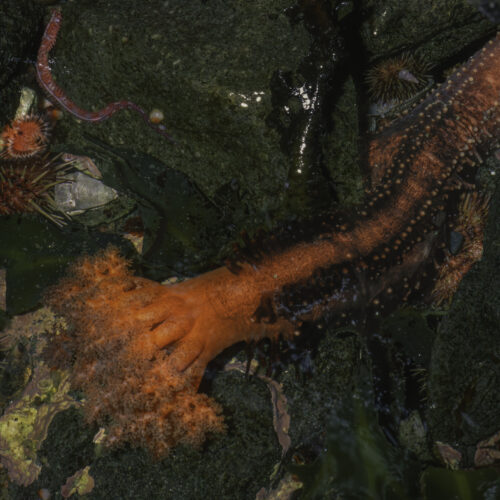
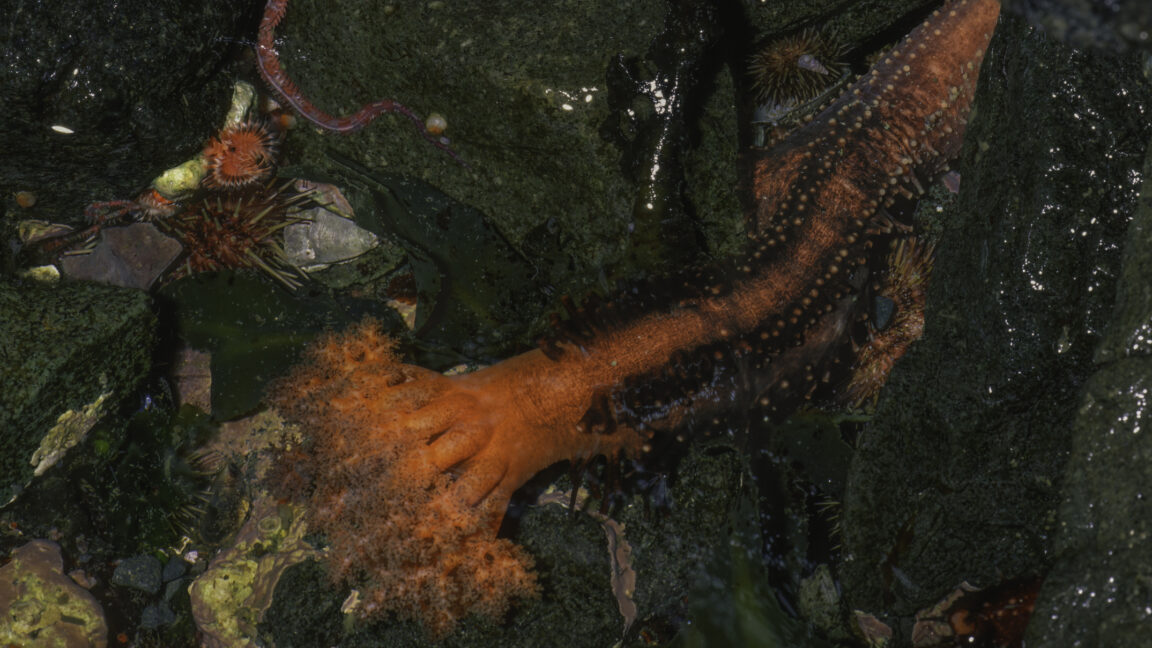
Organs, arms, appendages, and other complex tissues usually decay rapidly when they’re separated from their host. Over the years, biologists have seen some success with keeping them alive outside of the body—organ transplants depend on it—but it has always required germ-free environments and nutrient-rich mediums filled with growth factors. Now, though, scientists have discovered bits of tissue removed from a species of sea cucumber called Psolus fabricii can keep on living indefinitely if they’re left in ordinary seawater.

“This is naturally occurring tissue immortality,” said Sara Jobson, a researcher at Memorial University of Newfoundland and lead author of the study. “Having tissues that survive that easily is unheard of. We’ve never seen anything like this.”

The beginning of LiPfe

Psolus fabricii is a species of sea cucumber that lives in the cold waters of the Atlantic and Arctic oceans. Its bottom side, known as a sole, is soft and ringed by a band of tube feet that it uses to grip rocks. Once on a rock, it extends soft, branching tentacles into the water to feed on suspended particles. Because these sea cucumbers inhabit harsh environments, their feet and tentacles experience high rates of injury and loss. Evolution has therefore endowed these sites with an incredibly high capacity for regeneration.

Read full article

Comments

© Gerald Corsi

  •  

JWST maps the weather on a hot gas giant 700 light-years away

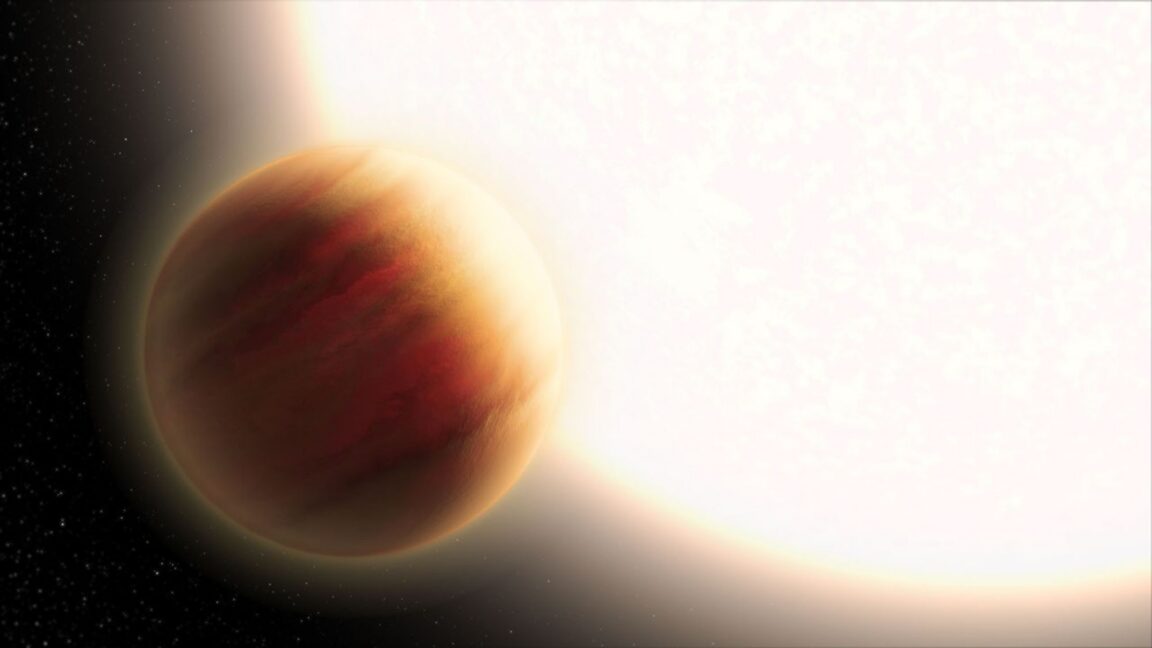
WASP-94A b is a hot, tidally locked gas giant orbiting close to one of the stars in a binary system roughly 690 light-years away from Earth. In a new Science study, scientists led by Sagnick Mukherjee, an astrophysicist at Johns Hopkins University, used the James Webb Space Telescope to learn what the weather looks like out there.

Tidal locking means that you no longer have day- and night-side temperature differences sweeping across the planet. “We wanted to understand the atmospheres of such planets,” Mukherjee says. “Are they static or dynamic? Do they have winds? Do they have clouds?” His team found that, on WASP-94A b, it’s cloudy in the morning, but the skies are clear in the evening. The fact that we didn’t know this already means we might have gotten the chemistry of this and many other exoplanets surprisingly wrong.

Averaged atmospheres

WASP-94A b has a mass slightly below half of Jupiter but has a diameter that’s over 70 percent wider. “This means the planet has low density, and its atmosphere extends further out into space, which makes it easier to observe,” Mukherjee explains. When astronomers study atmospheres like this, they usually rely on transmission spectroscopy. By analyzing the spectrum of light filtering through the planet’s atmosphere as it crosses in front of its star, they can figure out its chemical composition.

Read full article

Comments

© NASA, ESA, and L. Hustak (STScI)

  •  

Severed sea cucumber appendages don't seem to die

Organs, arms, appendages, and other complex tissues usually decay rapidly when they’re separated from their host. Over the years, biologists have seen some success with keeping them alive outside of the body—organ transplants depend on it—but it has always required germ-free environments and nutrient-rich mediums filled with growth factors. Now, though, scientists have discovered bits of tissue removed from a species of sea cucumber called Psolus fabricii can keep on living indefinitely if they’re left in ordinary seawater.

“This is naturally occurring tissue immortality,” said Sara Jobson, a researcher at Memorial University of Newfoundland and lead author of the study. “Having tissues that survive that easily is unheard of. We’ve never seen anything like this.”

The beginning of LiPfe

Psolus fabricii is a species of sea cucumber that lives in the cold waters of the Atlantic and Arctic oceans. Its bottom side, known as a sole, is soft and ringed by a band of tube feet that it uses to grip rocks. Once on a rock, it extends soft, branching tentacles into the water to feed on suspended particles. Because these sea cucumbers inhabit harsh environments, their feet and tentacles experience high rates of injury and loss. Evolution has therefore endowed these sites with an incredibly high capacity for regeneration.

Read full article

Comments

© Gerald Corsi

  •  

Severed sea cucumber appendages don't seem to die

Organs, arms, appendages, and other complex tissues usually decay rapidly when they’re separated from their host. Over the years, biologists have seen some success with keeping them alive outside of the body—organ transplants depend on it—but it has always required germ-free environments and nutrient-rich mediums filled with growth factors. Now, though, scientists have discovered bits of tissue removed from a species of sea cucumber called Psolus fabricii can keep on living indefinitely if they’re left in ordinary seawater.

“This is naturally occurring tissue immortality,” said Sara Jobson, a researcher at Memorial University of Newfoundland and lead author of the study. “Having tissues that survive that easily is unheard of. We’ve never seen anything like this.”

The beginning of LiPfe

Psolus fabricii is a species of sea cucumber that lives in the cold waters of the Atlantic and Arctic oceans. Its bottom side, known as a sole, is soft and ringed by a band of tube feet that it uses to grip rocks. Once on a rock, it extends soft, branching tentacles into the water to feed on suspended particles. Because these sea cucumbers inhabit harsh environments, their feet and tentacles experience high rates of injury and loss. Evolution has therefore endowed these sites with an incredibly high capacity for regeneration.

Read full article

Comments

© Gerald Corsi

  •  

Severed sea cucumber appendages don't seem to die

Organs, arms, appendages, and other complex tissues usually decay rapidly when they’re separated from their host. Over the years, biologists have seen some success with keeping them alive outside of the body—organ transplants depend on it—but it has always required germ-free environments and nutrient-rich mediums filled with growth factors. Now, though, scientists have discovered bits of tissue removed from a species of sea cucumber called Psolus fabricii can keep on living indefinitely if they’re left in ordinary seawater.

“This is naturally occurring tissue immortality,” said Sara Jobson, a researcher at Memorial University of Newfoundland and lead author of the study. “Having tissues that survive that easily is unheard of. We’ve never seen anything like this.”

The beginning of LiPfe

Psolus fabricii is a species of sea cucumber that lives in the cold waters of the Atlantic and Arctic oceans. Its bottom side, known as a sole, is soft and ringed by a band of tube feet that it uses to grip rocks. Once on a rock, it extends soft, branching tentacles into the water to feed on suspended particles. Because these sea cucumbers inhabit harsh environments, their feet and tentacles experience high rates of injury and loss. Evolution has therefore endowed these sites with an incredibly high capacity for regeneration.

Read full article

Comments

© Gerald Corsi

  •  

JWST maps the weather on a hot gas giant 700 light-years away

WASP-94A b is a hot, tidally locked gas giant orbiting close to one of the stars in a binary system roughly 690 light-years away from Earth. In a new Science study, scientists led by Sagnick Mukherjee, an astrophysicist at Johns Hopkins University, used the James Webb Space Telescope to learn what the weather looks like out there.

Tidal locking means that you no longer have day- and night-side temperature differences sweeping across the planet. “We wanted to understand the atmospheres of such planets,” Mukherjee says. “Are they static or dynamic? Do they have winds? Do they have clouds?” His team found that, on WASP-94A b, it’s cloudy in the morning, but the skies are clear in the evening. The fact that we didn’t know this already means we might have gotten the chemistry of this and many other exoplanets surprisingly wrong.

Averaged atmospheres

WASP-94A b has a mass slightly below half of Jupiter but has a diameter that’s over 70 percent wider. “This means the planet has low density, and its atmosphere extends further out into space, which makes it easier to observe,” Mukherjee explains. When astronomers study atmospheres like this, they usually rely on transmission spectroscopy. By analyzing the spectrum of light filtering through the planet’s atmosphere as it crosses in front of its star, they can figure out its chemical composition.

Read full article

Comments

© NASA, ESA, and L. Hustak (STScI)

  •  
❌