
Reading view

Webb Detects Methane on Interstellar Comet 3I/ATLAS
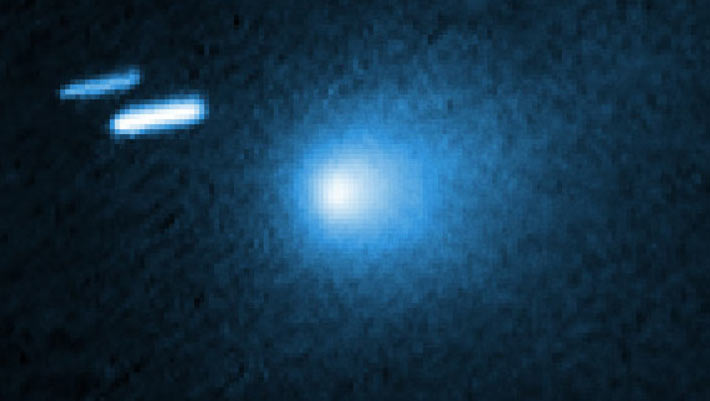
Hubble captured this image of 3I/ATLAS on July 21, 2025, when the comet was 446 million km (277 million miles) from Earth. Image credit: NASA / ESA / David Jewitt, UCLA / Joseph DePasquale, STScI.

Using the spectral data from the Mid-Infrared Instrument (MIRI) onboard the NASA/ESA/CSA James Webb Space Telescope, astronomers have detected methane on 3I/ATLAS.

The post Webb Detects Methane on Interstellar Comet 3I/ATLAS appeared first on Sci.News: Breaking Science News.
  •  

Hubble Captures Active Spiral Galaxy: Messier 88

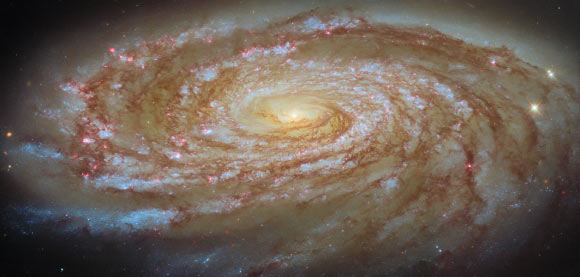
This image, taken with the Wide Field Camera 3 (WFC3) instrument aboard the NASA/ESA Hubble Space Telescope, shows the spiral galaxy Messier 88. Image credit: NASA / ESA / Hubble / D. Thilker / MAUVE-HST Team.

A newly-released Hubble image shows Messier 88, a black hole-powered spiral galaxy that is gradually plunging toward the crowded heart of the Virgo Cluster.

The post Hubble Captures Active Spiral Galaxy: Messier 88 appeared first on Sci.News: Breaking Science News.
  •  

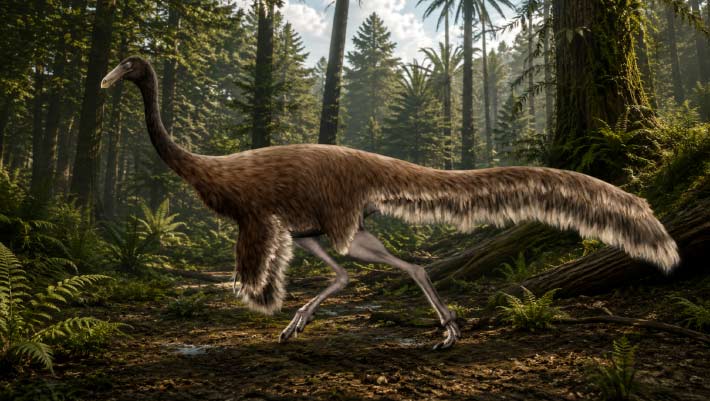
Toothless, Bipedal Crocodile Relative Lived in New Mexico 212 Million Years Ago

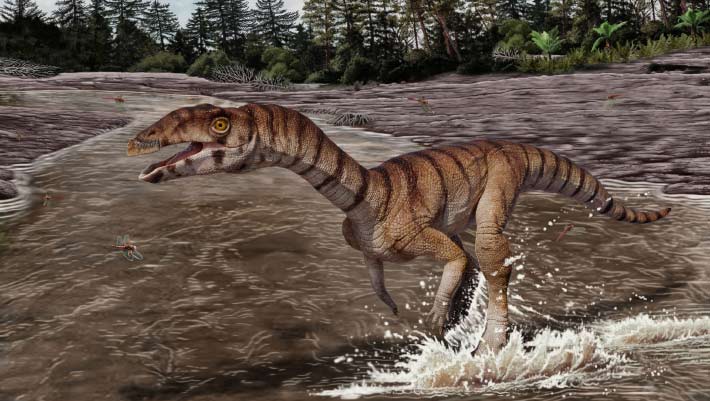
Labrujasuchus expectatus navigated the world on two legs with tiny arms and a toothless mouth tipped in a beak. Image credit: Jorge Gonzalez / NHMLAC Dinosaur Institute.

Paleontologists have described a new species of bipedal shuvosaurid archosaur from New Mexico, shedding light on a group of creatures that roamed North America during the Triassic period, more than 200 million years ago.

The post Toothless, Bipedal Crocodile Relative Lived in New Mexico 212 Million Years Ago appeared first on Sci.News: Breaking Science News.
  •  

Rare Ostrich-Like Dinosaur Fossil Found on Canadian Island

Life restoration of Quipalong henanesnsis, an ornithomimosaurian dinosaur that lived in what is now China during the Maastrichtian age of the Late Cretaceous, between 72 and 67 million years ago. Image credit: PaleoNeolitic / Sci.News.

Paleontologists in Canada say they have recovered a dinosaur tail vertebra from 75- to 80-million-year-old marine rocks on a small island off the coast of British Columbia, providing the clearest evidence yet that bird-like ornithomimosaurs once roamed the ancient Pacific coastline of North America.

The post Rare Ostrich-Like Dinosaur Fossil Found on Canadian Island appeared first on Sci.News: Breaking Science News.

  •  

Webb Detects Methane in Atmosphere of Exo-Saturn TOI-199b

An artist’s rendition of the ultrahot Jupiter TOI-1518b and its parent star. Image credit: Sci-News.com.

Using spectral data from the Near-Infrared Spectrograph (NIRSpec) onboard the NASA/ESA/CSA James Webb Space Telescope, astronomers analyzed the atmosphere of TOI-199b, a distant Saturn-mass world that is neither frozen nor scorching hot.

The post Webb Detects Methane in Atmosphere of Exo-Saturn TOI-199b appeared first on Sci.News: Breaking Science News.
  •  

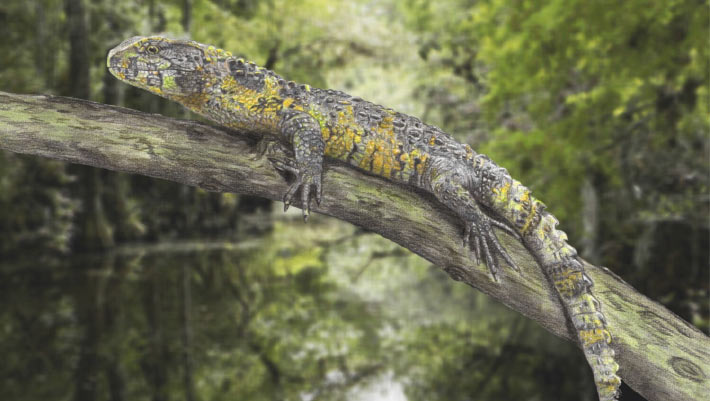
83-Million-Year-Old Crocodile Lizard Fossil Unearthed in France

Paleoartistic reconstruction of Acutodon villeveyracensis, the oldest known member of the pan-shinisaur lineage ever found in Europe. Image credit: Olivier Jansen.

Paleontologists have identified a new genus and species of pan-shinisaur lizard from a partial upper jaw discovered in southern France, pushing the presence of its lineage in Europe back by at least 30 million years.

The post 83-Million-Year-Old Crocodile Lizard Fossil Unearthed in France appeared first on Sci.News: Breaking Science News.
  •  

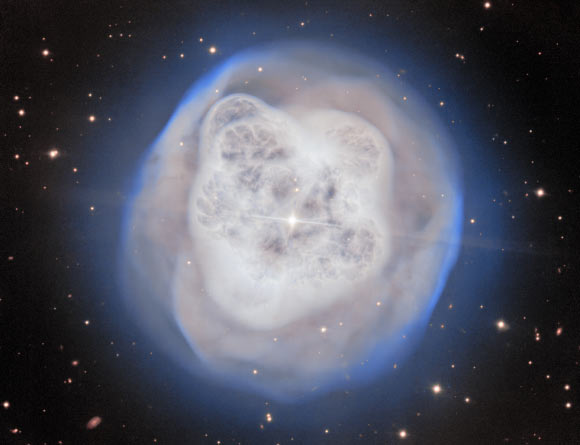
Gemini North Telescope Peers into Crystal Ball Nebula

This image of the Crystal Ball Nebula was captured by the 8.1-m Gemini North telescope at the International Gemini Observatory. Image credit: J. Miller & M. Rodriguez, International Gemini Observatory & NSF’s NOIRLab / T.A. Rector, University of Alaska Anchorage & NSF’s NOIRLab / D. de Martin & M. Zamani, NSF’s NOIRLab.

A stunning new image from the 8.1-m Gemini North telescope, located on the summit of Maunakea in Hawai’i, reveals the Crystal Ball Nebula in unprecedented detail: a lumpy, glowing sphere of gas sculpted by a pair of stars.

The post Gemini North Telescope Peers into Crystal Ball Nebula appeared first on Sci.News: Breaking Science News.

  •  
❌