Reading view

Injectable nanorobots may help heal spinal injuries

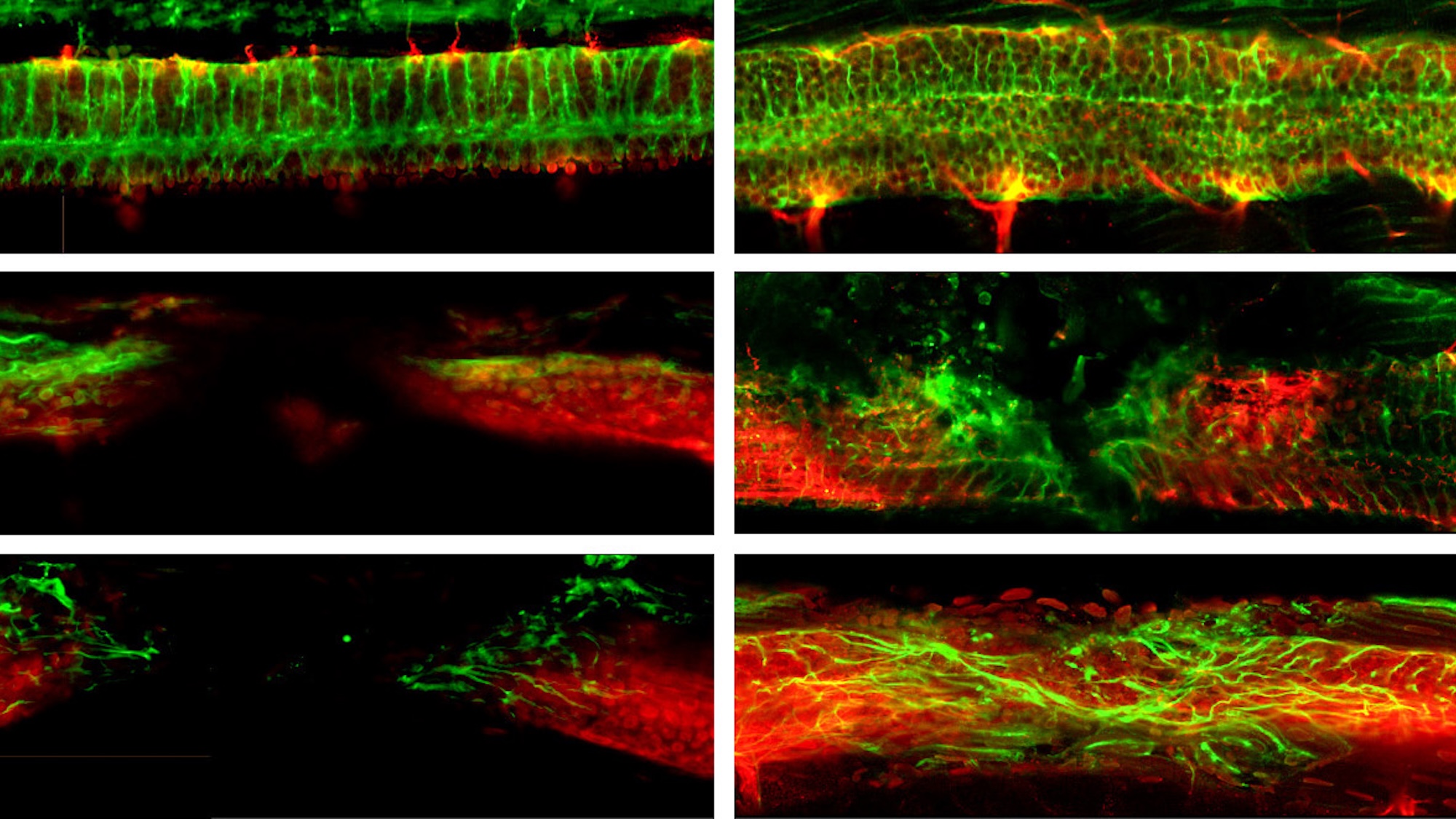
Despite significant medical advances, spinal cord damage remains one of the most difficult physical injuries to treat. Scarring frequently gets in the way of nerve fiber regrowth, while nerve cells usually cannot regenerate on their own. A possible solution? A fleet of stem cell-infused, injectable nanorobots that can help nerve cells regenerate. The tiny bots are detailed in a study recently published in the journal Nature Materials.

To build their new tools, a team at ETH Zurich in Switzerland engineered microscopic machines that combine living neural progenitor cells (NPCs)—specialized stem cells developed for the spine—with customized nanoparticles. These customized nanoparticles feature two layers—one that is sensitive to magnetic fields and another that translates them into electrical signals.

“We place a reservoir in the center where we trap the cells. Then we inject the nanoparticles and wait for the two components to bind,” Salvador Pané i Vidal, a study co-author and ETH Zurich roboticist, said in a statement.

Each nanorobot is about six micrometers wide, making them smaller than a red blood cell. However, the number of robots required to pull off a procedure is immense. Millions of nanobots are needed during animal trials. Even with such a high number, the initial experimental results are promising. In tests involving mice with severed spinal cords, nerve cells stimulated by the microrobots began reconnecting at the injury site within 28 days. By the end of the trial, the mice displayed major improvements in movement, gait, coordination, and exploratory behavior. 

Significantly more research is required before these nanobots are ready for primetime, but the team hopes to one day begin testing similar devices in humans. Before that, they need to determine the most effective magnetic fields and how long to apply them to patients. In the meantime, the overall design could also be applied to help treat regenerative issues in organs and wounds.

“The reproducible and scalable production of microrobots using our lab-on-a-chip system demonstrates that the platform’s application potential extends beyond basic research,” added Pané i Vidal.

The post Injectable nanorobots may help heal spinal injuries appeared first on Popular Science.

  •  

Marie Antoinette probably got braces to straighten her teeth

What’s the weirdest thing you learned this week? Well, whatever it is, we promise you’ll have an even weirder answer if you listen to Popular Science’s hit podcast. The Weirdest Thing I Learned This Week hits Apple, Spotify, YouTube, and everywhere else you listen to podcasts every-other Wednesday morning. It’s your new favorite source for the strangest science-adjacent facts, figures, and Wikipedia spirals the editors of Popular Science can muster. If you like the stories in this post, we guarantee you’ll love the show.

FACT: Marie Antoinette probably had braces

By Rachel Feltman

The idea of Marie Antoinette in orthodontic braces probably sounds like something out of my favorite Sofia Coppola film, but it’s not as anachronistic as it sounds. While I couldn’t find a definitive primary source on the subject, there are historical mentions of Marie Antoinette undergoing orthodontic treatment. And in some ways, it would be more surprising if she didn’t do a stint in braces: modern dentistry as we know it was essentially invented in France in the early 1700s, and by the time Marie and Louis got hitched, French people were practically known for having straight, pretty teeth. We know that Marie Antoinette was given an intense French makeover in all things before being shipped off to Versailles, so it’s plausible that she had a bit of dental work done, too. 

If the idea of 18th century orthodontia makes you want to put your head between your knees, you’re not wrong. The hardware designed by Pierre Fauchard, called a bandolet or bandeau, used a horseshoe-shaped piece of metal that pressed against the inside or outside of the dental arch. Dentists would manually tie individual teeth to the appliance using either silk threads or thin metal wires. That is, admittedly, pretty identical to how braces work today—they exert constant pressure on teeth to help move them into new positions, then hold them there while everything settles into place. But modern braces are designed to move teeth more effectively and with as little pain as possible, and the bandeau was much more of a blunt instrument. 

For a fun French dental bonus fact, I dug into the weird social history of smiling on the eve of the Revolution. Check out this week’s episode to learn more! 

FACT: One woman’s cells have fueled most medical research for decades 

Featuring Hari Kondabolu and Dr. Priyanka Wali

Today’s special guests are comedian Hari Kondabolu and physician-slash-comedian Priyanka Wali. Together they host the podcast Health Stuff, where they dive into everything from earwax to sleep hygiene.

On this week’s episode of Weirdest Thing, Hari and Priyanka share the story of Henrietta Lacks. While being treated for cervical cancer at Johns Hopkins in the 1950s, this African American mother of five unknowingly—and involuntarily—changed the course of medical history. Cancer cells from one of her biopsies were sent off for research without her knowledge or consent. Unlike other cancer cells in the lab, hers kept doubling instead of dying off. They were the first human cells that were discovered to multiply easily in a lab setting, making them perfect for studying the impact of various drugs, hormones, viruses, and toxins. While the cell line that originates from Henrietta Lacks’ tissues—called the HeLa line—has been used in research that’s saved countless lives over the decades, they also serve as a reminder of the entrenched racism of our medical system.

Listen to this week’s episode to learn more about Henrietta’s story. And for a deeper dive, check out “The Immortal Life of Henrietta Lacks.” 

FACT: It’s possible that neanderthals knew how to treat cavities 

By Rachel Feltman

Surprise, more teeth! Scientists recently reported that a 59,000-year-old tooth—a neanderthal molar, to be precise—could conceivably have been drilled to treat a cavity. They came to that conclusion by tinkering with three modern teeth, AKA subjecting them to the horrors of prehistoric dental treatment, to show that the ancient chomper showed signs of the same. 

Unsurprisingly, not everyone is 100 percent convinced by the experimental evidence. But even if hominids weren’t drilling cavities that long ago, there’s good reason to believe we’ve been at it for longer than you might guess. A couple of teeth from the Stone Age (about 13,000 years ago) show less ambiguous signs of dental drilling, and dentistry has been a flourishing (if often misguided) practice for thousands of years. Many of our ancient ancestors even wore dental bridges made out of gold and other precious metals—so grills have a long, proud history. 

The post Marie Antoinette probably got braces to straighten her teeth appeared first on Popular Science.

  •  

Rare meteorite proves our solar system almost had an extra planet

A rare meteorite discovered in the Sahara Desert proves that our solar system almost had at least one extra planet. In a study published in the journal Earth and Planetary Science Letters, astronomers say the chunk of space rock known as Northwest Africa (NWA) 12774 once belonged to a protoplanet possibly as large as Mars. That is, until a cosmic crash likely blew it to smithereens. 

The solar system includes eight known planets (sorry, Pluto). Barring interstellar catastrophe, this number will remain the same until the sun finally dies about 5 billion years from now. However, this total planetary count was never a guarantee.The solar system’s earliest era featured multiple embryonic protoplanets that had the potential to grow together into additional cosmic neighbors.

The remnants of these long gone celestial bodies are scarce, but traces still exist. That said, astronomers didn’t expect to find protoplanetary evidence in a meteorite like NWA 12774. Discovered in 2019, NWA 12774 is an angrite—one of the oldest known types of volcanic rock that was formed during the solar system’s era about 4.56 billion years ago. They’re also very rare. Of the roughly 80,000 meteorites discovered on Earth so far, only 68 are angrites.

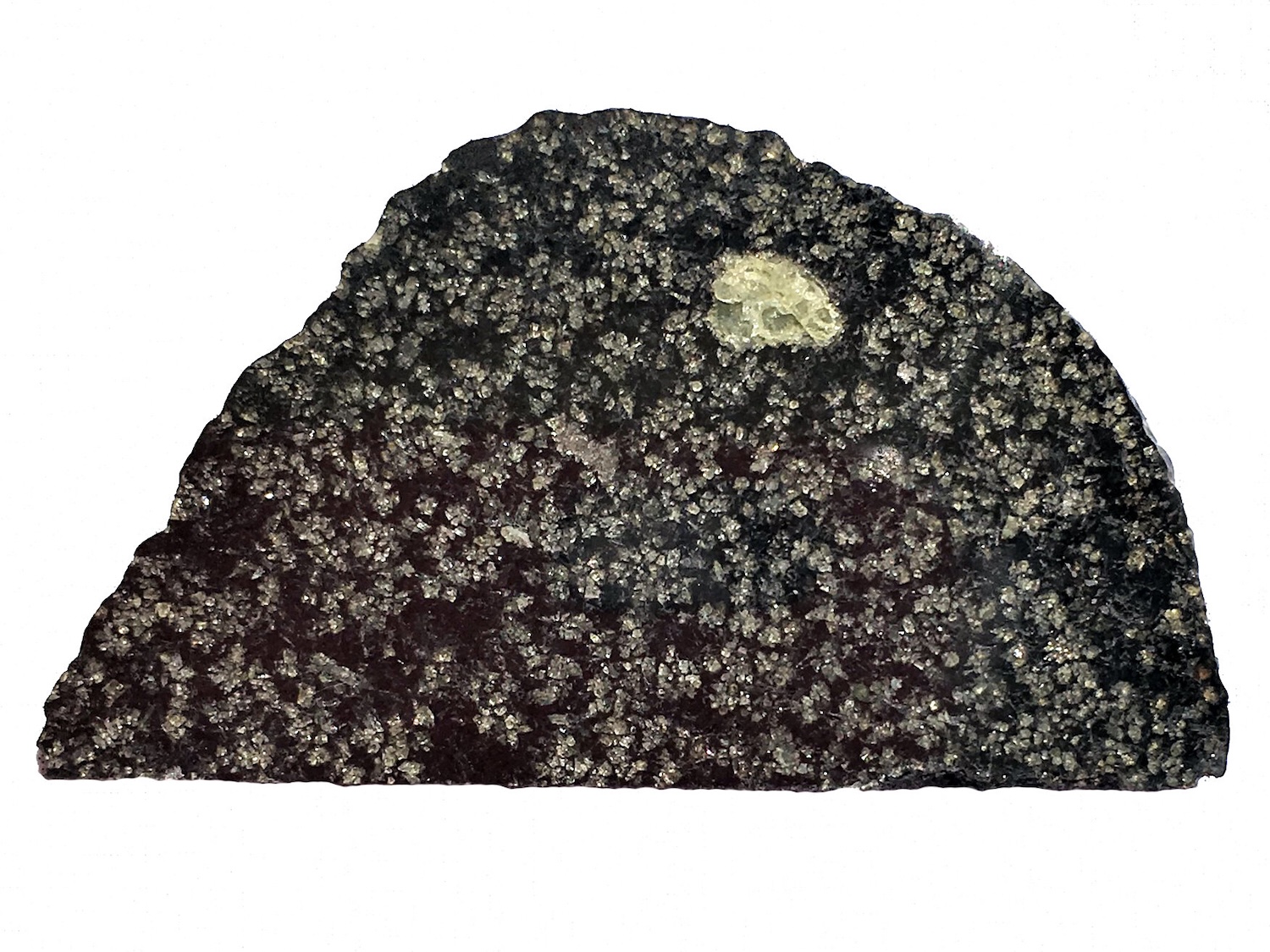
A slice of NWA 12774. The green circle is an olivine crystal, a magnesium-rich mineral. Credit: John Kashuba

Unlike rocky planets such as Mars and Earth, angrites do not have a lot of silicon dioxide. Because of this, astronomers have long assumed that angrites always originated in asteroids no larger than about 124 miles wide. NWA 12774 blows this theory apart..

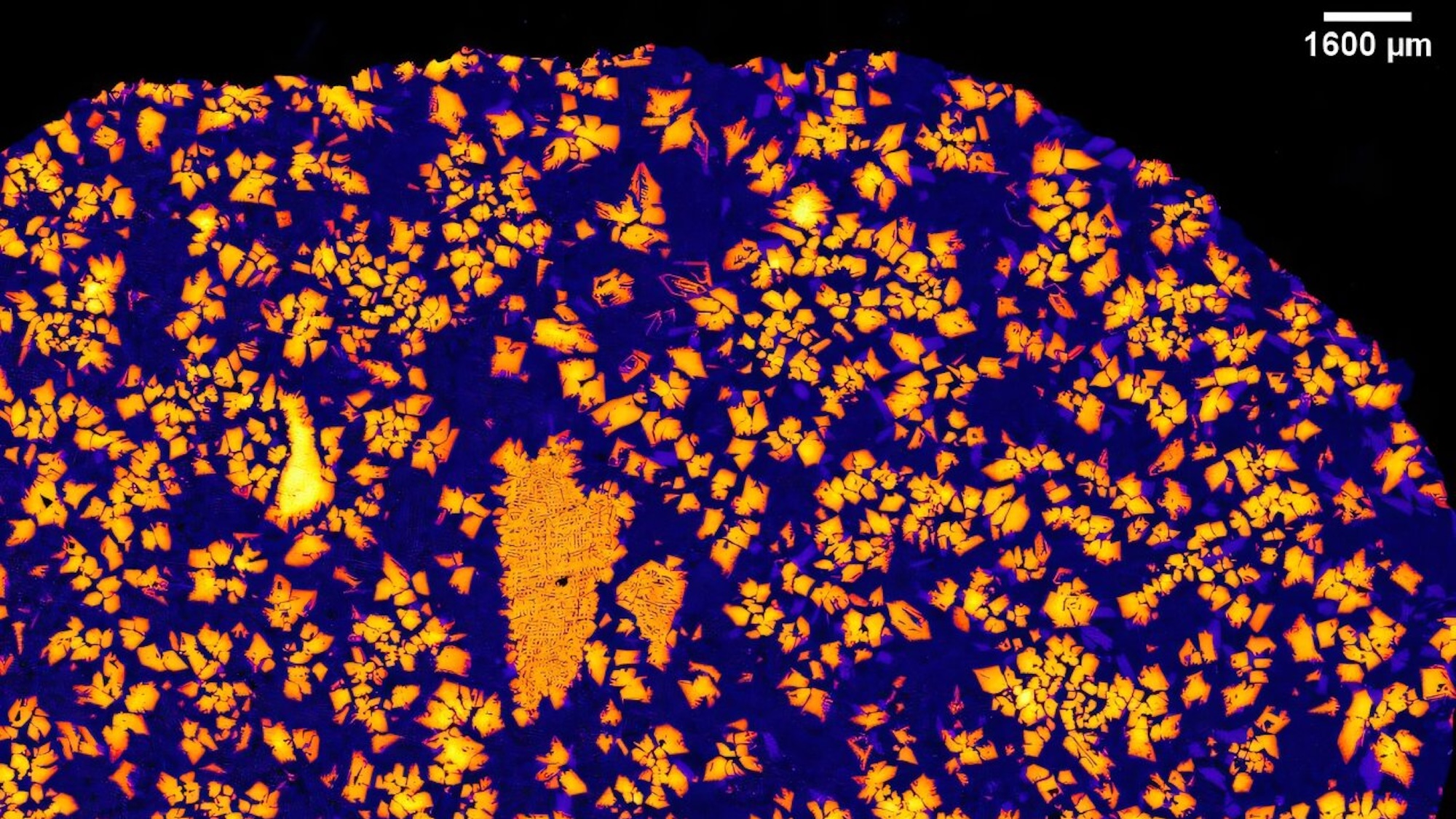
While analyzing the meteorite, researchers at the University of Colorado Boulder detected clinopyroxene, a mineral crystal that exists throughout Earth’s mantle and crust. NWA 12774’s clinopyroxene was also heavy in aluminum, which directly points to formation under massive amounts of pressure underground. The team then calculated the conditions necessary to create an angrite like NWA 12774, and settled on at least 17.5 kilobars of pressure. To put that in perspective, the pressure experienced at the bottom of the roughly 35,875-foot-deep Mariana Trench is barely one kilobar.

Small asteroids simply don’t possess the conditions needed to generate a rock like NWA 12774. What’s more, the angrite’s sharp crystalline edges also indicate that it formed at comparatively shallow depths in its host body. Based on all of these factors, astronomers now believe NWA 12774 once belonged to a young protoplanet with a radius anywhere from 621 to 2,050 miles wide. This means that instead of an asteroid, the angrite may have existed inside something as big as Mars.

“It’s incredible to think there was once a world this large,” Aaron Bell, a UC Boulder earth scientist and study co-author, said in a statement. “We only know it existed because a few fragments of it happened to land on Earth. These meteorites preserved evidence of a completely different pathway through which early planets developed.”

Although it’s unclear how the protoplanet met its demise, some type of crash between early solar system denizens is definitely a possibility. Regardless, the ramifications are huge for astronomers’ understanding of our cosmic neighborhood’s history.

“The materials that formed the angrite parent body are fundamentally different from the ingredients of Earth and Mars,” explained Bell. “It points to a distinct and separate evolutionary path in planetary formation in the early history of our solar system.”

The post Rare meteorite proves our solar system almost had an extra planet appeared first on Popular Science.

  •  

Scientists identify a cell type in the brain that was previously ignored and it may explain why human memory has no known upper limit

The human brain contains roughly 86 billion neurons. That number appears in almost every popular account of memory and intelligence, and it tends to carry an implicit argument: that the scale of human cognition follows from the scale of this cell count. What is less often mentioned is that the brain contains a roughly comparable number of a different cell type entirely, one that researchers have treated, for most of the history of neuroscience, as little more than biological scaffolding.

A paper published on 23 May in the Proceedings of the National Academy of Sciences puts forward a new hypothesis about what those cells, called astrocytes, might actually be doing. The work comes from a team at MIT: lead author Leo Kozachkov, Jean-Jacques Slotine, a professor of mechanical engineering and brain and cognitive sciences, and Dmitry Krotov of the MIT-IBM Watson AI Lab, who is the paper’s senior author. Their claim is not that astrocytes have been misunderstood in any dramatic sense; it is the more careful suggestion that they may be doing computational work that neurons, on their own, cannot account for.

This is a hypothesis supported by a mathematical model. The experimental work needed to test it has not yet been done.

The storage problem

The standard model for thinking about memory storage in neural networks is the Hopfield network, formalised by John Hopfield in his influential 1982 paper and drawing on earlier independent work by Shun-Ichi Amari in the early 1970s. Hopfield networks store information as patterns across connections between neurons, and they have been used as a working model for how the brain encodes and retrieves memories. The problem is that they can only store a limited amount of information, far less than what the human brain demonstrably holds. A modified version, known as dense associative memory, can store considerably more, but it requires couplings between more than two neurons at a time. Conventional synapses connect exactly two neurons: one presynaptic, one postsynaptic. There is no obvious biological mechanism for the higher-order coupling that dense associative memory requires.

Astrocytes are where the MIT team’s argument begins. These are star-shaped cells with long, thin extensions called processes, each of which can wrap around an individual synapse. An astrocyte can contact hundreds of thousands of synapses. When an astrocyte process wraps around a synapse, it creates what is called a tripartite synapse: a three-way junction involving the astrocyte process, the presynaptic neuron, and the postsynaptic neuron. Astrocytes cannot fire electrical action potentials the way neurons do, but they communicate through calcium signalling and can release signalling molecules called gliotransmitters into the synaptic junction.

The key move in the MIT model is to treat each tripartite synaptic domain not as a passive structural unit but as a computational one. Rather than thinking of an astrocyte as a single entity, the researchers treat it as a collection of semi-independent processes, each capable of sensing neural activity and feeding information back. The coupling this creates is not between two neurons but between the astrocyte process and the two neurons it connects. That is precisely the higher-order coupling that dense associative memories require.

What the model actually shows

“By conceptualising tripartite synaptic domains as the brain’s fundamental computational units,” says Maurizio De Pitta, an assistant professor of physiology at the Krembil Research Institute at the University of Toronto who was not involved in the study, “the authors argue that each unit can store as many memory patterns as there are neurons in the network. This leads to the striking implication that, in principle, a neuron-astrocyte network could store an arbitrarily large number of patterns, limited only by its size.”

The phrase “arbitrarily large” is worth pausing on. It does not mean infinite. It means that the model does not hit the ceiling that traditional neuron-only networks hit, and that the practical limit appears to scale with the network’s own dimensions. In this reading, the reason human memory has no known upper bound is not that the brain has found some exotic mechanism; it is that the brain may be exploiting a storage architecture that neuroscience has not, until recently, thought to look for.

The model also has something to say about energy efficiency. Because the ratio of stored information to computational units is high, and grows with network size, the system stores more per unit than a conventional Hopfield architecture. The authors suggest this fits with what is known about the brain’s actual energy budget.

What recent neuroscience has supported

The case for taking astrocytes seriously as more than support cells has been building for some years, though it has not yet hardened into consensus. Within the past few years, experimental work has begun to suggest a more active role. Studies disrupting astrocyte-neuron connections in the hippocampus have reported impairments in both memory storage and retrieval, and advances in calcium imaging resolution have made it possible to observe astrocytes and neurons coordinating their activity in real time. These findings establish that something is happening without settling what, and the field has not yet reached consensus on their interpretation.

“Originally, astrocytes were believed to just clean up around neurons,” Slotine says in the MIT release, “but there’s no particular reason that evolution did not realise that, because each astrocyte can contact hundreds of thousands of synapses, they could also be used for computation.”

The question the Kozachkov et al. paper is trying to answer is a narrower one: given what astrocytes do, what kind of computation could they plausibly be performing? The answer the model gives is memory encoding via dense associative memory, with information stored in the spatiotemporal patterns of calcium flow within the astrocyte, conveyed back to neurons through gliotransmitter release.

What the paper does not establish

The authors are direct about the speculative status of their work. “We hope that one of the consequences of this work could be that experimentalists would consider this idea seriously and perform some experiments testing this hypothesis,” Krotov says. The path from a plausible model to a confirmed mechanism is long, and many plausible models do not survive experimental contact. There is currently no way to test this hypothesis by reading the paper; what the paper does is make the case that testing it is worth the effort.

There is also a risk in reading the model too expansively. The dense associative memory architecture predicts certain mathematical properties of memory storage, but mapping those properties onto the full range of human memory, its emotional colouring, its selectivity, its susceptibility to distortion, requires considerably more work. The model addresses storage capacity. It does not address what gets stored, or why some memories persist, and others do not.

The Hopfield network context is worth keeping in mind here. John Hopfield received the Nobel Prize in Physics in 2024, shared with Geoffrey Hinton, for foundational work on artificial neural networks — work recognised for shaping the development of modern machine learning. The MIT paper extends that framework into a domain Hopfield’s original model could not reach. Whether the extension accurately describes what the brain is doing is, as yet, an open question.

The implication for how the brain is studied

There is a tendency in accounts of the brain to treat it as a neuron-first system, with everything else as secondary infrastructure. The attention given to neurons is not arbitrary; they are the cells that fire, that carry electrical signals, that form the visible substrate of perception and movement and speech. But a brain that uses half its cell count for functions that remain poorly understood is a brain with an incomplete accounting.

What the Kozachkov et al. paper adds to that picture is a specific, testable claim: that the three-way synaptic junction formed by an astrocyte and two neurons may be doing memory work that neuron-to-neuron connections alone cannot. If experiments bear that out, the implication is not just that astrocytes matter. It is that the unit of computation we have been studying, the synapse between two neurons, is not the brain’s actual basic unit of memory storage.

That would require some revision to a great deal of what has been written about the brain. It would not require discarding it.

The post Scientists identify a cell type in the brain that was previously ignored and it may explain why human memory has no known upper limit appeared first on Space Daily.

  •  

AI-Powered Coaching Transforms Exercise Guidance

In recent years, the surge in at-home fitness routines, especially during the global Covid-19 pandemic, has spotlighted a critical issue: improper exercise form leading to a significant rise in injuries. The U.S. Consumer Product Safety Commission reported a 48% increase in injuries related to at-home exercise during this period, underscoring the challenge many face without direct access to professional coaching. Addressing this gap, a pioneering team of researchers from Drexel University and Michigan State University has developed a cutting-edge prototype integrating artificial intelligence (AI), computer vision, and biomechanical modeling to offer real-time, precise exercise form coaching from streaming video footage.

This innovative program, dubbed BioCoach, marries advanced computer vision techniques with a vision-language model, allowing it not only to analyze human movement but also to generate live, anatomical feedback during various exercises. While numerous fitness coaching apps exist, few provide the specificity and immediacy of biomechanical correction delivered by a seasoned human trainer. BioCoach aims to bridge this divide by delivering targeted, timely cues rooted in the biomechanics of body motion, effectively emulating the nuanced guidance a knowledgeable coach would provide in person.

At the heart of BioCoach lies an intricate fusion of data processing algorithms. The system employs a dual-stream analysis approach: one stream utilizes a three-dimensional convolutional neural network (3D CNN) to capture visual appearance and motion dynamics, expertly recognizing distinct objects and movements within video sequences. Concurrently, a complementary stream estimates 3D skeletal posture and body morphology, extracting quantitative joint angles, ranges of motion, and exercise-phase data. This robust combination grants BioCoach an unprecedented depth of insight into the biomechanics underlying each repetition and posture captured on video.

The development team significantly enhanced the model’s training dataset by augmenting the Qualcomm Exercise Video Dataset (QEVD), a publicly available repository containing extensive exercise footage annotated with basic coaching feedback. Recognizing the sparse nature of original annotations, which often consisted of brief comments like “lower your body more,” the researchers re-annotated over 200 videos with detailed biomechanical targets and rationales. This enriched dataset included over 2,400 meticulously crafted notes specifying precise joint angles and motion thresholds, thus grounding the language model in authentic biomechanical context and timing.

This careful re-annotation process was integral not only in elevating the model’s linguistic precision but also in enabling rigorous evaluation of its feedback timing and relevance. By preserving the temporal alignment of coaching cues with specific exercise phases, the researchers ensured BioCoach’s ability to respond not just accurately but precisely when corrections are most beneficial—mirroring the instantaneous interventions of expert trainers.

BioCoach’s capacity to provide feedback is rooted in its ability to identify key joints relevant to individual exercises. For example, during squats, the system prioritizes analysis of the hips, knees, and ankles, while for push-ups, it focuses on the shoulders, elbows, and wrists. This targeted approach ensures that feedback remains specific and actionable, avoiding generic or irrelevant comments common in many current fitness apps. Additionally, by integrating detailed body shape and movement quality metrics, BioCoach can parse subtle deviations that might indicate compensatory patterns or strain risks.

The linguistic component of BioCoach translates intricate biomechanical data into natural language coaching cues with unparalleled clarity and relevance. Unlike more superficial feedback models, BioCoach articulates the significance behind each correction, explaining why a certain adjustment matters for distributing load or preventing injury. For instance, a suggestion might not only encourage “increasing elbow flexion to 90 degrees at the bottom of a push-up” but also clarify that “this adjustment helps distribute load evenly across joint structures,” thereby fostering user understanding and compliance.

In rigorous head-to-head testing, BioCoach was benchmarked against top-tier video-language AI models developed by prestigious institutions and corporations including MIT, NVIDIA, ByteDance, Alibaba, Salesforce, OpenAI, and leading Chinese universities. The evaluation involved feeding each program a combination of original QEVD videos and the newly annotated footage, assessing the response quality based on accuracy, anatomical correctness, detailed specificity, and timeliness.

The results were compelling. BioCoach outperformed its closest competitor, Stream-VLM (a collaboration between MIT and NVIDIA researchers) in text quality and relevance when evaluated on the original dataset. More strikingly, on the enriched dataset with biomechanics-based annotations, BioCoach demonstrated substantial gains across all metrics. Its feedback was notably more biomechanically accurate and rich with anatomy-specific details, establishing new standards for AI-driven exercise coaching.

The success of BioCoach highlights the profound benefit of integrating explicit 3D kinematic data and biomechanical constraints into AI coaching frameworks. By moving beyond mere pixel-level image analysis to structured, domain-specific knowledge, the system not only generates more accurate and insightful guidance but also becomes more interpretable and dependable, critical factors for user trust and safety in fitness applications.

Looking forward, the research team envisions expanding BioCoach’s capabilities to estimate joint reaction forces and muscle activation patterns from video input. Such enhancements would empower the system to detect even subtle compensatory movements or loading imbalances that can precipitate injury over time. These improvements could revolutionize both exercise and physical therapy by supporting users in receiving continuous, expert-level feedback remotely, effectively extending the reach of human trainers into digital spaces.

Dr. Feng Liu, assistant professor at Drexel’s College of Engineering and Computing and lead for the Visual Intelligence Lab, emphasized the transformative potential of BioCoach. “Our aspirations extend beyond simple encouragement,” he explained, “to actual biomechanically grounded coaching that helps individuals exercise safely and effectively. This integration of computer vision, 3D modeling, and language understanding is poised to redefine how AI supports human movement education.”

The development of BioCoach epitomizes a new wave of AI applications that intertwine deep learning and biomechanics, heralding an era where personalized, scientific exercise coaching is accessible anytime and anywhere. With ongoing refinement, such systems could democratize expert-level fitness guidance, mitigate injury risks, and ultimately promote healthier lifestyles across diverse populations worldwide.

Subject of Research: Not applicable
Article Title: From 3D Pose to Prose: Biomechanics-Grounded Vision–Language Coaching
News Publication Date: 27-Mar-2026
Web References: http://dx.doi.org/10.48550/arXiv.2603.26938
References: Feng Liu et al., arXiv preprint, 2026
Image Credits: Drexel University

Keywords: Artificial intelligence, Computer vision, Machine perception, Image processing, Natural language processing, Three dimensional modeling, Physical exercise

  •  

Oxygen Loss in Inland Freshwater Ecosystems

Inland freshwater ecosystems—comprising rivers, lakes, and reservoirs—are critical reservoirs of biodiversity and essential sources of freshwater resources for human use. However, these ecosystems are facing an alarming threat from deoxygenation, a process characterized by declining levels of dissolved oxygen (DO) in surface and subsurface waters. Dissolved oxygen serves as a fundamental driver of aquatic life, facilitating aerobic respiration for myriad organisms and sustaining complex biogeochemical cycling. The rapid depletion of DO in freshwater systems threatens not only the ecological health of these habitats but also the socioeconomic stability of communities that depend on them for drinking water, fisheries, and recreation.

Recent studies reveal a stark global trend: surface water dissolved oxygen in inland freshwater bodies is declining at unprecedented rates. Over the last two decades, lakes have recorded an average DO decrease of approximately 0.034 mg per liter per decade during summer months, while rivers have exhibited a more pronounced year-round decline of 0.043 mg per liter per decade dating back to the early 1980s. These patterns are not uniform, with spatial variability linked to geographic and climatic heterogeneity. Notably, the most dramatic decreases have occurred in Asian lakes, where DO has dropped by 0.043 mg per liter per decade, and in the Amazon River Basin, where declines reach as much as 0.2 mg per liter per decade, a figure that signals profound disruption in one of the planet’s most vital freshwater systems.

The drivers behind this widespread deoxygenation are multifaceted, intricately interwoven with both natural processes and human influences. Climate warming emerges as a dominant force amplifying oxygen depletion through several mechanisms. Elevated temperatures exacerbate thermal stratification in lakes and reservoirs, prolonging the summer layering of water masses which prevents oxygen exchange between surface and bottom layers. Moreover, oxygen’s solubility in water inherently decreases as temperature rises, compounding DO shortages. Higher temperatures also stimulate microbial metabolism, escalating the respiration rates that consume available oxygen. In sum, climatic warming both directly and indirectly escalates the vulnerability of freshwater systems to hypoxia and anoxia.

Human activities intensify these natural stressors by accelerating nutrient inputs, primarily nitrogen and phosphorus, through agricultural runoff, sewage discharge, and industrial effluents. This nutrient enrichment leads to eutrophication—a process marked by excessive algal growth and subsequent decay, further depleting oxygen levels once the organic matter decomposes. Extreme rainfall events, which are increasing in frequency and intensity due to climate change, exacerbate this situation by facilitating nutrient transport and promoting the development of hypoxic zones. Globally, this complex interplay of anthropogenic nutrient loading and climate-induced changes is reshaping hydrological and biogeochemical cycles with alarming consequences.

The process of deoxygenation initiates a cascade of biogeochemical feedbacks that accelerate ecosystem deterioration. Oxygen-depleted conditions foster the proliferation of anaerobic microbial communities, altering the cycling of key elements such as nitrogen, sulfur, and carbon. For instance, in low-oxygen environments, increased denitrification and sulfate reduction processes release potent greenhouse gases like nitrous oxide and hydrogen sulfide, contributing to climate warming and further degrading water quality. These feedback loops not only diminish biodiversity through selective pressures on aerobic organisms but also impede ecosystem resilience by modifying essential nutrient fluxes.

Biological communities within freshwater habitats are profoundly restructured as DO levels decline. Aerobic species—ranging from fish and macroinvertebrates to key microbial taxa—often face physiological stress or mortality due to hypoxic conditions, leading to losses in biodiversity and shifts toward more tolerant but less ecologically functional assemblages. These shifts undermine the ecological integrity of freshwater systems, compromising ecosystem functions such as nutrient cycling, primary production, and organic matter decomposition. Consequently, trophic interactions become altered, disrupting food web dynamics and potentially promoting harmful algal blooms and invasive species that further degrade water quality.

In parallel, the socioeconomic dimensions of freshwater deoxygenation are vast and insidious. Diminished oxygen concentrations impair fishery productivity, reducing catch volumes and the livelihoods of millions dependent on inland fisheries worldwide. Deoxygenated waters often exhibit poorer recreational quality due to eutrophication-driven algal blooms and unpleasant odors, impacting tourism and associated economic benefits. Moreover, the quality of drinking water sourced from lakes and rivers can be severely compromised by hypoxia-induced processes, including the release of harmful contaminants and changes in microbial populations. These factors collectively jeopardize public health, food security, and economic stability.

Despite the gravity of freshwater deoxygenation, monitoring efforts remain insufficiently coordinated and under-resourced. Establishing comprehensive, real-time dissolved oxygen monitoring networks is critical for detecting early-stage deoxygenation events and informing rapid management responses. Coupled with these networks, the development of integrated predictive models that incorporate climatic, hydrological, and biogeochemical drivers can improve forecasting accuracy and guide adaptive management strategies. These models must consider complex feedback mechanisms and potential nonlinear responses to environmental changes to ensure reliability.

Mitigation requires a multifaceted approach emphasizing nutrient management through reduction of agricultural runoff, wastewater treatment improvements, and watershed restoration. Restoration efforts that reestablish hydrological connectivity and promote aquatic vegetation can enhance oxygen replenishment and buffer against extreme events. Ecological restoration not only targets oxygen replenishment but also fosters biodiversity recovery and resilience building. Coordinated governance frameworks integrating local stakeholder engagement, scientific expertise, and policy enforceability are vital to ensuring the sustainability of mitigation initiatives.

Furthermore, adaptation strategies must anticipate the compounding threats posed by future climate warming and land-use changes. Increasing community awareness and embedding scientific findings into policy decisions foster better resilience and stewardship at the local to global scales. Collaborative interdisciplinary research—and transboundary cooperation, especially in large, shared freshwater basins—is pivotal for confronting the complexities of freshwater deoxygenation.

In conclusion, the widespread deoxygenation of surface waters in inland freshwater systems represents a critical environmental challenge with far-reaching ecological and socioeconomic impacts. The synergistic effects of climate warming and human activities have set in motion a trajectory of oxygen loss that threatens the viability of aquatic ecosystems globally. Addressing this challenge mandates innovative science-policy interfaces, enhanced monitoring infrastructures, proactive nutrient and watershed management, and inclusive governance models. Only through integrated and adaptive strategies can the integrity and functionality of our planet’s freshwater ecosystems be safeguarded for future generations.


Subject of Research: Deoxygenation trends, drivers, and impacts in inland freshwater ecosystems

Article Title: Deoxygenation in inland freshwater systems

Article References:
Shi, K., Iestyn Woolway, R., Guan, Q. et al. Deoxygenation in inland freshwater systems. Nat Rev Earth Environ (2026). https://doi.org/10.1038/s43017-026-00795-x

Image Credits: AI Generated

  •  

A study of adults aged 62 to 92 found that basic motor control — drawing lines, placing dots — remains almost identical between people with and without cognitive impairment, meaning the hands stay capable long after the processes that organise thought have started to change

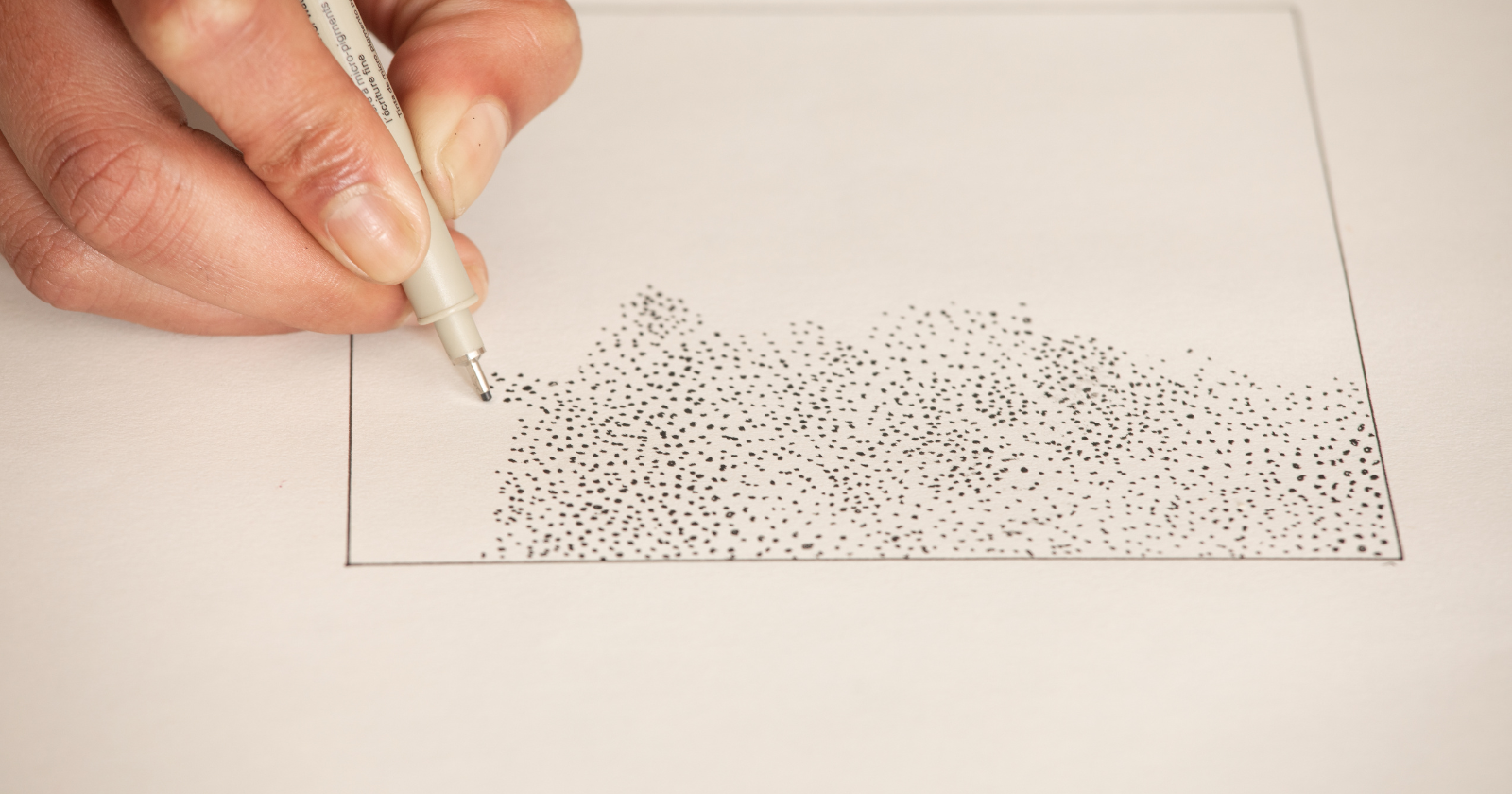
There is something quietly striking in the image. An older adult — perhaps 86, perhaps older — sits before a digitizing tablet and draws horizontal lines. The pen moves steadily across the surface. The lines come out clean and even. The hand does not falter. The hand, it turns out, does not know.

A new study published in Frontiers in Human Neuroscience has examined what happens to handwriting and motor control in older adults with and without cognitive impairment, and one of its most arresting findings is precisely this: when it comes to basic pen-motor tasks — placing dots on a surface, drawing horizontal lines — the two groups are effectively indistinguishable. The degradation of cognitive function that researchers can detect through standardized assessments leaves no measurable trace in the elementary mechanics of holding and moving a pen.

The basic motor infrastructure holds. What begins to separate the groups is something more demanding: the cognitive work that handwriting also requires.

What the study measured, and how

The research, led by Ana Rita Matias and colleagues at the Universidade de Évora and collaborating Portuguese institutions and published in May 2026, recruited 58 institutionalised older adults ranging in age from 62 to 99. Thirty-eight participants had been classified as cognitively impaired, with a mean age of 86.05 years. Twenty were cognitively healthy, with a mean age of 84.35 years. Cognitive status was established using two standard clinical instruments: the Mini-Mental State Examination and the Clock Drawing Test.

Each participant completed a series of tasks on a Wacom digitizing tablet fitted with an inking pen — a device that captures not just what is written but the kinematics of how it is written: pen velocity, pressure, the duration of strokes, the number of discrete movements, the pauses between them. This is the critical advantage of digital capture over conventional paper-based assessment. What the eye cannot see, the tablet records.

The tasks fell into two categories. The first were simple motor tasks: a dots task, in which participants were asked to place at least ten dots on the tablet surface within twenty seconds, and a lines task, in which they were asked to draw at least ten horizontal lines in the same time. These tasks required control of the pen but little else. No language processing. No memory retrieval. No composing of meaning.

The second category was more demanding: four handwriting-speed tasks involving the copying and dictation of sentences. Copying a sentence allows the writer to keep the source text in view. Dictation does not. The words arrive as sound, must be held in working memory, parsed for meaning, translated into motor sequences, and then committed to the page — all while the auditory trace is already fading.

Where the difference appears — and where it does not

The dots and lines tasks did not significantly discriminate between the two groups. This is the finding worth pausing on. Cognitive impairment, at the level where it is detectable by standard clinical tools, has not yet disrupted the peripheral motor system. The hand moves. The pen responds. The basic loop between intention and execution remains functionally intact.

The dictation tasks told a different story. Here the researchers found statistically significant differences between the cognitively impaired and cognitively healthy groups. One task in particular — referred to in the paper as WS3, a dictated sentence — produced the strongest discriminatory signal. Two features of the kinematic data were especially predictive: Duration, the total time taken to complete the task, and Number of Strokes, the count of discrete pen movements. Both variables significantly predicted cognitive group membership.

Participants with cognitive impairment took longer and produced more fragmented output — more individual pen movements to accomplish the same written result. The hand was still moving. But the coordination between the cognitive processes that organise language and the motor processes that execute it had become less fluent, more effortful, more interrupted.

As the authors write in their conclusion: “Handwriting kinematics, especially temporal and stroke-related features, are sensitive indicators of cognitive impairment when assessed under high cognitive–motor load.”

Why handwriting carries cognitive signal

Handwriting has attracted sustained interest from researchers studying cognitive decline precisely because it occupies a peculiar position: it is both a motor act and a cognitive one, and the two are difficult to disentangle by observation alone. The digitizing tablet changes that. By capturing kinematics in real time, it makes visible the hesitations, the micro-pauses, the multiplying strokes that a simple reading of the finished text would never reveal.

What the tablet captures, in effect, is cognitive load expressed through movement. When a task places high demands on working memory — as dictation does — the motor system has fewer resources available to it. The result is not necessarily illegible handwriting. The result is handwriting that takes longer, that requires more individual pen lifts, that shows the seams of the effort it took to produce.

The distinction between copying and dictation is not incidental to this research — it is the mechanism. Copying a sentence is primarily a perceptual-motor task. The writer looks at words and reproduces them. Dictation requires the writer to be, briefly, a language processor: receiving, holding, decoding, and transcribing without the safety net of visible text. That additional cognitive burden is where the between-group difference becomes measurable.

Earlier research in this area has identified kinematic features — pen velocity, in-air time, the ratio of time spent writing to time spent pausing — as markers that correlate with cognitive status in conditions including mild cognitive impairment and Alzheimer’s disease. What the Matias study adds is a careful separation between tasks that load the motor system alone and tasks that load the cognitive-motor system together. The separation clarifies which element of handwriting carries the diagnostic signal.

The case for handwriting-based screening

The researchers position their findings as support for digitally mediated handwriting tasks as screening tools for cognitive decline. The argument has practical force. A digitizing tablet is low-cost relative to neuroimaging and requires no specialist clinical infrastructure. Handwriting is, for most older adults, a deeply familiar act — ecologically valid in the language of assessment research, meaning it does not require participants to learn a new task or adapt to an unfamiliar paradigm. It is something people have done for decades, and the act of doing it again in a clinical or care context carries little of the anxiety or performance pressure that some formal cognitive assessments introduce.

For populations in institutional care — the population this study recruited — such considerations are not trivial. Fatigue, unfamiliarity, and distress can all contaminate cognitive assessment data. A brief handwriting task, completed at a table with a pen in hand, is a different kind of ask than a sustained battery of memory and attention tests.

The study also raises the possibility of longitudinal monitoring: repeated handwriting assessments over time could track subtle kinematic changes before they manifest as detectable impairment on conventional screening tools. The tablet captures what the eye misses. Over months or years, the data might record the earliest drift in the coordination between thought and hand.

What the hand does not know

The human detail at the centre of this research is the one that stays. An older adult draws horizontal lines on a tablet. The hand moves cleanly. The pen does not hesitate. By the measure of the task — ten lines in twenty seconds — the performance is equivalent to that of someone whose cognition, by clinical assessment, remains fully intact.

The hand, performing that task, is not reporting on what is happening elsewhere. The motor infrastructure is preserved. The elementary act of guiding a pen across a surface — the muscle coordination, the proprioceptive feedback, the fine motor loop that learned to hold a pen in childhood and has held one ever since — continues to operate as it has always operated.

What changes, and what the digitizing tablet can detect, is the integration. The moment handwriting becomes more than a motor act — the moment it requires the writer to hold language in mind, to compose and convert and commit — the kinematic signature of cognitive change begins to appear in the data. Not as tremor. Not as a loss of motor control. As duration. As the number of strokes it takes to get the words down.

The hands stay capable. The research is careful to say so. What shifts is the coordination between capability and the cognitive processes that direct it. That coordination, it turns out, is where cognitive impairment first makes itself legible to a machine that is paying close enough attention.

Produced with AI assistance. Reviewed by the Space Daily editorial team before publication.


The post A study of adults aged 62 to 92 found that basic motor control — drawing lines, placing dots — remains almost identical between people with and without cognitive impairment, meaning the hands stay capable long after the processes that organise thought have started to change appeared first on Space Daily.

  •  

Experiment Reveals Japanese Manga Stories Are Better Understood on Paper, Showing Distinct Brain Activation Patterns Compared to Digital Reading

Japanese manga has captured the imaginations of readers worldwide, blending intricate narratives with dynamic visual storytelling. However, a groundbreaking new study from Japan now reveals that the medium on which manga is consumed—paper versus digital screens—significantly influences both comprehension and the neurological processes involved during reading. This research, recently published in PLOS One, sheds light on how traditional paper manga may facilitate more efficient brain integration compared to digital reading, with sweeping implications for our understanding of reading cognition in the digital age.

The study embarked on a detailed examination of neural activation during manga reading on paper compared to digital devices such as tablets and e-readers. Using functional magnetic resonance imaging (fMRI), researchers observed key differences in brain activity patterns, particularly in areas associated with language processing and information integration. They identified enhanced activation in the language-related regions of the brain when subjects read manga on paper, suggesting that tactile and sensory cues inherent to the physical medium may bolster cognitive engagement.

Central to the findings is the notion of “energy-saving brain activation,” referring to more efficient neural processing during paper-based reading. The yellow-highlighted areas in the language regions of the brain in the fMRI images demonstrate this phenomenon, showing less scattered and more unified activation patterns. This contrasts sharply with the more diffuse brain activation recorded during digital reading sessions, which might indicate heightened cognitive load or less seamless integration of visual and textual information.

The researchers propose that paper’s tactile feedback, combined with the unique spatial layout of manga pages, strengthens the coordination between core and supportive brain integration processes. Specifically, the core integration networks encompass regions responsible for combining linguistic content with narrative context, while supportive networks assist by integrating visual cues and managing attention. Paper reading appears to harmonize these processes, facilitating more fluid comprehension and retention.

One of the compelling insights from the study connects these neural findings with behavioral measures. Participants exhibited improved understanding and memory recall of manga narratives when reading on paper. This superior performance aligns with the more focused brain activation patterns and suggests that the medium influences both the mechanics of brain function and the experiential aspects of comprehension.

Technological interface challenges also arise from this research. Digital screens, while convenient and increasingly prevalent, may impose subtle cognitive barriers related to screen glare, scrolling mechanisms, and screen refresh rates, all of which could disrupt the natural flow of reading and result in fragmented neural activation. Furthermore, the static yet tactile nature of paper affords readers a physical map of narrative progress, enhancing spatial memory and sequencing, critical for understanding complex storylines.

This investigation holds particular relevance in our current era, where digital consumption dominates cultural and educational content dissemination. As manga’s global audience increasingly shifts towards online platforms and digital archives, understanding the cognitive trade-offs of screen reading versus traditional media becomes paramount. This study’s demonstration that paper facilitates better integrative brain processing calls for a reevaluation of digital literacy tools and digital content delivery methods.

Beyond manga, the implications extend to other domains where multimedia and textual integrations are crucial, including education, professional reading, and even therapeutic storytelling. The brain’s differential response to media formats could influence curricular designs, recommending strategic use of paper for deeper learning and digital formats for rapid access or convenience.

Funding for the study was provided by COAMIX INC, a prominent entity in the manga publishing industry, alongside governmental support from Japan’s Ministry of Education, Culture, Sports, Science, and Technology. Importantly, the research team maintained strict adherence to scientific objectivity, asserting no conflicts of interest that could unfairly bias the results despite the corporate sponsorship.

The article “Manga reading on paper vs. digital devices: Prospective effects on core and supportive integration processes in the brain” was published on June 3, 2026, in PLOS One, a reputable open-access journal known for rigorous peer review. This publication date situates the study at the forefront of contemporary neurocognitive research into the interplay between media technologies and brain functions.

In summary, this landmark study challenges prevailing assumptions that digital devices unequivocally offer the superior or equal reading experience. Instead, it underscores the enduring value of traditional reading on paper, revealing nuanced neurophysiological differences with meaningful cognitive outcomes. As digital reading technologies evolve, integrating insights from this research could inform the development of next-generation devices replicating the cognitive advantages of paper.

Future investigations might explore how these findings generalize across different genres and languages, or how individual differences in reading habits and neurological makeup modulate the observed effects. In addition, expanding research to educational settings will clarify how to harness these insights for optimal learning outcomes in the digital era.

For manga enthusiasts, educators, cognitive scientists, and technology designers alike, this study offers a fresh perspective on an age-old question: does the medium matter? The answer, according to this research, is a resounding yes. The physicality of paper reading more than a nostalgic artifact, it remains a potent ally in the complex dance of brain networks that make reading a rich, immersive cognitive experience.

Subject of Research: Effects of reading manga on paper versus digital devices on brain integration processes.
Article Title: Manga reading on paper vs. digital devices: Prospective effects on core and supportive integration processes in the brain
News Publication Date: 3-Jun-2026
Web References: http://dx.doi.org/10.1371/journal.pone.0349778
Image Credits: Umejima et al., 2026, PLOS One, CC-BY 4.0
Keywords: manga, brain activation, neural integration, paper reading, digital devices, comprehension, fMRI, cognitive neuroscience, media effects, language processing, tactile feedback, cognitive load

  •  

After cooperation on SMILE mission, ESA and China chart parallel but separate paths

ESA and China recently launched the joint SMILE magnetosphere mission after a decade of cooperation, but despite similar goals, another collaboration appears distant.

The post After cooperation on SMILE mission, ESA and China chart parallel but separate paths appeared first on SpaceNews.

  •  

Disgust Linked to Improper Waste Disposal, Study Finds

A groundbreaking study emerging from the University of Gothenburg has shed new light on the persistent problem of improper waste disposal, revealing that the emotional response of disgust plays a critical role in shaping public behavior in shared environments. Traditionally, waste management failures have been attributed largely to social norms and carelessness. However, this new research emphasizes the powerful influence of sensory and emotional perceptions, particularly disgust sensitivity, on how individuals interact with waste disposal spaces.

The conventional wisdom posits that people’s waste disposal habits are mainly influenced by the behaviors of those around them—if littering is common, individuals are more likely to follow suit. While this social contagion effect is well-documented, it overlooks a vital psychological component: the visceral reaction humans have to unclean environments. When people perceive a space, such as a waste disposal room, as dirty or revolting, their discomfort and aversion can drive them to avoid engaging in proper disposal behavior, ironically exacerbating the original problem.

Dr. Jacob Sohlberg, a political scientist spearheading this research, explains that disgust—a fundamental human emotion designed to protect us from contamination—can paradoxically undermine environmental cleanliness. “People sensitive to disgust may actively avoid spending time in waste disposal areas if these spaces are perceived as repugnant, increasing the likelihood of haphazard waste disposal elsewhere,” Sohlberg notes. This new perspective shifts waste management research beyond the realm of pure social compliance and into the intricate interplay of human emotion and environmental cues.

The study focused on disadvantaged neighborhoods in Sweden, Finland, and Denmark, areas where littering is notably problematic and causes significant concern among residents. Prior empirical evidence uncovered that in these communities, residents view littering as a problem as severe as crime and unemployment, issues typically regarded as more pressing societal challenges. This underscores the urgency of addressing waste disposal inefficiencies comprehensively, taking into account not only social policies but human psychological tendencies.

The research team proposed three pivotal hypotheses. First, that unclean waste disposal environments heighten the incidence of improper waste disposal. Second, that individuals with heightened disgust sensitivity are disproportionately likely to dispose of waste incorrectly. Third, that the adverse effect of dirty surroundings on waste disposal behavior is magnified in those with high disgust sensitivity. These hypotheses guided a multifaceted research design involving field intervention, experimental manipulation, and large-scale surveys.

In a hands-on field study conducted over three weeks in Gothenburg, researchers allied with a local municipal housing company to observe waste disposal behavior in real time. Two waste stations were meticulously cleaned daily, while eight stations served as controls with no intervention. The results were revealing: stations subjected to extra cleaning saw a marked decrease in littering and erroneous waste disposal. Conversely, control stations showed no significant change, highlighting the tangible benefits of environmental maintenance on public behavior.

To directly examine the psychological mechanisms at play, the team designed a controlled experiment involving more than 300 residents from a disadvantaged Gothenburg neighborhood. Participants were exposed to images of either a pristine or a filthy waste disposal station. Those who viewed the dirty environment reported a significantly lower willingness to use the waste station properly, particularly among those scoring high on a disgust sensitivity scale. This experimental approach confirmed a causal link between perceived environmental cleanliness, disgust, and waste disposal intentions.

Expanding on these results, a third study reached over one thousand participants across socioeconomically challenged neighborhoods in Sweden, Denmark, and Finland through an online experiment that mirrored the earlier design. The data robustly supported the preliminary findings: perceptions of dirty waste disposal spaces increased self-reported intentions to mismanage waste, with disgust sensitivity intensifying this effect. Such consistency across different populations and methodologies affirms the generalizability of the emotional response’s role in waste behavior.

From a policy standpoint, this research translates into actionable strategies. Municipal authorities and housing agencies aiming to mitigate littering and improve waste management efficacy should prioritize the cleanliness and aesthetic quality of waste disposal areas. A well-maintained waste station not only encourages proper disposal but also fosters a community-wide perception of care and order, potentially creating a virtuous cycle of environmental stewardship and social norm adherence.

The societal implications of these findings extend beyond mere environmental tidiness. Cleaner waste disposal areas improve residents’ quality of life, enhancing neighborhood attractiveness and reducing public health risks associated with waste mismanagement. Moreover, better-managed waste systems facilitate the achievement of broader sustainability goals, lowering contamination risks and enhancing recycling efficacy.

Researchers anticipate that integrating psychological insights such as disgust sensitivity into urban planning and public health campaigns will refine waste management interventions. This emotionally informed approach moves beyond traditional messaging and enforcement, incorporating environmental design considerations that shape unconscious behavioral drivers effectively.

Ultimately, the research from the University of Gothenburg propels the discourse on waste disposal into new dimensions, showcasing the synergy between human psychology, environmental conditions, and collective action. It serves as a reminder that solving public sanitation issues necessitates nuanced understanding of both societal structures and the fundamental, innate emotional systems governing human behavior.

As cities worldwide grapple with mounting waste challenges, the integration of emotion-focused research provides a promising avenue to foster healthier public spaces. Keeping waste disposal environments not only clean but also psychologically inviting may very well be the key to reducing littering and promoting sustainable waste habits in vulnerable urban communities.


Subject of Research: Waste disposal behavior and disgust sensitivity in socioeconomically disadvantaged public environments.

Article Title: How Disgust Sensitivity Shapes Waste Disposal Behavior in Everyday Public Environments: Experimental and Difference-in-Differences Studies in the Nordic Countries

News Publication Date: 28-Apr-2026

Web References:
DOI Link

Image Credits: Photo: Emelie Asplund, featuring Jacob Sohlberg, political scientist at University of Gothenburg.

Keywords: Disgust sensitivity, waste disposal behavior, littering, public environment, environmental psychology, socioeconomically disadvantaged neighborhoods, waste management, recycling, behavioral intervention, urban sanitation.

  •  

Impact of Out-of-Pocket Expenses and Health-Related Social Needs on Families with Children

A recent cohort study conducted across numerous U.S. households with children sheds light on a critical factor influencing family well-being: the burden of high out-of-pocket medical expenses. This study reveals that such financial strain extends beyond the immediate challenge of covering healthcare costs, potentially undermining the ability of families to meet other essential health-related social needs. These needs encompass access to nutritious food, the capacity to pay essential bills, and securing adequate, quality housing—all foundational elements contributing to both physical and psychological health.

The research underscores a complex and cascading effect where substantial medical expenditures diminish disposable income available for these crucial necessities, exposing families to a heightened risk of adverse health outcomes. This multifaceted relationship highlights the interconnectivity between healthcare costs and social determinants of health, effectively portraying how economic hardship in medical spending can destabilize broader aspects of a household’s life.

By examining data from diverse households, the study articulates a nuanced perspective on how chronic financial pressure from healthcare payments impinges upon the ability of families to maintain food security. Nutrition, a critical pillar of health, becomes compromised when families face choices between procuring medications or purchasing groceries. Such dilemmas can exacerbate existing health conditions or contribute to new health challenges, thereby perpetuating a vicious cycle of poor well-being.

Equally important, the findings draw attention to the impact of medical expenses on a family’s capacity to pay routine bills, including utilities and other fixed costs necessary for sustaining a stable living environment. Disruptions in paying bills not only cause immediate discomfort but can also trigger longer-term economic instability, which is intrinsically linked to stress and mental health disorders.

Furthermore, the study posits that the quality of housing is often deprioritized in the face of mounting medical bills. When forced to allocate substantial funds for health services, households might settle for lower-quality housing or face housing insecurity. Housing inadequacies—such as overcrowding, poor ventilation, or unsafe neighborhoods—are known contributors to significant health disparities, amplifying the social costs of medical financial burdens.

The implications of these findings resonate profoundly within the healthcare policy domain. The study suggests that attempts to curtail high out-of-pocket costs, through policy reform or insurance redesign, could have far-reaching benefits beyond immediate medical affordability. By alleviating financial stress due to healthcare, families might retain or regain their ability to secure other health-promoting resources.

In this context, the study raises important questions about the design and structure of health insurance coverage and the broader social safety net. It indicates the need for more comprehensive approaches that incorporate support for social determinants of health alongside medical care. Such integration could inform future strategies targeting health equity and chronic disease management.

Moreover, it is noteworthy that this relationship between out-of-pocket costs and social needs is not merely correlational but potentially causal through mechanisms related to income allocation and financial decision-making. Families juggling expensive medical bills are more likely to experience trade-offs that adversely affect their health and social stability, evidencing a systemic vulnerability that demands interventions beyond clinical care.

Importantly, the cohort study focuses particularly on households with children, a demographic where the stakes of unmet health-related social needs are exceptionally high. Children’s development and long-term health trajectories are intimately tied to stable nutrition, housing, and economic security. Disruption in any of these domains can have lasting consequences throughout the lifespan.

This comprehensive research also contributes to growing evidence that tackling healthcare costs in isolation cannot fully address health disparities. Instead, it emphasizes a holistic understanding of health economics that encompasses the synergy between medical expenses and social conditions.

For healthcare providers, policymakers, and advocates, these findings underscore the critical role of integrating social support mechanisms with medical treatment plans. Addressing out-of-pocket costs alone, while crucial, must be paired with broader efforts to enhance social needs assistance in order to improve overall population health outcomes.

The evidence from this study invites stakeholders to reconceive health interventions through a multidisciplinary lens, where economic, social, and clinical factors are unified considerations. This paradigm shift is essential for designing effective solutions that mitigate the multifactorial risks posed by healthcare costs on the well-being of vulnerable families.

In summary, this important cohort study enriches our understanding of how high out-of-pocket medical costs can profoundly impair families’ access to essential social supports, risking a cascade of negative health consequences. Its findings advocate for a reformed healthcare system that advances affordability and integrates social determinants to foster healthier communities nationwide.


Subject of Research: Impact of high out-of-pocket medical costs on affordability of health-related social needs in U.S. households with children
Article Title: Not provided
News Publication Date: Not provided
Web References: Not provided
References: (doi:10.1001/jamanetworkopen.2026.16485)
Image Credits: Not provided
Keywords: Health care costs, Out-of-pocket medical expenses, Social determinants of health, Food security, Housing quality, Health disparities, U.S. households with children

  •  

Q&A: Experts discuss rise of profanity from politicians

In American politics, cursing and "four-letter words" are no longer confined to hot mics or hidden behind closed doors. Politicians and pundits are increasingly using so-called "bad words" in speeches, social media posts and campaign ads. Benjamin Bergen, professor of cognitive science, and Pamela Ban, associate professor of political science, both from UC San Diego's School of Social Sciences, examine why swearing among politicians is on the rise and what it reveals about persuasion, emotion and modern public discourse.

  •  

Q&A: Experts discuss rise of profanity from politicians

In American politics, cursing and "four-letter words" are no longer confined to hot mics or hidden behind closed doors. Politicians and pundits are increasingly using so-called "bad words" in speeches, social media posts and campaign ads. Benjamin Bergen, professor of cognitive science, and Pamela Ban, associate professor of political science, both from UC San Diego's School of Social Sciences, examine why swearing among politicians is on the rise and what it reveals about persuasion, emotion and modern public discourse.

  •  

A cheetah can go from a standstill to about 60 miles an hour in roughly three seconds, out-accelerating many sports cars, but it can’t hold that speed for long

Three seconds. That is roughly how long a cheetah needs to go from a dead stop to about 60 miles an hour.  The Cheetah Conservation Fund goes a little further, citing acceleration to a top speed past 110 km/h in just over three seconds.

Numbers like these tend to get pressed into a familiar comparison: the cheetah out-accelerates a sports car. The comparison is not wrong but it often leaves out the fact that the animal sustains this only for about half a minute before it has to stop.

Why the supercar comparison holds, and where it breaks

On the acceleration figure alone, the cheetah genuinely keeps pace with fast machinery. A three-second sprint to 60 mph sits in the same range as a great many high-performance cars, and beats most ordinary ones outright.

For context, a Toyota GR Supra 3.0 can do 0–60 mph in 3.9 seconds, while Car and Driver note that a 2025 Porsche 911 Carrera reaches that speed in 3.1 seconds. Sure, the quickest performance cars are now faster — the BMW M3 Competition xDrive at 2.8 seconds to 60 mph — but that only makes the comparison stranger: a wild animal is operating in the same acceleration conversation as serious modern machinery.

The comparison breaks down on duration. A supercar can hold its top speed for as long as the road and the fuel allow. A cheetah cannot. As put by the Cheetah Conservation Fund, “Prey must be caught within about 30 seconds, as maximum speed can only be maintained briefly”. The engine and the chassis are not the same thing as the fuel tank, and in a cheetah the tank is small.

There is a second wrinkle. The headline top speeds, the 110-plus figures, mostly come from captive or estimated conditions. When researchers actually measured wild cheetahs at work, the picture changed.

What the wild data showed

In 2013, Alan Wilson and colleagues at the Royal Veterinary College published a Nature study that fitted five wild cheetahs in Botswana with custom GPS-and-motion collars and recorded 367 hunting runs. The fastest run they captured was striking but earthbound: a top speed of about 93 km/h, or 58 mph. Most hunts involved only moderate speeds. Note that this figure is the top speed in this sample of wild animals, not the species ceiling.

The more telling number is the average. Most runs in the study were well below that record, with the typical chase topping out around 33 mph. The cheetahs were not maxing out. They were managing.

The 30-second ceiling, and the myth around it

So why does the sprint end so soon? For decades the textbook answer was overheating. The cheetah, the story went, hits a thermal ceiling and has to stop before it cooks itself. That figure, a body temperature of 40.5 C, traced back to a single 1973 treadmill experiment in which cheetahs ran at only about 30 km/h.

The physiologist Robyn Hetem put the problem plainly. Hetem noted that the long-standing overheating theory traced back to that single early study. Her 2013 work on free-living cheetahs measured body temperature minute by minute and found it averaged just 38.4 C when chases ended, well below the supposed limit. The animals stopped, but they were not overheating.

If not heat, then what? That question is not fully settled. Hetem’s own candidate is energy, and she keeps it hedged: the cheetahs “may just run out of energy after 30 seconds of sprinting.” Oxygen debt and the sheer cost of anaerobic effort sit somewhere in that explanation. 

Built for the moment, not the chase

What emerges from the data is a different animal than the speedometer suggests. The cheetah’s gift is not sustained velocity. It is the explosive opening, the burst. Its impressive top speed is something it can reach but rarely needs to hold.

The three-second sprint is real. What the collars added is the part the comparison to cars leaves out: the animal is engineered around a window it cannot hold open for long, and almost everything it does in a hunt is an attempt to finish before that window shuts.

The post A cheetah can go from a standstill to about 60 miles an hour in roughly three seconds, out-accelerating many sports cars, but it can’t hold that speed for long appeared first on Space Daily.

  •  
❌