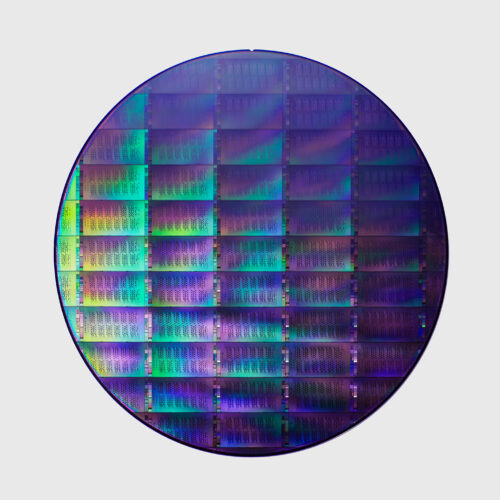
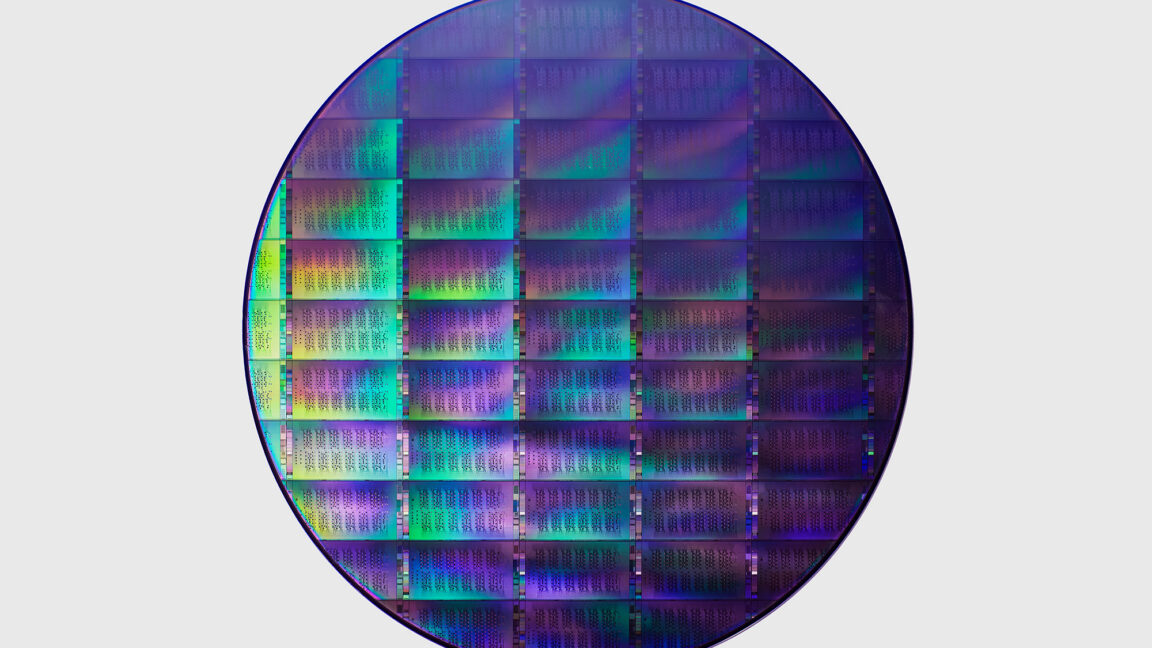
O investimento de cinco anos vai financiar investigação, fabrico, aquisições e parcerias, com o objetivo de entregar o IBM Quantum Starling em 2029 e, mais tarde, o Blue Jay, que será capaz de realizar mil milhões de operações quânticas em 2.000 qubits.
In the relentless quest to harness the extraordinary power of quantum computing, one of the most daunting obstacles has been the fragile and elusive nature of quantum information. This information is so delicate that the very act of measuring or observing it can disrupt or erase the data entirely, undermining the computational process. A groundbreaking study led by engineers at UNSW Sydney has introduced an innovative approach to quantum measurement that significantly reduces error rates while preserving the integrity of the quantum states involved. This advancement, echoing the metaphor of Schrödinger’s cat, marks an important milestone towards feasible, large-scale quantum computation.
Imagine a scenario where a cat is hiding inside one of eight identical boxes within a dark, noisy room. The challenge: to determine the exact location of the cat without entering the room or disturbing the creature, as opening the door risks harm. This metaphor, long used to illustrate the paradoxical nature of quantum mechanics, serves as an analogy for the challenge in quantum computing: detecting errors—akin to finding the cat’s position—without collapsing the delicate superpositions that encode quantum information. UNSW researchers ingeniously applied this analogy to real quantum systems, providing a novel solution to error correction without destructive measurements.
Their quantum ‘cat’ is an antimony atom’s nucleus embedded within a silicon chip, possessing eight distinct quantum states. This multiplicity of states allows the encoding of more complex quantum information and provides an avenue for error detection and correction. However, conventional error correction strategies typically rely on repeated measurements, which, although intended to improve reliability, paradoxically increase the risk of state disturbance, akin to repeatedly spraying water on boxes and possibly frightening the cat into a different hiding place.
The heart of the UNSW team’s strategy lies in a refined adaptive measurement protocol that fundamentally shifts how quantum states are interrogated. Instead of sequentially checking each possible quantum state with repeated measurements, their method judiciously stops at the first significant indicator—analogous to the first ‘meow’ heard from a box—then turns its focus to verifying the absence of signals from other states. This subtle inversion relies on deriving confidence not only from the presence of responses but crucially from the consistent silence of alternative states, a form of negative confirmation that meaningfully refines measurement fidelity while drastically limiting quantum disruptions.
In practical terms, the ‘sprinkler’ in this setup is represented by the controlled loading and unloading of an electron onto the antimony nucleus. This electron’s presence is conditional on the quantum state of the nuclear spin, with the critical caveat that such transitions are not benign; they risk ‘jostling’ the nuclear spin into an erroneous state. The adaptive protocol cleverly designs the experiment such that electron removal from the atom happens only once, minimizing disturbance. Subsequent validation steps require interrogating only empty states, which significantly reduces cumulative noise and error propagation.
The results speak volumes: this method cuts measurement error probabilities substantially—more than halving error rates—while also reducing total measurement time to about a third of prior methods. This leap is not merely incremental but transformative, pushing the system’s measurement fidelity to an impressive 99.61%. Such a degree of precision is imperative to achieving practical quantum error correction, which underpins the resilience of quantum computations against decoherence and other quantum noise factors.
This quantum advance isn’t just an abstract enhancement; it directly addresses the decisive hurdle in scaling quantum technologies for real-world applications. Whether simulating complex molecular reactions for drug discovery, optimizing elusive financial models, or enhancing machine learning architectures, quantum computing fundamentally depends on maintaining high-fidelity qubit operations and error management. This breakthrough measurement technique makes strides in that direction by enabling ‘mid-circuit’ measurements—observations performed while computations proceed—without compromising fragile quantum data.
The elegance of the UNSW approach further lies in its potential universality. Given that many quantum computing platforms, spanning semiconductor qubits, atomic array architectures, and photonic systems, grapple with similar measurement-induced errors, this adaptive readout protocol offers a broadly applicable solution. The capacity to transpose this method onto diverse systems maximizes its impact, suggesting a near-term upgrade pathway for improving quantum measurement fidelity across the field.
Furthermore, while the academic rigor behind this study is remarkable, the conceptual clarity gained from the Schrödinger’s cat metaphor provides a compelling framework for communicating complex quantum ideas to broader audiences. By translating abstractions into relatable narratives, the UNSW team not only clarifies their own work but also bridges the gap between esoteric quantum physics and accessible scientific discourse—essential for garnering public support and interdisciplinary collaboration.
This discovery underscores the symbiotic relationship between theory, experiment, and innovative engineering in the realm of quantum computing. It highlights how abstract quantum laws, when paired with cutting-edge hardware control and adaptive algorithms, can transcend previous technological limitations. As Principal Investigator Andrea Morello articulates, the fundamental challenge involves detecting errors without ‘scaring the cat’, preserving quantum superpositions long enough to leverage their computational promises.
Behind the scenes, the effective implementation relied on high-speed hardware such as field-programmable gate arrays (FPGAs) to perform real-time adaptive sampling and data inference. By rapidly adjusting measurement strategies based on immediate feedback, the system dynamically tailors its observations to maximize information extraction while minimizing invasiveness. This hardware-software synergy exemplifies the next generation of quantum control methodologies poised to accelerate the field further.
In summary, the UNSW team’s adaptive measurement protocol significantly advances the capability to perform nondestructive quantum state readouts. By creatively embracing the nature of quantum measurement’s paradoxical challenges rather than fighting against them, this method paves the way toward more reliable, scalable, and practical quantum computing systems. It underscores a hopeful trajectory where quantum information can be harnessed robustly, fueling advancements across science and technology that were once thought out of reach.
Subject of Research: Quantum measurement and error correction in silicon-based qubits Article Title: Maximizing the Nondemolition Nature of a Quantum Measurement Via an Adaptive Readout Protocol Web References: DOI: 10.1103/jtn1-wzyl Image Credits: UNSW Sydney Keywords: Quantum measurement, Quantum error correction, Quantum computing, Schrödinger’s cat, Silicon qubits, Adaptive measurement, Quantum fidelity, Quantum state readout
The US government will take equity stakes worth a total of $2 billion in a slew of quantum computing companies, including a startup backed by a firm with links to the Trump family and one taken public by a Pentagon official.
The announcement by the commerce department that it had signed letters of intent with nine companies—including GlobalFoundries and IBM—sent shares in quantum specialists soaring on Thursday.
Both IBM, which is set to get $1 billion, and GlobalFoundries, which will receive $375 million, were up more than 6 percent in pre-market trading. D-Wave Quantum, an awardee that was taken public in 2022 by Emil Michael—now a top Pentagon official—was up more than 20 percent.
Celebrity gossip might break the Internet, but not in the way that quantum computers could. “The advent of quantum computers poses a critical threat, as they could break widely deployed encryption schemes,” warns Lily Chen, a cryptography expert from the US National Institute of Standards and Technology (NIST). Systems at risk include banking encryption, digital signatures, secure messaging, secure shell tunnelling, cryptocurrency and more.
Today’s quantum computers are still too small and error-prone to defeat gold-standard encryption. However, new results from Google Quantum AI and start-up Oratomic suggest that could change, with two widely used cryptographic systems – elliptic curve cryptography (ECC) and the Rivest-Shamir-Adleman (RSA) algorithm – potentially coming under threat sooner than many scientists predicted.
Space–time trade-off
At present, anyone who wants to access encrypted information needs a secret digital key. To obtain this key, an attacker must first solve a difficult mathematics problem. For example, breaking the RSA algorithm boils down to factoring a large number into its prime components. Breaking ECC involves finding a secret number that connects two points on an elliptic curve.
Classical computers might take billions of years to solve these problems. But if an attacker had access to a powerful enough quantum computer, they could solve the problems in mere minutes using an algorithm devised by Peter Shor in 1994.
Several years ago, experts estimated that cracking a typical RSA scheme with 2048-bit keys (RSA-2048) would require tens of millions of physical quantum bits (qubits), which are the building blocks of quantum computers. A year ago, this value dropped to a million. By February 2026 it was down to 100,000. The latest results from California-based Oratomic push the floor even lower, to 10,000 physical qubits. The largest neutral-atom qubit array – realized last year in the lab of Oratomic co-founder Manuel Endres – stands at 6100 qubits. This makes the benchmark of 10,000 feel alarmingly close, though Endres’ array hasn’t yet been used for computation.
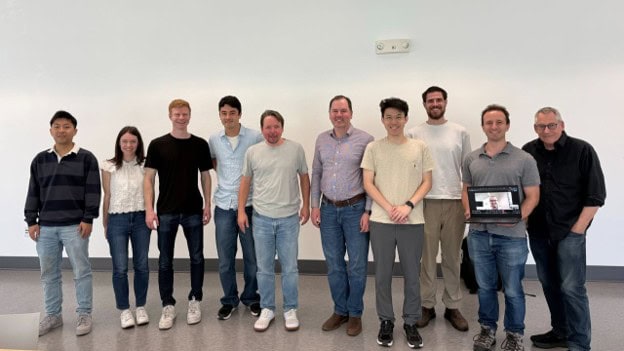
The team: Employees at Oratomic, a new neutral-atom quantum computing start-up. (Courtesy: Oratomic)
There are, however, trade-offs. Quantum computers that use fewer qubits or more space-efficient hardware generally have longer computation times. Oratomic’s proposed 10,000-qubit platform would require three years to crack ECC with 256-bit keys (ECC-256) and 120 years to crack RSA-2048. The company’s predicted time-efficient alternative could solve ECC-256 in 10 days, but that would require 26,000 qubits. Solving RSA-2048 in 97 days would take 100,000 qubits.
Oratomic’s numbers have not yet been peer-reviewed, and outside experts say they depend on different assumptions about future hardware developments. “The space-efficient [architecture] is mostly based on assuming aspects that have been demonstrated to work individually in state-of-the-art academic labs,” explains Maria Violaris, a quantum physicist at Oxford Quantum Circuits, who was not involved in the research. “Meanwhile, the time-efficient one relies on more speculative assumptions that need future innovation.”
A second perspective
On the same day as the Oratomic team posted its findings on the arXiv preprint server, researchers at Google Quantum AI released a white paper with their own updated resource estimates. They report that a computer with 500,000 physical qubits made from superconducting circuits could solve ECC-256 in 18 minutes – and potentially even less (see box). Google’s current state-of-the-art processor, Willow, has 105 physical qubits. However, the researchers warn against assuming gradual and predictable progress because quantum computing developments are driven by overcoming scaling barriers rather than by steady increases in processor size.
The quantum threat to cryptocurrencies
Elliptic curve cryptography (ECC) underpins the security of most blockchain networks, including Bitcoin and Ethereum. Bitcoin transactions take an average of 10 minutes, so if a quantum computer can crack ECC and determine the secret key during that window, the transaction could be intercepted and funds stolen in real time.
While Google Quantum AI’s results predict that it would take 18 minutes to solve ECC on a 500,000-qubit quantum computer, they argue that the run time could be effectively shortened in some circumstances. To understand how, imagine planning a heist in which you need to open a safe. Although you won’t know the exact combination until you get your hands on the safe, if you know the model number in advance, you can prepare some tools to help you crack it faster.
A quantum computer could do something similar. According to the Google Quantum AI researchers, half the ECC algorithm only depends on the elliptic curve and not on the specific transaction. A quantum computer could precompute this half, wait in a primed state until a Bitcoin transaction begins, then quickly solve the second half in only nine minutes, dropping below the 10-minute threshold.
Quantum computing platforms that use superconducting, silicon, and photonic qubits are well-positioned for real-time attacks because they tend to compute faster than neutral-atom and ion-based computers. However, the latter could still pose a serious risk through “at-rest” attacks. Such attacks involve adversaries collecting archived and publicly available data, then decrypting it later with few time constraints.
Which threat arrives first will depend on how different quantum computing architectures mature and scale, a path still marked with considerable uncertainty. “Ultimately, feasibility is difficult to say as it depends on how challenging it will be to increase scale or to take a novel approach by engineering [new] hardware,” notes Maria Violaris of Oxford Quantum Circuits.
The high number of physical qubits required for quantum computation comes from the need to detect and correct errors. Google Quantum AI’s estimate is based on a well-known error-correction method known as the surface code. In this approach, physical qubits are arranged in a rectangular grid and interact with their nearest neighbours. Quantum information is spread redundantly across this grid, allowing errors on one physical qubit to be found and fixed. The entire grid is considered one logical qubit, and the ratio of logical to physical qubits is called the encoding rate.
In the surface code, reducing error amounts to adding more physical qubits per logical qubit, and typical encoding rates range from a few hundred to a few thousand. In contrast, the Oratomic team based its estimates on a newer method of error correction called quantum Low-Density-Parity-Check (qLDPC), which reduces error more efficiently by making the physical qubits interact over large distances. Hengyun (Harry) Zhou, a physicist at the Massachusetts Institute of Technology in the US who was not involved in the research, explains that this longer-range connectivity can significantly increase the encoding rate. For qLDPC codes, a typical rate is around 1 to 10, but rates can now go as high as 1 to 2.
Because neutral atoms are highly reconfigurable, neutral atom platforms like those used by Oratomic (and other companies, including QuEra Computing, Infleqtion, Pasqal, planqc and Atom Computing) are naturally suited to the required long-range connectivity that qLDPC codes require. However, Zhou argues that it’s “not completely out of the question” that superconducting qubit platforms could use these codes too. “There is some additional cost that the lack of reconfigurability in those platforms currently leads to, but I would say if we’re thinking about a beyond-10-year timescale, it’s quite imaginable that things could also change for other platforms as well,” he says.
Responsible disclosure
Google Quantum AI’s white paper may represent a turning point in another respect. Rather than being open about their circuit designs, its authors hid them behind a “zero-knowledge proof”, which provided enough information to verify claims while hiding details that they say could provide bad actors with an “instruction manual”.
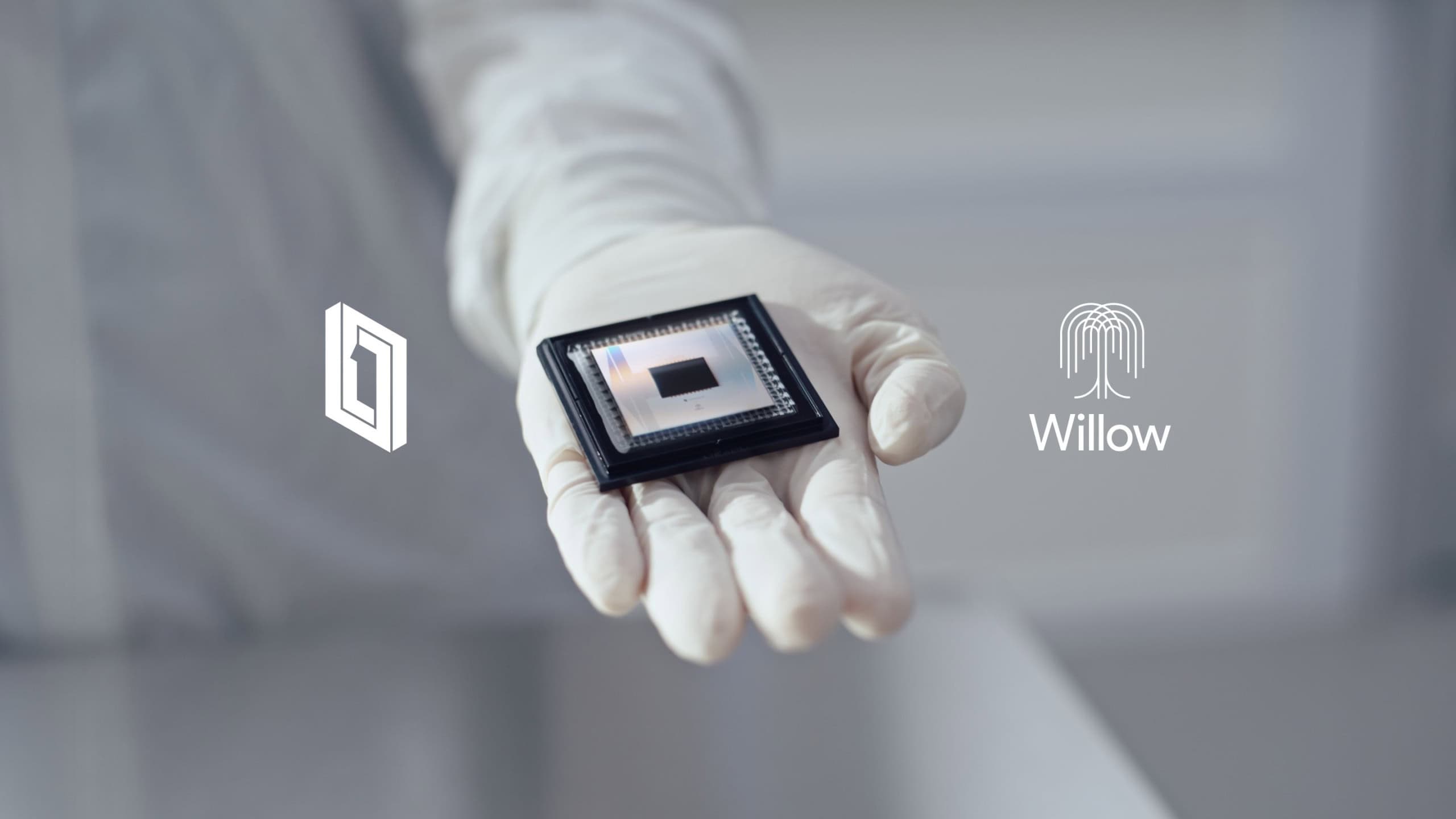
Superconducting quantum computing: Google Quantum AI’s Willow processing chip. (Courtesy: Google Quantum AI)
This is a relatively novel approach within the quantum computing community, which has thus far followed the conventional academic practice of publishing results with full transparency. A Google blog post expresses hope that “our approach to responsible disclosure can spur an important conversation among quantum computing researchers and the broader public”.
Certainly, it has already spurred a conversation among experts. “This is the first time I’ve ever seen a new mathematical result actually announced that way,” Scott Aaronson, a quantum physicist at the University of Texas at Austin, US, wrote on his blog. “I’m not sure how much it will actually help, as once other groups know that a smaller circuit exists, it might be only a short time until they’re able to find it as well.”
Zhou echoes this sentiment. “These are the kind of results that could potentially have a lot of general societal safety implications, so you want to make sure that they’re safeguarded responsibly,” he observes. “That being said, I think it is also possible that other people, now that they know what is possible, might come up with related constructions.”
What comes next?
In the long run, protecting against threats likely means migrating away from RSA and ECC and towards new mathematical problems that are difficult for both classical and quantum computers to solve. Google recently introduced 2029 as an internal deadline for migrating major system to so-called post-quantum cryptography (PQC), and many experts believe the migration ought to begin now.
“Migrating to PQC is a massive undertaking that won’t happen overnight. Starting migration today is a necessary risk management strategy,” urges Chen from NIST. She notes that NIST has been instrumental in guiding this migration, beginning with its 2016 call for cryptography experts to design and evaluate new algorithms for PQC, and culminating in its publication of the three most promising ones in 2024.
The Google Quantum AI researchers also outline recommendations to help cryptocurrency communities and policymakers prepare for the PQC era. And while urgency permeates their white paper, ongoing PQC efforts prompted them to end it on a positive note. “These trailblazing projects demonstrate that transition to post-quantum cryptography is realistic and instil hope that it will have been completed before the first [cryptographically relevant quantum computers] come online,” they write.
Last week, the US government announced $2 billion in investments in quantum computing companies, allocating $100 million each to a range of startups in exchange for equity in the companies. Those could be make-or-break investments for many companies that are likely years away from a product that could see widespread use. But a member of the US Congress is now arguing that those deals are illegal, as Congress did not allocate the money for this purpose—instead, it was meant to support public research in semiconductors.
But the biggest chunk of money would go to a company that likely wouldn't exist if it weren't for the government's backing. Anderon will be set up with a billion dollars each from IBM and the government and will inherit personnel and IP from IBM. It will serve as a foundry for fabricating quantum processing units and will contract its services out to IBM and any other company that wants access to cutting-edge hardware.
Is any of this legal?
Zoe Lofgren (D–Calif.), the ranking member of the House Science, Space, and Technology Committee, made it clear that she is not happy with how the government is using its money to support this technology.
The US government will take equity stakes worth a total of $2 billion in a slew of quantum computing companies, including a startup backed by a firm with links to the Trump family and one taken public by a Pentagon official.
The announcement by the commerce department that it had signed letters of intent with nine companies—including GlobalFoundries and IBM—sent shares in quantum specialists soaring on Thursday.
Both IBM, which is set to get $1 billion, and GlobalFoundries, which will receive $375 million, were up more than 6 percent in pre-market trading. D-Wave Quantum, an awardee that was taken public in 2022 by Emil Michael—now a top Pentagon official—was up more than 20 percent.
The US government will take equity stakes worth a total of $2 billion in a slew of quantum computing companies, including a startup backed by a firm with links to the Trump family and one taken public by a Pentagon official.
The announcement by the commerce department that it had signed letters of intent with nine companies—including GlobalFoundries and IBM—sent shares in quantum specialists soaring on Thursday.
Both IBM, which is set to get $1 billion, and GlobalFoundries, which will receive $375 million, were up more than 6 percent in pre-market trading. D-Wave Quantum, an awardee that was taken public in 2022 by Emil Michael—now a top Pentagon official—was up more than 20 percent.
A new study shows that one of quantum mechanics’ strangest properties may be the secret ingredient that makes powerful quantum computers possible. According to research by physicists at A*STAR and the National University of Singapore (NUS), this property, known as contextuality, plays a central role in error-correcting codes – the mathematical tools that protect quantum information from noise. The finding suggests that quantum weirdness is not just an exotic curiosity. Instead, it’s baked into the very structure of the codes that keep quantum computers alive.
The tiniest disturbance – a stray vibration, a fluctuation in temperature – can corrupt the information that quantum computers process. To deal with this, physicists use quantum error correction: a clever strategy that spreads information across many physical quantum bits (qubits) and continuously checks them for faults, without directly reading the data they encode. But there’s a catch. Even a perfectly error-corrected quantum computer isn’t automatically powerful. To run any quantum algorithm you could ever want – what physicists call being “universal” – you need to perform a complete set of operations on your qubits, known as gates. These are the quantum equivalent of the logical operations that underpin classical computing.
It would be nice if we could accomplish this with gates that act independently on each physical qubit, as this would prevent errors from spreading between qubits. Unfortunately, a fundamental theorem called the Eastin-Knill theorem states that no single error-correcting code can implement a universal set of gates using only this type of gates, which are known as transversal gates.
The standard workaround is to use two complementary codes and switch between them, with each one supplying the transversal gates the other cannot. This strategy is called code-switching, and physicists regard it as one of the most promising routes towards truly capable quantum hardware.
For years, though, a basic question lingered: what allows code-switching to work? What resource makes universal fault-tolerant quantum computation possible in the first place?
A quantum resource hiding in plain sight
A new PRX Quantum paper by Kishor Bharti and colleagues at NUS and A*STAR points to a surprising answer: quantum contextuality. This is one of those quantum properties that sounds philosophical but has very real consequences. In everyday life, measuring something – say, the temperature of a room – gives you the same answer regardless of what else you measure at the same time. In contrast, the outcome of a quantum measurement can depend on the context – that is, on which other measurements you perform alongside it.
To make this more concrete, imagine you have two qubits. Some pairs of measurements you can perform on these qubits are incompatible. In mathematical terms, they do not commute with each other, and you cannot perform them simultaneously without one disturbing the other. Position and momentum are good examples: Heisenberg’s uncertainty principle states that they cannot be measured simultaneously at arbitrarily high precision. On the other hand, measuring the spin of qubit 1 along the x-axis and the spin of qubit 2 along the z-axis at the same time is perfectly allowed: these variables commute, so these measurements are compatible.
But here’s the really strange part: the statistics of what you observe for qubit 1 can depend on which measurement you choose to perform on qubit 2, even when the measurements are compatible. This isn’t a matter of ignorance or experimental imprecision. It is a provable, fundamental feature of quantum theory with no counterpart in classical physics, one that was made rigorous by the mathematicians Simon B Kochen and Ernst Specker in 1967 as a generalization of the more famous notion of quantum nonlocality articulated by John Bell.
Contextuality was already known to play a role in specific quantum computing tasks. In particular, it is important for a technique called magic state distillation, which is used to boost the power of fault-tolerant hardware. But the latest work goes much further. It shows that contextuality is not just a useful tool you can optionally invoke. Instead, it is a built-in feature of any error-correcting code capable of supporting universal computation.
A clean threshold with big consequences
Bharti and colleagues studied a broad family of error-correcting codes known as subsystem stabilizer codes, which use a mix of commuting and non-commuting measurements. They found a remarkably clean result: one of these codes is contextual if and only if it has at least two so-called gauge qubits, which are extra degrees of freedom that arise from those non-commuting measurements. Below that, the code’s measurement statistics can always be explained classically. Above it, quantum weirdness is irreducible.
When this criterion is applied to code-switching protocols, the finding becomes even more striking. Every major protocol known to achieve universal quantum computation – including well-studied examples like switching between the Steane code and the Reed-Muller code – sits above this threshold. As team member Andrew Tanggara explains: “We show that a large family of code-switching protocols must necessarily use a contextual subsystem code.” The mathematics suggests this is no coincidence: universality and contextuality appear to be inseparable.
A new lens for quantum hardware design
The team’s result means that contextuality now joins entanglement as a fundamental resource that error-correcting codes possess to enable universal computation. This gives quantum engineers and theorists a powerful new diagnostic tool. If a proposed code architecture turns out to be non-contextual, no amount of clever engineering will make it universal through code-switching alone. Contextuality is not a nice-to-have – it is a prerequisite.
The new findings also deepen our understanding of why quantum computers can do things classical ones cannot. It is not simply because qubits can be in superposition, or because they can be entangled. It is because quantum systems are contextual – and that contextuality, it turns out, is precisely what gets encoded into the structure of the most powerful error-correcting codes we know how to build.

 Login
Login