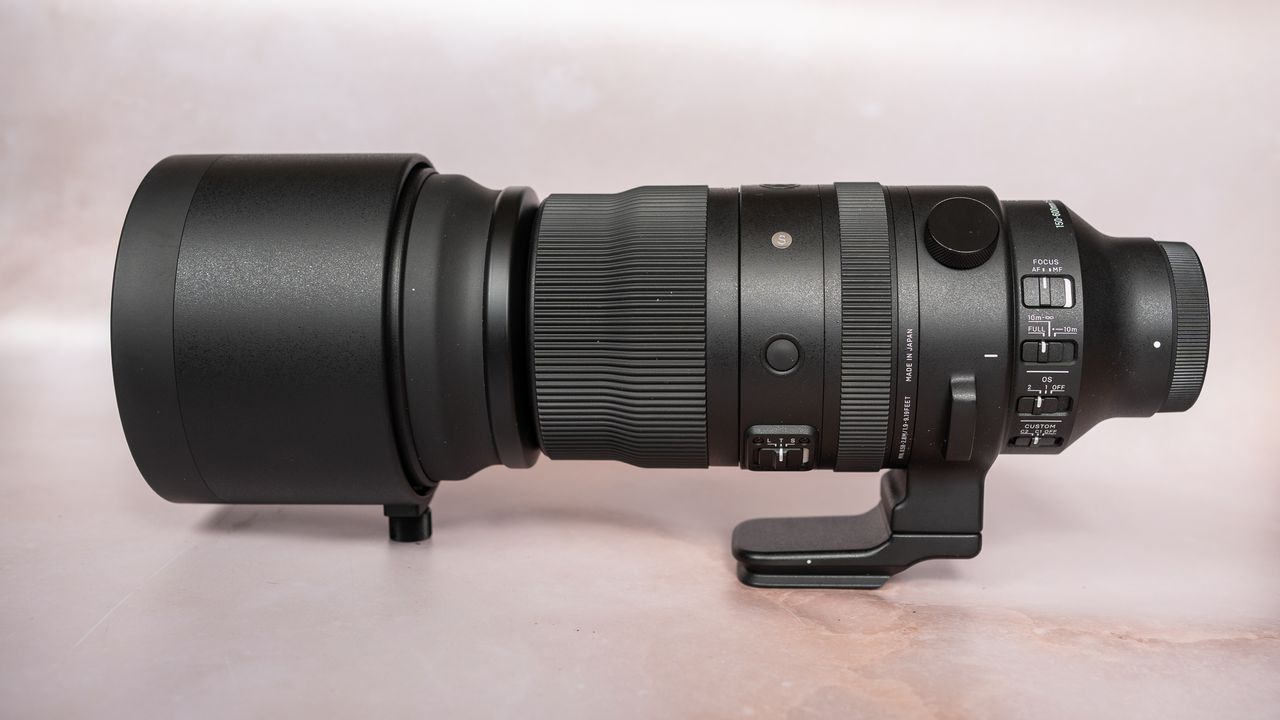
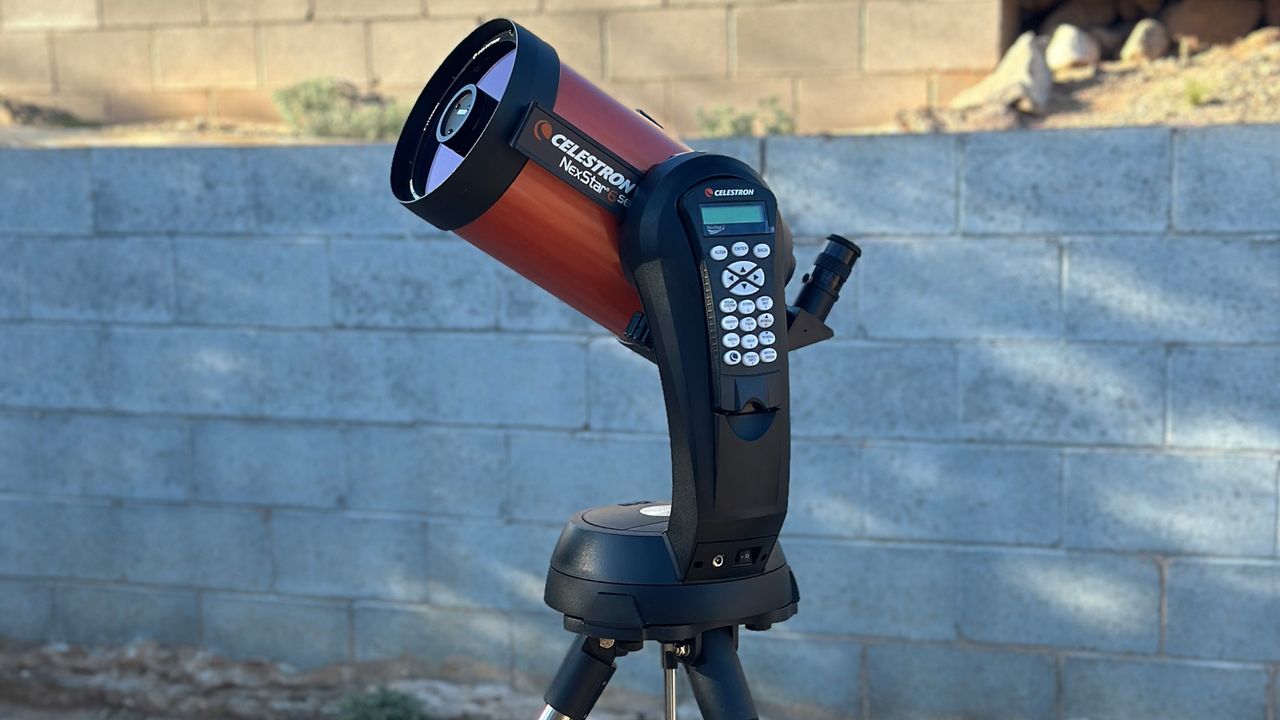
Get the legendary Celestron NexStar 8SE telescope at its lowest price of the year in this early Amazon Prime Day deal
In a breakthrough that promises to revolutionize the fields of optics and wireless technologies, researchers Xu and Rahmani have introduced an innovative methodology for all-optical and wireless image processing using metasurfaces. This development, presented in their 2026 publication in Light: Science & Applications, unveils the transformative potential of meta-operators—compact, engineered surfaces that manipulate electromagnetic waves with unprecedented precision. By leveraging these ultrathin metasurfaces, the team demonstrated a paradigm shift away from conventional electronic image processing, opening doors to faster, more efficient, and inherently parallel processing systems that can operate at the speed of light.
At the core of this innovation is the concept of metasurfaces, which are artificially structured interfaces composed of subwavelength-scale elements that control wavefronts of light or other electromagnetic signals. Unlike traditional optical components that rely on bulk materials and gradual changes in refractive index, metasurfaces achieve complex wave manipulations via abrupt phase, amplitude, and polarization shifts imposed on impinging waves. Xu and Rahmani’s meta-operators harness these capabilities to perform core image processing tasks, including filtering, edge detection, and spatial frequency analysis—all executed in real time without electronic conversions.
The researchers engineered these metasurfaces with precise nanoscale patterns that implement mathematical operators fundamental to image processing directly in the optical domain. This approach exploits the inherently parallel nature of light propagation, allowing entire two-dimensional images to be processed simultaneously. Not only does this dramatically accelerate processing speeds, but it also reduces the energy consumption and hardware complexity associated with electronic processors. These meta-operators represent a leap forward in green photonics, pushing the envelope for sustainable and high-throughput information processing systems.
Moreover, Xu and Rahmani’s meta-operators are not confined to traditional optical setups. Their design enables wireless image processing, wherein electromagnetic signals are modulated and processed in free space by metasurfaces without the need for wired connections or bulky lenses. This could pave the way for novel wireless imaging applications in various domains, including remote sensing, health diagnostics, and augmented reality. Imagine wearable devices or drones capable of on-the-fly image enhancement and interpretation through invisible metasurface layers, transforming raw capture into actionable data instantaneously.
The theoretical underpinnings of this advancement rest on carefully mapping integral calculus operations onto wavefront transformations enabled by metasurfaces. For example, differentiation and integration operators, commonly used in edge detection and feature extraction, are implemented by designing phase gradients and amplitude masks that mold the incident wave’s spatial profile. Xu and Rahmani utilized a combination of inverse design algorithms and deep learning techniques to optimize meta-atom configurations that realize these operators with minimal signal loss and maximal processing fidelity.
Experimental demonstrations highlighted the remarkable versatility of the meta-operators. In one setup, a metasurface was programmed to perform real-time edge enhancement of input images projected onto it. The processed output, captured via a simple optical detector, showcased sharpness and contrast improvements after one pass through the metasurface—a feat traditionally requiring multiple electronic processing steps. These experimental results validate the massive potential of integrating meta-operators into compact and portable optical devices, which could redefine fields from computer vision to medical imaging diagnostics.
Beyond image enhancement, the meta-operators possess the capacity to conduct complex transformations such as Fourier transforms optically. This realization reduces the latency and hardware footprint of frequency domain analyses, vital for signal processing, holography, and adaptive optics. The ability to seamlessly switch metasurface functionalities through dynamic reconfiguration hints at future devices capable of multifunctional image processing without physical replacement, achieved through externally tunable materials or integrated microelectromechanical systems.
The wireless implications of this research are equally profound. Conventional wireless imaging systems typically rely on electronic demodulation and processing. By embedding metasurfaces into transmitters or receivers, image information can be encoded, transformed, and decoded directly in the electromagnetic wave as it propagates through space. This direct wave processing reduces latency, enhances security by intrinsic encoding, and potentially increases bandwidth utilization. These capabilities are particularly significant for next-generation communication systems, including 6G and beyond, where ultrafast and secure data handling is paramount.
Additionally, this research contributes to the ongoing miniaturization and integration trend in photonics, where entire processing pipelines can be condensed into ultrathin flat devices, removing the bulk and fragility of traditional optical elements. The ultracompact form factor of meta-operators enables their seamless integration with existing hardware such as image sensors, cameras, and wireless communication modules. This paves the way for smart, autonomous devices with embedded intelligence for real-time data interpretation without offloading computation to external processors.
The theoretical and practical significance of meta-operators also stimulates exciting opportunities in artificial intelligence and machine vision. Optical pre-processing via metasurfaces can reduce computational loads on AI models by delivering cleaner, feature-enhanced inputs directly at the hardware level. Such synergy between physical computing and AI algorithms could boost performance in autonomous systems, robotics, and advanced surveillance, where rapid, power-efficient decision-making is critical.
The fabrication techniques behind these metasurfaces rely on state-of-the-art nanolithography and material deposition processes, capable of producing highly reproducible meta-atom arrays on scalable substrates. This suggests that the transition from experimental setups to mass production is feasible, accelerating the adoption of meta-operator based image processing in commercial and industrial domains. Furthermore, the use of versatile materials such as phase-change compounds or tunable dielectrics offers pathways towards dynamically reconfigurable metasurfaces adaptable to variable tasks and environments.
Challenges remain in optimizing the efficiency and signal-to-noise ratio of these devices, particularly as image complexity and processing demands grow. However, ongoing advancements in computational design and fabrication precision promise continuous enhancement in meta-operator performance. The integrated combination of optical physics, materials science, and computational algorithms embodied by this work heralds a new era of multifunctional, compact photonic devices tailored for the ever-expanding demands of modern imaging technologies.
Xu and Rahmani’s landmark study underscores metasurfaces’ potential to transcend passive optical components, transforming them into active computational elements. Their work seamlessly merges fundamental wave physics with practical image processing needs, illustrating a vivid vision for future optical systems where computation and transmission coalesce on the same ultrathin platform. This convergence will likely inspire further interdisciplinary research, culminating in innovative devices that redefine how we capture, process, and interpret visual information.
As society increasingly relies on real-time visual data for myriad applications, from autonomous navigation to medical diagnostics, the meta-operator approach offers a game-changing strategy that combines speed, efficiency, and miniaturization. The prospect of all-optical, wireless image processing compels the scientific community and industry alike to reimagine infrastructure, fostering transformative technologies that operate at the fundamental speed of light.
In conclusion, the introduction of meta-operators as demonstrated by Xu and Rahmani marks a significant milestone in photonics and image processing. By harnessing the tailored resonances and wavefront shaping capabilities of metasurfaces, they have unlocked a versatile toolbox for performing key image manipulations without electronics or bulky optics. This pioneering work sets the stage for future smart optical devices that integrate sensing, processing, and communication in a compact, efficient form factor—ushering in a new era of photonic intelligence that will permeate multiple technological landscapes.
Subject of Research:
New meta-operator-based metasurfaces enabling all-optical and wireless image processing techniques.
Article Title:
Meta-operators: all optical and wireless image processing via metasurfaces.
Article References:
Xu, L., Rahmani, M. Meta-operators: all optical and wireless image processing via metasurfaces. Light Sci Appl 15, 264 (2026). https://doi.org/10.1038/s41377-026-02318-1
Image Credits: AI Generated

Scientists report the development of a new experimental system that could lead to a breakthrough resource in quantum optics by successfully generating correlated photon pairs using sunlight.
The new system relies on nature’s most abundant light source as the main driver of a nonlinear optical process known as spontaneous parametric down-conversion (SPDC), which normally requires a laser to “pump” a nonlinear crystal.
The breakthrough achievement was reported in Advanced Photonics.
In the world of quantum optics, the phenomenon of pairs of correlated or entangled photons is an important asset, despite being a seemingly obscure concept for most of us.
Under normal circumstances, optical scientists rely on spontaneous parametric down-conversion (SPDC), a nonlinear optical process in which devices such as coherent lasers are the primary means of “pumping” a nonlinear crystal. Given that they require the kinds of lasers typically found only in top laboratories, the practical use of SPDC is nonviable under normal conditions.
Finding a practical, real-world substitute has long been an intriguing idea, which prompted researchers at Xiamen University in China to determine whether similar processes could be achieved using the most abundant source of light on Earth: sunlight.
This is easier said than done, since sunlight, unlike lasers, is generally unstable due to changes in intensity caused by environmental or atmospheric factors (think clouds, for instance) as well as changes in angle and position that occur naturally throughout the day.
All these factors compromise the precision required for SPDC. Still, the practicality of sunlight, as well as the energy it provides, has continued to make it a potentially feasible alternative that scientists hope might liberate SPDC from its reliance on lab-grade coherent lasers.
If it could be harnessed for such purposes, using sunlight to fuel SPDC would also mean that photon-pair generation could be achieved in remote areas where researchers had never previously considered it possible.
According to the Xiamen University research team, a new experimental system has been developed that uses sunlight as the only pump source for this process, employing a device that tracks the sun, similar to how equatorial mounts allow astronomers to follow the movement of celestial objects as the Earth spins.
The device, according to researchers, harnesses sunlight at the proper angles throughout the day, which is then fed through a length of optical fiber to an indoor lab. From there, the light is used to pump a potassium titanyl phosphate (KTP) nonlinear crystal.
Periodically Poled Potassium Titanyl Phosphate (PPKTP) crystals are a variety of engineered nonlinear optical crystals that researchers use for high-efficiency frequency conversion and other quantum optics applications, especially for creating entangled photon pairs. They work by altering qualities of light that include its color, phase, or frequency by forcing it to pass through a specially engineered component or structure.
While using sunlight as the sole source of illumination for such processes is complex, the team found that its system successfully produced photon pairs that exhibited strong correlations.
Next came the demonstration phase, where the team used the photon pairs generated by their new system to perform “ghost imaging,” a process that uses correlated photons to produce imagery rather than spatial detection.

While conventional laser-based systems can achieve better than 95 percent visibility at comparable pumping power levels, the team’s sunlight-powered technology achieved ghost imaging visibility of 89.7 percent, well within the range of lab-based systems. To further illustrate the system’s use with more detailed spatial structures, the team also used it to produce, appropriately enough, a two-dimensional image of a ghostly face.
Overall, the team says quasi-phase matching in the PPKTP crystal was achievable with the broad spectrum of sunlight, enabling them to generate an abundance of position-correlated photon pairs. Additionally, the team reports that their system yields better signal-to-noise and contrast-to-noise ratios, even given the challenges posed by sunlight variability when used as a primary energy source.
“Our research holds substantial significance as it expands the range of viable illumination sources,” the team writes in their recent study, “including scattered light and nontraditional artificial incoherent light—for imaging applications.”
They add that among the potentially promising uses for their technology, space-based quantum information systems may be particularly beneficial, since the team’s new method “enables operation independent of laser sources.”
The team’s new paper, “Sunlight-excited spontaneous parametric down-conversion for ghost imaging,” appeared in Advanced Photonics on April 24, 2026.
Micah Hanks is the Editor-in-Chief and Co-Founder of The Debrief. A longtime reporter on science, defense, and technology with a focus on space and astronomy, he can be reached at micah@thedebrief.org. Follow him on X @MicahHanks, and at micahhanks.com.
Engineering light transmission through opaque media is possible thanks to the development of a classical wavefront shaping technique first reported in 2007. Researchers have now demonstrated a quantum entanglement-based method that enables selective image transmission through complex disordered materials.
“We discovered that there might be a way to use quantum properties of light to actually help or improve the problem of imaging through scattering media,” explains Hugo Defienne, a quantum optics researcher at the Paris Institute of Nanosciences (CNRS/Sorbonne University).
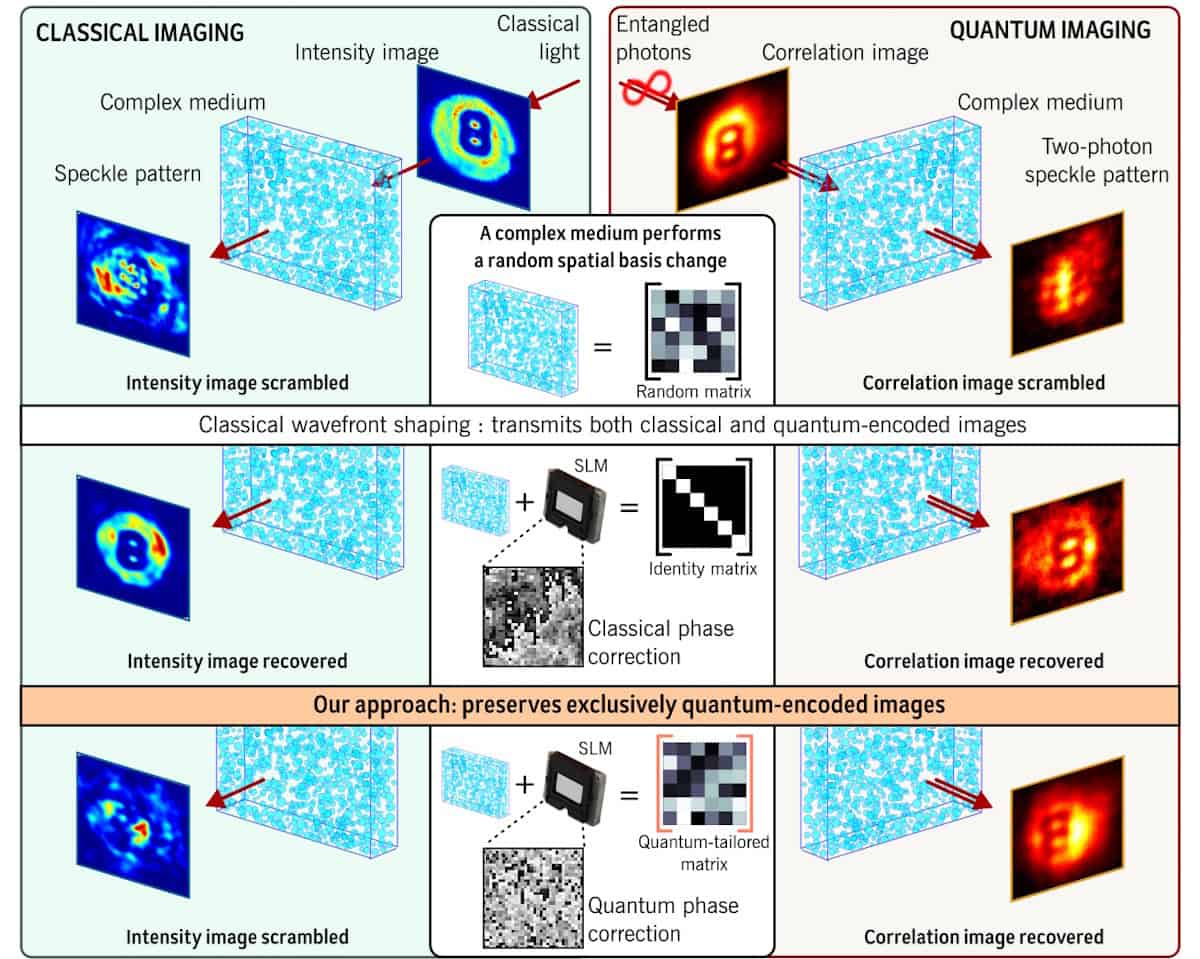
In two new research papers, Defienne and his colleagues show how to leverage quantum correlations to engineer incoming light to overcome the scrambling that occurs when it passes through “opaque” scattering materials. The approach could point towards alternatives to the solution pursued so far for unscrambling such light – and could even provide a route towards secure communications, by rendering channels transparent to entangled photon pairs, while remaining opaque to a classical light.
“These works offer a particularly elegant perspective, showing that for spatially entangled photons, the space of wavefront corrections that can compensate scattering is significantly larger than in the classical case,” comments Yaron Bromberg, head of the Complex Photonics Lab at the Hebrew University of Jerusalem in Israel.
In 2007, Allard Mosk and Ivo Vellekoop, both then at the University of Twente in the Netherlands, reported how measurements of the intensity spatial distribution of light distorted by transmission through an opaque scattering material could be used to control the propagation of light and refocus it at the output, effectively turning the scattering material into a lens.
Building on this, in 2010 Sébastien Popoff and Sylvain Gigan showed that they could identify a transformation matrix between the original beams and the transmitted beams, such that applying the inverse to the initial wavefront using a spatial light modulator would allow the original beams to emerge undistorted. Later developments have applied the technique to quantum light. However, being based on intensities of the transmitted light alone, these have not actually exploited light’s quantum properties.
Defienne was working on both the quantum properties of light and the challenge of unscrambling scattered light signals when he began to mull over how to leverage quantum properties in this feedback approach. “We discovered that when you use quantum light, there are many ways of actually unscrambling the light that do not exist when you use a classical system,” he tells Physics World.
To understand how solutions to the problem multiply for the quantum scenario, it helps to consider a certain type of quantum entanglement that leads to spatially correlated photons. Measure the end point of a photon that’s spatially correlated with another, and the end point of its partner photon will be dictated by the correlation. While scattering media also scramble spatial correlations, a spatial modulator can also invert the scrambling process to retrieve the original spatial correlations.
The quantum bonus comes because whereas with classical light the scattering medium only appears transparent when a one-to-one correspondence between incoming beam and output beam is achieved, there are additional solutions that return an apparently identical spatial correlation distribution between incoming and output entangled photons.
Defienne and his colleagues report the derivations for the quantum approach in Optica. They also demonstrate the approach using a single photon avalanche diode to detect the quantum correlations of light transmitted through a film of paraffin, before feeding it back into a spatial light modulator that adjusts phases to manipulate spatial correlations.

“Conceptually, it’s exactly the same idea,” says Defienne. Nonetheless, almost 20 years on from Mosk and Vellekoop reporting their approach for unscrambling light, this is the first time it has been successfully applied to the quantum properties of light. “It’s just very complex,” Defienne adds. The weak photon pair source, scattering losses in the medium and imperfect detection all pose challenges, such that it can take a long time to have enough data for the required statistics.
“In fact, this is only possible because now we have single-avalanche diode cameras,” says Defienne, noting that these became available with the required sensitivity and frame rate about five years ago. “With any previous camera technology, this is totally impossible.”
Leveraging the quantum properties in this way means that the spatial light modulator unscrambles the quantum correlations while leaving the classical beam still scrambled. The researchers suggest this could serve as a quantum filter that might be useful for blocking nefarious signals intended to muddle transmitted data – by encoding data in quantum correlations it’s possible to block fake data, so long as it is classically encoded. They demonstrate this filtering process in their Nature Physics paper.
“These results mark a significant breakthrough achieved in experimental samples,” says Sushil Mujumdar from the Tata Institute of Fundamental Research in India, who was not directly involved in the current research. Mujumdar has been working on optimizing wavefront shaping algorithms for quantum light, in particular where the incoming photon count is low. He adds: “The logical segue to this work would be the application of these techniques to thicker and realistic media, which, as acknowledged in the paper, become challenging because of drastically low signal photons, characteristic of the quantum domain.”
Indeed, Defienne and his colleagues are already looking into “some new shaping approach that could be better” for quantum correlated photons passing through, for example, a layer of paint instead of paraffin. They are also looking at the potential to leverage the optical nonlinearity of entangled photon optics for quantum reservoir computing.
The post Entangled photons open up potential applications of anti-scattering optics appeared first on Physics World.

Earlier this year a group of researchers led by Sören Arlt of the University of Tübingen set out to stretch the limits of how far artificial intelligence (AI) can contribute to scientific discovery. In work published in Nature Machine Intelligence, they developed a language model capable of generating classes of blueprints for quantum optics setups that produce specific families of quantum states. Their model was able to design several experimental configurations that successfully generated desired, and in some cases previously unknown, constructions within the limits of its training.
Beyond this immediate technical achievement, the implications of this approach are striking. In principle, a researcher could ask a system like this to propose experimental setups for a desired quantum state without spending months or years exploring possible configurations. Such capabilities could accelerate research in areas like quantum computing and quantum communication, where specially engineered quantum states serve as key resources. Although the system still has clear limitations – it cannot always guarantee that the produced state perfectly matches the target and it sometimes fails to find a solution – this study demonstrates that machine learning can already contribute meaningfully to scientific discovery, even in the design of physical experiments.
Earlier attempts had already hinted that AI could assist in designing quantum experiments. In 2016, researchers from Mario Krenn‘s group (in which Arlt is a doctoral student) demonstrated that automated search methods could propose previously unknown quantum optics experiments capable of generating complex entangled states. Since then the field has grown rapidly, with tools such as PyTheus producing candidate experimental designs and revealing physical mechanisms that researchers had not previously recognised.
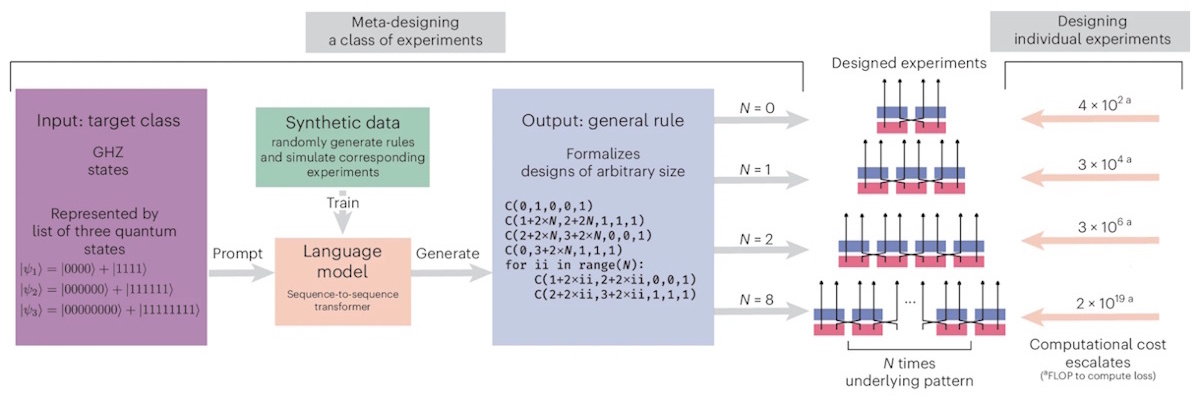
This time, instead of searching directly for a single experimental setup, the researchers trained a transformer-based language model on a dataset linking target quantum states to experimental blueprints. Given a desired state, the model generates Python code describing how to build a corresponding experiment. Based on the same transformer architecture used in modern language models, the system translates a quantum state into a program that constructs it experimentally. This output can be interpreted directly by researchers, allowing them to run the proposed construction and understand the design rules that the model discovered.

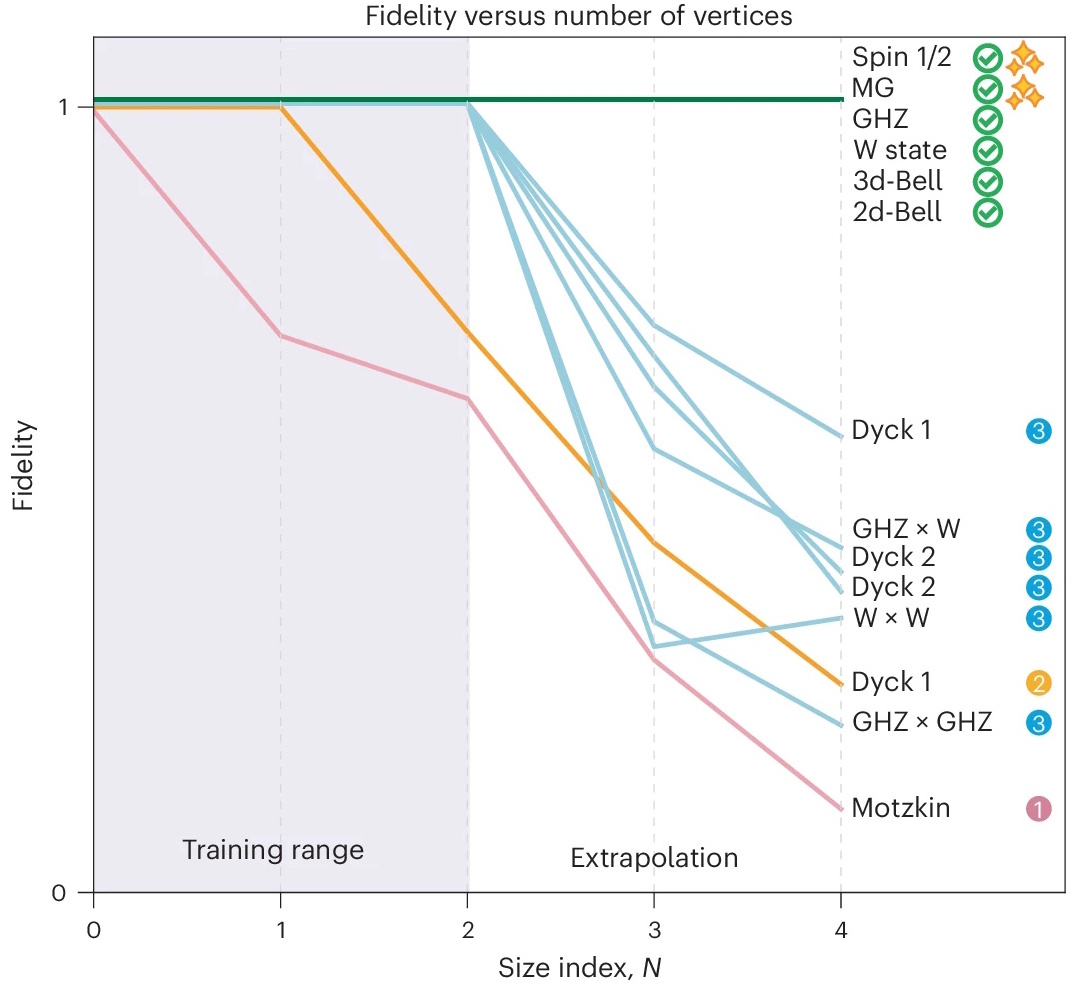
Using this approach, the researchers constructed 20 classes of quantum states of interest, among them well-known entangled states, such as GHZ, W and Bell states, some of which had no known experimental construction rules. Out of these, the system generated valid construction rules for six classes: four corresponded to already known solutions, while two corresponded to genuinely new construction rules for generating particular classes of entangled quantum states.
Rather than discovering entirely new states, the system identified previously unknown ways of assembling optical components that produce states with the required entanglement structure. The team verified these constructions computationally by simulating the resulting quantum states and comparing their fidelity with the target states. Although the experiments have not yet been carried out in the laboratory, the proposed setups provide experimentally testable blueprints.
The practical implications of tools like this are already prompting debate. Some see them as accelerating scientific discovery by exploring vast experimental possibilities, while others raise concerns that increasing automation could sideline experimental intuition. The key advance over previous approaches lies in generalization: rather than producing a single design, the model generates a program capable of constructing experiments for an entire class of states. “Instead of designing a single experiment for one target, this approach generates a general program that produces valid experiments for a whole class of targets,” Arlt explains.
The researchers chose to explore states that are physically relevant across different areas of quantum physics, allowing them to probe entanglement patterns relevant to quantum simulation, communication and computation. In this sense, the system expands the experimental toolbox available to physicists.
In some cases, the system uncovered patterns that the researchers had not previously identified. “We discovered two construction rules that we did not know of before,” Arlt notes. In another case, it generated a different construction rule for a class of states that had already been solved, following a completely different experimental strategy.
Rather than replacing physicists, the authors see AI changing how experiments are conceived. Instead of manually assembling setups, researchers may define the space of possible configurations and allow algorithms to explore it. As Arlt describes it: “instead of thinking about how do I put these components together so my experiment works, we think about what should the space of possible configurations look like so my computer can explore it efficiently”.
Despite the use of machine learning, the system is relatively modest in scale, with roughly 100 million parameters. While this keeps the computational cost manageable, it also constrains the range of experimental sizes and resources that the model can handle. The model also does not verify the correctness of its own outputs, requiring explicit fidelity checks of the generated states.
Looking ahead, the team hopes to extend this approach to other domains of physics and combine it with additional discovery methods.
All in all, tools like this suggest a future in which computers assist not only with simulations, but also with proposing new experiments and uncovering patterns in physical systems. Rather than replacing physicists, such systems may increasingly act as collaborators, helping researchers explore experimental designs that would otherwise remain inaccessible.
The post Meta-design: language models generate novel quantum experiments appeared first on Physics World.
A new integrated photonics platform can perform precision quantum experiments that were previously only possible with multiple table-top lasers and other bulky apparatus. According to its US-based developers, the new chip-scale device could find applications in quantum computing and portable optical clocks based on trapped ions.
Today’s quantum computers and optical clocks depend on a range of equipment that typically includes some combination of lasers, cryogenic coolers, vacuum chambers and optical reference cavities. The last of these can take up more than half the device’s total volume, and they are crucial for stabilizing laser frequencies to the high precision required for controlling the quantum states of trapped ions. Such ions can serve as quantum bits (qubits) in quantum computing and can also be used for precision timekeeping in optical clocks. In the latter case, each clock “tick” is defined by the frequency of the light the ions absorb and emit as they undergo a specific, sub-Hz transition (the so-called “clock transition”) between atomic energy levels.
Researchers led by Daniel Blumenthal of the University of California Santa Barbara (UCSB) and Robert Niffenegger at the University of Massachusetts Amherst have now shown for the first time that these large, stabilized laser systems can be replaced with small photonic chips. They used these chips to prepare and control the quantum state of strontium ions at room temperature as well as driving the clock transition. Though the fidelity of the system is not yet high enough to compete with the best traditionally-constructed devices, Niffenegger describes it as a critical first step for producing next-generation clocks and future quantum computers with millions of qubits. “Reaching such a goal will only be possible with such integrated quantum systems on a chip,” he explains.
Blumenthal, Niffenegger and colleagues used two components to create their chip-based stabilized laser: an integrated Brillouin laser with a wavelength of 674 nm, connected to an integrated 674 nm, 3 m long coil resonator cavity. The team characterized the stability of this laser and coil by measuring the 0.4 Hz quadrupole optical clock transition in strontium-88 (88Sr+) ions trapped at an electrode located on a single surface electrode trap (SET) chip. This transition is one of the most precise used by quantum researchers today, and its narrow linewidth makes it relatively easy to measure using high-resolution trapped ion spectroscopy.
“The fact that these results were achieved with the SET at room temperature is remarkable given the precision of the transition, and is a major step forward in realizing portable versions of this quantum technology,” Blumenthal says.
As well as being smaller than traditional lasers, the chip’s 674-nm Brillouin laser light also removes the need for bulky frequency conversion equipment. A further advantage is its reduced high-frequency noise, which is important for clock acquisition and qubit state preparation fidelity, and which cannot be achieved using standard electronic feedback loops. The coil, for its part, reduces mid- and low-frequency noise, stabilizing the laser’s carrier frequency even further so that it can be locked to the precision sub-Hz trapped-ion clock transition.
According to Niffenegger, this combination of improvements enabled the team to achieve a frequency noise profile and so-called Allen deviation (a measure of stability) of just of 5.3 × 10⁻¹³ – an unprecedented figure for a room-temperature chip. “We can therefore prepare qubit states with high fidelity and interrogate the clock transition, which is essential for quantum computing applications,” he says.
As optical clocks become more portable and robust, they become more feasible for a greater variety of applications. The ultimate goal, says Blumenthal, is to reach a stability range of 10-14 to 10-16, which would allow optical clocks to replace GPS-based navigation on missions to the Moon and Mars. “Such clocks could also help advance fundamental science – for example, by mapping gravity and measuring orbit time around Earth for climate science, detecting gravitational waves and dark matter/energy and for general relativity measurements, to name just a few,” he explains.
Niffenegger says it is now feasible to scale the team’s integrated platform to a grid of 100 or more ions, to further improve performance. He and his colleagues are now working to integrate other experimental components (including the ion trap chip, the optical cavity chip and other photonics) onto a single, full-architecture chip that builds on their current designs. “Preliminary results already show improved performance, with further exciting developments anticipated soon,” they tell Physics World.
The present work is detailed in Nature Communications.
The post Trapped ion quantum technology gets smaller appeared first on Physics World.