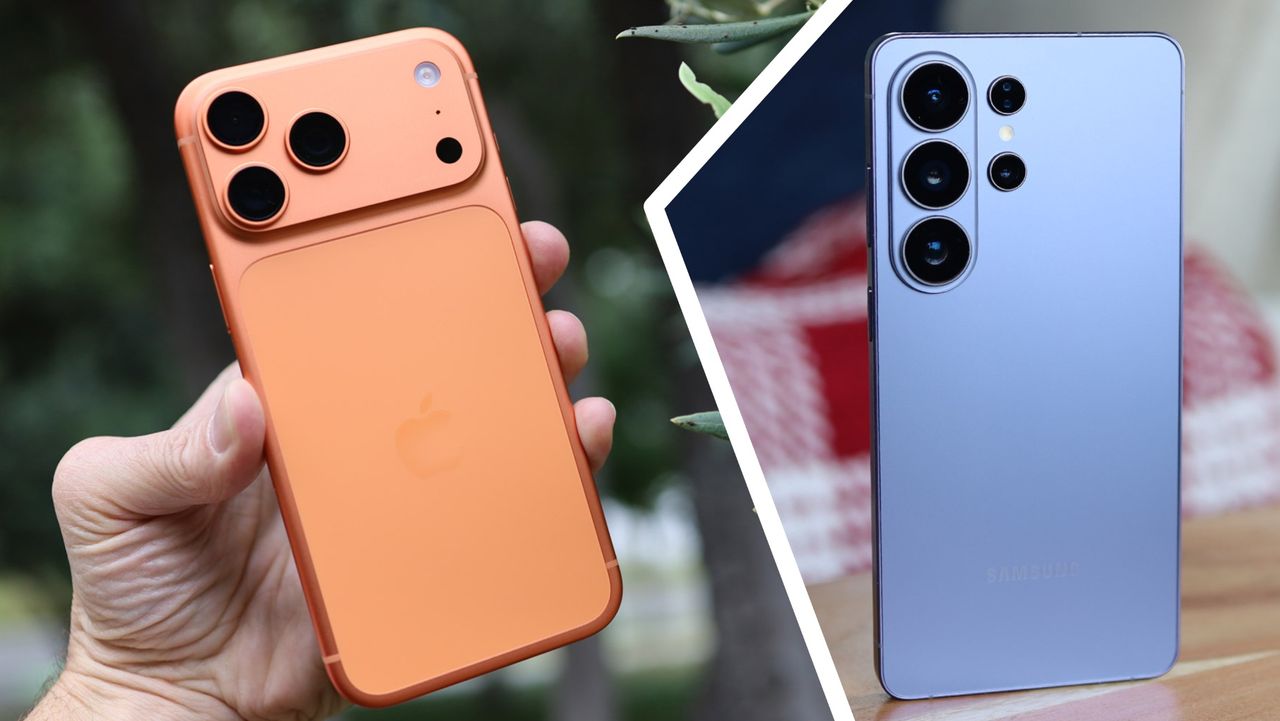
We know how Apple's WWDC keynote usually goes, but Apple can't afford to treat this edition as business as usual. Here are some suggestions for Apple to shake up the format and make a memorable event.
Compact power banks have gotten a lot faster in the past year — and it’s not just their USB-C charging speeds that have received a boost. The newest Qi2.2-certified models can wirelessly charge an iPhone 16 or later at up to 25W. Combine that with their ability to magnetically snap on via MagSafe, and you’ve got yourself an essential add-on that’s easy to take on the go.
Qi2 is a magnetic wireless charging standard that’s based on Apple’s MagSafe tech, so almost all modern iPhones support it. While the latest iPhones offer the fastest charging rates, older models (dating back to the iPhone 12) support 15W Qi2 charging speeds, which is still suitably quick. (The iPhone 17E also maxes out at 15W, and the 16E doesn’t have wireless charging at all.)
On the other hand, Android phones are a mixed bag, with very few models supporting Qi2, let alone Qi2.2. Google’s Pixel 10, 10 Pro, and 10 Pro Fold support Qi2 charging at up to 15W; the 10 Pro XL supports Qi 2.2 at up to 25W. Samsung’s Galaxy 26 lineup is “Qi2 Ready,” which means they can use Qi2 chargers at up to 15W if they have a magnet case. And that’s pretty much it.
We know you want the best, whichever phone you have. Some of you may be willing to pay a lot for it, while others may simply want the best possible model for the least amount of money. Of the seven we tested — which vary in features, design, and charging speed — we landed on two picks that should satisfy most people’s needs.
The Qi2.2 battery with the fastest wireless charging speeds
Dimensions: 2.6 x 4 x 0.6 inches, 196 grams / Wireless charging speed: Qi2.2 25W, Qi2 15W / Wired charging speed: Advertised as 45W, but a bit slower / Passthrough charging: Yes / Ports: One USB-C port / Built-in cable: Yes, non-removable / Advertised battery capacity: 10,000mAh, 36Wh
The Baseus PicoGo AM52 is about as no-frills as power banks come, both in design and features. The all-black battery pack has a sleek aluminum case, with soft-touch silicone on the magnetic side to prevent it from scratching your phone while charging. It can charge devices via Qi2.2 and USB-C simultaneously, but using both requires you to press the power button (and there’s a steep speed penalty as it splits the power).
The AM52 consistently offered the fastest wireless charging speeds of any power bank I tested, and it’s often the most affordable of the bunch. It wirelessly charged an iPhone 17 Pro Max to 65 percent in one hour and the Pixel 10 Pro XL to 50 percent, which is on par with the slightly pricier Sharge Icemag 3. The Iniu SnapGo Air slightly outperformed the AM52 in some wireless tests, but lagged behind in others. Baseus’s model lacks a built-in display — meaning you can’t see the remaining charge — but two of the four LED indicators were still full after an hour of wireless charging, indicating it still had some juice left.
I tested the version with a built-in USB-C cable, which usually retails for $64 at Amazon if you’re a Prime member ($4 more than the cordless version). Sometimes, it drops to $40 or so with a coupon, and in terms of wired charging speeds, it was also among the fastest of the seven batteries I tested. It charged both the iPhone and Pixel to about 90 percent capacity within an hour, though it’s not necessarily hard to find a battery that supports fast wired charging.
The Baseus AM52 advertises a top speed of 45W via USB-C, though it didn’t reach those speeds with any of the devices I tested. It topped out at about 38W while connected to the iPhone 17 Pro Max and 33W while attached to the Pixel 10 Pro XL, both of which advertise higher wired speeds (the Iniu SnapGo Air topped out at 39W). The Baseus also topped out at 39.1W while plugged into my M2 MacBook Air, which isn’t far from its advertised rating, while the Iniu reached 43W. In other words, get the Iniu if you value fast wired speeds and the Baseus if you want fast wireless charging.
The other Qi2.2 batteries I tested
Sharge’s Icemag 3 (39.1Wh) is the coolest battery of the seven that I tested, and it delivers great wireless and wired charging speeds (25W and 30W, respectively). No issues here, but it usually costs a fair amount more than the Baseus or Iniu model.
Iniu’s SnapGo Air (39.2Wh) came close to being our top pick thanks to its fast wired charging, relatively low price, and LED display that shows remaining charge. But its wireless charging performance was inconsistent.
The Qi2 battery with the most power for the least money
I wasn’t expecting one of the best-performing batteries to be the least expensive model I called in. The iWalk PowerHybrid is a 15W Qi2 charger that’s bulkier than our top pick, and honestly, pretty cheap-looking. But I can’t argue with its charging speeds, or the fact that it’s commonly available for about $35 — half the typical cost of the Baseus AM52. The PowerHybrid also includes a USB-C cable fashioned into a lanyard; however, this one is fully detachable, unlike Baseus’s.
The iWalk charged the iPhone 17 Pro Max to 55 percent in an hour via Qi2 wireless charging. It performed similarly to our Qi2.2 pick while charging the Pixel 10 Pro XL, too, delivering 46 percent of the phone’s total charge in an hour (with 59 percent of the power bank’s battery remaining). Yes, that’s slower than the AM52, but ask yourself: Is a 10 percent speed boost worth nearly twice the price? No judgment if your answer is yes, but those shaking their heads are my kind of people.
The PowerHybrid’s wired charging speeds were in line with other models I tested, allowing me to take the iPhone 17 Pro Max and the Pixel 10 Pro XL to 90 percent and 85 percent in an hour, respectively. It also didn’t have any issues reaching its peak 30W charging speeds across multiple devices, which, again, was the case with the AM52.
The iWalk battery has a pretty big quirk, however: It doesn’t automatically turn on when you place a device on its magnetic surface. For Qi2 charging to work, its display (which shows the remaining charge) must be illuminated, which requires you to either press the power button or charge something via its USB-C port. It’s not a big deal, but it might be annoying to some.
The other Qi2 batteries I tested
The Anker MagGo Power Bank (38.5Wh) is hefty and deluxe, with a durable kickstand and a slick display that shows remaining charge and time to charge. But it’s slow considering its high $90 price, managing 15W Qi2 and 27W USB-C charging.
No other battery I tested looks as quirky and futuristic as Aulumu’s M10 (36Wh). It supports Apple Watch charging, plus USB-C charging and Qi2 15W speeds, but it’s costly at $90 and delivers inconsistent wireless charging speeds.
Statik’s SmartCharge Gen 2 (38.5Wh) delivers what a lot of people are likely looking for: a power bank that can plug directly into an outlet, with two built-in USB-C cables, a few ports, not to mention Apple Watch charging. It’s cool and not terribly expensive at $70, but it’s very slow to charge devices.
Photography by Cameron Faulkner / The Verge
A note on efficiency and capacity
Battery packs are convenient, but slower and less efficient than wired power adapters. All the batteries I tested claim 10,000mAh capacity. Milli-Ampere-hours, unlike Watt-hours, depend on battery voltage, so they can be misleading. For example, the Anker MagGo 10K battery I tested is advertised as having 10,000mAh capacity at 3.85V, or 38.5Wh total energy. The Baseus battery I tested is advertised as having 10,000mAh capacity. Fine print on its label reveals that its actual rating is 5,000mAh at 7.2V, or 36Wh. That doesn’t mean it can deliver only half the energy of the Anker; it’s actually only a little bit less. The Watt-hours are what to look for. And none of that has anything to do with the output voltage from the Qi2 charger, anyway.
Wireless charging is also much less efficient than wired. Qi2 is the least bad, but still loses about a quarter of the battery’s energy compared to charging over USB-C. If you want to squeeze the most charge out of your battery, it’s wired all the way. And finally, claimed charging speeds are typically measured in ideal lab conditions; in my tests, charging speeds were rarely as fast as advertised.
Criada por um programador independente depois da sua primeira WWDC em 2019, a Vinyls reproduz a música da sua biblioteca com animações de disco em rotação, estalinhos característicos e até um arranhão se tocar na agulha.
Durante a semana, a Apple realizou uma atualização silenciosa dos valores propostos pelo seu programa Trade In. Todos os modelos iPhone 16 e iPad atuais passaram a valer mais enquanto retoma a novos equipamentos. Mas os smartphones Android desvalorizaram.
Apple has spent billions of dollars to develop satellite connectivity for iPhone; I very much doubt it did so solely to rescue stranded hikers. The company will most certainly have had a bigger prize in its sights when it first began working with GlobalStar (now owned by Amazon).
The most logical reason to invest in satellite coverage for its devices is the most obvious — to provide network infrastructure for new breeds of device and new service models. You don’t acquire access to massive amounts of bandwidth for nothing. And Apple’s steady introduction of new satellite-supported services shows it is interested in introducing these services, even though the offer isn’t extensive enough yet to require iPhone users to pay for access, yet.
The decision not to charge for those satellite services suggests they’re just the thin end of the company’s plans for satellite deployment.
It’s possible the company’s ambitions were limited by GlobalStar’s ability to put satellite constellations in orbit. That work was ongoing last time I looked, and I fully expect existing Apple satellite services will be extended to new nations, even under Amazon’s watch.
Amazon enters the room
Amazon’s recent $11.6 billion acquisition of GlobalStar is interesting. You can see that Apple is now forced to work with its old frenemy, even as both partners already profit from strong, steady Apple hardware sales via the online retailer. So they know they can make money together.
“Apple and Amazon have a long and proven track record of working together through Amazon’s core infrastructure services, and we look forward to building on that collaboration with Amazon Leo,” Greg Joswiak, Apple’s senior vice president of worldwide product marketing, said when the deal was announced. (The transaction isn’t expected to close until next year.)
Making money together is often seen as a strength in business relationships and Amazon has agreed to continue supporting Apple products and to collaborate with Apple on future satellite services.
When it comes to mobile telecoms, Amazon isn’t the only game in town, and neither is Starlink. Cellular operators are inking deals with satellite providers all over the world, all with the intention of bringing network access to those who otherwise can’t get a decent connection.
Just today in the UK, Virgin Media O2 announced plans to switch on the O2 Satellite service for iPhone users tomorrow, enabling customers — particularly in rural areas — to get a satellite connection where traditional cellular coverage is unavailable. It could simply identify new ways to enhance the Find My service.
Orange last year offered its own satellite comms to French customers, while Deutsche Telekom partners with others to provide SMS via satellite in Europe and the US. You’ll find similar alliances in most key territories, including Australia and Japan. The direction of travel exposes an industry embracing satellite as a way to widen existing cellular infrastructure, which makes sense given the relative cost of installing conventional masts in some regions.
Many ways to crack it
There’s speculation Apple could become a satellite carrier, a move that would put it in competition with carrier partners. But Apple doesn’t need to do to provide satellite communication services to iPhone users, nor would it want to relinquish the symbiotically profitable relationships it’s developed with carriers.
It could, for example provide satellite calling as a hardware feature available with every iPhone across all supported carriers, possibly as an additional service that guarantees customers can get a connection, even in the countryside. It could evangelize the service as being “Private by Design,” and supplement this with data over satellite to support apps, particularly agentic AI apps.
Combined with the next wave of AI enhancements Apple is expected to deliver for its systems, the combination of an always-on, resilient, private data connection and AI could prove invaluable to many customers. That’s particularly true for enterprise customers seeking global solutions that respect sovereign data, privacy, data retention policy and managed AI services – especially as terrestrial infrastructure becomes an attack target. Such scenarios will only become more widely understood as 6G emerges, with its built-in support for satellite infrastructure.
What will Apple do?
Will Apple move in that direction, or maintain its focus on the consumer markets? Will it decide that rather than deploying its own part-owned satellite constellations as it was with GlobalStar, it is better to work with carrier partners? Will it wait for 6G with its enhanced, standards-based support for satellite communications?
Those are answers we don’t yet have. But it is quite clear that as satellite communications truly enter the mass market, Apple has put together many of the technical, hardware, software and infrastructure pieces it will need to ensure the iPhone is a peer player in whatever use cases emerge.

 Login
Login