The director defends investment in and use of AI-generated storyboards, saying the immediacy of communicating his vision to cast and crew is ‘creatively freeing’
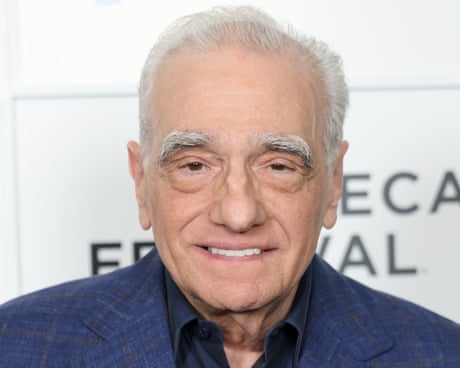
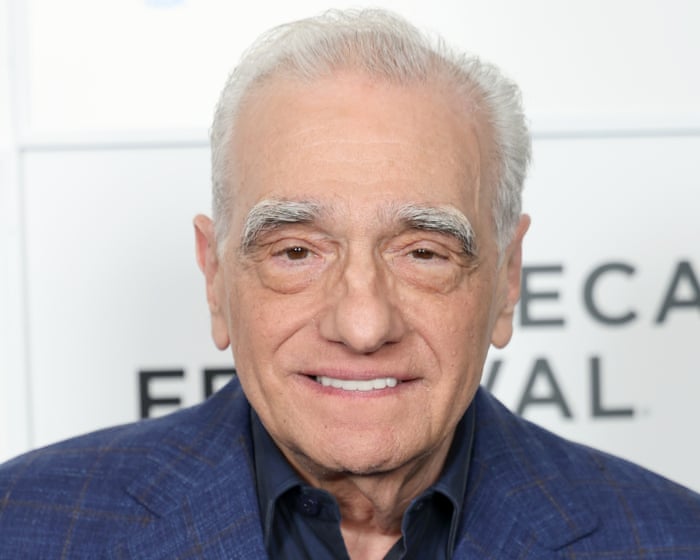
Martin Scorsese’s announcement that he has invested in an AI company and uses the technology to create storyboards has triggered a backlash from fellow members of the film industry.
It should have taken years, but Ash Koosha made a drama about Iran’s anti-government protests in weeks – and now it’s the first AI-made movie to screen at a major film festival. It could transform indie film-making, claims the director
Next week a breakthrough 75-minute drama about the brutal crackdown in Iran on anti-government protesters in January will premiere at the Tribeca film festival in New York. It is called Dreams of Violets and is based on journalism, video footage and eyewitness accounts. “I would say 80% of it is a recreation of events that actually happened,” says its Iranian-British director Ash Koosha. But Dreams of Violets is a work of fiction, not a documentary: a drama following a group of strangers caught up in the protests, who meet by chance in an alleyway. How on earth has Koosha managed to pull together a drama about the killings in less than six months?
The answer, it turns out, is by using artificial intelligence. Every image and character in Dreams of Violets is AI-generated. Koosha says he created the characters by describing their physical appearances, using people he has known in the past as references. It would be too dangerous to base characters on living people in Iran, he says. “Because of the security issue, it would not be safe for the characters to even remotely resemble someone.”
Record-breaking box office for Backrooms and Obsession has opened the door for twentysomething YouTube creators as the industry rethinks what audiences want
At this time last year, the idea of a wide-release feature film-maker cutting their teeth on YouTube was, if not unheard of, certainly still a niche origin story. Siblings Michael and Danny Philippou had just released Bring Her Back, the follow-up to their surprise horror hit Talk to Me, to pretty-good reviews and OK box office; clearly they would continue to work, but the slightly diminished returns didn’t predict a YouTube explosion. Nor did the outright lousiness of Shelby Oaks, from longtime YouTube film critic Chris Stuckmann, when it premiered in theaters later in 2025. Generous horror-festival buzz died down as more people actually laid eyes on the movie; Stuckmann was an obvious enthusiast, and some saw promise in his first effort, but a clumsy found-footage pastiche without much emotional sense didn’t seem like the next big thing, either.
But in 2026, something has shifted. In January, YouTuber Markiplier self-released his adaptation of the video game Iron Lung to theaters, and it outgrossed any number of big-studio titles. Then Curry Barker, whose comedy sketches have been a YouTube fixture, unveiled his feature debut Obsession. The film, made for under a million dollars, has become the box office phenomenon of the summer so far, managing a virtually unheard-of feat when its second and third weekends actually outgrossed its first. Obsession is sharing multiplex space with Backrooms, directed by 20-year-old Kane Parsons, who previously brought the spooky internet meme to life in a series of YouTube shorts. Despite being set in a series of purgatorial, sparsely furnished, fluorescent-lit “liminal spaces”, it was the top movie at the North American box office this weekend, poised to become the biggest-grossing movie from distributor A24 in a matter of days. Backrooms also opened to bigger numbers than any number of starrier or bigger-brand 2026 titles like Wuthering Heights, Scream 7, The Devil Wears Prada 2 or the last Pixar movie. That makes three YouTube-trained film-makers who have presided over some of this year’s biggest and/or most surprising hits. With them have come countless social media posts about how YouTube, not film school, provides the real training tomorrow’s directors need.
The roots of AI in rightwing ideology is examined in Valerie Veatch’s enjoyable doc, including an array of colourful, often crazed, figures
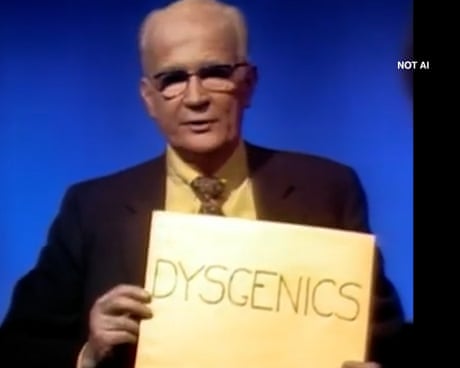
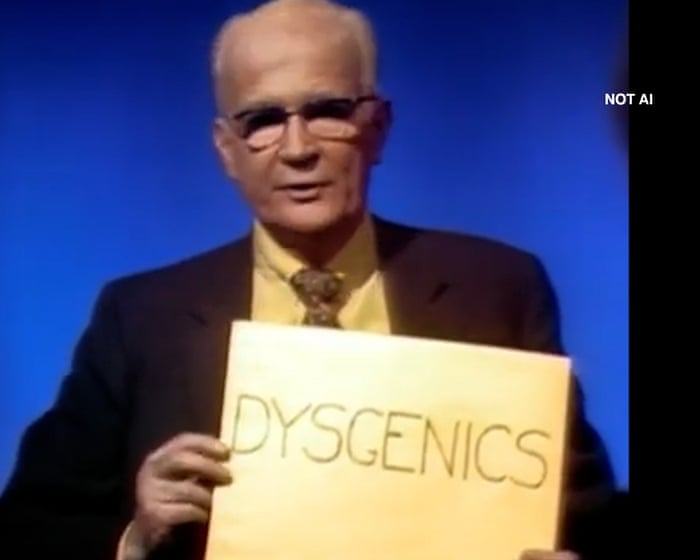
Director Valerie Veatch made her name with documentaries such as Love Child (about an online gaming-addicted couple whose child died of malnutrition) and Me at the Zoo (about American vlogger Cara Cunningham), films that explore the intersection of real-world subcultures and internet communities. Her latest continues in this vein, although its self-set remit is a bit broader, more urgent and germane to everyone right now: the pursuit of artificial intelligence, its dark history in eugenics and highly debatable utility today (despite the stock-market bubble pushing the value of a half-dozen companies towards the stratosphere).
The thrust of the film is largely polemic, guiding the viewer towards AI-sceptical conclusions one persuasive soundbite at a time. Nevertheless, it also serves as a very useful, straightforward primer on AI history, touching on a dazzling array of colourful, often crazed figures, including Victorian British eugenicist Francis Galton, Silicon Valley founding father and overt racist William Shockley and current-day jillionaire jerk Elon Musk. Sadly, the film is not so up-to-date that it covers Musk and former friend-turned-foe Sam Altman’s recent courtroom brawl, but that doesn’t detract from the thrust of Veatch and her interviewees’ arguments.
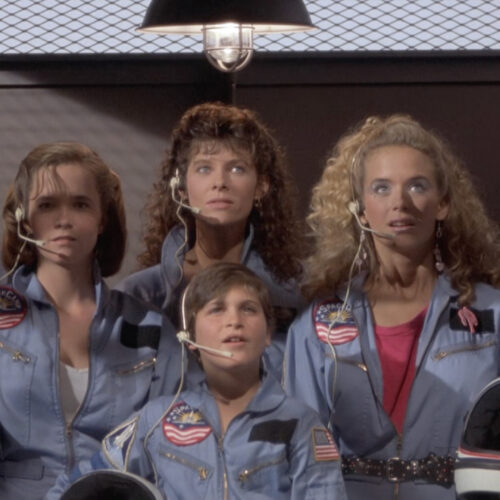
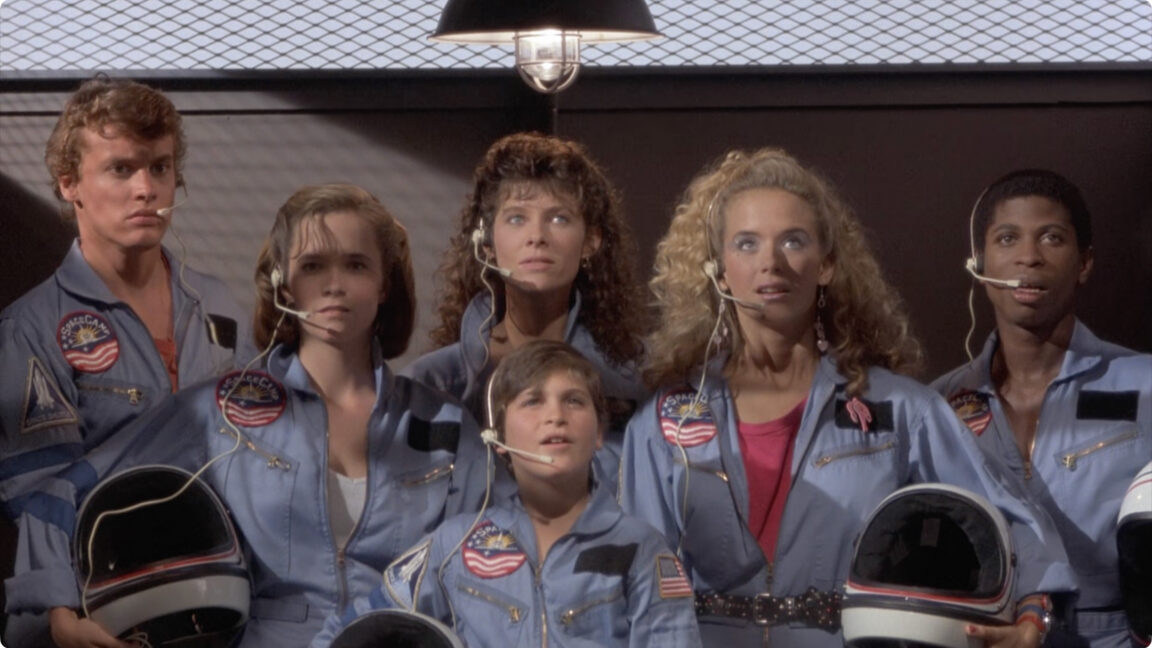
Forty years ago, the future seemed just around the corner—and the vehicle that was going to take us there was NASA's Space Shuttle. Originally envisioned as part of a larger integrated space transportation system, the shuttle was billed as a fully reusable vehicle, totally unlike the one-and-done capsules of the fading Apollo era, capable of making monthly (and perhaps even weekly) ferry flights to low Earth orbit.
The loss of Challenger in January 1986—carrying educator Christa McAuliffe, who would have been the first private citizen in space—put the kibosh on all of that. The shuttle, while fantastically advanced, would never be the vehicle to help humankind slip all of our surly bonds, so to speak. Even operating at its most frantic peak in 1985 just before Challenger's loss, the shuttle hardware managed a maximum of nine flights in one calendar year; for most of the 1990s, it performed at five or six flights per year. Civilians in space—to say nothing of Big Bird—would have to wait.
The A Minecraft Movie sequel officially has a title: A Minecraft Movie Squared. What's more, we now know that Kirsten Dunst will star as Alex, the game's female character option, and that Matt Berry is set to play an even bigger role in this film. He voiced Nitwit in the first movie, but in this one, he'll be playing a human character. Who exactly he'll be hasn't been revealed yet, but in the clip below, he can be heard dismissing a costume choice because "Steve would not be wearing that," suggesting he might be playing the Herobrine, a creepy pasta evil counterpart to Jack Black's Steve.
The director, Jared Hess, and Mojang Chief Creative …
Forty years ago, the future seemed just around the corner—and the vehicle that was going to take us there was NASA's Space Shuttle. Originally envisioned as part of a larger integrated space transportation system, the shuttle was billed as a fully reusable vehicle, totally unlike the one-and-done capsules of the fading Apollo era, capable of making monthly (and perhaps even weekly) ferry flights to low Earth orbit.
The loss of Challenger in January 1986—carrying educator Christa McAuliffe, who would have been the first private citizen in space—put the kibosh on all of that. The shuttle, while fantastically advanced, would never be the vehicle to help humankind slip all of our surly bonds, so to speak. Even operating at its most frantic peak in 1985 just before Challenger's loss, the shuttle hardware managed a maximum of nine flights in one calendar year; for most of the 1990s, it performed at five or six flights per year. Civilians in space—to say nothing of Big Bird—would have to wait.
Forty years ago, the future seemed just around the corner—and the vehicle that was going to take us there was NASA's Space Shuttle. Originally envisioned as part of a larger integrated space transportation system, the shuttle was billed as a fully reusable vehicle, totally unlike the one-and-done capsules of the fading Apollo era, capable of making monthly (and perhaps even weekly) ferry flights to low Earth orbit.
The loss of Challenger in January 1986—carrying educator Christa McAuliffe, who would have been the first private citizen in space—put the kibosh on all of that. The shuttle, while fantastically advanced, would never be the vehicle to help humankind slip all of our surly bonds, so to speak. Even operating at its most frantic peak in 1985 just before Challenger's loss, the shuttle hardware managed a maximum of nine flights in one calendar year; for most of the 1990s, it performed at five or six flights per year. Civilians in space—to say nothing of Big Bird—would have to wait.
The Kane Parsons' film Backrooms is expected to earn up to $90 million in its opening weekend after pulling down $38 million on Friday alone. That's not only above expectations, but absolutely obliterates A24's previous opening weekend record of $25.5 million for Alex Garland's Civil War. It's also a better opening day than The Mandalorian and Grogu, which only pulled down $33.7 million on its way to a total $81.6 million for the weekend.
That also means that Backrooms is an incredibly profitable movie, with an estimated $10 million budget. By comparison, the latest Star Wars disappointment cost $165 million and was considered affordable c …
Speaking at Amazon’s AI on the Lot event, the Rogue One film-maker Gareth Edwards said ‘it’ll do anything you ask’ and ‘it’s going to be better than CGI’
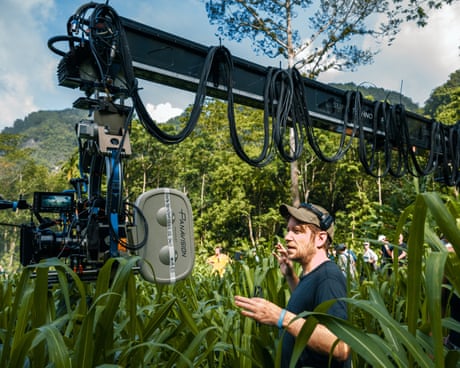
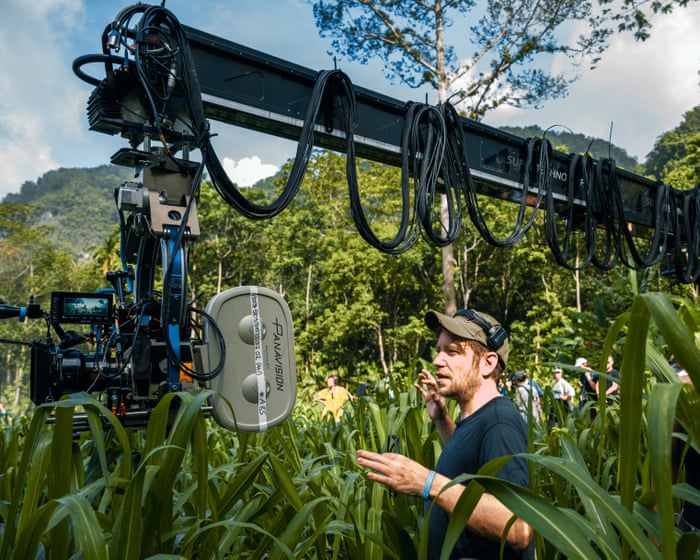
Jurassic World Rebirth and Rogue One director Gareth Edwards has enthusiastically endorsed the use of generative AI in film-making, saying “it is a fucking genius at helping you” and “it’s going to be better than CGI”.
Edwards was speaking at AI on the Lot, an event in Culver City, California, organised by Amazon, and in remarks reported by the Hollywood Reporter said: “I can’t see a reason why you wouldn’t become interested in this stuff as a film-maker. It’s so clearly a tool that might be up there with the camera. It’s going to be better than CGI.”
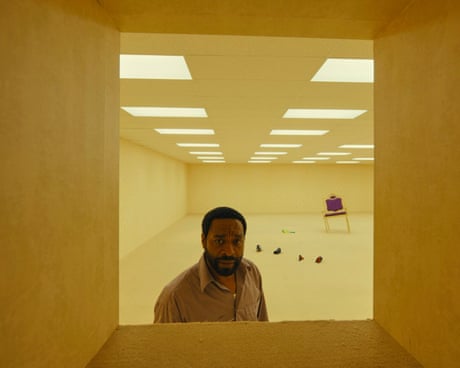
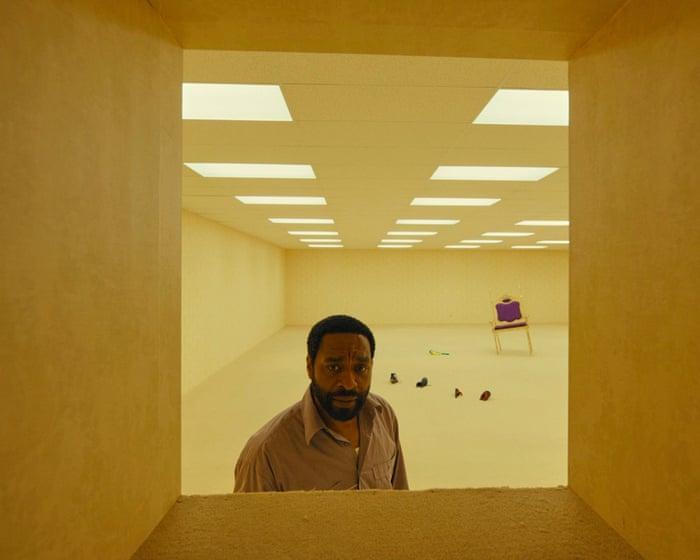
Debut from 20-year-old director examines memory, reality and fear after Chiwetel Ejiofor accesses an infinite series of hidden rooms that all feel creepily askew
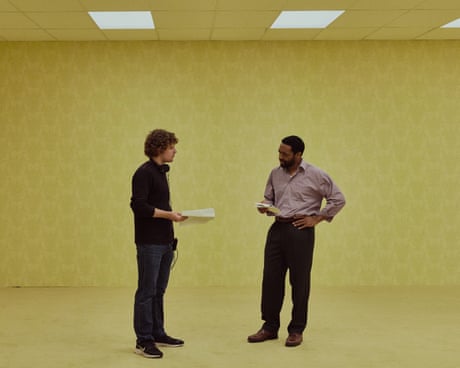
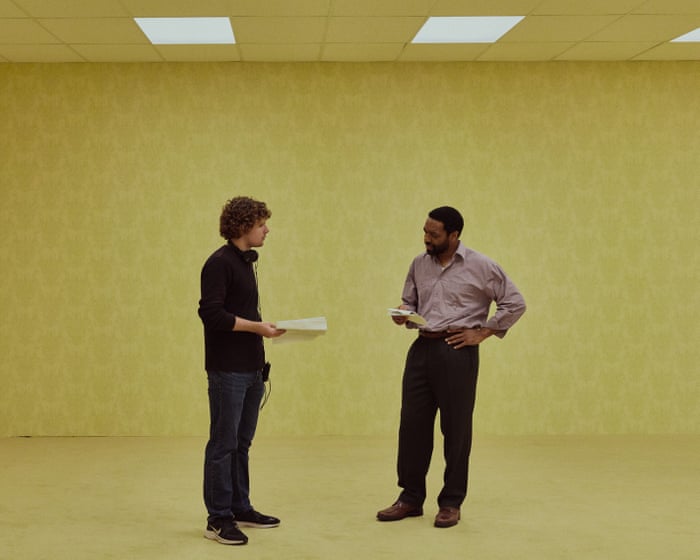
All the lonely people … where do they all belong? YouTuber Kane Parsons makes his feature directing debut with this icily brilliant and genuinely disturbing conceptual horror film based on his web series, and scripted by Will Soodik. There is something here of J-horror, the V/H/S found footage franchise, Dan Erickson’s Severance and Nathan Fielder’s The Rehearsal. It’s about people walled up in their own memories, imprisoned in endlessly remembered scenes from their past, or miserably perceived versions of their present existences in which they have become caricatures of themselves, gargoyle stars of their paralysed inner world of failure. Or perhaps the action of the film is not metaphorical in this or any other sense, and the “backrooms” of the title simply exist.
Chiwetel Ejiofor and Renate Reinsve give barnstormingly good performances as Clark and Mary; it is the early 90s and Clark is a failed architect, separated from his wife, and an alcoholic who to make ends meet self-hatingly manages a drearily and eerily vast discount furniture store, called Cap’n Clark’s Ottoman Empire. He does dumb TV ads dressed as a pirate while uneasily aware he should be a sultan to make the “Ottoman empire” pun work. He goes to see a therapist, Mary, a sad, gentle person who markets her own self-help audio tapes and is haunted by childhood memories of her abusive mother.
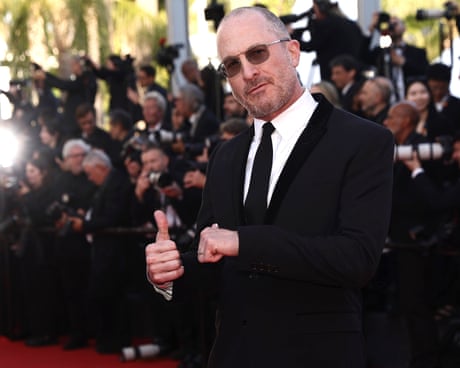
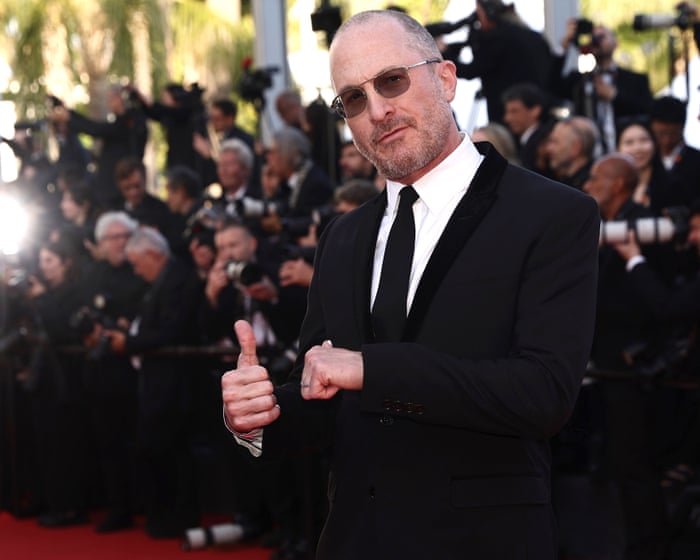
Darren Aronofsky among proponents of using technology, while Guillermo del Toro says he would ‘rather die’
Under a white marquee on Cannes’ Croisette beach, with the Mediterranean glistening behind him and superyachts drifting across the horizon, the director Darren Aronofsky addressed an audience of executives and tech evangelists gathered for an “AI for Talent” summit.
“There’s so much pushback against AI,” said Aronofsky, who has faced criticism over his embrace of generative AI projects though his new studio, Primordial Soup, at a time when artificial intelligence has become one of the film industry’s most divisive fault lines.

 Login
Login