Login
Login
These two founders left Goldman and Meta to build voice AI for markets everyone else overlooked
The startup's own stack for Africa and Middle East is now handling more than 17,000 calls per day.

It should have taken years, but Ash Koosha made a drama about Iran’s anti-government protests in weeks – and now it’s the first AI-made movie to screen at a major film festival. It could transform indie film-making, claims the director
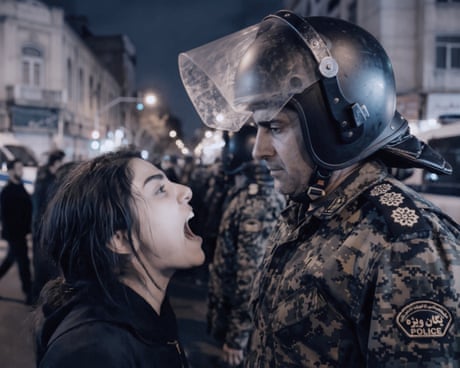
Next week a breakthrough 75-minute drama about the brutal crackdown in Iran on anti-government protesters in January will premiere at the Tribeca film festival in New York. It is called Dreams of Violets and is based on journalism, video footage and eyewitness accounts. “I would say 80% of it is a recreation of events that actually happened,” says its Iranian-British director Ash Koosha. But Dreams of Violets is a work of fiction, not a documentary: a drama following a group of strangers caught up in the protests, who meet by chance in an alleyway. How on earth has Koosha managed to pull together a drama about the killings in less than six months?
The answer, it turns out, is by using artificial intelligence. Every image and character in Dreams of Violets is AI-generated. Koosha says he created the characters by describing their physical appearances, using people he has known in the past as references. It would be too dangerous to base characters on living people in Iran, he says. “Because of the security issue, it would not be safe for the characters to even remotely resemble someone.”
Continue reading...
© Photograph: Courtesy of Ash Koosha
© Photograph: Courtesy of Ash Koosha
© Photograph: Courtesy of Ash Koosha

The Northwest Africa (NWA) 12774, an angrite meteorite discovered in the Sahara Desert, likely in Mauritania, appears to be a fragment of a vanished protoplanet, offering the strongest evidence yet that a large planetary body formed and was later destroyed during the Solar System’s chaotic infancy.
The post Meteorite Found in Africa Preserves Evidence of Long-Lost Massive Protoplanet appeared first on Sci.News: Breaking Science News.
UAE operator e& struck a deal with Uber to sell 12.5% of its stake in digital platform provider Careem Technologies for $100 million, leaving it with a 37.5% shareholding which the taxi app giant has an option to acquire the rest of.
Careem Technologies builds and operates its namesake app and related services. The app is used for various consumer services including food and grocery delivery, payment and other lifestyle services.
The deal is subject to regulatory approval and includes options which can be exercised by either side for Uber to buy e& out of Careem completely. The options can be activated between December 2031 or January 2032.
In a stock market statement, e& noted from the deal Careem would benefit from Uber’s experience and synergies with its global platforms.
For e& the sale reflects an “increased strategic focus on its core businesses and disciplined capital allocation priorities”, while allowing it to maintaining some exposure to the app business.
Uber already owns the other 50% of Careem Technologies and the entirety of the ride sharing business it was originally spun-off from.
Careem Technologies was separated from the taxi business in 2023, with e& taking a 50.03 per cent stake in that business in exchange for an investment of $400 million in it.
The post Uber to deliver e& $100M for Careem stake appeared first on Mobile World Live.

Safaricom CEO Peter Ndegwa (pictured) believes Africa is no longer playing catch-up in global technologies, telling attendees of a key business conference in Kenya the continent is now holding its own in developing fresh business models and tapping emerging digitalisation trends.
In a string of posts on a popular micro-blogging site, the operator reported Ndegwa told the Academy of International Business (AIB) Conference nations are increasingly looking to Africa for fresh approaches to delivering growth and innovation.
Africa is now “co-creating new models” and its views are ever-more sought after, Ndegwa said.
The Safaricom boss noted Africa was not immune to global challenges, but argued “turbulence can also drive transformation”.
He pointed to the Covid-19 (coronavirus) pandemic as an example, explaining the operator group “had to navigate regulatory changes, currency pressure”, greater competition and cybersecurity challenges.
The challenges fuelled a shift from “telco to techco” as Safaricom recognised “adaptability is now a competitive advantage”.
He noted global uncertainties continue today due to “geopolitical tension, economic volatility” and various disruptive technology developments including AI, meaning the ability to swiftly adjust is still essential.
Ndegwa said the m-Pesa mobile money platform “remains the clearest example of African innovation” being used to address a local problem by looking to the bigger picture of what the system is for rather than focusing solely on technology.
He argued the platform shows what can be achieved in driving digital transformation when initiatives are backed by the right regulations and laws, along with “strong public-private collaborations”.
The three-day AIB event concluded today (29 May).
The post Safaricom boss places Africa on even footing appeared first on Mobile World Live.
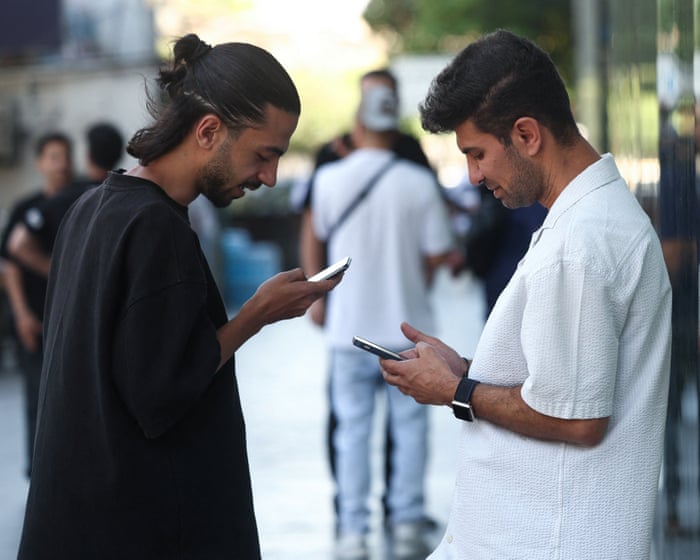
After 88 days of near-total blackout, first reactions to the return of partial connectivity were not celebratory
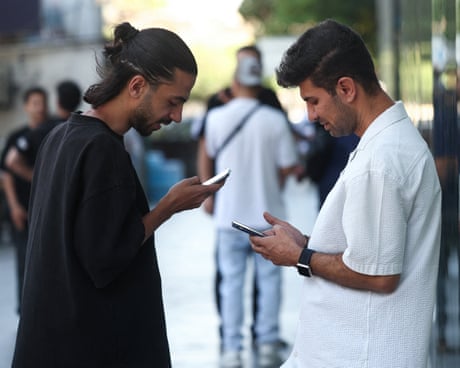
After 88 days of near-total internet blackout in Iran, long-delayed messages, images and poems flooded phones and social media feeds at about 5pm on Tuesday, when still-limited connectivity flickered back to life.
The first reactions, however, were not celebratory. Many new posts were threaded with scepticism, anxiety and anger.
Continue reading...
© Photograph: Majid Asgaripour/Reuters
© Photograph: Majid Asgaripour/Reuters
© Photograph: Majid Asgaripour/Reuters