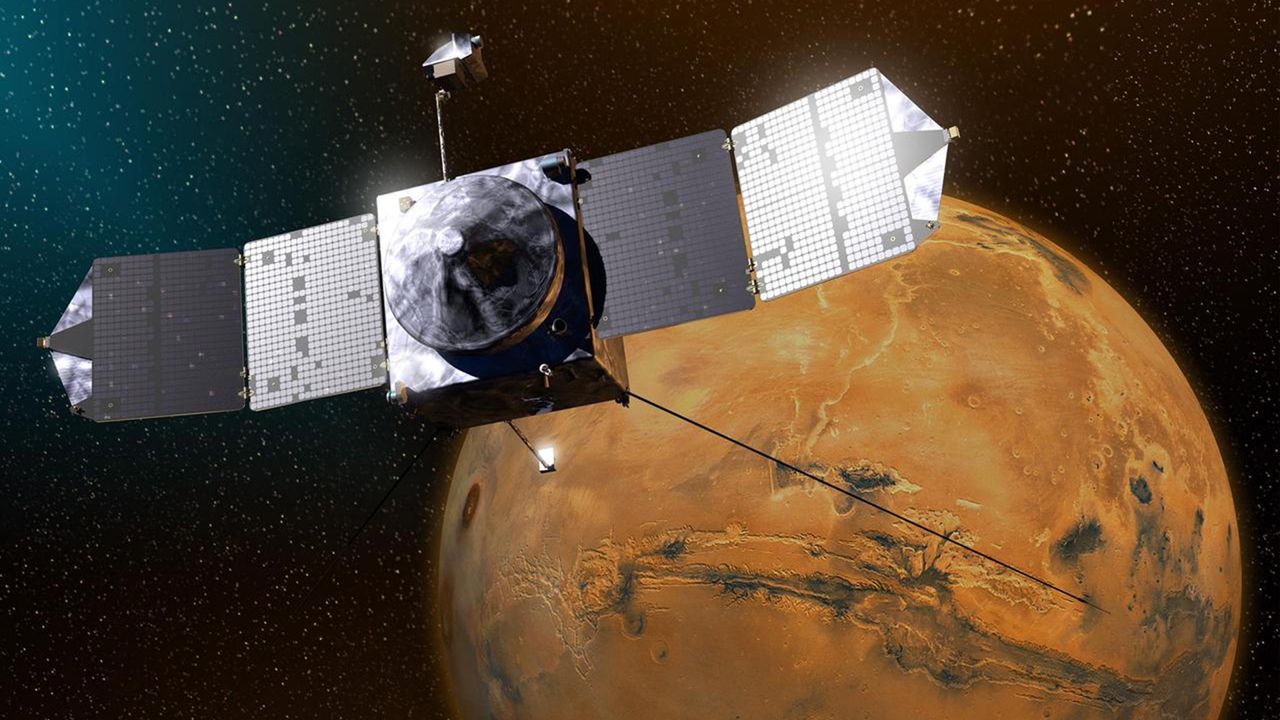
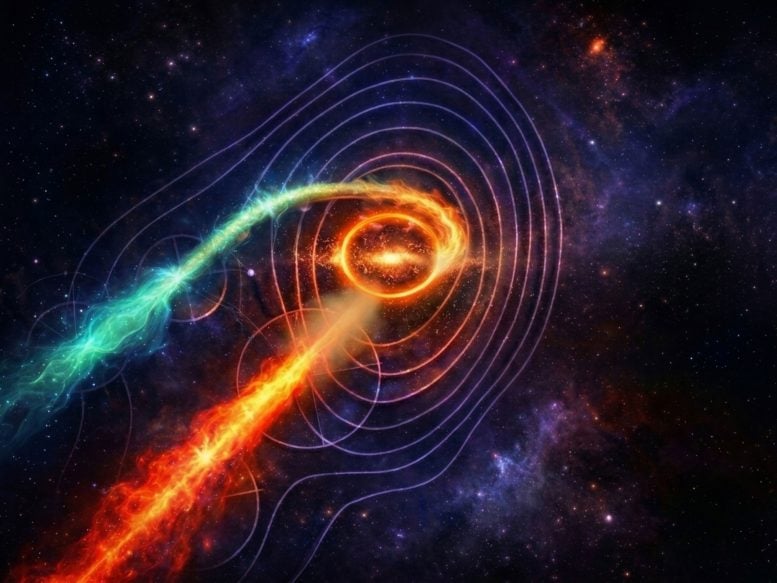
NASA has confirmed its MAVEN spacecraft is officially dead after losing contact with the probe in December. An anomaly in the probe's rotation speed led to an unexpected loss of power, though the exact cause remains unknown.
The strength of gravity is different on every body in the solar system. Whether it’s the crushing weight of Jupiter or the miniscule pull of a small asteroid, this fundamental force of physics still has a major impact on the material those bodies are made up of. A new paper from researchers at the University […]
Newly released NASA satellite images reveal the extent of recent wildfire damage on Santa Rosa Island in vivid detail, showcasing the impact of the largest Channel Islands fire on record.
The images, obtained with NASA satellite observation platforms that include the Fire Information for Resource Management System (FIRMS) and the Fire Event Explorer, reveal fire damage to nearly half of the island’s southeastern side.
The fire was initially spotted on May 15, 2026, and containment efforts began as the blaze spread across the island over the following days.
Now, the new NASA imagery is revealing the extent of the damage caused by the historic fire, which officials say came close to endangering one of our nation’s rarest species.
California’s Channel Islands, with Santa Rosa Island visible in the center. Fire damage is visible on the island’s southeastern portion (Image Credit: NASA Earth Observatory/Lauren Dauphin, using Landsat data from the U.S. Geological Survey).
18,000 Acres Scorched on Santa Rosa Island
Current damage estimates indicate that close to one-third of the island was impacted, constituting more than 18,300 acres on the island, which is part of California’s Channel Islands National Park.
Comparisons with past NASA imagery of Santa Rosa Island, made possible with Landsat satellite images, reveal a sharp contrast between once verdant regions of the island, which are now scorched by fire, shown in reddish brown in the more recent images (see below).
Santa Rosa Island is shown in a side-by-side comparison, featuring the wildfire near its outset on May 16, 2026, and subsequent imagery from May 24, 2026, as the fire spread across approximately 1/3 of the island (Image Credit: NASA Earth Observatory/Lauren Dauphin, using Landsat data from the U.S. Geological Survey).
Fortunately, Channel Islands National Park officials reported that the fire had been 97 percent contained by May 26, after burning its way through chaparral and grassland covering large portions of the island.
Endangering One of America’s Rarest Species
The Channel Islands serve as a unique and extremely diverse habitat for a range of species of both plants and animals. Among the species threatened during the recent fires were Torrey pines (Pinus torreyana), recognized as our nation’s rarest pine tree, which only grows on Santa Rosa Island and in a preserve in urban San Diego.
A wild grove of Torrey pines on Santa Rosa Island (Image Credit: Wikimedia Commons/CC BY 2.5).
Fortunately, most of the island’s Torrey pine forest remains intact, although some damage was reportedly discernible in surveys by firefighters on the island and in drone imagery of the scorched areas.
According to island officials, the fire appears to have burned its way inland at lower intensity, making its way through pine areas that burned ground-dwelling vegetation while leaving the overlying canopy largely unaffected.
Damage from the Largest Channel Island Fire
Park officials say that some smaller areas of forest did sustain significant damage, as conditions in those pockets allowed a greater burn intensity.
Closer to the fire’s northern boundary, Santa Rosa’s cloud forests—the wooded areas comprised mostly of oak and pine growth surrounded by chaparral, whose name is derived from the island fog that sustains them—were successfully preserved by firefighting crews who worked ahead of the fire to cool areas where combustible vegetation grows.
Based on recent local reports, the fire that consumed large portions of Santa Rosa Island’s vegetation is the largest known to have impacted any of the Channel Islands. Fortunately, many of the island’s indigenous trees and other vegetation are resilient enough to withstand fire, since they do not rely on it as part of their growth cycles like many mainland plant species.
Additional information about the fires can be found here, and more imagery of the recent damage has been made available at NASA’s Earth Observatory page.
Micah Hanks is the Editor-in-Chief and Co-Founder of The Debrief. A longtime reporter on science, defense, and technology with a focus on space and astronomy, he can be reached atmicah@thedebrief.org. Follow him on X @MicahHanks, and at micahhanks.com.
An international team of astronomers has uncovered what they are calling the clearest evidence yet for dying white dwarf stars as the origin of a class of mysterious cosmic signals called long-period radio transients.
The research, led by University of Sydney PhD student Kovi Rose, potentially offers researchers a ‘Rosetta Stone’ capable of deciphering and categorizing other such signals.
“For the first time, we have pinpointed the origin of these signals, confirming the source to be a ‘cataclysmic variable’, or an accreting white dwarf star,” Rose explained in an email to The Debrief.
The team behind the discovery, including the astronomers at CSIRO’s ASKAP radio telescope, said that identifying the origin of these transient cosmic signals that come from a few remote regions of the Milky Way galaxy could also offer researchers a “natural laboratory” to study the extreme physics that occur in such environments.
Mysterious Cosmic Signals “Have Puzzled Astronomers for Years”
According to the same email, long-period radio transients were initially thought to be slow-spinning neutron stars, known as pulsars, emitting periodic energy bursts. However, the team notes that mathematical models suggest that slow-rotating neutron stars should generate enough energy to produce the mysterious cosmic signals.
“Long-period radio transients have puzzled astronomers for years,” Mr. Rose explained. “We’ve only found about a dozen, and their origins have been unclear.”
Hoping to solve the mystery, the University of Sydney-led team aimed their instruments at a small, dense star called a white dwarf. However, unlike our solitary Sun, this white dwarf is part of a binary star system, named ASKAP J1745−5051, with a much larger but less dense red dwarf as its companion.
Artists’ impression of a white dwarf binary system, ASKAP J1745-5051, that could serve as a cosmic ‘Rosetta Stone’ for studying long-period radio transients. Image Credit: Carl Knox/OzGrav/Swinburne & Joshua Preston Pritchard (CSIRO).
After several scans with CSIRO, the team discovered that the smaller white dwarf, about the size of Earth but with a mass closer to the Sun, was shedding or accreting material onto the larger but less dense red dwarf star. As the material heats up, it releases X-rays.
The team also detected periodic bursts of radio signals from the binary system. Although these regular emissions are tied to the system’s orbital motion, the researchers found that the bursts of X-rays and radio signals didn’t peak at the same time. According to Mr. Rose, this lack of synchronicity “tells us they’re being produced in different regions of the system.”
Analysis Reveals Long-Period Radio Transient Match
A closer analysis suggested that, due to the proximity of the two stars, which orbit each other in just one hour, their interacting magnetic fields were producing regular radio-wave bursts, which the team clocked at 1.4-hour intervals.
Professor Murphy, Head of School at the University of Sydney School of Physics and Chief Investigator at the ARC Centre of Excellence for Gravitational Wave Discovery (OzGrav), said that similar objects have previously been linked to binary star systems, “but this is the first one where we can clearly see both stars and the accretion process in action.”
When the team compared the emissions from the binary system with those of previously detected long-period radio transients, the data were a clear match. According to Rose, this comparison proved definitively that this elusive category of mysterious cosmic signals “comes from a white dwarf actively pulling material from a companion star.”
Natural Laboratories for Exploring Extreme Plasma Physics
Although the team’s findings do not rule out other causes of these mysterious cosmic signals, they said their discovery “strengthens an alternative explanation” that at least some are caused by binary star systems involving white dwarfs.
“The system is also only the second known long-period radio transient to emit regular X-rays – and the first where the cause of the regularity has been confirmed,” they explained.
When discussing the potential impact of their findings on future research, the team noted that ASKAP J1745-5051 could provide astronomers “a reference point” for understanding other long-period radio transients that have remained uncharacterized.
Mr. Rose said that the system could help researchers determine whether other long-period transients are more like pulsars or like white dwarf systems, “acting like a stellar Rosetta stone,” referencing the famous stone tablet that helped modern researchers decipher Egyptian hieroglyphs. He also noted that the system offers researchers a unique opportunity to study extreme plasma physics and magnetic-field interactions “under conditions that cannot be replicated on Earth.”
“These systems are natural laboratories,” Mr Rose said. “They allow us to test our understanding of how matter behaves in strong magnetic fields and under intense gravitational forces.”
In the future, the University of Sydney-led team said they are planning future observations of the system with a combination of optical, radio, and X-ray telescopes “to better understand how these emissions are generated” and to determine whether similar mechanisms found in this system can explain the full population of long-period radio transients spotted to date.
“Each new discovery is helping us piece together the bigger picture,” Mr Rose explained. “We’re only just beginning to understand this new class of cosmic events.”
Christopher Plain is a Science Fiction and Fantasy novelist and Head Science Writer at The Debrief. Follow and connect with him on X, learn about his books at plainfiction.com, or email him directly at christopher@thedebrief.org.
Muon Space announced a Starship-class satellite platform June 3 designed from the ground up to meet the demands of the emerging orbital data center market, with an initial launch slated for 2028 after securing customers.
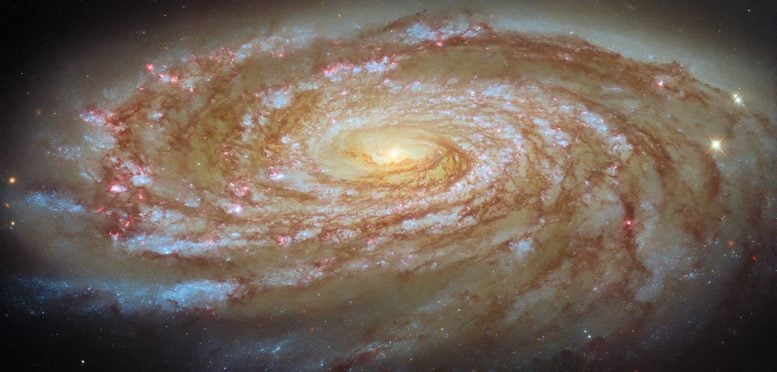
A spectacular spiral galaxy known as M88 is traveling toward the crowded heart of the Virgo Cluster, where powerful forces are already beginning to reshape its future. A striking new image from the NASA/ESA Hubble Space Telescope highlights Messier 88 (M88), a spiral galaxy that is in the midst of a cosmic journey spanning hundreds [...]
Keeping satellites cool in space is a major challenge. Unlike on Earth, where heat can escape into the surrounding air, space is a vacuum. This means there is no air to carry heat away. As a result, electronic systems on satellites and spacecraft can quickly overheat if they do not have an effective way to […]
Researchers discovered a closely orbiting pair of supermassive black holes in Markarian 501 by tracking two jets of particles. The binary system could merge within 100 years and may produce detectable gravitational waves. Current evidence indicates that nearly every large galaxy contains a supermassive black hole at its center, with a mass ranging from millions [...]
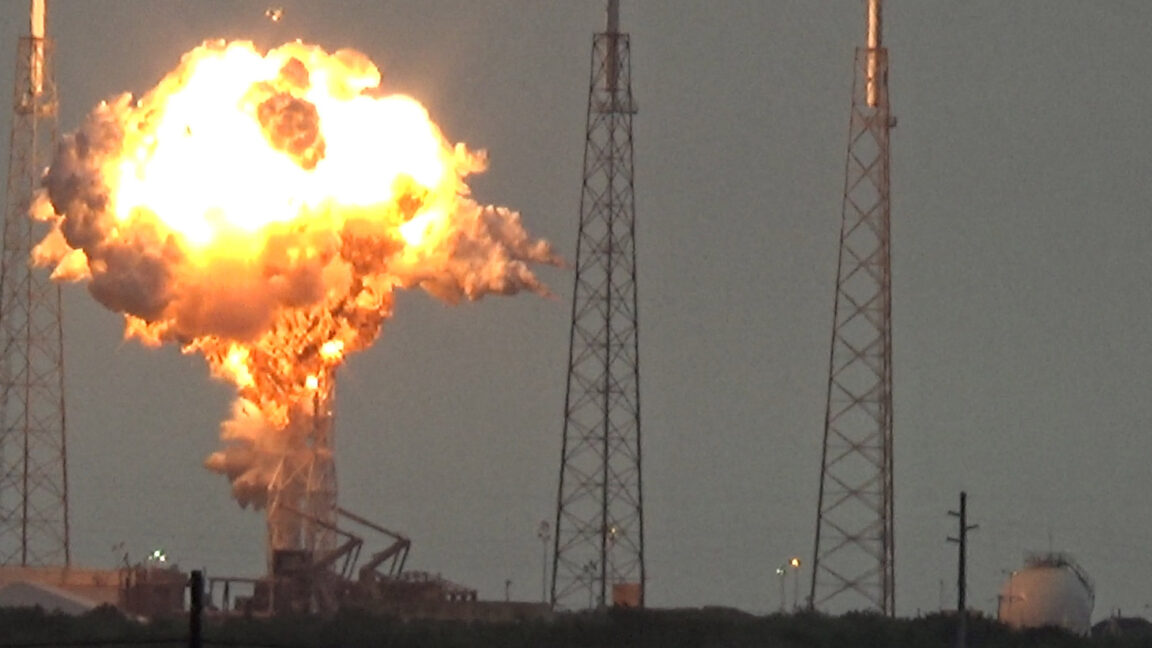
A former NASA engineer named John Muratore sat on console as launch director in early September 2016 as propellant flowed onto a Falcon 9 rocket in Florida. Ahead of a planned launch two days later, SpaceX was preparing for a static fire test of the vehicle.
Then, all of a sudden, the rocket exploded. "It came out of nowhere, and it was really violent," Muratore said. This fireball resulted in the destruction of the rocket, much of its launch site, and the AMOS-6 satellite already attached to the vehicle.
Nearly a decade later, on May 28, Blue Origin conducted a static fire test of a new rocket, with its larger New Glenn vehicle a few miles down the Florida coast. The company had gotten further into its test, reaching engine ignition, before its rocket also exploded.
A former NASA engineer named John Muratore sat on console as launch director in early September 2016 as propellant flowed onto a Falcon 9 rocket in Florida. Ahead of a planned launch two days later, SpaceX was preparing for a static fire test of the vehicle.
Then, all of a sudden, the rocket exploded. "It came out of nowhere, and it was really violent," Muratore said. This fireball resulted in the destruction of the rocket, much of its launch site, and the AMOS-6 satellite already attached to the vehicle.
Nearly a decade later, on May 28, Blue Origin conducted a static fire test of a new rocket, with its larger New Glenn vehicle a few miles down the Florida coast. The company had gotten further into its test, reaching engine ignition, before its rocket also exploded.
A former NASA engineer named John Muratore sat on console as launch director in early September 2016 as propellant flowed onto a Falcon 9 rocket in Florida. Ahead of a planned launch two days later, SpaceX was preparing for a static fire test of the vehicle.
Then, all of a sudden, the rocket exploded. "It came out of nowhere, and it was really violent," Muratore said. This fireball resulted in the destruction of the rocket, much of its launch site, and the AMOS-6 satellite already attached to the vehicle.
Nearly a decade later, on May 28, Blue Origin conducted a static fire test of a new rocket, with its larger New Glenn vehicle a few miles down the Florida coast. The company had gotten further into its test, reaching engine ignition, before its rocket also exploded.
NASA’s Fermi telescope may have finally uncovered the magnetic powerhouse behind the universe’s brightest supernovae. An international team of astronomers analyzing observations from NASA’s Fermi Gamma-ray Space Telescope has found what appears to be the first convincing detection of gamma rays from a rare type of extraordinarily bright stellar explosion known as a superluminous supernova. [...]
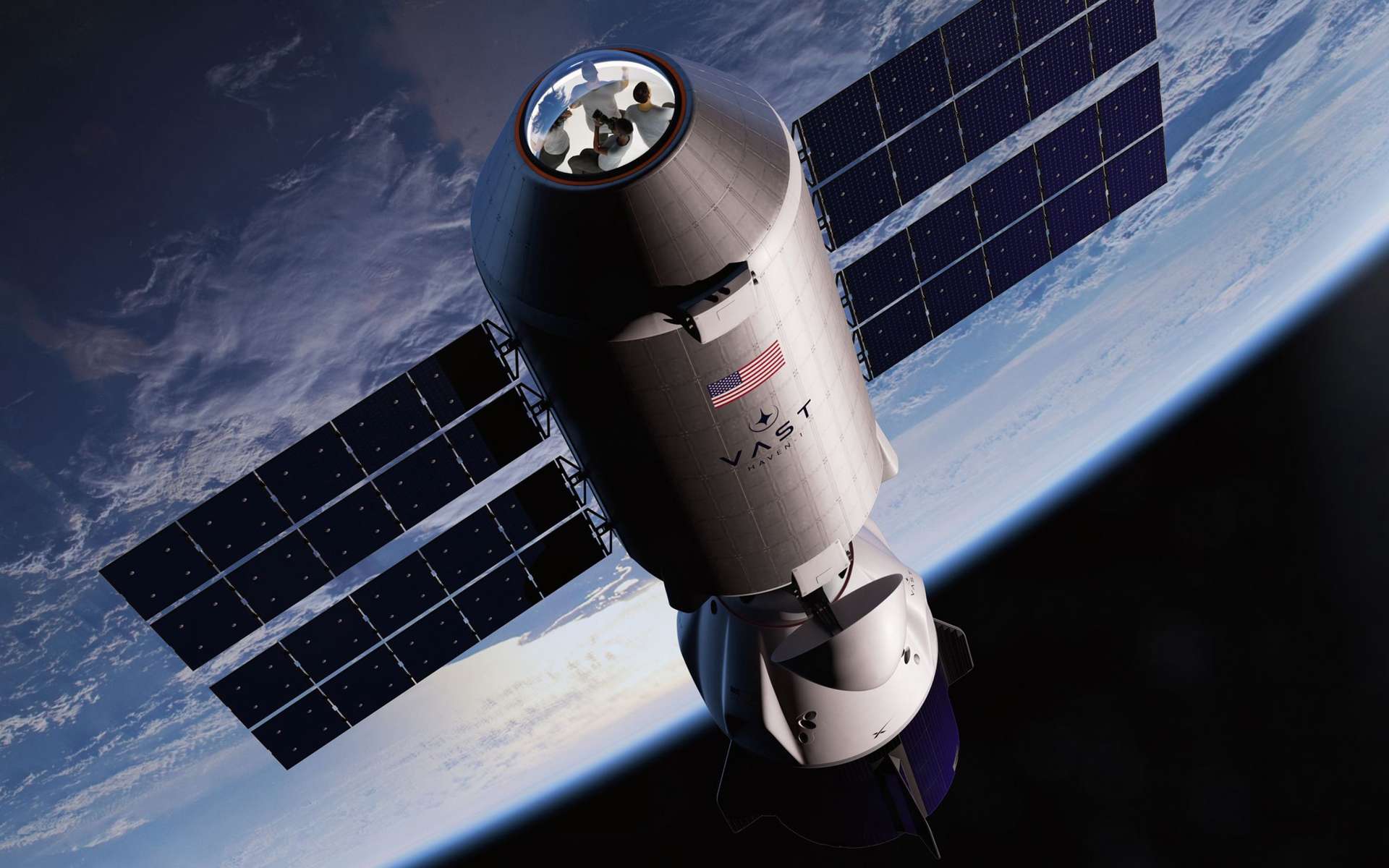
Une annonce surprise au sommet Choose France. Emmanuel Macron a annoncé ce 1er juin un accord avec la start-up américaine Vast pour envoyer deux de ses astronautes dans l'espace. Thomas Pesquet s'apprête à vivre un troisième vol, tandis qu'Arnaud Prost s'élancera pour la première fois vers une...
The moon may look peaceful from Earth, but its surface is one of the harshest environments imaginable. It is covered by a layer of fine dust and crushed rock called lunar regolith. This material is not like the soil we have on Earth. It contains sharp particles of rock and glass that can damage equipment, […]
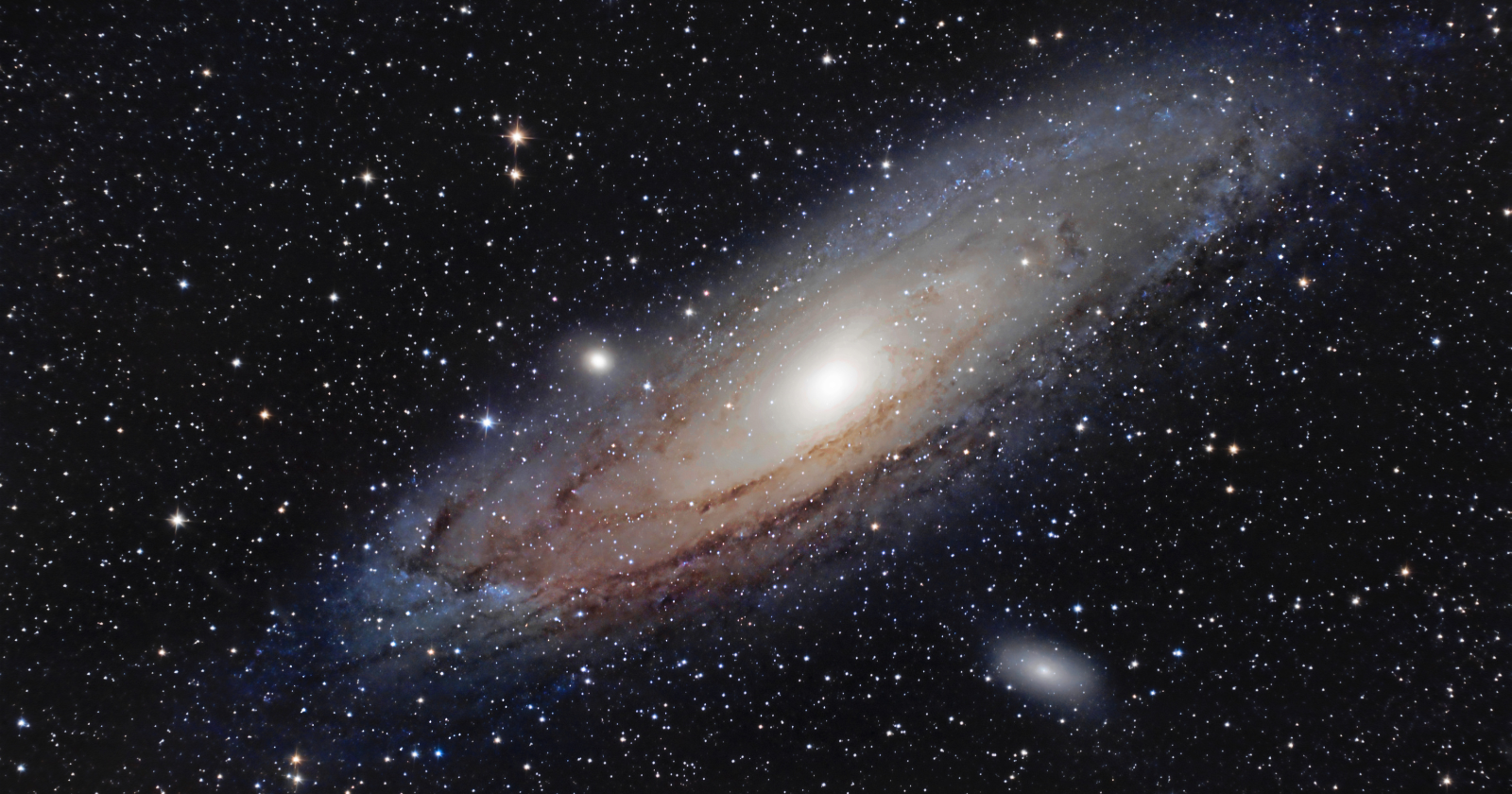
On a clear, moonless autumn night, away from city lights, the patch of sky between the constellations Andromeda and Cassiopeia contains a faint, fuzzy smudge that looks like a slightly out-of-focus star. The smudge is not a star. It is the Andromeda Galaxy, designated M31, the nearest large galaxy to our own and the most distant object that an unaided human eye can see. The light reaching your retina from Andromeda has been travelling for approximately 2.5 million years. It started its journey across intergalactic space at a moment when, on Earth, the first members of the genus Homo had recently appeared in East Africa and were beginning to chip the earliest stone tools out of pebbles. The light is older than our genus’s mastery of the rock.
According to NASA’s Hubble Messier Catalogue reference on M31, Andromeda lies at a distance of 2.5 million light-years, contains an estimated trillion stars, and spans roughly 260,000 light-years across — about twice the diameter of the Milky Way’s main disk, depending on how each galaxy’s outer halo is measured. It is the largest member of our Local Group of galaxies, a small cluster of about 80 galaxies bound together by gravity that includes the Milky Way, the Triangulum Galaxy, the Magellanic Clouds and a few dozen smaller satellite galaxies. Andromeda and the Milky Way are the two heavyweights of the group, separated by 2.5 million light-years of nearly empty space and approaching each other at roughly 110 kilometres per second. In about 4.5 billion years, the two galaxies are predicted to merge.
What “2.5 million light-years” means
A light-year is the distance light travels in one year, moving at 299,792 kilometres per second through a vacuum. It works out to roughly 9.46 trillion kilometres. The “year” in “light-year” therefore refers to the time the light takes, not to the date when the light was emitted. A galaxy “2.5 million light-years away” is 2.5 million light-years’ worth of empty space distant, meaning that the light from it requires 2.5 million years to cover the gap.
The implication is the one that makes astronomical observation a form of time travel in reverse. Any observation of a distant object is necessarily an observation of that object’s past, by the amount of time the light has taken to reach the observer. When you look at the Sun, you are seeing it as it was about eight minutes ago. When you look at Proxima Centauri, the nearest star outside the Solar System, you are seeing it as it was about four years ago. When you look at the brightest stars of the constellation Orion, you are seeing them as they were a few hundred to a few thousand years ago, depending on the specific star. When you look at Andromeda, you are seeing it as it was 2.5 million years ago. The galaxy has continued to evolve in the meantime. Whatever has happened in M31 since the light left, no observer on Earth can see yet.
The poetic version of this fact is sometimes used by NASA’s own science-communication team. NASA’s “Catch Andromeda Rising” guide for night-sky observers phrases the framing succinctly: M31 is “so far away that the light you see left M31’s stars when our earliest ancestors figured out stone tools.”
What was happening on Earth then
The corresponding moment in Earth’s history is well documented in the palaeoanthropological record. According to the Smithsonian Institution’s Human Origins Program, the genus Homo — the group containing our species and our closest extinct relatives — appears in the African fossil record from about 2.8 million years ago. The earliest known specimen, called LD 350-1, was discovered at the Ledi-Geraru site in Ethiopia’s Afar region in 2013 and dated to roughly 2.75-2.8 million years ago. According to the Becoming Human project at Arizona State University’s Institute of Human Origins, the LD 350-1 mandible is “one of the best fossil representatives from this poorly understood period of human evolution,” giving researchers their clearest single window into the emergence of our genus. By the time the light from Andromeda that is now reaching Earth was just beginning its journey, the genus Homo had been in existence for perhaps 200,000 to 300,000 years.
The same period saw the appearance of the first deliberately produced stone tools in the archaeological record. The earliest stone tools, the Oldowan industry, date to about 2.6 million years ago, with cut-marked animal bones from the same period showing that early humans were using sharp stone flakes to butcher carcasses. Homo habilis, the species whose Latin name literally translates as “handy man,” lived from about 2.4 million to 1.65 million years ago, and was given the name specifically for its association with these early stone tools.
The light that reaches your eye from Andromeda tonight began travelling toward you during the early phase of this period. While the first photons were crossing the gap between M31 and the Milky Way, a small number of early hominins in East Africa were taking the first reliably documented steps toward the technology that would, two and a half million years later, build the telescopes capable of imaging the galaxy the light came from.
Why Andromeda is the visible limit
The reason Andromeda is the most distant naked-eye object, despite being roughly the size of six full Moons in angular extent across the sky, is that it is also extremely faint. Most of the galaxy’s surface brightness is spread thinly across a large area, with only the bright core visible to the unaided eye. Under truly dark skies, observers report being able to see fainter portions of the disk extending well beyond the bright nucleus, but in practice most casual observers see only a small, slightly elongated smudge a few times brighter than the surrounding sky background.
Other galaxies are technically visible to keen observers under exceptional conditions. The Triangulum Galaxy, M33, lies at about 2.7 million light-years and is sometimes claimed as a naked-eye object by experienced amateurs at very dark sites. M81, in Ursa Major, is much further at 12 million light-years and has been reported by a small number of naked-eye observers under perfect conditions. These observations are at the absolute limit of human visual capability and require dark adaptation, perfect transparency, and skilled averted vision. For practical purposes, Andromeda is the conventional and widely-accepted “most distant naked-eye object.” Anyone who can see it without a telescope is, in the strict sense, seeing further than any other unaided human observation.
The galaxy looks unremarkable from Earth because of the distance. Up close, M31 contains roughly a trillion stars, dozens of satellite galaxies, supermassive black holes, supernovae, and the same vast structural complexity that the Milky Way contains. Hubble’s most recent high-resolution survey, released in 2025, assembled the largest photomosaic ever made by the space telescope: 2.5 billion pixels stitched together from 600 overlapping snapshots taken over a decade of observations, capturing the glow of about 200 million individual stars — roughly one fiftieth of one percent of M31’s total stellar population. From 2.5 million light-years away, the entire galaxy appears as a faint patch of haze, smaller in subjective impression than a moonbeam. The light has been on its way since before any human ancestor knew what a tool was.

 Login
Login