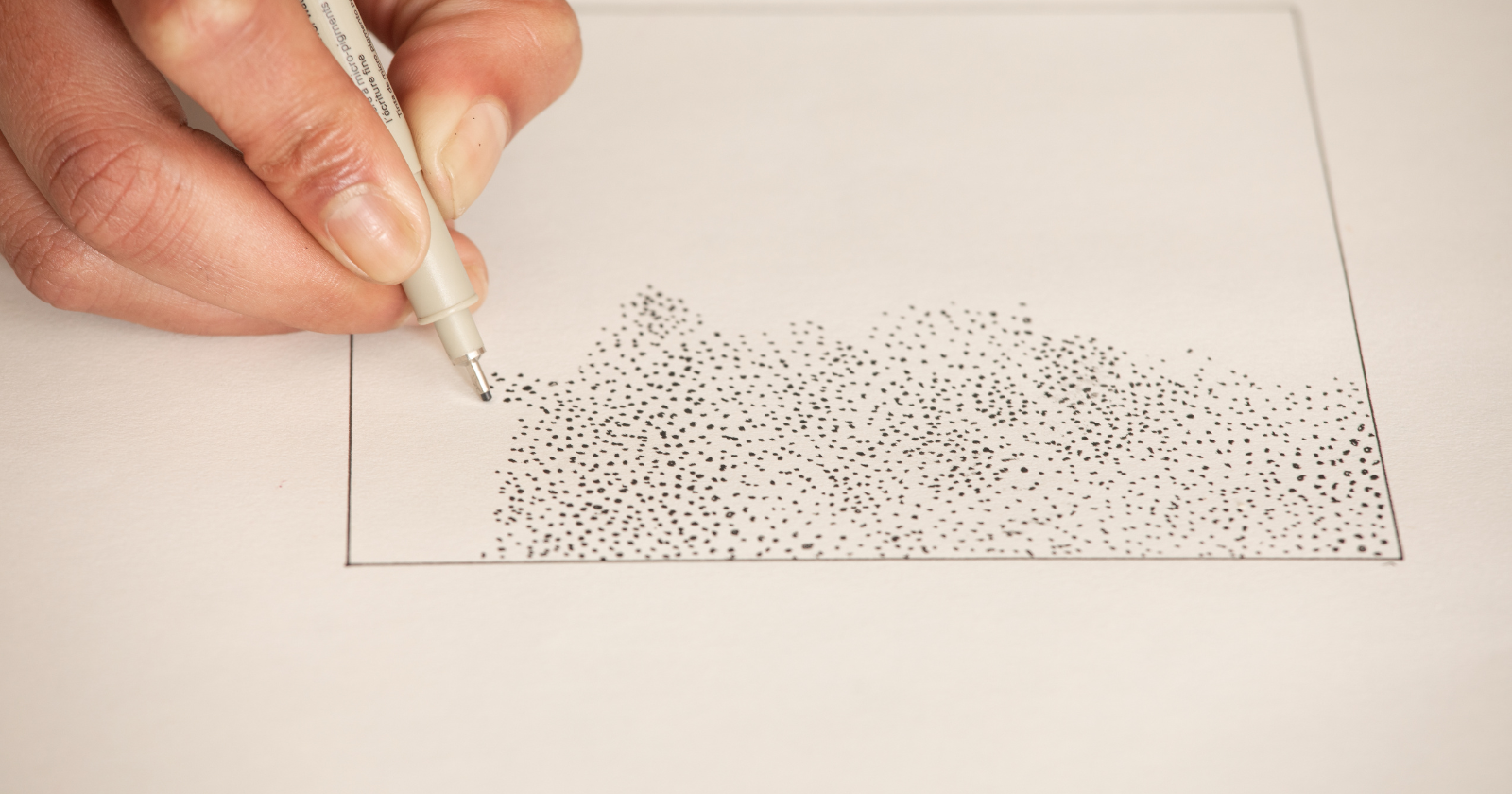
There is something quietly striking in the image. An older adult — perhaps 86, perhaps older — sits before a digitizing tablet and draws horizontal lines. The pen moves steadily across the surface. The lines come out clean and even. The hand does not falter. The hand, it turns out, does not know.
A new study published in Frontiers in Human Neuroscience has examined what happens to handwriting and motor control in older adults with and without cognitive impairment, and one of its most arresting findings is precisely this: when it comes to basic pen-motor tasks — placing dots on a surface, drawing horizontal lines — the two groups are effectively indistinguishable. The degradation of cognitive function that researchers can detect through standardized assessments leaves no measurable trace in the elementary mechanics of holding and moving a pen.
The basic motor infrastructure holds. What begins to separate the groups is something more demanding: the cognitive work that handwriting also requires.
What the study measured, and how
The research, led by Ana Rita Matias and colleagues at the Universidade de Évora and collaborating Portuguese institutions and published in May 2026, recruited 58 institutionalised older adults ranging in age from 62 to 99. Thirty-eight participants had been classified as cognitively impaired, with a mean age of 86.05 years. Twenty were cognitively healthy, with a mean age of 84.35 years. Cognitive status was established using two standard clinical instruments: the Mini-Mental State Examination and the Clock Drawing Test.
Each participant completed a series of tasks on a Wacom digitizing tablet fitted with an inking pen — a device that captures not just what is written but the kinematics of how it is written: pen velocity, pressure, the duration of strokes, the number of discrete movements, the pauses between them. This is the critical advantage of digital capture over conventional paper-based assessment. What the eye cannot see, the tablet records.
The tasks fell into two categories. The first were simple motor tasks: a dots task, in which participants were asked to place at least ten dots on the tablet surface within twenty seconds, and a lines task, in which they were asked to draw at least ten horizontal lines in the same time. These tasks required control of the pen but little else. No language processing. No memory retrieval. No composing of meaning.
The second category was more demanding: four handwriting-speed tasks involving the copying and dictation of sentences. Copying a sentence allows the writer to keep the source text in view. Dictation does not. The words arrive as sound, must be held in working memory, parsed for meaning, translated into motor sequences, and then committed to the page — all while the auditory trace is already fading.
Where the difference appears — and where it does not
The dots and lines tasks did not significantly discriminate between the two groups. This is the finding worth pausing on. Cognitive impairment, at the level where it is detectable by standard clinical tools, has not yet disrupted the peripheral motor system. The hand moves. The pen responds. The basic loop between intention and execution remains functionally intact.
The dictation tasks told a different story. Here the researchers found statistically significant differences between the cognitively impaired and cognitively healthy groups. One task in particular — referred to in the paper as WS3, a dictated sentence — produced the strongest discriminatory signal. Two features of the kinematic data were especially predictive: Duration, the total time taken to complete the task, and Number of Strokes, the count of discrete pen movements. Both variables significantly predicted cognitive group membership.
Participants with cognitive impairment took longer and produced more fragmented output — more individual pen movements to accomplish the same written result. The hand was still moving. But the coordination between the cognitive processes that organise language and the motor processes that execute it had become less fluent, more effortful, more interrupted.
As the authors write in their conclusion: “Handwriting kinematics, especially temporal and stroke-related features, are sensitive indicators of cognitive impairment when assessed under high cognitive–motor load.”
Why handwriting carries cognitive signal
Handwriting has attracted sustained interest from researchers studying cognitive decline precisely because it occupies a peculiar position: it is both a motor act and a cognitive one, and the two are difficult to disentangle by observation alone. The digitizing tablet changes that. By capturing kinematics in real time, it makes visible the hesitations, the micro-pauses, the multiplying strokes that a simple reading of the finished text would never reveal.
What the tablet captures, in effect, is cognitive load expressed through movement. When a task places high demands on working memory — as dictation does — the motor system has fewer resources available to it. The result is not necessarily illegible handwriting. The result is handwriting that takes longer, that requires more individual pen lifts, that shows the seams of the effort it took to produce.
The distinction between copying and dictation is not incidental to this research — it is the mechanism. Copying a sentence is primarily a perceptual-motor task. The writer looks at words and reproduces them. Dictation requires the writer to be, briefly, a language processor: receiving, holding, decoding, and transcribing without the safety net of visible text. That additional cognitive burden is where the between-group difference becomes measurable.
Earlier research in this area has identified kinematic features — pen velocity, in-air time, the ratio of time spent writing to time spent pausing — as markers that correlate with cognitive status in conditions including mild cognitive impairment and Alzheimer’s disease. What the Matias study adds is a careful separation between tasks that load the motor system alone and tasks that load the cognitive-motor system together. The separation clarifies which element of handwriting carries the diagnostic signal.
The case for handwriting-based screening
The researchers position their findings as support for digitally mediated handwriting tasks as screening tools for cognitive decline. The argument has practical force. A digitizing tablet is low-cost relative to neuroimaging and requires no specialist clinical infrastructure. Handwriting is, for most older adults, a deeply familiar act — ecologically valid in the language of assessment research, meaning it does not require participants to learn a new task or adapt to an unfamiliar paradigm. It is something people have done for decades, and the act of doing it again in a clinical or care context carries little of the anxiety or performance pressure that some formal cognitive assessments introduce.
For populations in institutional care — the population this study recruited — such considerations are not trivial. Fatigue, unfamiliarity, and distress can all contaminate cognitive assessment data. A brief handwriting task, completed at a table with a pen in hand, is a different kind of ask than a sustained battery of memory and attention tests.
The study also raises the possibility of longitudinal monitoring: repeated handwriting assessments over time could track subtle kinematic changes before they manifest as detectable impairment on conventional screening tools. The tablet captures what the eye misses. Over months or years, the data might record the earliest drift in the coordination between thought and hand.
What the hand does not know
The human detail at the centre of this research is the one that stays. An older adult draws horizontal lines on a tablet. The hand moves cleanly. The pen does not hesitate. By the measure of the task — ten lines in twenty seconds — the performance is equivalent to that of someone whose cognition, by clinical assessment, remains fully intact.
The hand, performing that task, is not reporting on what is happening elsewhere. The motor infrastructure is preserved. The elementary act of guiding a pen across a surface — the muscle coordination, the proprioceptive feedback, the fine motor loop that learned to hold a pen in childhood and has held one ever since — continues to operate as it has always operated.
What changes, and what the digitizing tablet can detect, is the integration. The moment handwriting becomes more than a motor act — the moment it requires the writer to hold language in mind, to compose and convert and commit — the kinematic signature of cognitive change begins to appear in the data. Not as tremor. Not as a loss of motor control. As duration. As the number of strokes it takes to get the words down.
The hands stay capable. The research is careful to say so. What shifts is the coordination between capability and the cognitive processes that direct it. That coordination, it turns out, is where cognitive impairment first makes itself legible to a machine that is paying close enough attention.
Produced with AI assistance. Reviewed by the Space Daily editorial team before publication.
Japanese manga has captured the imaginations of readers worldwide, blending intricate narratives with dynamic visual storytelling. However, a groundbreaking new study from Japan now reveals that the medium on which manga is consumed—paper versus digital screens—significantly influences both comprehension and the neurological processes involved during reading. This research, recently published in PLOS One, sheds light on how traditional paper manga may facilitate more efficient brain integration compared to digital reading, with sweeping implications for our understanding of reading cognition in the digital age.
The study embarked on a detailed examination of neural activation during manga reading on paper compared to digital devices such as tablets and e-readers. Using functional magnetic resonance imaging (fMRI), researchers observed key differences in brain activity patterns, particularly in areas associated with language processing and information integration. They identified enhanced activation in the language-related regions of the brain when subjects read manga on paper, suggesting that tactile and sensory cues inherent to the physical medium may bolster cognitive engagement.
Central to the findings is the notion of “energy-saving brain activation,” referring to more efficient neural processing during paper-based reading. The yellow-highlighted areas in the language regions of the brain in the fMRI images demonstrate this phenomenon, showing less scattered and more unified activation patterns. This contrasts sharply with the more diffuse brain activation recorded during digital reading sessions, which might indicate heightened cognitive load or less seamless integration of visual and textual information.
The researchers propose that paper’s tactile feedback, combined with the unique spatial layout of manga pages, strengthens the coordination between core and supportive brain integration processes. Specifically, the core integration networks encompass regions responsible for combining linguistic content with narrative context, while supportive networks assist by integrating visual cues and managing attention. Paper reading appears to harmonize these processes, facilitating more fluid comprehension and retention.
One of the compelling insights from the study connects these neural findings with behavioral measures. Participants exhibited improved understanding and memory recall of manga narratives when reading on paper. This superior performance aligns with the more focused brain activation patterns and suggests that the medium influences both the mechanics of brain function and the experiential aspects of comprehension.
Technological interface challenges also arise from this research. Digital screens, while convenient and increasingly prevalent, may impose subtle cognitive barriers related to screen glare, scrolling mechanisms, and screen refresh rates, all of which could disrupt the natural flow of reading and result in fragmented neural activation. Furthermore, the static yet tactile nature of paper affords readers a physical map of narrative progress, enhancing spatial memory and sequencing, critical for understanding complex storylines.
This investigation holds particular relevance in our current era, where digital consumption dominates cultural and educational content dissemination. As manga’s global audience increasingly shifts towards online platforms and digital archives, understanding the cognitive trade-offs of screen reading versus traditional media becomes paramount. This study’s demonstration that paper facilitates better integrative brain processing calls for a reevaluation of digital literacy tools and digital content delivery methods.
Beyond manga, the implications extend to other domains where multimedia and textual integrations are crucial, including education, professional reading, and even therapeutic storytelling. The brain’s differential response to media formats could influence curricular designs, recommending strategic use of paper for deeper learning and digital formats for rapid access or convenience.
Funding for the study was provided by COAMIX INC, a prominent entity in the manga publishing industry, alongside governmental support from Japan’s Ministry of Education, Culture, Sports, Science, and Technology. Importantly, the research team maintained strict adherence to scientific objectivity, asserting no conflicts of interest that could unfairly bias the results despite the corporate sponsorship.
The article “Manga reading on paper vs. digital devices: Prospective effects on core and supportive integration processes in the brain” was published on June 3, 2026, in PLOS One, a reputable open-access journal known for rigorous peer review. This publication date situates the study at the forefront of contemporary neurocognitive research into the interplay between media technologies and brain functions.
In summary, this landmark study challenges prevailing assumptions that digital devices unequivocally offer the superior or equal reading experience. Instead, it underscores the enduring value of traditional reading on paper, revealing nuanced neurophysiological differences with meaningful cognitive outcomes. As digital reading technologies evolve, integrating insights from this research could inform the development of next-generation devices replicating the cognitive advantages of paper.
Future investigations might explore how these findings generalize across different genres and languages, or how individual differences in reading habits and neurological makeup modulate the observed effects. In addition, expanding research to educational settings will clarify how to harness these insights for optimal learning outcomes in the digital era.
For manga enthusiasts, educators, cognitive scientists, and technology designers alike, this study offers a fresh perspective on an age-old question: does the medium matter? The answer, according to this research, is a resounding yes. The physicality of paper reading more than a nostalgic artifact, it remains a potent ally in the complex dance of brain networks that make reading a rich, immersive cognitive experience.
Subject of Research: Effects of reading manga on paper versus digital devices on brain integration processes.
Article Title: Manga reading on paper vs. digital devices: Prospective effects on core and supportive integration processes in the brain
News Publication Date: 3-Jun-2026
Web References: http://dx.doi.org/10.1371/journal.pone.0349778
Image Credits: Umejima et al., 2026, PLOS One, CC-BY 4.0
Keywords: manga, brain activation, neural integration, paper reading, digital devices, comprehension, fMRI, cognitive neuroscience, media effects, language processing, tactile feedback, cognitive load
ESA and China recently launched the joint SMILE magnetosphere mission after a decade of cooperation, but despite similar goals, another collaboration appears distant.
A groundbreaking study emerging from the University of Gothenburg has shed new light on the persistent problem of improper waste disposal, revealing that the emotional response of disgust plays a critical role in shaping public behavior in shared environments. Traditionally, waste management failures have been attributed largely to social norms and carelessness. However, this new research emphasizes the powerful influence of sensory and emotional perceptions, particularly disgust sensitivity, on how individuals interact with waste disposal spaces.
The conventional wisdom posits that people’s waste disposal habits are mainly influenced by the behaviors of those around them—if littering is common, individuals are more likely to follow suit. While this social contagion effect is well-documented, it overlooks a vital psychological component: the visceral reaction humans have to unclean environments. When people perceive a space, such as a waste disposal room, as dirty or revolting, their discomfort and aversion can drive them to avoid engaging in proper disposal behavior, ironically exacerbating the original problem.
Dr. Jacob Sohlberg, a political scientist spearheading this research, explains that disgust—a fundamental human emotion designed to protect us from contamination—can paradoxically undermine environmental cleanliness. “People sensitive to disgust may actively avoid spending time in waste disposal areas if these spaces are perceived as repugnant, increasing the likelihood of haphazard waste disposal elsewhere,” Sohlberg notes. This new perspective shifts waste management research beyond the realm of pure social compliance and into the intricate interplay of human emotion and environmental cues.
The study focused on disadvantaged neighborhoods in Sweden, Finland, and Denmark, areas where littering is notably problematic and causes significant concern among residents. Prior empirical evidence uncovered that in these communities, residents view littering as a problem as severe as crime and unemployment, issues typically regarded as more pressing societal challenges. This underscores the urgency of addressing waste disposal inefficiencies comprehensively, taking into account not only social policies but human psychological tendencies.
The research team proposed three pivotal hypotheses. First, that unclean waste disposal environments heighten the incidence of improper waste disposal. Second, that individuals with heightened disgust sensitivity are disproportionately likely to dispose of waste incorrectly. Third, that the adverse effect of dirty surroundings on waste disposal behavior is magnified in those with high disgust sensitivity. These hypotheses guided a multifaceted research design involving field intervention, experimental manipulation, and large-scale surveys.
In a hands-on field study conducted over three weeks in Gothenburg, researchers allied with a local municipal housing company to observe waste disposal behavior in real time. Two waste stations were meticulously cleaned daily, while eight stations served as controls with no intervention. The results were revealing: stations subjected to extra cleaning saw a marked decrease in littering and erroneous waste disposal. Conversely, control stations showed no significant change, highlighting the tangible benefits of environmental maintenance on public behavior.
To directly examine the psychological mechanisms at play, the team designed a controlled experiment involving more than 300 residents from a disadvantaged Gothenburg neighborhood. Participants were exposed to images of either a pristine or a filthy waste disposal station. Those who viewed the dirty environment reported a significantly lower willingness to use the waste station properly, particularly among those scoring high on a disgust sensitivity scale. This experimental approach confirmed a causal link between perceived environmental cleanliness, disgust, and waste disposal intentions.
Expanding on these results, a third study reached over one thousand participants across socioeconomically challenged neighborhoods in Sweden, Denmark, and Finland through an online experiment that mirrored the earlier design. The data robustly supported the preliminary findings: perceptions of dirty waste disposal spaces increased self-reported intentions to mismanage waste, with disgust sensitivity intensifying this effect. Such consistency across different populations and methodologies affirms the generalizability of the emotional response’s role in waste behavior.
From a policy standpoint, this research translates into actionable strategies. Municipal authorities and housing agencies aiming to mitigate littering and improve waste management efficacy should prioritize the cleanliness and aesthetic quality of waste disposal areas. A well-maintained waste station not only encourages proper disposal but also fosters a community-wide perception of care and order, potentially creating a virtuous cycle of environmental stewardship and social norm adherence.
The societal implications of these findings extend beyond mere environmental tidiness. Cleaner waste disposal areas improve residents’ quality of life, enhancing neighborhood attractiveness and reducing public health risks associated with waste mismanagement. Moreover, better-managed waste systems facilitate the achievement of broader sustainability goals, lowering contamination risks and enhancing recycling efficacy.
Researchers anticipate that integrating psychological insights such as disgust sensitivity into urban planning and public health campaigns will refine waste management interventions. This emotionally informed approach moves beyond traditional messaging and enforcement, incorporating environmental design considerations that shape unconscious behavioral drivers effectively.
Ultimately, the research from the University of Gothenburg propels the discourse on waste disposal into new dimensions, showcasing the synergy between human psychology, environmental conditions, and collective action. It serves as a reminder that solving public sanitation issues necessitates nuanced understanding of both societal structures and the fundamental, innate emotional systems governing human behavior.
As cities worldwide grapple with mounting waste challenges, the integration of emotion-focused research provides a promising avenue to foster healthier public spaces. Keeping waste disposal environments not only clean but also psychologically inviting may very well be the key to reducing littering and promoting sustainable waste habits in vulnerable urban communities.
Subject of Research: Waste disposal behavior and disgust sensitivity in socioeconomically disadvantaged public environments.
Article Title: How Disgust Sensitivity Shapes Waste Disposal Behavior in Everyday Public Environments: Experimental and Difference-in-Differences Studies in the Nordic Countries
A recent cohort study conducted across numerous U.S. households with children sheds light on a critical factor influencing family well-being: the burden of high out-of-pocket medical expenses. This study reveals that such financial strain extends beyond the immediate challenge of covering healthcare costs, potentially undermining the ability of families to meet other essential health-related social needs. These needs encompass access to nutritious food, the capacity to pay essential bills, and securing adequate, quality housing—all foundational elements contributing to both physical and psychological health.
The research underscores a complex and cascading effect where substantial medical expenditures diminish disposable income available for these crucial necessities, exposing families to a heightened risk of adverse health outcomes. This multifaceted relationship highlights the interconnectivity between healthcare costs and social determinants of health, effectively portraying how economic hardship in medical spending can destabilize broader aspects of a household’s life.
By examining data from diverse households, the study articulates a nuanced perspective on how chronic financial pressure from healthcare payments impinges upon the ability of families to maintain food security. Nutrition, a critical pillar of health, becomes compromised when families face choices between procuring medications or purchasing groceries. Such dilemmas can exacerbate existing health conditions or contribute to new health challenges, thereby perpetuating a vicious cycle of poor well-being.
Equally important, the findings draw attention to the impact of medical expenses on a family’s capacity to pay routine bills, including utilities and other fixed costs necessary for sustaining a stable living environment. Disruptions in paying bills not only cause immediate discomfort but can also trigger longer-term economic instability, which is intrinsically linked to stress and mental health disorders.
Furthermore, the study posits that the quality of housing is often deprioritized in the face of mounting medical bills. When forced to allocate substantial funds for health services, households might settle for lower-quality housing or face housing insecurity. Housing inadequacies—such as overcrowding, poor ventilation, or unsafe neighborhoods—are known contributors to significant health disparities, amplifying the social costs of medical financial burdens.
The implications of these findings resonate profoundly within the healthcare policy domain. The study suggests that attempts to curtail high out-of-pocket costs, through policy reform or insurance redesign, could have far-reaching benefits beyond immediate medical affordability. By alleviating financial stress due to healthcare, families might retain or regain their ability to secure other health-promoting resources.
In this context, the study raises important questions about the design and structure of health insurance coverage and the broader social safety net. It indicates the need for more comprehensive approaches that incorporate support for social determinants of health alongside medical care. Such integration could inform future strategies targeting health equity and chronic disease management.
Moreover, it is noteworthy that this relationship between out-of-pocket costs and social needs is not merely correlational but potentially causal through mechanisms related to income allocation and financial decision-making. Families juggling expensive medical bills are more likely to experience trade-offs that adversely affect their health and social stability, evidencing a systemic vulnerability that demands interventions beyond clinical care.
Importantly, the cohort study focuses particularly on households with children, a demographic where the stakes of unmet health-related social needs are exceptionally high. Children’s development and long-term health trajectories are intimately tied to stable nutrition, housing, and economic security. Disruption in any of these domains can have lasting consequences throughout the lifespan.
This comprehensive research also contributes to growing evidence that tackling healthcare costs in isolation cannot fully address health disparities. Instead, it emphasizes a holistic understanding of health economics that encompasses the synergy between medical expenses and social conditions.
For healthcare providers, policymakers, and advocates, these findings underscore the critical role of integrating social support mechanisms with medical treatment plans. Addressing out-of-pocket costs alone, while crucial, must be paired with broader efforts to enhance social needs assistance in order to improve overall population health outcomes.
The evidence from this study invites stakeholders to reconceive health interventions through a multidisciplinary lens, where economic, social, and clinical factors are unified considerations. This paradigm shift is essential for designing effective solutions that mitigate the multifactorial risks posed by healthcare costs on the well-being of vulnerable families.
In summary, this important cohort study enriches our understanding of how high out-of-pocket medical costs can profoundly impair families’ access to essential social supports, risking a cascade of negative health consequences. Its findings advocate for a reformed healthcare system that advances affordability and integrates social determinants to foster healthier communities nationwide.
Subject of Research: Impact of high out-of-pocket medical costs on affordability of health-related social needs in U.S. households with children
Article Title: Not provided
News Publication Date: Not provided
Web References: Not provided
References: (doi:10.1001/jamanetworkopen.2026.16485)
Image Credits: Not provided
Keywords: Health care costs, Out-of-pocket medical expenses, Social determinants of health, Food security, Housing quality, Health disparities, U.S. households with children
In American politics, cursing and "four-letter words" are no longer confined to hot mics or hidden behind closed doors. Politicians and pundits are increasingly using so-called "bad words" in speeches, social media posts and campaign ads. Benjamin Bergen, professor of cognitive science, and Pamela Ban, associate professor of political science, both from UC San Diego's School of Social Sciences, examine why swearing among politicians is on the rise and what it reveals about persuasion, emotion and modern public discourse.
In American politics, cursing and "four-letter words" are no longer confined to hot mics or hidden behind closed doors. Politicians and pundits are increasingly using so-called "bad words" in speeches, social media posts and campaign ads. Benjamin Bergen, professor of cognitive science, and Pamela Ban, associate professor of political science, both from UC San Diego's School of Social Sciences, examine why swearing among politicians is on the rise and what it reveals about persuasion, emotion and modern public discourse.
Numbers like these tend to get pressed into a familiar comparison: the cheetah out-accelerates a sports car. The comparison is not wrong but it often leaves out the fact that the animal sustains this only for about half a minute before it has to stop.
Why the supercar comparison holds, and where it breaks
On the acceleration figure alone, the cheetah genuinely keeps pace with fast machinery. A three-second sprint to 60 mph sits in the same range as a great many high-performance cars, and beats most ordinary ones outright.
For context, a Toyota GR Supra 3.0 can do 0–60 mph in 3.9 seconds, while Car and Driver note that a 2025 Porsche 911 Carrera reaches that speed in 3.1 seconds. Sure, the quickest performance cars are now faster — the BMW M3 Competition xDrive at 2.8 seconds to 60 mph — but that only makes the comparison stranger: a wild animal is operating in the same acceleration conversation as serious modern machinery.
The comparison breaks down on duration. A supercar can hold its top speed for as long as the road and the fuel allow. A cheetah cannot. As put by the Cheetah Conservation Fund, “Prey must be caught within about 30 seconds, as maximum speed can only be maintained briefly”. The engine and the chassis are not the same thing as the fuel tank, and in a cheetah the tank is small.
There is a second wrinkle. The headline top speeds, the 110-plus figures, mostly come from captive or estimated conditions. When researchers actually measured wild cheetahs at work, the picture changed.
What the wild data showed
In 2013, Alan Wilson and colleagues at the Royal Veterinary College published a Nature study that fitted five wild cheetahs in Botswana with custom GPS-and-motion collars and recorded 367 hunting runs. The fastest run they captured was striking but earthbound: a top speed of about 93 km/h, or 58 mph. Most hunts involved only moderate speeds. Note that this figure is the top speed in this sample of wild animals, not the species ceiling.
The more telling number is the average. Most runs in the study were well below that record, with the typical chase topping out around 33 mph. The cheetahs were not maxing out. They were managing.
The 30-second ceiling, and the myth around it
So why does the sprint end so soon? For decades the textbook answer was overheating. The cheetah, the story went, hits a thermal ceiling and has to stop before it cooks itself. That figure, a body temperature of 40.5 C, traced back to a single 1973 treadmill experiment in which cheetahs ran at only about 30 km/h.
The physiologist Robyn Hetem put the problem plainly. Hetem noted that the long-standing overheating theory traced back to that single early study. Her 2013 work on free-living cheetahs measured body temperature minute by minute and found it averaged just 38.4 C when chases ended, well below the supposed limit. The animals stopped, but they were not overheating.
If not heat, then what? That question is not fully settled. Hetem’s own candidate is energy, and she keeps it hedged: the cheetahs “may just run out of energy after 30 seconds of sprinting.” Oxygen debt and the sheer cost of anaerobic effort sit somewhere in that explanation.
Built for the moment, not the chase
What emerges from the data is a different animal than the speedometer suggests. The cheetah’s gift is not sustained velocity. It is the explosive opening, the burst. Its impressive top speed is something it can reach but rarely needs to hold.
The three-second sprint is real. What the collars added is the part the comparison to cars leaves out: the animal is engineered around a window it cannot hold open for long, and almost everything it does in a hunt is an attempt to finish before that window shuts.
Newly released NASA satellite images reveal the extent of recent wildfire damage on Santa Rosa Island in vivid detail, showcasing the impact of the largest Channel Islands fire on record.
The images, obtained with NASA satellite observation platforms that include the Fire Information for Resource Management System (FIRMS) and the Fire Event Explorer, reveal fire damage to nearly half of the island’s southeastern side.
The fire was initially spotted on May 15, 2026, and containment efforts began as the blaze spread across the island over the following days.
Now, the new NASA imagery is revealing the extent of the damage caused by the historic fire, which officials say came close to endangering one of our nation’s rarest species.
California’s Channel Islands, with Santa Rosa Island visible in the center. Fire damage is visible on the island’s southeastern portion (Image Credit: NASA Earth Observatory/Lauren Dauphin, using Landsat data from the U.S. Geological Survey).
18,000 Acres Scorched on Santa Rosa Island
Current damage estimates indicate that close to one-third of the island was impacted, constituting more than 18,300 acres on the island, which is part of California’s Channel Islands National Park.
Comparisons with past NASA imagery of Santa Rosa Island, made possible with Landsat satellite images, reveal a sharp contrast between once verdant regions of the island, which are now scorched by fire, shown in reddish brown in the more recent images (see below).
Santa Rosa Island is shown in a side-by-side comparison, featuring the wildfire near its outset on May 16, 2026, and subsequent imagery from May 24, 2026, as the fire spread across approximately 1/3 of the island (Image Credit: NASA Earth Observatory/Lauren Dauphin, using Landsat data from the U.S. Geological Survey).
Fortunately, Channel Islands National Park officials reported that the fire had been 97 percent contained by May 26, after burning its way through chaparral and grassland covering large portions of the island.
Endangering One of America’s Rarest Species
The Channel Islands serve as a unique and extremely diverse habitat for a range of species of both plants and animals. Among the species threatened during the recent fires were Torrey pines (Pinus torreyana), recognized as our nation’s rarest pine tree, which only grows on Santa Rosa Island and in a preserve in urban San Diego.
A wild grove of Torrey pines on Santa Rosa Island (Image Credit: Wikimedia Commons/CC BY 2.5).
Fortunately, most of the island’s Torrey pine forest remains intact, although some damage was reportedly discernible in surveys by firefighters on the island and in drone imagery of the scorched areas.
According to island officials, the fire appears to have burned its way inland at lower intensity, making its way through pine areas that burned ground-dwelling vegetation while leaving the overlying canopy largely unaffected.
Damage from the Largest Channel Island Fire
Park officials say that some smaller areas of forest did sustain significant damage, as conditions in those pockets allowed a greater burn intensity.
Closer to the fire’s northern boundary, Santa Rosa’s cloud forests—the wooded areas comprised mostly of oak and pine growth surrounded by chaparral, whose name is derived from the island fog that sustains them—were successfully preserved by firefighting crews who worked ahead of the fire to cool areas where combustible vegetation grows.
Based on recent local reports, the fire that consumed large portions of Santa Rosa Island’s vegetation is the largest known to have impacted any of the Channel Islands. Fortunately, many of the island’s indigenous trees and other vegetation are resilient enough to withstand fire, since they do not rely on it as part of their growth cycles like many mainland plant species.
Additional information about the fires can be found here, and more imagery of the recent damage has been made available at NASA’s Earth Observatory page.
Micah Hanks is the Editor-in-Chief and Co-Founder of The Debrief. A longtime reporter on science, defense, and technology with a focus on space and astronomy, he can be reached atmicah@thedebrief.org. Follow him on X @MicahHanks, and at micahhanks.com.
North Carolina’s blueberries may have a beetle problem. For the first time, scientists in the Tarheel State have documented the presence of Prionus imbricornus eating blueberry bushes. This longhorn beetle and itslarvae can chomp their way through the state’s valuable blueberry fields. The findings are described in a study published this week in the Journal of Integrated Pest Management.
Blueberries are native to North Carolina, but were not cultivated until 1935. The state is the sixth largest blueberry producer in the United States, and the blueberry industry is valued at roughly $70 million. Protecting the plants from pests is crucial, as blueberries are considered one of North Carolina’s most valuable and desirable crops.
Several species including the blueberry maggot (Rhagoletis mendax), plum curculio (Conotrachelus nenuphar), and cranberry fruitworm (Acrobasis vaccinii Riley) can threaten blueberry crops. The long-horned beetle P. imbricornus may now join their ranks. P. imbricornus is known for their long antennae and are considered wood-boring beetles. The adult females typically lay their eggs in the soil near the roots of hardwood trees. The larvae then eat and destroy the roots. These larvae can grow up to five inches long and potentially kill trees, since the adults don’t feed.
P. Imbricornis larva. The larva, which can grow up to five inches long, feed on the roots of blueberry bushes. Image: Matt Bertone/NC State.
North Carolina is the first state to report that P. imbricornus is actively feeding on blueberry bushes. However, reports of unidentified larvae from the Prionus beetle genus feeding on and damaging blueberry bush roots go back to 2010. In the 16 years since, identifying the specific species responsible has been difficult since the larvae live near the roots of the plants. Different types of longhorn beetle larvae also look very similar, and not identifying a species can harm efforts to combat harmful bugs.
“Before now, researchers often just assumed the species of Prionus on their commodities based on adult identification,” Kenneth Geisert, a study co-author and NC State graduate student, said in a statement. “If that guess was incorrect, it could mean using a treatment strategy that did not line up with the problem and incorrectly associating species and their hosts.”
For example, P. imbricornus attacks roots, but another longhorn beetle species may go after a tree’s dead branches or trunk.
“Without knowing which species of beetle you’re dealing with and their ecology, incorrect management can cause adverse effects on non-target insects,” Geisert added.
For this study, the team used a series of black panel traps scented with sex pheromones to attract and gather adult beetles. The traps were placed at six farms across Pender, Sampson, Bladen, and New Hanover counties. The team then used a technique called genetic barcoding on the larvae to analyze small, standardized segments of their DNA to identify the species. They then compared the unknown larval sequences with the same genetic segments from known Prionus adults.
They matched the P. imbricornus with 98 to 99 percent accuracy. According to the team, this result is both good and bad news for farmers.
“On one hand, it’s very important that we know which species we’re dealing with,” said Lorena Lopez, a study co-author and entomologist at NC State. “On the other, North Carolina was the first state to ever report Prionus infestation in blueberries, and there are no insecticides currently labeled against this pest in blueberries.”
To address this shortfall, Lopez has begun insecticide trials. Pinpointing effective insecticides and timing during P. imbricornis reproductive cycles can potentially limit larval development. Fewer larvae could help prevent major root damage and provide blueberry farmers with an effective management tool to protect their crops.
 Login
Login