Reading view

Amazon’s AI-Generated Animated Series Canceled After Relentless Derision

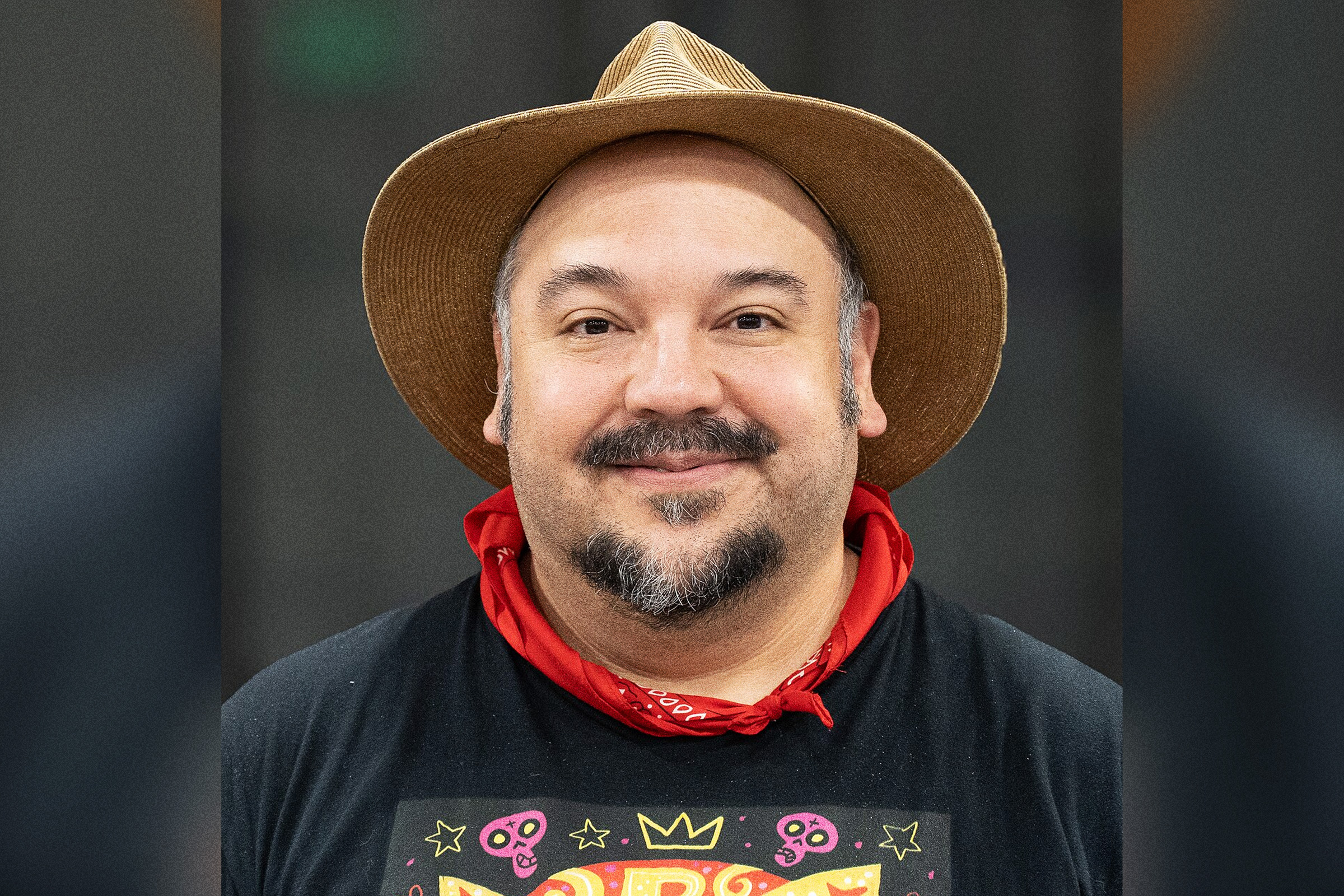
At first, it felt a bit like Emmy-winning writer director Jorge Gutierrez had been living under a rock.

On May 27, Amazon announced that it had ordered an animated series, dubbed “Punky Duck,” as part of its GenAI Creators’ Fund, celebrating it as a “creative breakthrough.” The fund, a collaboration between Amazon’s MGM Studios and its Amazon Web Services, was designed to hand creators “access to professional-grade AI tools and funding” to “produce high-quality cinematic entertainment.”

Gutierrez seemingly couldn’t believe the power he’d been handed.

“The best way I can describe it is, it’s like you have sex, and then someone hands you the baby,” he told a panel during an announcement last week. “It’s pretty crazy.”

However, given the way the conversation surrounding the use of AI in creative industries has been headed, it shouldn’t come as a surprise that reactions to the news were overwhelmingly negative, with Gutierrez swiftly becoming the target of an astonishing amount of online outrage.

His Wikipedia profile was edited to describe him as a “sellout” and early attempts to allow his fans to vent their frustration on his Instagram account didn’t go over well, either, forcing him to delete swaths of posts.

Not all the derision was from the online peanut gallery.

“It is very seductive that something now exists that contains the collective works of millions of artists and wordsmiths all thrown in a blender allowing one to pour out on demand things based on suggestions and prompts,” wrote acclaimed voice actor Billy West. “You become a soul stealer, a grave robber of sorts. You are an artist! God gave you a far greater gift and purpose to share with others. We need your true self!”

The backlash was so extensive, Gutierrez ended up backtracking on the lucrative gig entirely, in one of the clearest signs yet that AI has become toxic sludge to much of the audience Amazon is trying to woo.

“I have decided to drop out of the AI program at Amazon,” he tweeted on May 29, just two days after the company’s announcement. “I will not be making a Punky Duck series. Actions speak louder than words.”

The incident perfectly highlights just how much the AI backlash has grown, with experts warning that the tech is causing cultural stagnation while Hollywood actors panic over being replaced. Some of the biggest names in the industry have publicly spoken out against the use of AI in creative fields, forming a expanding line of resistance.

It apparently wasn’t just angry comments directed at Gutierrez for “selling out.” In a separate tweet, Gutierrez said that “the racist stuff and the attack on my kid were too much,” indicating pundits online had gone to extreme lengths.

Even this attempt to defuse the situation didn’t sit well, with users accusing him of pulling the “racism card,” while others claimed he was “making this up to deflect from your piss poor choices.”

Oddly enough, Gutierrez was once a vocal critic of AI, as the Los Angeles Times reports, posting several memes decrying the tech between 2023 and 2025.

“Threatening the dude and his family is obviously going way too far, but I’m still against major animators using AI, 100 percent,” one Reddit user argued. “I’m still glad he dropped out of it, but I f***ing hate that people threatened the dude.”

“Animation isn’t worth that, the hell is wrong with people?” the user added.

Meanwhile, Gutierrez has tried to get the angry mob back on his side.

“Learning a lot from many of you,” he tweeted. “Thank you. Lots of information that I’m digesting wholeheartedly. I am absolutely understanding the concern of using AI to assist an animation pipeline.”

“For all those showing me grace, I really appreciate it,” Gutierrez added. “I have a lot to think about.”

More on AI backlash: Harvard Graduation Speaker Unloads on AI in Profanity-Loaded Tirade, Prompting Cheers From Students: “I’m Here to Tell You the Mission of Your Generation Is to Destroy AI”

The post Amazon’s AI-Generated Animated Series Canceled After Relentless Derision appeared first on Futurism.

  •  

Anthropic and DeepMind Now Actively Investigating AI Consciousness

Are AI models conscious, and if not, could they be in the near future? The possibility is far-fetched, but AI companies seem to feel it’s in their best interests to keep the question as open-ended as possible.

Now, the Financial Times reports that three of the industry’s top dogs — Anthropic, Google’s AI lab DeepMind, and Meta — have all hired experts in fields like psychology, philosophy, and ethics to pursue research into machine consciousness and AI welfare. 

Anthropic, which has arguably done the most out of the bunch to anthropomorphize its models and play up the AI consciousness angle — its chatbot has the human name of “Claude,” after all — has been testing its models for behaviors that resemble “panic” and “anxiety,” per the reporting, and is pursuing “model welfare research” to explore whether AI models might have experiences that matter morally.

“We remain deeply uncertain about this, but we think the question is serious enough to study carefully as AI systems get more capable,” the company said in a statement.

DeepMind, meanwhile, has hired University of Cambridge researcher Henry Shevlin as a philosopher working on machine consciousness, human-AI relationships, and AGI readiness, per the reporting. (Earlier this year, Shevlin sparked a wave of discourse in online AI circles after sharing his stunned reaction to an email he received from an AI agent.)

DeepMind ethicist Iason Gabriel, who leads the lab’s AGI and society team, called the question of AI consciousness “very complicated,” and described AI as “highly capable cognitive agents that are also just very deeply different from human beings and even from animal consciousness.”

These weighty claims are disputed by many scientists and AI researchers. But the FT, in seeking a counterargument to round out its reporting, quotes an expert who makes claims that ascribe a questionable degree of humanlike agency to chatbots. “[AI models] have goals, they can deceive, they can hide what their true interests are,” Susan Schneider, director of the Center for the Future of AI, Mind and Society, told the newspaper. But she added it’s “entirely scientifically possible that they’re doing this without having the felt quality of experience, which is what consciousness is.”

Certainly, the possibility of AI consciousness shouldn’t be completely dismissed out of hand. But neither should alien civilizations, which are generally treated more as a sci-fi musing than an urgent existential issue. 

Moreover, we should be skeptical when most of the noise on this topic is coming from the industry itself. Anthropic CEO Dario Amodei has repeatedly dangled the possibility of AI consciousness in interviews. And his company’s research frequently makes bold claims about their models showing humanlike behavior, such as supposedly harboring “emotions.” Just remember that it’s easier for AI companies to string us along with wild Skynet doomsday scenarios instead of confronting the tech’s far mundane consequences currently playing out before our eyes.

More on AI: Was This the Moment That AI Psychosis Began?

The post Anthropic and DeepMind Now Actively Investigating AI Consciousness appeared first on Futurism.

  •  

Can AI Be Conscious? Researchers Say Science May Not Yet Know How to Tell


The question of whether artificial intelligence can be conscious has moved well beyond science fiction. It now sits at the center of scientific debate and is increasingly shaping discussions about a range of contentious issues, from AI ethics to animal welfare, fetal development, and laboratory-grown brain tissue.

However, according to a new analysis published in Neuron, the science used to answer that question may not actually be measuring what researchers think it is. A research team led by Hakwan Lau at the Institute for Basic Science in South Korea, with collaborators from the Université de Montréal and New York University, argues that many common experimental methods in consciousness research do not separate subjective experience from general information processing.

In the paper, The Ethical Impasse of Current Consciousness Science, the researchers argue that current scientific tools may not be capable of reliably detecting consciousness.

The Measurement Problem

Consciousness research relies heavily on methods such as visual masking, binocular rivalry, and the detection of perceptual limits. These methods usually compare brain responses when a person is aware of something versus when they are not. The idea is that the difference between these two cases shows whether conscious experience is present or not.

Lau and his team challenge this assumption. When experiments make a stimulus invisible, they often reduce both conscious awareness and the brain’s ability to process information about that stimulus. This means that what appears to be a marker of consciousness in the brain may actually reflect general cognitive activity.

“Many current theories of consciousness appear to be supported by a range of experimental findings,” Lau said. “But those findings may actually reflect general information processing rather than consciousness itself — so it remains difficult to conclude that these theories truly explain consciousness.”

A Historical Warning

The authors compare the current situation to the late 19th and early 20th centuries, when strong claims about consciousness led to a crisis in psychology. The resulting backlash led to the rise of behaviorism, which focused only on observable behavior and halted consciousness research for many years.

Researchers caution that a similar situation could occur again. As AI systems become more advanced and public interest in machine consciousness increases, scientists are under pressure to provide answers. If researchers make strong claims about consciousness in AI, organoids, or fetuses that lack robust methods to support them, scientific credibility could be undermined.

Better Science Required

The authors suggest a different approach. Conditions like blindsight, in which people with brain damage can respond to stimuli they do not report seeing, offer a more controlled way to study consciousness. Another example is hemispatial neglect, where patients fail to notice one side of their visual field while still having basic perception. For researchers, these conditions provide a rare opportunity to separate awareness from information processing and investigate each process on its own.

These conditions show that subjective experience and information processing are distinct from one another. The team says that building experiments around this difference is needed to make reliable scientific claims about consciousness.

The implications of this study extend far beyond the academic world. Deciding whether non-human entities are conscious has direct legal and ethical concerns. The researchers say that the science behind these decisions must meet high standards.

“Questions about consciousness increasingly carry ethical and societal implications,” Lau said. “If scientific claims about consciousness are going to influence discussions about animal welfare, AI ethics, or bioethics, then the scientific foundations supporting those claims must be especially rigorous.”

The researchers conclude that the most urgent challenge is not deciding whether AI, animals, or organoids are conscious, but developing better tools to identify consciousness if it emerges.

Austin Burgess is a writer and researcher with a background in sales, marketing, and data analytics. He holds an MBA, a Bachelor of Science in Business Administration, and a data analytics certification. His work focuses on breaking scientific developments, with an emphasis on emerging biology, cognitive neuroscience, and archaeological discoveries.

  •  

Can autonomous AI-powered killer drones take morality onboard?

While the technology is set to play a growing role in modern warfare, there remains an unresolved ethical challenge

Should the AI-powered drones of the future have a licence to kill? The question is becoming ever more pressing as governments and the defence industry acknowledge that drone systems will play an increasingly crucial role in future warfare.

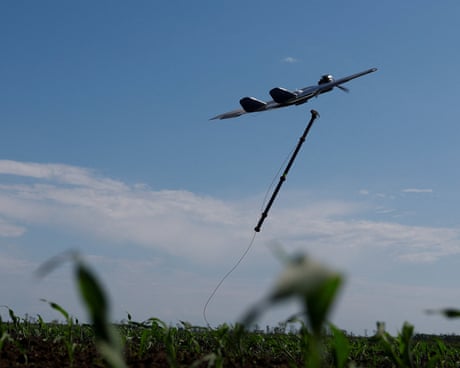
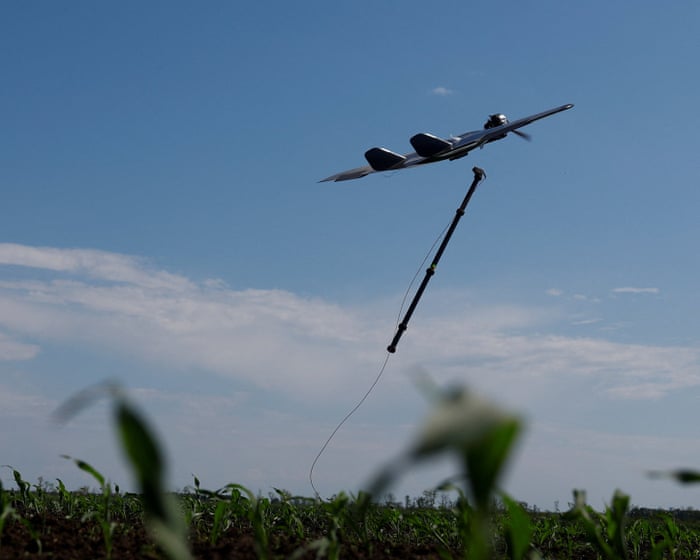
With drones being deployed in huge numbers in the Ukraine war and AI being used to assist bombing missions in the Iran conflict, there is an expectation among some observers that weapons will have to operate with increased operational autonomy, which means they will need something approximating a moral framework.

Continue reading...

© Photograph: Valentyn Ogirenko/Reuters

© Photograph: Valentyn Ogirenko/Reuters

© Photograph: Valentyn Ogirenko/Reuters

  •  

Artificial Wombs: Exploring Ethical Frontiers

In a groundbreaking development poised to revolutionize neonatal care and reproductive technologies, the emerging field of artificial womb (AW) technology has sparked intense debate among scientists, ethicists, and policymakers. As researchers publish comprehensive scoping reviews that delve into the layered ethical considerations surrounding this cutting-edge technology, it becomes evident that the future of human gestation may soon transcend traditional biological boundaries, raising profound questions about the nature of life, parenthood, and medical intervention.

Artificial wombs, also known as ectogenesis devices, are engineered life-support systems designed to mimic the biological functions of the uterus, allowing premature or otherwise vulnerable fetuses to develop in an artificial environment. Unlike conventional neonatal incubators, artificial wombs aim to recreate the complex physiological conditions that a natural womb provides, including the delivery of oxygen, nutrients, and hormonal signals essential for normal development. This technological innovation holds the potential to dramatically improve survival rates for extremely premature infants, who currently face high risks of mortality and lifelong disability.

Technical strides in AW technology have been propelled by advances in biomaterials, microfluidics, and fetal physiology. Researchers have developed sophisticated bioreactors equipped with synthetic amniotic fluid and artificial placenta interfaces capable of facilitating gas exchange and nutrient delivery while eliminating waste products. These systems simulate the mechanical and chemical environment of the womb, providing a supportive milieu that supports continuous growth and organ maturation. Animal trials have demonstrated promising results, whereby fetal lambs have been maintained inside artificial wombs for several weeks, showing notable development comparable to in utero progression.

Despite these promising advancements, the path to clinical application in humans remains fraught with technical, ethical, and regulatory challenges. One of the critical technical barriers is ensuring the precise control and replication of the uterine environment’s dynamic nature. The uterus is not a static chamber; it orchestrates complex biochemical signaling that influences the fetus’s epigenetic programming, immune system development, and neurocognitive growth. Achieving such a level of biomimicry requires integrating real-time monitoring technologies with adaptive feedback mechanisms, demanding unprecedented interdisciplinary collaboration.

The ethical dimensions introduced by artificial womb technology extend far beyond the scope of conventional neonatal care protocols. Principally, AW technology disrupts conventional understandings of gestation’s biological and social parameters. By decoupling gestation from the maternal body, it challenges the traditional gestational kinship and raises questions about the legal and moral status of the fetus under artificial care. This separation provokes debates over parental rights, responsibilities, and the potential redefinition of motherhood. Furthermore, the prospect of ectogenesis stirs societal concerns regarding reproductive autonomy, inequality, and the commodification of fetal development.

A particularly contentious aspect of artificial womb deployment pertains to the concept of viability—the gestational age at which a fetus can survive ex utero, a legal and medical benchmark for debates on abortion rights and neonatal care decisions. With AW technology potentially lowering the threshold of viability to much earlier gestational stages, this criterion could face unprecedented challenges. Ethical frameworks would need to adapt to the expanded range of survivable gestational ages, potentially reshaping public health policies and reproductive laws worldwide.

Moreover, the ramifications for fetuses with congenital abnormalities or those requiring intensive medical interventions raise critical ethical considerations. Artificial wombs could theoretically preserve and nurture fetuses previously deemed nonviable, complicating decisions about the extent of medical care and quality of life assessments. This possibility calls for robust ethical guidelines balancing the benefits of survival with respect for individual dignity and long-term outcomes.

Privacy and consent issues also loom large in this emerging field. The intimate nature of gestation, traditionally confined within the maternal body, would be externalized and subject to clinical control and technological mediation. This transition demands rigorous protocols to ensure informed consent, data privacy, and the protection of vulnerable subjects in artificial gestation settings. The question arises whether future parents or guardians can fully comprehend the implications of entrusting fetal development to machines, necessitating enhanced counseling and oversight frameworks.

Furthermore, artificial womb technology raises significant social justice concerns. Access to such advanced reproductive technologies may be limited by socioeconomic status, healthcare infrastructure, and geographic location, potentially exacerbating existing disparities in neonatal outcomes. Policymakers must therefore anticipate and address inequities in availability to prevent the widening of healthcare gaps, ensuring that AW benefits are equitably distributed.

From a psychological perspective, the impact on parent-child bonding when gestation occurs outside the maternal womb remains largely unexplored. The intimate physical and hormonal interactions during pregnancy play a pivotal role in maternal-fetal attachment and subsequent family dynamics. The absence of direct gestational involvement may influence parental bonding, emotional well-being, and child development, indicating the need for comprehensive psychological support and long-term studies.

On the regulatory front, global frameworks governing artificial womb technology are nascent and heterogeneous. Establishing consistent guidelines to oversee research, clinical trials, and eventual clinical use will require international cooperation among scientific bodies, bioethicists, and governmental agencies. Regulatory oversight must balance the encouragement of innovation with safeguarding against premature or unethical applications.

Importantly, public perception and societal acceptance will significantly influence the trajectory of artificial womb technology. Public engagement initiatives, transparency in research practices, and inclusive dialogues are essential to fostering trust and understanding. Addressing fears of “unnatural” reproduction and debunking misconceptions will be critical to integrating AW technology into mainstream medical practice sensitively.

As AW research progresses toward clinical reality, multidisciplinary collaboration will be imperative. Biomedical engineers, neonatologists, ethicists, sociologists, and lawmakers must converge to navigate the complex scientific and moral landscape. The responsible development of artificial womb technology entails anticipatory governance that proactively identifies and mitigates risks while amplifying potential benefits.

In conclusion, artificial womb technology represents a paradigm shift with monumental implications for medicine, ethics, and society. While offering hope to improve neonatal survival and reimagine reproductive possibilities, it simultaneously demands careful scrutiny of the profound ethical questions it raises. The journey from experimental prototypes to clinical tools will require deliberate, informed deliberation, ensuring that this revolutionary technology serves humanity’s best interests without compromising foundational values.

As ongoing research continues to unravel the intricacies of artificial gestation, the global community stands at a crossroads. The choices made today will sculpt the future of human reproduction and neonatal care, exemplifying the delicate interplay between scientific innovation and ethical responsibility. The promise of artificial wombs invites us to reconsider not only how life begins but also the societal frameworks that sustain it in an ever-evolving biomedical era.


Subject of Research:
Ethical considerations surrounding artificial womb technology and its implications for neonatal care and reproductive medicine.

Article Title:
Correction: Artificial womb technology; a scoping review of ethical considerations.

Article References:
De Bie, F.R., Paul, J., Malek, J. et al. Correction: Artificial womb technology; a scoping review of ethical considerations. J Perinatol (2026). https://doi.org/10.1038/s41372-026-02746-2

Image Credits:
AI Generated

  •  

This Neuralink Patient is Transforming Thoughts Into Art in a New Brain-Computer Interface Breakthrough


Neuralink’s first female PRIME trial participant, Audrey Crews, is now creating abstract art using the company’s brain-computer interface.

Crews, who was paralyzed from the neck down at age 16, has been creating memorable abstract art with her mind using an innovative brain-computer interface (BCI) technology.

Crews is the 9th Neuralink participant and the first woman to receive the implantable device in the PRIME clinical trials.  

After a car accident left her paralyzed from the neck down, Audrey didn’t think she would be able to draw or paint again.

20 years later, she became the first female participant in our clinical trials. Now, she uses her brain-computer interface to create art with her mind. pic.twitter.com/mRkJMDpgrM

— Neuralink (@neuralink) May 15, 2026

With fewer than 100 people worldwide with BCIs, Crews has found herself at the intersection of art and the future of bneuroscience. By using only the power of thought, Crews has created vibrant abstract art with rich color and shapes.

On her website, she explains why creating this art is important to her: “My mission is to expand the boundaries of human expression and share the u

nseen landscapes of the mind,” Crews says. 

Her artwork has evolved stylistically since her first showcase on X in 2025, at which time she was learning to draw her name.

“I tried writing my name for the first time in 20 years. Im working on it,” Crews said in a post on X

“I’ll never forget the moment I used my thoughts to write my name, ‘Audrey,’ on a laptop screen for the first time in two decades. I even drew hearts and a slice of pizza, which felt like a small miracle! I shared that moment on X, laughing about my progress,” Crews said on her website.

“It’s humbling to know my journey is helping Neuralink refine this technology, which could one day let millions control devices with their minds,” she added.  

Since then, Crews’ art has evolved, and she has also launched her online NeuraArt Studio, where fans can purchase limited-edition prints of her artwork.

Amid the BCI company’s efforts, Neuralink states that its devices are still “investigational and not FDA approved.” 

However, in January of this year, the company said in a statement that a “primary ‌aim of our expanding clinical trials is to better understand these variations and improve both our hardware and the overall procedure for every participant.”

Neuralink began human trials of its brain implant in 2024 after resolving safety concerns raised by the U.S. Food and Drug Administration, which had previously declined to approve its initial application in 2022.

For Crews, what she has achieved lies at the intersection of current implantable BCI technology and fine abstract art, signaling a fundamental reframing of what it means to create, perceive, and even experience such creative products—a shift from something merely observed to something partially constructed by BCI users through thought.

“This breakthrough didn’t just restore my ability to create—it ignited a passion for art that had been dormant for too long,” she says. Crews’ art can be viewed, and prints are available for purchase, on her NeuraArt Studio website.

Chrissy Newton is a PR professional and the founder of VOCAB Communications. She currently appears on The Discovery Channel and Max and hosts the Rebelliously Curious podcast, which can be found on YouTube and on all audio podcast streaming platforms. Follow her on X: @ChrissyNewton, Instagram: @BeingChrissyNewton, and chrissynewton.com. To contact Chrissy with a story, please email chrissy @ thedebrief.org.

  •  

Convicted Harvard Scientist Rebuilds Career in China Through Controversial Brain-Computer Interface Lab


A former Harvard chemistry professor convicted in the United States for concealing ties to a Chinese talent program is now leading a state-backed brain-computer interface laboratory in Shenzhen, raising fresh concerns about the geopolitical race for emerging technologies.

Former Harvard scientist Charles Lieber, 67, has rebuilt his research career in China, where he currently directs the Institute for Brain Research, Advanced Interfaces and Neurotechnologies (i-BRAIN). In 2021, he was convicted in the United States for lying to federal investigators about his financial ties to a Chinese talent recruitment program, as well as for tax-related offenses. He was sentenced to prison and later placed under home confinement before relocating to Shenzhen in 2025.

Considered a leading authority in BCI research and development, Lieber now serves as director of i-BRAIN, a laboratory operating under the Shenzhen Medical Academy of Research and Translation (SMART), a government-backed institution. The laboratory’s primary focus includes primate research and BCI chip development.

Lieber said during a Shenzhen government news conference in December, “I arrived on April 28, 2025, with a dream and not much more, maybe a couple bags of clothes.” He added, “Personally, my own goals are to make Shenzhen a world leader.”

According to Reuters, the lab provides Lieber with resources beyond what he had access to in the United States, including dedicated nanofabrication equipment and extensive primate research facilities.

Experts have previously warned U.S. officials and Congress about the privacy implications of BCI technologies, as well as potential military applications that enhance cognitive performance on and off the battlefield. Lieber’s return to cutting-edge research has renewed debate in the United States over technology security and scientific cooperation with China.

“China has weaponized against us our own openness and our own efforts for innovation,” Glenn Gerstell, an advisor at the Center for Strategic and International Studies and former general counsel for the U.S. National Security Agency (NSA), told Reuters on  May 1. “They’ve flipped that and turned it around against us, and they’re ​taking advantage of it.”

China’s policy of “military-civil fusion,” which encourages collaboration between civilian research institutions and the military, has increased those concerns in the United States. In July 2025, the Chinese government announced its goal of becoming the “gold standard” for BCI competitors worldwide. 

At i-BRAIN, Lieber’s team is reportedly currently hiring international researchers to conduct experiments involving rhesus monkeys, which have been used for BCI testing at many other companies, such as Elon Musk’s Neuralink.

In recent years, Neuralink employees have reported ongoing mistreatment and deaths of rhesus monkeys, where death certificates are openly available to see. But Musk took to the popular social media outlet X, stating that “No monkey has died as a result of a Neuralink implant. First, our early implants, to minimize risk to healthy monkeys, we chose terminal monkeys (close to death already).”

The i-BRAIN lab also offers chip-manufacturing tools, including ultraviolet lithography systems used to create tiny electronic circuits. 

Washington and Wall Street Brace for the BCI Era

In October of last year, Morgan Stanley released a private report titled, “Neuralink: AI in your brAIn” addressing that Elon Musk and Neuralink are at the forefront of a larger technological shift that society may not be ready for: one with staggering implications that could ultimately impact everything from healthcare to gaming, defense, investing, and society at large. The report also addressed the challenges of a potential “neuro-elite” evolving over time. 

“As AI moves into the physical world through expressions ranging from robotaxis to humanoids and autonomous weapons systems, we recommend paying closer attention to developments in brain-computer interface,” a portion of the paper states, under a section titled “Prometheus Shrugged.”

A month before this report was released, on September 24, Senate Majority Leader Chuck Schumer, along with Senators John Cornyn and Ron Wyden, proposed legislation to regulate BCIs, requesting that the FTC review the policy for long-term use.

Named the MIND Act, guidelines should be created alongside a framework to address ethical concerns and safeguard American interests.

Altogether, as the race to merge minds and machines intensifies, the broader consequences of who controls these technologies—and how they are used—remain in question.

Chrissy Newton is a PR professional and the founder of VOCAB Communications. She currently appears on The Discovery Channel and Max and hosts the Rebelliously Curious podcast, which can be found on YouTube and on all audio podcast streaming platforms. Follow her on X: @ChrissyNewton, Instagram: @BeingChrissyNewton, and chrissynewton.com. To contact Chrissy with a story, please email chrissy @ thedebrief.org.

  •  

Rethinking Consciousness: Could Everything From Animals to AI Be Aware?


Traditionally, consciousness has been treated as an exclusive club. Humans are unquestionably members. Most animals are often assumed to be on the outside. Plants, fungi, bacteria, and machines are typically regarded as little more than biological or mechanical systems lacking any real awareness.

However, a recent review published in Frontiers in Psychology argues that science could be asking the wrong questions and making incorrect assumptions about consciousness.

Dr. Jeff Sebo, a philosopher and professor of environmental studies and bioethics at New York University, explores an intriguing issue in modern science and philosophy: what kinds of beings should we assume are conscious before definitive proof exists.

Rather than focusing only on humans or familiar animals, Dr. Sebo’s analysis examines whether plants, fungi, bacteria, AI systems, robots, and perhaps even all matter itself could possess some form of subjective experience.

While it may sound like a mere philosophical debate, perceptions of what qualifies as consciousness influence a wide range of fields, from biomedical research to the ethical principles guiding humanity’s relationship with nature and emerging technologies.

“Questions about the distribution of consciousness in the world arise constantly in both science and ethics,” Dr. Sebo writes. “These assumptions shape everything from research design and laboratory protocols to farming practices and wildlife management policies.”

Historically, science has often assumed that nonhuman beings lack consciousness. Over the past few decades, however, a growing body of research has increasingly challenged that view, with studies suggesting that many animals—including chimpanzees, dolphins, octopuses, and even insects—possess surprisingly sophisticated cognitive abilities and can exhibit signs of self-awareness, emotion, planning, and tool use.

In 2024, forty scientists and philosophers, including Dr. Sebo, signed the New York Declaration on Animal Consciousness. The decree states that, based on the mounting empirical evidence, there is a “realistic possibility of conscious experience” in many animals. Support for the declaration has expanded dramatically, with the number of signatories growing to nearly 600 scientists and philosophers as of May 2026.

In his recent paper, Dr. Sebo takes the consciousness debate further by challenging the long-standing assumption that nonhuman beings lack consciousness unless overwhelming evidence proves otherwise. He argues that this default skepticism may actually be holding science back.

“The traditional skeptical assumption about nonhuman consciousness may be too restrictive given the current state of evidence and theory,” Dr. Sebo writes. “When we search for evidence with an open mind and non-anthropocentric methods, we tend to find at least some indicators of subjective awareness across a wide range of biological and artificial systems.”  

Instead of treating consciousness as a simple yes-or-no question, Dr. Sebo analyzes several possibilities for how consciousness may be distributed across the natural and artificial world, and examines the default assumptions scientists use when evidence remains uncertain.

One possibility is that all animals are conscious. Similarly, the concept holds that all living beings are conscious, including plants and fungi. A third prospect is the idea that any organism capable of processing sensory information may possess awareness. Another approach centers on complex cognition, potentially extending consciousness to future AI systems.

The most radical possibility is panpsychism, the philosophical idea that consciousness is a fundamental property of matter itself. However, Dr. Sebo cautions that even if simple forms of consciousness existed at the level of matter, further theory would be needed to explain how, or whether, complex conscious experience emerges in larger systems.

Dr. Sebo does not argue that a single default assumption about consciousness is always best. Instead, he argues that scientists and ethicists may need different assumptions for different purposes, depending on the evidence, the research question, and the ethical risks involved.

“We should select different default assumptions about the distribution of consciousness for different purposes and in different contexts, both within and beyond the animal kingdom,” Dr. Sebo writes. “Overall, the aim is to balance theoretical rigor with practical progress, recognizing that assumptions work differently when taken as truth claims and when taken as mere tools.”

One of the central challenges to understanding consciousness is that it remains notoriously difficult to study.

Scientists can observe behavior, brain activity, and information processing, but subjective experience itself cannot be directly accessed from the outside. In philosophy, this is known as the “problem of other minds.” Humans cannot directly verify another being’s inner experience in the same way they can access their own.

“We can directly observe behaviors and anatomies, but not thoughts and feelings,” Dr. Sebo writes. “These epistemic barriers limit our ability to draw firm conclusions about which beings are conscious.”

The inherent inability to observe subjective awareness has led researchers to develop new approaches, including the search for so-called “markers” of consciousness in animals and even in AI systems. By comparing humans and nonhumans, scientists hope to identify similarities that indicate the presence of subjective experiences in animals and in technology.

However, these techniques may have significant limitations because they rely heavily on identifying markers that resemble human consciousness. If consciousness exists in many forms, some animals and potentially future AI systems could exhibit signs of awareness fundamentally alien to human experience, making them much harder for researchers to recognize.

The paper also revisits the so-called “hard problem of consciousness,” the enduring mystery of how physical systems like brains produce subjective experience at all. Even if neuroscience eventually explains how the brain processes information, researchers will still struggle to explain why those processes feel like something from the inside.

Because of the profound uncertainties surrounding consciousness, Dr. Sebo argues that rigid skepticism toward nonhuman awareness may no longer be scientifically justified. Instead, he suggests researchers may benefit from a more flexible, probabilistic approach. Rather than treating entities as either conscious or mindless, scientists could assign varying probabilities of consciousness based on the available evidence.

Adopting this more holistic approach to consciousness could have profound ethical implications, as it would force people to rethink their attitudes towards animals, plants, and artificial intelligence.

If a creature or machine has even a modest chance of experiencing suffering, Dr. Sebo argues society may need to consider the moral risks of ignoring that possibility. Mistakenly treating a conscious being as a mere object could allow enormous harm.

The analysis compares the dangers of false positives and false negatives. Mistakenly treating a nonconscious object as conscious could waste resources or encourage unnecessary emotional attachment. But mistakenly treating a conscious being as though it lacks feelings or awareness could allow suffering on a massive scale.

“At the theoretical level, our defaults should ideally balance the risk of false positives and the risk of false negatives,” Dr. Sebo writes. “At the practical level, our defaults should also reflect what particular agents are able to achieve and sustain at present and what will build momentum toward a better calibrated moral circle in the future.”

The argument becomes especially complicated in the context of artificial intelligence. As Dr. Sebo notes, advanced AI systems could eventually force society into deeply difficult ethical territory.

On the one hand, if future AI systems become capable of mimicking human behavior convincingly enough to persuade society they are conscious, people may eventually face pressure to grant them rights or legal protections.

On the other hand, the paper argues that granting rights or political standing to machines that are not actually conscious could create serious societal dangers. Beyond deepening humanity’s dependence on advanced technologies, Dr. Sebo notes that some experts warn such decisions could even introduce existential risks if increasingly powerful AI systems were treated as entities with genuine moral or political standing.

“The result could be human disempowerment, perhaps even extinction—all for the sake of entities with no inner mental life,” Dr. Sebo writes.

At the same time, Dr. Sebo cautions against dismissing AI consciousness outright under a default stance of skepticism. He notes science’s long history of underestimating animal consciousness serves as a warning about the risks of assuming unfamiliar minds are impossible.

Rather than arguing for a single universal standard, Dr. Sebo emphasizes that different situations may require different assumptions about consciousness. Scientific theory, practical research, ethical theory, and real-world policymaking all involve different risks and goals, meaning each may require its own approach.

For example, scientists trying to open new lines of research may benefit from broader assumptions about consciousness, while policymakers designing regulations may need more cautious, incremental standards.

One of the paper’s most striking themes is that consciousness may not be a rare phenomenon restricted to humans and a handful of advanced animals. Instead, the universe may contain a far wider spectrum of minds than humanity can currently imagine.

That possibility carries profound implications for fields ranging from neuroscience and philosophy to agriculture, environmental policy, robotics, AI development, and even the search for extraterrestrial life.

Ultimately, the idea also raises deeply unsettling questions about humanity’s relationship with the rest of existence—and whether people may have vastly underestimated the presence of conscious experience in the world around them.

“The stakes of our default assumptions about the distribution of consciousness are high,” Dr. Sebo concludes. “As progress continues, our default assumptions about the distribution of consciousness could shape our decisions in a range of contexts, determining the trajectory of consciousness science and the fates of countless entities.”

Tim McMillan is a retired law enforcement executive, investigative reporter and co-founder of The Debrief. His writing typically focuses on defense, national security, the Intelligence Community and topics related to psychology. You can follow Tim on Twitter: @LtTimMcMillan.  Tim can be reached by email: tim@thedebrief.org or through encrypted email: LtTimMcMillan@protonmail.com 

  •  

Neighbors Horrified by Data Center Twice the Size of Manhattan

TV personality and businessman Kevin O’Leary is looking to construct a mammoth data center facility more than twice the size of Manhattan in Utah’s broader Salt Lake City region.

As Slate reports, the megalomaniac plans for the “Stratos Hyperscale Data Center” would see dozens of data center buildings, research facilities, and even worker housing be constructed across 40,000 acres of unincorporated land in Box Elder County, which is home to over 60,000 residents.

Given the widespread backlash to data centers across the entire country, it shouldn’t come as a surprise that many of these residents are now rushing to council meetings to forcefully refute the plans. After all, they’ve watched as other areas that welcome the facilities struggle with rising electricity prices, stressed water systems, and noise pollution.

Worse yet, the Great Salt Lake is already in crisis: it’s rapidly disappearing amid devastating droughts across the state. An extremely resource-intensive data center could place a massive new strain on it, regardless of the many reassurances from developers.

Despite initially setting aside a vote on the Stratos construction project, county commissioners eventually pushed forward, arguing that they had the “obligation” to start building, as Slate reports.

The debate drew thousands of negative comments, with hundreds of angry residents piling into a May 4 commission meeting, an all-too-familiar sight as countless Americans are desperately trying to publicly denounce plans for similar data centers in their counties.

Behind closed doors, Box Elder County commissioners eventually approved the data center, triggering an even louder outcry. Meanwhile, county attorneys argue that voters don’t have a legal say in the matter, rejecting a push for a referendum. As the Salt Lake Tribune reported last week, opponents said they were looking to take legal action after being shut out of the approval process.

“To me, and to other people I’ve talked to, it felt like it was done in the dark: backroom deals and assurances made with no transparency or government accountability,” Salt Lake City resident Larry Curtis told Slate.

Stratos remains adamant that the data center will be a boon for the region, creating 2,000 permanent jobs. Critics, though, say that figure is far too small for the sheer scale of the operation.

It’d be a fraught debate anywhere, but the backdrop here is grim: residents have been watching as the Great Salt Lake continues to shrink, with snow and rain becoming extremely sparse.

“In the past, one thing I could’ve agreed with [Utah governor Spencer Cox] on was that we need to save the lake,” resident Stephen Otterstrom told Slate. “Now this puts into question whether there is any sincerity in that.”

Yet the tides could soon start to change as the public blowback grows. The outcry has been loud enough for local politicians to backpedal after initially supporting the data center, as they realize it’s a major liability that could endanger their chances of being reelected.

More on data centers: You’ll Never Guess Trade Unions’ Position on AI Data Centers

The post Neighbors Horrified by Data Center Twice the Size of Manhattan appeared first on Futurism.

  •  

Major Teachers Union Pleads With Elementary Schools to Stop Giving Young Kids AI

Angry parents aren’t the only ones railing against the proliferation of AI in schools. The American Federation of Teachers, the second-largest teacher’s union in the United States, has now launched a major campaign calling on schools to keep AI and hardware like iPads out of elementary classrooms.

In a buzzy speech at the National Press Club on Wednesday, AFT president Randi Weingarten unveiled ten demands centered around reaffirming human-led instruction. One of the key requests: an immediate ban on AI systems in elementary school classrooms.

The AFT’s action points also included a screen ban for students in pre-kindergarten through second grade, as well as a prohibition on companion chatbots for students under 16, which schools have adopted at an alarming rate.

“If we don’t find a way to call this out from an education perspective, I fear that we will lose a generation of kids,” Weingarten told the New York Times in an interview. “The work of teaching and learning in the earliest grades should be done without AI.”

In her speech, Weingarten caveated that the AFT’s campaign isn’t some fanatical Butlerian Jihad. She is “not calling for a total ban on AI or a Chromebook bonfire,” but for “getting the balance right to harness the benefits of technology while mitigating the harms.”

Whether the AFT is successful at achieving its demands could make a crucial difference in millions of kids’ educational journey. As tech giants push schools to adopt all kinds of AI systems, a growing body of research is showing that the risks far outweigh any benefits.

As one year-long study conducted by the Brookings Institution’s Center for Universal Education found, AI in education comes with major risk of harm to children’s cognitive and social development — a horrifying thought as an ever-growing number of kids substitute real-life friends with AI chatbots.

More on AI in education: Parents Explode in Fury at School’s Plan to Constantly Film Their Children to Train AI

The post Major Teachers Union Pleads With Elementary Schools to Stop Giving Young Kids AI appeared first on Futurism.

  •  

AI Company Paying Random People $2,000 Per Month to Crank the Hog

AI companies have long relied on armies of data labelers, whose job it is to annotate, tag and classify text, images and videos to train AI models.

It’s not exactly a flashy occupation, with some saying they’re forced to watch privacy-invading footage. Others argue they’re being forced to dig their own graves by training models capable of doing their old jobs.

Other job opportunities in the space could prove more pleasurable. As Business Insider reports, a chatbot companion startup called Joi AI, which offers a NSFW character AI chat service, is hiring ten “mast**bation consultants,” according to a job listing the company posted on social media.

Best of all, chosen candidates will be paid $2,000 a month — not bad for cranking the hog to audio erotica.

These consultants are being asked to spend four weeks writing about their intimate experience while testing the company’s audio feature. Anyone can apply.

Unsurprisingly, Joi AI was quickly drowning in applications, with the company’s head of brand, Julie Levin, telling BI that the company had received over 100,000 applications in a matter of days.

“What are we supposed to do with 100,000 applications?” Levin said. “I should probably call them ‘winners,’ because it’s such a competition.”

It’s an unusual AI gig that will involve chosen candidates delivering weekly reports after completing “daily audio-guided sessions.”

“We expect people to learn something about how mast**bation affects their life in a good way or a bad way,” Levin told BI. “We wanted them to reflect on that.”

Chances are that not everybody signing up was sincerely meaning to help the company fine-tune its new audio feature. In a recent tweet, the company reflected on the types of “cover letter openings” it had received, which ranged from “this is my calling,” to “I’ve been training for this my whole life.” Other openings included “my therapist said I needed a hobby,” and “I applied on behalf of my husband.”

“Time to go pro,” one X user joked. “Ready to contribute extensive data, repeatedly, for science.”

The reality, of course, is that companies offering NSFW chatbot companionship have long been shrouded in controversy, from men creating AI girlfriends and verbally abusing them to teenagers falling in love with their new large language model-powered partners.

Experts also warn that a huge proportion of those with AI companions appear to be more depressed and lonely than those who don’t. Other research has found that people hooked on AI chatbots are more likely to experience profound breaks with reality and higher levels of psychological distress.

More on AI chatbots: Certain Chatbots Vastly Worse For AI Psychosis, Study Finds

The post AI Company Paying Random People $2,000 Per Month to Crank the Hog appeared first on Futurism.

  •  

Woman Alarmed When Her Trusted Therapist Starts Recording Her With AI

Therapy is predicated on trust. You can’t be honest and vulnerable, and share how you’re really feeling, if you don’t believe in the embodied-concerned-frown sitting in the armchair across from you.

So you can understand why one woman, 31-year-old Molly Quinn, was taken aback when her trusted therapist suddenly whipped out an AI model to start recording their private conversations, NPR reports

“She wasn’t taking notes like she usually did,” Quinn recalled realizing halfway through one session. “The iPad was just propped up.”

Where were her words being processed and stored? Will they one day become training data? It’s not something you have to ask yourself when your therapist jots stuff down on a clipboard. But those questions were now racing through Quinn’s head, leaving her uneasy.

“The more I thought about it, the more I just started getting more and more sick to my stomach,” she told NPR. “This person who I’m supposed to be able to trust with some very private and very intense emotions had just completely disregarded something I said I was not comfortable with. I felt completely violated.”

Though her therapist offered to stop using the AI tool, Quinn cut her off and found another one.

“The trust was gone,” she told NPR.

Like doctors, therapists across the country are adopting AI tools for notetaking and generating transcripts. AI companies offering these services frame it as a way of cutting down on the drudgery of paperwork and other administrative tasks, freeing up more time to focus on patients — a permutation of a common AI industry refrain: let us do the tedious stuff for you. 

The reliability of AI tools remains fairly dodgy, though, and even setting aside questions of hallucinations creeping into clinical notes — which is something we’re already seeing happen — it’s not clear whether patients are even comfortable with the tech yet. In a YouGov survey cited by NPR, only 11 percent of Americans said they would be open to using AI in mental health care. An even slimmer eight percent said they would trust AI being used this way, while 40 percent said they don’t trust the technology at all.

“Even the presence of AI changes the therapeutic experience,” Marisa Cohen, a couples and sex therapist in New York, told NPR. “Clients know or feel like something else is listening to them. That awareness can subtly alter their disclosure.”

“When you introduce something that’s being stored electronically, it raises additional questions about trust and safety,” Cohen added. “It’s essentially a third party.”

Tal Salman, the CEO a popular AI scribe tool for therapists called Berries, insists that conversation recordings are deleted immediately and that transcripts are stored on HIPAA compliant servers in the US. Even if this is true, if AI companies’ tools are to ever have a place in private mental health settings, they need the trust of patients — and that’s something the AI industry clearly hasn’t earned yet. Quinn fears that AI-recorded conversations could one day be exposed by hackers.

“We’re going to see breaches,” she told NPR. “Maybe not tomorrow, maybe not next week. But in a few years? I think we’re going to see them. And I don’t want my therapy session to be part of that.”

More on AI: The Pope Just Low Key Declared Holy War on Artificial Intelligence

The post Woman Alarmed When Her Trusted Therapist Starts Recording Her With AI appeared first on Futurism.

  •  

Harvard Graduation Speaker Unloads on AI in Profanity-Loaded Tirade, Prompting Cheers From Students: “I’m Here to Tell You the Mission of Your Generation Is to Destroy AI”

Earlier this month, former Google CEO Eric Schmidt was met with jeers when he brought up AI during his commencement speech at the University of Arizona. Just days earlier, footage of real estate executive Gloria Caulfield being booed at her commencement speech at the University of Central Florida after mentioning AI went viral online.

“What happened?” Caulfield asked the raucous crowd, incredulous. “OK, I struck a chord! May I finish?”

Apart from a complete failure to read the room, the two incidents perfectly highlight massively growing backlash to the controversial tech, with millions of students who are about to enter the workforce becoming fed up of executives celebrating AI and prioritizing investments in the tech that often come at the cost of creating new jobs.

Seemingly tapping into these widespread frustrations, “The Daily Show” host and standup comedian Ronny Chieng sang a dramatically different tune during a profanity-laden commencement speech at Harvard’s Class Day event this week.

“Can I just say f*** AI, f*** AI, f*** AI?” Chieng said, triggering rapturous applause. “I’m glad you agree. It’s so stupid. A lot of other respected graduation speakers at colleges around America are talking about you guys needing to master AI for the future.”

“I’m here to tell you the mission of your generation is to destroy AI,” he told a far more receptive crowd.

Chieng addressed ongoing concerns that AI may lead to atrophying skills, particularly among students, and a broader phenomenon experts have come to call “cognitive surrender,” in which users abandon their own reasoning to adopt the views of an AI model as their own.

“I know someone sitting out here right now who is saying, ‘What about the use of AI to pioneer breakthroughs in medicine and physics?’… If you’re using it for that purpose, you’re not the problem,” Chieng said. “I’m talking about the accumulation of cognitive debt due to excessive use of large language models… This is why you should be scared of AI.”

“Your generation’s upcoming battle won’t be humans against AI; that’s at least two months away,” he added jokingly. “It’s going to be people with substance versus people with shallow knowledge. It’s going to be mastery versus faking it. It’s going to be people with good taste versus tacky.”

To many, Chieng’s speech will likely come as a breath of fresh air. Young people, faced with dire post-graduation job prospects, are continuing to turn against AI in incredible ways, from refusing to use it at work to even intentionally undermining their bosses’ AI initiatives

University students across the country are starting to speak out, arguing that the tech is being hoisted on them against their will while undermining the role of human agency and creativity in society.

Put simply, they refuse to be replaced by machines as executives continue to celebrate AI as the next industrial revolution.

Chieng’s speech took on a more philosophical turn towards the end.

“Creating is the fun part,” he said. “Why would I want AI to take that away from me?”

More on AI backlash: There Are Signs of a Massive AI Backlash

The post Harvard Graduation Speaker Unloads on AI in Profanity-Loaded Tirade, Prompting Cheers From Students: “I’m Here to Tell You the Mission of Your Generation Is to Destroy AI” appeared first on Futurism.

  •  

DuckDuckGo Installs Spike as Google Moves to Replace Search With AI

At its I/O conference last week, Google made it abundantly clear it’s looking to leave behind the Search pages of yore, featuring hyperlinks to online content — and replacing them with a reimagined and AI-powered “intelligent search box.”

Instead of links, Google is looking to push users down an AI chatbot rabbit hole. That’s despite the tech’s glaring shortcomings, which the company has yet to meaningfully address, with the company’s flagship AI Overview feature still suffering from a staggering number of hallucinations.

Even something as simple as googling the word “disregard” sent the feature into a spiral, forcing the company to jump in after a wave of mockery.

Given the scale of the ever-growing backlash to AI, it shouldn’t come as a surprise that reactions to the latest news ranged from frustration to anger.

And many netizens are seemingly ready to call it quits once and for all, with week over week US installs of search alternative DuckDuckGo soaring 30 percent.

“People aren’t just complaining about Google’s AI search overhaul, they’re leaving,” the company’s official X account tweeted on Tuesday. “Momentum is growing. It’s time to Fire Google.”

“Google is force-feeding AI with no way to opt out,” DuckDuckGo founder and CEO Gabriel Weinberg told tech journalist Paul Thurrott. “As a result, their results are getting worse, not better.”

“We want to be the place that puts users in charge and allows them to decide how much or how little AI they want,” he added. “That’s why we’re seeing a spike in people coming to DuckDuckGo this week, it’s as simple as that.”

Underscoring it all, responses to Google’s latest announcement were predominantly negative.

“Nobody asked you to change the box we asked you to fix the results,” one Reddit user wrote.

“Change how people use the Internet, by making them switch to Duck Duck Go,” another user joked.

The development highlights a growing surge in AI backlash, ranging from rural American towns revolting against plans for AI data centers to students jeering at the mere mention of AI during commencement speeches.

That backlash has become particularly apparent in the software world, with Microsoft finding out the hard way that its all-in approach to AI has become immensely unpopular.

Technically speaking, DuckDuckGo does offer its own AI product, called Duck.AI, as TechCrunch points out. However, the company appears to have grown wise to the backlash, offering a specifically AI-free search page — which has also seen traffic surge as of late.

More on Google search: Google Is Making Huge Changes That Are Poised to Decimate What’s Left of Journalism

The post DuckDuckGo Installs Spike as Google Moves to Replace Search With AI appeared first on Futurism.

  •  

Corporations Reeling From Huge AI Costs With No Clear Benefits

Companies that fell head over heels for AI are experiencing a rude awakening.

Costs to access powerful AI tools are soaring, forcing company leaders to ask some difficult questions. As Axios reports, the early warning signs are already here, with Microsoft planning to remove its Anthropic Claude Code licenses after opening up access to the tool just six months ago, reportedly for financial reasons.

Uber COO Andrew Macdonald also admitted during a recent podcast appearance that gains in productivity simply weren’t being reflected in the company’s soaring AI-related expenses.

Meanwhile, industry leaders including OpenAI CEO Sam Altman and Anthropic CEO Dario Amodei are walking back their initial claims that AI will lead to a jobs apocalypse, further stoking concerns that the tech may not be all it was initially cracked up to be during the height of the AI hype cycle.

It’s a perfect storm as companies ponder the real-world benefits from their costly investments in AI, if there even are any. That’s particularly true for companies finding that some of their employees are using AI models for meaningless tasks — like checking the weather, as one CTO told Axios, which is an incredibly expensive and roundabout way of getting a meteorological update.

CloudBees CEO Anuj Kapur told the publication that use cases for the tech are limited and that the “reality of AI right now is that it only works for coding.”

Simply put, many are finding that AI just isn’t exactly a money maker. Former Microsoft chief AI officer Sophia Velastegui added that “most people default to automating tasks they dislike rather than tasks most valuable to the company.”

Then there are ongoing concerns over allowing AI agents to run autonomously could open companies up to new risks, such as data leaks.

It’s an uncomfortable predicament to be for an AI industry making trillion-dollar bets on imminent surges in demand and soaring revenues. As the Wall Street Journal reported last month, OpenAI missed its own targets of reaching one billion weekly active users for ChatGPT by the end of 2025, as well as several revenue goals.

In other words, enterprise customers reeling from soaring costs is the very last thing the AI industry needs. Without meaningful use cases and more clarity on a possible return on investment, firms may think twice before spending vast sums on the tech — a harsh reality check for an industry that has long heavily relied on hype and seemingly endless investor enthusiasm.

More on AI prices: Uber Says Its AI Costs Just Aren’t Worth It

The post Corporations Reeling From Huge AI Costs With No Clear Benefits appeared first on Futurism.

  •  

Anthropic Customers Creeped Out by Its Newest Models

Earlier this year, Anthropic started rolling out its latest Mythos AI model to a select number of organizations as part of a deliberately slow and careful launch.

The goal was to give them a fighting chance to address any cybersecurity lapses in their code. Anthropic warned that Mythos was powerful enough to blast holes in their defenses with ease.

Months later, Anthropic cofounder Chris Olah traveled to the Vatican this week to speak at an announcement of Pope Leo’s first encyclical, which happened to be about AI and its associated risks. In remarks, Olah ominously said his team of engineers kept discovering mysterious and even “unsettling” things inside the company’s models.

Add it all up, and the the company’s customers are perturbed. Developers attending recent Claude Code workshops in London last week told Bloomberg‘s Parmy Olson that they were becoming concerned over AI models and agents being given unprecedented levels of autonomy, raising hard-to-ignore questions over accountability in case things were to go south.

Claude Code head of product Cat Wu assured Olson that the system was “incredibly secure” and that it was more of a matter of insufficient communication, not a lack of controls.

But that likely won’t be of much reassurance to developers, who feel like they’re being pushed out of the programming process, relegated to watching an AI tool spit out code over hours, if not days. Others pointed out that the latest iterations of Claude Code were no longer displaying text describing their ongoing chain of thought, further obfuscating their inner workings.

It’s a particularly pertinent subject as Anthropic desperately tries to paint itself as the morally conscious and responsible adult in the room, as perfectly illustrated by Olah’s highly unusual appearance at the Vatican this week.

In many ways, the AI company appears to want it both ways, calling for more oversight and care while also rolling out powerful AI tools that have human developers unsettled.

The potential risks are apparent as ever. With less human oversight, future errors tools like Claude Code may introduce could become increasingly difficult to meaningfully address. Experts have also warned of skill atrophy as programmers start relying more and more on AI coding assistants. As 404 Media reported earlier this month, many developers are alarmed to observe that their peers are quickly losing technical skills due to over-relying on the software.

But not all may be lost. As access to these tools starts to become prohibitively expensive to many as the true costs of AI come into focus, some much-needed human oversight might not be dead quite yet.

More on Anthropic: Anthropic Cofounder Travels to Vatican, Tells Pope They’re Finding “Unsettling” Things Inside AI Models

The post Anthropic Customers Creeped Out by Its Newest Models appeared first on Futurism.

  •  

Influential Tech Founder Says His Peers Are Suffering From Mass AI Psychosis

It’s no secret that many of the world’s top CEOs are obsessed with AI. By pursuing lofty goals of complete AI automation, these executives have created one of the largest financial bubbles in recent memory while transforming the job market into a barren wasteland, with little to show for their efforts so far.

As the top tech companies have yet to find a way to turn AI into a profitable venture, those decisions to go all-in on AI are looking increasingly delusional. According to Aaron Levie, CEO and founder of the massive cloud computing company Box, there’s a simple explanation for it: many of his colleagues are suffering from AI psychosis.

“CEOs are uniquely prone to AI psychosis because they’re sufficiently distant from the last mile of work that still has to happen to generate most value with AI,” Levie wrote on X-formerly-Twitter. Translation: AI-happy CEOs are out of touch with the rank-and-file workers tasked with making their AI ambitions come to life.

As an example, Levie offers cases in which corporate executives say “look I made this awesome product prototype” with an AI chatbot. “Yes but you didn’t have to review the code before it went into production and fix a bunch of issues,” he retorts.

Whether “AI psychosis” is the best metaphor for this concept is up for debate. Arguably the most common definition of AI psychosis is that it’s a phenomenon where extreme interactions with AI triggers or amplifies delusions or paranoia, sometimes already existing and sometimes seemingly newly cooked up with the AI. The symptoms can be extreme, with AI chatbots convincing victims that they’re communing with God-like entities, or have singlehandedly uncovered a grave threat to humankind.

There are indeed some executives who seem to fit the bill. Last year, Futurism reported that colleagues of Geoff Lewis, managing partner of the multi-billion dollar investment firm Bedrock, were concerned that he was suffering from a break with reality after spending too much time with ChatGPT (ironically, Bedrock was an early investor in OpenAI.) In that case, Lewis had claimed to be mapping an incomprehensible “non-governmental system” that was designed to disrupt his life.

That said, there’s a major gap between an exec believing they’re targeted by a vast conspiratorial network and an exec buying into AI hype. The phenomenon Levie is identifying might better fall under “organizational blindness,” a known phenomenon where leaders of a company find themselves disconnected from the reality of work on the ground. Coupled with a ravenous hunger for profit, this kind of tunnel vision seems to be exactly what we’re seeing in companies around the globe.

In today’s world, many executives and managers operate at an abstract level, working via spreadsheets, emails and Zoom meetings. This is different from concrete labor, meaning the specific, friction-heavy tasks that workers perform, like writing code or wiring server racks. When a board-room full of executives loses sight of this tangible labor — by failing to consider the kinds of tasks AI chatbots are actually good at, for example — it can certainly create a break from material reality, though one driven by social factors rather than psychological.

In other words, there are two possibilities: either the world’s CEOs are losing their minds, or they’re just succumbing to the latest manifestation of capitalism run amok. Occam’s razor probably suggests the latter.

More on AI and CEOs: 99 Percent of CEOs Are Preparing to Lay Off Workers and Replace Them With AI Within Two Years, Survey Finds

The post Influential Tech Founder Says His Peers Are Suffering From Mass AI Psychosis appeared first on Futurism.

  •  

AI Firm Trots Out Digitally Resurrected Corpse of Stan Lee You Can Use to Create Mind-Numbing Slop

Stan Lee, an icon of the comic books world, died in 2018.

But tell that to ElevenLabs, the AI voice synthesizing firm. On Wednesday, the company announced that it signed a new deal with the famed Marvel writer’s social media brand, Stan Lee Universe, allowing it to replicate his appearance and voice using AI — meaning that Lee will still be giving cameos beyond the grave, only this time without his say so. 

“You know what they never tell you about legends? They outlive the page,” an AI Stan Lee said in a video released by ElevenLabs, per Variety.

“With great power comes great responsibility,” mimed the AI Lee in another video. “Excelsior!”

According to the announcement, users can pick Lee’s AI clone on the ElevenLabs “Iconic Marketplace” to narrate audiobooks and, in further mockery of his legacy, create AI generated comic panels that star him in it.

ElevenLabs will also launch a new “Stan Lee Book Club of the Month” series, in which the AI Lee will read a different book every month.

AI resurrections of dead public figures are always controversial and ethically fraught. But it feels especially egregious in Lee’s case, as he was allegedly the victim of horrific elder abuse in his final years, before dying at the age of 95. A lawsuit accused his handlers of trotting out the ailing writer to make money off his frequent public appearances, forcing him to write his signature for fans even when he appeared to forget where he was and how to spell his name. AI, arguably, is now further robbing him of his autonomy and dignity.

Stan Lee Universe doesn’t see it that way, with its board member and lawyer Chaz Rainey seeming to argue that this is all in keeping with Lee’s spirit.

“Stan always believed in meeting his fans where they were: in the pages of a comic, at a convention, or in a quick on-screen cameo,” Rainey said in a statement to Variety. “This partnership is a way of continuing that. Fans have always told us that when they read his comics, they hear the words in Stan’s voice, and now, thanks to ElevenLabs, we can make that a reality.”

AI necromancy has taken a foothold, complaints of its unsavoriness notwithstanding. It was used in a major blockbuster film, “Alien: Romulus,” in 2024 to bring back British actor Ian Holm, who portrayed the android Ash in the original film. Darth Vader voice actor James Earl Jones signed a deal before his death allowing his voice to be cloned by an AI firm, and an AI-voiced Darth Vader appeared in Fortnite years later. And an AI resurrection of the actor Val Kilmer is being used in “As Deep as the Grave,” a film Kilmer agreed to star in but couldn’t because he succumbed to his battle with throat cancer.

More on AI: OpenAI’s Attempt at an AI-Generated Pixar-Style Movie Is in Shambles

The post AI Firm Trots Out Digitally Resurrected Corpse of Stan Lee You Can Use to Create Mind-Numbing Slop appeared first on Futurism.

  •  

Debt Collectors Are Being Replaced With AI Agents

With inflation out of control amidst a low-fire, low-hire economy, the amount of private debt in the United States is at an all time high. That’s a grim milestone for any country, let alone one as technically rich as the US — and it’s leading to a massive rise in late payments and credit delinquency.

But as more and more lenders come looking for their payments, it’s increasingly AI — rather than humans — doing the collecting.

New reporting by Wired details the rise of AI agents for hounding debtors. As one Seattle man identified as Ben told the publication, autonomous bots are even making erroneous calls on old debts that have already been settled.

During a call regarding a $266 dispute with a past landlord, Ben said he was hounded by Eve, an obviously artificial voice agent sent by the company ProCollect.

“Would you like to resolve it today by card or bank transfer?” the AI agent asked.

Knowing that he had already settled the dispute, Ben poked and prodded, trying to test its limits after it refused to connect him to a human. “I figured it was just going to kick me over to a person when I asked about repayment structure or anything more technical,” he told Wired.

In the end, he got the bot to engage in some quasi-sexual roleplay, where he was “just a little guy” and his debt was a sultry giantess. After a few minutes of this, Ben says he was unceremoniously whisked away to a human, who confirmed the debt had been settled.

As cofounder of AI call center startup Altur Pedro Fernández told Wired, debt collectors are some of his sector’s “best early adopters.” Altur, for example, places over 2.5 million debt calls a month with AI agents.

It’s not surprising they get things wrong, either. Debt collection is based on massive webs of data, spreadsheets which are essentially sold down the line from the original creditors to second-hand buyers, a sloppy and frustrating system at best.

For all their faults, humans are infinitely more reasonable when it comes to resolving discrepancies that turn up in the shuffle. While nobody likes a debt collector, human or otherwise, at least you can argue back to a fleshbag.

More on AI agents: Oops: Bosses Realize Their Companies Have Been Swarmed by Legions of Redundant AI Agents

The post Debt Collectors Are Being Replaced With AI Agents appeared first on Futurism.

  •  

Nvidia CEO Begs Execs to Stop Telling Workers They’re Fired Because of AI

We’ve long had our doubts about tech leaders making boisterous claims about automating jobs with AI.

For a while now, executives have raised eyebrows by justifying sweeping layoffs by arguing that AI had made thousands of roles redundant. But as reality settles in and the tech’s real-world capabilities are coming into focus, some in the industry are starting to sing a dramatically different tune.

Most recently, Nvidia CEO Jensen Huang scorned other executives for wrongly justifying layoffs with AI — and telling them to cut it out. The hidden implication: soaring costs are the real culprit, especially when it comes to AI-related spending, mismanagement, and over-hiring.

“The narrative that connects AI to job loss, for many of the CEOs that are doing it — it is just too lazy,” Huang told Channel News Asia. “AI has just arrived, how is it possible they’re already losing jobs?”

“How is it possible that AI became productive and useful only six months ago, and they were somehow laying people off two years ago because of AI?” he added. “It doesn’t make any sense.”

Huang didn’t beat around the bush in his searing comments.

“It was just a way for them to sound smart and I really hate that,” the CEO argued. “I think we’re scaring people, and that’s irresponsible.”

We’ve long suspected that CEOs have been trying to mislead investors by claiming that much human labor was simply no longer needed in the age of AI. In one particularly telling episode earlier this year, Twitter founder and Block Inc (formerly Square) CEO Jack Dorsey announced he was slashing his company’s workforce by “nearly half,” citing the emergence of “intelligence tools” that are “accelerating” changes.

Former staffers quickly threw cold water on his claims, arguing the layoffs were actually the result of over-hiring, particularly during the COVID-19 pandemic.

Instead of a dramatic rise in productivity, what’s far more likely is that companies are draining their pockets by making enormous investments in AI. That’s especially pertinent as the cost of accessing AI cloud computing resources continues to soar, forcing companies to slow down hiring.

To Huang, it’s the result of a lack of ambition, more than anything else. He also remains hopeful about AI ultimately leading to more jobs, not fewer.

“It’s more likely that the companies with ambition will be more productive, they will do things faster, their company will increase in velocity,” he told Channel News Asia. “As a result, they become larger, more profitable. When they become larger, more profitable, they’ll end up hiring more people.”

“Of course, they’ll use more AI, but they will also hire more people,” he added.

It’s a shift in messaging. Just last year, Huang warned in a CNN interview that “if the world runs out of ideas, then productivity gains translates to job loss” and that “everybody’s jobs will be affected” while “some jobs will be lost.”

Huang isn’t alone in dismissing AI layoffs. Just last week, Google DeepMind CEO Demis Hassabis accused leadership at other companies of a “lack of imagination” for blaming layoffs on AI.

In short, it’s a harsh reality check that flies in the face of ongoing narratives being pushed by executives desperately trying to convince investors that unprecedented levels of spending are justified.

“This is not a minor disagreement about messaging,” marketing publication State of Brand wrote. “This is the people selling the shovels telling the miners to stop blaming the shovels for the cave-in.”

More on Nvidia: Nvidia CEO Says AI Will Be a Permanent Micromanaging Boss Who Never Stops Nagging You

The post Nvidia CEO Begs Execs to Stop Telling Workers They’re Fired Because of AI appeared first on Futurism.

  •  
❌