
Reading view

Attosecond interferometry meets quantum optics

Experimental attosecond science is built around the ability to generate and control light flashes lasting billionths of a billionth of a second. Such extreme pulses can be created through high harmonic generation (HHG), where an intense laser field drives electrons out of atoms or solids and then forces them back, releasing bursts of extreme ultraviolet radiation. Techniques like this have transformed our ability to observe electron motion on its natural timescale.

To extract information from such ultrafast processes, physicists often rely on attosecond interferometry. By combining a strong laser field with a weaker second colour, different electron trajectories are made to interfere, imprinting timing and phase information onto the emitted harmonics. Over recent years, these schemes have become standard tools for attosecond metrology and spectroscopy.

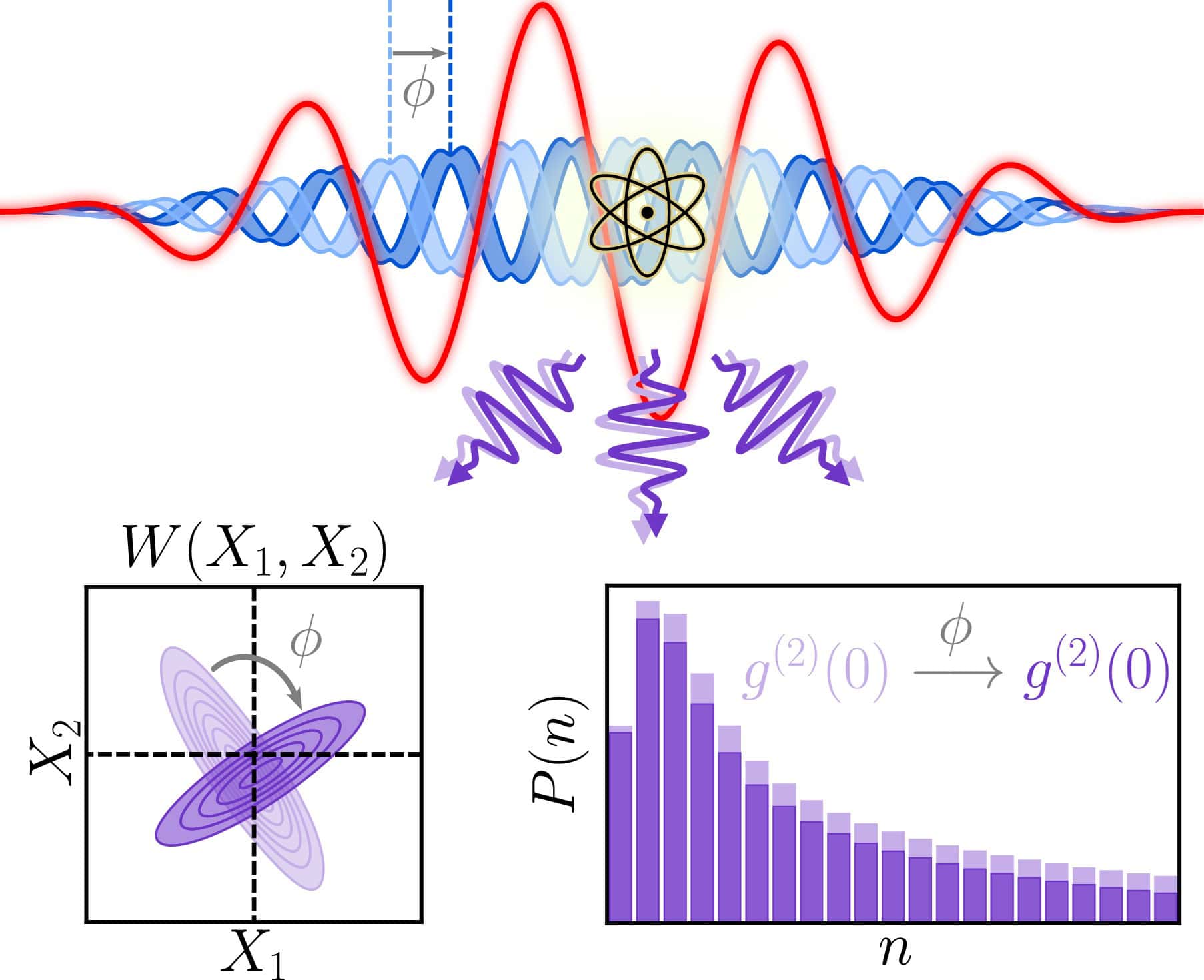
In a recent paper published in Reports on Progress in Physics, Javier Rivera Dean et al, revisited this idea from a quantum optical perspective. Treating both the driving fields and the emitted harmonics as quantum rather than classical objects, they analysed how attosecond interferometric control influences the photon statistics, correlations and phase space structure of the generated light. Their calculations show that even when harmonic radiation appears classical in its average properties, its underlying quantum state can carry rich and measurable structure.

The study also explores how interferometric phase control can be repurposed as a practical probe of quantum optical features in spectral regions where standard techniques, such as homodyne detection, are unavailable. This represents a new approach for measuring phase-space distributions through tomographic reconstruction: attosecond quantum tomography.
Attosecond quantum scheme
Illustrative image new of experimental scheme proposed in their paper (Credit: J. Rivera-Dean).

By combining quantum optics with common attosecond techniques, the work shows how ultrafast science is increasingly becoming a platform not just for watching electrons move, but also for studying light itself at the shortest timescales accessible in the laboratory.

Read the full article

Attosecond quantum optical interferometry – IOPscience

J. Rivera-Dean et al 2026 Rep. Prog. Phys. 89 047901

Do you want to learn more about this topic?

The physics of attosecond light pulses – IOPscience by P. Agostini and L. F. DiMauro (2004)

The post Attosecond interferometry meets quantum optics appeared first on Physics World.
  •  

Pushing many-body entanglement to its absolute limit

An absolutely maximally entangled (AME) state is one in which every possible division of a many-body system into two groups is as entangled as quantum mechanics allows. This makes AME states uniquely valuable as benchmarks for quantum theory and as resources for quantum technologies. Yet basic questions about their existence, structure and classification have remained unresolved, even after two decades of study.

In a new work, dedicated to Ryszard Horodecki, this field has been advanced in several important ways. First, the authors provided a comprehensive and up to date overview of known methods for constructing AME states, going beyond traditional approaches based on stabilizer and graph states. The authors showed how recent ideas from combinatorics, matrix and group theory generate entirely new families of highly entangled states that were previously unknown.

They also went on to study how entanglement behaves when particles are removed from an AME system. This reveals how robust these extreme states are to loss and noise, an essential consideration for real quantum technologies.

One highlight is a solution to the quantum version of Euler’s famous “36 officers” problem.  This puzzle asks whether 36 officers from six ranks and six regiments can be arranged in a 6 x 6 grid so that no row or column repeats a rank or regiment. Classical mathematics proves this is impossible.

The paper shows however, that quantum mechanics can bypass this restriction altogether. By using an absolutely maximally entangled quantum state, the researchers constructed a quantum version of the puzzle in which all constraints are satisfied simultaneously. The solution relies on superposition and quantum entanglement rather than fixed arrangements, illustrating how quantum theory enables outcomes forbidden in classical mathematics.

By mapping the limits of multipartite entanglement, this work connects abstract theory with practical goals such as quantum error correction, secure communication, and benchmarking future quantum computers.

Read the full article

Absolutely maximally entangled pure states of multipartite quantum systems – IOPscience

Grzegorz Rajchel-Mieldzioć et al 2026 Rep. Prog. Phys. 89 057601

The post Pushing many-body entanglement to its absolute limit appeared first on Physics World.

  •  

Flying focus wakefields open a new acceleration regime

Conventional particle accelerators use radio frequency cavities to push particles to high energies, but these machines are vast and expensive. Laser wakefield accelerators (LWFAs) offer a radically different approach. When an intense laser pulse travels through a plasma, it drives a rippling disturbance called a wakefield. Electrons can be trapped in this plasma wave and surf along it, being boosted to very high energies over just centimetres.

However, these electrons tend to outrun the plasma wave that accelerates them, a limitation known as dephasing. One proposed way around this problem is the flying focus: a laser pulse engineered so that its point of highest intensity moves along the propagation axis at a controllable velocity. By matching this velocity to that of the electrons, the plasma wakefield could, in principle, remain phase locked to the particles, enabling sustained acceleration. While the flying focus concept has been theoretically developed and experimentally demonstrated in principle in recent years, the detailed structure and behaviour of the resulting wakefields has not yet been optimised for applications.

In a new study, a team of researchers from the Weizmann Institute of Science probed these wakefields directly, combining high resolution experiments with advanced simulations. Using femtosecond relativistic electron microscopy, the team sent a separate electron beam through the flying focus wakefield, allowing them to image its electromagnetic structure with micrometre spatial resolution and femtosecond timing.

The results reveal that flying focus wakefields are stable but highly structured, blending linear and nonlinear features and extending off axis in ways not seen in conventional laser driven wakefields. The study also shows that factors such as plasma density, composition and ionisation dynamics can significantly reshape the wake. These effects must be carefully modelled and controlled if the scheme is to deliver on its promise.

By opening a direct experimental window onto flying focus wakefields, the work provides the crucial insight needed to turn a compelling idea into a practical technology.

Read the full article

Probing flying-focus wakefields – IOPscience

Aaron Liberman et al 2026 Rep. Prog. Phys. 89 038501

The post Flying focus wakefields open a new acceleration regime appeared first on Physics World.

  •  

Limits on communication in quantum measurements

Quantum technologies often imagine distant users – Alice and Bob – sharing entangled particles and trying to learn something about them. In principle, the most powerful measurements are global: Alice and Bob act as if their systems were in the same lab. In reality, they are usually limited to local operations and classical communication (LOCC). This means that each makes measurements locally and sends classical messages back and forth. A long standing debate is how much classical communication is actually required to perform a given quantum task.

In a recent article, Arthur Dutra and colleagues, tackled this question by analysing quantum measurements that use just one round of classical communication. Rather than treating LOCC as an all or nothing option, the team asked more precise questions. Who should measure first? How many classical bits are needed? Does Bob really need to adapt his measurement based on Alice’s message?

Their key contribution is a new mathematical framework that turns these questions into efficiently solvable optimisation problems. Using a hierarchy of semidefinite programmes (a standard tool in quantum information theory) the authors placed tight upper bounds on what one round LOCC measurements can achieve, even when the size and direction of the classical message are fixed.

Applying this framework to the task of guessing which quantum state was prepared (quantum state discrimination) they uncovered several surprises. In some cases, it matters a lot who measures first: Bob first strategies can outperform Alice first ones, even when only one classical bit is exchanged. Perhaps most interestingly, they showed concrete examples of adaptive strategies (those in which Bob’s measurement depends on Alice’s outcome) are provably more powerful than any non adaptive approach.

Beyond these examples, the work offers a general way to quantify classical resources in quantum protocols. As future quantum networks face practical limits on latency, memory, and bandwidth, knowing exactly how many bits must be communicated, and when, may be just as important as entanglement itself.

Read the full article

Structure of quantum measurements implementable with one round of classical communication – IOPscience

Arthur C R Dutra et al 2026 Rep. Prog. Phys. 89 037601

The post Limits on communication in quantum measurements appeared first on Physics World.

  •  

Trapping light in open space

Photonic crystal slabs are periodic structures that confine light in two dimensions while allowing it to leak in the third. Their in‑plane periodicity forces light to behave like an electron in a crystal, forming bands rather than isolated modes.

These objects can host an array of novel physical phenomena, from ultra‑sharp resonances to exotic singularities such as exceptional points. Among the most intriguing are bound states in the continuum (BICs). These are modes that, despite lying in an energy range where radiation is allowed, remain perfectly confined.

In a new theoretical study, a team of researchers from China showed that this leakage, and its surprising absence in certain cases, can be understood from a single first‑principles viewpoint. Central to their approach are Bloch waves and the scattering matrix.

Bloch waves are the natural building blocks of waves in periodic structures. Instead of spreading freely, light inside a photonic crystal is organised into Bloch waves whose fields repeat from one unit cell to the next, up to a phase factor. Even in an open slab, only a small number of these Bloch waves propagate across the thickness and carry energy towards the surrounding medium.

The scattering matrix describes how incoming waves are converted into outgoing ones by the periodic structure. The values of frequency where the matrix becomes singular (its poles) correspond to resonant modes. For open systems, these frequencies are complex: the real part sets the resonance position, while the imaginary part measures how fast energy leaks away.

One key insight of this work is that the complexity of the problem collapses dramatically once the analysis is restricted to the minimal set of Bloch waves that actually propagate. Interference between just two waves can already explain “accidental” bound states in the continuum (BICs), where radiation vanishes despite the mode lying in an open channel. Including three waves naturally produces Friedrich–Wintgen and symmetry‑protected BICs near band crossings. Adding polarisation reveals far‑field vortices and exceptional points.

By grounding resonant photonics in a minimal scattering‑matrix picture, the authors unify a wide range of phenomena within a single, transparent framework. This should prove valuable for designing efficient resonators, lasers, and topological photonic devices.

Read the full article

Complex band structure and bound states in the continuum: a unified theoretical framework – IOPscience

Jie Liu et al 2026 Rep. Prog. Phys. 89 037901

The post Trapping light in open space appeared first on Physics World.

  •  

What happens when a Bose–Einstein condensate becomes turbulent?

The concept of turbulence is one of physics’ most persistent challenges, defying a simple description despite decades of research. Adding quantum mechanics into the mix only makes things more complicated.

BECs are formed when atoms are cooled down to close to absolute zero. In this state they behave as a single coherent quantum fluid. They enable the observation of quantum behaviour on a macroscopic scale, enabling breakthroughs in fundamental physics and ultra‑precise technologies.

Waves can form within a BEC when it’s disturbed, just like in any other fluid. These can travel through the material, interacting, cascading and ultimately forming turbulent patterns.

When the turbulence is weak, and the chaotic interactions are small, perturbative wave‑interaction theories work well. A complete, simple theory of strong turbulence, however, remains elusive. Nonlinearities dominate and approximations break down.

The new paper sets out the conditions for a BEC to shift from weak to strong turbulence, offering a clearer way to interpret experiments and simulations. The work explains how nonlinear interactions, external driving, and dissipation help to shape the turbulent cascade. This process is analogous to classical turbulence but is fundamentally altered by quantum mechanics.

The authors emphasise that distinguishing the two turbulent regimes is essential for interpreting modern ultracold-atom experiments, where turbulence can be intentionally engineered using a shaking potential trap.

As BECs continue to serve as pristine platforms for simulating complex fluid behaviour, understanding their turbulent states is becoming increasingly important. The results of this paper will be invaluable for future investigations into quantum turbulence, non-equilibrium statistical physics, and the boundary where order gives way to chaos in quantum matter.

Read the full article

Strong and weak wave turbulence regimes in Bose–Einstein condensates – IOPscience

Ying Zhu et al 2026 Rep. Prog. Phys. 89 030501

The post What happens when a Bose–Einstein condensate becomes turbulent? appeared first on Physics World.

  •  

The mathematics of quantum entanglement

Most headline-grabbing advances in quantum mechanics today are experimental in nature: more qubits, entangled particles, fewer errors.

Often overlooked are the advances in the mathematics that underpins the behaviour of these quantum systems.

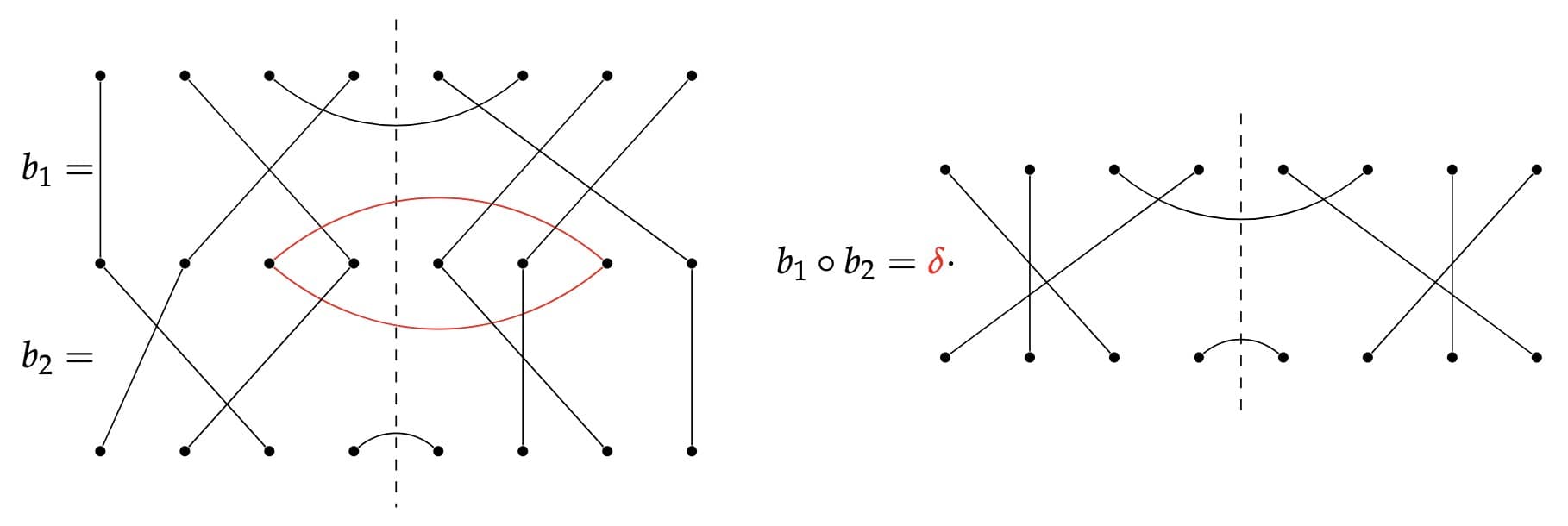
The walled Brauer algebra is an abstract but increasingly important mathematical structure that appears in quantum information theory whenever physicists study particles, symmetries and transformations involving permutations and partial transposition.

Work in this area inevitably leads to the question of how a system transforms when particles are permuted or when one part of a composite object is flipped (transposed) while the rest is left untouched. Collect all such operations together and you get the walled Brauer algebra. It plays an important role in the mathematical description of problems ranging from entanglement detection to advanced teleportation schemes.

Brauer Algebra
The walled Brauer algebra (Credit: M. Horodecki, M. Studziński and M. Mozrzymas)

The problem is that this algebra is famously intricate. Until now, physicists have only been able to describe its structure using methods that do not fully align with the natural symmetries of the system, making calculations heavy and sometimes opaque.

The new work changes that. The authors have developed an iterative construction that builds the algebra piece by piece, revealing its architecture in a symmetry-compatible way. Instead of a tangled hierarchy, the algebra unfolds into independent components, each shaped by the action of two symmetric groups.

The result is not just a more elegant mathematical picture; it is also a new framework that can make symmetry-based analysis of complex quantum-information problems more systematic and transparent.

This matters now more than ever. Quantum technologies increasingly involve many-particle configurations where symmetry is both a feature and a challenge. Teleportation schemes that move quantum information without moving particles, algorithms that manipulate unknown quantum operations, and proposals for higher-order quantum processes all rely on understanding how transformations behave under symmetry.

By clarifying this structure, the new framework could help researchers analyse these settings more effectively and support the development of better-controlled entanglement- and teleportation-based protocols.

Read the full article

Iterative construction of group-adapted irreducible matrix units for the walled Brauer algebra – IOPscience

M. Horodecki et al 2026 Rep. Prog. Phys. 89 027601

The post The mathematics of quantum entanglement appeared first on Physics World.

  •  

Revealing the magic in hybrid quantum systems

This property determines whether a quantum system can outperform even the fastest classical supercomputer. Until now, scientists could quantify magic in systems of qubits, but not in systems of bosons such as photons or hybrid devices of coupled bosons and spins, like those used in real quantum hardware.

In this new work, a team of researchers from Taiwan and Japan proposed the first unified way to measure magic in systems that combine both spins and bosons. These hybrid platforms appear everywhere from superconducting circuits to trapped ion quantum processors. However the quantum resources inside them have remained difficult to identify.

The team’s new framework uses the shape of a quantum state in phase space to define a family of magic entropies that apply cleanly to qubits, bosons and crucially, the interactions between them.

To test the idea, the researchers examined the Dicke model, a paradigmatic system in which many spins couple to a single light field. As the system approaches a superradiant phase transition (a dramatic collective reorganisation), the shared non-classical behaviour across both spins and photons (the hybrid magic) peaks at this transition. This provides another way to identify the critical point, alongside familiar tools such as entanglement. Another interesting result is that, in the finite systems studied here, the quantum magic in the spin sector increases sharply, while the bosonic magic saturates to a finite value. This contrast suggests that these measures capture different aspects of the quantum state.

The team also analysed how magic evolves dynamically in the Jaynes–Cummings model, where a single spin and a single photon exchange energy. As the two systems swap excitations, magic flows back and forth, and have different behaviours for bosonic and spin parts, providing a picture of how computational power migrates through a quantum device in real time.

As quantum computers grow more complex, scientists and engineers need reliable ways to diagnose which parts of their machines produce genuine quantum advantage. This new framework gives them a powerful tool to do just that, and it’s one that works not just for qubits, but for the hybrid architectures likely to define the next generation of quantum technologies.

Read the full article

Magic entropy in hybrid spin-boson systems – IOPscience

S. Crew et al 2026 Rep. Prog. Phys. 89 027602


The post Revealing the magic in hybrid quantum systems appeared first on Physics World.

  •  
❌