Reading view

HexClad just dropped its summer sale with site-wide discounts on everything it makes (including pots and pans)

HexClad has marked down nearly its entire catalog for the season, with free shipping and cuts that run up to roughly 50% across hybrid cookware, Damascus steel knives, and grilling gear. The summer sale has a few standouts worth flagging up top: the 7-piece Damascus Steel Knife Set drops to $399 (was $783), the Master Series steak knife set falls to $131 (was $259), and the Hybrid BBQ Grill Pan is down to $111 (was $159). The prices hold while the sale runs, and a handful of the bundles throw in a free gift on top.

I just started testing a HexClad frying pan to update some of our cookware buying guides and I’m impressed off the bat. My fried eggs have been dancing around the cooking surface like Ryan and Emma in La La Land (I just got around to watching La La Land).

HexClad Hybrid Fry Pan with Lid, 12-inch $169 (was $199)

The pan that built the brand, and the easiest way into the lineup

See It

The 12-inch Hybrid is currently on my stove and it will have a pound of ground beef in it later. With a laser-etched stainless steel grid raised over the nonstick valleys, you can sear hard and use metal utensils without chewing up the surface. It works with induction cooktops, stays oven-safe to 500 degrees, and the tempered glass lid covers everything from a fast fry to a slow simmer.

HexClad Hybrid Fry Pan Set with Lids, 6-Piece $399 (was $691)

Three pans, three lids, and a free gift for $292 off

See It

This set covers the three pan sizes most kitchens actually reach for, the 8-, 10-, and 12-inch Hybrids, each with its own tempered glass lid. Bought together they run $292 less than the pans cost individually, and HexClad is adding a free gift with purchase during the sale. It is the practical pick if you want most of your stovetop sorted in one box without jumping to a full set.

HexClad Hybrid Pots and Pans Set, 12-Piece $699 (was $1,198)

A full cookware kit for $499 off, the headline deal of the sale

See It

This is the complete HexClad kitchen in one box, with fry pans, saucepans, a stockpot, and lids that handle nearly everything you cook in a given week. It is the most-reviewed item in the whole sale and carries the biggest dollar discount most people will reasonably go for, $499 off the regular $1,198. If you are replacing a tired set all at once, this is the cheapest moment to buy into the version you keep for years.

HexClad Cookware Sets and Bundles

The bundles are where the deepest percentage cuts live. The Too Hot to Handle Bundle is half off at $1,399 (was $2,766), and the Summer Sizzler Set lands at $999 (was $1,933) if you want to outfit a kitchen and a grill in one go.

HexClad Hybrid Fry Pan Deals

If you would rather buy one pan at a time, every size is discounted. The smaller pans carry the steepest cuts, with the 7-inch Hybrid down to $76 (was $109), a low-risk way to test whether the hybrid surface earns a spot in your kitchen.

HexClad Pots, Saucepans, and Dutch Ovens

Need to fill gaps rather than buy a full set? The pots and saucepans are each 15% off, including the 5-quart Hybrid Dutch Oven at $169 (was $199) and the 12-quart Stock Pot at $186 (was $219).

HexClad Grilling and Specialty Cookware

This is the summer-relevant corner of the sale. The Hybrid BBQ Grill Pan drops 30% to $111 (was $159), and the 10-inch Hybrid Wok is $95 (was $119) if stir-fry is more your speed.

HexClad Damascus Steel Knives and Knife Sets

The knives carry some of the largest percentage discounts in the sale. The 7-piece Damascus Steel Knife Set is half off at $399 (was $783), and the Master Series 4-piece steak knife set is $131 (was $259).

HexClad HexMill Grinders

The HexMill grinders rarely move on price, so the sale is worth a look. The Salt and Pepper Grinder Set is $199 (was $318), and the full HexMill Collection Bundle is $299 (was $487).

HexClad Cutting Boards, Tools, and Accessories

The smaller add-ons round out the cart. The 8-piece BBQ Tool Set is $74 (was $99), and the 6-piece Stainless Mixing Bowl Set with vacuum-seal lids drops to $84 (was $99).

The post HexClad just dropped its summer sale with site-wide discounts on everything it makes (including pots and pans) appeared first on Popular Science.


  •  

Injectable nanorobots may help heal spinal injuries

Despite significant medical advances, spinal cord damage remains one of the most difficult physical injuries to treat. Scarring frequently gets in the way of nerve fiber regrowth, while nerve cells usually cannot regenerate on their own. A possible solution? A fleet of stem cell-infused, injectable nanorobots that can help nerve cells regenerate. The tiny bots are detailed in a study recently published in the journal Nature Materials.

To build their new tools, a team at ETH Zurich in Switzerland engineered microscopic machines that combine living neural progenitor cells (NPCs)—specialized stem cells developed for the spine—with customized nanoparticles. These customized nanoparticles feature two layers—one that is sensitive to magnetic fields and another that translates them into electrical signals.

“We place a reservoir in the center where we trap the cells. Then we inject the nanoparticles and wait for the two components to bind,” Salvador Pané i Vidal, a study co-author and ETH Zurich roboticist, said in a statement.

Each nanorobot is about six micrometers wide, making them smaller than a red blood cell. However, the number of robots required to pull off a procedure is immense. Millions of nanobots are needed during animal trials. Even with such a high number, the initial experimental results are promising. In tests involving mice with severed spinal cords, nerve cells stimulated by the microrobots began reconnecting at the injury site within 28 days. By the end of the trial, the mice displayed major improvements in movement, gait, coordination, and exploratory behavior. 

Significantly more research is required before these nanobots are ready for primetime, but the team hopes to one day begin testing similar devices in humans. Before that, they need to determine the most effective magnetic fields and how long to apply them to patients. In the meantime, the overall design could also be applied to help treat regenerative issues in organs and wounds.

“The reproducible and scalable production of microrobots using our lab-on-a-chip system demonstrates that the platform’s application potential extends beyond basic research,” added Pané i Vidal.

The post Injectable nanorobots may help heal spinal injuries appeared first on Popular Science.
  •  

Georgia is battling invasive, 4-foot-long lizards

Wildlife experts in Georgia are urging locals to keep on the lookout for any four-foot-long lizards wandering around the Peach State. As its name implies, the Argentine black and white tegu (Salvator merianae) isn’t native to the United States, and it’s quickly becoming a nuisance.

Although the black and white tegu resembles many monitor lizard species, they are actually only distantly related to the reptiles. The speckled omnivores can weigh upwards of 10 pounds, largely thanks to a diet that regularly includes eggs, small animals, fruits, and vegetables. They are also extremely prolific animals, with a single female capable of producing around 35 eggs every year. These typically hatch during the summer between June and July, meaning many in Georgia have a decent chance of spotting a tegu in the near future.

It’s still unclear how the tegus were first introduced into the state, although illegal releases by exotic pet owners are the most likely explanation. Georgia’s Department of Natural Resources (DNR) first responded to reports of the rogue reptiles in 2018, with sightings spreading ever since. Tegus are currently particularly concentrated in southeastern Georgia’s Toombs and Tattnall counties, but experts fear a lack of predators means the lizard population could soon explode without concerted conservation efforts. As non-native “wild” species, trapping and hunting tegus is legal in Georgia throughout the year.

That said, the DNR still cautions hunters against coming into direct contact with the reptiles. Although not particularly aggressive or dangerous, tegus may carry exotic parasites as well as harmful bacteria including salmonella. Experts encourage people to instead contact the DNR if they see one of the lizards, either by emailing gainvasives@dnr.ga.gov or calling (478) 994-1438.

Unfortunately, Georgia isn’t the only state contending with an unwanted tegu problem. According to an ongoing mapping project from the U.S. Geological Survey and Georgia Southern University, residents across Florida, Alabama, South Carolina, and Texas have also reported sightings in recent years.

The post Georgia is battling invasive, 4-foot-long lizards appeared first on Popular Science.

  •  

Marie Antoinette probably got braces to straighten her teeth

What’s the weirdest thing you learned this week? Well, whatever it is, we promise you’ll have an even weirder answer if you listen to Popular Science’s hit podcast. The Weirdest Thing I Learned This Week hits Apple, Spotify, YouTube, and everywhere else you listen to podcasts every-other Wednesday morning. It’s your new favorite source for the strangest science-adjacent facts, figures, and Wikipedia spirals the editors of Popular Science can muster. If you like the stories in this post, we guarantee you’ll love the show.

FACT: Marie Antoinette probably had braces

By Rachel Feltman

The idea of Marie Antoinette in orthodontic braces probably sounds like something out of my favorite Sofia Coppola film, but it’s not as anachronistic as it sounds. While I couldn’t find a definitive primary source on the subject, there are historical mentions of Marie Antoinette undergoing orthodontic treatment. And in some ways, it would be more surprising if she didn’t do a stint in braces: modern dentistry as we know it was essentially invented in France in the early 1700s, and by the time Marie and Louis got hitched, French people were practically known for having straight, pretty teeth. We know that Marie Antoinette was given an intense French makeover in all things before being shipped off to Versailles, so it’s plausible that she had a bit of dental work done, too. 

If the idea of 18th century orthodontia makes you want to put your head between your knees, you’re not wrong. The hardware designed by Pierre Fauchard, called a bandolet or bandeau, used a horseshoe-shaped piece of metal that pressed against the inside or outside of the dental arch. Dentists would manually tie individual teeth to the appliance using either silk threads or thin metal wires. That is, admittedly, pretty identical to how braces work today—they exert constant pressure on teeth to help move them into new positions, then hold them there while everything settles into place. But modern braces are designed to move teeth more effectively and with as little pain as possible, and the bandeau was much more of a blunt instrument. 

For a fun French dental bonus fact, I dug into the weird social history of smiling on the eve of the Revolution. Check out this week’s episode to learn more! 

FACT: One woman’s cells have fueled most medical research for decades 

Featuring Hari Kondabolu and Dr. Priyanka Wali

Today’s special guests are comedian Hari Kondabolu and physician-slash-comedian Priyanka Wali. Together they host the podcast Health Stuff, where they dive into everything from earwax to sleep hygiene.

On this week’s episode of Weirdest Thing, Hari and Priyanka share the story of Henrietta Lacks. While being treated for cervical cancer at Johns Hopkins in the 1950s, this African American mother of five unknowingly—and involuntarily—changed the course of medical history. Cancer cells from one of her biopsies were sent off for research without her knowledge or consent. Unlike other cancer cells in the lab, hers kept doubling instead of dying off. They were the first human cells that were discovered to multiply easily in a lab setting, making them perfect for studying the impact of various drugs, hormones, viruses, and toxins. While the cell line that originates from Henrietta Lacks’ tissues—called the HeLa line—has been used in research that’s saved countless lives over the decades, they also serve as a reminder of the entrenched racism of our medical system.

Listen to this week’s episode to learn more about Henrietta’s story. And for a deeper dive, check out “The Immortal Life of Henrietta Lacks.” 

FACT: It’s possible that neanderthals knew how to treat cavities 

By Rachel Feltman

Surprise, more teeth! Scientists recently reported that a 59,000-year-old tooth—a neanderthal molar, to be precise—could conceivably have been drilled to treat a cavity. They came to that conclusion by tinkering with three modern teeth, AKA subjecting them to the horrors of prehistoric dental treatment, to show that the ancient chomper showed signs of the same. 

Unsurprisingly, not everyone is 100 percent convinced by the experimental evidence. But even if hominids weren’t drilling cavities that long ago, there’s good reason to believe we’ve been at it for longer than you might guess. A couple of teeth from the Stone Age (about 13,000 years ago) show less ambiguous signs of dental drilling, and dentistry has been a flourishing (if often misguided) practice for thousands of years. Many of our ancient ancestors even wore dental bridges made out of gold and other precious metals—so grills have a long, proud history. 

The post Marie Antoinette probably got braces to straighten her teeth appeared first on Popular Science.

  •  

Rare meteorite proves our solar system almost had an extra planet

A rare meteorite discovered in the Sahara Desert proves that our solar system almost had at least one extra planet. In a study published in the journal Earth and Planetary Science Letters, astronomers say the chunk of space rock known as Northwest Africa (NWA) 12774 once belonged to a protoplanet possibly as large as Mars. That is, until a cosmic crash likely blew it to smithereens. 

The solar system includes eight known planets (sorry, Pluto). Barring interstellar catastrophe, this number will remain the same until the sun finally dies about 5 billion years from now. However, this total planetary count was never a guarantee.The solar system’s earliest era featured multiple embryonic protoplanets that had the potential to grow together into additional cosmic neighbors.

The remnants of these long gone celestial bodies are scarce, but traces still exist. That said, astronomers didn’t expect to find protoplanetary evidence in a meteorite like NWA 12774. Discovered in 2019, NWA 12774 is an angrite—one of the oldest known types of volcanic rock that was formed during the solar system’s era about 4.56 billion years ago. They’re also very rare. Of the roughly 80,000 meteorites discovered on Earth so far, only 68 are angrites.

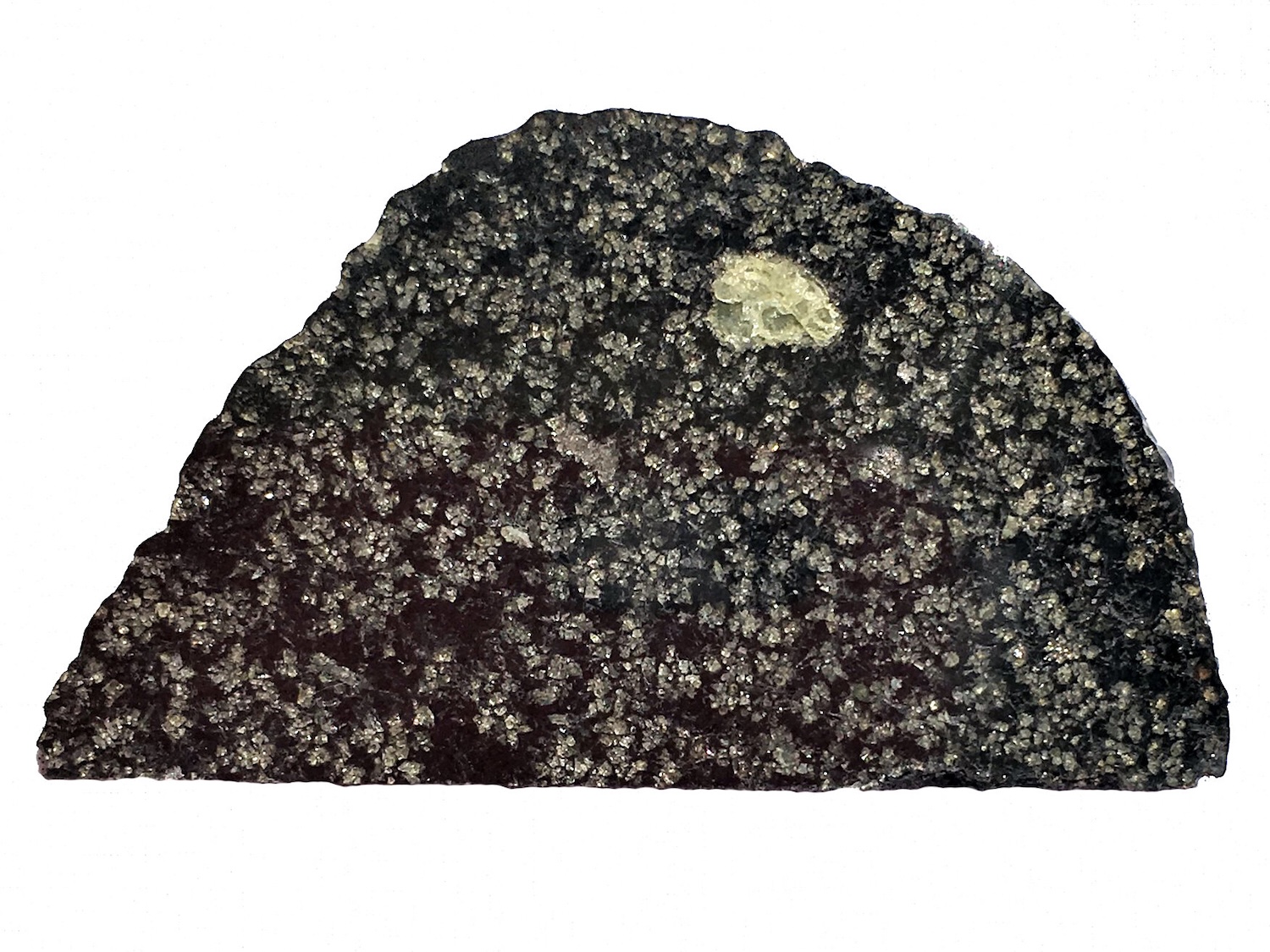
A slice of NWA 12774. The green circle is an olivine crystal, a magnesium-rich mineral. Credit: John Kashuba

Unlike rocky planets such as Mars and Earth, angrites do not have a lot of silicon dioxide. Because of this, astronomers have long assumed that angrites always originated in asteroids no larger than about 124 miles wide. NWA 12774 blows this theory apart..

While analyzing the meteorite, researchers at the University of Colorado Boulder detected clinopyroxene, a mineral crystal that exists throughout Earth’s mantle and crust. NWA 12774’s clinopyroxene was also heavy in aluminum, which directly points to formation under massive amounts of pressure underground. The team then calculated the conditions necessary to create an angrite like NWA 12774, and settled on at least 17.5 kilobars of pressure. To put that in perspective, the pressure experienced at the bottom of the roughly 35,875-foot-deep Mariana Trench is barely one kilobar.

Small asteroids simply don’t possess the conditions needed to generate a rock like NWA 12774. What’s more, the angrite’s sharp crystalline edges also indicate that it formed at comparatively shallow depths in its host body. Based on all of these factors, astronomers now believe NWA 12774 once belonged to a young protoplanet with a radius anywhere from 621 to 2,050 miles wide. This means that instead of an asteroid, the angrite may have existed inside something as big as Mars.

“It’s incredible to think there was once a world this large,” Aaron Bell, a UC Boulder earth scientist and study co-author, said in a statement. “We only know it existed because a few fragments of it happened to land on Earth. These meteorites preserved evidence of a completely different pathway through which early planets developed.”

Although it’s unclear how the protoplanet met its demise, some type of crash between early solar system denizens is definitely a possibility. Regardless, the ramifications are huge for astronomers’ understanding of our cosmic neighborhood’s history.

“The materials that formed the angrite parent body are fundamentally different from the ingredients of Earth and Mars,” explained Bell. “It points to a distinct and separate evolutionary path in planetary formation in the early history of our solar system.”

The post Rare meteorite proves our solar system almost had an extra planet appeared first on Popular Science.

  •  

Big Pic: How Turkish Protesters Use Google Maps To Track Police

Google Maps

Consider it civilian reconnaissance. Protesters in Turkey are using Google Maps to track police movement, plot out barricades, and rally together.

Created Saturday, the map of Istanbul Police Movements centers on Taksim square, the heart of recent (and ongoing) protests against the Prime Minister Recep Tayyip Erdogan’s government. It began last week with trees and a barracks. Erdogan’s government plans to renovate an Ottoman barracks, a structure dating back at least a century, near the square. To get construction equipment to the barracks, officials wanted to raze trees from the nearby Gezi Park. Protesters prevented this, demonstrating in defense of the green space for over a week. Since then, protests expanded, evolving into a critique of the current ruling party.

Mapping protests and police response in real-time is a relatively new phenomena. In 2010, students protesting in London used a Google Map to track police action, documenting riot vans and helicopters moving against the protesters. But some features of the Turkish protests are straight out of Les Misérables, or indeed any number of historical protests. Barricades keep vehicles, police, and even horses away from the protesters, take time to tear down, and protect against thrown objects or gunfire, should the police response turn violent. In centuries past, governments brought in armies to quell protesters, and used cannons to knock down barricades. Paris, the site of so many protests, even underwent a major urban redesign with wider streets to make barricades more difficult.

In addition to the red triangle markers of barricades, here are some features of the map:

  • A green tent to mark the heart of Taksim Square
  • Road warnings in green, letting people know which one are open and which are blocked
  • Pink tags for groups announcing who they are and where they are protesting
  • Light blue flags for police locations and reported movements
  • Warnings of police tracking servers online, confusingly under light blue as well.
  • General rallying cries, slogans, and mottos from protesters are marked with house symbol

Notably absent? Sensitive information, like the location and identity of specific individuals, like volunteer doctors. In the jargon of secrecy, that’s called good Operational Security. In plain talk, it’s just common sense.

The post Big Pic: How Turkish Protesters Use Google Maps To Track Police appeared first on Popular Science.
  •  

A ‘mystery beetle’ is devouring North Carolina’s precious blueberries

North Carolina’s blueberries may have a beetle problem. For the first time, scientists in the Tarheel State have documented the presence of Prionus imbricornus eating blueberry bushes. This longhorn beetle and its larvae can chomp their way through the state’s valuable blueberry fields. The findings are described in a study published this week in the Journal of Integrated Pest Management

Blueberries are native to North Carolina, but were not cultivated until 1935. The state is the sixth largest blueberry producer in the United States, and the blueberry industry is valued at roughly $70 million. Protecting the plants from pests is crucial, as blueberries are considered one of North Carolina’s most valuable and desirable crops. 

Several species including the blueberry maggot (Rhagoletis mendax), plum curculio (Conotrachelus nenuphar), and cranberry fruitworm (Acrobasis vaccinii Riley) can threaten blueberry crops. The long-horned beetle P. imbricornus may now join their ranks. P. imbricornus is known for their long antennae and are considered wood-boring beetles. The adult females typically lay their eggs in the soil near the roots of hardwood trees. The larvae then eat and destroy the roots. These larvae can grow up to five inches long and potentially kill trees, since the adults don’t feed. 

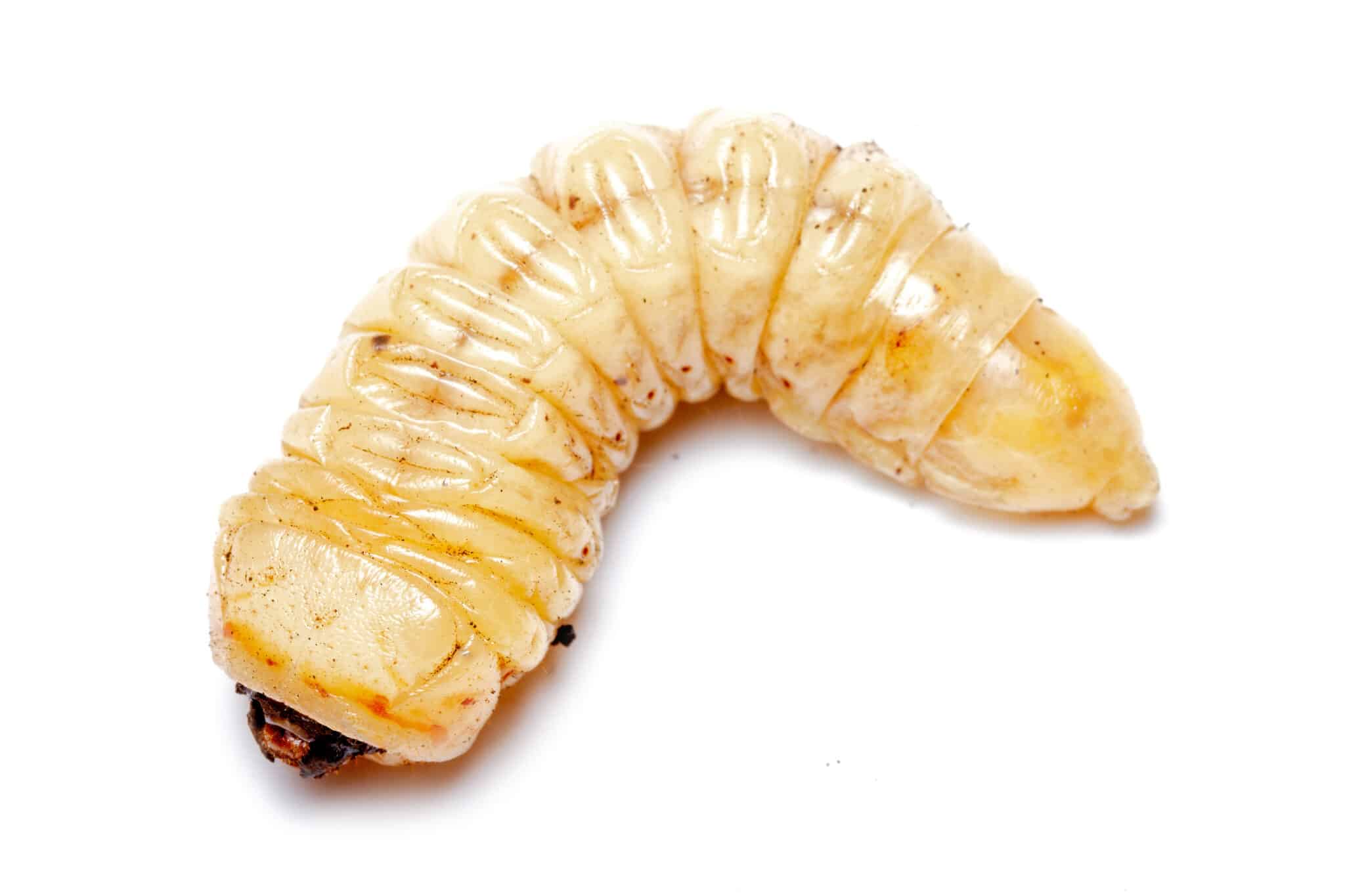
a long yellow beetle larvae
P. Imbricornis larva. The larva, which can grow up to five inches long, feed on the roots of blueberry bushes. Image: Matt Bertone/NC State.

North Carolina is the first state to report that P. imbricornus is actively feeding on blueberry bushes. However, reports of unidentified larvae from the Prionus beetle genus feeding on and damaging blueberry bush roots go back to 2010. In the 16 years since, identifying the specific species responsible has been difficult since the larvae live near the roots of the plants. Different types of longhorn beetle larvae also look very similar, and not identifying a species can harm efforts to combat harmful bugs. 

“Before now, researchers often just assumed the species of Prionus on their commodities based on adult identification,” Kenneth Geisert, a study co-author and NC State graduate student, said in a statement. “If that guess was incorrect, it could mean using a treatment strategy that did not line up with the problem and incorrectly associating species and their hosts.”

For example, P. imbricornus attacks roots, but another longhorn beetle species may go after a tree’s dead branches or trunk. 

“Without knowing which species of beetle you’re dealing with and their ecology, incorrect management can cause adverse effects on non-target insects,” Geisert added.

For this study, the team used a series of black panel traps scented with sex pheromones to attract and gather adult beetles. The traps were placed at six farms across Pender, Sampson, Bladen, and New Hanover counties. The team then used a technique called genetic barcoding on the larvae to analyze small, standardized segments of their DNA to identify the species. They then compared the unknown larval sequences with the same genetic segments from known Prionus adults.

They matched the P. imbricornus with 98 to 99 percent accuracy. According to the team, this result is both good and bad news for farmers.

“On one hand, it’s very important that we know which species we’re dealing with,” said Lorena Lopez, a study co-author and entomologist at NC State. “On the other, North Carolina was the first state to ever report Prionus infestation in blueberries, and there are no insecticides currently labeled against this pest in blueberries.”

To address this shortfall, Lopez has begun insecticide trials. Pinpointing effective insecticides and timing during P. imbricornis reproductive cycles can potentially limit larval development. Fewer larvae could help prevent major root damage and provide blueberry farmers with an effective management tool to protect their crops. 

The post A ‘mystery beetle’ is devouring North Carolina’s precious blueberries appeared first on Popular Science.

  •  

Weed really does change your dreams

It’s four in the morning and you wake from a dream. It wasn’t a nightmare exactly, but it was vivid and unsettling—a circus of imagery in which the other commuters stuck in gridlock beside you were all octopi  or your feet were transformed into a pair of horse hooves while going through airport security. 

Maybe you don’t often remember your dreams but this one, this episode that fused the mundane with the outlandish, it sticks. Even days later, you can still see those tentacles gripping the steering wheels or feel the awkwardness of your gait running to catch your flight. 

It couldn’t have been that joint you smoked before bed, could it? Science says maybe.

How weed effects sleep cycles

Reports of vivid dreams are “very well known” in cannabis and neuroscience research, says Andrew Kesner, assistant professor of psychology at Indiana University in Indianapolis. But “we still don’t really know the neurobiology of dreaming and what sort of features make you remember your dreams better or worse.”

What researchers do know is how consuming weed alters sleep patterns

Cannabinoids are found naturally in the brain in a non-psychoactive form called endocannabinoids. Endocannabinoids control our sleep/wake cycle, aka our circadian rhythms, by modulating and maintaining the brain’s biological balance through an abundant receptors neuroscientists call CB1. 

“When people fall asleep, the brain makes its own cannabinoids that increase and decrease throughout the sleep-wake cycle, and throughout the day,” explains Kesner.

Marijuana contains a different form of cannabinoid than the one naturally produced by the brain, THC or tetrahydrocannabinol. THC also works on the brain’s CB1 receptors but, unlike endocannabinoids, it is psychoactive, meaning it makes users feel high by producing feelings like euphoria and paranoia. 

Blooming bight green cannabis.
Blooming cannabis plant ready to be harvested into various THC-based products. Image: Sunan Wongsa-nga / Getty Images Sunan Wongsa-nga

When you smoke weed before bed, the THC added to the brain’s natural endocannabinoids sends the brain’s CB1 receptors into overdrive. And when those CB1 receptors are in overdrive, they change the way you sleep.

Natural sleep in healthy adults begins with a short period of nodding off followed by a stage of “slow-wave” sleep, that deep sleep from which it’s hard to wake someone up. Cycles of lighter sleep punctuated by bouts of REM (rapid eye movement) sleep follow, growing longer and longer throughout the night. 

“REM sleep is classically the time when you’re dreaming,” says Kesner, when “your brain acts like it’s awake but the brain stem paralyzes your body so you can’t act out your dreams.” 

Consuming THC appears to suppress REM sleep: It causes it to arrive later in the sleep cycle and to make up less of the overall percentage of sleep. THC also causes more frequent interruptions to REM sleep. That, says Kesner, may be the origins of its reputation for causing weird dreams. 

“We know if you wake someone up in REM sleep, that’s when they have the highest chance to remember their dreams,” he explains. So, while there’s no evidence that dreams under the influence of THC are any different than THC-free dreams, the ability to remember them more easily may make the sleeper believe they are more bizarre or intense. 

According to one recent study, a dreamer is also likely to feel more rested following a night of vivid dreams, which may be one reason why many people feel smoking a joint or eating a gummy helps them to sleep.

Dreams are slippery suckers

Anything more is hard to say for sure.

“It’s possible that the THC could be making dreams more intense by changing cortical activity [the way the brain functions], making them wonkier and maybe adding some variability to what you’re dreaming about,” Kesner continues. But the huge variability among individuals in both sleep and the effects of THC use makes objectively studying weed-induced dreams “kind of a nightmare”—pun not intended. 

Researchers still don’t even know exactly what dreams are or why they happen—though there’s a good chance that it may be the brain coming up with different learning scenarios, according to Kesner. Someone who plays with puppies all day may, for example, dream that night about being chased by wolves. That way, if it ever happens in real life, the dreamer is better prepared to react to them. 

Related 'Ask Us Anything' Stories

Whether the weed was smoked or taken in edible form is probably also important; THC immediately affects the brain when smoking while edibles take time for the body to metabolize. One study in which participants reported weird dreams after smoking weed before bedtime, therefore, may have had to do more with the way REM sleep “rebounds,” or immediately returns to longer and more robust natural cycles, when the brain experiences THC withdrawal than with THC’s psychoactive effects. 

It’s well documented, says Kesner, that chronic THC users experience more intense REM sleep after they stop using it. The same might happen in occasional users, whose REM sleep could theoretically become more intense as the acute effects of weed wears off during the night. In other words, you don’t sleep as well while weed’s psychoactive THC is bouncing around your brain but it becomes much more restorative as soon as its effects wear off. 

Ultimately, there probably is no “one-size-fits-all for what cannabis does to sleep or how it affects dreams,” Kesner concludes. As of now, there’s simply not enough data to come to any meaningful verdict. THC or not, dreams are, by their very nature, weird.

In Ask Us Anything, Popular Science answers your most outlandish, mind-burning questions, from the everyday things you’ve always wondered to the bizarre things you never thought to ask. Have something you’ve always wanted to know? Ask us.

The post Weed really does change your dreams appeared first on Popular Science.

  •  

Big wings and sweet songs: The mating lives of Panama’s katydids

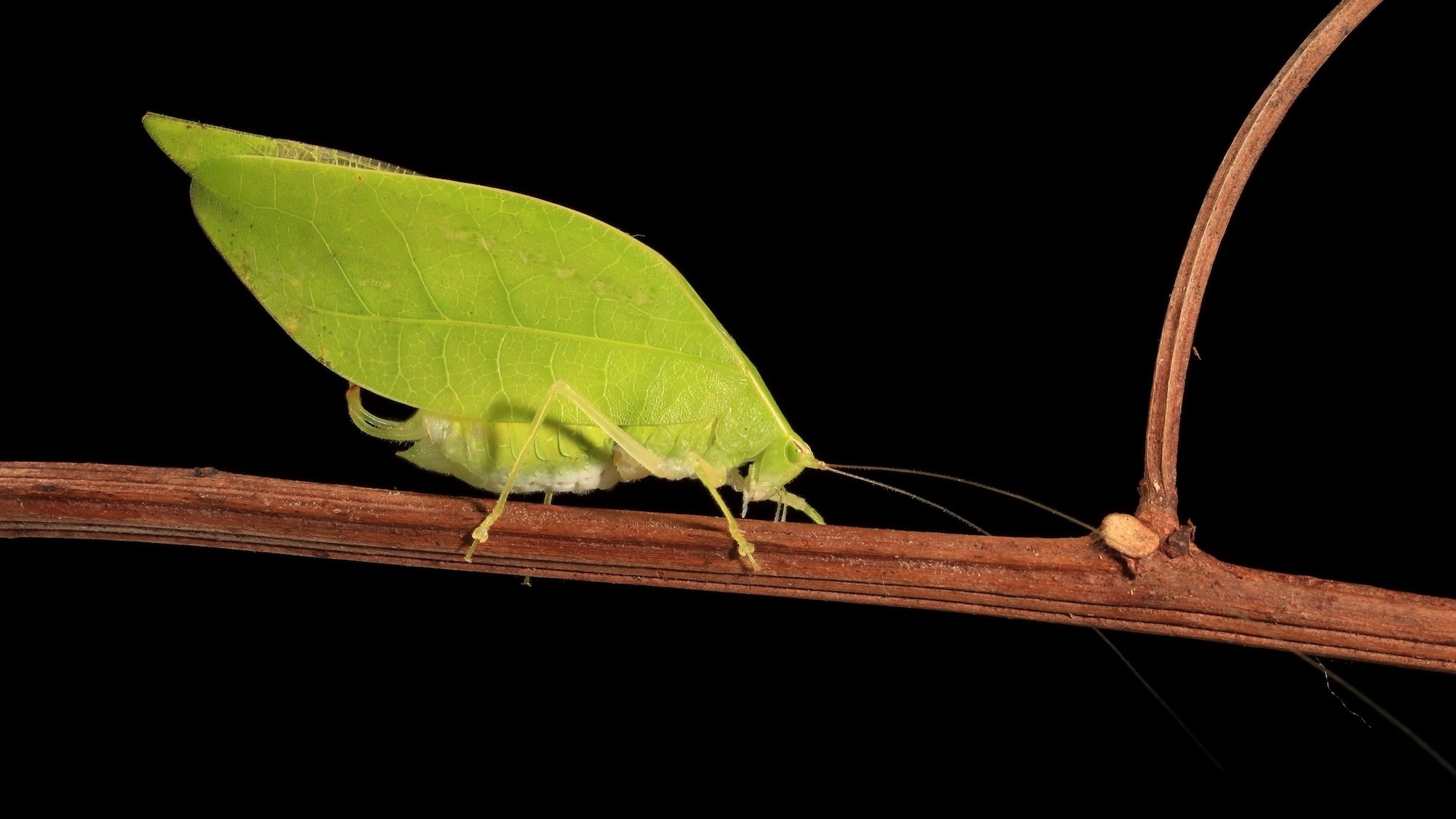
When it comes to reproduction, animals will pull out all the stops to attract a mate. Sending out noisy mating calls, showing off colorful wings, inflating a throat pouch, and shaking a literal tailfeather all ensure that the next generation of a species happens. Some insects will go as far as making themselves look like an entirely different living thing—leaves. 

Usually used as a means of camouflage, male katydids appear to use their leafy disguise to amplify mating calls and make themselves more attractive to the opposite sex. The findings are detailed in a study published today in the journal Proceedings of the Royal Society B, and offer one of the first demonstrations of how leaf mimicry enhances a male katydids’ sexual signals. 

To shield themselves from predators, various species of katydids have evolved wings with structures that look like leaves. Panama’s leaf-masquerading katydids (Arota festae) will even change from green to hot pink in order to better mimic leaves. What’s been less clear to entomologists is whether or not these leaf-mimicking structures play a role in katydid mating. 

This new study looked at a species called Viadana brunneri from Barro Colorado Island, Panama. To attract mates, katydids create songs by rubbing together specialized structures on their wings. In many tropical species like V. brunneri, the portion that mimics leaves makes up the majority of their wing’s surface area.  

a green insect with a large, green wing that looks like a leaf hands upside down on a stick
Most of the wing structure is devoted to helping male katydids look more like a leaf. Image: Christian Ziegler.

Previously, scientists believed physical adaptations for survival and for attracting mates can function in conflict with one another, particularly if they are physically connected. A male peacock’s flashy tail feathers may help it attract a female, but it also makes it easier for predators to find them. Male katydids, on the other hand, are able to use the acoustic properties of the structures that they use for defense to their reproductive advantage. They are a rare example of how an adaptation for self-defence and reproduction can work together without necessarily putting the animal in jeopardy. 

The team performed a series of bioacoustic, behavioral, and biophysical experiments, showing that these leafy structures on their wings make them more attractive to females, while also helping conceal them. After removing the leafy portions of a male V. brunneri’s wings, the pitch became higher and the volume of their songs also changed. The team then played these calls for females who preferred the lower pitch calls from males with their leafy wing sections still intact. 

While male katydids do all the singing, females indicate their interest by replying to the song with clicks. The insects produce short, sporadic and infrequent calls, possibly for only two seconds in a single night. They perform these calls in ultrasounds, which our ears can’t pick up. They also found that the leafy portions of the male katydid wing will vibrate to amplify their songs, making them more detectable to females. 

“Our study provides a rare example of natural and sexual selection acting in harmony, producing traits that simultaneously improve survival and mating success,” Dr. Benito Wainwright, a study co-author and evolutionary biologist at the University of St Andrews, said in a statement. “We are now extremely excited to start exploring how such an interesting interaction evolved in katydids.” 

The post Big wings and sweet songs: The mating lives of Panama’s katydids appeared first on Popular Science.

  •  

Anker just dropped its charging accessories to clearance prices before the upcoming Prime Day sale

Amazon’s pre-Prime Day Anker sale is live right now, three weeks before the actual event kicks off on June 23rd. The sale runs across wall chargers, power banks, wireless chargers, and docking stations, with cuts of up to 35% on most of the lineup. The Anker Prime 20,100mAh Power Bank drops to $125.99 (was $179.99) and the 13-in-1 USB-C Triple-Display Docking Station is $139.99 (was $199.99). Whether these hold through Prime Day or bump back up before then is anyone’s guess, but the prices are real right now.

Anker Nano 45W Smart Display USB-C Charger $27.99 (was $39.99)

The brick that shows exactly how much power it’s putting out

See It

The Anker Nano 45W USB-C Charger has a built-in Smart Display that shows real-time wattage output on the face of the brick, and a Care Mode that automatically throttles back when a phone hits 80% to protect the battery long-term. It’s a single USB-C port, compact and foldable, and at $27.99 it’s the least expensive way to get into Anker’s Smart Display lineup. Most people who track charge speeds will find it useful. Everyone else just has a very good 45W GaN charger at a price that makes it easy to keep one at a desk and another in a bag.

Anker 100W 3-Port GaN USB-C Charger with Smart Display $49.98 (was $69.99)

One wall outlet, enough wattage for a laptop, tablet, and phone

See It

The Anker 100W 3-Port GaN USB-C Charger puts 100W total across three USB-C ports, with a smart display and touch control to see and adjust per-port output. With a single device plugged into the top port, you get the full 100W, enough for a 16-inch MacBook Pro at full charge speed. With all three ports active, it splits automatically. At $49.98 it’s 29% off and covers the most common use case: one charging brick, everything on your desk, no hunting for the right outlet.

Anker Prime 3-in-1 Qi2.2 25W MagSafe Charging Station $149.99 (was $229.99)

Anker’s best MagSafe dock, $80 off list and Qi2.2 certified at 25W

See It

The Anker Prime 3-in-1 Qi2.2 25W Charging Station is certified to the Qi2.2 standard, which pushed the MagSafe peak from 15W to 25W on iPhone 16 and later. It charges iPhone, Apple Watch, and AirPods simultaneously, with a built-in AirCool aerospace-grade thermoelectric cooling system that keeps the phone pad running at full 25W without throttling under sustained load. The on-unit display shows per-device wattage in real time. At $149.99 it’s the biggest dollar-amount discount in the current sale, $80 off a model that doesn’t typically go this low.

Anker Wall Charger and Cable Deals at Amazon

The Anker 140W 4-Port MacBook Charger with Smart Display is $64.99 (was $89.99), which is enough single-port output to run a 16-inch MacBook Pro at full speed while simultaneously charging an iPad and two phones off the other three ports. The Prime 100W 3-Port Foldable GaN Charger at $39.98 (was $69.99) is the deepest percentage cut on any single item in the current sale at 43% off.

Anker Power Bank Deals at Amazon

The Anker Prime 20,100mAh Power Bank at $125.99 is the high-wattage travel option, TSA-approved at 220W max output with app control for per-port management. For MagSafe users, the MagGo 10,000mAh Qi2 power bank with foldable stand is $67.99, and the slim 10K version without the stand is $69.99 (was $79.99).

Anker Wireless Charger and Car Charger Deals at Amazon

The Anker Zolo Qi2 MagSafe Charging Pad 2-Pack at $23.99 (was $39.99) is the biggest percentage cut in the wireless section at 40% off, which works out to under $12 per pad. The 3-in-1 Cube MagSafe Charging Stand drops to $89.99 (was $129.99) for a compact foldable unit that handles iPhone, Apple Watch, and AirPods together.

Anker Hub and Docking Station Deals at Amazon

The Anker Prime 14-Port Docking Station is $169.99 (was $269.99), a 37% cut on the 160W dual-4K model, and the top-end Prime TB5 Thunderbolt 5 dock is $339.98 (was $399.99), which supports 120 Gbps transfer and dual 8K display output. On the budget end, the USB-C to HDMI adapter is $12.99 and the 5-in-1 hub is $15.99.

Anker Desktop Charging Station Deals at Amazon

The Anker Prime 250W 6-Port GaN Charging Station with 2.26-inch LCD is $99.99 (was $149.99), the flagship desktop unit that lets you set per-port wattage from a touch display. For travel, the Nano 67W 6-in-1 Travel Power Strip drops to $33.99 (was $49.99) with a flat plug and 5-foot cord that works well for hotel rooms.

The post Anker just dropped its charging accessories to clearance prices before the upcoming Prime Day sale appeared first on Popular Science.

  •  

Lost WWII submarine discovered off the coast of Japan

The wreck of an American submarine from World War II has been found off the coast of Matsua Island, Japan. The USS Herring (SS-233) currently rests over 300 feet down in the Pacific Ocean, where it is sitting upright and “maintains a high degree of integrity,” according to United States Naval History and Heritage Command (NHHC). The discovery was announced exactly 82 years after the vessel sank, based on evidence collected from an international team of researchers. 

Herring’s final mission

The Herring was first launched from Portsmouth Naval Shipyard in Maine on January 15, 1942, and officially commissioned on May 4, 1942. The vessel completed eight war patrols in both the Atlantic and Pacific Oceans during the war. Herring sank seven enemy ships, including four Japanese cargo ships during what would be the submarine’s final patrol. 

Herring was last seen by the crew of the USS Barb during the evening of May 31, 1944. The submarines met to determine who would patrol areas off the Kurile Islands, an archipelago east of Japan. Early on June 1, 1944, Barb’s crew recorded hearing the sound of weapons designed to attack a submarine from a ship or aircraft called depth charges exploding in the distance. 

Japanese historical records also confirm that Herring was struck in two direct hits during a counterattack by a shore battery. The strikes ultimately sank Herring and the vessel was presumed lost when Herring failed to report to Midway on July 13, 1944. The sinking killed all 83 crewmembers.

USS Herring Memorial statue at the Battleship Memorial Park in Mobile, Alabama. (Photo by: Ron Buskirk/UCG/Universal Images Group via Getty Images)
USS Herring Memorial statue at the Battleship Memorial Park in Mobile, Alabama. Image: Ron Buskirk/UCG/Universal Images Group via Getty Images Ron Buskirk

A protected final resting place

In 2017, a joint expedition between Russian Geographic Society (RGS) and the Russian Military reported a submarine wreck in the area. Based on its location and appearance, the RGS reported that the wreckage was Herring. A subsequent joint expedition returned to the wreck in 2022 to document its status and honor the lost crew. The expedition team also placed a plaque on site. The data collected and shared by the RGS was analyzed by two U.S. volunteer researchers and one researcher in Japan. NHCC confirmed the wreckage on June 1, 2026–82 years to the day after Herring is believed to have sunk.

Importantly, the wreckage shows battle damage around the submarine’s conning tower. This tower is a raised platform from which an officer can conn (conduct or control) a vessel. This damage, along with evidence of grounding at the submarine’s bow, correlates with the historical record of the Herring’s sinking.

The wreckage is currently protected by U.S. law and under the jurisdiction of the Department of the Navy. The Navy allows some non-intrusive activities on sunken military craft, but any activity that may disturb the sunken vessel must be coordinated with NHHC.

“Most importantly, the wreck represents the final resting place of Sailors who gave their lives in defense of the nation and should be respected by all parties as a war grave,” the NHHC wrote in a press release.”

The post Lost WWII submarine discovered off the coast of Japan appeared first on Popular Science.
  •  

The mystery of Alaska’s orange rivers is finally solved

Alaska’s Arctic rivers have a big, orange problem. Previously clear rivers are turning a cloudy orange color due to iron particles, and it’s more than unsightly. The particles can suffocate fish and choke insects, threatening the food web and ecosystem as a whole. 

Scientists have long pointed to previously frozen soil beginning to thaw as the potential culprit behind the contamination of rivers in northern Alaska’s remote Brooks Range, and a study recently published in the Communications Earth & Environment proves it. The research also shows two distinct ways that this thawing soil is rusting the rivers and can help scientists predict where the damage is likely to spread next. 

“You’d think if any ecosystem could hide from the effects of warming and big human footprints, it’d be this one. But it’s not so,” Tim Lyons, a study co-author and biogeochemist at the University of California, Riverside, said in a statement. “There is no safe place.”

a scientist samples river water that has turned orange
Researcher sampling rusty Alaskan river water. Image: Tim Lyons/UCR.

From thawing permafrost to orange water

Permafrost is rock or soil that contains ice that has been frozen for two or more years. Alaska is warming two to three times faster than the global average, melting some of the permafrost that has been frozen for thousands of years. That thawing permafrost is already threatening the Tracy Arm Fjord, a popular destination for Alaskan cruises. 

As the ice-filled permafrost begins to thaw due to climate change, it can turn into mud that can’t support the weight of the soil or vegetation above it. This can threaten human-built infrastructure such as homes, pipes, and roads. It can also expose iron particles from rocks that turn rivers orange, a process called rusting. 

Rusting has severe ecological consequences. The fine iron particles can stay suspended in water for over 60 miles, smothering algae, disrupting insect populations, and clogging fish gills. These changes may already be affecting salmon in Alaska and Canada who rely on the gravel riverbeds for spawning and rely on algae as food during early life stages.

A top-down, fool’s gold problem

For this new study, the team looked at a wide regional view of the roughly 600-mile Brooks Range. They then zoomed in on a specific river system, followed by an even closer look at one creek. This top-down approach helped them to connect the bigger regional patterns to specific, on-the-ground processes.

“At middle, more heavily forested elevations, there isn’t much going on. But at the higher and lower elevations we could see distinctly different phenomena,” said Roman Dial, a study co-author math and biology professor emeritus at Alaska Pacific University.

At the higher elevations, the problem begins in the rocky ground containing pyrite, aka fool’s gold. Since the ground was frozen for many years, water and air didn’t affect the pyrite. Yet the rising temperatures have started to melt the ground, kicking off a process called acid rock drainage. The minerals and rocks are exposed to oxygen and water and degrade the water quality. 

“When pyrite meets water, it comes apart. It breaks down into iron and sulfur, creating sulfuric acid as well as sulfate and other toxic metals,” said Lyons. “When the iron-rich water mixes with more oxygen, the iron turns into rust-like particles that color the water and stain the bottom sediments orange.”

It’s an entirely different story at the lower elevations. The landscape is covered with wetlands that are changing shape and expanding downward as the permafrost melts. In these more soggy places, the soils are low in oxygen. So instead of breathing in oxygen, the microbes in the water (mostly bacteria) are taking in iron. 

“When we breathe, oxygen goes in and gets converted to the carbon dioxide that we exhale,” Dial said. “Similarly, microbes are consuming iron in the lowland soils and converting it into a water-soluble form that seeps into streams and results in rusting as it meets oxygenated surface water.”

Taken together, both acid rock drainage and microbes breathing in more iron help explain why orange waters are appearing across such large and remote regions across northern Alaska, closely tracking to areas where permafrost is thawing.

scientists sampling orange river water

The direct link

The team also found a delayed effect that could help predict future contamination. During the summer, the active, top layer of soil thaws to its deepest point. It then refreezes before the winter. The iron released during one summer thaw can become trapped and then flushed into rivers the following year.

By studying long-term ground temperature data and stream chemistry, this lag can be used to anticipate increases in metal levels.

“That means we can use ground temperatures to help predict water quality in the future,” added study co-author and University of Alaska ecologist Paddy Sullivan. In 2019, Sullivan first noticed the dramatic river changes that looked “like sewage” during fieldwork in the region.

Since mines typically control the waters near them to minimize pollution, the team partnered with scientists at the Red Dog zinc mine in northwest Alaska. The scientists there have long-term temperature records from boreholes that are drilled deeply into the earth and from chemistry sampling in stream water. Linking the underground measurements with changes in the stream’s chemistry directly connected the thawing permafrost to the rusting rivers.

While this problem is difficult to contain and manage, predicting where the contamination may pop up next could help pinpoint and protect critical habitats. This forecasting is especially important for communities that depend on these waters and the fishing living there for food and cultural practices.

“There’s no fixing this once it starts,” Lyons said. “But we can give people downstream a heads up and work hard to protect the places that are still safe and less vulnerable to the rusting.”

The post The mystery of Alaska’s orange rivers is finally solved appeared first on Popular Science.

  •  

Orangutan poop holds surprising clues about how long they breastfeed

How do you determine how many months or years animal mothers nurse their babies? If you’re not in a rush and can observe this dynamic, you could supposedly stick around to see when the baby, mother, or both decide that they’re done. However, that could take years. A team of researchers investigating breastfeeding in orangutans recently opted for a different, perhaps surprising strategy—searching for particular proteins in poop. 

In a preliminary study published in the journal Communications Biology, researchers searched for milk‑specific proteins in the feces of wild Bornean orangutans (Pongo pygmaeus) living in the Danum Valley Conservation Area, in the Malaysian part of the island of Borneo. These proteins prove that he or she is continuing to drink breast milk.The practice of recognizing particular proteins in feces is called fecal proteomics and it can help scientists better understand what animals are consuming.

“Orangutans have a slow life history with one of the longest interbirth intervals and the lowest reported infant mortality rates among primates or even mammals,” the team wrote in the study. “Breastfeeding is a key factor in their life history because it possibly promotes offspring health and increases maternal interbirth intervals.”

The team gathered fecal samples for over two and a half years, and found milk‑specific proteins in all the 20 samples from orangutans less than six and a half years old. This indicates that the young great apes were continuing to breastfeed until they were at least that age. 

According to the team, these results are “consistent with the behavioral evidence as having one of the longest breastfeeding periods in mammals.”

What’s more, “milk intake was significantly correlated with higher levels of biological defense and probiotic bacterial proteins.”

In other words, the more milk a young orangutan drinks, the more probiotic intestinal bacteria it has and the sturdier its biological protections are. Such consistent and enduring breastfeeding probably helps the very high survival of orangutan babies and plays a role in their slow reproductive approach. 

Unfortunately, Bornean orangutans are critically endangered, and the paper highlights why their populations don’t rebound quickly after a decrease. Safeguarding what’s left of their rainforest habitats is crucial. 

The post Orangutan poop holds surprising clues about how long they breastfeed appeared first on Popular Science.

  •  

Can poppy seeds actually make you fail a drug test?

The opium poppy (Papaver somniferum) has a weird double life. The plant’s seeds give a tasty, nutty flavor to bagels, breads, and cakes in bakeries around the world. But the plant’s seed pods also give the class A drug heroin its numbing and euphoric effects. 

That’s because the seed pods exude a milky substance called latex, which is rich in natural chemicals called opiates, such as morphine. Dried-out poppy latex is called opium, and the chemicals it contains can be used as medical-grade painkillers or processed to make street drugs like heroin. 

This doesn’t mean that your next deli bagel is going to send you into a stupor, because processed poppy seeds are carefully washed of any residual latex. But the washing process isn’t so thorough as to remove all traces of opiates from your body. Here’s why anyone in a job that requires random drug tests should try their next bowl of porridge without adding any black little poppy seeds. 

Processing a poppy plant

The round structure that sits on top of a poppy plant’s stem is called a capsule. This is a pod that contains hundreds of tiny poppy seeds. The plant produces opiates, like morphine, codeine, and thebaine, within the capsule to help it grow. These are contained in the milky latex, which will drip from the pod if it’s broken or cut. 

A single poppy pod typically holds hundreds of tiny poppy seeds. Video: Poppy Seed Harvest!, @Freedom_Flare

During harvesting, poppies that have died and dried out are mechanically harvested, removing the above-ground portion of the plant. Crushing, sieving, or other cleaning techniques separate the seeds from the seed capsules. The seeds that later end up on our bagels and breads are washed seeds, meaning they are carefully cleaned after being separated from their seed capsules to remove any opiate-containing latex. 

This process means there isn’t any risk of getting high from washed poppy seeds. However, drug tests are incredibly sensitive, and these washed seeds may still trigger a positive result from trace chemicals

Urbah Viqar, a doctor at Central and Northwest London NHS Foundation Trust, says that if you eat “one to two teaspoons” of poppy seeds, then you could return a positive opiate result. Given that some poppy seed bagel recipes recommend sprinkling a teaspoon of seeds on a single bagel, these breakfast treats should be treated with caution if you might be tested for drugs. 

Importantly, opiates like morphine stay in your system for several days, so avoiding poppy seeds for a while before a drug test is a good idea, Viqar says. Some companies have developed low-opiate poppy seed blends to allow bagel enjoyers to get their fix without risks. 

But this isn’t the whole story. If you eat unwashed poppy seeds, the effects are radically different. 

Yes, you get high off unwashed poppy seeds

In 2023, Viqar heard reports that men were reporting to their family doctors complaining of constipation. These patients, mainly from the local Indian Punjabi community, weren’t blocked up by a lack of fiber. Instead, their symptoms were a consequence of their unwashed poppy seed addiction. 

Viqar explains that in some communities, unwashed poppy seeds have been a traditional remedy for generations. Without washing, the seeds retain the opiate-rich latex released during harvesting. As a result, consuming them can make you feel sleepy and relaxed. 

But opiates are, of course, highly addictive. Viqar and her colleague Noah Stanton, who is also a doctor at Central and Northwest London NHS Foundation Trust, wrote a review summarizing the cases of 16 men, nearly all from the Indian Punjabi community, who had become addicted to unwashed poppy seeds. 

“They start with a very small amount, maybe they’re just taking half a teaspoon,” explains Viqar. Many of the men would grind the seeds and consume them as a dry powder, or mixed with water, or brew them as tea. 

The effects of the unwashed seeds are milder than a powerful opioid like heroin, but that made the patients’ addiction more “insidious,” says Stanton. “It took place over a much more gradual time period,” he adds. The unwashed seeds produce a drowsy, sedative effect. 

But by the time Viqar and Stanton saw them, some of the men had seriously ramped up their poppy habit. Two men, who had each been consuming unwashed poppy seeds for over 15 years, were taking 20 tablespoons of seeds every single day. That dose would contain enough opiates to make someone without a strong tolerance overdose, said Viqar. 

Related 'Ask Us Anything' Stories

The risks of too many poppyseeds

An opiate overdose would likely slow breathing until the heart stopped. Viqar wasn’t able to point to any cases she was aware of where people had died from unwashed poppy seeds, but said that there was little research into what a safe limit might be. 

“You don’t know how much is a safe amount, how much is a lethal amount,” she explained. Long-term addiction could also impact a patient’s social life and relationships, said Stanton. Several of the men in the study worked with heavy machinery, which tends not to play well with opiate-related drowsiness. 

Both Viqar and Stanton said that better regulation was badly needed. Unwashed poppy seeds can be purchased in bulk in the United Kingdom and the United States at low prices. Awareness among clinicians would also help, they added. Drug screening questionnaires regularly ask about alcohol and drug consumption. A new question to add to the list, Viqar says, is “Have you ever used poppy seeds?”

In Ask Us Anything, Popular Science answers your most outlandish, mind-burning questions, from the everyday things you’ve always wondered to the bizarre things you never thought to ask. Have something you’ve always wanted to know? Ask us.

The post Can poppy seeds actually make you fail a drug test? appeared first on Popular Science.

  •  

Positive Grid REACTOR Intelligent Guitar Amplifier review: Perfect for practice, set for the stage

The dreams of every young guitarist are born from another artist’s fingers. The virtuosos that came before forged the inspiration to hunt and to chase rhythms, lead lines, and ultimately a tone to adopt as our sonic fingerprint. It’s a chase that often takes many years and thousands of dollars to complete, making it an intimidating prospect for players of all stripes. 

Enter the Positive Grid REACTOR. It’s a performance-ready guitar amplifier designed to close the gap between the tone you hear in your head and the sound it produces. It brings together Positive Grid’s years of experience designing amp and FX engines and combines it with a custom-trained AI model that can deliver any tone you can describe or capture in seconds. It’s no gimmick. I’ve played guitar for close to 30 years, and this is one of the most fun pieces of guitar tech I’ve used in years. 

Positive Grid REACTOR

See It


Pros

  • Wonderfully versatile—just as at home on that stage as in the bedroom
  • Powerful tone-shaping possibilities, impressive range
  • AI tone generation isn’t a gimmick—it’s genuinely useful and a lot of fun
  • Tones are generated in sets—rhythm, lead, back-up, all at once (usually)
  • Approachable and intuitive controls are easy to learn; RTFM, but you’ll be alright if you wait a jam session or two
  • Surprisingly well-priced

Cons

  • Advanced players may not benefit as much from its features
  • Bluetooth audio can be very hit or miss
  • Some of the best features of the Spark are entirely absent
  • Trial and error is still required


The short version

With years of software experience and generations of Spark amplifiers under its belt, Positive Grid knows a thing or two about helping guitarists craft the perfect tone. The REACTOR is the union of everything the company has learned about software and hardware. Refined, tight, and well-priced, it leverages AI for good, helping players stop fiddling and start dialing in their sound using natural language. 

REACTOR, craft me a tone that captures …

The build and purpose

Positive Grid has been a major player in the guitar world for years, thanks to its excellent line of guitar software and impressively capable Spark practice amps. While the original Spark 40, the company’s first amplifier in 2019, has begun to show its age, the REACTOR doesn’t suffer the same learning curve as the Spark. Over the last seven years, the company honed its skills. The Spark may have been best suited for the bedroom, but the REACTOR is made for the stage. And also the bedroom. 

The REACTOR lacks nothing in terms of robustness, at least compared to my Fender Deluxe. The speaker enclosure is made of wood, thick and sturdy, with tight, hard leather surfacing. The controls live on the top panel, easily accessible mid-performance if you keep the REACTOR nearby. Each knob, switch, and button is tight with crisp, tactile feedback. As ever, time will be the ultimate judge of its build quality, but first impressions are exceptionally positive, especially compared to the company’s first hardware release. 

Positive Grid also deserves kudos for offering such a generous array of connectivity options. In addition to the guitar input, you’ll also find power amp and MIDI support, Bluetooth audio to jam along with, an FX loop, USB Type-C (the REACTOR doubles as an audio interface for home recording), and a headphone jack for when one watt is too much. It’s a full-featured, premium-feeling package and gives the Boss Katana a run for its money.

  • Positive Grid REACTOR details
  • Positive Grid REACTOR details
  • Positive Grid REACTOR details

The REACTOR comes in two variants: 50-watt and 100-watt. I was sent the 100-watt version and, unlike most of the Spark series, it’s sized like a normal 100-watt amp. Inside is a custom-tuned 12-inch guitar speaker designed for each model (not a full-range, flat-response cone), and it gets loud. We’re talking 100-watt guitar-amplifier loud, not Bluetooth-speaker loud, and that means it will rattle the windows far before it reaches its peak. When Positive Grid says that REACTOR is performance-ready, it isn’t kidding.  

There are far more interesting features than simple loudness, however. While you can play loudly, you don’t need to at all. Both versions feature 25W and 1W amplification modes that reduce volume without significantly altering your tone. The three power modes are well-suited to playing alone, playing with a group, and performing on a stage.

That’s the first hint that there’s some interesting engineering under the hood. For this release, Positive Grid outfitted the REACTOR with a powerful digital signal processor (DSP) and features powered by AI, which stands for “Amp Intelligence” in their parlance, making it an all-in-one solution perfect for both new and veteran players.

Between the amplifier’s eight built-in presets, endless cloud saves, two dozen amps, and eight simultaneous stomp boxes, and community sharing through PG’s ToneCloud service, there’s enough tonal possibility here that you can lose hours demoing—and that’s before getting to its “smart features.”  

The REACTOR is so tightly tethered to its app that if you’re opposed to using it, this simply isn’t the amp for you. Once the Spark app is connected to the amplifier, you have full control over every setting and parameter, and a much easier interface for making those changes. The app also houses the Creator Hub: your digital home to create, edit, and save custom tones. It’s also where you’ll find the amp’s AI assistant, which is the prime driver of the REACTOR’s charm.

The sound and performance 

It’s at this point that I should probably make a confession: Even though I’m a longtime fan of Positive Grid’s work with Bias FX and Bias Amp, a guitar amplifier had not entered my mind as something that could possibly be enhanced with AI. And yet, what Positive Grid has delivered here is an impressive showcase of how AI can support guitarists rather than steal from them.

While I was impressed with the out-of-the-box presets and their 24 included amp models, which make it entirely possible to simply plug it in and play without worrying about app or AI support, the real “a-ha” moment for me came when I experimented with the Creator Hub for the first time. 

To generate a tone, all you need to do is upload a picture, sound sample, or describe your desired tone in a sentence. Admittedly, generating a tone from a picture is a little gimmicky unless you happen to be taking a picture of a guitar setup that you’d like to emulate, but text generation was nothing short of shocking.

Create a tone to match “Glass Eater” by Atreyu …

That was all I gave it, and I had four separate click-to-use tones within 10 seconds, two options each for both rhythm and lead parts. Not just one tone. Every tone, to play every guitar part, in the song. The quality of the tones was also exceptionally good. They weren’t always perfect, but they were usually close enough that a couple of manual tweaks were all it took to get them there. Once you get into the groove, dialing up a preset, even for obscure songs, becomes second nature. 

The power of this simple functionality can’t be overstated. The REACTOR removes a barrier to entry so fundamental to progress and performance on the guitar that it has driven many to quit the instrument entirely. We all have a sound in mind: a searing lead or a djenty, brutal rhythm. Even if you master every note of a lead line you’ve been struggling with, the achievement feels incomplete without the tonal identity tying it all together. 

With the Creator Hub and its resulting tones, you’re up and playing faster than ever, but you’re also learning how those tones are made, making you a more capable musician. Once they’re downloaded, you can navigate to another section of the app to study, tweak, and tailor every element of the signal chain. Over time, you’ll begin to notice how certain sounds or effects are achieved. That knowledge improves your craft. 

As dependent on AI and machine learning as it is, things aren’t perfect. There are times that the tones it produces are off-base, and you need to try again or refine the prompt (“add more gain”, etc.). The amp features two toggleable Amp Intelligence modes, Heat and Push/Smooth. Turning up the Heat setting monitors your playing style and either pushes or draws back the amp to match your playing. The Push/Smooth toggle also changes how it responds, with Push feeling more lively and responsive to the touch and Smooth rounding out the rhythm and body tones. Both of these systems are fine, and they accomplish their job, but neither feels like a game-changing innovation in the way that the Creator Hub is. 

As I’ve tested and explored the REACTOR, I’ve developed a sense that Positive Grid is putting it in a bit of a box. According to the company itself, the REACTOR occupies a different space in its lineup from the Spark. If the Spark series is about home practice, the REACTOR is all about tone and performance. It has better hardware and higher-resolution sound quality that puts the Boss Katana and other all-in-one modeling amps on notice. 

Ahead of this review, Positive Grid told me that it had trained its tone engine through countless hours of studying hundreds of amps and effects it seeks to emulate, down to the gain stages, transformers, bias points, and harmonic response. Because of this, it can respond much more like its real-life inspirations. That’s impressive stuff, and after testing it for myself, I believe it. 

Yet, even the AI behind the REACTOR has its limits. Ask it to recreate anything washed in multiple reverbs or delays, and you’ll see it struggle. If you’re hoping to emulate a Strymon BlueSky, you’ll be disappointed. Pretty much anything running on a proprietary algorithm for its soundscape will be outside of its scope to recreate entirely, as you would expect it to be. 

A Positive Grid REACTOR Control foot pedal shown on a stage in front of an amp
Positive Grid

The verdict

The Positive Grid REACTORamp retails for $349 for the 50-watt version or $449 for the 100-watt version.  A wireless foot controller, the REACTOR Control [shown above], is also available for an additional $149 and allows you to control stompboxes and settings from afar—perfect for a silent stage setup. Together, that’s $498 to $598, but the quality and tone-shaping capabilities of the REACTOR make it a standout value even at that price and an easy recommendation. 


The specs

ProductPositive Grid REACTOR
Price$349 (50W) | $449 (100W, tested)
Power rating50W/25W/1W | 100W/25W/1W (tested)
Hardware configuration1 x 12-inch, wooden cabinet, top-mounted controls, rear I/O
Inputs¼-inch guitar input, Bluetooth, USB-C, MIDI, power amp, FX loop
Hardware memory and presetsEight onboard presets, user-replaceable with custom settings
Amplifier and effect models24 included amp models, eight simultaneous effects categorized by type 
App and cloud featuresIntelligent tone creation (text, audio, or image-based user inputs), cloud storage of user presets, signal chain editing and customization, tone refinement 
Form factor50W and 100W versions available
Best forPractice, small to medium-sized gigs, intermediate-level practice, and guitarists looking for an all-in-one, budget-conscious solution

The post Positive Grid REACTOR Intelligent Guitar Amplifier review: Perfect for practice, set for the stage appeared first on Popular Science.

  •  

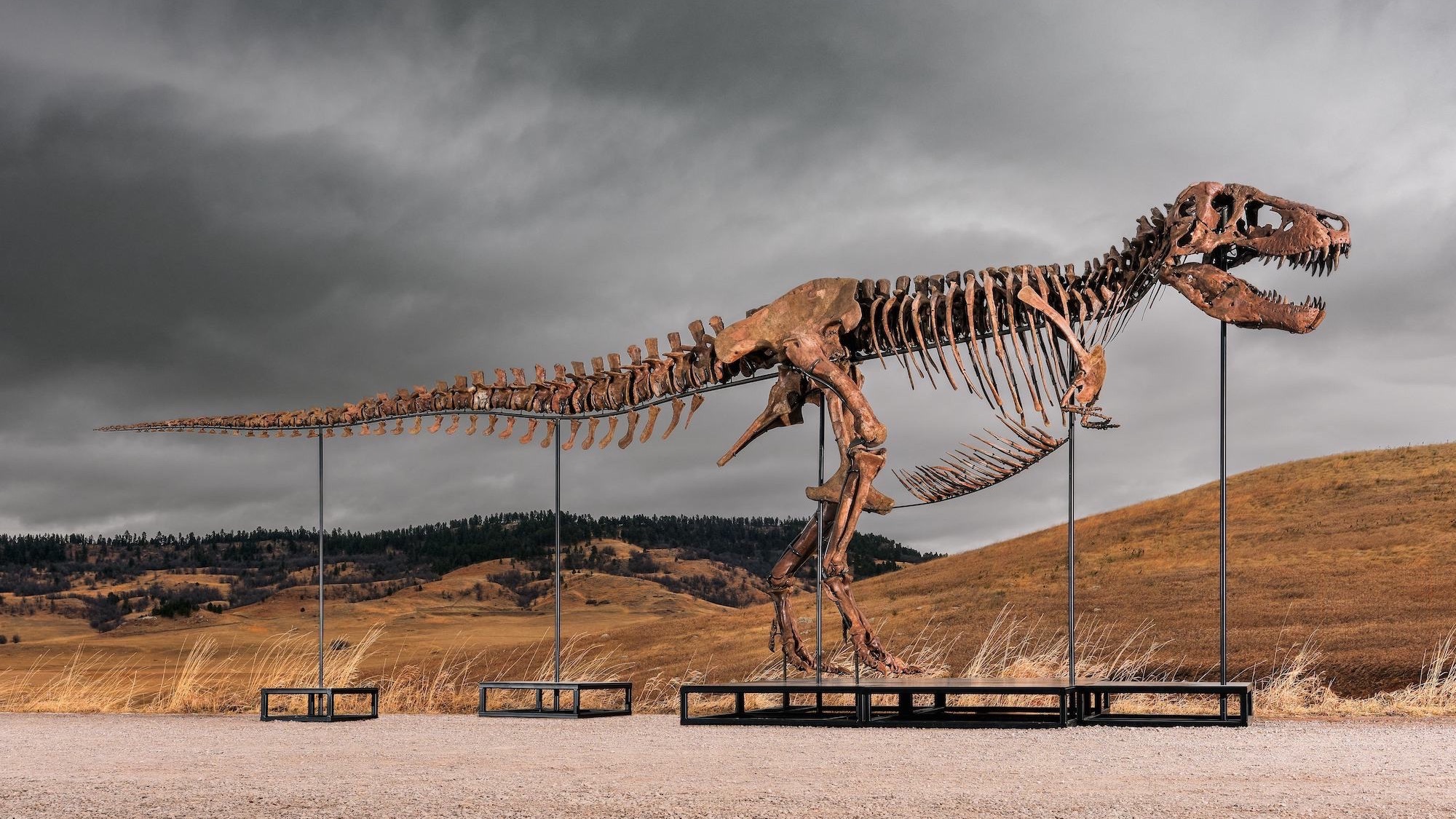
This T. rex could be yours for $30 million

Dinosaur enthusiasts with deep pockets will have their chance to buy one of the largest and most complete Tyrannosaurus rex specimens ever discovered. Meet Gus, a 12.5-foot tall skeleton that took paleontologists three years to excavate. Auction house Sotheby’s values the specimen at $20–30 million, the highest estimate ever placed on a dinosaur.

Late cattle rancher Gary “Gus” Licking found Gus on his land in South Dakota. For years, Licking came across teeth and small bone fragments on his ranch, and realized more bones may be lurking beneath the soil. To find out, he recruited Thomas Heitkamp and his team from Theropoda Expeditions.

Licking suggested that the team start digging in a 6,500-acre parcel of land. And that’s exactly where Gus was found in 2021. Licking died only one year into the excavation, so he never got to see the complete specimen. The team named the T. rex “Gus” in his honor.

“This specimen took three years to excavate—with the team sometimes working for weeks straight without finding a thing,” Heitkamp said in a press release. “The site was a complex fossil bed and preserved many fossils of the flora and fauna that comprised the larger Cretaceous ecosystem. We documented each stage with quarry maps, inventories, and collection data. In the end, our diligence paid off and we were delighted to discover what turned out to be a huge and incredibly complete T. rex specimen.”

In addition to the three summers it took to excavate, the team also had three years of lab work. In the lab, they carefully extracted the fossil from the rock before the bones could be prepared, cleaned, and identified. 

The skeleton is made up of 183 fossil bones representing 82 percent of all of the dinosaur’s bones, including a well preserved skull, furcula (wishbone), and a completely represented pelvis. Its body is roughly 38-feet long and its skull alone is over four-feet long.

“It really does feel like tackling the world’s hardest puzzle, except we have to find all the pieces first,” said Heitkamp. “All those bones separated for 67 million years that we can now, almost magically, fit back together. There’s something deeply satisfying about that.”

Gus will be up for auction on July 14 during Sotheby’s Natural History auction. The fossil will also be on display to the public at Sotheby’s galleries in New York City beginning on July 1.

“For me the added bonus was knowing that Gus was just one of the many pieces of history hidden in the land that Gary and I loved to share,” added Licking’s wife, Dana. “It will be exciting to see how many others will get to enjoy this spectacular discovery.”

The first T. rex to be auctioned off was a specimen named Sue. Now on display at the Field Museum in Chicago, she was sold for over $8 million in October 1997. Ever since, dinosaur auctions like these have courted controversy. Some critics say that fossils kept in private collections are lost to science. They also believe it encourages finding complete or marketable fossils over scientific study, and could lead to incomplete research.

There’s also the question of the fees private landowners may receive, meaning that the person with the largest bank account may receive favorable access over scientists. Some countries including South Africa, Brazil, and Canada have gone as far as to place heavy restrictions on significant fossils wherever they are found.

The post This T. rex could be yours for $30 million appeared first on Popular Science.

  •  

Bald eagle Jackie shoos away Fiona the squirrel

Internet-famous eagles Jackie, Shadow, Sandy, and Luna are not the only residents of their beautiful pine tree overlooking big bear lake. And sometimes, the watchful parents will let their presence be known. 

According to Friends of Big Bear Valley (FOBBV), one of the tree’s most famous residents came close to the eagle family over the weekend. Fiona the squirrel made several appearances overnight between May 30 and 31. During one visit, Jackie decided to send a message to the bushy-tailed rodent.

“Jackie responded with a dramatic slap and some backtalk that reminded us she is not tolerating Fiona while trying to sleep,” FOBBV writes.

The not-so-little-anymore eaglets Sandy and Luna also practiced their squirrel-shooing skills and wing flaps later in the day. 

Fiona is one of the catchall names of the flying squirrels that live near Jackie and Shadow. FOBBV is not sure how many of the rodents are in the area, but Fiona and Fast Freddie (another nickname) have had cameo appearances on the livestream for years. The squirrels will visit the nest from time to time, primarily searching for food scraps. 

According to the United States Fish and Wildlife Service, the nocturnal creatures are San Bernardino flying squirrels, (Glaucomys sabrinus californicus) a subspecies of the Humboldt’s flying squirrel. They can glide for as far as 300 feet in the air and primarily eat truffles, conifer seeds, and lichens. FOBBV volunteers have noted that the squirrels are “very fond of Shadow’s fish tails, coot feathers, egg shells and even crunchy beetles!”

So far, Jackie and Shadow’s eggs and eaglets have not been in any serious danger from the squirrels. The same can’t be said for the tree’s ravens, who destroyed the pair’s first two eggs this breeding season. 

All of the action can be found 24/7 on the eagle nest livestream.


Jackie and Shadow’s 2026 babies: Everything you need to know

It’s been another roller coaster nesting season for Jackie and Shadow, a pair of internet-famous bald eagle parents living in San Bernardino National Forest in Southern California. After two of their eggs were destroyed by ravens in January, Jackie and Shadow laid two new eggs that have successfully hatched.

Chick 1 hatched on April 4 at 9:33 p.m. PDT, while Chick 2 followed on April 5 at 8:30 a.m. Their large nest in Big Bear Valley east of Los Angeles is livestreamed 24 hours a day by nonprofit Friends of Big Bear Valley (FOBBV) and has captivated millions. 

On May 1, FOBBV announced the chicks’ names: Sandy and Luna.

How long will the chicks stay in the nest? 

Chicks usually stay in the nest until 10 to 14 weeks of age.

What challenges do the eaglets face?

Before leaving the nest, the chicks face threats from other birds of prey, including hawks, ravens, other eagles, and owls. Inclement weather can also present challenges for the chicks. In 2025, a March snowstorm resulted in the death of one of Jackie and Shadow’s three chicks.

During fledging, only 70 percent of eaglets survive. One of the greatest threats is from cars that can injure or kill the birds while they scavenge for food on roadkill. 

Who are Jackie and Shadow? 

The pair first got together in 2018 and successfully raised chicks in 2019 and 2022. However, their eggs failed to hatch in 2023 and 2024. Only 50 percent of eagle eggs successfully hatch, so this pair has already beaten the odds.

What happened to Jackie and Shadow’s 2025 eaglets?

In 2025, Jackie laid three eggs that all hatched in early March. On March 13, a strong snowstorm dumped up to two feet of snow and battered the nest with strong winds. Only two of the chicks were visible on the live cam when the storm passed by the next morning. FOBBV later confirmed the passing of one of the chicks. The two surviving chicks were later named Sunny and Gizmo after 54,000 names were submitted by fans.

What happens after chicks fledge? 

Young eagles usually fledge–or leave the nest and fly–when they can flatten their wings and have feathers capable of flight. This typically occurs when the birds hit 10 to 14 weeks of age. Males also tend to take their first flight a little sooner than females. 

According to FOBBV, fledglings from Southern California have been spotted as far south as Baja California, as far north as British Columbia, and as far east as Yellowstone National Park.

About 70 percent of bald eagles survive the fledgling stage. FOBBV does not tag their eagles, so it’s not possible to follow the chicks’ journeys after they flee the nest.

Can I help Jackie and Shadow?

Yes. Environmental groups are currently fundraising $10 million to protect Jackie and Shadow’s foraging area from development. Learn more at SaveMoonCamp.org.

The post Bald eagle Jackie shoos away Fiona the squirrel appeared first on Popular Science.

  •  

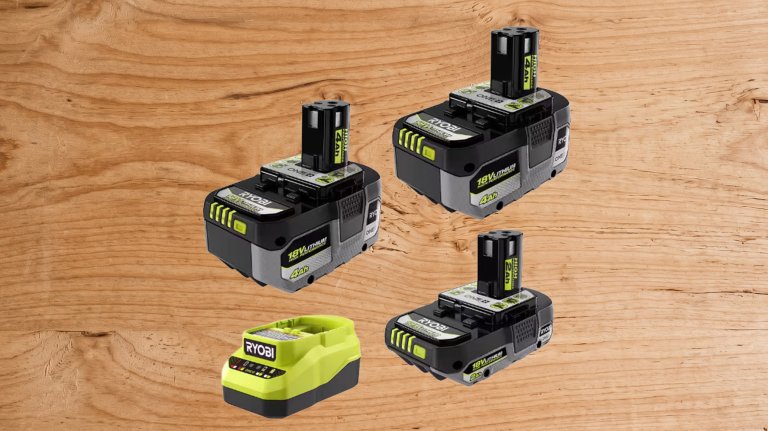
Get two batteries and a free power tool for just $99 during The Home Depot’s Ryobi Days sale

The best deal at RYOBI Days at The Home Depot right now isn’t a price cut, it is a free tool. Right now, you can buy one of the qualifying RYOBI ONE+ 18V kits and pick a second ONE+ tool at no extra cost. The priciest free options on the higher-tier kit are worth up to $229. I haver a number of Ryobi tools in my kit and they almost always perform way above their price tag. And that’s even before the discounts. The free-tool menu changes as stock moves, so the good picks tend to disappear before the kits do.

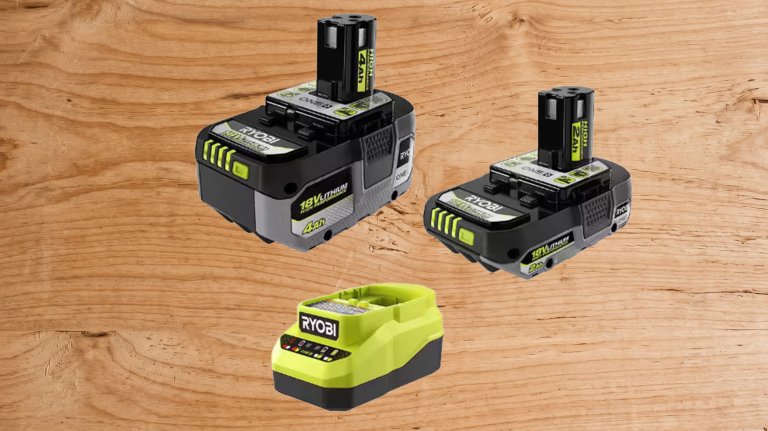
RYOBI ONE+ 18V Starter Kit with 2.0Ah and 4.0Ah Batteries and Charger $99.00 (was $228.00)

57% off the most useful entry point, and it unlocks a free ONE+ tool

See It

The RYOBI ONE+ 18V Starter Kit (PSK1212SB) is the one to grab first at $99, down from $228, because it covers the two battery sizes you actually use. You get a 4.0Ah HIGH PERFORMANCE pack for high-draw tools like saws, a lighter 2.0Ah pack for drills and lights, and a charger, and the kit qualifies for a free ONE+ tool worth up to $89. Any RYOBI 18V ONE+ battery runs the entire 300-plus tool ONE+ catalog, so this is the cheapest honest way into the system.

RYOBI ONE+ 18V 13-Inch Cordless String Trimmer with 2.0Ah Battery and Charger $99.00

A finished yard tool at $99 that still comes with a free ONE+ tool

See It

The RYOBI ONE+ 18V 13-inch String Trimmer (P20150) is the better $99 buy if you also need to cut grass, since it ships ready to run with a 2.0Ah battery and charger and still qualifies for a free ONE+ tool. It handles edging and trimming on a typical lot, and the included battery drops straight into any other ONE+ tool you own. Pairing it with a free blower or hedge trimmer from the offer list basically builds a starter yard kit for the price of one tool.

RYOBI ONE+ 18V HIGH PERFORMANCE Starter Kit with 2.0Ah and Two 4.0Ah Batteries and Charger $199.00 (was $361.97)

Three batteries, 45% off, and the longest free-tool menu in the event

See It


The RYOBI ONE+ 18V HIGH PERFORMANCE Starter Kit (PSK108SB) is the pick if you want the strongest free tool, because at $199 it opens a 20-item menu that includes options worth more than the kit itself. You get three HIGH PERFORMANCE batteries (one 2.0Ah and two 4.0Ah) plus a charger for $199, down from $361.97, and the free-tool list runs up to a $229 battery two-pack. If you are starting from zero and want to skip the upgrade later, this is the kit that pays for itself fastest.

How the RYOBI Days free-tool deal works

The RYOBI Days free-tool offer is structured around three qualifying purchases: the $99 ONE+ Starter Kit, the $99 ONE+ String Trimmer, and the $199 HIGH PERFORMANCE Starter Kit. Add a qualifying kit to your cart, then choose one tool from that kit’s eligible list and it lands in the order at $0. The $99 kits draw from a 13-tool menu topped by an $89 reciprocating saw, while the $199 kit expands the menu to 20 tools and adds the high-dollar options. Stock is the only real catch, since the offer is limited to what The Home Depot has on hand and the best free tools sell through first.

Free RYOBI ONE+ tools you can claim with a $99 kit

With either $99 kit, the RYOBI ONE+ 18V Reciprocating Saw is the highest-value free pick on the 13-tool menu at a regular $89.00, followed by the 18-inch Hedge Trimmer at $79.97. Every option below is a real ONE+ tool that runs on the battery your kit already includes, and the price shown is what you would otherwise pay.

The $199 HIGH PERFORMANCE kit unlocks bigger free tools

Step up to the $199 HIGH PERFORMANCE Starter Kit and the free RYOBI ONE+ 18V 4.0Ah Battery Two-Pack becomes the standout claim at a regular $229.00, more than the kit costs. The same menu adds the brushless Pet Stick Vacuum at $199.00, the 4-Mode Impact Wrench at $179.00, and the 7-1/4-inch brushless Circular Saw at $139.00, none of which appear on the $99 list.

Other tools on the $199 menu worth a look include the RYOBI ONE+ HP 18V Brushless AirStrike Brad Nailer, the RYOBI ONE+ HP 18V Brushless 130 MPH 510 CFM Leaf Blower, the RYOBI ONE+ 18V HP Brushless Hybrid 9-Inch WHISPER SERIES Oscillating Fan, and the RYOBI ONE+ 18V Cordless Telescoping Power Scrubber. All four run on the batteries the kit already includes.

The post Get two batteries and a free power tool for just $99 during The Home Depot’s Ryobi Days sale appeared first on Popular Science.
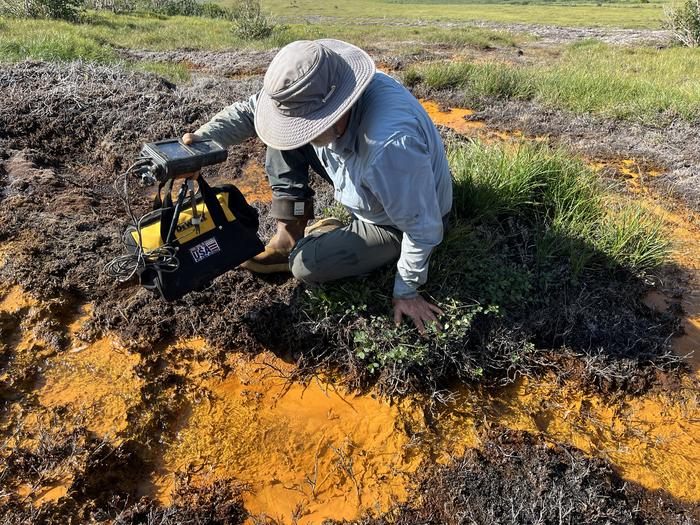
  •  

50 million pounds of invasive fish removed from Illinois River

While swimmers and boaters don’t have to fear sharks or giant squid in the Great Lakes watershed, invasive fish the size of large dogs lurk in the freshwater. Invasive carp have wreaked havoc on the ecosystem for over a century, but officials have hit a milestone worth celebrating in the fight against these mega fish. 

In the past 15 years, wildlife officials have removed 50 million pounds of invasive carp from the Illinois River. That’s equivalent to roughly 5,000 elephants. The removal is part of a broader and coordinated effort to protect the rivers and lakes from this non native species.

Why are carp a problem?

Currently, four species of invasive carp cause harm in the Great Lakes and beyond—bighead carp (Hypophthalmichthys nobilis), silver carp (Hypophthalmichthys molitrix), black carp (Mylopharyngodon piceus), and grass carp (Ctenopharyngodon idella). 

According to the Great Lakes Fishery Commission, all four species were imported to North America to help with pest control in aquaculture facilities in the 1970s. The carp escaped confinement in only 10 years, and have spread to the Mississippi River basin and other large rivers, including the Missouri and Illinois.

Each of the four invasive carp species can weigh more than 100 pounds and grow to four feet from tip to tail. Bighead carp and silver carp generally feed on the tiny plankton in the water, while grass carp eats rooted plants in shallow water, and black carp feed primarily on mollusks and snails. 

“They consume so much food and can exist in such great numbers that they can really reduce the amount of [resources] for resident species of fish,” Peter Alsip, an ecologist with the NOAA Great Lakes Environmental Research Lab told Popular Science in 2024. “They can have indirect effects on the whole ecosystem because [silver carp] are consuming phytoplankton and zooplankton, which are essentially the base of the food web.”

Once inside a watershed, they can reproduce rapidly and compete with native fish species for resources. In areas where invasive carp are abundant, they have harmed other fish species  and interfered with commercial and recreational fishing, according to the United States Fish & Wildlife Service (USFWS). They can also pose a danger to humans, as the giant fish can jump out of the lake and hit unsuspecting boaters.

What is being done to stop them?

Carp eradication measures have been active for over 100 years. These efforts include targeted mass removal efforts, developing barriers to block or impede their movement, and ongoing monitoring. 

carp in a large net
Cap being culled in the Illinois River. Image: Illinois Department of Natural Resources.

The 50 million pounds of fish removed from the Illinois River were part of a program focusing on the northern part of the river about 50 miles from Lake Michigan. The removal project is designed to suppress the mostly adult populations of carp living in the area, by limiting their ability to reproduce and reduce their migration upstream towards the Electric Dispersal Barrier System. Located about 37 miles from Lake Michigan, this electric barrier is designed to deter their movement through the Chicago area. It is one of the main tools wildlife officials are using to keep them from further entering the Great Lakes through the Illinois River. Another program in the Illinois River offers fish harvest incentives to commercial fishers in the river’s lower 240 miles. 

“The more invasive carp we remove, the more we reduce their harmful impacts and the risk of them reaching Lake Michigan,” the USFWS wrote on Facebook. “Thanks to these and other efforts to monitor our waters and prevent the spread of invasive carp, Illinois and more than two dozen partners are safeguarding some of our most prized native fisheries, and the Great Lakes regional economy.”

The post 50 million pounds of invasive fish removed from Illinois River appeared first on Popular Science.

  •  

Fire dozers outfitted with NASA-made sensors help battle blazes

Dangerous, frontline firefighting jobs may get a bit safer thanks to new heat-sensing sensors designed by NASA. The sensors are made from commonly available household materials, and attach to the bulldozers firefighters use to clear vegetation and brush in a fire’s immediate path, triggering an alarm when temperatures reach extremely dangerous levels.

Knowing when a fire is hot might sound obvious, but many new so-called fire dozers are being outfitted with enclosures to protect their operators from the flames. That’s a welcome change, but it also reduces the operator’s ability to gauge the surrounding heat. These new sensors help solve that problem, protecting the driver and helping prevent the dozers from sustaining too much damage.

The sensor setup is simple by design. It consists of a standard thermocouple similar to those found in a home oven, which is then wired to an LED light in the dozer’s cabin. If the light starts blinking, it’s time to get out of Dodge. 

The entire system is powered by something that’s probably laying around your house: AA batteries. Using a simple power source like this is part of an attempt to make every aspect of the design affordable and accessible. University of Alabama, Huntsville research scientist Ryan Wade emphasized that point in a NASA blog post. He explained that during a recent trial installing the sensor in a fire dozer, his team realized that they were missing a part. Rather than waiting to hear back from NASA and having a custom piece shipped to them, they simply walked down the street to a hardware store and solved the problem.

a sensor with a red light being placed on a bullzoser
NASA Wildland Fires Program science integration manager Jennifer Fowler holds an LED light on the dashboard of a fire dozer belonging to the Alabama Forestry Commission (AFC). The LED light is connected to a thermal sensor mounted in the window of the dozer, which turns the light on when the radiant heat from a nearby fire reaches a dangerous threshold. FireSense scientists have been working with the AFC to develop and install these thermal sensors onto these dozers, which they showcased during a stakeholder event on April 23-24, 2026 at the Solon Dixon Forestry Education Center in Andalusia, Alabama. Image: NASA/Milan Loiacono.

“NASA’s expertise in this case comes not in the novelty of the instrument itself, but in figuring out how to solve the problem quickly and integrate that technology into their existing system,” Wade said.

That flexibility is what makes the approach so valuable for firefighters. Alabama Forestry Commission fire analyst Ethan Barrett says the devices so far work “exactly as intended.” In Alabama, at least, officials are planning to outfit their entire dozer fleet with the sensors. The sensor system was developed by NASA’s FireSense project, whose interest in it was twofold. The sensors will more immediately help firefighters on the ground as fire season approaches, but the data they collect will also prove invaluable for future research. By placing sensors in the dozers, NASA will gather reams of data about fire strength and intensity straight from the front lines.

The post Fire dozers outfitted with NASA-made sensors help battle blazes appeared first on Popular Science.

  •  
❌