Login
Login
Chinese hackers use new Atlas RAT malware in European cyberattacks
A Chinese-speaking cybercrime group has expanded its targeting to the European space, deploying previously undocumented malware and the Atlas backdoor. [...]








A healthy NASA orbiter disappeared as usual behind Mars back in December. When the spacecraft reemerged from the other side, it was never the same again.
The U.S. space agency announced June 3 that the Mars Atmosphere and Volatile Evolution mission, aka Maven, is over, after a review board determined the orbiter that has circled Mars for over 11 years is now unreachable.
Though all of Maven's systems were normal before it rounded the bend on Dec. 6, 2025, something mysterious happened to the spacecraft when it slipped out of view. A snippet of data transmitted to Earth indicates Maven began rapidly tumbling. While mission control would normally only lose contact with the spacecraft for 20 to 30 minutes when it passed behind Mars, the team never regained its signal.
NASA's anomaly review board, which convened in February, determined this erratic rotation, coupled with dwindling battery power, meant there was no viable way to recover Maven. At a teleconference Wednesday, officials delivered something of a eulogy to the mission, which continued 10 years longer than the team had originally planned.
"I think the team has really experienced the loss of a loved one with the end of the mission here," said project manager Mike Moreau from NASA's Goddard Space Flight Center.
Maven's decommissioning closes a chapter in Mars exploration: NASA has lost a key workhorse that both rewrote scientists' understanding of the Martian atmosphere and quietly hauled huge volumes of data home for rovers on the ground.
Whether a meteor is to blame for Maven's demise is not known right now. NASA has yet to conclude its investigation into the root cause for the incident. The agency is expected to deliver a final report later in the year.

Arriving at Mars in September 2014, Maven has focused on "atmospheric escape" — the leak of gas from the top of Mars' atmosphere into space. Its measurements showed that this surges during solar storms, when bursts of energy and particles erupt from the sun. A major space‑weather event in May 2024, one of the strongest seen at Mars in 20 years, triggered a torrent of particles that stripped away gas and lit up the planet with glowing auroras.
"We now have a better understanding of atmospheric escape at Mars than at any other planet, including Earth," said Shannon Curry, Maven's principal investigator, based at the University of Colorado Boulder.
Maven found several kinds of auroras at Mars and helped the Perseverance rover capture the first visible‑light aurora from the surface, giving scientists a sense of what astronauts might see with their own eyes. The orbiter also showed how a planet‑wide dust storm in 2018 boosted the loss of water to space, tying together dust, climate, and the fate of Mars' ancient oceans.
One of Maven's most important results involved a process called "sputtering." Put simply, charged particles slam into the upper atmosphere and knock neutral atoms into space, like a cannonball splashing water out of a pool. This process has likely stripped Mars' atmosphere for billions of years, with implications for other planets.
The mission also made some surprise finds. Maven’s particle detector picked up hard X‑rays from a distant black hole system known as Scorpius X‑1, and the team used that odd signal to learn more about the density of Mars' upper atmosphere.
Beyond science, Maven played a vital behind‑the‑scenes role as a communications relay. The spacecraft passed data between Earth and surface missions such as Spirit, Opportunity, Curiosity, and Perseverance. Though it handled only about 8 percent of all relay sessions, it delivered nearly 18 percent of the total data, according to NASA, thanks in part to a new coding scheme that boosted how much information it could send during each contact. At one point, Maven set the solar system record for most data returned in a single relay session.
For now, Maven will remain in a stretched‑out orbit around Mars. NASA expects the dead spacecraft to stay in space for 50 to 100 years before the orbit naturally shrinks and it falls into Mars' atmosphere. Officials say it doesn't threaten other orbiters circling the Red Planet.
To make up for Maven's lost relay capacity, Mars Odyssey, Mars Reconnaissance Orbiter, and European orbiters have adjusted their operations. NASA also plans a new Mars Telecommunications Network in the 2030s, with help from commercial partners, to provide more robust communications and navigation services for future robotic and human missions.
For the people who worked on Maven, though, the loss feels personal. Curry said the team was "broken up" about it. When asked what she'd inscribe on the orbiter's tombstone, she didn't hesitate with her answer:
"Best Mars mission ever."
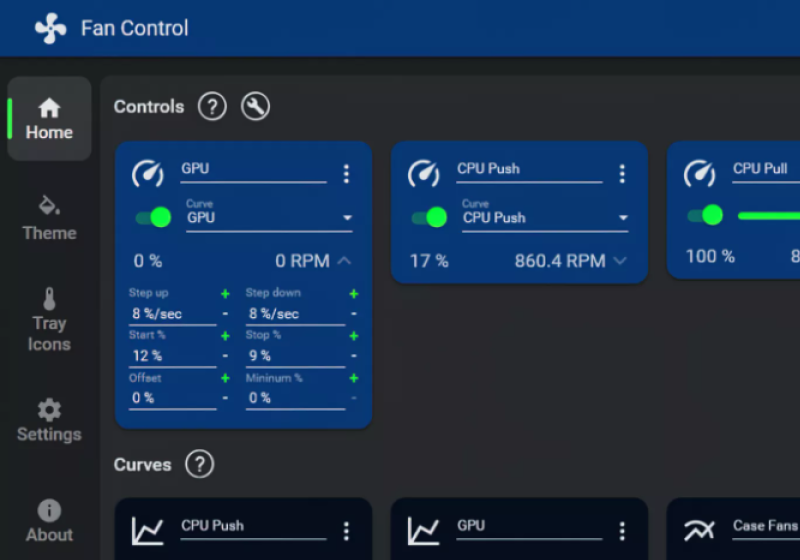
FanControl lets you create detailed fan curves, monitor temperatures, and fine-tune cooling behavior across a wide range of supported PC hardware. The latest release issues various fixes and limits the app to a single service client connection for improved stability.
Se você quer poder modificar seus arquivos PDF, conheça e veja como instalar o editor Sejda PDF Desktop no Linux via Flatpak.
Leia o restante do texto "Como instalar o editor Sejda PDF Desktop no Linux via Flatpak"
O post Como instalar o editor Sejda PDF Desktop no Linux via Flatpak apareceu primeiro em Blog do Edivaldo - Informações e Notícias sobre Linux.



Just in case you were wondering, Nvidia's RTX Spark isn't supposed to be a one-off. The company is not just flirting with becoming the fifth high-profile vendor of consumer laptop chips to see if people bite. At Computex 2026 in Taipei, Nvidia CEO Jensen Huang confirmed at least two additional generations of RTX Spark are already planned. The eventual goal, he said, is to build Star Trek-like computers and and Star Wars-like droids you can order around with your voice.
"I want to talk to my laptop! I want R2-D2!" he told analysts and investors at Computex, revealing that he started working with Microsoft CEO Satya Nadella "about three years …
Conheça Dreambeans, o novo app da Google que usa IA para criar histórias diárias personalizadas e te ajuda a focar no que importa.
O post Google lança Dreambeans: Histórias personalizadas para um dia mais focado apareceu primeiro em Blog do Edivaldo - Informações e Notícias sobre Linux.


If you’re looking for a summer project that keeps you out of the sweltering heat, LEGO.com has got you covered. Far from kids’ play, the advanced LEGO Icons and Editions sets are built for teen and adult fans. They’re challenging, immersive, impressive, and the perfect way to embrace your fandom.
The newest LEGO releases feature some huge new sets to shop for, so here are three recent arrivals that stood out to us.
While the world’s best soccer players do their final prep ahead of the FIFA World Cup kick-off, superfans can prep for all the watch parties with the incredible Lionel Messi Celebration set from LEGO Editions.
Featuring Messi’s iconic Number 10 striped jersey against a sky-and-pitch backdrop (and subtle nods to his life and career), this 3D wall art is the perfect way to show your support and love for the game. Sitting at 1,427 pieces, it’s a suitable build for teens and adults to complete as a fun group activity this summer break.
One of the unique things about being a Disney fan is that you can talk about your fandom to almost anyone, and they’ll be able to relate to the nostalgia of it all. The LEGO Disney Main Street, U.S.A. kit will spark those magical memories for every level of fan.
It features three buildings — a fire station with the Walt Disney family apartment, the Emporium, and the Crystal Arcade — in one display-worthy model. The sprawling set comes with fun extras, including a popcorn wagon with a popping function and 16 minifigure characters, including Mickey and Minnie Mouse.
Marvel’s Avengers: Doomsday won’t be gracing our screens until the end of the year, but that doesn’t mean we can’t have a superhero summer. The LEGO Marvel S.H.I.E.L.D. Helicarrier model building kit includes detailed features, movie scenes, and six minifigures from The Avengers.
At 3,057 pieces and incorporating runways, engines, a control tower, aircraft, interior rooms, and more — it’s a challenging build that will keep you engaged for hours. Fans will love the clever references to scenes from the movie and attention to detail in the interiors.
While we’ve highlighted three standouts from the latest drop, there are plenty more collections to explore as you find your fandom flame. Shop all new LEGO sets for an immersive day indoors this summer.