Login
Login
Scientists identify a cell type in the brain that was previously ignored and it may explain why human memory has no known upper limit
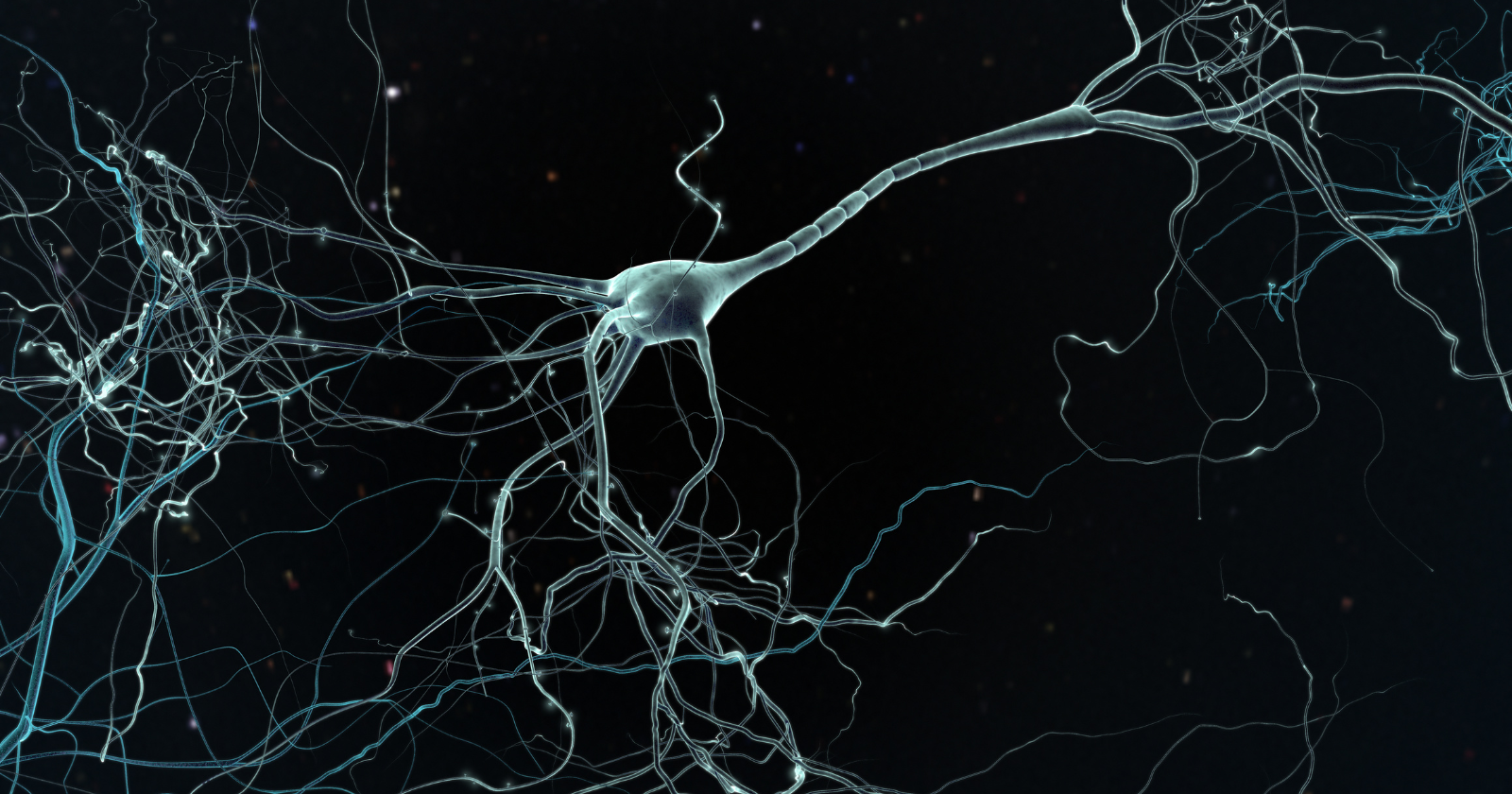
The human brain contains roughly 86 billion neurons. That number appears in almost every popular account of memory and intelligence, and it tends to carry an implicit argument: that the scale of human cognition follows from the scale of this cell count. What is less often mentioned is that the brain contains a roughly comparable number of a different cell type entirely, one that researchers have treated, for most of the history of neuroscience, as little more than biological scaffolding.
A paper published on 23 May in the Proceedings of the National Academy of Sciences puts forward a new hypothesis about what those cells, called astrocytes, might actually be doing. The work comes from a team at MIT: lead author Leo Kozachkov, Jean-Jacques Slotine, a professor of mechanical engineering and brain and cognitive sciences, and Dmitry Krotov of the MIT-IBM Watson AI Lab, who is the paper’s senior author. Their claim is not that astrocytes have been misunderstood in any dramatic sense; it is the more careful suggestion that they may be doing computational work that neurons, on their own, cannot account for.
This is a hypothesis supported by a mathematical model. The experimental work needed to test it has not yet been done.
The storage problem
The standard model for thinking about memory storage in neural networks is the Hopfield network, formalised by John Hopfield in his influential 1982 paper and drawing on earlier independent work by Shun-Ichi Amari in the early 1970s. Hopfield networks store information as patterns across connections between neurons, and they have been used as a working model for how the brain encodes and retrieves memories. The problem is that they can only store a limited amount of information, far less than what the human brain demonstrably holds. A modified version, known as dense associative memory, can store considerably more, but it requires couplings between more than two neurons at a time. Conventional synapses connect exactly two neurons: one presynaptic, one postsynaptic. There is no obvious biological mechanism for the higher-order coupling that dense associative memory requires.
Astrocytes are where the MIT team’s argument begins. These are star-shaped cells with long, thin extensions called processes, each of which can wrap around an individual synapse. An astrocyte can contact hundreds of thousands of synapses. When an astrocyte process wraps around a synapse, it creates what is called a tripartite synapse: a three-way junction involving the astrocyte process, the presynaptic neuron, and the postsynaptic neuron. Astrocytes cannot fire electrical action potentials the way neurons do, but they communicate through calcium signalling and can release signalling molecules called gliotransmitters into the synaptic junction.
The key move in the MIT model is to treat each tripartite synaptic domain not as a passive structural unit but as a computational one. Rather than thinking of an astrocyte as a single entity, the researchers treat it as a collection of semi-independent processes, each capable of sensing neural activity and feeding information back. The coupling this creates is not between two neurons but between the astrocyte process and the two neurons it connects. That is precisely the higher-order coupling that dense associative memories require.
What the model actually shows
“By conceptualising tripartite synaptic domains as the brain’s fundamental computational units,” says Maurizio De Pitta, an assistant professor of physiology at the Krembil Research Institute at the University of Toronto who was not involved in the study, “the authors argue that each unit can store as many memory patterns as there are neurons in the network. This leads to the striking implication that, in principle, a neuron-astrocyte network could store an arbitrarily large number of patterns, limited only by its size.”
The phrase “arbitrarily large” is worth pausing on. It does not mean infinite. It means that the model does not hit the ceiling that traditional neuron-only networks hit, and that the practical limit appears to scale with the network’s own dimensions. In this reading, the reason human memory has no known upper bound is not that the brain has found some exotic mechanism; it is that the brain may be exploiting a storage architecture that neuroscience has not, until recently, thought to look for.
The model also has something to say about energy efficiency. Because the ratio of stored information to computational units is high, and grows with network size, the system stores more per unit than a conventional Hopfield architecture. The authors suggest this fits with what is known about the brain’s actual energy budget.
What recent neuroscience has supported
The case for taking astrocytes seriously as more than support cells has been building for some years, though it has not yet hardened into consensus. Within the past few years, experimental work has begun to suggest a more active role. Studies disrupting astrocyte-neuron connections in the hippocampus have reported impairments in both memory storage and retrieval, and advances in calcium imaging resolution have made it possible to observe astrocytes and neurons coordinating their activity in real time. These findings establish that something is happening without settling what, and the field has not yet reached consensus on their interpretation.
“Originally, astrocytes were believed to just clean up around neurons,” Slotine says in the MIT release, “but there’s no particular reason that evolution did not realise that, because each astrocyte can contact hundreds of thousands of synapses, they could also be used for computation.”
The question the Kozachkov et al. paper is trying to answer is a narrower one: given what astrocytes do, what kind of computation could they plausibly be performing? The answer the model gives is memory encoding via dense associative memory, with information stored in the spatiotemporal patterns of calcium flow within the astrocyte, conveyed back to neurons through gliotransmitter release.
What the paper does not establish
The authors are direct about the speculative status of their work. “We hope that one of the consequences of this work could be that experimentalists would consider this idea seriously and perform some experiments testing this hypothesis,” Krotov says. The path from a plausible model to a confirmed mechanism is long, and many plausible models do not survive experimental contact. There is currently no way to test this hypothesis by reading the paper; what the paper does is make the case that testing it is worth the effort.
There is also a risk in reading the model too expansively. The dense associative memory architecture predicts certain mathematical properties of memory storage, but mapping those properties onto the full range of human memory, its emotional colouring, its selectivity, its susceptibility to distortion, requires considerably more work. The model addresses storage capacity. It does not address what gets stored, or why some memories persist, and others do not.
The Hopfield network context is worth keeping in mind here. John Hopfield received the Nobel Prize in Physics in 2024, shared with Geoffrey Hinton, for foundational work on artificial neural networks — work recognised for shaping the development of modern machine learning. The MIT paper extends that framework into a domain Hopfield’s original model could not reach. Whether the extension accurately describes what the brain is doing is, as yet, an open question.
The implication for how the brain is studied
There is a tendency in accounts of the brain to treat it as a neuron-first system, with everything else as secondary infrastructure. The attention given to neurons is not arbitrary; they are the cells that fire, that carry electrical signals, that form the visible substrate of perception and movement and speech. But a brain that uses half its cell count for functions that remain poorly understood is a brain with an incomplete accounting.
What the Kozachkov et al. paper adds to that picture is a specific, testable claim: that the three-way synaptic junction formed by an astrocyte and two neurons may be doing memory work that neuron-to-neuron connections alone cannot. If experiments bear that out, the implication is not just that astrocytes matter. It is that the unit of computation we have been studying, the synapse between two neurons, is not the brain’s actual basic unit of memory storage.
That would require some revision to a great deal of what has been written about the brain. It would not require discarding it.
The post Scientists identify a cell type in the brain that was previously ignored and it may explain why human memory has no known upper limit appeared first on Space Daily.