Normal view

The IKEA effect in the age of AI

3 June 2026 at 19:00

I have a drawer at home full of leather offcuts I cannot bring myself to throw away. They are scraps, most of them, the edges trimmed off wallets and card holders I made by hand back when I was teaching myself leathercraft and slowly turning it into a small side business. Objectively they are waste. To me they are the evidence of something. I worked for those scraps, and that work changed how I see them.

If you have ever kept a wonky mug a child made, or refused to bin a piece of furniture you built badly, you already know the feeling I am describing.

And there is a name for it.

A quick note before I go further. I am not a psychologist or a neuroscientist, just a writer who makes things and reads widely. What follows is reflection on a handful of studies, most of them observational or small, not advice about how you should work or think.

The IKEA effect is the tendency to place a disproportionately high value on things you helped make. It was named and documented by Michael Norton, Daniel Mochon and Dan Ariely in a 2012 paper with the lovely title “The IKEA Effect: When Labor Leads to Love”. Across four studies using IKEA boxes, origami and Lego, people consistently rated their own clumsy creations as “similar in value to experts’ creations”. 

The number that tends to get repeated comes from the first experiment in the paper. Builders bid an average of $0.78 for the plain storage boxes they had assembled themselves, while non-builders bid an average of $0.48 for the identical pre-built box, a premium of roughly 63 percent. 

The authors are blunt about it. They write that “labor alone can be sufficient to induce greater liking for the fruits of one’s labor: even constructing a standardized bureau, an arduous, solitary task, can lead people to overvalue their (often poorly constructed) creations”. Note the “can.” This is a tendency, not a law.

And there is one important catch, and it matters for where I am going. The effect only showed up when the labor succeeded. When people failed to finish, or built something and then took it apart, the extra value vanished. Effort that goes nowhere does not buy attachment. Completed effort does.

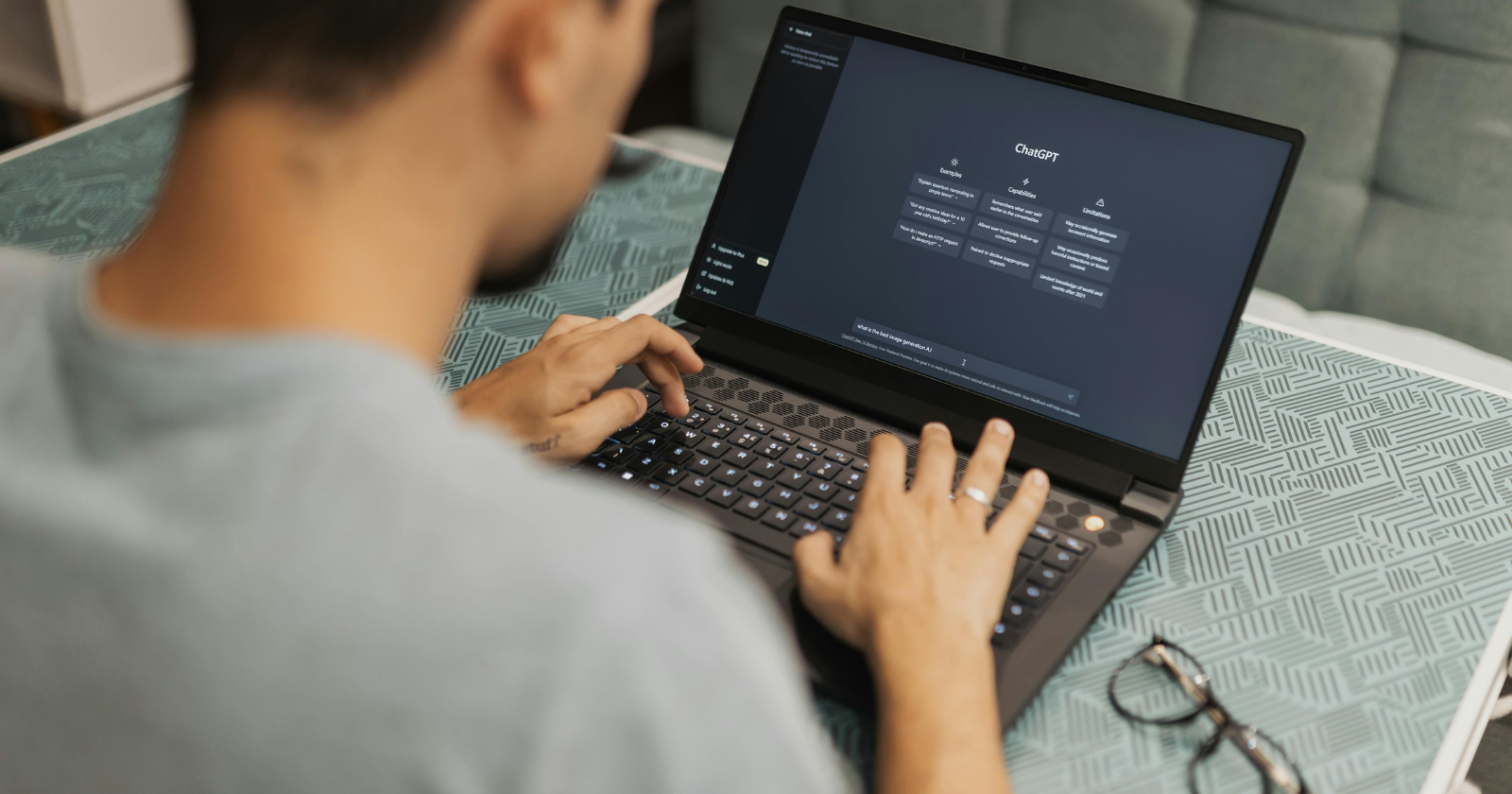
Now sit that next to the thing reshaping how a lot of us work. Generative AI is, broadly, a labor remover. It takes much of the cognitive grind out of writing, coding, summarising, drafting. Or at least it’s supposed to. The output arrives, often decent, and the effort that used to produce it simply did not happen.

If the IKEA effect is right that we love what we labor over, the obvious question is what we feel about what we did not labor over at all.

A 2025 study looked at this. In “Your Brain on ChatGPT”, researchers had 54 people write essays using an LLM, a search engine, or nothing but their own heads, while measuring brain activity. The people who leaned on the LLM reported the lowest sense of ownership over what they had written, and showed the weakest brain connectivity of the three groups. Many of them struggled to quote back the essay they had just produced.

And this seems to show up on the other side too: not just in how creators feel about AI-assisted work, but in how audiences judge it. In a 2023 study, “Humans versus AI: whether and why we prefer human-created compared to AI-created artwork”, researchers found that people tended to prefer artworks they believed were human-made over artworks they believed were AI-made. Part of that preference came down to the qualities people associated with human creation: intention, emotion, effort, and a sense that someone was actually behind the work.

That matters because the Ikea effect is not really about furniture. It is about ownership. We do not only value the finished object. We value the effort we believe went into it. And when that effort feels absent — whether we are the maker or the audience — something in the value seems to drop.

I notice this in my own days. I use AI for parts of my writing work: the research, the lookup, the first-pass structuring, the awkward sentence I cannot quite untangle. But the pieces I feel most attached to are still the ones where I had to wrestle with the idea myself. The ones where I got annoyed, deleted half of it, walked away, came back, and finally found the line I was looking for.

The other risk here is not just that AI-made things feel less ours. It is that the effort we skip might have been doing something for us beyond producing the object.

A 2025 study by Michael Gerlich found a significant negative correlation between frequent AI use and critical thinking. This one study so but put beside the IKEA finding about failed labor and a pattern suggests itself. The value, in both the products study and our own heads, seems to live in the completed effort, not the finished result. Skip the effort and you may keep the result while losing what the effort was quietly building.

I do not buy the idea that AI is something to refuse. I use it. It is genuinely useful. What the leather drawer and the writing work both tell me is that the value was never really in the object. It was in the doing.

So the practical move, for me at least, is not to do everything the hard way out of nostalgia. It is to be deliberate about which labor I keep. Let the machine carry the parts that are pure friction with no learning in them. Hold onto the parts where the effort is the point, where struggling through is what builds the skill or the judgment or the sense that the thing is mine.

The post The IKEA effect in the age of AI appeared first on Space Daily.

Thought of the day from French philosopher Blaise Pascal: “The sole cause of man’s unhappiness is that he does not know how to stay quietly in his room”

3 June 2026 at 14:00

I came across Pascal’s line again the other day and did the thing you do with a good quote: nodded, felt a little seen, moved on. Then it followed me out the door.

I went for a walk that evening, the way I usually do, and somewhere along the way I noticed the phone in my pocket. I wasn’t looking at it. But it was there, the way it’s always there, and it occurred to me that I couldn’t remember the last time I sat in a room with nothing in it. No screen, no book, no podcast, no plan. Just me, staying put.

What Pascal wrote, in his Pensées, felt relevant, modern even: “The sole cause of man’s unhappiness is that he does not know how to stay quietly in his room.” But he was writing in the 1600s, long before notifications and screens.

I suppose, the uncomfortable thing about silence is that it does not feel productive while it is happening. Nothing is being consumed. Nothing is being answered. Nothing is being crossed off a list.

But that does not mean nothing is happening. 

When the mind is not being fed by a screen, a podcast, a book, or another little hit of instruction, it starts doing something we rarely give it time to do: wander, sort, connect, and return to whatever has been sitting underneath the noise. Research on mind-wandering, by Akina Yamaoka and Shintaro Yukaw, has suggested that this kind of mental drifting can help with creative problem-solving, especially when we are doing something simple enough to leave part of the mind free.

Walking seems to do something similar. A 2014 Stanford study titled “Give Your Ideas Some Legs: The Positive Effect of Walking on Creative Thinking” found that people produced more creative ideas while walking and shortly afterward.

So maybe silence is not just the absence of distraction. Maybe it is one of the few conditions in which the mind gets to catch up with itself.

I would like to tell you I have this one figured out. I don’t. The closest I get is the walk, and the walk has a phone in it. The other thing I reach for is coffee in the morning before I touch a screen, which I manage some days and lose on others. It comes and goes. There are mornings I am halfway through an email before the kettle has boiled. So when I read Pascal, my honest reaction isn’t agreement so much as recognition. He is describing me.

It turns out I am not unusual. University of Virginia psychologist Timothy Wilson ran a series of studies that asked people to sit alone in a bare room for a few minutes with nothing to do but think.

They did not enjoy it.

Given the option, many chose to give themselves a small electric shock rather than sit there quietly: twelve of eighteen men in one version, and one of them pressed the button 190 times. People would rather be jolted than be left alone with their own heads.

You would think the lesson is to march yourself into the empty room and stay until you get good at it. But the part that stuck with me came from Wilson himself. He was careful to say he did not yet have the evidence but admitted he remained convinced that “the mind may be freed up if it’s mildly engaged in the world, such as going for a walk or looking out a window.”

That stopped me, because it is more or less the only version of this I actually do. Not the empty room. The walk. The window. The cup of coffee where the only thing happening is the coffee. I had been filing these under cheap substitute, the thing you settle for when you can’t manage the real, monkish article. Maybe they are not the substitute. Maybe, for a mind that was never trained to sit in a void, a little motion is the way in rather than a way around.

What the phone takes from me isn’t really the grand stillness Pascal had in mind. I was never going to sit cross-legged in an empty room anyway. What it takes is the small stuff: the walk where my thoughts get to wander instead of being handed something to look at, the ten minutes with a coffee before the day starts talking. Those are the gaps where whatever I have been avoiding tends to surface, and I notice I have gotten very good at filling them before they can.

I am not going to pretend I am about to become a person who sits in silent rooms. But I have started leaving the phone in the pocket on the walk on purpose now, instead of by accident, and trying to win the morning coffee more often than I lose it. Pascal would probably consider this a low bar. He might be right. But at least it is a bar I can actually reach.. 

The post Thought of the day from French philosopher Blaise Pascal: “The sole cause of man’s unhappiness is that he does not know how to stay quietly in his room” appeared first on Space Daily.

The case for jotting down a few things we are grateful for

3 June 2026 at 11:00

The image most of us have of a gratitude journal is a little precious. A leather notebook, a quiet corner, a candle maybe, and a person carefully composing several lines about the sunset and the smell of coffee. It looks like a ritual you have to earn the time for.

This was the image I used to have of it at least, and I think because it looks like that for some, many of us never start, or start once and quietly let it go.

When I went looking at the actual research on this, I expected it to be flimsier than the hype. It was, in fact, sturdier than I thought, and also much smaller and less precious than the candle version suggests.

A quick note before we go further: I am a curious generalist, not a psychologist. What follows is my reading of the research, not advice for your situation. The studies here are observational or short experimental trials, and population-level patterns are not promises about what any one person will feel.

The modern science of this traces back to a 2003 paper by Robert Emmons and Michael McCullough, “Counting Blessings Versus Burdens.” As put by the researchers, across three experiments, “gratitude-outlook groups exhibited heightened well-being across several, though not all, of the outcome measures across the 3 studies, relative to the comparison group.” The findings suggested that taking account of what we have in life has emotional and interpersonal benefits. 

The benefits are also well backed up by experts like those at UCLA Health who not that gratitude can help to reduce depression and anxiety, relieve stress and even improve heart health. 

But here’s the twist. Doing it more often does not always appear to be better. A frequency study led by Sonja Lyubomirsky, reported by the Greater Good Science Center, found that people who journaled once a week for six weeks felt happier afterward, while people who did it three times a week did not. The likely reason is the thing that quietly undermines most good feelings. As Emmons puts it, “We adapt to positive events quickly, especially if we constantly focus on them. It seems counterintuitive, but it is how the mind works.” That single line reframes the whole thing for me. The instinct, if you believe something is good for you, is to do it harder and more often.

The writing is something I think we should touch on, too. It’s not just a way of recording the gratitude, it seems. It might be where a lot of the work happens. Emmons describes it this way: “Writing helps to organize thoughts, facilitate integration, and helps you accept your own experiences and put them in context.”

I think most of us already feel grateful for things in a vague, passing way. The dog is fine, the work email got sorted, a friend texted back. These thoughts float by and dissolve. Putting one of them into a sentence forces you to decide what it actually was and why it mattered, and that small act of naming is what seems to give it weight. The guidance that has settled out of this body of work leans toward depth over breadth, one thing properly felt rather than ten things listed flat.

The reassuring thing is that the experts do not ask for the candle. Emmons is blunt about it: “You don’t need to buy a fancy personal journal to record your entries in, or worry about spelling or grammar.” And against all the tidy tips, he keeps one honest caveat in play, that “there is no one right way to do it.” That line matters more than any of the prescriptions around it, because it takes the pressure off getting it right.

So the version I would actually defend is almost embarrassingly small. A few lines, once or twice a week, on whatever is at hand. Not a ritual, not a system, just the act of jotting down a few things we are grateful for. 

If the reason you are reading about gratitude is that things have felt heavy lately, that is worth taking seriously. A journal is a fine thing, but a good therapist is a better one when the weight is real.

The post The case for jotting down a few things we are grateful for appeared first on Space Daily.

❌