Login
Login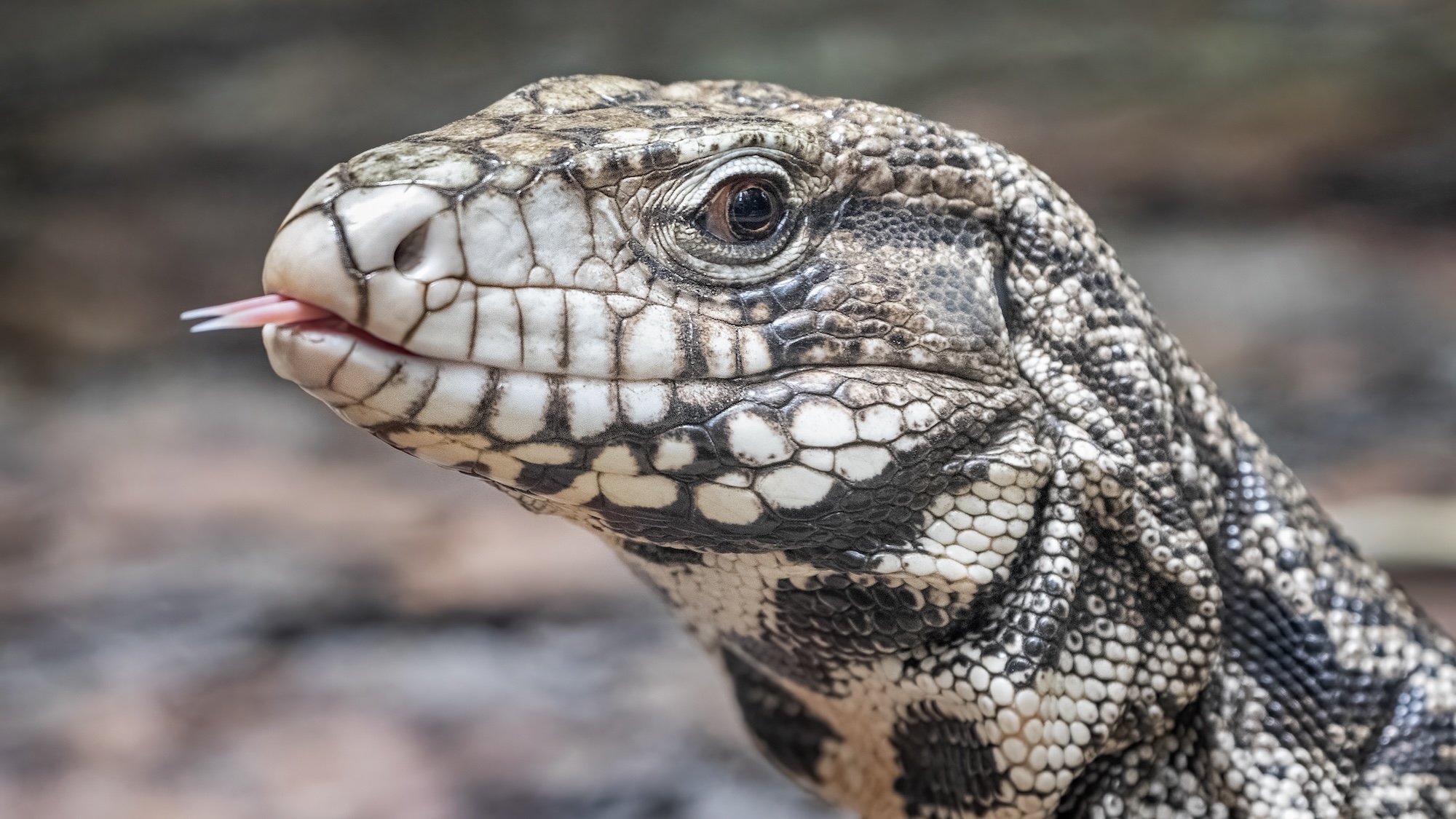

Georgia is battling invasive, 4-foot-long lizards
Wildlife experts in Georgia are urging locals to keep on the lookout for any four-foot-long lizards wandering around the Peach State. As its name implies, the Argentine black and white tegu (Salvator merianae) isn’t native to the United States, and it’s quickly becoming a nuisance.
Although the black and white tegu resembles many monitor lizard species, they are actually only distantly related to the reptiles. The speckled omnivores can weigh upwards of 10 pounds, largely thanks to a diet that regularly includes eggs, small animals, fruits, and vegetables. They are also extremely prolific animals, with a single female capable of producing around 35 eggs every year. These typically hatch during the summer between June and July, meaning many in Georgia have a decent chance of spotting a tegu in the near future.
It’s still unclear how the tegus were first introduced into the state, although illegal releases by exotic pet owners are the most likely explanation. Georgia’s Department of Natural Resources (DNR) first responded to reports of the rogue reptiles in 2018, with sightings spreading ever since. Tegus are currently particularly concentrated in southeastern Georgia’s Toombs and Tattnall counties, but experts fear a lack of predators means the lizard population could soon explode without concerted conservation efforts. As non-native “wild” species, trapping and hunting tegus is legal in Georgia throughout the year.
That said, the DNR still cautions hunters against coming into direct contact with the reptiles. Although not particularly aggressive or dangerous, tegus may carry exotic parasites as well as harmful bacteria including salmonella. Experts encourage people to instead contact the DNR if they see one of the lizards, either by emailing gainvasives@dnr.ga.gov or calling (478) 994-1438.
Unfortunately, Georgia isn’t the only state contending with an unwanted tegu problem. According to an ongoing mapping project from the U.S. Geological Survey and Georgia Southern University, residents across Florida, Alabama, South Carolina, and Texas have also reported sightings in recent years.
The post Georgia is battling invasive, 4-foot-long lizards appeared first on Popular Science.