Normal view

Rare meteorite proves our solar system almost had an extra planet

3 June 2026 at 17:01

A rare meteorite discovered in the Sahara Desert proves that our solar system almost had at least one extra planet. In a study published in the journal Earth and Planetary Science Letters, astronomers say the chunk of space rock known as Northwest Africa (NWA) 12774 once belonged to a protoplanet possibly as large as Mars. That is, until a cosmic crash likely blew it to smithereens. 

The solar system includes eight known planets (sorry, Pluto). Barring interstellar catastrophe, this number will remain the same until the sun finally dies about 5 billion years from now. However, this total planetary count was never a guarantee.The solar system’s earliest era featured multiple embryonic protoplanets that had the potential to grow together into additional cosmic neighbors.

The remnants of these long gone celestial bodies are scarce, but traces still exist. That said, astronomers didn’t expect to find protoplanetary evidence in a meteorite like NWA 12774. Discovered in 2019, NWA 12774 is an angrite—one of the oldest known types of volcanic rock that was formed during the solar system’s era about 4.56 billion years ago. They’re also very rare. Of the roughly 80,000 meteorites discovered on Earth so far, only 68 are angrites.

A slice of NWA 12774. The green circle is an olivine crystal, a magnesium-rich mineral. Credit: John Kashuba

Unlike rocky planets such as Mars and Earth, angrites do not have a lot of silicon dioxide. Because of this, astronomers have long assumed that angrites always originated in asteroids no larger than about 124 miles wide. NWA 12774 blows this theory apart..

While analyzing the meteorite, researchers at the University of Colorado Boulder detected clinopyroxene, a mineral crystal that exists throughout Earth’s mantle and crust. NWA 12774’s clinopyroxene was also heavy in aluminum, which directly points to formation under massive amounts of pressure underground. The team then calculated the conditions necessary to create an angrite like NWA 12774, and settled on at least 17.5 kilobars of pressure. To put that in perspective, the pressure experienced at the bottom of the roughly 35,875-foot-deep Mariana Trench is barely one kilobar.

Small asteroids simply don’t possess the conditions needed to generate a rock like NWA 12774. What’s more, the angrite’s sharp crystalline edges also indicate that it formed at comparatively shallow depths in its host body. Based on all of these factors, astronomers now believe NWA 12774 once belonged to a young protoplanet with a radius anywhere from 621 to 2,050 miles wide. This means that instead of an asteroid, the angrite may have existed inside something as big as Mars.

“It’s incredible to think there was once a world this large,” Aaron Bell, a UC Boulder earth scientist and study co-author, said in a statement. “We only know it existed because a few fragments of it happened to land on Earth. These meteorites preserved evidence of a completely different pathway through which early planets developed.”

Although it’s unclear how the protoplanet met its demise, some type of crash between early solar system denizens is definitely a possibility. Regardless, the ramifications are huge for astronomers’ understanding of our cosmic neighborhood’s history.

“The materials that formed the angrite parent body are fundamentally different from the ingredients of Earth and Mars,” explained Bell. “It points to a distinct and separate evolutionary path in planetary formation in the early history of our solar system.”

The post Rare meteorite proves our solar system almost had an extra planet appeared first on Popular Science.

On-Demand Nanomanufacturing of Electronics in Microgravity

3 June 2026 at 21:57

In a groundbreaking advancement poised to transform the trajectory of space exploration and technology, researchers have unveiled a novel method for manufacturing electronics in microgravity environments using on-demand additive nanomanufacturing techniques. This development, articulated in a recent publication by Bevel, Taba, Patel, and colleagues, outlines the creation of intricate electronic components and functional devices directly in space, bypassing the significant constraints traditionally imposed by Earth-dependent manufacturing and payload transport. The technology marks a pivotal step towards sustaining long-duration missions and the expansion of human presence beyond our planet.

The innovation leverages the advantages offered by microgravity, an environment that alters material behaviors at nanoscale levels, enabling unprecedented precision and control during the fabrication of electronic circuits. Additive manufacturing in microgravity defies the limitations caused by gravity-driven sedimentation and convection on Earth, permitting the deposition of materials with atomic and molecular fidelity. This enhancement at the nanomanufacturing scale is essential for producing next-generation electronics that require exacting standards for performance, miniaturization, and integration.

At the core of this technology is a platform capable of performing ultra-fine additive deposition processes, employing specialized printheads and deposition strategies adaptable to the unique conditions of space. Rather than relying on pre-fabricated components that must be transported from Earth—a costly and logistically challenging endeavor—this methodology empowers spacecraft and potentially orbital outposts to fabricate electronic parts autonomously. The capacity to manufacture on-demand not only reduces payload weights and costs but also mitigates risks associated with component failure, allowing for real-time repairs and adaptations in the field.

Significantly, the researchers have demonstrated the feasibility of this approach through experiments replicating microgravity conditions, integrating conductive, semiconductive, and dielectric materials with nanoscale precision. This multi-material integration is critical for constructing functional devices such as sensors, thin-film transistors, and other components essential to spacecraft instrumentation and communication systems. The ability to seamlessly combine materials paves the way for more complex architectures necessary in advanced electronics.

The implications extend beyond mere convenience; they herald a paradigm shift in how future space missions approach sustainability and autonomy. Missions to Mars, lunar bases, and deep space exploration necessitate robust, self-sufficient systems capable of overcoming the isolation and resupply limitations inherent at vast distances from Earth. The capacity for in-situ manufacturing of electronic systems reduces dependency on Earth’s manufacturing cycles and enables continuous innovation and customization in operational hardware.

Furthermore, the nanomanufacturing process developed capitalizes on the unique physicochemical properties inherent in microgravity. For instance, surface tension and capillary forces dominate over gravitational effects, enabling smoother layering of materials and reducing defects that typically arise in terrestrial manufacturing. This fundamental shift enhances device reliability and performance critical for mission success in harsh extraterrestrial environments.

Another notable aspect of the study involves the scalability and adaptability of the technology. The modular nature of the additive deposition system allows it to be tailored for various mission sizes and requirements, from small satellite platforms to large space stations. Such versatility ensures that the technology can evolve in tandem with ambitions in space habitation and exploration, integrating seamlessly with robotic manufacturing units and autonomous assembly lines.

The research team also addresses challenges related to environmental interference in space, such as radiation and vacuum conditions, illustrating how their materials and techniques maintain structural integrity and functional stability even under these stresses. This robust design consideration is crucial to operational longevity and reliability, ensuring that electronics produced via this method endure the rigors of space.

Moreover, the development contributes significant insights into the materials science of space conditions. By analyzing the microstructural properties of the printed electronics, the study elucidates how microgravity influences crystalline growth, grain boundaries, and defect formation. These findings have broader implications for material engineering and could inform terrestrial manufacturing improvements by mimicking advantageous space-like environments.

Importantly, the technology’s on-demand nature introduces dynamic adaptability to mission operations. Instruments and devices can be fabricated or modified in real time, allowing for unexpected mission requirements or adjustments without waiting for resupply missions. This responsive manufacturing capability offers strategic benefits for mission planners, scientists, and engineers operating in the unpredictable expanse of space.

While currently focused on nanoscale electronics, the researchers envision expansions into fabricating other functional devices, including sensors, actuators, and potentially bioelectronic systems. Such expansions would significantly enrich the technological toolkit available in orbit or on extraterrestrial surfaces, driving innovation in habitat systems, health monitoring, and environmental sensing.

Financially and operationally, this advancement promises to reduce the exorbitant costs associated with launching heavy and complex electronic equipment from Earth. By decentralizing manufacturing to space itself, mission budgets can allocate resources more effectively, and payload design can focus on raw materials and versatile fabrication modules instead of stockpiled components.

As humanity pushes further into the final frontier, the ability to engineer and produce critical technology in situ emerges as a cornerstone of sustainable space exploration. This study not only offers a technological breakthrough but also acts as a conceptual beacon, inspiring new strategies for mission resilience and autonomy that will shape the future of human activity beyond Earth’s atmosphere.

In conclusion, the pioneering work on additive nanomanufacturing of electronics in microgravity marks a critical inflection point in space manufacturing technology. By harnessing the distinctive advantages of space environments, researchers have created a path forward that could dramatically enhance mission resilience, cost-efficiency, and technological capability. This research, presented by Bevel, Taba, Patel, and their collaborators, vividly illustrates how microgravity is not simply a challenge to be overcome but an enabling condition for next-generation manufacturing, heralding a new era of in-space electronics fabrication and functional device production.

Subject of Research:
Additive nanomanufacturing of electronics in microgravity environments aimed at enabling in-space fabrication of functional electronic devices.

Article Title:
On-demand additive nanomanufacturing of electronics in microgravity: towards in-space manufacturing of electronics and functional devices.

Article References:
Bevel, C., Taba, A., Patel, A. et al. On-demand additive nanomanufacturing of electronics in microgravity: towards in-space manufacturing of electronics and functional devices. npj Adv. Manuf. 3, 23 (2026). https://doi.org/10.1038/s44334-026-00085-w

Image Credits:
AI Generated

DOI:
https://doi.org/10.1038/s44334-026-00085-w

JWST found a fully formed galactic bar where theory said one couldn’t possibly exist yet — and it quietly rewrites how the universe’s earliest giants stopped making stars

JWST found a fully formed galactic bar where theory said one couldn't possibly exist yet — and it quietly rewrites how the universe's earliest giants stopped making stars

Astronomers using the James Webb Space Telescope have spotted a fully formed stellar bar inside a massive galaxy that existed when the universe was barely a tenth of its current age, a structure that current models say should not be possible. The find locates the bar inside a galaxy at high redshift, viewed in the early universe.

Bars are long, cigar-shaped concentrations of stars that cut across the centers of disk galaxies. The Milky Way has one. So do a significant fraction of nearby spirals. They are supposed to be slow-cooked features, products of billions of years of gravitational settling inside a dynamically cold, stable disk.

GN20 did not get the memo.

barred spiral galaxy JWST

A structure that defies three predictions at once

The bar stretches several kiloparsecs from end to end, comparable in scale to the bar in the present-day Milky Way. Its existence collides with three separate theoretical expectations.

The first: bars of that size should collapse under their own gravity unless embedded in a sufficiently massive, kinematically cold stellar disk. Young galaxies were thought to lack that scaffolding.

The second: simulations have long suggested bars need billions of years to organize. GN20 simply hasn’t existed long enough.

The third, and perhaps the most damaging: high gas fractions, which dominate early galaxies, were believed to suppress bar formation by disrupting the orbital resonances that hold a bar together.

Observations suggest all three problems dissolve under a single condition: the presence of highly turbulent gas across the inner disk at high gas fraction.

Confirmation from a second instrument

The JWST detection does not stand alone. The stellar bar structure aligns with independent dust mapping carried out by millimeter-wave observations. Two instruments operating at radically different wavelengths see the same elongated structure cutting through the galaxy’s interior.

That agreement matters. JWST is sensitive enough to occasionally pick up structures that turn out to be artifacts of dust geometry or projection. Independent views of the cold dust distribution close that escape hatch.

A cosmic funnel feeding a monster

GN20 is one of the most extreme star-forming galaxies in the early universe, producing more than 1,000 solar masses of new stars per year. For comparison, the Milky Way forms stars at a much lower rate.

The bar appears to be part of the reason. Bars act as gravitational conveyor belts, torquing gas out of stable orbits and channeling it toward the galactic center. The high star formation rate is likely being driven by the bar funneling gas and dust into the center, where it triggers an intense nuclear starburst in the gas-rich disk, and fuels the potential active galactic nucleus.

That last clause carries weight. If a bar is dumping fuel into a nascent supermassive black hole at high redshift, it offers a mechanism for the rapid black hole growth JWST has been documenting across the early cosmos. Astronomers have struggled to explain how black holes built up to billions of solar masses so quickly after the Big Bang. A turbulent, bar-driven feeding system is one answer.

Why dead galaxies might owe their death to bars

The most provocative implication of the find concerns galaxies that are no longer forming stars at all. Massive elliptical galaxies in the present-day universe are red, quiet, and effectively dead. They burned through their gas early and never recovered.

How they died has been an open question for decades. Recent work on post-starburst systems suggests the shutdown is abrupt rather than gradual. Post-starburst galaxies represent a small fraction of all galaxies and show signs of having recently hosted enormous bursts of star formation before falling silent. These galaxies carry substantially less molecular gas than their still-active counterparts.

A bar like GN20’s offers a plausible mechanism for that depletion. Channel gas inward fast enough, light it on fire in a nuclear starburst, feed an active galactic nucleus, and a galaxy can exhaust or expel its cold gas reservoir within a cosmologically short window. What remains is a quenched elliptical.

GN20 may be a snapshot of exactly that process in motion. The bar is not just an unexpected structure. It may be the murder weapon.

What turbulence changes

The theoretical wrinkle is turbulence. Standard bar-formation models treat the gas-rich interior of a young galaxy as fundamentally unstable terrain. Cold, smooth disks form bars. Hot, chaotic ones do not.

But the GN20 observations imply something else. Turbulence at high gas fraction may actually stabilize the bar by providing internal pressure support, preventing the runaway collapse that would otherwise unwind the structure. The same turbulence that should make bar formation impossible might be what makes it possible at this epoch.

If that interpretation holds, simulations of early galaxy evolution will need substantial revision. Many existing models do not resolve turbulent gas dynamics at the scales required to capture this physics.

A growing pattern of early maturity

GN20 fits inside a broader JWST trend: the early universe keeps looking more mature than it should. Webb has now spotted bars within the first two billion years after the Big Bang, host galaxies of quasars at extreme redshifts, and disk structures that classical models said could not yet exist.

The pattern is consistent enough that it has stopped being a series of one-off anomalies. Early galaxies appear to have built recognizable structure faster, brighter, and more efficiently than pre-Webb theory allowed.

What happens next

Follow-up work will likely concentrate on resolving the kinematics inside GN20’s bar in greater detail, ideally with ALMA or further millimeter-wave campaigns that can clock the gas velocity field. If the turbulent-stabilization hypothesis is right, the gas should display velocity dispersions far above what is seen in nearby barred spirals.

For theorists, the GN20 result is uncomfortable in a useful way. It points to a specific, testable physical ingredient that current models underweight. Hydrodynamic simulations that properly resolve turbulent, gas-rich disks at high redshift are now the obvious next step.

For everyone else, GN20 is one more reminder that the early universe was not a quiet, formless place waiting to grow up. It was already building the bones of the galaxies we recognize today, and doing so in ways the textbooks did not predict.

The post JWST found a fully formed galactic bar where theory said one couldn’t possibly exist yet — and it quietly rewrites how the universe’s earliest giants stopped making stars appeared first on Space Daily.

Predicting Space Weather Is Possible—Could We Also Stop It?

3 June 2026 at 19:53

The weather on Earth can get pretty messy sometimes. But in space, it can be wild—and the effects can be far-reaching.

Solar flares, giant explosions on the sun, can send out streams of energy that block radio communications and fry satellite electronics. Geomagnetic storms, caused by variations in solar wind, can mess with GPS signals and spark current surges on Earth that overload power grids.

The impact of space weather isn’t limited to temporarily losing electricity or digging out dusty paper maps for directions when satellite navigation systems fail. Every electronic financial transaction in the world, for instance, relies on time stamps sent by satellite systems. And, in May 2024, a solar storm threw out GPS systems used to accurately guide tractors in planting and harvesting crops, hobbling food production for days and costing US farmers $500 million.

Although satellites can be built with tougher shields or have their orbits adjusted, those are just Band-Aids; there’s currently little we can do to protect ourselves from space storms.

Boston University researcher Brian Walsh has an idea for how to change that. He’s been testing the theoretical feasibility of a system of spacecraft that could fire chemical elements to the edge of Earth’s magnetic field, temporarily fortifying our defenses and deflecting potentially damaging space weather. In simulations, Walsh and researchers from the University of Michigan found the system could cut the intensity of a major geomagnetic storm in half. The findings were published in the journal Space Weather.

“Since humans have been in space, we’ve been trying to predict what’s going to happen in the space environment,” says Walsh, a BU College of Engineering associate professor of mechanical engineering. “But we came up with a model that could flip the paradigm. It’s like people in a village who see a river flooding—maybe they can predict when that will happen, but probably what’s even better is if they could build a storm wall. That’s what we’re proposing here.”

Bouncing Storms Past the Earth

Walsh says his idea for a weather wall in space was inspired by a natural phenomenon: material peeling off the Earth’s atmosphere and floating to the edge of our planet’s protective bubble, the magnetosphere, to bolster it. “I thought, maybe you could turn [that process] up, increase the intensity of it,” he says.

His proposed system, named StormWall, would start with the launch of six spacecraft into a geosynchronous orbit matching the Earth’s own rotation. Each craft would be fitted with a canister loaded with what the researchers call a mass-loading material. When released, the material—an alkaline chemical element like barium or lithium—would photoionize, a process that induces an electrical charge, seeding the atmosphere with plasma.

In their simulations, Walsh and his colleagues found that this plasma would disrupt the flow of energy between any solar storm and the magnetosphere—and that would be enough to bounce the space weather around and past our planet.

Not Science Fiction

Walsh admits a weather wall in space sounds a little like science fiction, but says it’s within our reach.

“When you apply some really serious physics to it, it does work. And the amount of mass we need, the launch capacities—it’s all within our capabilities,” he says. “People have always thought, ‘space is huge, the sun is massive, we just have to sit here and take whatever it gives us.’ But what we found is that we can impact it.”

One of the biggest barriers to implementation is cost. Launching six spacecraft, together carrying the equivalent of about a dozen oil trucks–worth of material, wouldn’t be cheap. And once the payload is fired out and photoionizes, the system would be dead and couldn’t be replenished—it’s one and done. But with private companies investing billions in space infrastructure—and even contemplating data centers in orbit—Walsh says the math on cost-benefit ratios could soon favor his proposed approach. In their paper, Walsh and his colleagues point out that a massive once-in-a-century geomagnetic storm—the last one was in 1859—would cause devastating damage in space and on Earth, with power grid costs alone topping $2.4 trillion.

He’s confident the team can bring down the StormWall costs too. Next on their agenda is studying ways to half the material used, simulating a pulsed release of materials to extend the system’s lifespan, and examining potentially more efficient orbits. They also want to dig deeper into the chemistry involved to nail down the best elements to use.

And although space junk is a major issue in Earth’s lower atmosphere, Walsh says any materials they pump into its higher reaches would quickly be carried out of the system after they’ve done their job. “The material drifts out on these natural highways, it leaves the system—the magnetosphere flushes the material out within six or so hours.”

Geoengineering Space

As the head of BU’s Space Physics & Technology Lab, much of Walsh’s broader research is focused on observing and better understanding the space environment around Earth; he and his team were recently part of a mission that sent a telescope to the moon to image our magnetic shield. Although the StormWall project is loosely connected to that wider work, Walsh says it’s a bit of an outlier. “This is quite different than what anyone is doing right now—I don’t know of anyone proposing to geoengineer space.”

Should the idea literally take off, he says that, unlike some space missions that might reap rewards for the few, this one would benefit us all.

“If you built it, if it was deployed, it would help all people on the planet,” says Walsh. “You couldn’t make it in a way that helped only one country, one group of satellites.”


Journal

Space Weather

Method of Research

Computational simulation/modeling

Subject of Research

Not applicable

Article Title

Terrestrial Space Weather Protection Through Human-Produced Mass-Loading

Article Publication Date

2-Jun-2026

COI Statement

The authors declare no conflicts of interest relevant to this study.

Media Contact

Jennifer Rosenberg

Boston University

jennr@bu.edu

Journal
Space Weather
Funder
U.S. National Science Foundation
DOI
10.1029/2025SW004846

bu içeriği en az 2000 kelime olacak şekilde ve alt başlıklar ve madde içermiyecek şekilde ünlü bir science magazine için İngilizce olarak yeniden yaz. Teknik açıklamalar içersin ve viral olacak şekilde İngilizce yaz. Haber dışında başka bir şey içermesin. Haber içerisinde en az 12 paragraf ve her bir paragrafta da en az 50 kelime olsun. Cevapta sadece haber olsun. Ayrıca haberi yazdıktan sonra içerikten yararlanarak aşağıdaki başlıkların bilgisi var ise haberin altında doldur. Eğer yoksa bilgisi ilgili kısmı yazma.:
Subject of Research:
Article Title:
News Publication Date:
Web References:
References:
Image Credits:

Keywords

Asteroid dirt is fluffier than we thought

3 June 2026 at 16:27

The strength of gravity is different on every body in the solar system. Whether it’s the crushing weight of Jupiter or the miniscule pull of a small asteroid, this fundamental force of physics still has a major impact on the material those bodies are made up of. A new paper from researchers at the University […]

The post Asteroid dirt is fluffier than we thought appeared first on Knowridge Science Report.

One of America’s Rarest Species Just Narrowly Survived a Historic Wildfire—NASA Satellite Images Reveal the Stunning Damage

3 June 2026 at 16:10

Newly released NASA satellite images reveal the extent of recent wildfire damage on Santa Rosa Island in vivid detail, showcasing the impact of the largest Channel Islands fire on record.

The images, obtained with NASA satellite observation platforms that include the Fire Information for Resource Management System (FIRMS) and the Fire Event Explorer, reveal fire damage to nearly half of the island’s southeastern side.

The fire was initially spotted on May 15, 2026, and containment efforts began as the blaze spread across the island over the following days.

Now, the new NASA imagery is revealing the extent of the damage caused by the historic fire, which officials say came close to endangering one of our nation’s rarest species.

Channel Islands
California’s Channel Islands, with Santa Rosa Island visible in the center. Fire damage is visible on the island’s southeastern portion (Image Credit: NASA Earth Observatory/Lauren Dauphin, using Landsat data from the U.S. Geological Survey).

18,000 Acres Scorched on Santa Rosa Island

Current damage estimates indicate that close to one-third of the island was impacted, constituting more than 18,300 acres on the island, which is part of California’s Channel Islands National Park.

Comparisons with past NASA imagery of Santa Rosa Island, made possible with Landsat satellite images, reveal a sharp contrast between once verdant regions of the island, which are now scorched by fire, shown in reddish brown in the more recent images (see below).

Santa Rosa Island fire
Santa Rosa Island is shown in a side-by-side comparison, featuring the wildfire near its outset on May 16, 2026, and subsequent imagery from May 24, 2026, as the fire spread across approximately 1/3 of the island (Image Credit: NASA Earth Observatory/Lauren Dauphin, using Landsat data from the U.S. Geological Survey).

Fortunately, Channel Islands National Park officials reported that the fire had been 97 percent contained by May 26, after burning its way through chaparral and grassland covering large portions of the island.

Endangering One of America’s Rarest Species

The Channel Islands serve as a unique and extremely diverse habitat for a range of species of both plants and animals. Among the species threatened during the recent fires were Torrey pines (Pinus torreyana), recognized as our nation’s rarest pine tree, which only grows on Santa Rosa Island and in a preserve in urban San Diego.

Torrey pines
A wild grove of Torrey pines on Santa Rosa Island (Image Credit: Wikimedia Commons/CC BY 2.5).

Fortunately, most of the island’s Torrey pine forest remains intact, although some damage was reportedly discernible in surveys by firefighters on the island and in drone imagery of the scorched areas.

According to island officials, the fire appears to have burned its way inland at lower intensity, making its way through pine areas that burned ground-dwelling vegetation while leaving the overlying canopy largely unaffected.

Damage from the Largest Channel Island Fire

Park officials say that some smaller areas of forest did sustain significant damage, as conditions in those pockets allowed a greater burn intensity.

Closer to the fire’s northern boundary, Santa Rosa’s cloud forests—the wooded areas comprised mostly of oak and pine growth surrounded by chaparral, whose name is derived from the island fog that sustains them—were successfully preserved by firefighting crews who worked ahead of the fire to cool areas where combustible vegetation grows.

Based on recent local reports, the fire that consumed large portions of Santa Rosa Island’s vegetation is the largest known to have impacted any of the Channel Islands. Fortunately, many of the island’s indigenous trees and other vegetation are resilient enough to withstand fire, since they do not rely on it as part of their growth cycles like many mainland plant species.

Additional information about the fires can be found here, and more imagery of the recent damage has been made available at NASA’s Earth Observatory page.

Micah Hanks is the Editor-in-Chief and Co-Founder of The Debrief. A longtime reporter on science, defense, and technology with a focus on space and astronomy, he can be reached at micah@thedebrief.org. Follow him on X @MicahHanks, and at micahhanks.com.

Scientists Discover an Astronomical ‘Rosetta Stone’ for Decoding Mysterious Cosmic Signals

3 June 2026 at 12:59


An international team of astronomers has uncovered what they are calling the clearest evidence yet for dying white dwarf stars as the origin of a class of mysterious cosmic signals called long-period radio transients.

The research, led by University of Sydney PhD student Kovi Rose, potentially offers researchers a ‘Rosetta Stone’ capable of deciphering and categorizing other such signals.

“For the first time, we have pinpointed the origin of these signals, confirming the source to be a ‘cataclysmic variable’, or an accreting white dwarf star,” Rose explained in an email to The Debrief.

The team behind the discovery, including the astronomers at CSIRO’s ASKAP radio telescope, said that identifying the origin of these transient cosmic signals that come from a few remote regions of the Milky Way galaxy could also offer researchers a “natural laboratory” to study the extreme physics that occur in such environments.

Mysterious Cosmic Signals “Have Puzzled Astronomers for Years”

According to the same email, long-period radio transients were initially thought to be slow-spinning neutron stars, known as pulsars, emitting periodic energy bursts. However, the team notes that mathematical models suggest that slow-rotating neutron stars cannot generate enough energy to produce the mysterious cosmic signals.

“Long-period radio transients have puzzled astronomers for years,” Mr. Rose explained. “We’ve only found about a dozen, and their origins have been unclear.”

Hoping to solve the mystery, the University of Sydney-led team aimed their instruments at a region of space and discovered a small, dense star called a white dwarf. However, unlike our solitary Sun, this white dwarf is part of a binary star system, named ASKAP J1745−5051, with a much larger but less dense red dwarf as its companion.

mysterious cosmic signals
Artists’ impression of a white dwarf binary system, ASKAP J1745-5051, that could serve as a cosmic ‘Rosetta Stone’ for studying long-period radio transients. Image Credit: Carl Knox/OzGrav/Swinburne & Joshua Preston Pritchard (CSIRO).

After several scans with ASKAP, the team discovered that the smaller white dwarf, about the size of Earth but with a mass closer to the Sun’s, was shedding or accreting material onto the larger but less dense red dwarf star. As the material heats up, it releases X-rays.

The team also detected periodic bursts of radio signals from the binary system. Although these regular emissions are tied to the system’s orbital motion, the researchers found that the bursts of X-rays and radio signals didn’t peak at the same time. According to Mr. Rose, this lack of synchronicity “tells us they’re being produced in different regions of the system.”

Analysis Reveals Long-Period Radio Transient Match

A closer analysis suggested that, due to the proximity of the two stars, which orbit each other in just one hour, their interacting magnetic fields were producing regular radio-wave bursts, which the team clocked at 1.4-hour intervals.

Professor Murphy, Head of School at the University of Sydney School of Physics and Chief Investigator at the ARC Centre of Excellence for Gravitational Wave Discovery (OzGrav), said that similar objects have previously been linked to binary star systems, “but this is the first one where we can clearly see both stars and the accretion process in action.”

When the team compared the emissions from the binary system with those of previously detected long-period radio transients, the data were a clear match. According to Rose, this comparison proved definitively that this elusive category of mysterious cosmic signals “comes from a white dwarf actively pulling material from a companion star.”

Natural Laboratories for Exploring Extreme Plasma Physics

Although the team’s findings do not rule out other causes of these mysterious cosmic signals, they said their discovery “strengthens an alternative explanation” that at least some are caused by binary star systems involving white dwarfs.

“The system is also only the second known long-period radio transient to emit regular X-rays – and the first where the cause of the regularity has been confirmed,” they explained.

When discussing the potential impact of their findings on future research, the team noted that ASKAP J1745-5051 could provide astronomers “a reference point” for understanding other long-period radio transients that have remained uncharacterized.

Mr. Rose said that the system could help researchers determine whether other long-period transients are more like pulsars or like white dwarf systems, “acting like a stellar Rosetta stone,” referencing the famous stone tablet that helped modern researchers decipher Egyptian hieroglyphs. He also noted that the system offers researchers a unique opportunity to study extreme plasma physics and magnetic-field interactions “under conditions that cannot be replicated on Earth.”

“These systems are natural laboratories,” Mr Rose said. “They allow us to test our understanding of how matter behaves in strong magnetic fields and under intense gravitational forces.”

In the future, the University of Sydney-led team said they are planning future observations of the system with a combination of optical, radio, and X-ray telescopes “to better understand how these emissions are generated” and to determine whether similar mechanisms found in this system can explain the full population of long-period radio transients spotted to date.

“Each new discovery is helping us piece together the bigger picture,” Mr Rose explained. “We’re only just beginning to understand this new class of cosmic events.”

The findings are published in the journal Nature Astronomy.

 Christopher Plain is a Science Fiction and Fantasy novelist and Head Science Writer at The Debrief. Follow and connect with him on X, learn about his books at plainfiction.com, or email him directly at christopher@thedebrief.org.

Muon Space unveils Starship-class satellite platform for orbital data centers

3 June 2026 at 12:39

Muon Space announced a Starship-class satellite platform June 3 designed from the ground up to meet the demands of the emerging orbital data center market, with an initial launch slated for 2028 after securing customers.

The post Muon Space unveils Starship-class satellite platform for orbital data centers appeared first on SpaceNews.

Hubble Captures a Stunning Spiral Galaxy Slowly Being Stripped of Its Future

3 June 2026 at 12:04
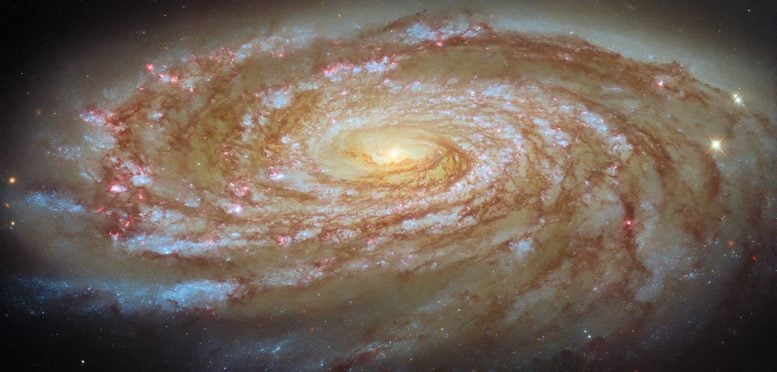
Spiral Galaxy Messier 88 (M88)A spectacular spiral galaxy known as M88 is traveling toward the crowded heart of the Virgo Cluster, where powerful forces are already beginning to reshape its future. A striking new image from the NASA/ESA Hubble Space Telescope highlights Messier 88 (M88), a spiral galaxy that is in the midst of a cosmic journey spanning hundreds [...]

New laser-treated metal could help keep satellites cool in space

3 June 2026 at 11:55

Keeping satellites cool in space is a major challenge. Unlike on Earth, where heat can escape into the surrounding air, space is a vacuum. This means there is no air to carry heat away. As a result, electronic systems on satellites and spacecraft can quickly overheat if they do not have an effective way to […]

The post New laser-treated metal could help keep satellites cool in space appeared first on Knowridge Science Report.

Astronomers Detect a Close Pair of Supermassive Black Holes for the First Time

3 June 2026 at 11:29
Center of the Galaxy Markarian 501Researchers discovered a closely orbiting pair of supermassive black holes in Markarian 501 by tracking two jets of particles. The binary system could merge within 100 years and may produce detectable gravitational waves. Current evidence indicates that nearly every large galaxy contains a supermassive black hole at its center, with a mass ranging from millions [...]

How long will it take to rebuild Blue Origin's launch pad? We asked some SpaceX vets.

3 June 2026 at 11:00

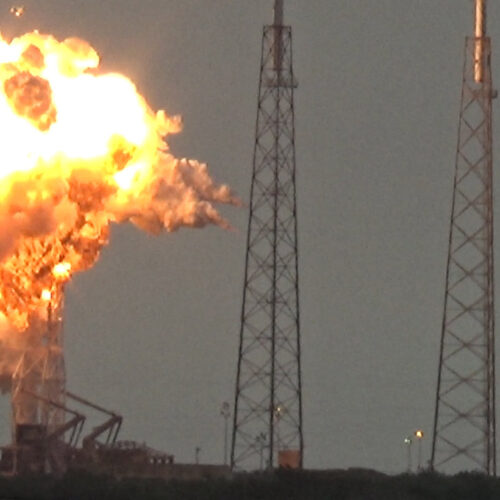
A former NASA engineer named John Muratore sat on console as launch director in early September 2016 as propellant flowed onto a Falcon 9 rocket in Florida. Ahead of a planned launch two days later, SpaceX was preparing for a static fire test of the vehicle.

Then, all of a sudden, the rocket exploded. "It came out of nowhere, and it was really violent," Muratore said. This fireball resulted in the destruction of the rocket, much of its launch site, and the AMOS-6 satellite already attached to the vehicle.

Nearly a decade later, on May 28, Blue Origin conducted a static fire test of a new rocket, with its larger New Glenn vehicle a few miles down the Florida coast. The company had gotten further into its test, reaching engine ignition, before its rocket also exploded.

Read full article

Comments

© USLaunchReport

How long will it take to rebuild Blue Origin's launch pad? We asked some SpaceX vets.

3 June 2026 at 11:00

A former NASA engineer named John Muratore sat on console as launch director in early September 2016 as propellant flowed onto a Falcon 9 rocket in Florida. Ahead of a planned launch two days later, SpaceX was preparing for a static fire test of the vehicle.

Then, all of a sudden, the rocket exploded. "It came out of nowhere, and it was really violent," Muratore said. This fireball resulted in the destruction of the rocket, much of its launch site, and the AMOS-6 satellite already attached to the vehicle.

Nearly a decade later, on May 28, Blue Origin conducted a static fire test of a new rocket, with its larger New Glenn vehicle a few miles down the Florida coast. The company had gotten further into its test, reaching engine ignition, before its rocket also exploded.

Read full article

Comments

© USLaunchReport

How long will it take to rebuild Blue Origin's launch pad? We asked some SpaceX vets.

3 June 2026 at 11:00

A former NASA engineer named John Muratore sat on console as launch director in early September 2016 as propellant flowed onto a Falcon 9 rocket in Florida. Ahead of a planned launch two days later, SpaceX was preparing for a static fire test of the vehicle.

Then, all of a sudden, the rocket exploded. "It came out of nowhere, and it was really violent," Muratore said. This fireball resulted in the destruction of the rocket, much of its launch site, and the AMOS-6 satellite already attached to the vehicle.

Nearly a decade later, on May 28, Blue Origin conducted a static fire test of a new rocket, with its larger New Glenn vehicle a few miles down the Florida coast. The company had gotten further into its test, reaching engine ignition, before its rocket also exploded.

Read full article

Comments

© USLaunchReport

NASA’s Fermi Telescope Caught a Supernova Doing Something Never Seen Before

Supernova Starburst Space Travel Warp SpeedNASA’s Fermi telescope may have finally uncovered the magnetic powerhouse behind the universe’s brightest supernovae. An international team of astronomers analyzing observations from NASA’s Fermi Gamma-ray Space Telescope has found what appears to be the first convincing detection of gamma rays from a rare type of extraordinarily bright stellar explosion known as a superluminous supernova. [...]
❌