Normal view

Blue Origin’s New Glenn exploded on its Cape Canaveral pad on May 28 — and the costliest casualty may be the lunar timeline NASA had bet on it just two days earlier

Blue Origin just lost a New Glenn on the pad, and the real casualty isn't the rocket — it's the lunar timeline NASA quietly bet on a week earlier

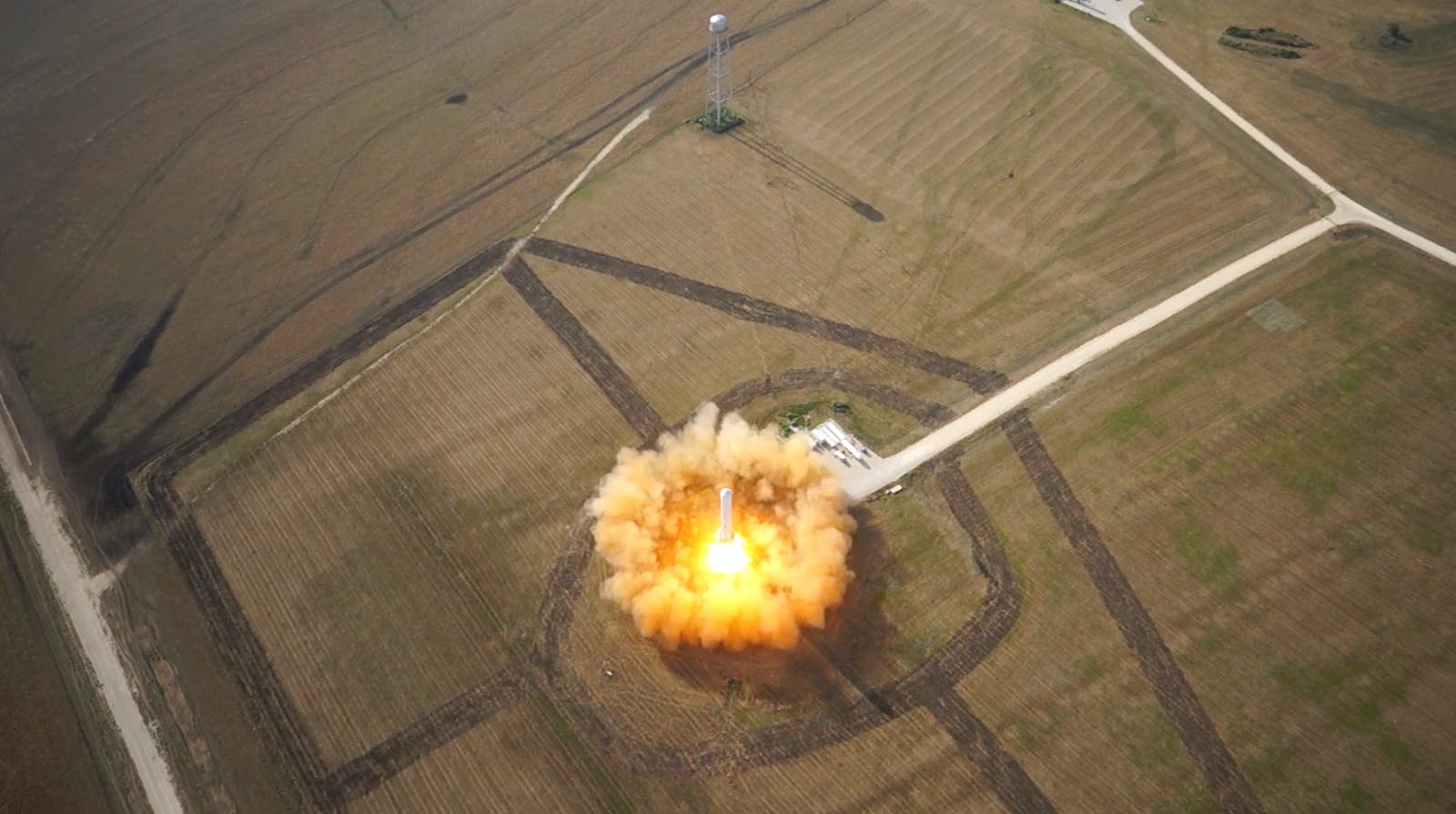
Blue Origin’s New Glenn rocket exploded on its launch pad at Cape Canaveral on the evening of May 28, destroying the vehicle and inflicting heavy damage on Launch Complex 36 during what was meant to be a routine static-fire test. No one was injured, but the loss has grounded the company’s only heavy-lift pad indefinitely — and it landed two days after NASA had publicly tied a piece of its Moon program to exactly this rocket.

The failure happened at roughly 9 p.m. Eastern as the first stage’s seven BE-4 engines fired. The rocket was being readied for the NG-4 mission, scheduled for as soon as June 4 with a payload of Amazon Leo broadband satellites. Amazon has confirmed no satellites were aboard during the test.

New Glenn rocket launch pad

The worst pad incident at the Cape in nearly a decade

The fireball at Launch Complex 36 is the most destructive event at Cape Canaveral since SpaceX lost a Falcon 9 during a fueling test at neighboring SLC-40 in September 2016. That pad sat dormant for about 16 months before returning to service in December 2017. A loss of this magnitude, depending on the structural damage, could follow a similar timetable.

Video circulated within minutes. The blast was visible across the Space Coast, with a mushroom cloud rising over Brevard County and debris scattered across the pad. Space Launch Delta 45 later warned that debris could wash ashore along public areas in the days and weeks afterward.

Blue Origin acknowledged an anomaly during the hotfire test within roughly half an hour and said all personnel were accounted for.

Bezos and Isaacman respond

Jeff Bezos addressed the loss publicly that night on X. “All personnel are accounted for and safe,” he wrote, adding that it was too early to know the root cause but the company was already working to find it, and that it would rebuild and return to flight.

NASA Administrator Jared Isaacman — who only two days earlier had named Blue Origin hardware to the agency’s first Moon Base mission — said NASA was assessing near-term mission impacts and would provide timeline updates as information became available.

The choreography is by now familiar from high-stakes commercial space failures: acknowledge the loss, frame it as part of the iterative process, get back to the pad. What is different this time is the dependency stack that has built up around New Glenn over the past two years.

Amazon’s constellation hits a wall

Amazon has 24 launches under contract with Blue Origin for its Amazon Leo broadband constellation, with NG-4 slated to carry the first batch of satellites. The entire manifest is now suspended with no resumption date until LC-36 is rebuilt and New Glenn returns to flight.

Leo is already under FCC-imposed deployment deadlines, and every grounded launch tightens that timeline. Amazon faces uncomfortable questions about whether to diversify away from Blue Origin’s heavy lifter, even as alternatives remain scarce. SpaceX, the only operator with comparable cadence, is a direct competitor to Leo through Starlink.

Smaller commercial customers, including those who have looked at New Glenn for direct-to-device launches, are likely to shift toward Falcon 9 manifests already running near capacity.

The Artemis dependency problem

The explosion’s most consequential ripple reaches NASA’s lunar program. Just two days earlier, on May 26, NASA had announced its Moon Base plan, naming Blue Origin’s Mk1 “Endurance” lander to fly the first privately funded lunar lander mission — Moon Base I — to the Shackleton Connecting Ridge near the lunar south pole, carrying NASA’s SCALPSS and a Lunar Retroreflector Array, targeting no earlier than fall 2026.

Endurance launches on New Glenn. The vehicle that would have carried it is now scattered across LC-36, and the pad it would have flown from is the damaged one.

A program already under strain

New Glenn’s operational record is short and uneven. It first flew in January 2025, reaching orbit but failing to recover its booster. NG-2 in November 2025 carried NASA’s ESCAPADE Mars probes and landed its booster for the first time. NG-3, launched April 19, 2026, landed the booster again but suffered an upper-stage cryogenic leak that stranded an AST SpaceMobile satellite in the wrong orbit. The FAA grounded the vehicle, and Blue Origin only received clearance to resume flights on May 22 — six days before this static-fire failure.

NASA’s broader lunar architecture is not positioned to absorb new delays gracefully. The Blue Moon lander, which NASA is counting on as one of two crewed-landing options, also depends on New Glenn to reach space. A rocket that cannot fly cannot demonstrate the launch reliability the agency wants to see before committing crews to Artemis missions later this decade.

The institutional question

Heavy-lift development is brutally hard. SpaceX absorbed multiple Falcon 9 losses on its way to dominance, and Starship has exploded repeatedly during test campaigns. The industry’s tolerance for these failures has grown because the iterative model has produced results.

What sets this incident apart is the timing. Blue Origin secured a flagship NASA role on May 26; its rocket exploded on May 28. The whiplash exposes a fragility that policymakers have been reluctant to confront: NASA’s Moon plans, Amazon’s constellation, and a meaningful share of upcoming national-security launches all flow through a small number of providers whose hardware can fail catastrophically on a single evening.

Bezos has been here before. Years of test failures and skepticism preceded Blue Origin’s first crewed New Shepard flight in 2021, and the company eventually delivered. The open question now is whether New Glenn can recover on a timeline that preserves its role in NASA’s lunar architecture, or whether the agency quietly rebalances toward SpaceX while the investigation runs.

What comes next

The immediate work is forensic. Blue Origin and the FAA will reconstruct what happened during the hotfire. Pad damage will be assessed and insurance claims filed. Range officials in coordination with Blue Origin are evaluating data to determine the cause.

The longer-term question is institutional. On May 26, NASA framed the Moon Base program as its bet on commercial partners to lower costs and accelerate timelines. That bet now depends on Blue Origin showing that May 28 was an anomaly rather than a pattern — and on how fast LC-36, the only pad built for New Glenn, can be rebuilt.

Blue Origin invested more than $1 billion to rebuild that pad before bringing it back into service in 2021. Whether the company’s investors and NASA’s planners have the patience for another long recovery is a separate question — and one that, after a single Thursday evening, is no longer hypothetical.

The post Blue Origin’s New Glenn exploded on its Cape Canaveral pad on May 28 — and the costliest casualty may be the lunar timeline NASA had bet on it just two days earlier appeared first on Space Daily.
In early June 2026, the X-59 is expected to cross Mach 1 at 43,000 feet, the first sharp proof point in NASA’s fifty-year attempt to turn an overland sonic boom into a certifiable thump

The X-59's first supersonic run next month isn't really a flight test — it's a regulatory argument NASA has been building for fifty years against a single FAA rule

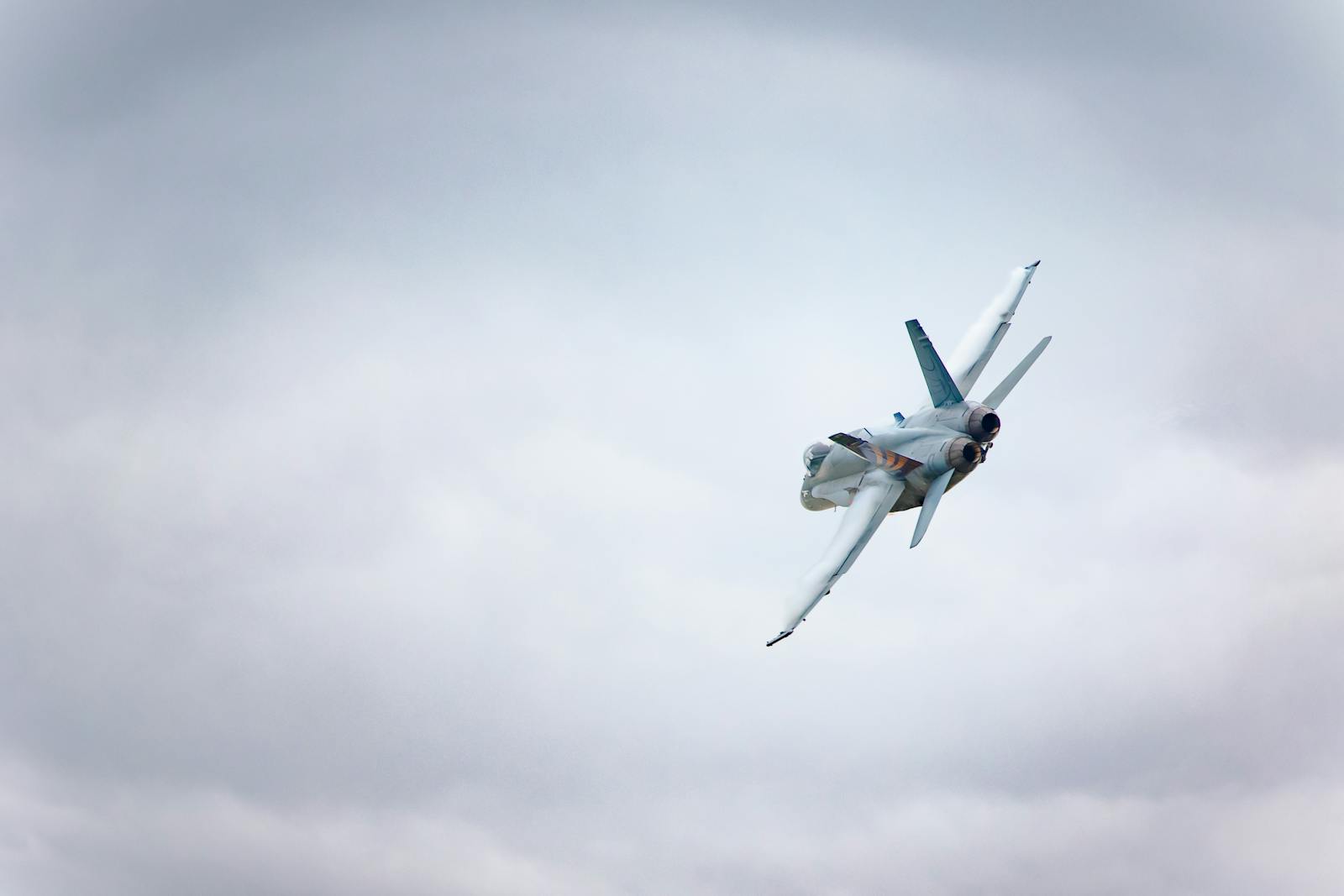
The X-59 is expected to cross Mach 1 for the first time in early June 2026 at about 43,000 feet, not as a speed stunt but as the opening move in a regulatory case NASA has been assembling since the United States restricted routine civil supersonic flight over land in the early 1970s.

The aircraft is built to do something narrower and stranger than fly fast. It is built to make a sonic boom arrive on the ground as a quieter pressure signature, the soft “thump” at the center of NASA’s Quesst mission.

That is why the first supersonic run matters. It begins the part of the program where the airplane stops being a shape on a ramp and becomes a flying argument about what the law should measure.

What happens in early June

NASA says the X-59 team expects the aircraft to fly faster than Mach 1 for the first time during a series of test flights in early June 2026, at approximately 43,000 feet and above 630 mph.

That first step is deliberately conservative. The milestone is to cross the barrier, gather data, and keep widening the flight envelope rather than jump immediately to the full mission profile.

The larger target comes after that. NASA says the aircraft will later fly a “mission conditions” profile at Mach 1.4, about 925 mph, at roughly 55,000 feet, the speed and altitude needed for the eventual community demonstrations over the United States.

The aircraft reached 43,000 feet and roughly Mach 0.95 in April 2026 during subsonic testing, according to NASA’s Quesst updates. Those flights were still short of the sound barrier, but they put the airplane close enough for the next series of tests to matter.

Why the thump matters more than the speed

The X-59 is not a prototype airliner. It is a single-seat research aircraft built by Lockheed Martin for NASA to test whether careful shaping can keep shock waves from merging into the sudden crack people associate with a sonic boom.

That shaping is visible before the aircraft ever leaves the runway. The nose stretches far ahead of the cockpit, the fuselage is long and narrow, and the pilot does not look through a forward windshield in the conventional way.

Instead, the aircraft uses an external vision system that feeds forward views to cockpit displays. NASA accepted that unusual cockpit arrangement because the front of the airplane is part of the acoustic design.

The goal is not silence. NASA has described the target as a quieter sonic thump, with expected levels as low as about 75 perceived loudness decibels, compared with Concorde-style booms above 100 PLdB.

That distinction is the entire program. If the public hears a low thump instead of a sharp boom, regulators may have a measurable noise basis for allowing some future overland supersonic operations.

The rule NASA is really testing

The regulation behind the X-59’s importance is not hidden. The FAA rule at 14 CFR 91.817 generally bars civil aircraft from operating in the United States above Mach 1 except under specific authorization.

In June 2025, the White House directed the FAA to take steps to repeal that prohibition and establish an interim noise-based certification standard, making the X-59’s data more politically useful than it would have been even a year earlier.

The order changed the policy direction, but it did not answer the acoustic question. A rule that allows civil supersonic flight over land still needs a defensible number, a test method, and public-response data regulators can use without relying on optimism from aircraft makers.

That is where Quesst fits. NASA plans to fly the X-59 over selected U.S. communities, collect ground measurements, and survey residents about how they perceive the sound.

The result is meant to be a dataset for U.S. and international regulators, not a sales brochure for one airplane. NASA’s own mission language says the community responses will be shared to help set data-driven acceptable noise thresholds for commercial supersonic flight over land.

The two-phase path to the ground signature

The first phase is about the aircraft itself. Engineers have to understand the X-59’s handling, propulsion, structures, flight controls, and instrumentation before they can make a serious claim about what reaches the ground.

That phase began after the aircraft’s first flight on Oct. 28, 2025, when NASA test pilot Nils Larson flew the X-59 for 67 minutes from Palmdale to NASA’s Armstrong Flight Research Center at Edwards, California.

NASA said that first flight stayed subsonic, reached about 12,000 feet and about 230 mph, and kept the landing gear down, which is common practice for an experimental aircraft on its first outing.

The next phase is acoustic validation. Engineers will use ground recording systems and aircraft measurements to determine whether the airplane’s shock pattern matches the low-boom predictions that justified the shape.

Only after that does the public-response campaign make sense. A community survey is not useful until NASA knows the aircraft is producing the kind of pressure signature the mission was designed to test.

NASA X-59 quiet supersonic research aircraft

Why this is slower than the old supersonic race

The X-59’s cautious pace looks almost theatrical beside the Cold War supersonic programs. The Soviet Tu-144 made its first flight on Dec. 31, 1968, before Concorde, and first went supersonic on June 5, 1969.

Concorde became the famous survivor of that era, but it never solved the overland boom problem. Its commercial life remained tied largely to oceanic routes, and Air France’s Concorde service ended in 2003 after 27 years.

The Tu-144 story was harsher. It was the first supersonic transport to fly and the first passenger aircraft to go supersonic, but the program was damaged by technical problems, crashes, and a short passenger-service life.

The X-59 has a different clock. NASA is not trying to beat another country to a first flight or sell tickets next season. It is trying to give regulators enough physical and human-response evidence to decide whether the old categorical ban can become a noise standard.

Other companies are moving around the same regulatory opening. Boom Supersonic’s XB-1 demonstrator broke the sound barrier on Jan. 28, 2025, and Hermeus announced in March 2026 that its unmanned Quarterhorse Mk 2.1 had received an FAA Special Airworthiness Certificate in the experimental category.

Those programs matter commercially, but they do not replace the X-59’s specific job. NASA’s aircraft is the one built around the low-boom community-response question.

What success would actually look like

Success is not just the X-59 going supersonic. A conventional fighter can do that, and Concorde did it for decades.

Success is a repeatable pressure signature low enough for ground instruments to record as a thump rather than a boom, then a set of community responses showing how ordinary people react when that sound arrives over their homes.

The selected communities have not been announced. NASA’s published planning for the community campaign describes multiple test locations, daytime operations, repeated surveys, and data meant to capture response across different conditions.

That makes the June 2026 supersonic run an opening measurement, not the verdict. The aircraft still has to fly the mission-condition profile, validate its acoustic signature, and then produce the public-response data regulators can use.

The old rule treated Mach 1 over land as the line that mattered. The X-59 is built to test whether the more important line is not the speed of the airplane, but the shape of the pressure wave that reaches the ground seconds later.

If the aircraft works, the sound under its flight path should not be the crack that made Concorde politically impossible over land. It should be a small atmospheric tap from 55,000 feet, quiet enough that the next argument begins with a number instead of a boom.

Related reading on Space Daily: X-59 QueSST more than the sum of its parts, Taming the boom, and Starbase neighbors take SpaceX to court over cracked walls and booming skies.

The post In early June 2026, the X-59 is expected to cross Mach 1 at 43,000 feet, the first sharp proof point in NASA’s fifty-year attempt to turn an overland sonic boom into a certifiable thump appeared first on Space Daily.

The Raptor 3 was supposed to be the engine that finally ended Starship’s reliability problem — instead, on its first flight, several of them quit less than 20 seconds into the boostback burn, dropping the booster into the Gulf and grounding the whole program for a federal mishap review

The Raptor 3 was supposed to be the engine that ended Starship's reliability problem — instead it just grounded the entire program after a 1,500 km/h plunge into the Gulf

SpaceX’s Raptor 3 engine — the powerplant the company has spent the better part of two years marketing as a simpler, more reliable replacement for the troubled Raptor 2 — failed multiple times in its maiden flight during exactly the kind of high-stress maneuver it was designed to handle. The Super Heavy booster’s engines began dropping offline seconds into a planned boostback burn, the stage lost the thrust needed to reverse course, and it fell back through the atmosphere and struck the Gulf at high speed. The Federal Aviation Administration has now grounded Starship pending a mishap investigation.

That sequence is the story. Not the paperwork, not the splashdown of the upper stage, not the Starlink mass simulators that deployed on schedule. The most-watched new rocket engine in the world failed in its debut, and it failed in the precise scenario SpaceX needs it to survive for Starship to ever become operational.

Starship Super Heavy booster

Twenty seconds, then a fall

According to telemetry shown on SpaceX’s own webcast, the boostback burn was scheduled to last about a minute. It ended after less than 20 seconds. Several Raptor 3 engines failed to light cleanly almost immediately after ignition, the booster never built the thrust needed to reverse its trajectory, and it fell back through the atmosphere and struck the water at high speed.

The stage came down inside an FAA-activated Debris Response Area, and the agency confirmed the debris fell inside the hazard zone with no reports of public injury or damage to public property. In its own post-flight statement, the FAA reported that the event caused six departure delays and five airborne holding events, with no diversions — the kind of secondary disruption that has become a recurring concern as Starship cadence grows.

The booster failure was not the only Raptor anomaly of the day. One of the 33 Raptor engines on Super Heavy shut down roughly a minute and 42 seconds into ascent, and one of the six engines on the upper stage also cut out before its planned duration. The FAA’s determination formally classifies the incident as a mishap, triggering a federally supervised root-cause review that SpaceX must complete and have approved before another Starship lifts off from Starbase, Texas.

The Raptor 3 debut

The flight was the maiden outing of Starship version 3, the vehicle’s most substantial revision since the program began. The redesign introduced the Raptor 3 engine, which SpaceX has marketed as a simpler, higher-thrust replacement for the Raptor 2 — fewer parts, fewer welds, fewer of the failure modes that plagued earlier flights. The vehicle reached space and completed most of its stated test objectives, including the deployment of Starlink mass simulators and a soft splashdown of the upper stage in its targeted Indian Ocean zone.

The upper stage, in other words, behaved close to nominally. The booster did not.

Engine-out tolerance has always been part of Starship’s design philosophy. Losing one of 33 engines on ascent is, in principle, survivable. But losing multiple Raptor 3 units in quick succession during a planned, choreographed maneuver — the boostback burn is not an edge case, it is core to every operational Starship profile — suggests something closer to a systemic failure mode in a brand-new engine variant making its first flight. That is a categorically different problem from a single random shutdown.

How long the grounding might last

Recent precedent points toward a relatively fast paperwork resolution if SpaceX can isolate the cause. The FAA declared a mishap on Blue Origin’s New Glenn flight on April 19 after the upper stage malfunctioned during its second burn, stranding an AST SpaceMobile satellite in an unrecoverable orbit. Just over a month later, the agency accepted Blue Origin’s investigation report and cleared New Glenn to resume launches.

That precedent comes with a warning, though. Days after being cleared, New Glenn exploded during a static-fire test on May 28, with images suggesting significant damage to its launch complex at Cape Canaveral. A clean regulatory close-out is not the same thing as a clean return to flight. If SpaceX moves with comparable speed on the paperwork, and if the Raptor 3 issue proves tractable, Starship could be back on the pad within weeks rather than months. The harder question is whether a multi-engine failure mode can be diagnosed, fixed, and revalidated that quickly.

The broader picture for commercial launch oversight

Two of the largest privately developed launch vehicles in the world were grounded for mishap reviews within roughly five weeks of each other this spring. That is a notable data point about where the commercial launch industry sits in 2026: ambitious cadence goals, rapid iteration on new engines and upper stages, and a regulatory regime that is increasingly comfortable resolving incidents quickly when no public harm has occurred.

The FAA has also begun signaling that the stakes are rising. The agency has warned pilots to exercise extra caution against “catastrophic” debris hazards in the airspace around Starship’s corridor, and its own analysis suggests the enlarged hazard areas it approved for Starship could affect more than 13,000 commercial aircraft operations annually. The Flight 12 delays and holding events fit that pattern.

For SpaceX, the timing is awkward. The company has been pushing Starship toward operational deployment of Starlink V3 satellites, lunar Human Landing System work for NASA’s Artemis program, and the eventual Mars architecture that Elon Musk has staked the company’s identity on. Each grounding compresses the schedule, and SpaceX flagged Starship’s path to orbit as a milestone in the IPO prospectus it filed in May.

What the test actually proved

The temptation, after any mishap, is to read the result as binary: success or failure. The flight resists that framing.

The upper stage flew its mission. The mass simulators deployed. The splashdown happened where it was supposed to. For a first flight of a substantially redesigned vehicle with a new engine variant, getting the second stage through its full profile is a genuine technical result.

And the booster, while lost, demonstrated something useful in the negative. The Raptor 3’s behavior under boostback stress is now a known problem rather than an unknown one. That is what test flights are for, even when the FAA paperwork that follows is uncomfortable.

The booster is at the bottom of the Gulf. The data it sent back is not — and that data now defines a specific punch list SpaceX has to work through before Starship can fly operationally. The company has to determine whether the multi-engine dropouts trace to a common cause in the Raptor 3 design itself (combustion stability, turbopump behavior, ignition logic under throttle-up) or to a vehicle-level issue in how the new booster feeds and commands those engines during boostback. Each of those answers carries a different fix and a different timeline. A software or sequencing change could be flight-ready in weeks. A hardware redesign of the engine — the variant SpaceX has barely begun producing at scale — is a months-long problem that would ripple straight into the Starlink V3 deployment schedule and into the Artemis lunar lander milestones NASA is counting on. The next few weeks of the mishap investigation will determine which of those futures SpaceX is actually living in.

The post The Raptor 3 was supposed to be the engine that finally ended Starship’s reliability problem — instead, on its first flight, several of them quit less than 20 seconds into the boostback burn, dropping the booster into the Gulf and grounding the whole program for a federal mishap review appeared first on Space Daily.

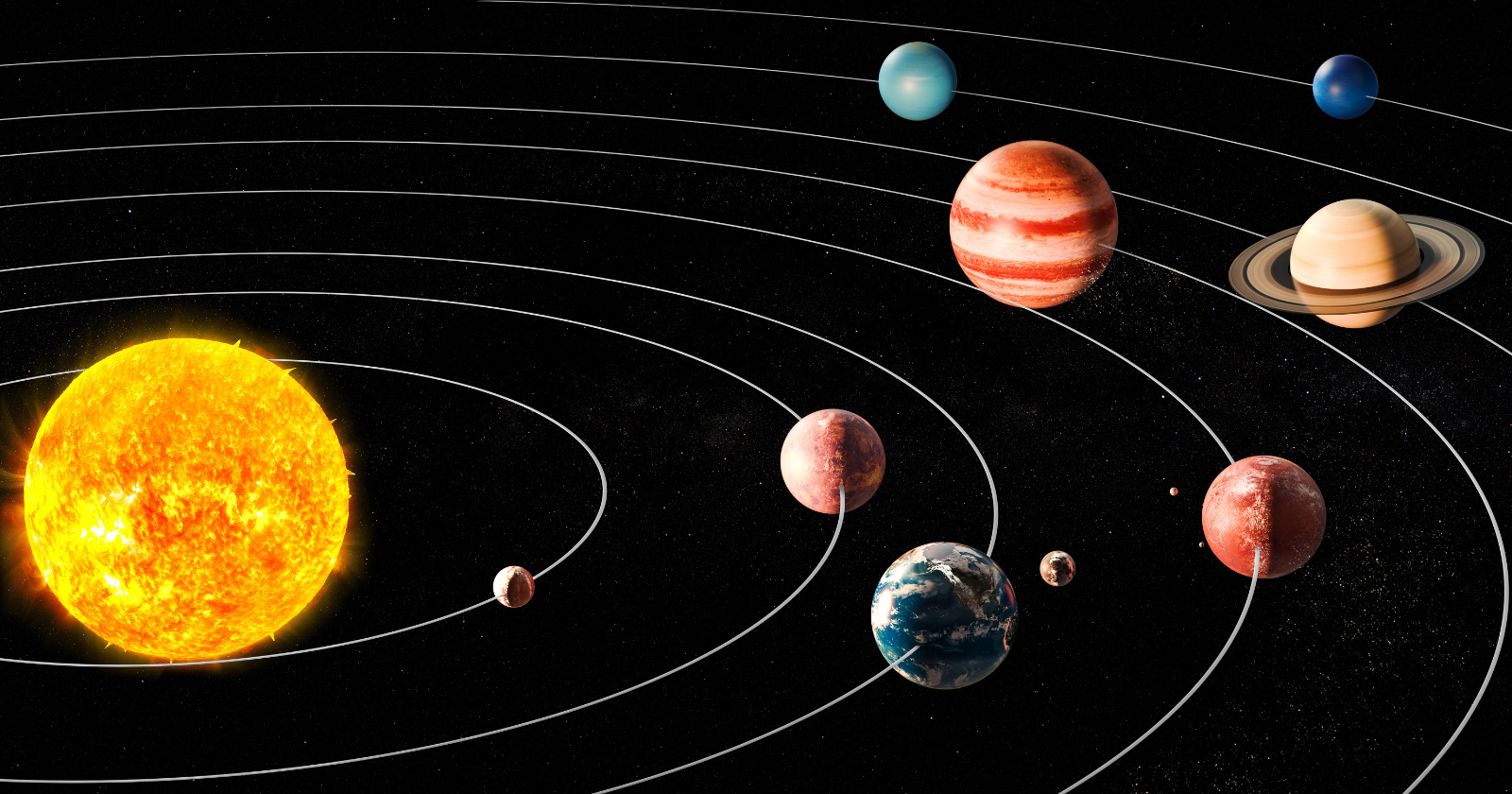
Almost everyone assumes Venus is our nearest neighbour, but averaged across its orbit the planet closest to Earth is actually Mercury

Most people would say Venus is Earth’s nearest planetary neighbour. Averaged across its orbit, though, the planet that stays closest to Earth is Mercury. The claim comes from a 2019 commentary in Physics Today by Tom Stockman, Gabriel Monroe and Samuel Cordner, and it has a tidy, faintly irritating quality: it is correct, and it is mostly a point about what the word “closest” is being asked to do.

The usual answer is not wrong so much as it is answering a different question.

Why people say Venus

Venus is the planet whose orbit runs nearest to Earth’s, and the one that makes the closest single approach. When Venus passes between Earth and the Sun, the gap between them can fall to about 38 million kilometres, closer than any other planet comes. Venus is also the planet most similar to Earth in size. So calling it our closest neighbour is reasonable, as long as “closest” means “comes nearest at its nearest.”

The authors point out that even NASA’s own materials have described Venus as our closest planetary neighbour. By the closest-approach measure, that holds.

What the calculation actually shows

The trouble starts with how the average distance between two planets is usually worked out. The common shortcut is to take each planet’s average distance from the Sun and subtract one from the other. For Earth and Venus that gives a small number, and Venus comes out closest on average.

That shortcut quietly assumes the two planets sit on the same side of the Sun. They rarely do. Most of the time the planets are scattered around their orbits, often on opposite sides of the Sun from each other, and the subtraction ignores all of that.

Stockman and his colleagues used two approaches instead. One was a formula they called the point-circle method, which averages the distance across every position each planet can occupy. The other was a simulation that placed the planets in their orbits and stepped forward every 24 hours for 10,000 years, recording which planet was nearest Earth at each step. Over that run, Mercury was Earth’s closest planet about 47 per cent of the time, Venus about 36 per cent, and Mars about 17 per cent.

The part that surprises people

The same calculation produces a stranger result. By this averaging, Mercury is not only Earth’s closest planet on average. It is the closest planet, on average, to every other planet in the solar system, the outer giants included.

The reason is that Mercury hugs the Sun. It never strays far from the centre of the system, so it never gets very far from anything else. A planet on a wide outer orbit spends long stretches on the far side of the Sun from any given neighbour. Mercury, kept close in, avoids those long absences. It wins on consistency rather than on any single close pass.

What it does and does not mean

It does not mean the order of the planets has changed. Mercury is still the innermost planet, and Venus’s orbit is still the one that runs closest to Earth’s. It does not mean Mercury ever comes physically closer to Earth than Venus does at its nearest. Venus still holds the record for the closest approach.

What changed is the answer to one specific question: averaged over a long span of time, which planet is nearest. Not everyone accepts that this is the most useful sense of “closest neighbour,” and the disagreement is mostly about the definition rather than the arithmetic, which is not really in dispute.

There is a practical version of the question too, and it has not changed. For anyone planning a spacecraft, the time-averaged distance is not the figure that matters. What matters is the geometry at launch and the close approaches that open transfer windows, and by that measure Venus and Mars are still the near targets they have always been.

The Mercury result rearranges a piece of trivia. It does not rearrange the solar system.

The post Almost everyone assumes Venus is our nearest neighbour, but averaged across its orbit the planet closest to Earth is actually Mercury appeared first on Space Daily.

Much of what we know about the scale of the universe rests on a method worked out by a woman employed as a human computer at Harvard for a few cents an hour

Much of what we know about the scale of the universe rests on a method worked out by a woman who was employed, at the time, as a human computer at the Harvard College Observatory. Her name was Henrietta Swan Leavitt. She began as an unpaid volunteer and was later paid thirty cents an hour, slightly more than most of the women doing the same work, to measure the brightness of stars on glass photographic plates.

The relation she found is still in use. It is one of the lower rungs on what astronomers call the distance ladder, the chain of techniques that lets us put a number on how far away other galaxies are. Almost everything built above it depends on it holding.

The work the computers did

In the late nineteenth and early twentieth centuries, the Harvard College Observatory employed a group of women to process its growing archive of photographic plates. They measured, catalogued and classified stars by hand, plate after plate. The director, Edward Pickering, hired women in part because he could pay them less than men with equivalent training. The group was known, with the casual condescension of the period, as Pickering’s computers.

They were not permitted to operate the telescopes. The observing was done by men, and the plates came back to the women to be read. Leavitt joined in 1893, took a permanent post in 1902, and spent most of her career on a single assignment: identifying variable stars, stars whose brightness rises and falls. Over her career she catalogued more than 2,400 of them, a large share of all those known at the time.

What Leavitt noticed

Most of her attention went to two faint patches of light in the southern sky, the Magellanic Clouds, which we now know to be small companion galaxies of the Milky Way. By 1908, working through plates of the Small Magellanic Cloud, she had noticed something in a subset of these stars, later called Cepheid variables: the brighter ones tended to take longer to complete a cycle from bright to dim and back.

Why this mattered turns on a single assumption. All the stars in the Small Magellanic Cloud sit at roughly the same distance from Earth, the way the lights of a distant town are about equally far from you even though the town is wide. So a Cepheid that looked brighter than another in the same cloud really was brighter. Its apparent brightness was not an accident of being nearer.

That let Leavitt convert something you can see, the period of pulsation, into something you usually cannot, the star’s true output of light. In a 1912 Harvard College Observatory circular reporting the periods of twenty-five Cepheids in the Small Magellanic Cloud, she set the relationship out plainly. The stars, she wrote, were “probably at nearly the same distance from the Earth,” so their periods tracked their actual emission of light.

Before this, distances could be measured directly only for relatively nearby stars, using parallax, the small shift in a star’s apparent position as Earth moves around the Sun. Beyond about a hundred light years that method ran out. Leavitt’s relation offered a way past that limit, as long as it could be anchored.

Why it became a ruler

A period-luminosity relation is not yet a distance. To turn it into one, you need the true distance to at least one Cepheid, to anchor the scale. Once anchored, the rule works in three steps: measure how long a Cepheid takes to pulse, read off its true brightness from Leavitt’s relation, then compare that with how bright it appears. The gap between true and apparent brightness gives the distance.

Leavitt was not allowed to take that next step. According to the National Women’s History Museum, Pickering kept her on cataloguing work and did not let her pursue the calibration. The anchoring was done by others, the Danish astronomer Ejnar Hertzsprung and the American Harlow Shapley among them.

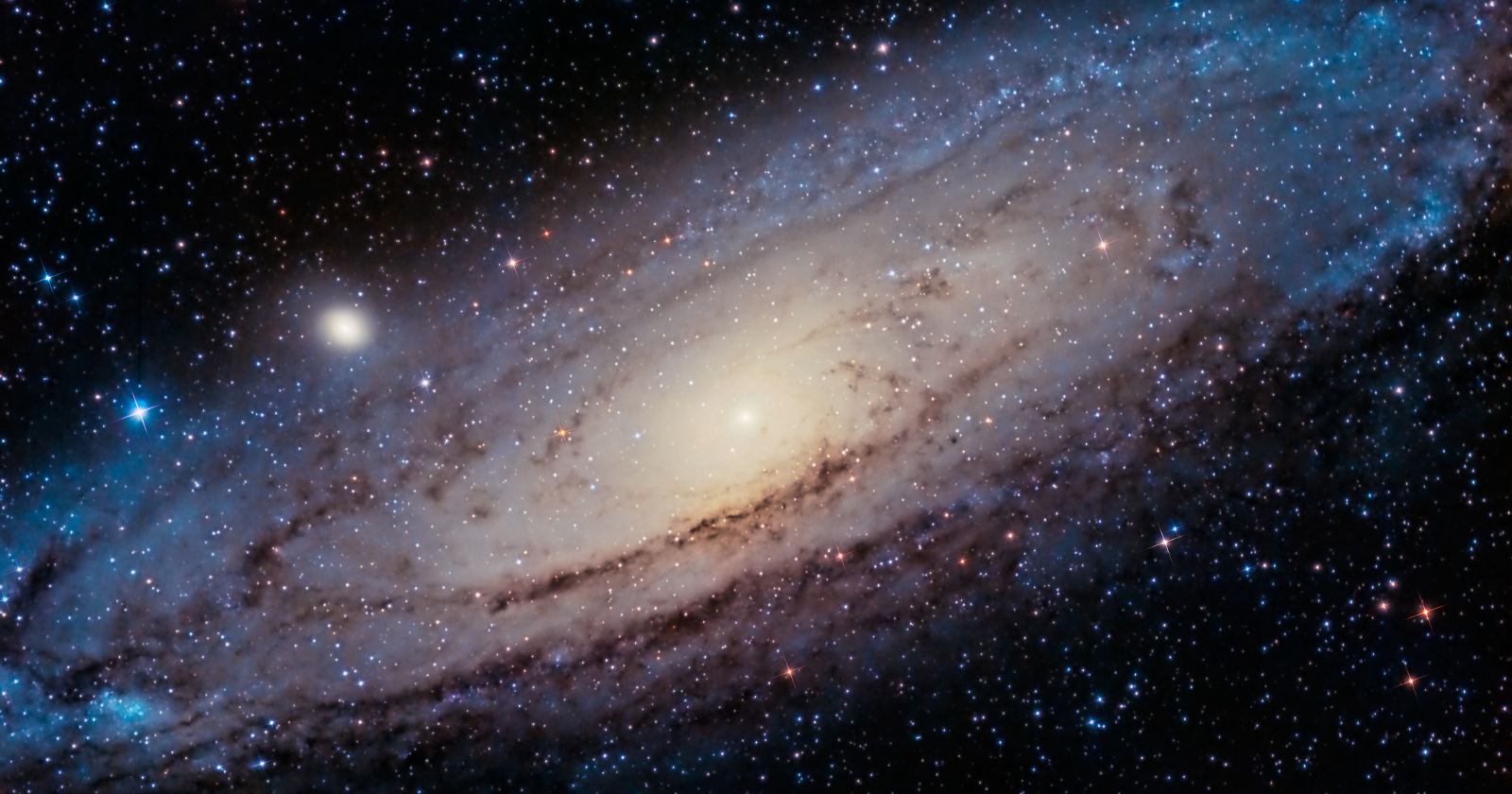
The payoff came in the 1920s. Edwin Hubble found Cepheids in the Andromeda nebula, applied Leavitt’s relation, and showed that Andromeda was far too distant to lie within the Milky Way.

It was a separate galaxy.

The known universe became, in a few years, enormously larger. Hubble then combined galaxy distances with redshift measurements to show that more distant galaxies are receding faster, the observation behind the expanding universe.

The credit

Pickering published Leavitt’s work under his own name, with a note that it had been prepared by Miss Leavitt.

The 1912 circular carries his signature.

Recognition came late and partial. In 1925 the Swedish mathematician Gösta Mittag-Leffler wrote to Leavitt to say he was minded to nominate her for the Nobel Prize in Physics, not knowing she had died of cancer in 1921. The prize is not awarded posthumously. When he asked Shapley, by then the observatory’s director, for more on her work, Shapley replied that much of the credit belonged to his own interpretation of her findings, as the American Physical Society recounts.

What it still does

Leavitt’s relation, now often called Leavitt’s Law, did not stay in 1912. The Cepheid distance ladder is still one of the main ways the present-day expansion rate of the universe is measured, including in the work that shared the 2011 Nobel Prize in Physics for the discovery that the expansion is accelerating. Adam Riess, one of those laureates, built much of his career on extending this same tool.

It is also still being checked against the original. In a 2025 analysis posted to the arXiv, Louise Breuval, Caroline Huang and Adam Riess revisit Leavitt’s 1912 data, comparing her first period-luminosity relation with modern measurements and noting where the early photographic plates skewed it. The authors describe that relation as the first standard-candle method for measuring distances beyond our own galaxy, and as still central to cosmology.

The reason this is more than housekeeping is a live disagreement. The expansion rate measured up the Cepheid ladder does not match the rate inferred from the early universe, and the cause is not yet settled. The lower rungs of that ladder are the ones Leavitt built, which is why a relation first drawn by hand on glass plates is still being re-measured rather than retired.

The post Much of what we know about the scale of the universe rests on a method worked out by a woman employed as a human computer at Harvard for a few cents an hour appeared first on Space Daily.

❌