Normal view

World War III and Coming Depression

16 April 2026 at 06:53
The Federal Reserve has now stopped quantitative tightening (QT), and moved to credit creation, quantitative easing (QE) once again. This signals global expansion of war as the only hope against the desperate condition of global finances, leading to a great depression.

Trump Effect in the Gold-to-Silver Price Ratio

30 January 2025 at 00:12
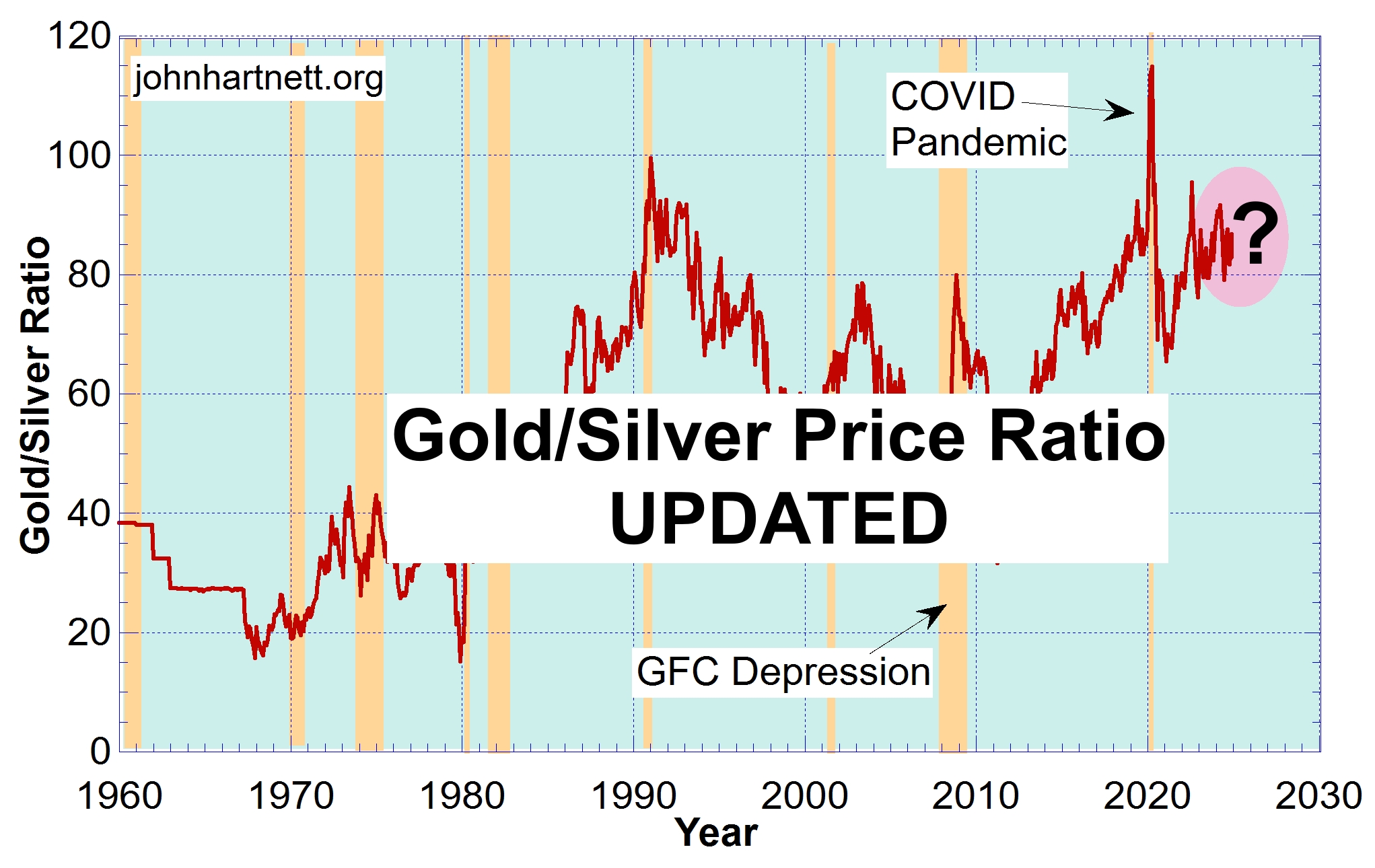
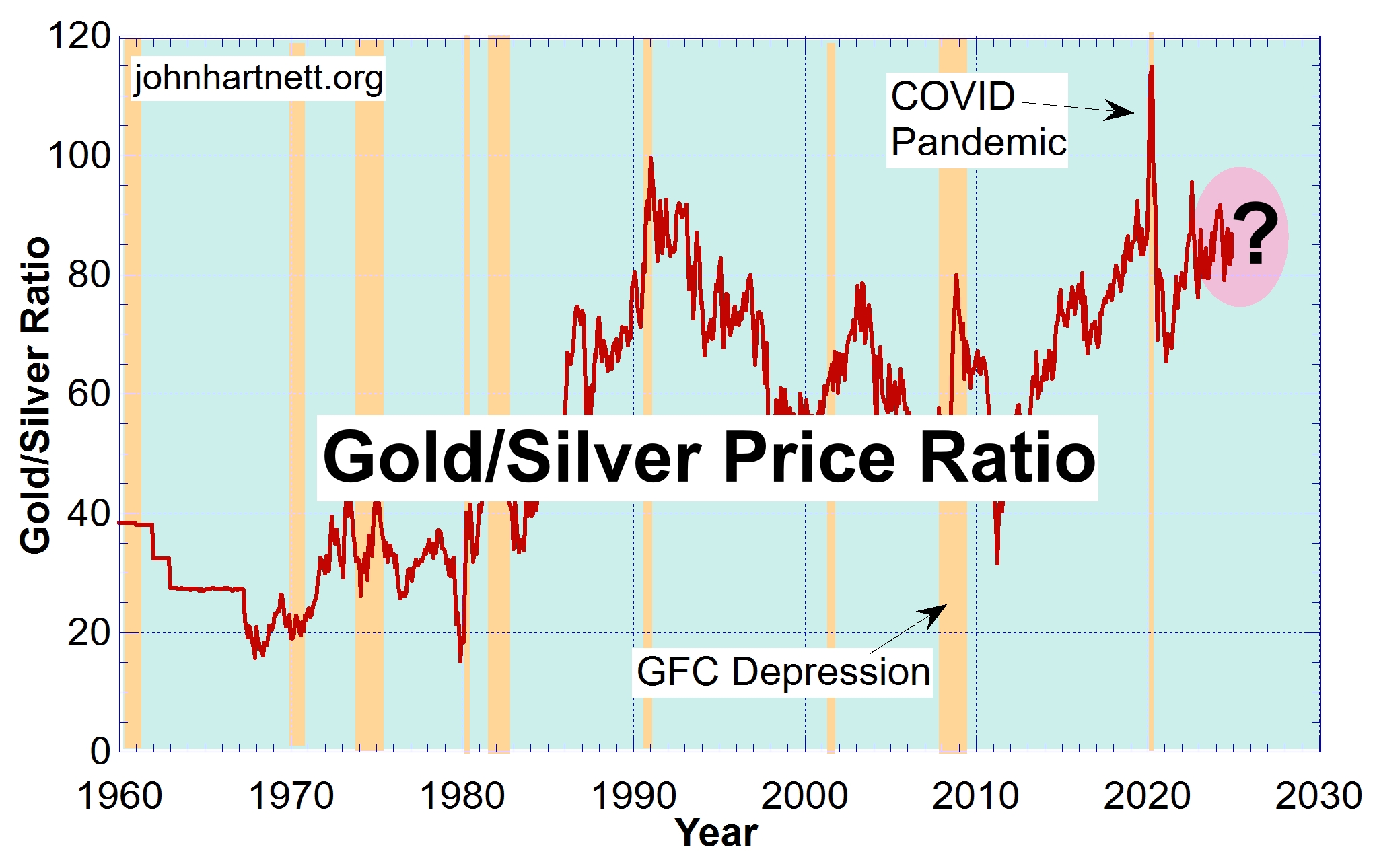
The analysis of the gold-to-silver price ratio reveals a significant "Trump Effect," noted after the November 2024 election, indicating a correlation between rising ratios and impending recessions. Updated data shows that the "velocity" of this ratio suggests an approaching major depression, supported by historical trends.

Next Global Financial Crisis in 2025?

17 December 2024 at 21:09
The US National Debt suggests a potential financial crisis in July 2025, based on historical debt trends linked to past crises. Analysis of the Monetary Base and gold prices indicates similar patterns to previous downturns. However, a third crisis is necessary for a reliable prediction of 2025.

US National Debt Predicts the Next Big Financial Crisis

12 December 2024 at 03:31
Recently the US National Debt peaked at approximately $35.46 trillion, with a few notable rapid increases during financial crises. The debt's growth rate predicts another financial crisis by mid-2025 that could surpass previous crises. Preparations for significant economic challenges are advised.

Is the Gold-to-Silver Ratio Predicting Another Great Depression?

27 November 2024 at 05:45
The gold-to-silver price ratio serves as an indicator of economic instability, fluctuating significantly during recessions and major events such as the Great Depression and WWII. Recent data suggests a potential approaching Depression, highlighted by observed "velocity" changes in the ratio, particularly following the 2024 U.S. presidential election.

Psilocybin Helped Reduce Depression Symptoms Within Just Days, Recent Clinical Trial Reveals

27 May 2026 at 12:45


A recent clinical trial in Sweden found that a single oral dose of psilocybin reduced depressive symptoms within 48 hours in participants suffering from moderate to severe depression. Participants also reported improvements that persisted for more than three months.

The study, carried out at the Northern Stockholm Psychiatric Clinic and published in JAMA Network, is the first randomized, double-blind trial of psilocybin for depression in Sweden. Researchers at Karolinska Institutet followed 35 participants for 12 months, making this one of the more rigorous long-term, placebo-controlled studies of psilocybin therapy for major depressive disorder.

Most antidepressants take anywhere from two to six weeks before patients begin to notice any change, and even then, about two out of three people don’t fully recover after their first round of treatment. If psilocybin’s fast-acting effect holds up in larger studies, it could provide doctors with a much-needed alternative method for treating depression.

Psilocybin vs. Placebo

All 35 participants suffered from recurrent moderate to severe major depressive disorder. Researchers randomly assigned 17 people to receive a 25 mg oral dose of psilocybin and 18 others to receive an active placebo. The placebo was niacin, a vitamin known to cause temporary flushing and tingling sensations to help mimic the experience of taking a drug.

Everyone in the study also participated in five psychotherapy sessions spread over 17 days. This included a session to prepare participants before taking the drug, the dosing session itself, and three follow-up sessions to help process their reported experiences. On the day of treatment, participants wore eyeshades and listened to music for several hours, with clinical staff nearby to monitor their safety.

Clinicians who did not know which treatment participants received used the Montgomery-Åsberg Depression Rating Scale (MADRS), a 0 to 60-point assessment, to measure depressive symptoms at days 8, 15, 42, and 365 after the initial dose.

Clinically Significant Results

By day 8, people who received the psilocybin dose had an average drop in MADRS score of 7.27 points compared with the placebo group. Researchers say that a difference of this size is statistically significant. This difference continued through day 15 and day 42. By the end of the first year, researchers no longer observed a clear difference between the groups.

Participants’ self-assessments began to show improvement even sooner. Using a self-report version of the MADRS, the group that received the psilocybin dose reported significant improvement starting on the second day; the difference in self-reported assessments between groups persisted until about day 102.

At six weeks, remission rates (defined as a MADRS score below 10) were at 53% in the psilocybin group and 6% in the niacin group. By the end of the year, both groups had similar outcomes, as the placebo group showed gradual improvement over time.

“Our results suggest that psilocybin can provide rapid, clinically meaningful improvement in depression and may serve as an alternative to standard treatment when fast symptom reduction is important,” said lead author Hampus Yngwe, a consultant psychiatrist and PhD student at Karolinska Institutet’s Department of Clinical Neuroscience.

The Psychedelic Caveat

The psychedelic effects of psilocybin made it difficult to keep participants unaware of which treatment they received. After the first year, 94% of those in the psilocybin group and all in the niacin group correctly identified which dose they received.

This is important to note because a person’s expectations can shape how they report their symptoms. The researchers pointed out this limitation and said the effect size might partly be due to participants believing they had received the real drug. Clinician ratings, which were also unaware of the administered doses, showed a similar, though smaller, benefit for the psilocybin group compared to self-reports, which supports this concern.

“We want to understand how factors such as treatment expectations and lack of blinding affect the results, as previous studies may have exaggerated the treatment effects,” Yngwe said.

What Comes Next

Most reported side effects were mild and brief. Headache, anxiety, and hallucinations were the most common adverse effects reported in the psilocybin group. However, two participants experienced severe anxiety that required medical attention in the weeks after dosing. The researchers say this finding highlights the need for careful patient selection and follow-up in future studies.

“It is important to emphasize that the treatment is not risk-free and that some patients may need extra support,” said senior author Johan Lundberg, professor at Karolinska Institutet’s Department of Clinical Neuroscience.

The research team plans to analyze PET scans and biological samples collected before and after dosing to see whether psilocybin changes synaptic density in the brain. This could help explain how the drug produces its rapid antidepressant effect and whether repeated dosing might extend this benefit.

While these results are encouraging, the study only included 35 people at one clinic, which makes it hard to draw broad conclusions about long-term effects. Larger and more diverse studies will be needed before psilocybin therapy could become a standard treatment.

Austin Burgess is a writer and researcher with a background in sales, marketing, and data analytics. He holds an MBA, a Bachelor of Science in Business Administration, and a data analytics certification. His work focuses on breaking scientific developments, with an emphasis on emerging biology, cognitive neuroscience, and archaeological discoveries.

A Single Dose of Psilocybin May Produce Lasting Brain Changes, Study Finds

14 May 2026 at 13:16


A new study shows that one psychedelic experience doesn’t just alter how a person feels; it may also change the brain itself. Researchers at UC San Francisco and Imperial College London found that a single 25 mg dose of psilocybin produces signs of likely anatomical changes in the brain that persist for at least a month after the experience.

Published in Nature Communications, the study was conducted in healthy adults with no prior psychedelic use. These results may help explain why psilocybin-assisted therapy is being explored as a treatment for depression, anxiety, and addiction.

The researchers identified a key mechanism behind these changes. Instead of focusing on a single brain region, they identified brain entropy as a key factor linking the experience to later outcomes.

What the Brain Looks Like on Psilocybin

Brain entropy refers to the diversity of neural activity happening at any given moment. A low-entropy brain tends to fall into predictable, repetitive patterns. A high-entropy brain is processing a richer, more varied stream of information. Within 60 minutes of taking the 25 mg dose, EEG recordings showed a sharp spike in entropy.

This increase in entropy persisted longer than the drug’s immediate effects. People who experienced the biggest jumps in entropy also reported more psychological insight the next day, saying they felt a deeper sense of emotional self-awareness. These insights coincided with improvements in well-being that lasted for at least two to four weeks.

“Psychedelic means ‘psyche-revealing,’ or making the psyche visible,” said senior author Robin Carhart-Harris, PhD, the Ralph Metzner Distinguished Professor of Neurology at UCSF. “Our data shows that such experiences of psychological insight relate to an entropic quality of brain activity and how both are involved in causing subsequent improvements in mental health.”

How the Study Was Designed

The study included 28 healthy adults with no mental health diagnoses. The experiment had two phases. First, each person received a very low 1 mg dose of psilocybin, which acted as a placebo. Researchers then tracked their brain activity and structure using EEG, MRI, and diffusion tensor imaging over the next few weeks.

One month later, those same participants received the 25 mg dose. The researchers then repeated the same series of brain scans and assessments.

Diffusion tensor imaging (DTI), a technique that measures water movement along neural pathways, showed that participants’ brain connections were more structurally intact a month after the high dose. This finding is the opposite of what typically happens with aging, which tends to weaken these connections. The most noticeable changes were in pathways linking the front and middle parts of the brain, areas involved in self-reflection, emotional regulation, and decision-making.

The researchers called these “likely anatomical changes” and emphasized that scientists still need more work to understand exactly what the structural shifts mean over longer time frames.

The Trip Is the Treatment

All but one participant described the 25 mg experience as the most unusual state of consciousness they had ever experienced. The other person ranked it among their top five. A month later, the group also performed better on a test of cognitive flexibility, which measures how well a person can adapt their thinking to new information.

Author Taylor Lyons, PhD, a research associate at Imperial College London, pointed to this chain of effects as the study’s most significant takeaway.

“Psilocybin seems to loosen up stereotyped patterns of brain activity and give people the ability to revise entrenched patterns of thought,” Lyons said. “The fact that these changes track with insight and improved well-being is especially exciting.”

These results could guide future research. If brain entropy during the experience predicts how well the treatment works, scientists might be able to use it to calibrate dosage in real time. This could help ensure patients get enough to support insight and recovery, without so much that it causes excessive stimulation.

What Comes Next

The researchers conducted the study in healthy volunteers and now plan to test whether these patterns also appear in people with depression, anxiety, or addiction. These are the groups where psilocybin therapy is being studied most actively. The sample size of 28 was small, and the researchers emphasized the need for larger, more diverse trials before drawing firm conclusions about clinical use.

Carhart-Harris noted that the therapeutic promise of psilocybin has been recognized for years. This study now provides new details about the biological mechanisms that may underlie its effects.

“We already knew psilocybin could be helpful for treating mental illness,” Carhart-Harris said. “But now we have a much better understanding of how.”

Austin Burgess is a writer and researcher with a background in sales, marketing, and data analytics. He holds an MBA, a Bachelor of Science in Business Administration, and a data analytics certification. His work focuses on breaking scientific developments, with an emphasis on emerging biology, cognitive neuroscience, and archaeological discoveries.

Frequent Exposure to News Involving Gun Violence is Linked to Depression, Researchers Find

14 May 2026 at 13:15


Researchers at Rutgers University have found that frequent exposure to real-world gun violence through the media may affect our mental health. The research suggests that regularly viewing firearm-related news and social media content is linked to higher levels of depression and emotional distress among adults throughout the United States.

The study examined 5,000 adults nationwide. Throughout the study, the research team focused on exposure to real-world firearm violence through popular media outlets such as Instagram, cable television news, newspapers, and other related media. Unlike fictional violence seen in movies, video games, or television dramas, the study took a direct look at the reactions to actual incidents of gun violence reported in the media throughout the United States.

“One of the most critical elements is ‘threat system activation,’ essentially how the brain’s survival system (fear/vigilance) gets activated again and again from violent images/narratives,” according to Niloufar Esmaeilpour, a Registered Clinical Counselor and the Founder of Lotus Therapy & Counseling Center.

Esmaeilpour, who was not connected to the study, told The Debrief in an email that “Although an individual might not be at risk personally, seeing shootings, victims, police/emergency response, etc., repeatedly in the media could cause individuals to inaccurately judge their personal safety,” invoking a cognitive bias known as “availability heuristic.”

“Chronic activation of the body’s threat response through repeated viewing could result in chronic stress responses (sleep disturbances, irritable mood, emotional numbing), and potentially later symptoms of anxiety/depression,” Esmaeilpour said.

Another outside perspective was provided by Dr. Clint Salo, a Board-Certified Psychiatrist at The Grove Recovery Community. “What’s happening neurologically is that the brain doesn’t fully distinguish between witnessing violence directly and consuming it repeatedly through a screen,” Salo said. “The threat response activates either way.”

“So chronic exposure to graphic news content keeps the nervous system in a low-grade state of vigilance, and over time, that contributes to anxiety, depression, and a distorted sense of how dangerous the world actually is,” Salo said. “Algorithms make this significantly worse because they’re optimized for engagement, and fear and outrage drive engagement.”

The Findings  

The researchers found that people who watch or frequently encounter firearm-related content reported more days when they experienced poor mental health and a higher rate of depression symptoms. Researchers used statistical models to compare levels of media exposure with personal emotional well-being, revealing a connection between repeated exposure and negative emotional or mental health outcomes.  

Devon Ziminski, a postdoctoral fellow at the New Jersey Gun Violence Research Center at the Rutgers School of Public Health, says in a statement that the findings  “support existing research that repeated exposure to firearm violence may negatively affect well-being, and that real-world media firearm violence exposure may also have negative implications.”

Even watching highly-publicized firearm violence events like mass shootings, how the event is shaped, its narrative, the volume of coverage, and how it’s framed in the media—even if the outlet is credible—can all lead to negative mental health outcomes. Fundamentally, the idea is that the coverage could reinforce perceptions of threat and harm. 

The overall outcome is that large amounts of gun voilence consumed can contribute to poor mental health. Researchers believe the emotional effects of repeatedly watching violent real-world events should be part of a broader discussion about how people receive their news and are exposed to information.  

“While much work focuses on direct victimization, these findings suggest that cumulative media exposure to real-world firearm violence could contribute to a mental health burden, even for those not personally involved in an incident,” Ziminski says. 

While researchers are not suggesting we turn off all our media devices, they are encouraging people to be well-informed and to work toward a better understanding of how negative media can shape emotional well-being. Strategies such as limiting repetitive exposure to distressing content, taking breaks from it, and balancing news consumption with positive activities may help reduce emotional strain.

“When consuming news, I recommend creating a ‘news dosing schedule,’ setting aside specific times each day (e.g., 20-30 min once/twice per day) for news consumption instead of constant browsing,”  Esmaeilpour suggests. “Browsing continuously can overwhelm emotions, making it difficult to manage one’s mental health.”

“Intentional selection of high-quality news sources that include contextual information and do not repeatedly present graphic detail will also help mitigate the emotional response to news stories,”  Esmaeilpour added. “In addition, taking some type of physical/cognitive break immediately following exposure (i.e., going for a walk, listening to music, talking with others) is beneficial because it changes the state of the nervous system away from being in a continued threat state.”

The recent study, “Associations between media gun violence exposure (GVE) and mental health: a national cross-sectional study,” was published in BMC Public Health.

Chrissy Newton is a PR professional and the founder of VOCAB Communications. She currently appears on The Discovery Channel and Max and hosts the Rebelliously Curious podcast, which can be found on YouTube and on all audio podcast streaming platforms. Follow her on X: @ChrissyNewton, Instagram: @BeingChrissyNewton, and chrissynewton.com. To contact Chrissy with a story, please email chrissy @ thedebrief.org.

Quitting smoking could help protect your memory function

2 June 2026 at 02:34

Many people know that smoking increases the risk of lung cancer, heart disease, and stroke. What is less widely known is that smoking can also affect the brain. Research has shown that smoking may accelerate aging processes throughout the body, including those that influence memory, learning, and thinking abilities. As scientists search for ways to […]

The post Quitting smoking could help protect your memory function appeared first on Knowridge Science Report.

❌