Korean researchers have developed a new catalyst design technology that can improve the performance of batteries and hydrogen fuel cells while reducing energy loss.
Modern sails on large ships are becoming increasingly common to save fuel—and also the climate. Now a research team is looking at how to maximize their benefits, and that turns out to be more complicated than anticipated.
Drones operating in a swarm can perform a range of different tasks and exchange information with one another. Up until now, civilian drone swarms are often controlled centrally via a mobile communications link. In the case of autonomous operations, this means that the individual drones are only able to communicate in a star topology via a central node—usually a mobile phone mast.
Space is a vacuum. Heat therefore cannot be transferred to the surroundings by thermal conduction. This poses a problem for any type of space-capable electronics, which can quickly overheat under these conditions. The only way to dissipate heat in space is through radiation into space. A radiator converts the heat into thermal radiation. The material used must emit as much thermal radiation as possible for the process to work efficiently.
Demand for batteries for electric vehicles and energy storage systems is growing exponentially. Fraunhofer ITWM relies on digital simulation tools and innovative measurement systems to ensure that manufacturing processes function reliably and efficiently. The researchers develop models for key steps throughout the battery production chain, such as mixing, coating or drying electrodes.
In its 2022 condition assessment, the German Federal Ministry for Digital and Transport (BMDV) classified 8,000 highway bridges as requiring rehabilitation. In other words, it is time to start continuously monitoring Germany's bridges. With the COMOBASE modular acoustic emission monitoring system, the Fraunhofer Institute for Ceramic Technologies and Systems IKTS presents an innovative solution for continuous infrastructure monitoring, specially customized for the respective requirements and significantly more economical than conventional technologies.
A new study from National Taiwan University reports a single-layer zigzag-type metallic glass film with precisely tunable emissivity for thermal infrared camouflage technology. A glancing-angle deposition method was used to fabricate the zigzag-type structure. According to the infrared lossy characteristics of metallic glass and the strong optical anisotropy induced by the zigzag microstructure, the absorptance/emissivity of the film is sensitive to the in-plane rotation angle and sample-tilt angles.
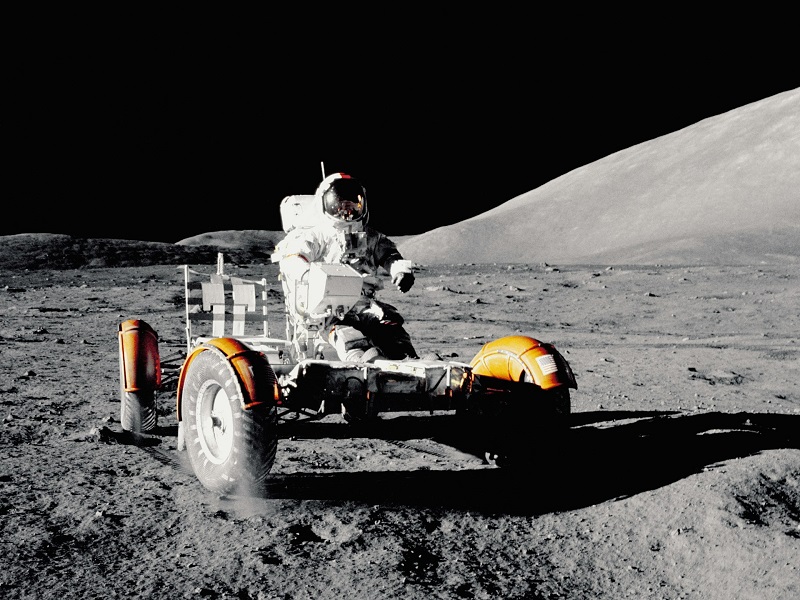
A new race to the moon is emerging between the United States and China. Unlike fifty years ago, the goal is no longer just about landing and leaving, but establishing a base that allows for a sustainable presence and extended stays on the surface of our natural satellite. The objective is now to use the […]

 Login
Login