 Login
Login
Rocket launches are turning the upper atmosphere into an accidental climate experiment
1 June 2026 at 19:00
 A new study finds pollution from satellite megaconstellations could account for 42% of the space sector’s climate impact by 2029.
 A new study finds pollution from satellite megaconstellations could account for 42% of the space sector’s climate impact by 2029.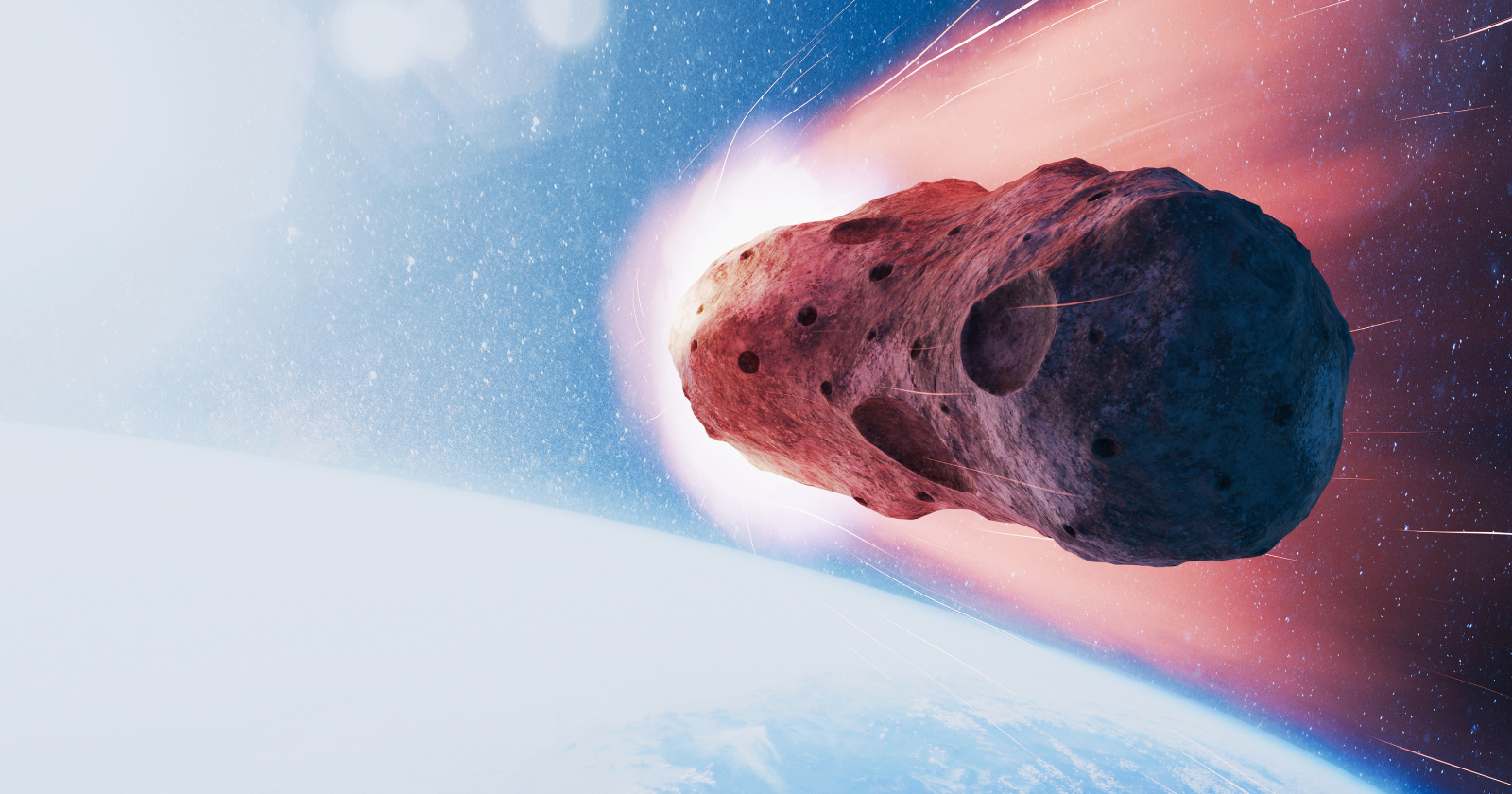

In October 2017, a survey telescope on Maui caught a faint, fast point of light that did not belong here. The object was moving too quickly, on the wrong kind of orbit, to have formed around our Sun. It had come from somewhere else, passed close to the Sun a few weeks earlier, and was already on its way back out.
The object was found on 19 October 2017 by Robert Weryk, working with the Pan-STARRS1 telescope run by the University of Hawaii and funded through NASA’s near-Earth object program. The International Astronomical Union later gave it the designation 1I/2017 U1, the “1I” marking it as the first confirmed interstellar object on record. The Pan-STARRS team named it ‘Oumuamua, Hawaiian for a messenger from afar arriving first.
It was a genuine first. What it was, exactly, is a question that has not fully closed.
‘Oumuamua was found late and seen briefly. By the time anyone noticed it, it had already passed perihelion, its closest approach to the Sun, on 9 September 2017, and was heading away. Astronomers had roughly a fortnight of useful observation before it faded.
From that short window, a few things were established. Its orbit was steeply hyperbolic, with an eccentricity near 1.2, far outside the range of anything bound to the Sun. Its incoming interstellar speed was about 26 kilometres per second, and after swinging past the Sun it was moving far faster. Its brightness swung dramatically as it tumbled, which pointed to an extreme elongated shape, though whether it was closer to a cigar or a flattened disc has never been resolved. Estimates put its longest dimension at a few hundred metres.
By colour and surface it looked broadly like the icy nuclei of comets. It did not behave like one in the way that mattered most.
In June 2018, a team led by Marco Micheli of the European Space Agency reported in Nature that ‘Oumuamua’s path could not be explained by gravity alone. As it left the inner Solar System it carried a small extra push directed away from the Sun. The deviation was tiny, but the orbit had been measured carefully enough to be confident it was real.
For a comet, this would be unremarkable. Comets warm as they near the Sun, ices turn to gas, and that escaping material acts like a weak, off-centre thruster. The trouble was that ‘Oumuamua showed no sign of doing this. No tail. No coma. No dust. Repeated searches found nothing being shed.
So there was a force consistent with outgassing, and no outgassing anyone could see.
That is the puzzle that has kept the object in the literature for years.
Most of the serious proposals try to keep ‘Oumuamua natural while accounting for an invisible push. One line of argument is that it was venting something hard to detect. Nitrogen ice was suggested, with the idea that the object was a fragment of a nitrogen-rich body. Hydrogen has also been proposed.
In 2023, Jennifer Bergner and Darryl Seligman published a hydrogen-based explanation in Nature. Their model argues that radiation in interstellar space could produce trapped molecular hydrogen inside water-rich ice, which is later released as the object warms near the Sun, giving a push with no visible dust tail. It is a plausible mechanism. It is also one model, built to fit a single object whose data is limited, and it has not been tested against a second case.
A separate and far more contested suggestion came from Harvard astronomer Avi Loeb, who argued the acceleration might point to an artificial origin, such as a thin, sail-like structure pushed by sunlight. Most researchers working on the object do not accept this. The natural explanations, unsettled as they are among themselves, remain the mainstream reading, and there is no direct evidence the object was anything other than a strange natural body.
The honest limitation is the data. ‘Oumuamua was caught on its way out, observed for a short time, and is now far beyond reach. No spacecraft visited it. No sample exists. Every explanation is being fitted to one faint, fast, briefly seen object, which is why no single account has won.
What has changed since is the company it now keeps. In 2019, a clearly cometary interstellar object, 2I/Borisov, passed through and behaved exactly as a comet should, complete with a visible tail. In July 2025 a third, 3I/ATLAS, was found, and it too shows ordinary cometary activity. The Vera C. Rubin Observatory, which recorded 3I/ATLAS in commissioning data ten days before its official discovery, is expected to turn up many more now that its decade-long survey has begun.
That is the value of more cases. If interstellar objects prove to be a varied population, ‘Oumuamua may simply have been an unusual member of it, seen at a bad angle and too late. If others show the same quiet push without a tail, the hydrogen and nitrogen models gain real support rather than a single fit.
For now, the first interstellar object remains the least explained of the three. The next ones, caught earlier and watched longer, are the ones likely to settle what ‘Oumuamua could not.
The post In 2017, astronomers spotted the first object ever confirmed to have come from another star system passing through our own: a strange, elongated visitor called ‘Oumuamua that seemed to accelerate as it left, in a way scientists are still debating appeared first on Space Daily.
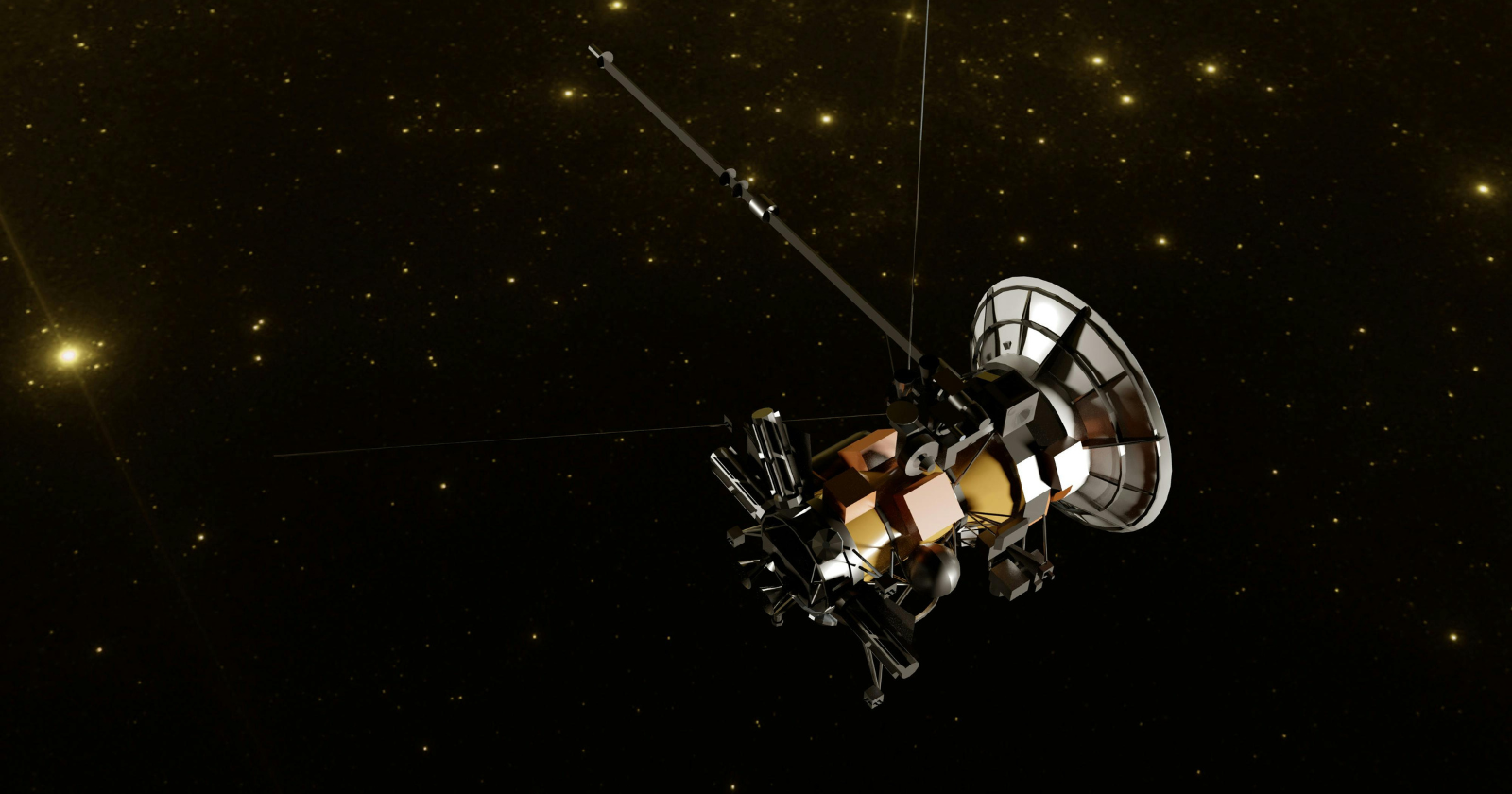
Bolted to the side of Pioneer 10 is a gold-anodised aluminium plaque, about 152 by 229 millimetres, engraved with the figures of a man and a woman and a set of symbols meant to mark where and when the spacecraft came from. The craft that carries it has been silent for more than two decades. It is still moving, coasting outward beyond the planets on a path that points in the general direction of the star Aldebaran, in Taurus.
The message was not NASA’s idea, or even Carl Sagan’s. As the Smithsonian National Air and Space Museum recounts, the science writer Eric Burgess suggested during the mission’s planning that Pioneer should carry a greeting to any civilisation that found it. Sagan took up the idea, designed the plaque with Frank Drake, and had the human figures drawn by Linda Salzman Sagan. Its best-known feature is not the figures but the diagram beside them: a radial pattern showing the Sun’s position relative to fourteen pulsars, each line marked in binary with that pulsar’s frequency. The idea was that any finder able to identify those pulsars could triangulate the Sun’s location, and read the frequencies as a rough timestamp, since pulsars slow at known rates. It is a map home, and also a clock.
Pioneer 10 launched on 2 March 1972 and became the first spacecraft to cross the main asteroid belt and the first to fly past Jupiter, which it reached in December 1973. Its routine science mission ended on 31 March 1997. After that, NASA kept tracking its weakening signal as a test of deep-space communication.
The power was the limit. Pioneer 10 ran on radioisotope thermoelectric generators, which produce less electricity as their plutonium decays. According to NASA’s account, the last telemetry came back on 27 April 2002, and the final faint signal, carrying no data, was detected on 23 January 2003. A contact attempt on 7 February 2003 found nothing, and a last try in March 2006 also failed. The spacecraft did not break or crash. Its RTGs had likely fallen below the power needed to keep the transmitter operating.
The line repeated in most accounts is that Pioneer 10 is heading for Aldebaran and will take about two million years to get there. NASA uses the same framing, putting Aldebaran at roughly 68 light-years away and the trip at more than two million years.
Two qualifications matter. The first is that the two-million-year figure assumes Aldebaran stays put. It does not. The number is calculated as if the star had zero velocity relative to the spacecraft, which is a convenient simplification rather than a prediction. Over two million years both the star and Pioneer 10 will have moved, so the figure describes the crossing time to Aldebaran’s current position, not a genuine rendezvous.
The second is that “heading for” overstates the aim. Pioneer 10 is drifting in the broad direction of Aldebaran, not on course to reach it. Nothing is steering. The plaque and the trajectory have become a single object now, a labelled probe on a fixed coast, and the star is a marker on the horizon rather than a destination.
The spacecraft itself may not remain recognisable forever. Across millions of years of travel, micrometeoroid impacts and cosmic-ray erosion will slowly wear at the structure. The plaque was mounted on the antenna support struts partly to shield it from interstellar dust, and gold-anodised aluminium was chosen with durability in mind, but durability here is relative, and no one can say with confidence how legible it would be to a finder in the far future.
The more honest point is about audience. The plaque was never likely to be read by anyone. The nearest stars are light-years apart, the space between them is mostly empty, and the chance of any object the size of a car being intercepted is vanishingly small. Sagan understood this. The plaque worked at least as well as a message to the people who made it, a statement in 1972 that a species capable of building the probe was also capable of imagining who might one day find it.
Pioneer 10 is no longer the most distant human-made object. Voyager 1 passed it on 17 February 1998, at a distance of about 69 astronomical units, and has remained farther out since. Pioneer 10 continues outward regardless, unpowered and untracked, likely somewhere around 140 astronomical units from the Sun by now depending on how the estimate is framed, and receding by roughly 2.5 astronomical units a year. Without a signal, that position is inferred from its trajectory rather than measured.
There is nothing left to wait for from it, no next contact and no milestone NASA is tracking. What remains is a quiet piece of bookkeeping: a 1972 spacecraft, its last word logged in January 2003, still carrying a map of where it came from on a path that points, for now, at a red star in Taurus.
The post Bolted to Pioneer 10 is a plaque showing two humans and a cosmic map back to Earth, while the spacecraft itself is now a silent ghost ship drifting toward Aldebaran, a star it will not pass for another two million years. appeared first on Space Daily.
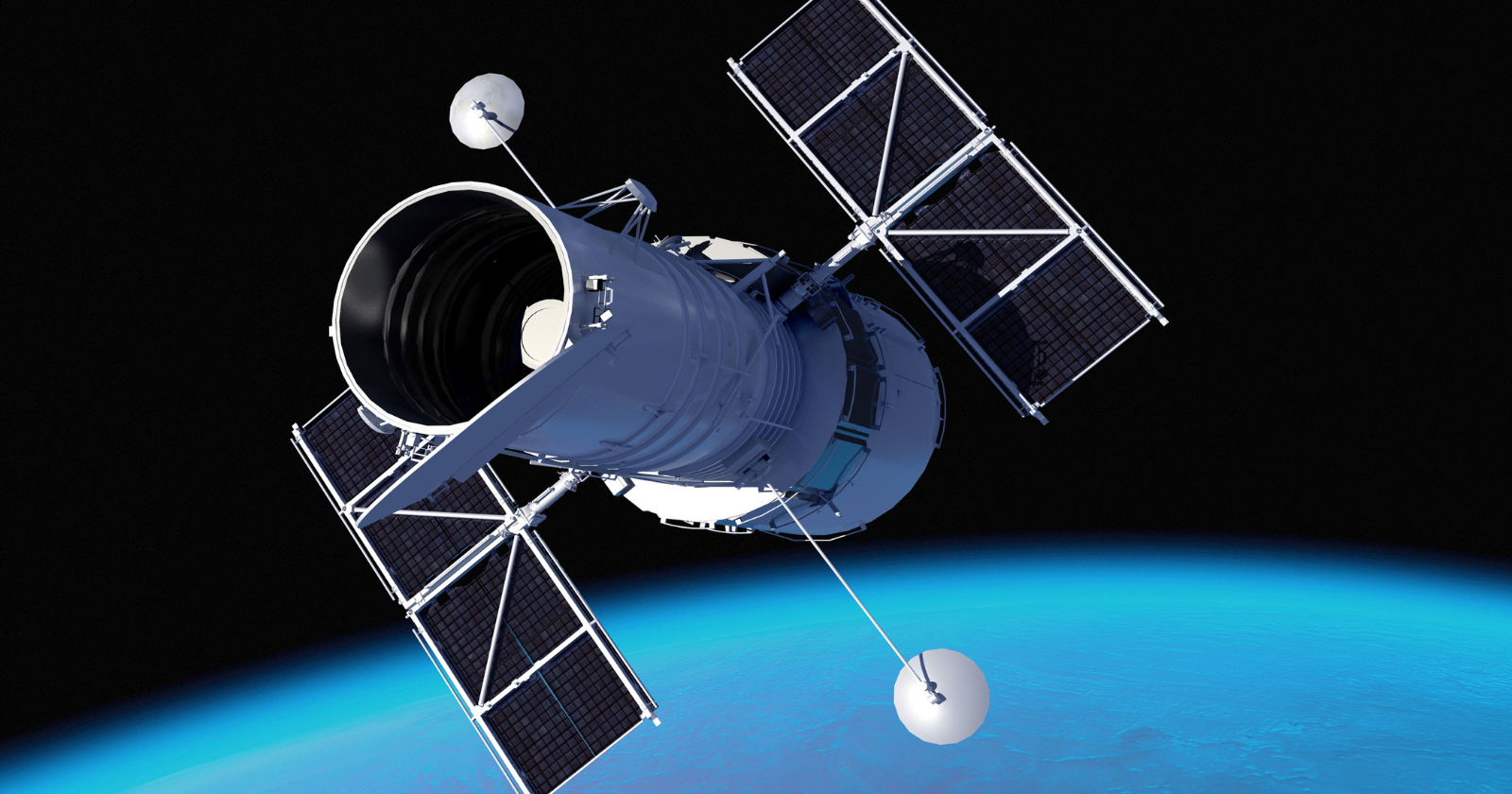
Japan’s Hayabusa probe returned to Earth on 13 June 2010, breaking apart in a bright streak over the Woomera Test Range in South Australia. About three hours before that final reentry, it had released a 40-centimetre capsule, which parachuted down into the outback intact. Inside were the first samples ever returned from the surface of an asteroid. The mission had taken seven years and very nearly did not make it back at all.
The spacecraft, known as MUSES-C until it was renamed Hayabusa just before its launch on 9 May 2003, was built by what is now the Japan Aerospace Exploration Agency primarily as an engineering demonstration. Its target was 25143 Itokawa, a near-Earth asteroid roughly 550 metres long, which Hayabusa reached in September 2005. The headline that survives is the clean one: first asteroid sample return. The actual story is messier, and more interesting for it.
The list of failures is long enough that the return reads less like a plan executed than a plan salvaged. As Space.com summarised at the time, the probe suffered a fuel leak, repeated communications breakdowns, and malfunctions in its ion engines, problems that together added about three years to the journey. A small hopping lander called MINERVA, meant to bounce across the surface taking pictures, was released during a descent and drifted off into space without ever reaching the asteroid.
Then there was the sampling system itself, which is the part most worth dwelling on.
Hayabusa was designed to collect material by touching a horn-shaped device to the surface and firing a five-gram tantalum projectile into the asteroid at about 300 metres per second. The fragments thrown up by that impact would be funnelled through the horn into a sealed canister. Tantalum was chosen deliberately, because it is rare in meteorites and so would not be confused with the asteroid material.
The projectiles never fired. JAXA’s own account notes that during the first touchdown the spacecraft detected a possible hazard and issued an abort, and the abort command also cancelled the firing. The paper reporting the touchdowns in Science, led by JAXA’s team, recorded that the pyrotechnic control device gave no indication the projectiles had completed firing. Hayabusa touched down twice on a smooth patch named the Muses Sea on 19 and 25 November 2005, but the mechanism that was supposed to generate the sample did not work as intended either time.
What saved the science was the asteroid’s almost negligible gravity. When the horn made contact with the surface, the touchdowns themselves disturbed the regolith, and a small amount of dust drifted up into the collection area and stayed there. According to NASA, examination of the capsule later revealed roughly 1,500 dust particles from Itokawa, presumed to have been kicked into the catcher during the contacts rather than collected by the intended firing.
The grains were tiny, mostly tens of micrometres across, smaller than the width of a human hair. Confirming they were asteroid material rather than terrestrial contamination took JAXA several months of analysis. In November 2010 the agency reported that at least 1,500 grains had been identified as rocky particles, most of extraterrestrial origin and traceable to Itokawa.
The payoff was not the quantity but a specific scientific question the grains could answer. Researchers had long debated whether the common S-type asteroids, the stony bodies that dominate the inner asteroid belt, were the parent objects of the most common meteorites found on Earth, the ordinary chondrites. The spectra did not quite match, and the suspected reason was space weathering, the gradual alteration of an airless surface by solar wind and micrometeorite bombardment.
The Itokawa grains, described across a set of papers in the 26 August 2011 issue of Science, closed much of that gap. The mineralogy matched a class called LL chondrites, tying a specific meteorite type directly to a specific asteroid for the first time using returned material rather than inference. That is the result the seven-year ordeal delivered: not a large sample, but a clean link between the rocks that fall to Earth and the bodies they come from.
Hayabusa’s value turned out to be as much procedural as scientific. The mission proved that a sample could be retrieved from an asteroid and brought home, and it gave JAXA a hard education in everything that could go wrong doing it. The successor, Hayabusa2, launched in 2014 to the asteroid Ryugu with a redesigned sampling system, collected surface material in February 2019 and subsurface material that July, and delivered its capsule, this time with the collection mechanism working as designed, to the same Woomera range on 6 December 2020.
The richest comparison now comes from NASA’s OSIRIS-REx, which delivered material from asteroid Bennu on 24 September 2023. Bennu is a carbonaceous asteroid rather than a stony one like Itokawa, and early analysis of its sample has reported amino acids, nucleobases, and evidence of ancient salty water, the kind of organic and aqueous chemistry the dry Itokawa grains were never going to carry. That work is ongoing, and the Itokawa and Ryugu samples are increasingly read alongside it as the catalogue of directly sampled asteroids grows.
The post After a crippled seven-year journey Japan’s Hayabusa probe limped home in 2010 and burned up in the sky over Australia, but not before releasing the first asteroid samples ever returned to Earth. appeared first on Space Daily.
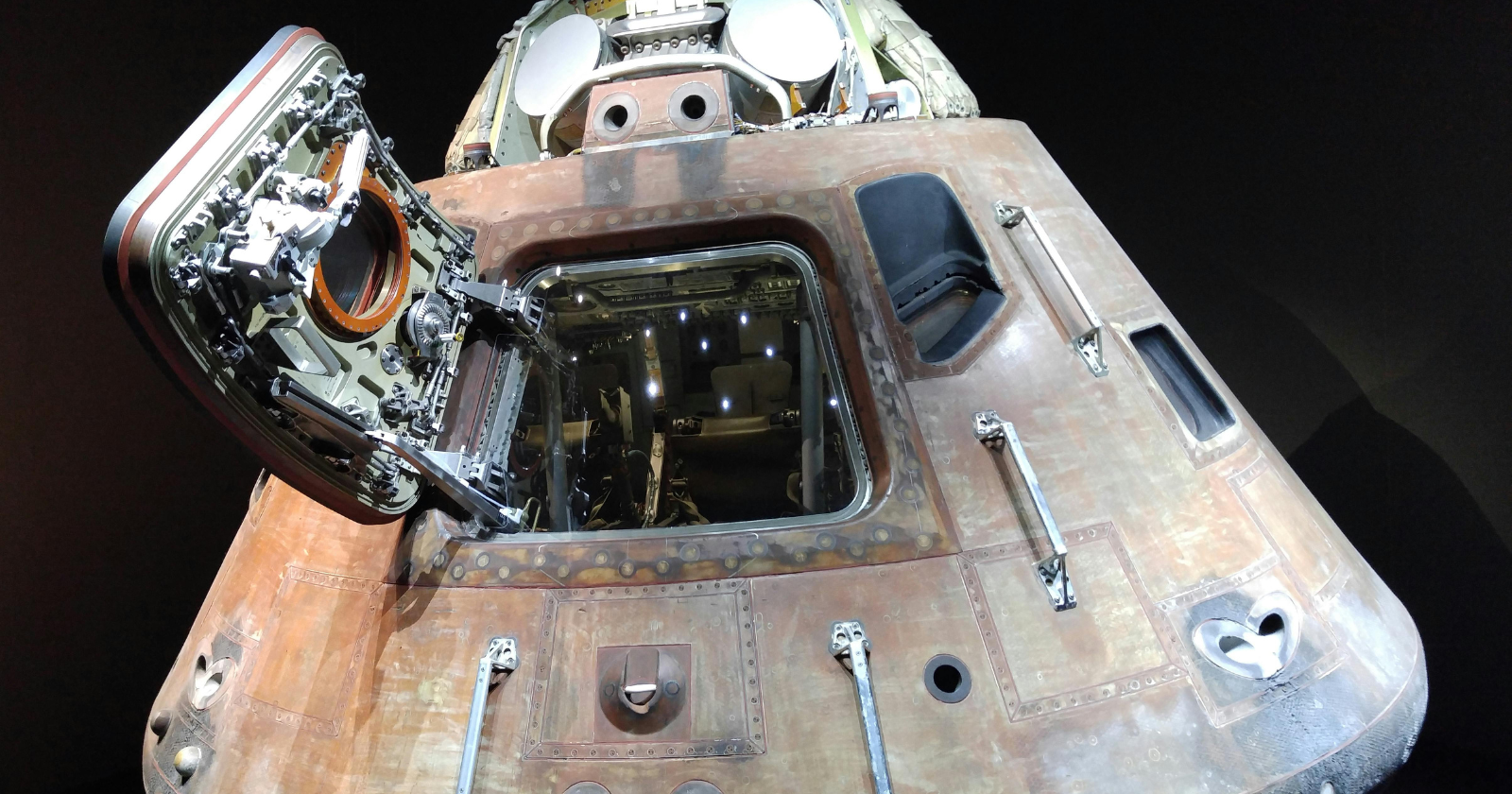
After their first moonwalk, Aldrin and Neil Armstrong were back inside the Eagle, attempting to rest before the ascent. Aldrin noticed a small black plastic object on the floor. On inspection, it was the broken-off switch from the engine arm circuit breaker, marked ENG ARM on the panel. That breaker fed power to the ascent engine. Without that breaker closed at the right point in the checklist, the normal procedure for arming the ascent engine would not work. The command module was still above them, but their own route back to it now depended on a broken plastic switch.
The popular version of the story compresses everything that followed into a single dramatic beat. Aldrin pulls out a felt-tipped pen, jams it into the panel, the engine fires, and the moon launch proceeds on schedule. The actual sequence is less cinematic and more interesting.
The lunar module was an extreme weight-reduction exercise, and its cramped cabin left many controls and circuit breakers exposed. In a pressurised suit with a Portable Life Support System backpack on, the cabin became a hazard course of protrusions waiting to be bumped.
That is what happened. Either Aldrin or Armstrong, manoeuvring in the cramped space after the moonwalk, had caught the engine arm breaker switch with the PLSS pack and snapped it off the panel. Neither noticed at the time. The first sign of the problem was a piece of plastic on the floor.
Aldrin reported the broken breaker to Houston. The astronauts then tried to sleep. They did not sleep well.
This is the part most retellings omit. The decision to push the breaker in with a pen was not a desperate field repair. It was one option being considered alongside others. The night between the moonwalk and the ascent was spent, on the ground, with engineers and controllers working through alternative procedures for arming the ascent engine if the breaker could not be closed.
William Barry, then NASA Chief Historian, has been clear about this in interviews. As History.com quotes him: had the felt-tip pen not worked, Mission Control and the crew would have continued working to find other ways to close the circuit so the ascent engine could be fired. The men were not, in the operational sense Apollo used the word, stranded. They were in trouble. There is a difference.
That difference matters because the popular framing turns the pen into the only thing standing between two astronauts and a slow death on the lunar surface. The pen was the first thing that worked. The list of things that might have worked next was not empty.
Aldrin’s stated reasoning, in his memoir Magnificent Desolation, is the part the lede gets exactly right. He decided against using his finger because the circuit was electrical. He decided against anything with metal at the end for the same reason. He had a felt-tipped pen in the shoulder pocket of his suit, which he had brought along to write on a rendezvous chart. The pen had a plastic body. He inserted it into the opening where the switch had been, and the breaker held.
The pen was a Duro felt-tip marker, not a Fisher Space Pen. The Fisher pen story, which crops up in roughly half the retellings, is a separate piece of Apollo folklore involving a different pen, different mission requirements, and a different commercial backstory. Both the Duro pen and the broken switch were later donated to the Museum of Flight in Seattle, displayed together as physical evidence of a particular kind of engineering moment.
The technical legacy of the incident was small and immediate. On subsequent Apollo missions, the engine arm breaker and other critical breakers in the lunar module cabin were given guards. The vulnerability had been identified by snapping it off in flight, and the fix took the form of a small piece of metal that prevented a backpack from finding the switch by accident.
This is the unglamorous version of how spacecraft hardware evolves. Find the failure mode in flight. Patch it on the next vehicle. The Apollo programme accumulated many such fixes between missions, most of which never surfaced in public memory because they corrected problems that did not become near-disasters.
The engine arm breaker became part of public memory because Aldrin kept the broken switch, kept the pen, wrote about both, and donated them to a museum.
What we find useful about the felt-tip pen story is not the dramatic version, which treats it as a near miss saved by quick thinking. The more interesting version is what it shows about how a working spaceflight programme actually handles problems.
A piece of plastic ends up on the floor of a lunar module. Two crew members notice it, identify it, and report it. Mission Control begins working alternatives without panicking. The crew sleeps badly. In the morning, the simplest possible fix is tried first. It works. The mission continues. The vehicle design is updated for the next flight.
That is what a functioning operations culture looks like, and it is the part of the story that gets compressed when the pen is asked to carry all the drama on its own. The pen did the job. So did the system around it.
The broken switch and the Duro pen were later displayed together in Seattle, and the engine arm breaker on subsequent lunar modules was protected by a guard.
The post When the Apollo 11 crew prepared to leave the Moon, they found the circuit breaker that armed their ascent engine had snapped off after a bulky backpack knocked it, and Buzz Aldrin pushed it back into place with a felt-tip pen rather than risk putting metal into a live electrical circuit. appeared first on Space Daily.
