Normal view

A particle just passed through the Mediterranean carrying 220 petaelectronvolts of energy — roughly twenty times more than any neutrino ever recorded before it, and scientists still aren’t sure where it came from

In the middle of the night of 13 February 2023, a muon passed through a partially built detector sitting 3,450 metres below the surface of the Mediterranean Sea, off the southeast coast of Sicily. The detector is KM3NeT/ARCA, the Astroparticle Research with Cosmics in the Abyss component of the Cubic Kilometre Neutrino Telescope, a European research infrastructure still under construction at the time. In a window of just under two microseconds, more than 28,000 photons lit up the instrument’s photomultipliers. More than a quarter of those sensors saturated outright. The muon had crossed the entire detector.

After two years of analysis, the KM3NeT collaboration published its findings in Nature on 12 February 2025. The muon’s energy was estimated at 120 petaelectronvolts. The neutrino that produced it, they concluded, carried approximately 220 petaelectronvolts. No neutrino of comparable energy had ever been recorded anywhere. The previous record, held by events in IceCube’s dataset, sat around 10 petaelectronvolts. The event, designated KM3-230213A, nearly an order of magnitude higher.

This is one detection, not a population. The questions it raises are real, but a single event cannot settle them.

What a neutrino at this energy means

Neutrinos interact so rarely with matter that trillions pass through a human body every second without leaving any trace. They carry no electric charge and have almost no mass. Those properties make them useful as astronomical messengers: unlike photons or charged particles, they travel from their source to the detector in a straight line, largely unaffected by the magnetic fields and radiation that fill intergalactic space. A neutrino arriving from a distant source carries information about that source in a relatively uncorrupted form.

Energy is a key piece of that information. At 220 PeV, KM3-230213A falls into a regime that the KM3NeT collaboration describes as the first confirmed detection of a neutrino in the hundreds-of-PeV range. The detector was not full at the time: only 21 of the planned 230 detection strings were in place, with 378 optical modules operating. That the instrument caught an event of this energy while still a fraction of its eventual size is, at minimum, an indication of what the completed detector may see.

The almost horizontal trajectory of the muon, combined with its energy, rules out the possibility that the particle arrived from the atmosphere above, which is where the vast majority of muons at KM3NeT’s depth originate. The track’s geometry and energy together point to a neutrino that entered the Earth from above, interacted with rock or seawater near the detector, and produced the muon that ARCA recorded. In the collaboration’s analysis, the probability of this being an atmospheric background event is negligibly small.

Where it came from: the open question

The neutrino’s reconstructed direction points to celestial coordinates of right ascension 94.3 degrees and declination minus 7.8 degrees. The KM3NeT collaboration searched that region for potential sources. They found nothing significant. No known Galactic object has been proposed as a plausible source for a neutrino at this energy. The direction is also inconsistent with any nearby extragalactic source that would straightforwardly explain the observation.

Several candidate categories have been proposed in the literature since the paper’s publication. Active galactic nuclei, particularly blazars, are among them: blazars are a class of active galaxy in which a relativistic jet points toward Earth, and they have already been associated with lower-energy neutrino detections by IceCube. One analysis, published in early 2025, examined blazar candidates within the angular uncertainty of KM3-230213A and found no convincing match. A separate paper considered gamma-ray bursts as the source, including a search for associations with documented GRB events accounting for possible Lorentz invariance violations that might have delayed the neutrino’s arrival relative to the gamma-ray signal. Those searches also found no definitive association.

A third category is the cosmogenic neutrino: a particle produced not at an astrophysical source but in transit, when an ultra-high-energy cosmic ray collides with a photon from the cosmic microwave background that fills the Universe. This process, known as the GZK mechanism after the physicists who described it, is expected to produce neutrinos at very high energies, and 220 PeV sits within a plausible range. The KM3NeT collaboration’s own companion paper on the cosmogenic scenario found it consistent with the observation but not conclusive. A more exotic proposal, published in Physical Review Letters in 2026, suggested the event could have been produced by the final evaporation of a primordial black hole, an event that would generate a short burst of high-energy particles including neutrinos. That hypothesis remains speculative and is not supported by independent evidence.

None of these scenarios has been confirmed. The source of KM3-230213A is, at present, unknown.

The IceCube problem

The more awkward question about KM3-230213A is not where the neutrino came from, but why IceCube has not seen anything like it.

IceCube is the larger instrument. It operates in the ice beneath the South Pole with an instrumented volume of one cubic kilometre and has been collecting data since 2010. Its exposure, the product of effective detection area and operating time, substantially exceeds KM3NeT’s at the energy of KM3-230213A. On purely statistical grounds, IceCube should have been the first detector to observe a neutrino at this energy, and it should have observed more than one by now. It has not. IceCube’s published upper limits on the neutrino flux at these energies are, in fact, below the rate implied by a single KM3NeT event observed over the period KM3NeT was running.

Several papers have attempted to quantify this tension. Estimates vary between roughly two and three-and-a-half sigma, depending on assumptions about the neutrino’s source spectrum and the angular region of sky considered. That range sits below the conventional threshold for claiming a significant discrepancy, but it is not negligible, and it has generated a substantial volume of follow-up work.

One natural explanation is statistical: a single-event detection at an energy where event rates are expected to be very low will inevitably produce some tension with non-detection elsewhere, and the significance of that tension is sensitive to the model used to estimate expected rates. It is possible that KM3NeT was simply fortunate to catch an unusually rare event, and that IceCube’s non-detection is consistent with that rate at the two-sigma level.

A more theoretically ambitious explanation was put forward by Vedran Brdar and Dibya S. Chattopadhyay in a paper published in Physical Review Letters in February 2026. Their argument centres on a geometrical fact. The neutrino detected by KM3NeT travelled through approximately 147 kilometres of rock and seawater before reaching the detector. A neutrino arriving at IceCube from the same direction in the sky would have passed through only about 14 kilometres of ice. That difference in path length through matter, they suggest, could explain the discrepancy if the particle was originally a sterile neutrino, a hypothetical particle that does not interact via the standard weak force, which oscillated into a detectable active neutrino over the longer path to KM3NeT. The shorter path to IceCube would have been insufficient for that conversion to occur at the required rate.

The paper presents two mechanisms by which such oscillations could arise, both involving physics beyond the Standard Model. The authors are explicit that this is a proposal, not a confirmed result: the paper identifies a possible resolution, not a demonstrated one.

What the detector was, and what it is becoming

KM3NeT/ARCA at the time of the detection was operating with 21 detection strings out of a planned 230. The full detector will instrument approximately one cubic kilometre of deep Mediterranean water, with roughly 200,000 photomultiplier tubes distributed across the string array. At the time of writing, the collaboration has continued deploying detection units through annual marine campaigns, and an online alert system is being developed to distribute direction and timing information for interesting events shortly after detection, enabling rapid follow-up from other instruments.

The collaboration also notes that an upgrade to the detector’s positioning system will improve directional reconstruction for future events from the current angular uncertainty of approximately 1.5 degrees down to the target of around 0.1 degrees. That improvement will apply retroactively to KM3-230213A as well, potentially tightening the source region enough to either implicate or exclude specific candidate objects that currently fall within the uncertainty cone.

A parallel development worth watching is the collaboration between KM3NeT and IceCube. Both teams have indicated interest in joint analysis of the ultra-high-energy neutrino sky, combining IceCube’s larger exposure with KM3NeT’s different viewing geometry and detection medium. That comparison may eventually resolve whether the apparent tension between the two instruments reflects astrophysics, instrument response, or something more fundamental. At the moment, it remains unresolved.

What this is, and what it is not

KM3-230213A is a real detection. The analysis behind it is careful and the publication in Nature was peer-reviewed. The energy estimate of 220 PeV carries a 90 per cent confidence interval running from 72 PeV to 2.6 exaelectronvolts, which is wide, but even the lower bound of that range comfortably exceeds any previous neutrino detection. The event is what the KM3NeT collaboration says it is.

What it is not is a resolved scientific story. The source is unknown. The IceCube tension is real but not yet statistically decisive. The proposals for exotic physics, sterile neutrino oscillations, primordial black hole evaporation, remain speculative. The collaboration itself is measured about what can be concluded from a single event, and the papers published since the Nature article reflect the genuine uncertainty that still surrounds it.

The more useful frame, for now, is that KM3-230213A establishes that neutrinos at these energies exist and can be detected with instruments of this kind. The completed KM3NeT will see more of them. Whether the next one resolves the questions the first has raised, or adds new ones, is the part that remains to be seen.

The post A particle just passed through the Mediterranean carrying 220 petaelectronvolts of energy — roughly twenty times more than any neutrino ever recorded before it, and scientists still aren’t sure where it came from appeared first on Space Daily.

Rocket debris that has been drifting in low Earth orbit since the 1960s just helped scientists find something they had missed for decades — a specific threshold in solar activity past which space junk starts falling toward Earth measurably faster

Spent rocket stages and defunct satellites do not manoeuvre. Once launched, they simply fall, very slowly, pulled toward Earth by the drag of an upper atmosphere that thickens and thins with the Sun’s eleven-year activity cycle. That passivity makes them useful. Because they never fire a thruster to correct their orbit, every metre of altitude lost is a direct record of the air pushing against them, and through that, a record of the thermosphere itself.A team led by Ayisha M. Ashruf at the Space Physics Laboratory, Vikram Sarabhai Space Centre, in Thiruvananthapuram, India, has now published a paper in Frontiers in Astronomy and Space Sciences that reads those records in a new way. The paper is built around 17 debris objects, all launched in the 1960s and all still in orbit, tracked across three consecutive solar cycles spanning 1986 to 2024. What it finds, across all 17 objects and all three cycles, is that the relationship between solar activity and orbital decay is not a smooth gradient. There is a threshold. Cross it, and the rate of descent increases sharply.This is one study, not settled consensus. But the pattern holds consistently across three decades of data and 17 independent objects.

The objects and why they were chosen

The paper draws on Two-Line Element data from the Space-Track database, the standard orbital-mechanics format used to track every object in Earth orbit. Ashruf’s team began with a set of 95 candidate debris objects from the 1960s, then filtered for objects in low Earth orbit below 800 km, with stable near-circular orbits and continuous data across the full period. Seventeen survived that filtering.

The list includes TIROS weather satellites, Thor rocket debris, Delta stage fragments, and two Soviet-era Cosmos objects. They orbit at inclinations ranging from roughly 48 to 99 degrees, and altitudes between about 600 and 800 km, completing a full loop of the planet every 90 to 120 minutes. Their masses range from under 20 kg to over 1,400 kg.

What they share is longevity and passivity. None have performed any orbital adjustment in over sixty years. That makes their altitude history a clean signal: whatever happened to their orbit happened because of the atmosphere, not because of anything onboard.

The threshold

Solar activity is most commonly tracked through sunspot numbers, a count that correlates with the Sun’s emission of extreme ultraviolet radiation. The Sun’s eleven-year cycle moves between quiet periods, when sunspot numbers are low and the thermosphere cools and contracts, and active periods when numbers climb and the upper atmosphere heats and expands. More atmosphere at orbital altitude means more drag on any object passing through it.

Earlier research had established this general connection. What it had not established was where within a solar cycle the drag effect becomes meaningfully stronger. Ashruf’s team fitted a Gaussian curve to the sunspot record for each of the three cycles studied, then identified the point in each cycle where the 17 debris objects showed a transition from slow, gradual decay to markedly steeper decay. That point, consistent across three cycles and across the full range of objects, fell between approximately 67 and 75 per cent of the cycle’s peak sunspot number.

The authors describe this as a threshold beyond which thermospheric density increases sufficiently to drive a clear acceleration in orbital decay. Below the threshold, descent is slow and fairly uniform. Above it, the curve steepens. The threshold appears on the way up through each cycle and again on the way back down.

Cross-checking with direct measurements of extreme ultraviolet flux from the Solar and Heliospheric Observatory confirms the pattern. Within the rapid-decay windows identified by the debris data, EUV flux in the 0.1 to 50 nanometre band ran roughly 50 to 130 per cent above levels seen outside those windows. The debris records and the solar measurements point to the same mechanism: heightened EUV output heats the thermosphere, which expands upward, and the increased air density at orbital altitude increases drag.

Three cycles, one staircase

The three cycles in the dataset were not equal in strength. Solar cycle 22, which peaked around 1989 to 1991, was the most active of the three. Cycle 23, peaking around 2000 to 2002, was moderately active. Cycle 24, peaking around 2014, was historically weak by modern standards.

The debris records reflect that hierarchy directly. Peak decay rates during cycle 22 averaged 0.59 metres per hour across the 17 objects. Cycle 23 produced a mean of 0.54 metres per hour. Cycle 24 came in at 0.25 metres per hour, roughly half of cycle 22’s pace. The staircase is clean: each successive cycle, as solar activity weakened, drove proportionally less orbital decay.

The paper also compared the correlation between decay rates and several different solar and geomagnetic indices. Solar proxies performed strongly: the F10.7 radio flux index explained about 75 per cent of the variance in decay rate across the 17 objects; sunspot numbers accounted for about 67 per cent. Geomagnetic indices fared poorly. The AE index, which tracks auroral electrojet activity driven by particle precipitation and magnetic disturbances, explained less than 2 per cent of the long-term variance. The Dst index, which measures the ring current, explained around 22 per cent. The paper’s interpretation is that geomagnetic storms matter for short-term orbital perturbations, but for sustained, long-term decay the dominant driver is solar EUV forcing of the thermosphere, not geomagnetic disturbance.

The polar gap in the model

The team used ballistic coefficients derived from the cycle 22 and cycle 23 data to model what cycle 24 orbital decay should have looked like, then compared those predictions to what the TLE data actually showed. For 15 of the 17 objects, the model reproduced the observed decay profiles reasonably well, though it required a scaling factor ranging from 0.55 to 0.79 to match observed behaviour. The need for that scaling reflects known limitations in empirical atmospheric density models, particularly around the transition between solar minimum and solar maximum conditions.

Two objects did not fit at all. SAT 733, a Thor Agena D rocket body, and SAT 734, a satellite called OPS 3367A, showed persistent large discrepancies between modelled and observed decay that no scaling factor could close. Both travel near-polar orbits, at inclinations close to 99 degrees. The other 15 objects orbit between roughly 48 and 67 degrees of inclination.

The paper’s interpretation is cautious but direct: the NRLMSIS 2.0 atmospheric model, which is the standard empirical model used for this kind of orbital prediction, likely underestimates atmospheric density variability at high latitudes. The thermosphere at polar regions is influenced by geomagnetic activity in ways that are not fully captured by models built primarily around lower-latitude data. The gap matters because polar and sun-synchronous orbits are common choices for Earth-observation missions, and their reentry predictions may carry larger errors than the model currently reflects.

What the finding offers operators

The practical value of a threshold is that it gives satellite operators a more specific warning indicator than a general solar forecast. Rather than tracking the entire solar cycle, operators can watch sunspot numbers relative to the expected cycle peak. When that ratio climbs past roughly two-thirds of peak, conditions enter the regime where drag-driven decay accelerates. Fuel reserves for orbit maintenance need to be adequate for that period, not just for quiet-Sun operations.

The February 2022 Starlink event sits in the background here. A moderate geomagnetic storm shortly after launch pushed 38 satellites into orbits lower than planned, and atmospheric drag was sufficient to prevent them from reaching their target altitude. Most reentered within weeks. The Starlink case involved a geomagnetic disturbance rather than sustained solar maximum conditions, so the mechanisms are not identical, but the broader point stands: drag at low Earth orbit is not a fixed baseline to plan against, and the Sun’s eleven-year cycle is the primary long-term variable.

The paper notes that missions launched near a solar maximum may consume propellant faster than mission planners expect, particularly if planning tools use average solar conditions rather than the cycle-phase-specific drag rates the new threshold identifies.

What the study does not resolve

The 17 objects all orbit within the 600 to 800 km altitude range. The paper does not claim the same threshold applies at lower altitudes, where atmospheric density is higher and the relationship between solar activity and drag may behave differently. Most of the large satellite constellations being deployed now operate below 600 km, and the paper’s findings do not directly translate to that regime without further work.

The three solar cycles in the dataset were also all relatively moderate by historical standards. The most active cycles on record, including cycle 19 in the late 1950s, produced solar maxima substantially stronger than cycle 22. Whether the 67 to 75 per cent threshold holds under more extreme solar conditions is not something this data can answer.

The polar orbit modelling gap remains open. Ashruf’s team notes it explicitly as a direction for future work, and it is a real limitation for anyone predicting the reentry timing of debris in high-inclination orbits.

Better empirical models for high-latitude atmospheric density are needed, and the debris records in this study now provide one benchmark for testing them.

The paper is published as “Characterizing solar cycle influence on long-term orbital deterioration of low-earth orbiting space debris”, authored by Ayisha M. Ashruf, Ankush Bhaskar, C. Vineeth, and Tarun Kumar Pant, in Frontiers in Astronomy and Space Sciences, volume 13, published 6 May 2026. It is open access.

The post Rocket debris that has been drifting in low Earth orbit since the 1960s just helped scientists find something they had missed for decades — a specific threshold in solar activity past which space junk starts falling toward Earth measurably faster appeared first on Space Daily.

Scientists get their best-ever look at distant planet’s surface

1 June 2026 at 12:03

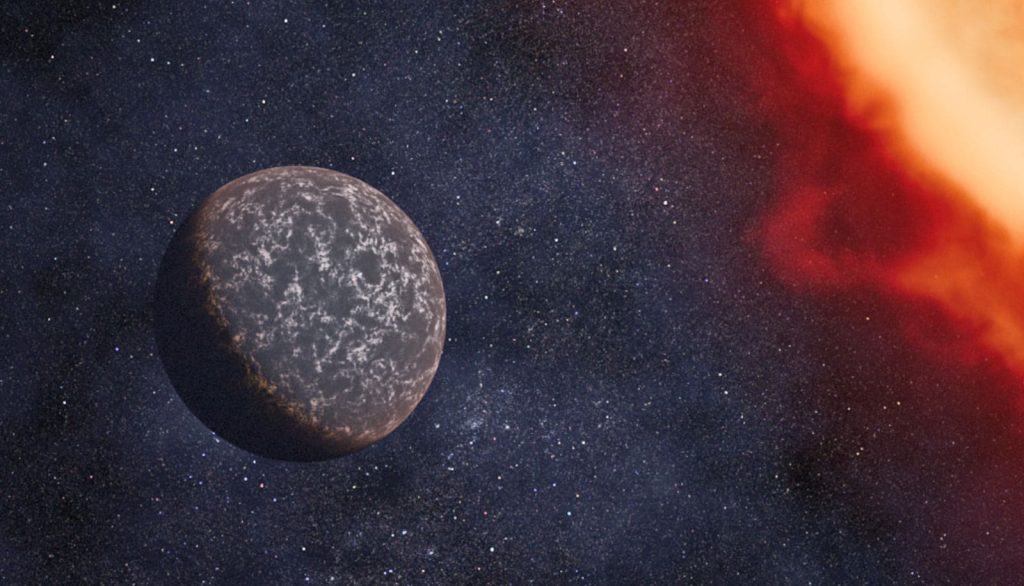
Astronomers have found thousands of worlds in faraway star systems, but one of the questions that’s been hardest to answer is the one that immediately jumps to any human mind: What does the planet look like? By analyzing subtle changes in light, researchers found the planet Kua’kua—which orbits a small star in the constellation Indus—has […]

The post Scientists get their best-ever look at distant planet’s surface appeared first on Knowridge Science Report.

Is extracting oxygen from lunar soil the future of space exploration

1 June 2026 at 01:26

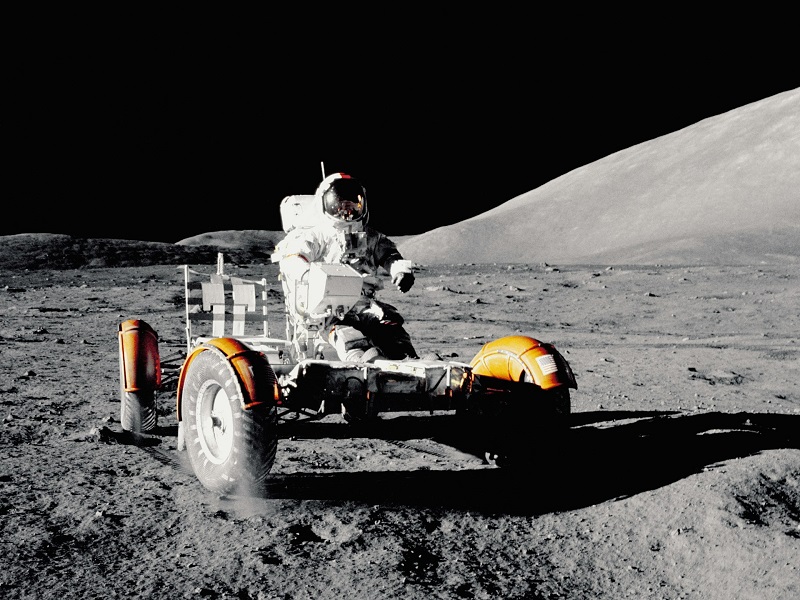
A new race to the moon is emerging between the United States and China. Unlike fifty years ago, the goal is no longer just about landing and leaving, but establishing a base that allows for a sustainable presence and extended stays on the surface of our natural satellite. The objective is now to use the […]

The post Is extracting oxygen from lunar soil the future of space exploration appeared first on Knowridge Science Report.

❌