Normal view

The Guardian view on the Aberdeen South byelection: the politics of energy take centre stage | Editorial

31 May 2026 at 17:30

While Westminster’s attention is focused on Andy Burnham and Makerfield, another pivotal byelection is taking place in Scotland’s north-east

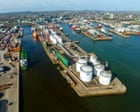
The coming byelection in Makerfield, from where Andy Burnham aspires to make rapid progress towards Downing Street, is perhaps the most consequential in British political history. But the decision by the Scottish National party’s former Westminster leader, Stephen Flynn, to relocate to Holyrood means that another pivotal contest is taking place more than 350 miles to the north. If Makerfield is a test case for Mr Burnham and Labour’s ability to see off Reform UK, Mr Flynn’s old constituency of Aberdeen South is on the frontline of the increasingly fraught politics of North Sea oil.

Labour, despite finishing second in the 2024 general election thanks largely to anti-Tory tactical voting, will not be expecting much this time round. The ramifications of Donald Trump’s reckless war in Iran have exposed Britain’s ongoing vulnerability to fossil-fuel-related energy shocks, highlighting the practical benefits of moving to a green economy. But the knock-on effects of the closure of the strait of Hormuz have also been a gift for the Scottish Conservatives and Reform, who are framing the byelection as a local referendum on reviving oil and gas production beyond Westminster-imposed limits.

Continue reading...

© Photograph: Iain Masterton/Alamy

© Photograph: Iain Masterton/Alamy

© Photograph: Iain Masterton/Alamy

Wes Streeting backs calls for national insurance cut and North Sea drilling

31 May 2026 at 11:49

Labour leadership hopeful says NI reduction for firms could ‘incentivise’ hiring, particularly of younger people

Wes Streeting has backed calls for national insurance cuts for businesses, and for the government to drill for oil and gas in the North Sea.

The former health secretary and potential Labour leadership candidate told the Sunday Times there should be a “targeted reduction” of employers’ national insurance contribution as a way to “actively incentivise” hiring, particularly of young people.

Continue reading...

© Photograph: Thomas Krych/Zuma Press Wire/Rex/Shutterstock

© Photograph: Thomas Krych/Zuma Press Wire/Rex/Shutterstock

© Photograph: Thomas Krych/Zuma Press Wire/Rex/Shutterstock

The race for oil: will Jamaica be the next country to drill and what does that mean for its green pledges?

28 May 2026 at 13:00

With early tests suggesting the presence of crude oil, the Caribbean island has begun to debate whether it could justify becoming a producer

Jamaica is closer than ever to drilling for oil. Tests on samples from the seabed off the Caribbean island’s south coast earlier this year identified hydrocarbons, which suggest the presence of crude oil below ground.

Jamaica imports all its fuel, which costs about $1.5-2bn (£1.1bn-1.5bn) annually, depending on global oil prices. It is a persistent drag on an economy that generated $4.3bn from tourism, its biggest earner, in 2024.

Continue reading...

© Illustration: Eleanor Shakespeare

© Illustration: Eleanor Shakespeare

© Illustration: Eleanor Shakespeare

Loopholes undermine palm oil industry’s antideforestation pledges

JAKARTA — More than a decade after the palm oil industry embraced a pledge to not deforest, clear tropical peatlands, or use exploitative practices, policies to that end now cover most of the global palm oil trade, as major traders, refiners and consumer brands have pledged to keep deforestation-linked palm oil out of their supply chains. However, deforestation linked to palm oil continues, particularly in Indonesia, the world’s largest producer of the commodity. Satellite analysis by forest-mapping initiative TheTreeMap shows 31,073 hectares (76,783 acres) of forest were cleared for palm oil in Indonesia in 2025, slightly higher than the 30,956 hectares (76,494 acres) recorded in 2024 — highlighting persistent gaps in how the industry enforces its zero-deforestation pledges. In some cases, palm oil from newly cleared land still enters supply chains that companies describe as deforestation-free. “No Deforestation, No Peat, No Exploitation” (NDPE) policies aim to eliminate three major sources of harm in palm oil production: clearing natural forests, developing plantations on carbon-rich peatlands, and exploiting workers or local communities. By 2020, these commitments covered roughly 83% of palm oil refinery capacity in Indonesia and Malaysia, the world’s main producing region. In recent years, companies have also built systems to enforce these pledges. Many now publish grievance mechanisms where violations can be reported, while third-party monitoring groups use satellite imagery to track forest loss and flag suspicious activity. Large-scale corporate deforestation in Indonesia has fallen compared to the mid-2010s, when some plantation companies were clearing vast areas of rainforest. Deforestation for…This article was originally published on Mongabay

❌