
Normal view

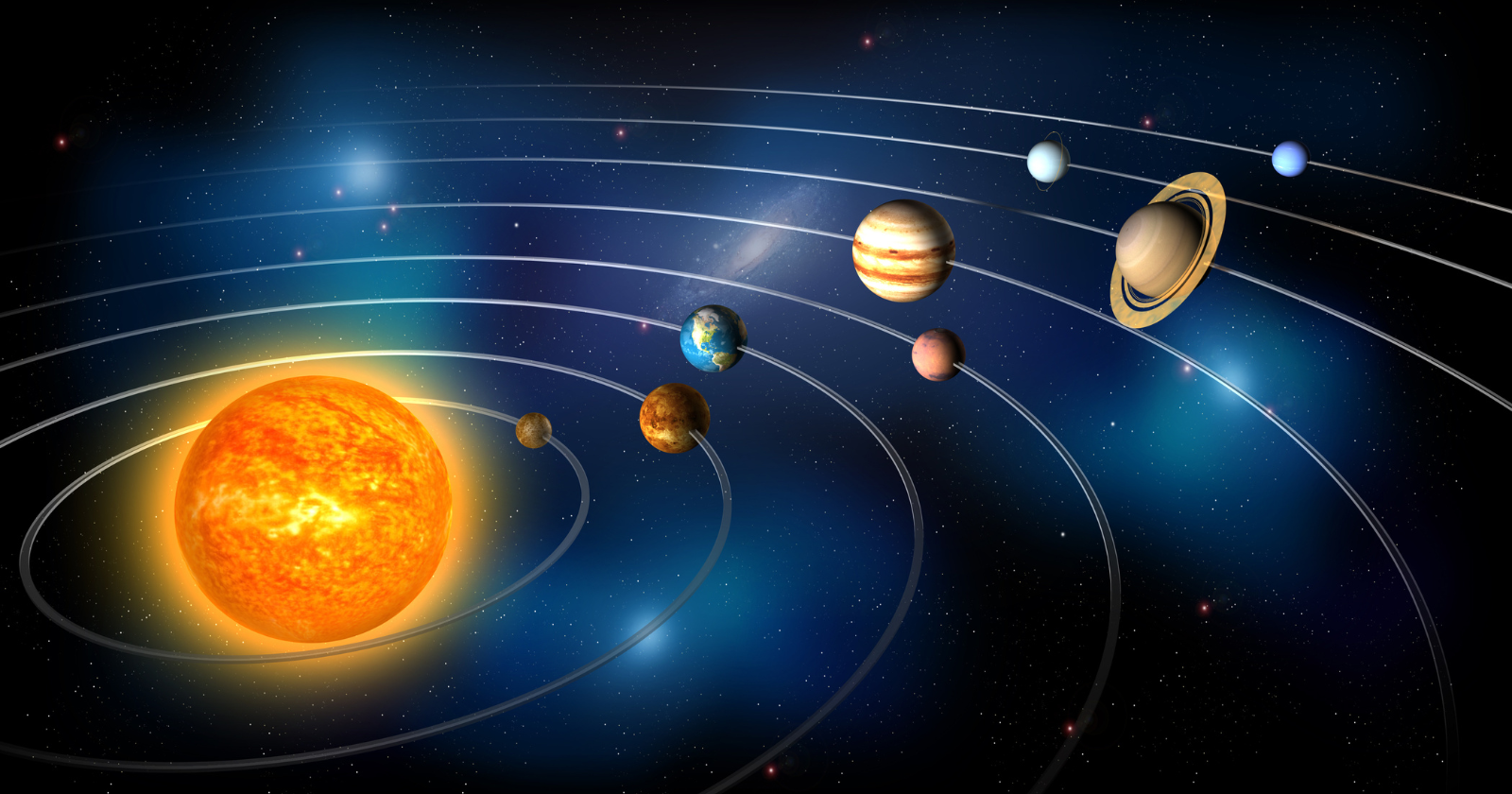
The Sun is not standing still. It is carrying the entire Solar System around the centre of the Milky Way, and one lap takes roughly 230 million years. The last time we were this far around the galaxy, Earth was in the Triassic Period and the very first dinosaurs were only just beginning to walk.

The Sun is not fixed in space. It carries the entire Solar System around the centre of the Milky Way, completing one lap in roughly 230 million years. One galactic year ago, Earth was in the Late Triassic, and the first dinosaurs were only just beginning to appear in the fossil record.

The image is tidy and the underlying facts hold up reasonably well. But both numbers carry more uncertainty than the neat pairing suggests, and the idea that we have come back to the same place is, on closer reading, not quite right.

How well we actually know the number

The Sun’s orbital period around the galactic centre is not pinned to a single value. Estimates run from about 225 to 250 million years, with 230 million the figure most often quoted. Keith Hawkins, an astronomer at the University of Texas at Austin, put it at around 220 to 230 million years and made the point that this so-called galactic year is specific to our position in the galaxy: stars closer to the centre orbit faster, those further out more slowly.

The numbers underneath are better constrained than the period itself. The Sun sits roughly 26,000 light-years from the galactic centre and moves through its orbit at about 230 kilometres a second, a figure the National Radio Astronomy Observatory gives alongside a period of about 226 million years. Data from the European Space Agency’s Gaia mission has since tightened the rotation curve and nudged the favoured period towards the lower end of the range. So when anyone says 230 million years, the honest reading is a figure good to within a few tens of millions of years, not a precise count.

The Triassic check

The dinosaur half of the claim survives scrutiny. One galactic year ago lands in the Late Triassic, in the stage palaeontologists call the Carnian. The oldest dinosaurs that are confidently identified as dinosaurs come from the Ischigualasto Formation in northwestern Argentina, dated to around 230 to 233 million years ago: small bipedal animals such as Eoraptor and Eodromaeus, and the larger predator Herrerasaurus.

What the popular version tends to leave out is that these animals were not yet the rulers of anything. The Natural History Museum in London, drawing on the work of dinosaur researcher Paul Barrett, notes that the first definite dinosaurs around 230 million years ago were rare members of the fauna, overshadowed by crocodile-line reptiles. Their dominance did not begin until the end-Triassic extinction about 201 million years ago cleared the field. The coincidence with the galactic year works as well as it does partly because two independently uncertain dates, the orbital period and the first-dinosaur date, happen to fall in the same window.

Why “this far around” is the wrong picture

The phrase that does the heavy lifting in the original observation is “this far around the galaxy,” and it implies a return to the same spot. We have not returned to the same spot.

Several things get in the way. The galaxy rotates differentially, so there is no single rigid sweep that carries everything around together. The spiral arms are not solid structures made of fixed stars; they behave more like wave patterns moving through the disc, which means the arm we sit near now is not the arm we sat near in the Triassic. The Sun also bobs up and down through the galactic plane, crossing it every few tens of millions of years, with a full vertical cycle of roughly 60 to 70 million years. Over hundreds of millions of years it drifts in galactic radius as well.

Put together, one lap brings the Sun back to a similar distance from the centre and a similar angular position, while the actual neighbourhood, the nearby stars, the gas clouds, the arms, is entirely different. The clock comes back around. The place does not.

What not to read into it

The tempting next step is to treat galactic position as a cause of what happens on Earth, and there is a real line of research that flirts with exactly this. In 1984, Schwartz and James proposed in Nature that an apparent periodicity in mass extinctions might track the Sun’s oscillation through the galactic plane, the suggested mechanism being that plane crossings disturb the outer comet cloud and send impactors towards the inner Solar System.

The idea has been revisited and challenged repeatedly in the decades since. The main objections are that the plane-crossing interval does not cleanly match the claimed extinction period, and that the extinction periodicity itself is disputed. It remains an unconfirmed hypothesis, not an established link. The galactic year is a useful way to feel the depth of geological time. On the available evidence it is not a lever on terrestrial biology.

The figure will keep moving as Gaia data accumulates and the Milky Way’s rotation curve is measured more precisely. The defensible version of the dinosaur line is the modest one: roughly one trip around the galaxy ago, by a clock we can only read to within tens of millions of years, the first dinosaurs were small, rare, and a long way from inheriting the planet.

The post The Sun is not standing still. It is carrying the entire Solar System around the centre of the Milky Way, and one lap takes roughly 230 million years. The last time we were this far around the galaxy, Earth was in the Triassic Period and the very first dinosaurs were only just beginning to walk. appeared first on Space Daily.
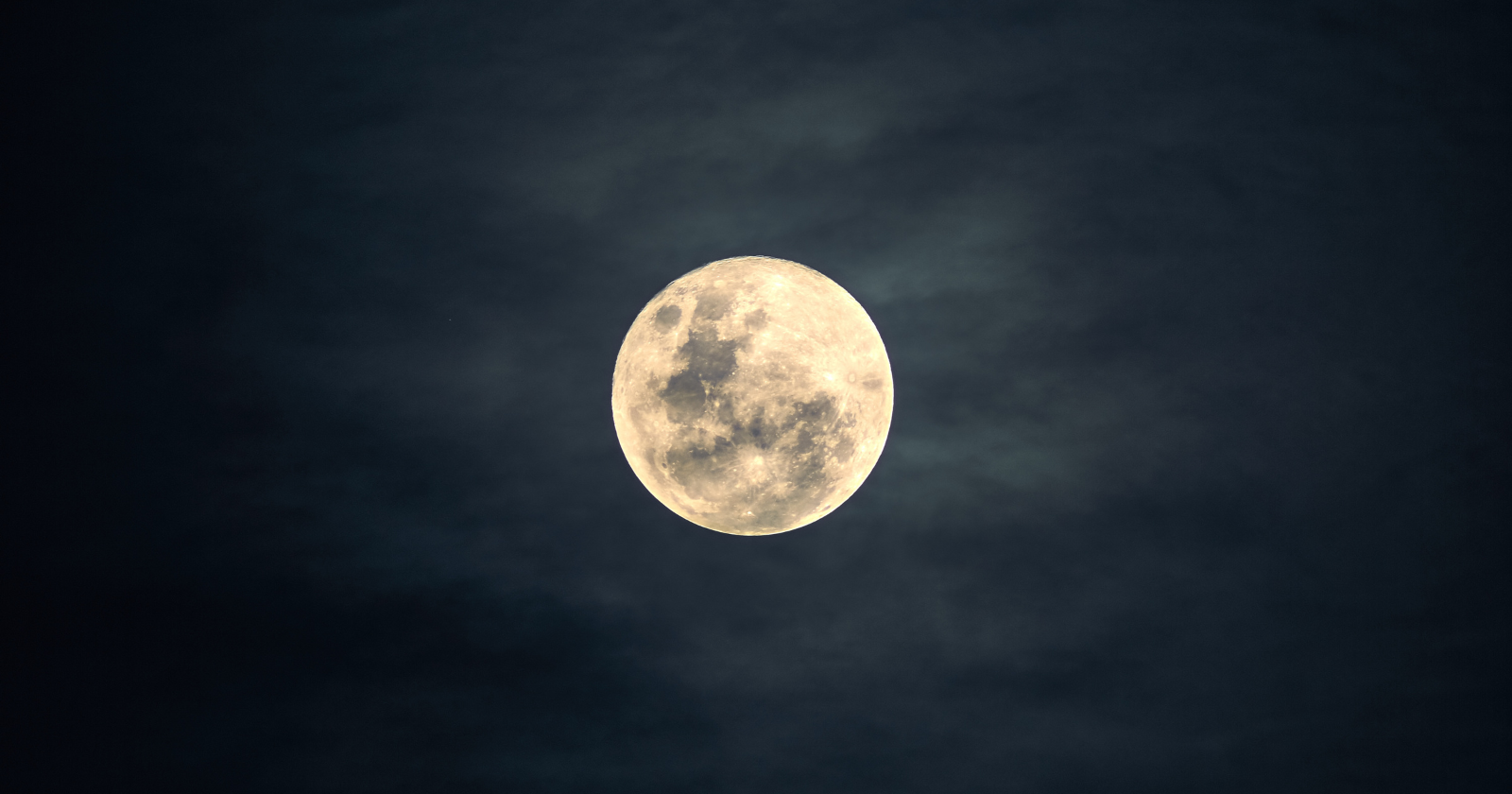
The leading explanation for how the Moon was born is that a world the size of Mars called Theia slammed into the young Earth and flung out the debris that became the Moon, and recent research suggests Theia itself never fully left, with two continent-sized blobs buried near our planet’s core possibly being the last remains of the world that struck us.

The leading account of where the Moon came from is a collision. Early in the Solar System’s history, a young planet roughly the size of Mars, given the name Theia, is thought to have struck the proto-Earth a glancing blow. The debris thrown into orbit gathered into the Moon. This is the giant-impact hypothesis, and it has been the mainstream view among planetary scientists for decades.

A 2023 study added a striking idea to it: that Theia did not simply vanish into the young Earth, and that two continent-sized masses sitting near our planet’s core may be what is left of it. The idea is well argued and genuinely interesting. It is also a single modelling study proposing a hypothesis, not a settled finding, and the two deserve to be kept apart.

Why the impact hypothesis leads

The giant-impact model earned its place because it explains several things at once. It accounts for the Moon’s large size relative to Earth, for the Earth-Moon system’s angular momentum, and for the Moon having only a small iron core, which fits an object assembled mostly from the rocky outer layers of two bodies after their metal had sunk to the centres.

It is the leading hypothesis rather than the only one. It also carries an unresolved problem worth stating plainly: the Earth and the Moon are almost identical in the isotopes of several elements, far more alike than the model easily predicts if the Moon were built largely from a separate impactor with its own distinct composition. The match is close enough that researchers have called it a significant puzzle for prevailing Moon-formation models. Various fixes have been proposed, from a more violent and thoroughly mixed impact to alternative formation models, and the question is not closed. The impact hypothesis is the best account available, not a proven event.

The blobs are real. Their origin is the open question.

The two masses near the core are not in doubt. Seismologists identified them in the 1980s by watching how earthquake waves slow as they pass through the lowermost mantle, and they have a formal name: large low-velocity provinces, or LLVPs. One sits beneath Africa, the other beneath the Pacific. Each is continent-sized, and they appear to differ in composition from the mantle around them.

What has never been settled is where they came from. They could be accumulations of dense oceanic crust dragged down over billions of years of plate tectonics. They could be material left over from an early magma ocean. They could be a primordial layer that never mixed in. The blobs are an observed feature of the deep Earth with several competing explanations, and that was the state of the question before 2023.

What the 2023 study actually argued

The new proposal came from a team led by Qian Yuan, then at Arizona State University and Caltech, published in Nature. Its claim is specific. If Theia’s mantle was richer in iron than the proto-Earth’s, then fragments of it would have been denser than the surrounding rock. Some of that dense Theian material, rather than being flung into orbit or fully blended in, could have sunk through the young Earth and settled atop the core, where it could clump and survive for billions of years as the LLVPs we detect today.

The team supported this with simulations: models of the impact itself, then models of how dense blobs would move through the mantle over time. In those runs, material around 2 to 3.5 per cent denser than the surrounding mantle sank and gathered into piles resembling the LLVPs. So the study offers a physical pathway by which the blobs could be Theia, and shows that pathway is consistent with the physics. The authors’ own framing is careful. In the paper they write that the LLVPs “may represent” buried relics of Theia, not that they are.

What the study does not show

This is where the popular version tends to outrun the research. A simulation that produces LLVP-like structures from Theian material demonstrates that the idea is possible and self-consistent. It does not, on its own, confirm that this is what happened.

No piece of Theia has been held in a hand or measured directly. The blobs sit roughly 2,900 kilometres down and cannot be sampled. The case rests on the impact hypothesis being correct, on assumptions about Theia’s composition that are themselves inferred, and on models rather than physical evidence. Other explanations for the LLVPs have not been ruled out. A coherent model that links two of the deepest puzzles in Earth science, the Moon’s birth and the blobs near the core, is an elegant result and a reason to take the idea seriously. It is not the same as having found the impactor.

What to watch

The interesting work now is whether the link can be tested rather than only modelled. If the LLVPs really are Theian, they might carry a chemical signature distinguishable from ordinary mantle, and traces of deep material brought toward the surface by mantle plumes are one place researchers look for it. Independent lines of evidence about the Moon’s composition, and refinements to the impact models, will also bear on whether the iron-rich-Theia assumption holds.

For now the honest summary is layered. The Moon most likely formed from a giant impact. Two real, continent-sized anomalies sit near Earth’s core. One well-argued study proposes that the second is the leftover of the first. The first claim is mainstream, the second is observed, and the third is a hypothesis worth following rather than a closed case.

The post The leading explanation for how the Moon was born is that a world the size of Mars called Theia slammed into the young Earth and flung out the debris that became the Moon, and recent research suggests Theia itself never fully left, with two continent-sized blobs buried near our planet’s core possibly being the last remains of the world that struck us. appeared first on Space Daily.

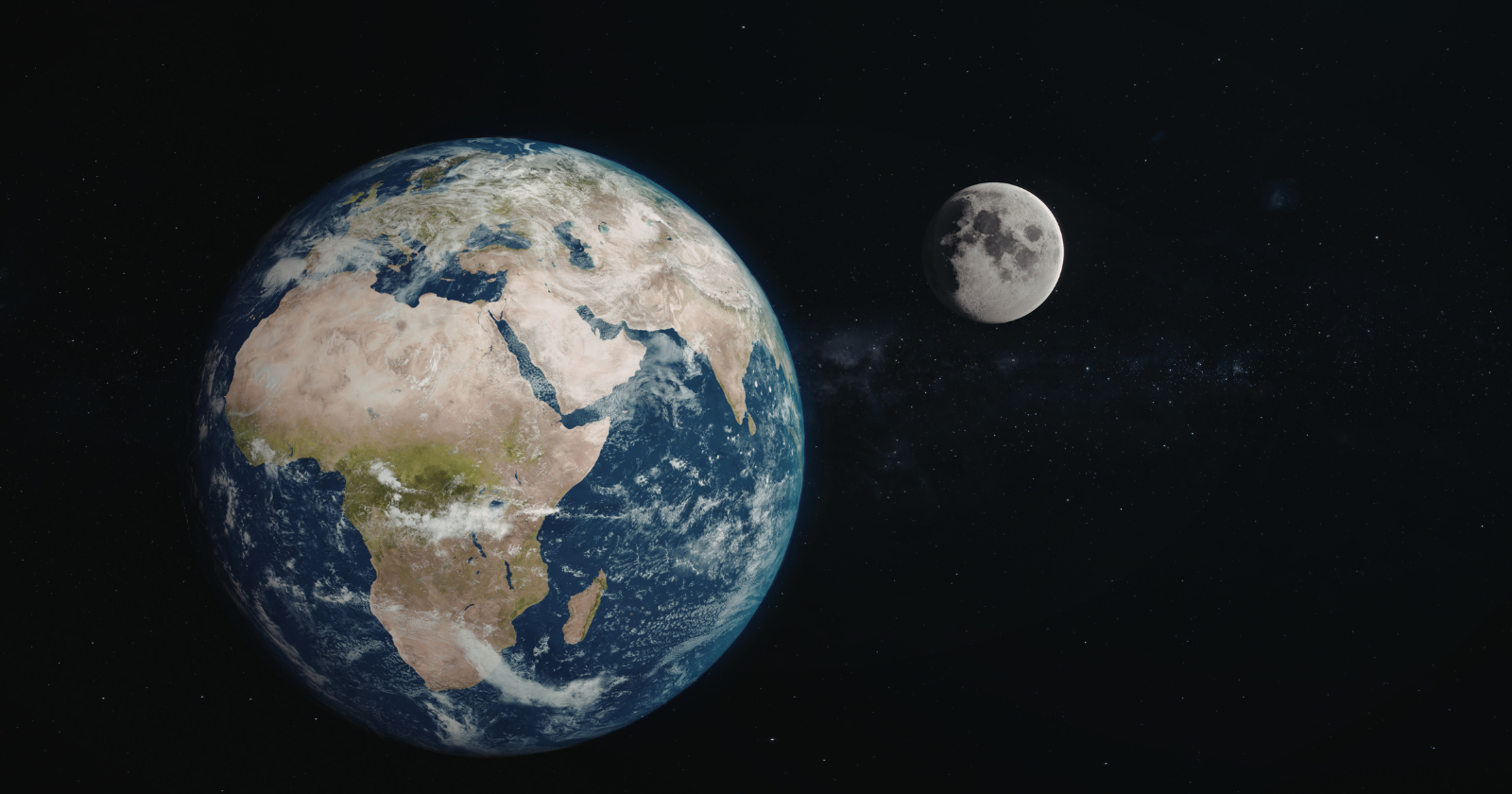
The Moon is stealing time from the Earth, and it has been getting away with it for billions of years. Our planet spins so much slower than it once did that a single day has stretched from just 19 hours to the 24 we live by, and the Moon is still creeping away from us right now.

Earth’s spin is slowing, the day is getting longer, and the Moon is drifting outward at about 3.8 centimetres a year, a figure measured by bouncing lasers off the reflectors the Apollo missions left on the surface. Two things in the popular telling are worth correcting, though, because both make a careful process sound more dramatic, and stranger, than it is.

The Moon is not stealing anything. And the day did not stretch from 19 hours to 24 in the order that phrasing implies.

Nothing is being stolen

The “stealing time” image is vivid, but it describes a straightforward transfer rather than a theft.

The Moon raises tidal bulges in Earth’s oceans. Because Earth rotates faster than the Moon orbits, our planet’s spin drags those bulges slightly ahead of the line between the two bodies. The displaced water pulls gravitationally on the Moon, and the Moon pulls back. The result is a brake on Earth’s rotation and a push that nudges the Moon into a higher, wider orbit.

What ties the two together is a conservation law. The total angular momentum of the Earth-Moon system stays constant. As Earth’s rotation loses angular momentum, the Moon’s orbit gains exactly that amount, which is why it moves away. Nothing is lost from the system and nothing is taken from outside it. The “theft” is bookkeeping: one column falls, the other rises by the same figure. A less colourful description, but the accurate one is a transfer, not a heist.

Where the 19 hours actually fits

The bigger problem with the popular version is the timeline. It suggests the day began at 19 hours and has been climbing steadily to 24 ever since. The real sequence runs the other way at the start, and includes a long pause in the middle.

Soon after the Moon formed, roughly 4.5 billion years ago, Earth was spinning far faster than now. Estimates for that early day run well under 19 hours, somewhere in the region of 10 hours or less. The day then lengthened over time as tidal braking did its work. So 19 hours is not the beginning of the story. It is a point partway through.

And it is a striking point, because the day appears to have stalled there. A 2023 study in Nature Geoscience by Ross Mitchell and Uwe Kirscher found that Earth’s day held at roughly 19 hours for about a billion years during the mid-Proterozoic, between around two billion and one billion years ago. This is one study built on a compilation of geological constraints, not a settled count, but the mechanism it proposes is elegant. Lunar ocean tides were slowing Earth’s spin, as always. At the same time the Sun’s heating of the atmosphere drove atmospheric tides that pushed the other way, speeding the spin up. For roughly a billion years the two effects came close to cancelling, and the day stopped lengthening.

So the honest version is almost the reverse of the slogan. The day began far shorter, lengthened over time, then appears to have paused near 19 hours for roughly a billion years before the slow climb toward 24 hours resumed.

Measured with Apollo’s mirrors

The present-day half of the claim, that the Moon is still moving away, is the part we can measure most directly, and the method belongs on a page about space.

Three Apollo missions and two Soviet landers left arrays of corner-cube reflectors on the lunar surface. Observatories on Earth fire laser pulses at them and time the round trip. Multiplying by the speed of light gives the Earth-Moon distance to within a few centimetres, and tracking it across decades shows the Moon receding at about 3.8 centimetres a year, close to the rate a fingernail grows.

One caution about that number. It is the present rate, not a constant, and it cannot simply be run backwards. Project 3.8 centimetres a year into the past and the Moon would have been touching Earth around 1.5 billion years ago, which is impossible given that it formed some three billion years before that. The recession rate depends on how the continents and ocean basins are arranged, and today’s layout, with an Atlantic close to a tidal resonance, makes the braking unusually strong. In the deep past the rate was slower. The Moon is leaving, but not on a straight line drawn from today’s speed.

What to keep from the factoid

Earth’s spin is slowing, the day is lengthening by a couple of milliseconds a century, and the Moon is edging away, all driven by tides and all measured rather than guessed.

The two refinements worth carrying are quieter than the slogan. No time is being stolen, because the angular momentum Earth loses is precisely the amount the Moon’s orbit gains. And 19 hours was not a starting line but a thousand-million-year pause, a stretch when two tides held the day still before the slow lengthening resumed.

The post The Moon is stealing time from the Earth, and it has been getting away with it for billions of years. Our planet spins so much slower than it once did that a single day has stretched from just 19 hours to the 24 we live by, and the Moon is still creeping away from us right now. appeared first on Space Daily.

❌