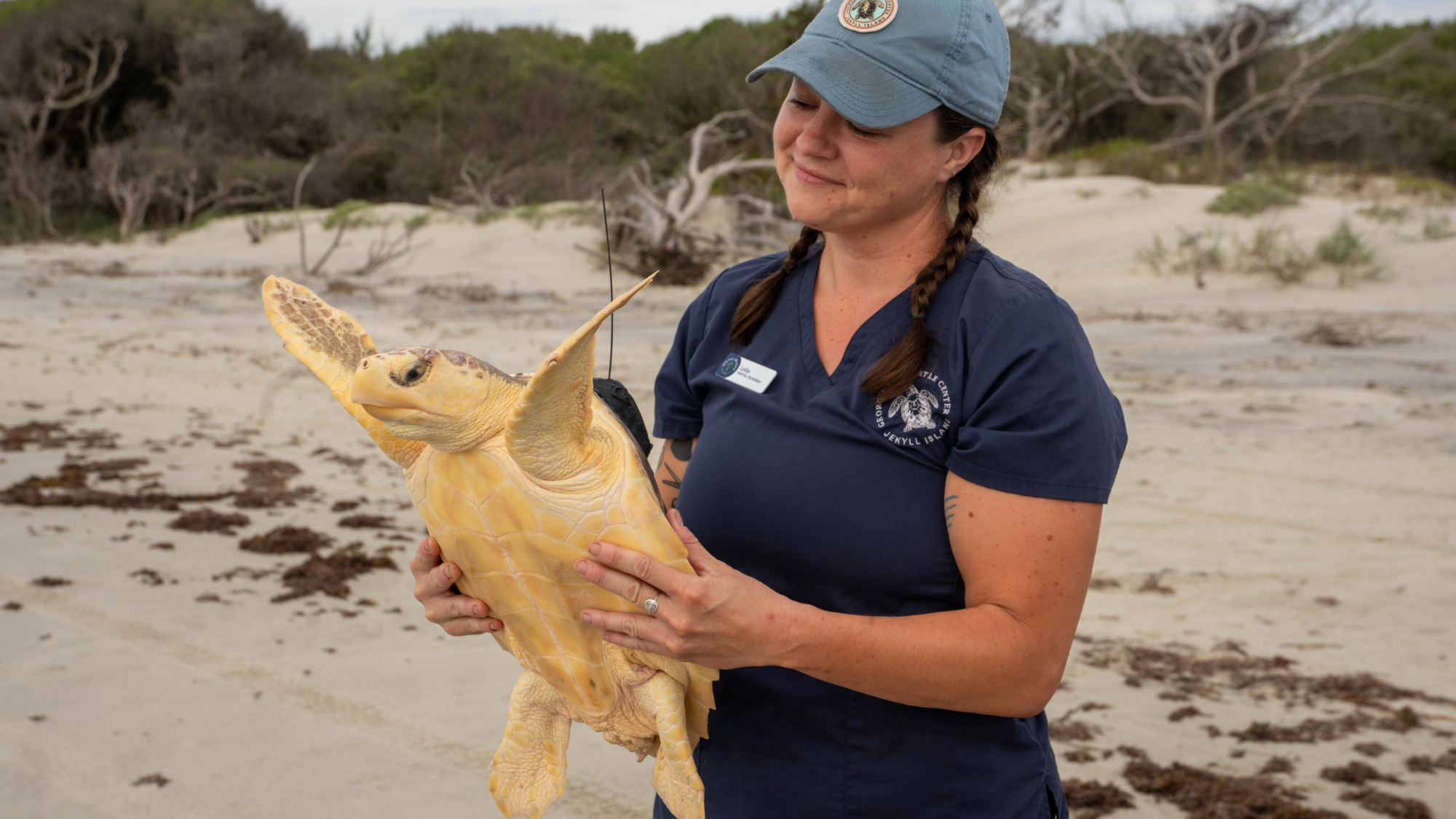
A unique turtle is officially getting a second chance at life in the big blue. Last month we reported on a special resident at the Georgia Sea Turtle Center in Jekyll Island, Georgia: a first-generation hybrid sea turtle, the child of a Loggerhead sea turtle father (Caretta caretta) and a Kemp’s ridley sea turtle (Lepidochelys kempii) mother. Nicknamed Earl Grey, the reptile-turned-celebrity has returned to the wild.
This Hannah Montana of turtles was slated to be released on Wednesday, but on Tuesday the Georgia Sea Turtle Center announced a change of plans because of “some unexpected pre-release complications.” Luckily, these complications must have been resolved. He was sent on his way Thursday morning, only one a day behind schedule.
“Yesterday evening, veterinarians at the Georgia Sea Turtle Center determined that the best course of action for Earl Grey’s well-being and successful transition back into the ocean was to conduct a private release,” according to a George Sea Turtle Center spokesperson.
The turtle was rescued from a beach in Brewster, Massachusetts, where it was stranded and cold-stunned. The turtle’s mixed background was revealed by genetic testing after the Loggerhead ridley (or Kemp’s Loggerhead?) arrived at the turtle center. Hybrid animals are natural, but we don’t know how many wild hybrid sea turtles there are. Most hybrid animals are only confirmed with genetic testing.
Earl Grey on his way to the beach for release. Image: Jekyll Island Authority.
“From an evolutionary perspective, hybridization could be one of many ways genetic diversity is introduced into a population,” Jaynie L. Gaskin, Georgia Sea Turtle Center director, told Popular Science in April. “We encourage other rehabilitation facilities to consider genetic testing for any suspected hybrid sea turtles, as there may be more individuals than we currently realize!”
In a Facebook video, the turtle center highlights the traits that the rare hybrid sea turtle inherited from each species, including a hook-shaped beak of a Kemp’s ridley (the mother) and the colors of a Loggerhead (the father). A combination of, in their words, the “best of both worlds.” .
A pleasant swim at the beach or pool can quickly turn deadly. Every year, over 4,000 people die from unintentional drowning across the United States.
Swim safety experts say drowning is highly preventable. They recommend learning basic swimming skills, designating “water watchers” to keep an eye on children in the water, and avoiding swimming alone or under the influence.
But what if your outfit could stop you from drowning? Swim safety experts say wearing the right color on your next beach day is a good way to stay visible and out of harm’s way—especially for inexperienced swimmers and kids.
So what are the safest swimsuit colors?
Lisa Zarda, Executive Director of the U.S. Swim School Association, says people wearing bright, neon colors are easiest to spot in pools, lakes, and oceans, while blue, black, white, and gray swimsuits blend into the water.
“When the water is moving and reflecting the sunlight, certain colors just disappear under the water,” she said. “Especially in open water, where it can be kind of murky and hard to see: The brighter the color, the better.”
Wearing bright colors helps lifeguards and other safety officials identify and rescue people who are at risk of drowning. Vivid orange and super-bright, highlighter yellow are two standout colors for swim safety.
“Think safety vests and traffic cones,” Zarda said. “Those are bright colors also for a reason—so that they can be easily seen.”
An informal study by Alive Solutions, a public safety group, tested swimsuit visibility in three different conditions: in a pool with a standard light bottom, a pool with a dark bottom similar to dark blue ocean environments, and in an outdoor lake with brown-gray water.
Across the board, the study identified bright, neon orange as the most visible color. But there was some slight variation of which colors stood out best in different environments. Against a dark pool bottom, neon yellow, green, and orange were the most eye-catching, while even brighter reds and pinks appeared darker, and both light and dark colors faded into the water.
In a pool with a light bottom, most colors stood out, while light colors like white and light blue disappeared almost instantly.
In a lake, only neon colors were visible while all other colors quickly blended. So bottom line: stick to a neon orange swimsuit if you want to be sure to be seen.
Dark colored swimsuits can be especially hard to spot in open water. Image: mrs / Getty Images / MARTINS RUDZITIS
What makes neon stand out?
All visible color is the result of reflected light. A red apple, for instance, absorbs many wavelengths along the light spectrum, but bounces back red wavelengths. So to the human eye, an apple appears red.
Ordinary colors, like the red of an apple, only reflect the light they receive, but fluorescent pigments do more than that. They also absorb incoming nonvisible ultraviolet and some visible blue light and then re-emit part of that energy as intensely visible light. This is why fluorescent colors almost seem to glow.
Fluorescent shade’s high-contrast is why traffic safety signs, protective gear, and safety and rescue objects, like buoys, are often made with neon materials. It’s also what makes fluorescent swimsuits extra safe.
Swim safety for kids
As summer comes into full swing, Zarda says wearing a neon swimsuit is just one piece of the puzzle to prevent drowning, particularly for kids.
Children are extremely vulnerable to drowning accidents. Kids between ages one to four die from drowning more than any other cause of death, according to the Centers for Disease Control and Prevention. For children aged five to 14, drowning is the second leading cause of unintentional injury.
“Choosing the right swimsuit color doesn’t replace any of the other important layers of protection.” Zarda said.
“Always having undistracted adult supervision, having a fence around your pool, enrolling your child in swim lessons so that they know how to swim and navigate in the water—those are all still very important.”
In Ask Us Anything, Popular Science answers your most outlandish, mind-burning questions, from the everyday things you’ve always wondered to the bizarre things you never thought to ask. Have something you’ve always wanted to know? Ask us.
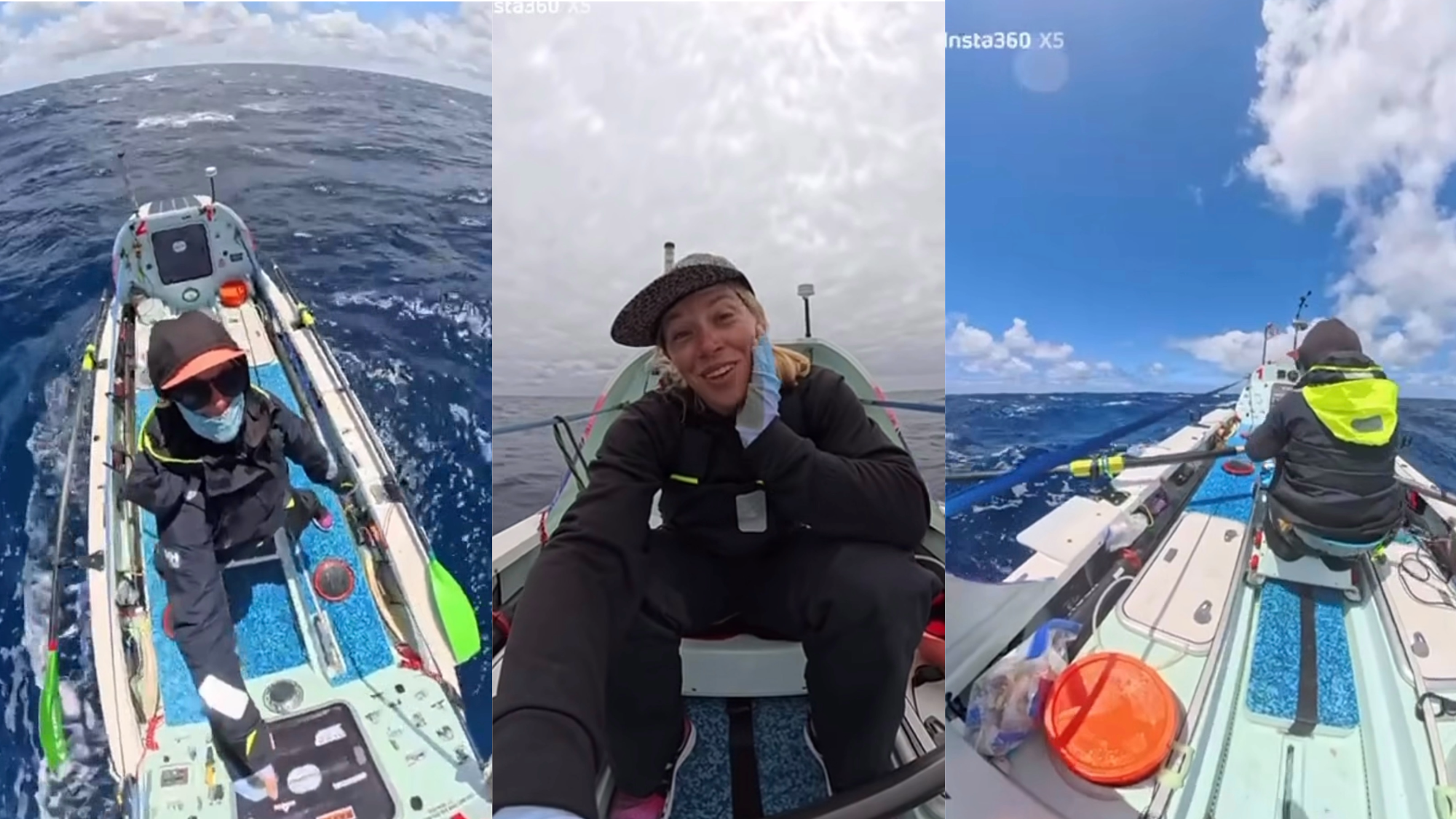
A 31-year-old New York native named Kelsey Pfendler is one week into her audacious quest to become the youngest woman to row unassisted from California to Hawaii. To complete her over 2,400-mile journey, she will need to face stormy seas and traverse waters teeming with all types of ocean life. If she succeeds, Pfendler will become the first American woman ever to do so.
A couple hours of napping and some food will make you feel like a new woman! Waves and wind are still big, but luckily they are becoming more favorable, allowing Kelsey’s boat to catch and ride the waves. Kelsey is rowing to raise funds for The Whale Foundation an organization whose mission is to support, restore, and celebrate the health and well-being of the Grand Canyon river guiding community. Links to learn more and donate are in our bio. @Concept2 @Recpak @insta360 official
Pfendler set off from Monterey, California on May 21 and has been posting daily updates on her TikTok. A separate live tracker also plots her position on a digital map. As of May 28, the tracker shows her off the Southern California coast, moving at 1.6 knots. The multi-month voyage is a major test of physical strength and mental fortitude, and it’s already proven grueling. In just her first week, Pfendler battled strong headwinds as she pushed away from the California coast, leaving her hands covered in blisters.
Absolutely flying today! Waves are around 14ft and wind maxed about 22mph earlier, which gave her a good boost of speed. 229 miles so far, about 2,000 to go. @Concept2 @Recpak
And it has only gotten tougher. Pfendler’s route took her directly into the path of a weather front, bringing bone-chilling temperatures and punishing waves. Worse, while taking cover from the waves, she lost the cap to her heavy-duty freshwater bag. Though she has the ability to make more freshwater with a desalination device, it runs on solar power and the storm left the skies too dark and overcast for the device to work. As a result, Pfendler has had to tap into her emergency supply of 25 small water bottles, a scarcity that has also prevented her from using water to rehydrate her freeze-dried camp food.
“It’s tortillas and peanut butter until I get some sun,” Pfendler said.
But the trip has had its lighter moments as well. Pfendler posted an update sharing her excitement when she crossed the continental shelf. At about 50 to 60 miles off the California coast, crossing the continental shelf is something few humans get to experience so intimately. She also recounted a moment where she spotted either a sea lion or a dolphin hunting fish nearby, sending them leaping out of the water all around her boat.
“It was really cool, it was in the dark and it was kinda special for me,” Pfendler said,
This quest isn’t Pfendler’s first rodeo. She completed a similar rowing trip from California to Hawaii in 2024 with three companions, serving as the skipper. That trip took 40 days, 22 hours, and 14 minutes. Still, rowing in total isolation—even for an experienced oarswoman—adds another layer of challenge. If Pfendler completes the trip, she will be just the third woman ever to do so. The record, set by British rower Lia Ditton in 2020, currently stands at 86 days, 10 hours, and 56 seconds.
Want to spend less on energy? You’re not alone. Summer’s approach means air conditioning season is almost here, just in time for a global energy crisis.
Naturally, we’re all looking for ways to lower our energy bills. There’s a lot of great advice out there, from ditching incandescent lights to getting a heat pump. But there’s also some energy-saving advice that is useless—and a few tips that actually waste energy. Here are a few common myths about energy conservation, debunked with actual science.
Closing vents in empty rooms doesn’t save energy.
If there are rooms in your house you don’t regularly use—a guest bedroom, say, or an occasionally used rec room—you might wonder whether it’s worth heating or cooling it year-round. What if you closed the vents in those rooms, just to save a little money? There’s a certain intuitive logic to this. Heating and cooling costs money, so why bother leaving the vents open in rooms you’re not using?
But HVAC systems don’t work that way. Research suggests that closing vents will probably end up costing you more money. Here’s how.
“The reduction in building thermal loads due to conditioning only a part of the house was offset by increased duct system losses,” the study concluded, stating this was “mostly due to increased duct leakage.”
Put simply: Closing vents doesn’t save energy, because doing so pushes heated or cooled air into your walls instead of your rooms. HVAC systems use pressure to force air through vents, and the system is typically calibrated for the number of vents in your home. Closing one of those vents means there’s more pressure. Because no home HVAC system is free from leaks, that increased pressure means air ends up being pushed through those leaks into your attic or walls instead of any of your rooms.
This doesn’t mean you can’t ever close your vents—you might do so for comfort reasons, for example. It just means that closing vents isn’t a good way to save money on energy.
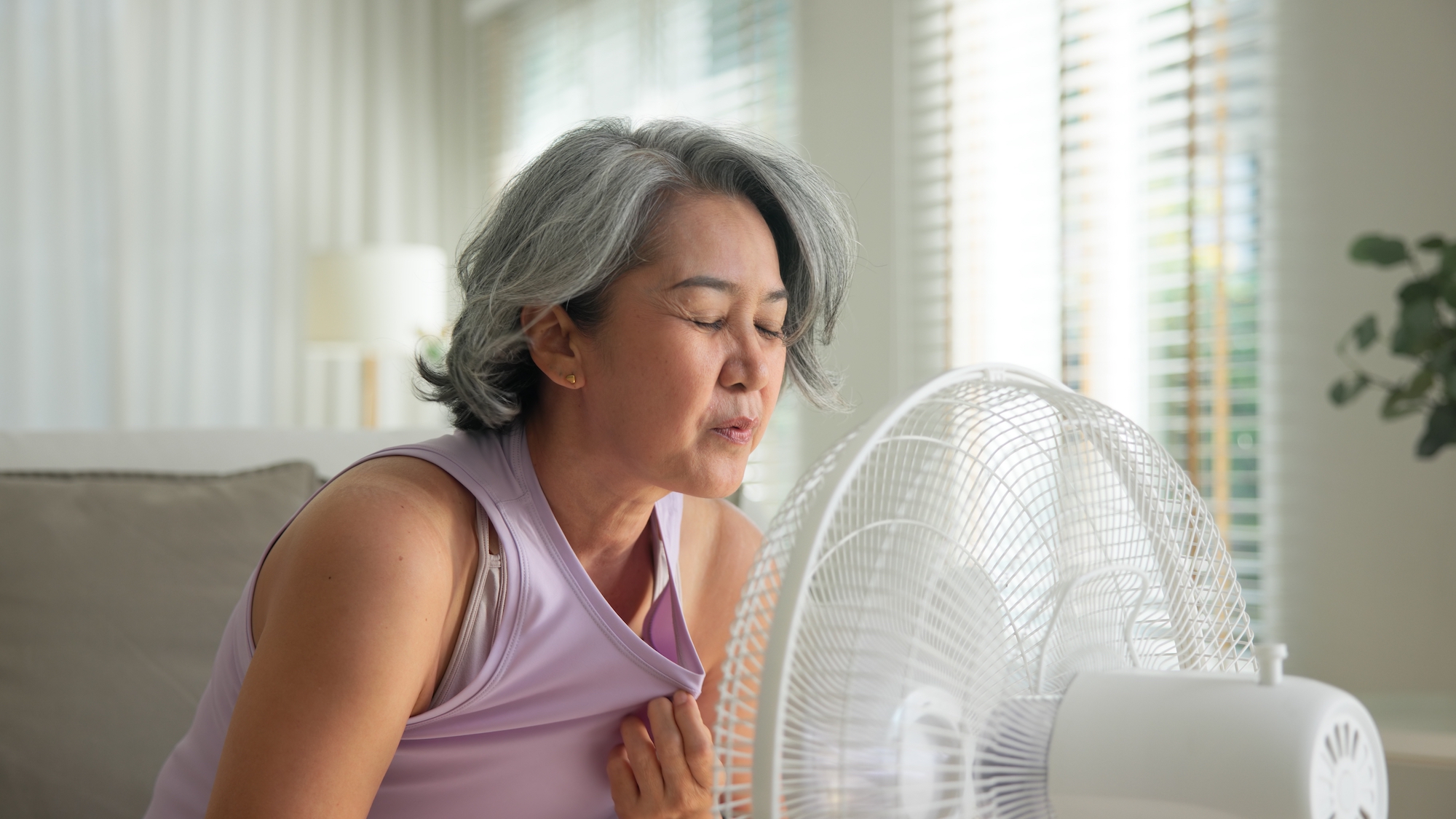
Fans don’t cool rooms; they cool people.
If it’s hot out you should turn on the fans, right? Not exactly. It turns out fans are only useful if there are people in the room; leaving them on in an empty room is pointless.
Why is that? Because fans don’t cool rooms, only people. You can experiment with this at home if you have a thermometer. Turn on the fan and see if the temperature goes down (it won’t), then also note if the room feels cooler (it will). The reason behind this is the windchill effect.
Air moving across your body speeds up heat transfer from your skin to the air, which we experience as cooling. Anyone who lives in a climate with cold winters is used to hearing both the actual physical temperature and what the temperature feels like given the windchill effect. The wind doesn’t change the physical temperature, which you can measure with a thermometer, but the human experience of it.
The exact same force is at work inside when you turn on a fan, and it can lead to real energy savings. According to the US Department of Energy, turning on a ceiling fan during the summer “allows you to raise the thermostat setting by about 4 degrees Fahrenheit without reducing comfort.” A 2013 study by researchers from the University of California in Berkeley goes further, suggesting people can feel comfortable in a room 6 degrees higher with a fan than without it.
Either way, turning on a fan could allow you to avoid turning on the air conditioning in some conditions, which obviously saves energy. Even with AC on, though, a fan could allow you to set the thermostat a little bit higher. Just remember: There is no point to leaving a fan on if you’re not in the room.
Cranking the thermostat doesn’t speed things up.
Here’s a trick people try sometimes: turning the thermostat up past what you actually want in order to speed things along. The problem is that HVAC systems don’t work that way. That’s according to Trane, a leading manufacturer of HVAC systems. “When you set your thermostat to a specific temperature, such as 70 degrees, your HVAC system will operate at the same rate to reach that temperature, regardless of whether you initially set it higher or lower,” the company wrote in a blog post. “Setting it higher won’t make your home heat up any faster; it will only cause your system to overshoot the desired temperature, resulting in unnecessary energy consumption.”
Set the temperature you want and walk away. Image: Shutterstock Monkey Business Images
BC Hydro, a Canadian energy utility, agrees, writing that “the science is that rooms don’t heat up any faster when you crank the temperature up to 24 degrees Celsius instead of 21 degrees”. With very few exceptions, HVAC systems adjust the temperature at a pretty consistent rate. The best policy is setting the temperature you want and waiting.
Turning the lights on and off doesn’t affect modern light bulbs.
There is an idea that you shouldn’t turn off the lights every time you leave a room, because doing so takes up more energy than simply leaving them on. It’s not true.
Many energy-saving myths have their origin in now-obsolete technology. This is one of those. Fluorescent lighting, the light-saber shaped tubes of light once common in office buildings and schools, wear down more quickly if they’re constantly being turned on and off. The same is true of compact fluorescent bulbs, or CFLs, which were a common energy-saving tool in the 2000s. For this reason, according to the US Department of Energy, you should only turn off fluorescent lights if you’re going to be out of the room for 15 minutes or more.
This advice isn’t really relevant in the 2020s, though, because fluorescent lighting is a rarity now. Most modern lighting is LED-based, and “the operating life of a LED is unaffected by turning it on and off,” according to the Department of Energy.
So, unless you’ve got some really old lighting, go ahead and turn the lights off every time you leave a room. You’ll use a little bit less energy and it won’t damage your bulb at all.
Last year, 4.8 million people ventured to Yellowstone National Park, one of the most famous of our nation’s “best ideas.” And it’s not surprising why. The park, spread across 2.2 million acres and three states, includes half of Earth’s active geysers, the Grand Canyon of the Yellowstone River, and stunning wildlife.
Yellowstone’s famed Grand Prismatic Spring. Image: NPS / Jim Peaco.
No reservations
Unlike a trendy new restaurant or theme park, Yellowstone does not require a reservation to enter. Visitors just need a park entrance pass. However, it’s important to remember that the summer is very busy, so bring your patience along with that bear spray and be ready for crowds and lines at entrances.
Check road status
Most of Yellowstone’s park roads are open to personal vehicles in mid-April and will close in early November. Still, weather may temporarily close roads, so use Yellowstone’s website and app to check the status of park roads before arriving.
Plan, plan, plan
As with any popular tourist attraction, it pays to plan. While the park does not require reservations to enter, campgrounds and lodging do. Visitors often need to book well in advance, and operating hours and service levels may change with little notice. Check before you go for the latest on fishing permits, current weather, places to go, etc.
Cow bison and calves in Lamar Valley. Image: NPS/ Neal Herbert.
Give wildlife lots of space
Yellowstone’s wildlife are one of the park’s biggest draws. But remember that wild animals are dangerous if you get too close. You must respect safety regulations and view them from a safe distance. Always maintain a minimum of 100 yards from predators like bears, wolves, and cougars and 25 yards from all other animals, including bison and elk. Also, all of Yellowstone is bear country, so carry bear spray and know how to use it before you go. You should also review how to watch wildlife safely and travel safely while in bear country.
Be a responsible driver (and parker)
Observe all of the posted speed limits and use the designated pullouts to watch wildlife, take pictures, and let other cars pass you. Also, do not stop your vehicle in the middle of the road. When pulling over, be sure to park with all four of your vehicles tires fully to the right of the white line.
Boardwalks are your friends
Please keep on the park’s boardwalks. People have been severely injured or even killed after stepping off of them into thermal areas. Here, the thin, fragile ground can suddenly give way, and visitors risk falling directly into scalding hot springs. The springs can reach temperatures of over 200 degrees Fahrenheit.
Views of Sunday Geyser from the boardwalk. Image: NPS / Jacob W. Frank.
Unplug, but remember the app
Download the free National Park Service app (and all of the offline content) before you arrive in the park. The app has interactive maps, tours of park places, on-the-ground accessibility information, and more that can help enhance your visit.
Expect limited connectivity
That said, don’t be surprised if you can’t receive calls or texts, even in the few areas of the park that may have cell reception. This is why it is important to remember to download that map before entering the park.
Sunset on the Madison River near Madison Junction. Image: NPS / Neal Herbert.
Prepare for all kinds of weather
Yellowstone’s weather is unpredictable. You can expect big temperature swings, rain, or even snow during every month of the year. Make sure you have a warm jacket, rain gear, and several layers. You should also check current weather conditions before arrival. .
Branch out
Consider attending a ranger program, exploring the Yellowstone Tribal Heritage Center, or participating in the free Junior Ranger program are extra ways to make the most out of your trip.
Deep below the ocean surface, at roughly the depth of 130 five-story buildings stacked end to end, a robot has unfurled a protest sign that reads: “LISTEN TO THE SCIENCE!” A Greenpeace remotely operated vehicle (ROV) holds the banner more than 2,300 meters (7,500 feet) below the surface of the Norwegian Sea, in front of a hydrothermal vent field known as Loki’s Castle. “This marks the deepest banner protest in history, to speak for ecosystems that have no voice of their own,” Sandra Schöttner, chief scientist for the Deep Arctic Expedition, Greenpeace International, said in a press release. The protest, carried out on May 27 during Greenpeace’s Deep Arctic Expedition, targeted an area of the Arctic seabed that the Norwegian government opened to deep-sea mining in early 2024 before reversing course under political pressure. Loki’s Castle was discovered in 2008 in the Arctic Ocean between Greenland and Norway. Here in the depths, hot fluid, between 300 and 320 degrees Celsius (572 and 608 degrees Fahrenheit), pours from mineral chimneys on the seafloor. These vents support a rich and unusual community of life, including microbes that resemble the distant ancestors of complex life on Earth. A 2024 study in Scientific Reports documented the animals living around the vents, including five new-to-science species. The authors suggested areas like this along the Arctic Mid-Ocean Ridge should be treated as “vulnerable ecosystems” and protected. In January 2024, the government of Norway opened roughly 281,000 square kilometers (108,000 square miles) of Arctic waters (an area…This article was originally published on Mongabay
Earlier this month, state-owned oil company Petroecuador announced a new project involving “hydraulic fracturing” in an oil block in the Ecuadorian Amazon. As a result, some observers spoke out against the environmental risks of high-volume shale “fracking,” in which water and chemicals are injected at high pressures into the tight bedrock to release trapped oil and gas. Shale fracking tends to cause air pollution, uses high quantities of water, and can result in contamination that creates public health risks for surrounding communities. But while “hydraulic fracturing” and shale “fracking” involve similar processes, they’re carried out at entirely different intensities, with different designs, the observers later said. The two terms are often used interchangeably, and the government didn’t explain the distinction or follow up when the groups asked for clarification, they said. “It’s striking because, for us, one of the concerns is the lack of information associated with this announcement,” Sebastián Valdivieso, Ecuador country director for the Wildlife Conservation Society (WCS), told Mongabay. The announcement concerned oil in Block 57, also known as the Shushufindi Libertador block, located in Sucumbíos province, which is largely covered by Amazonian rainforest. New drilling there would yield 930 barrels a day, extracted with the help of service provider Chuanqing Drilling Engineering Corporation (CCDC), a subsidiary of China National Petroleum Corporation. In its announcement, Petroecuador said it was the first time in the country’s history that hydraulic fracturing would be used on subsurface limestone, where those kinds of operations aren’t usually carried out. A group of…This article was originally published on Mongabay
Avian vampire flies (Philornis downsi) were not discovered in the Galápagos Islands for almost three decades after they were thought to have arrived from mainland Ecuador in the 1960s. Even then, the first were found by accident. Birgit Fessl, a landbird ecologist, was surveying for native species on the island of Santa Cruz in 1997 when she reached into the branches of a tree to take down the huge, domed nest of a woodpecker finch. Inside was a surprise. “We found one dying chick, another dead one which just looked sucked dry and 20 large maggots full of blood,” said Fessl, who now leads the Charles Darwin Foundation’s Landbird Conservation program. “I was stunned — the first dead baby in my hands. Then I realized it wasn’t an accident: It was everywhere,” she told Mongabay over a WhatsApp call. Across each of the Galapagos’ human-inhabited islands, vampire flies had already wrought havoc, killing some chicks in nests they infiltrated and leaving others maimed for life. “But it went unseen because people didn’t really know what to look for.” Around the world, more than 37,000 invasive species have been introduced to new environments. Many of these cause suffering, from vampire flies maiming finches to yellow crazy ants (Anoplolepis gracilipes) spraying acid at the eyes of shrikes (Laniidae) on Minami-Daitō Island, Japan, and Australian quolls (Dasyurus) bleeding from the nose after eating toxic cane toads (Rhinella marina). But none of these are measured by the current global standard for assessing the impact…This article was originally published on Mongabay
With early tests suggesting the presence of crude oil, the Caribbean island has begun to debate whether it could justify becoming a producer
Jamaica is closer than ever to drilling for oil. Tests on samples from the seabed off the Caribbean island’s south coast earlier this year identified hydrocarbons, which suggest the presence of crude oil below ground.
Wake-up call, and a call to arms The spectacular feature-length documentary ‘Ocean with David Attenborough’ is his very first partnership with National Geographic, now showing on Disney+ channel in Australia. With the great...
While kangaroos are a very social species, there has until recently been no evidence that they form long-term relationships between individuals. But a new study by researchers from UNSW Sydney indicates that this...

 Login
Login