Attorney Aaron Siri exposes the flawed safety testing of childhood vaccines, claiming that none have been tested against saline placebos. Instead, vaccines are compared to older vaccines, creating a misleading safety profile. He argues that significant adverse event rates exist, asserting that these practices endanger children's health and lack proper testing validation.
In a groundbreaking multicenter study that challenges conventional therapeutic strategies for chronic psoriasis, researchers from Radboud University Medical Center and Ghent University Hospital have demonstrated that significant dosage reductions in advanced biologic treatments do not compromise clinical efficacy. This international, pragmatic, randomized controlled trial, recently published in The Lancet Regional Health – Europe, proposes a paradigm shift in managing this burdensome skin disease, with profound implications for patient quality of life and healthcare economics.
Psoriasis, an autoimmune inflammatory disorder afflicting approximately half a million individuals in the Netherlands alone, manifests with complex immunopathology involving dysregulated cytokine networks. Over the past two decades, the development of biologics targeting specific interleukins—namely IL-17 and IL-23—has revolutionized disease control, offering patients dramatic symptom relief and improved functional capacity. Nevertheless, these biologics come with hefty price tags, often exceeding €17,000 per patient annually, necessitating exploration of optimized dosing regimens.
The study enrolled 244 patients across 19 Dutch and Belgian hospitals, following them over an 18-month period. By employing a non-inferiority design, the investigators assessed whether tapering the biologics to two-thirds or even half of the standard therapeutic doses could maintain remission or low disease activity without increasing adverse events. Importantly, dose reductions were implemented via gradually extending the intervals between injections, an innovative approach that offered practical advantages in clinical settings.
Findings revealed that 75% of patients responded favorably to the reduced dosing regimens, experiencing symptom control equivalent to those maintained on standard doses. This outcome not only underscores the potency and durability of IL-17 and IL-23 inhibitors but also supports the hypothesis that lower antigenic stimulus suffices to suppress the aberrant immune activation characteristic of psoriasis in many patients. By allowing the immune system to recalibrate under diminished pharmacological pressure, treatment sustainability was notably enhanced.
From a pharmacoeconomic standpoint, the implications are substantial. Reducing dosage effectively halves the frequency of injections for some individuals, translating into annual cost savings nearing €8,500 per patient. This reduction diminishes logistical burdens for both patients and healthcare systems and aligns with global imperatives for more sustainable and efficient medical resource utilization. Moreover, fewer injections potentially lower cumulative immunogenicity and treatment-related side effects, contributing to improved safety profiles.
Patient perspectives garnered during the study highlighted the psychological complexity inherent in tapering biologic therapies. Given psoriasis’s chronicity—with many suffering symptoms for decades before initiating biologics—patients often harbor understandable concerns regarding potential relapse. The study’s pragmatic design allowed participants to revert to standard dosing promptly if symptom control waned, ensuring personalized management and strengthening patient confidence during the dose reduction phase.
Lead dermatologist Elke de Jong emphasized that incorporating flexible dosage adjustments into clinical guidelines could transform routine practice. This adaptive strategy balances maximizing therapeutic benefit and minimizing overtreatment, fostering individualized care paradigms. Such guideline evolution is critical as novel biologics continue to enter the market, driving up costs and challenging healthcare sustainability globally.
The research specifically investigated a range of IL-17 inhibitors—including secukinumab, ixekizumab, bimekizumab, and brodalumab—and IL-23 inhibitors such as guselkumab, risankizumab, and tildrakizumab. These agents employ monoclonal antibody technology to selectively neutralize cytokines pivotal in psoriasis pathogenesis, thereby interrupting inflammatory cascades at a molecular level. The demonstrated feasibility of dosing attenuation with these biologics signifies a major advance in the nuanced application of targeted immunotherapies.
Physician-epidemiologist Juul van den Reek explained that extending injection intervals delivers dual benefits: reduction in iatrogenic trauma and the environmental footprint associated with production, packaging, and distribution of biologic medications. In an era accentuated by climate considerations, such efficiencies present vital contributions toward greener healthcare models without compromising patient outcomes.
This well-powered, rigorously conducted trial represents the first large-scale prospective evidence supporting dose tapering of biologics for psoriasis. Given the rising prevalence of autoimmune diseases and escalating pharmaceutical expenses worldwide, these findings furnish a robust framework for revising treatment algorithms both within the Netherlands and Belgium—and potentially beyond. Such clinical innovation positions the dermatology community at the forefront of precision medicine and value-based care delivery.
Future research avenues may focus on identifying biomarkers predictive of which patients can most safely and effectively sustain reduced biologic dosing, paving the way for even more tailored interventions. Furthermore, long-term observational studies are warranted to monitor sustained remission rates and assess immunological consequences of dose modulation.
In conclusion, this landmark study dispels the long-held notion that maximal drug dosing is invariably required to maintain psoriasis control. By scientifically validating the safety and efficacy of biologic dose reduction, the BeNeBio trial heralds a new chapter in dermatological therapeutics—one characterized by patient empowerment, economic prudence, and informed flexibility in chronic disease management.
Subject of Research: People
Article Title: Dose reduction of IL-17 and IL-23 inhibitors in psoriasis (BeNeBio study): an international, pragmatic, multicentre, randomised, controlled, non-inferiority trial
Leishmania parasites appear to evolve through widespread genetic exchange, reshaping assumptions about how they adapt and spread. A parasite long thought to spread mostly by cloning itself may be far more genetically dynamic than scientists once believed. A new international study suggests that Leishmania—a group of microscopic parasites responsible for debilitating tropical diseases—regularly swaps genetic [...]
Sunburn and mosquito bites go together in the summer like a hot dog and ketchup. To keep from becoming a mosquito buffet, most of us turn to bug sprays with DEET. An acronym built from its scientific identification (diethyltoluamide), DEET was developed for the United States Army in 1946 and entered civilian use in 1957. It is generally considered safe when used as directed.
However, mosquitoes can learn to associate the repellant with food. They may even become attracted to it. The findings are detailed in a study published today in the Journal of Experimental Biology.
“If someone applies DEET and the concentration fades over time, but a mosquito still manages to feed, the insect may begin associating that smell with a reward,” Clément Vinauger, a study co-author and biochemist at Virginia Tech, said in a statement. “That’s a possibility we should take seriously when we think about how repellents are used in the real world.”
Ace processors
Like it or not, Earth’s over 3,500 known mosquito species are pretty smart and an evolutionary wonder. They use sensory information to find hosts and can adapt to changing environments.
“Mosquitoes are remarkable at processing information about their environment,” Vinauger said. “What we are trying to understand is not only how they detect us, but how their brains interpret those cues and turn them into behavior.”
A DEET-covered dinner bell?
In this new study, the team focused on the yellow fever mosquito (Aedes aegypti). This species spreads several diseases to tens of millions of people each year, including dengue fever, Zika, yellow fever, and chikungunya.
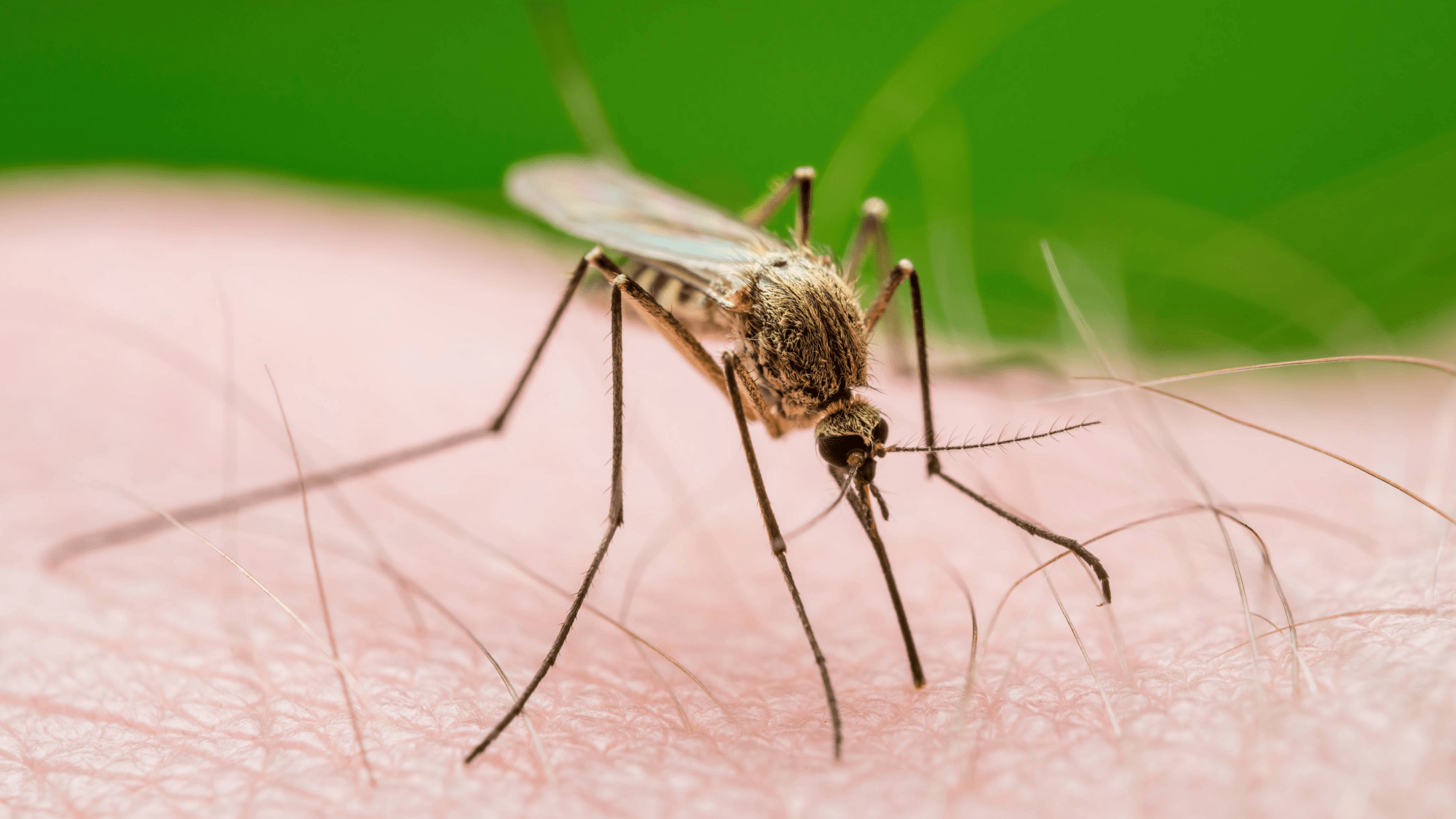
The mosquitoes were restrained behind a piece of fabric mesh. They then offered the mosquitoes a bag of warm blood (yum) that was just out of the insects’ reach to see how enthusiastically the insects stabbed at it with their proboscises. As expected, the mosquitoes were interested in the blood, particularly when the team rewarded them by lowering the bag within reach. Things changed a bit once DEET entered the experiment. When the team offered the insects blood when surrounded by the scent of DEET, they initially stayed away from the potential feast.
A female yellow fever mosquito (Aedes aegypti), feeding on a bag of warm blood. Image: Romina Barrozo.
To see if they could be trained to associate that smell with the dinner bell, the team fed the mosquitoes warm blood for 20 seconds, squirting the scent of DEET into the enclosure in the final 10 seconds of dining. They repeated the procedure three more times before noting how the mosquitoes responded to only the scent of DEET. In this trial, over 60 percent of mosquitoes tried to bite when they smelled DEET.
To examine further, the mosquitoes were given a choice between two human hands. The hand belonged to study co-author Ayelén Nally of the University of Buenos Aires. One of Nally’s hands was coated with DEET at normal concentrations and the other was bare. The untrained mosquitoes avoided the DEET-treated hand, while the trained mosquitoes were drawn to it.
Interestingly, the mosquitoes could form that same association when sugar, instead of blood, was used as the reward.
According to the team, they are seeing how the mosquito’s brain can rewrite its response based on their experiences. What they have learned matters just as much as what a chemical like DEET does.
“If mosquitoes are repeatedly exposed to DEET, it becomes less effective as a repellent,” study co-author Claudio Lazzari from University of Tours in France added.
Keep the bug spray
Importantly, this does not mean you should stop using DEET completely. It is still one of the most effective ways to keep the dangerous insects away, particularly where mosquito-borne disease is common.
“If you’re in tropical regions where disease risk is real, you should use it,” Vinauger said. “Instead of applying a lot at once, you may want to reapply regularly so it’s always active and providing continuous protection.”
Treated clothing may also be a challenge since DEET concentrations in fabric decline over time. Additional study to understand their behavior is crucial for public health as mosquito-borne illnesses increase due to climate change.
“We need to understand how mosquitoes keep outsmarting our control strategies,” Vinauger concluded. “And that takes understanding how they work—at the molecular level, the neural level, the behavioral level.”
For a woman in her mid-40s to mid-50s, it arrives without warning. She wakes up, overheated, wondering why it’s so hot in the house—until she sees the thermostat is set for 70 degrees, same as always. Or, she’s midway through a work presentation when heat rises from her chest to her face, and she wonders if the flush on her cheeks is visible to everyone in the room.
It’s a hot flash—a rite of passage for the majority of women in either perimenopause, the years leading up to menopause, or the years beyond it. Menopause itself is diagnosed after 12 consecutive months without a period, but the hot flashes don’t always get the memo.
Here’s everything doctors currently know about hot flashes.
What is a hot flash, and who gets them?
Hot flashes are a sudden heat flare up often paired with flushed skin and sweating. They don’t usually last long, between a minute and five minutes in duration.
Most women experience a hot flash about four and a half to five years after their last period, Dr. Monica Christmas, an OB/GYN at University of Chicago Medicine and director of its menopause program tells Popular Science. She also is the associate medical director of the nonprofit Menopause Society, which provides healthcare professionals with tools and resources to support women through the transition.
Women have grappled with hot flashes—whether simply annoying or genuinely debilitating—for centuries. In 1582, Dr. Jean Liebault of France was among the first to document the phenomenon. But while we know much more about hot flashes and night sweats than Liebault ever did, one question still stumps experts.
“What we can’t answer is why doesn’t everybody get them,” Christmas says. “Because everybody doesn’t get them. I have patients that will say, ‘I don’t know,’ if I say, ‘Are you having any hot flashes or night sweats?’ And as soon as they say that, I’m like, ‘You’re not having them.’”
What’s actually happening inside women’s bodies during a hot flash?
During a hot flash, a woman might feel like she’s spiking a high fever, but physiologically, that’s not what is happening. As women approach menopause and the ovaries begin to make less estrogen, the brain’s internal thermostat—the hypothalamus—becomes hypersensitive to even small shifts in temperature, Christmas says.
The body “thinks” it’s overheating, even when the actual temperature hasn’t changed much. In response, our bodies try to cool us down. Blood vessels dilate, which is supposed to help dissipate some of that heat, but then that triggers a sweating reflex.
“Many people will say, ‘I feel this out of nowhere, this surge of warmth that typically is from the nipple line up,’” she says. “And then as soon as the heat came on, and I felt like I was internally heated up or on fire, I start to sweat.”
Exactly how an individual woman experiences hot flashes varies wildly. Some describe very mild symptoms. Others grapple with profuse sweating. Some experience only hot flashes during the day, while some have regular night sweats. About four in five women experience them at some point during the menopause transition, according to the American College of Obstetricians & Gynecologists.
“There’s a lot of variability,” Christmas says. Common triggers include alcohol, caffeine, high-sugar and highly processed foods, along with stress.
Black women also are more likely to experience more severe and longer-lasting symptoms, sometimes up to 11 years, she says. And research also shows that women with more severe, longer-lasting hot flashes and night sweats appear to be at higher risk of cardiovascular disease.
That doesn’t mean treating hot flashes automatically lowers heart risk, Christmas says. But it does reinforce that these women deserve particularly careful attention to blood pressure, cholesterol, and lifestyle. “I want to make sure I’m doing everything possible to minimize that risk,” she says when she treats her patients.
There’s more to hot flashes than hormonal changes
For decades, the entire process was blamed purely on estrogen loss, Christmas says. But that explanation left some unanswered questions.
“That doesn’t explain why every menopausal woman doesn’t have night sweats,” she says. “And it also doesn’t quite explain why we can sometimes start to experience them during the perimenopause transition because during perimenopause, people still have some estrogen.”
Newer research now is telling a more complex story. When the brain recognizes that a woman’s estrogen levels are low, nerve cells in the hypothalamus called KNDy neurons (pronounced “candy”) become overactive, releasing neurotransmitters, which are chemical signals the brain uses to send messages throughout the body. These neurotransmitters include kisspeptin, dynorphin, and neurokinin B.
“It’s actually those neurotransmitters that seem to have more of an impact on our ability to regulate our internal temperature,” Christmas says. “They’re not hormones.”
What to do if you get a hot flash
For women in the middle of their hot flash years—along with the 10 percent of menopausal women who continue to experience them—there are treatments.
Estrogen-based hormone therapy can help, but not every woman, including those with a history of blood clots or breast cancer, can take hormone therapy.
Hormone therapy can help alleviate hot flashes. Video: Hormone therapy – Four things a Mayo Clinic women’s health specialist wants you to know., Mayo Clinic
Fortunately, researchers’ new understanding about the role of KNDy neurons has allowed for new treatments that block the brain signals that trigger hot flashes in the first place. The FDA approved a new drug called Veozah (it’s chemical name is fezolinetant) in 2023. It targets the neurokinin 3 receptor, which plays a key role in regulating body temperature.
Lynkuet, another drug (with the chemical name elinzanetant), came along in 2025. It blocks both the neurokinin 1 and neurokinin 3 receptors, interrupting the process that triggers hot flashes at two points instead of one.
Other medications can also provide relief, though weren’t originally developed for hot flashes, Christmas says. Some SSRIs and SNRIs; gabapentin, a neurologic medication; and oxybutynin, used for overactive bladder, are all used off-label for hot flashes and night sweats.
Cognitive behavioral therapy and hypnosis also have been shown to reduce hot flashes. “I’m menopausal, too, so I know if I’m under a lot of stress or in a stressful situation, I’m going to probably have more hot flashes than not,” Christmas says.
“So there’s certainly something about being able to calm our central nervous system down that seems to have an impact, too.”
If you’re struggling with hot flashes, Christmas recommends seeing your healthcare provider for help. Treatments are available. What’s more, in some cases, hot flashes or night sweats could signal other issues, including thyroid disorders, cancer, and infections, among others.
But bottom line, when it comes to hot flashes, you don’t have to sweat them out.
In Ask Us Anything, Popular Science answers your most outlandish, mind-burning questions, from the everyday things you’ve always wondered to the bizarre things you never thought to ask. Have something you’ve always wanted to know? Ask us.

 Login
Login