Normal view

The conversation women aren’t having with their doctors about menopause and memory loss isn’t just overdue — it may be one of the most important health decisions of their fifties

Most conversations about menopause, to the extent they happen in a clinical setting at all, start and end at the same set of symptoms. Hot flashes. Night sweats. Sleep disruption. Mood changes. These are real, they are common, and for many women they are severe enough to significantly affect quality of life. But they are also, in an important sense, the surface of a much deeper physiological story — one that involves the brain directly, in structural and functional terms, and one that most women are not hearing from the people who are supposed to be helping them navigate this transition.

The cognitive dimension of menopause — the memory changes, the concentration difficulties, the particular kind of mental fatigue that many women in their late forties and fifties describe — has been systematically underrepresented in clinical guidance and research funding for decades. That is beginning to change, but the change is arriving slowly, and the practical consequence is that women are frequently left to interpret their own symptoms without context, without a framework, and without information about interventions whose effectiveness is, at this point, reasonably well supported by evidence — provided the timing is right. The timing, it turns out, is everything.

What the brain actually goes through

A 2026 review published in The Lancet titled “Advances in understanding of cognitive symptoms during menopause” brought together the current state of evidence on what happens neurologically during this transition, and the picture it presents is more specific and more structural than the popular understanding of menopause typically includes. Estrogen is not merely a reproductive hormone. It has well-documented neuroprotective effects — it supports synaptic plasticity, promotes the production of acetylcholine (a neurotransmitter central to memory and attention), and appears to modulate the brain’s inflammatory response. When estrogen levels decline during the menopausal transition, the brain is not simply losing a hormone. It is losing a system of support it has relied on throughout adulthood.

The structural consequences are measurable. Research cited by the Menopause Society has documented reductions in gray matter volume in the frontal and temporal cortex and in the hippocampus — precisely the regions involved in memory formation, executive function, and the ability to hold and manipulate information in working memory. These reductions are not subtle on a population level. They are consistent enough across studies to be considered a feature of the menopausal transition rather than an incidental variation. What this means, practically, is that the brain fog many women report during perimenopause is not psychosomatic, not a side effect of stress or poor sleep alone, and not a symptom that politely awaits acknowledgment before making itself felt in daily life.

The cognitive symptoms women are experiencing but not naming

There is a particular kind of suffering that comes from experiencing symptoms you cannot name, in a domain where your reports have historically been met with skepticism or normalization. Many women going through perimenopause describe a cognitive texture that is difficult to articulate precisely because it is diffuse — not a single dramatic deficit but a constellation of subtle difficulties that compound over time. Forgetfulness that feels qualitatively different from ordinary absentmindedness. Difficulty holding a thread of thought through a complex task. A kind of mental friction that wasn’t there before, an extra effort required to do things that previously felt automatic.

The research vocabulary for this cluster of experiences covers attention, working memory, verbal memory, and executive function — all the cognitive capacities associated with the prefrontal and hippocampal regions where gray matter reductions have been documented. The SWAN (Study of Women’s Health Across the Nation) cohort, which has followed women longitudinally through the menopausal transition for over two decades, found that cognitive performance declines measurably during perimenopause. Crucially, the SWAN data also suggests that this decline may not be permanent — there is evidence of possible reversal, or at least stabilization, in the postmenopausal phase as the brain adapts to its new hormonal environment.

That potential reversal is important information. It means that what women experience during perimenopause is not necessarily a preview of permanent cognitive decline but a transition period with its own arc — one that the brain navigates, imperfectly and with varying degrees of difficulty, toward a new equilibrium. The problem is that understanding this arc, and making informed decisions about whether and how to intervene, requires a conversation that is not yet happening routinely in clinical settings.

The timing problem with hormone therapy

The most consequential piece of information in the current evidence base — and the one most likely to remain unshared in a routine clinical visit — is that the effectiveness of hormone therapy for cognitive outcomes is not uniform across time. It depends critically on when treatment is initiated, and the window during which initiation appears most beneficial is the same window during which most women are still actively navigating the transition and most actively need support.

An observational study published in Neurology found that estrogen therapy initiated in midlife — during or shortly after the menopausal transition — was associated with improved verbal memory. The same intervention initiated later in life showed no such association. This is not a minor calibration note. It is a fundamental characteristic of how the intervention works, and it means that a woman who waits until her sixties to discuss hormone therapy with a doctor, perhaps because the cognitive conversation never happened in her fifties, may have missed the window during which that therapy could have meaningfully supported brain health.

This timing dependence is sometimes described as the “critical window hypothesis” — the idea that the neuroprotective effects of estrogen are most available when the brain’s estrogen receptors are still responsive and the menopausal transition is still underway. The research supporting this hypothesis is actively contested. A 2025 meta-analysis in The Lancet Healthy Longevity, applying stricter risk-of-bias criteria, found no evidence for a cognitive benefit tied to the timing of hormone therapy. Other analyses, including a Weill Cornell meta-analysis of 34 randomised trials, found timing-dependent effects on verbal memory for certain formulations. The broad signal is present in parts of the literature, but it is not yet settled science. Individual variation, hormonal formulation, and interaction with other risk factors all affect outcomes in ways the research has not fully resolved.

But the broad signal — that earlier intervention is more effective than later intervention for cognitive outcomes — is consistent enough that leading researchers have begun calling explicitly for earlier, more routine discussion of these options with patients.

The UK Royal College of Obstetricians and Gynaecologists identified the cognitive effects of menopause as one of its top ten research priorities — a designation that reflects both the seriousness of the issue and the relative thinness of the clinical infrastructure currently built around it.

Why the conversation isn’t happening

The reasons the conversation isn’t happening are multiple, and none of them are particularly flattering to the systems involved. Menopause has historically been undertreated and under-researched relative to its prevalence and impact. The WHI study of the early 2000s, which raised concerns about hormone therapy and was widely interpreted as a broad warning against it, cast a long shadow over the field — even though subsequent analysis substantially revised that picture, particularly for younger women and for the specific question of cognitive outcomes. That shadow has been slow to lift from clinical practice.

There is also the matter of consultation time. A standard appointment is not well structured for a conversation that requires explaining neurological mechanisms, walking through evidence about timing and formulation, discussing individual risk factors, and arriving at a genuinely informed decision. Many women do not bring the cognitive symptoms up, partly because they are uncertain whether they are real or significant, partly because they have absorbed the cultural message that menopause is something to be endured rather than managed. And many clinicians, even those who are receptive, do not ask — either because it falls outside their training, because they are uncertain of the evidence, or simply because the appointment ends before the topic arises.

What changes if the conversation does happen — earlier, more routinely, and with better information on both sides — is that women can make decisions about their own brain health during the window in which those decisions carry the most weight. Not all women will want or be appropriate candidates for hormone therapy. There are legitimate individual differences in risk profile, personal preference, and clinical judgment that should shape those decisions. But the decision cannot be made well if the information never arrives. The current situation, in which timing matters enormously and most women are not told that timing matters, is not an acceptable equilibrium — and the evidence base is strong enough that calling for more routine clinical discussion is not premature.

The post The conversation women aren’t having with their doctors about menopause and memory loss isn’t just overdue — it may be one of the most important health decisions of their fifties appeared first on Space Daily.


Laughter activates many of the same brain reward circuits as food and sex, and a 2025 study finds it measurably lowers cortisol and may restructure how the developing brain builds resilience to stress

We tend to think of laughter as a social performance — the audible signal that something is funny, the punctuation on a joke well received. Even people who study emotion professionally can drift into treating laughter as essentially expressive, as the outward visible surface of an inner state. But a growing body of research is pushing back against that framing, and the pushback is coming from neuroscience rather than philosophy.

Laughter, it turns out, is a biological event with measurable consequences for the hormonal environment, the neural reward system, and — in the case of children — the actual architecture of the developing brain. It is not merely the sign of a good mood. It is, in important respects, a driver of one.

A 2026 book, “The Brain Loves to Laugh” by Dr. Jacqueline Harding, an early childhood researcher at Middlesex University, published by Routledge, brought a degree of biological specificity to this question that has rarely been attempted at the developmental level. Harding’s analysis synthesized research across neuroscience, developmental psychology, and endocrinology to ask what laughter does to the brain — not in the abstract, but in the physiological and structural sense, and particularly during the period when the brain is most susceptible to experience-dependent shaping. The findings complicate the idea that laughter is something that happens to children. They suggest it is something that happens inside them, at a level that shapes who they become.

The reward circuit connection

One of the more striking findings in Harding’s analysis is the mapping of laughter onto the brain’s mesolimbic reward system — the same distributed network activated by food, sex, social bonding, and other stimuli that evolution has decided are worth pursuing. This is not a metaphor about how laughter feels good. It is a description of neural architecture. The experience of genuine laughter recruits the ventral tegmental area, the nucleus accumbens, and the prefrontal cortex in patterns that overlap substantially with other primary rewards. Dopamine is released. So are serotonin, endorphins, and oxytocin.

What this means, from a developmental standpoint, is that laughter is not a secondary or incidental feature of a child’s emotional life. It is wired into the same motivational circuitry that drives learning, attachment, and the pursuit of pleasure more broadly. The child who laughs is not simply reacting — their brain is generating the same neurochemical conditions associated with reward and approach behavior that are foundational to motivated engagement with the world.

This helps explain something that developmental researchers have noted for decades but struggled to fully account for: the surprising intensity with which young children seek out the experiences and people that make them laugh, long before they have language to explain why.

It also reframes laughter’s developmental timeline. Laughter precedes speech — children laugh reliably before they produce words, and the emergence of shared laughter between caregiver and infant is one of the earliest markers of social bonding. The fact that this emerges so early, and that it maps onto the same reward circuitry as other primary biological drives, is not coincidental. It appears to be how the social brain bootstraps itself into function before language is available to do the same work.

What the cortisol data shows

Beyond the reward system, Harding’s analysis is specific about what laughter does to the hormonal environment — and the finding that has attracted the most attention is the effect on cortisol. Cortisol is the primary stress hormone in humans, produced by the adrenal glands in response to perceived threat or demand. It is not inherently harmful — cortisol plays important roles in metabolism, immune function, and alertness — but chronically elevated cortisol is associated with a wide range of negative outcomes, and in developing children, sustained cortisol elevation has particular consequences for neural development that research has tracked with increasing precision.

Laughter, Harding’s analysis found, physically lowers circulating cortisol. This is not a claim about mood or subjective wellbeing. It is a measurable change in the hormonal environment, and it comes paired with a reduction in epinephrine — the other major stress-response neurochemical — while simultaneously raising the neurochemicals associated with positive affect and social connection. A systematic review and meta-analysis of interventional studies on spontaneous laughter and cortisol levels provides convergent evidence for this effect across populations, and a 2025 meta-analysis of laughter interventions in children found large effect sizes for anxiety reduction in pediatric patients — specifically in hospital settings using structured clown-therapy interventions. This suggests the hormonal mechanism has meaningful real-world consequences, not just lab-based correlates.

The phrase “physically lowers cortisol” is worth pausing on. It is not unusual, in popular writing about emotional states, to describe psychological experiences in language that implies biological reality without committing to it. The research here does commit. When a person laughs — genuinely laughs, not a performed social laugh but the involuntary kind — the body produces less of the hormone associated with threat-response and more of the hormones associated with approach, bonding, and reward. That is a biological event. Its consequences are biological consequences.

How this restructures the developing brain

The most significant dimension of Harding’s analysis, from a developmental perspective, is the argument about what repeated emotional experiences do to the architecture of a young brain. Early emotional states, she argues, do not merely pass through a child — they become embedded in its neural structure. The brain develops in the context of its dominant emotional environment, and the circuits that are most frequently activated during early childhood are the circuits that develop most robustly. This is a version of the Hebbian principle — neurons that fire together wire together — applied to affective experience at scale.

The implication is that a child who experiences frequent shared laughter is not simply having more pleasant moments than a child who does not. They are developing, gradually and through repetition, a brain that has built stronger infrastructure around the states associated with those moments: reward, safety, approach, connection, the resolution of playful tension. The prefrontal network that laughter activates — and that humor, as a cognitively demanding activity requiring the resolution of conflicting ideas, exercises with particular intensity — is the same network involved in executive function, emotional regulation, and the management of stress.

This last point about humor as cognitive work is underappreciated. Harding’s analysis notes that humor is genuinely demanding — understanding a joke requires holding two incompatible frameworks simultaneously and resolving the incongruity between them. That is not a trivial cognitive task, and doing it repeatedly appears to exercise the neural machinery of flexible thinking in ways that have downstream effects on cognitive and emotional resilience. The child who laughs a lot is, in this account, also a child whose brain is being worked in particular ways that matter for development.

The co-regulation dimension of this is equally important. When an adult and child share laughter — when the adult’s face and voice and body communicate delight, and the child’s nervous system responds to that signal — what is happening is not merely bonding in the social sense. Research into parent-child co-regulation during positive shared experiences — including play and laughter — has found measurable physiological coordination between caregiver and child, including heart rate alignment and coordinated brain activity, suggesting their nervous systems are actively attuned during these moments.

The child’s limbic system is, through that alignment, acquiring a working model for what regulated emotional states look like and feel like — a model it can eventually deploy independently. Co-regulation through shared joy is, in this sense, a form of instruction in self-regulation that requires no words and no deliberate teaching.

What remains when the laughter fades

There is a temptation, when encountering research like this, to reach immediately for prescriptions — to convert findings about laughter and neural development into a program, a set of recommendations, a checklist of things parents should do more often. That is probably not the most useful response to what the science is showing. The research does not describe a deficit to be corrected. It describes a mechanism that is already operating in most children’s lives, in the ordinary texture of play and silliness and shared delight that tends to happen naturally when adults and children spend time together without too much pressure on either side.

What the neuroscience adds is a more accurate description of what is actually happening during those moments. The child who collapses in giggles is not simply expressing happiness. Their hypothalamic-pituitary-adrenal axis is producing less cortisol. Their reward network is receiving a signal that the present moment is safe and worth approaching. Their prefrontal circuitry is being exercised in ways that contribute to cognitive flexibility and emotional regulation.

Their nervous system is synchronizing with the nervous system of the person laughing with them, and that synchrony is building a model they will carry forward. None of this requires anything more complicated than what most adults, at their best, already bring to the children in their lives. The science is not an instruction manual. It is an explanation for something that was already working.

The post Laughter activates many of the same brain reward circuits as food and sex, and a 2025 study finds it measurably lowers cortisol and may restructure how the developing brain builds resilience to stress appeared first on Space Daily.
Tomatoes were considered poisonous in much of Europe for nearly two centuries after they were introduced from the Americas — not because of anything dangerous in the fruit itself, but because the plant belongs to the same botanical family as deadly nightshade, with leaves and stems that really do contain toxic alkaloids, and the misunderstanding kept the fruit out of European cuisine until the late 1700s

The tomato is generally believed to have arrived in Europe in the early 16th century, brought by Spanish explorers — most likely Hernán Cortés after the conquest of Tenochtitlán in 1521. For the next two and a half centuries, Europeans grew the plant in their gardens and refused to eat it. Tomatoes appeared in herbals, in botanical illustrations, in ornamental displays, and in private correspondence between curious naturalists. They did not appear on European dinner plates in any meaningful way until the late 1700s. The reason was not pewter plates, lead poisoning, or any specific incident. The reason was botanical resemblance. The tomato is a member of the nightshade family, Solanaceae, and Europeans correctly identified that the plant was related to species they already knew to be dangerous.

What Europeans actually saw

The earliest documented European reference to the tomato as food comes from the Italian herbalist Pietro Andrea Mattioli, who described the fruit in 1544 and classified it as a type of mandrake. According to a 2025 Smithsonian Magazine update on the cultural history of the tomato, originally published in 2013 by K. Annabelle Smith and updated by Kayla Randall, Mattioli’s classification of the tomato as a mandrake “had later ramifications.” The classification was not arbitrary. Mandrake (Mandragora officinarum) is a real plant, used in European folk medicine and witchcraft traditions for centuries, and it is genuinely poisonous. It is also a member of the same family, Solanaceae, as the tomato. So is deadly nightshade (Atropa belladonna), the bittersweet nightshade (Solanum dulcamara), the black nightshade (Solanum nigrum), henbane (Hyoscyamus niger), and a number of other plants well known in early modern Europe to be variously poisonous, narcotic, or hallucinogenic.

From a 16th-century botanist’s perspective, the tomato fitted neatly into a known family of dangerous plants. The leaves were similar in shape to those of black nightshade. The flowers were similar to those of belladonna. The fruit was small and round, in the early imported varieties yellow or pale red rather than the large red tomatoes of modern cultivation. Mattioli’s classification was reasonable. The tomato was related to plants that killed people. The natural assumption, in the absence of any direct experimental evidence to the contrary, was that the tomato also killed people.

The leaves and stems are actually toxic

The assumption was not entirely wrong. The leaves and stems of the tomato plant do contain alkaloids that would, in sufficient quantity, make a person sick. The principal compound is tomatine, a glycoalkaloid related to solanine, the better-known toxic compound in green potatoes. According to a peer-reviewed review on tomato glycoalkaloid toxicology published in Food Chemistry in 2024, tomatine concentrations are highest in the stems, roots and leaves of young tomato plants, and progressively diminish as the fruits ripen. The compound can cause vomiting, diarrhoea, abdominal pain and lethargy in mammals at sufficient dose, and acts as a natural fungicide and insecticide protecting the plant from microbial and herbivore attack.

An adult would have to consume a substantial quantity of tomato leaves to experience symptoms, but the toxic compounds are real. Livestock occasionally poisons itself by overgrazing on tomato plants. Children who chew on the leaves can become mildly unwell. The plant defends itself against insects and grazers with the same chemistry that makes the rest of the family a poor choice for casual experimentation. Europeans observing the tomato as a new species, examining its leaves, smelling its pungent foliage, and noting its membership in a recognised family of poisonous plants were not making a foolish judgement. They were making a botanically defensible one. The error was specifically in extending that judgement to the ripe fruit.

Two hundred years of hesitation

The tomato’s reputation in Europe was therefore a botanical reputation rather than an experiential one. The fruit was not actually killing anyone. No physician of the 1600s could point to a chain of confirmed tomato-related deaths. The plant was simply assumed dangerous on the grounds that its relatives were dangerous, and the assumption persisted in the absence of widespread tests of the contrary.

In the warmer climates of southern Europe, where tomatoes grew more readily, this reluctance eroded first. Italian cookbooks began including tomato recipes in the late 17th century. The earliest known recipe for tomato sauce was published in Naples in 1692, in Antonio Latini’s two-volume cookbook Lo Scalco alla Moderna (“The Modern Steward”). Latini, a former orphan who had risen to become steward to the first minister of the Spanish viceroy of Naples, included a recipe for “Salsa di Pomodoro alla Spagnuola” — tomato sauce in the Spanish style — calling for roasted and peeled tomatoes mixed with chopped onion, chilli, thyme, salt, oil and vinegar. The sauce was intended for meat and fish rather than pasta, but it marked the formal entry of the tomato into recorded European cooking. By the 18th century, tomatoes were a regular feature of Mediterranean cuisine, particularly in southern Italy and Spain. In the colder regions of northern Europe — England, the Netherlands, Germany, the Scandinavian countries — the suspicion lasted longer. English gardeners grew tomatoes ornamentally well into the 1800s, and the fruit only entered British and American kitchens widely in the second half of the 19th century.

The popular story that the tomato’s bad reputation was driven by lead leaching from pewter plates has been widely repeated in food-history journalism, but the explanation has been challenged by chemists. As cited in the Smithsonian Magazine update, Dr. Joe Schwarcz, director of the Office for Science and Society at McGill University in Montreal, has dismissed the lead-leaching story directly, noting in a 2023 video for the Montreal Gazette that “the amount that would be leached out would be trivial, and you’d never get sick from it.” Wine and vinegar — both more acidic than tomatoes — were extensively consumed from pewter vessels throughout the medieval period without producing any analogous panic. The pewter story, in the form that has circulated in recent decades, appears to be a colourful retrospective explanation rather than a documented historical cause.

How the fruit eventually won

The rehabilitation of the tomato in northern Europe and North America happened slowly through the 18th and 19th centuries, driven by gradually accumulating evidence that the fruit was, in fact, safe to eat. According to the Thomas Jefferson Foundation’s Monticello research, Jefferson was an early American adopter of the tomato. His butler Étienne Lemaire purchased tomatoes for Presidential dinners during Jefferson’s time in office, and Jefferson’s garden book records the planting of tomatoes at Monticello from 1809 until 1824. Jefferson had referred to tomatoes as a common Virginia garden plant in his 1781 Notes on the State of Virginia, suggesting they were already familiar in some American gardens before the wider rehabilitation got underway. In Salem, New Jersey, in 1820, a local gentleman named Robert Gibbon Johnson is said to have eaten a basket of tomatoes on the steps of the courthouse in front of a curious crowd, with no ill effects. The story is colourful and probably embellished, but it captures the social process accurately. The tomato was a fruit Europeans and Americans had to decide, collectively and gradually, to start eating.

By the end of the 19th century, the rehabilitation was complete. The development of Pizza Margherita in Naples in 1889, the spread of Italian immigration to the United States in the late 19th and early 20th centuries, and the rise of tin canning all helped the tomato establish itself as a staple ingredient in Western cuisine. The original botanical worry — that the tomato belonged to a family of poisonous plants — remained literally true. It was just that the fruit itself, of this one member of that family, turned out to be harmless. Two centuries of European caution had been based on a reasonable inference that happened to be wrong about which parts of the plant were dangerous.

The post Tomatoes were considered poisonous in much of Europe for nearly two centuries after they were introduced from the Americas — not because of anything dangerous in the fruit itself, but because the plant belongs to the same botanical family as deadly nightshade, with leaves and stems that really do contain toxic alkaloids, and the misunderstanding kept the fruit out of European cuisine until the late 1700s appeared first on Space Daily.

Saudi Arabia imports sand — despite being a country dominated by desert, the sand of the Arabian Peninsula is too smooth and round for use in construction concrete, because thousands of years of wind erosion have polished the grains to a shape that does not bond well with cement, and most construction sand must be imported from countries like Australia

In 2023, Saudi Arabia paid approximately $140,000 to import construction-grade sand from Australia. The figure is small in dollar terms, but the trade flow it represents is the visible part of a much larger phenomenon. Saudi Arabia, a country dominated by some of the largest sand deserts on Earth, cannot use the sand in its own deserts for most construction work. The grains are the wrong shape. They have been polished smooth by thousands of years of wind erosion, and smooth round grains do not bond with cement in the way that concrete requires. Construction-grade sand has to come from somewhere else — from rivers, lakes, seabeds, or quarries, where the grains have been broken sharp by water rather than rounded by air. For a country building cities the size of NEOM and the Red Sea Project, the result is that even abundant sand is the wrong sand, and imports become a structural feature of the economy.

Why desert sand fails

The materials science is straightforward and well understood. Sand grains come in a range of shapes, depending on how they were produced. Grains that have been carried by rivers, tumbled in streams, ground by glaciers, or pulverised in quarries tend to have rough, angular surfaces. They lock together when packed, like irregular puzzle pieces, and they bond mechanically with the cement paste in concrete to produce a strong composite material. Grains that have been carried by wind, in contrast, behave very differently. Each collision between airborne grains, repeated countless times across the dunes of a desert, slightly rounds off the corners and edges. After thousands of years of this process, the grains end up smooth, spherical, and uniform in size. They are beautiful under a microscope. They are nearly useless in concrete.

The behaviour of desert sand in a wet concrete mix is sometimes described in industry literature as resembling ball bearings. Smooth round grains slide past one another rather than interlocking. They fail to engage mechanically with the cement paste, leaving microscopic voids and weak interfaces throughout the cured material. Concrete made primarily with desert sand cracks more easily, weighs more for the same strength, and ages worse than concrete made with angular sand. For a small structure, the difference might be tolerable. For a 200-storey skyscraper or a kilometre-long bridge, it is not. The structural engineers responsible for Saudi Arabia’s mega-projects need sand whose grains can do their structural job, and the grains in the Empty Quarter cannot.

What gets imported, and from where

The construction sand reaching Saudi Arabia comes from a small number of countries with abundant water-eroded sand reserves and the export infrastructure to ship it economically. Australia is among the most important suppliers. According to the Observatory of Economic Complexity, Australia exported approximately $273 million worth of sand in 2023, making it the second-largest sand exporter in the world. Saudi Arabia, the United Arab Emirates, and other Gulf states are among the regular destinations. Australia’s geological history, with its rivers, quarries, and glacial deposits, has produced the sharp-grained sand that concrete production requires. Australia ships it. The Gulf buys it.

The asymmetry is sometimes treated as an absurdity, the kind of fact that seems to contradict common sense, but it is the logical outcome of how sand actually forms. According to a 2026 analysis by Gulf Good News referencing UN Environment Programme research, Dubai’s Burj Khalifa required approximately 330,000 cubic metres of concrete, with most of the sand component imported from overseas because local desert sand could not provide adequate structural strength. The Palm Jumeirah artificial island in the UAE consumed 94 million cubic metres of marine sand, dredged from specific locations in the Persian Gulf where the grain size was suitable, and even that supply could not be drawn from the surrounding desert. The pattern repeats across the Gulf. Mega-construction demands angular sand. Local deserts cannot supply it. Foreign rivers, quarries, and seabeds do.

The wider problem

Saudi Arabia’s situation is the most counterintuitive example of a global pattern. According to the May 2026 United Nations Environment Programme report Sand and Sustainability: An Essential Resource for Nature and Development, the world extracts approximately 50 billion tonnes of sand and gravel every year — a fivefold increase since 1970, when annual extraction stood at 9.6 billion tonnes. Sand is now the second most consumed natural resource on Earth, after fresh water. Demand has grown at an average annual rate of 3.2 percent over the past half-century, and UNEP projects that demand for sand used in buildings alone could rise by up to 45 percent by 2060. The volume of sand humanity already uses each year is enough to construct a wall 27 metres high and 27 metres thick around planet Earth.

The UNEP report emphasises that most of this sand cannot come from deserts. The reserves usable in construction are concentrated in river systems, coastal areas, and continental shelves, and they are being extracted faster than geological processes can replace them. The result is what UNEP describes as the “sand gap,” in which unregulated sand mining is causing riverbed erosion, the destruction of marine habitats, the collapse of beach ecosystems, and the disappearance of small islands. The countries that supply construction sand are paying environmental costs to do so. The countries that import it are insulated from those costs only because their geography happens to produce the wrong kind of sand.

The longer-term response is shifting toward alternatives. Manufactured sand, produced by mechanically crushing rocks into the angular grain shapes that concrete requires, is becoming an increasing share of construction supply in countries that have started to take the problem seriously. Recycled concrete, in which old buildings are crushed and re-incorporated into new ones, is another partial solution. Saudi Arabia itself is investing in both approaches, and is considering domestic manufactured-sand production as part of its Vision 2030 infrastructure plans. The total amount of imported sand the country actually requires for any given year is therefore a moving figure, dependent on how quickly alternatives scale. What stays constant is the underlying physics. The grains in the Arabian deserts have been rounded by the wind for thousands of years. They will not bond with cement. The country that has more sand than almost any other still has to buy the sand it can actually use.

The post Saudi Arabia imports sand — despite being a country dominated by desert, the sand of the Arabian Peninsula is too smooth and round for use in construction concrete, because thousands of years of wind erosion have polished the grains to a shape that does not bond well with cement, and most construction sand must be imported from countries like Australia appeared first on Space Daily.

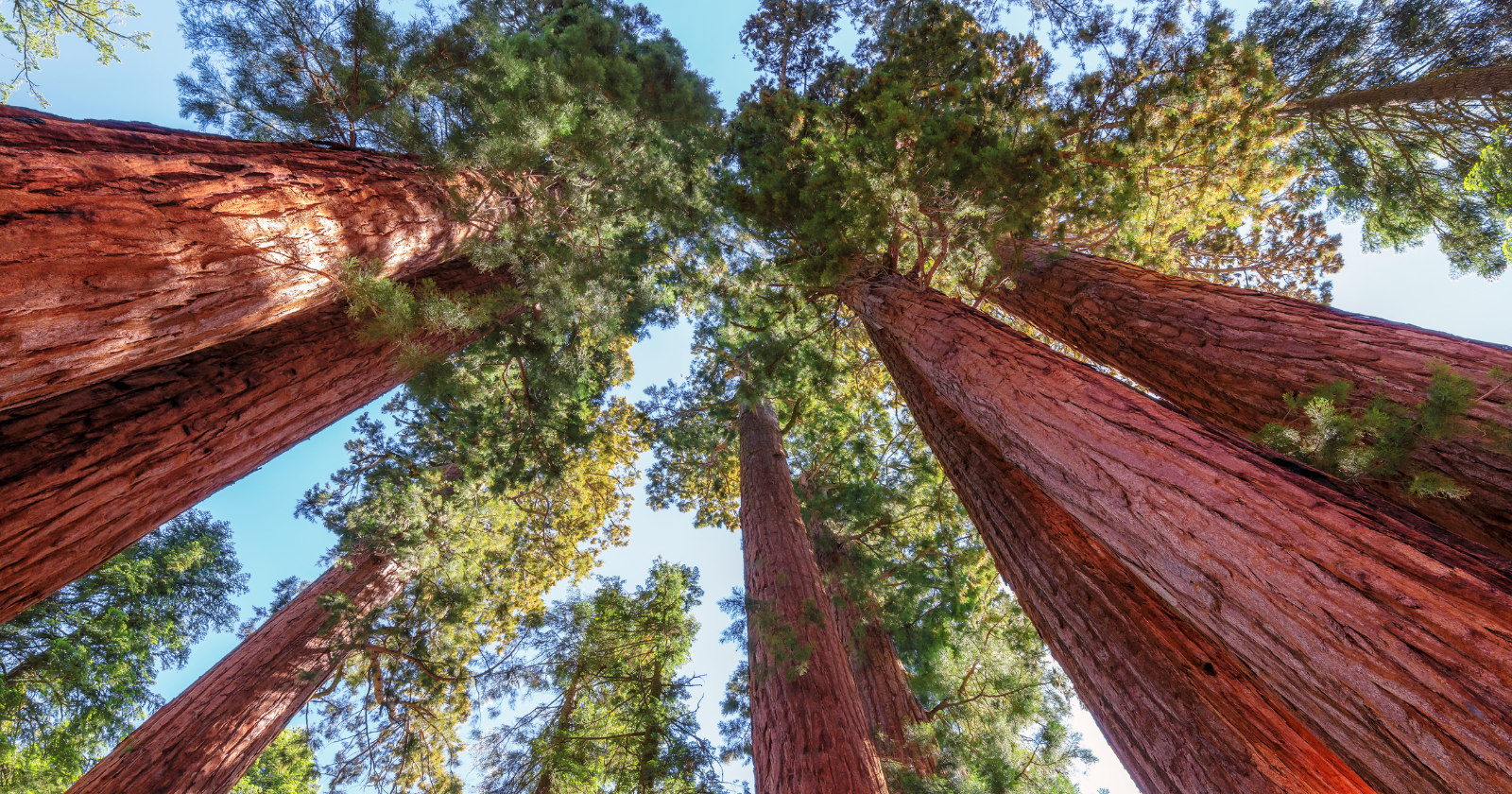
Sequoia and redwood trees alive today were already mature when the Roman Empire was at its peak — the oldest living giant sequoias are over 3,000 years old, which means they were standing in California before the Parthenon was built in Athens, before Julius Caesar was born, and before the Roman Empire even existed

In Sequoia National Park in California, a giant sequoia named the President stands 247 feet tall, carries roughly 2 billion leaves, and has been alive for about 3,200 years. It germinated as a small seed in the late twelfth century BC. At the time, the New Kingdom of Egypt was building additions to the temples at Karnak. The Trojan War, if it actually happened, was still within living memory. The first Olympic Games would not be held for another four centuries. The founding of Rome, in the traditional reckoning, would not occur for another 425 years. The Parthenon would not be built for another seven centuries. Most of recorded human history is younger than the President tree.

The President is not even the oldest known giant sequoia. According to a National Park Service history of sequoia age estimates, the Grizzly Giant in Yosemite’s Mariposa Grove was estimated at 3,800 years of age by early 20th-century researchers, and was considered by many to be the oldest of all living giant sequoias. Other historic estimates pushed individual trees as old as 4,000 years. The most carefully verified figures, based on ring counts of stumps in the early 20th century, identified a small number of giant sequoias more than 3,000 years old, with the oldest at about 3,200 years.

Why sequoias live so long

The biological mechanism behind sequoia longevity is a combination of features that together produce an organism unusually resistant to the ordinary causes of tree death. The bark of a mature giant sequoia is up to three feet thick, fibrous, and rich in tannins that deter insects and fungi. The wood itself contains compounds that resist decay, so even fallen sequoia logs remain intact for centuries. The trees are notably fire-adapted: their thick bark insulates the living cambium beneath, and surface fires that would kill most species sweep through a sequoia grove without ending the trees’ lives. In fact, periodic fires are required for sequoia reproduction. Sequoia cones release their seeds in response to the heat of a passing fire, exposing the freshly cleared mineral soil that seedlings need.

The biggest threat to a mature giant sequoia is not age but mechanical failure. The trees grow so large that root systems eventually become unable to anchor them against high winds, particularly in saturated soil after heavy storms. Most sequoias that die in old age do so by falling over rather than by senescence in any biological sense. There is no indication that giant sequoias have a maximum natural lifespan in the way most species do. They simply continue to grow, slowly, for as long as they remain upright. According to Atlas Obscura’s profile of the General Sherman tree, the largest sequoia by volume is “adding volume faster than ever, overturning previous theories that trees grow more slowly as they get bigger.”

Two species, often confused

The popular phrase “sequoia and redwood” conflates two distinct species. The giant sequoia (Sequoiadendron giganteum), confined to about 75 groves on the western slope of the Sierra Nevada in California, is the species producing the famous 3,000-year-old specimens. The coast redwood (Sequoia sempervirens), found along the Pacific coast from southern Oregon to central California, is a closely related but separate species. Coast redwoods are the tallest trees on Earth, with the current record-holder, Hyperion, measuring 380 feet, but they typically do not live as long as giant sequoias. The oldest documented coast redwoods are around 2,200 years old. The world’s oldest individual tree of any kind is neither a sequoia nor a redwood, but a bristlecone pine (Pinus longaeva) named Methuselah, growing in California’s White Mountains, with a verified age of approximately 4,855 years.

What makes the giant sequoias famous is the combination of their longevity with their sheer mass. The General Sherman tree, the largest single-stem tree in the world by volume, contains roughly 1,487 cubic metres of wood and weighs over 2,000 tons. The National Park Service’s current age estimate places it at about 2,200 years, with other published figures ranging from 2,200 to 2,700 years depending on the dating method. Earlier 20th-century estimates were considerably higher, reaching 3,500 years or more, but successive scientific revisions have brought the figure down. The uncertainty reflects the practical difficulty of dating a living tree without coring it deeply enough to count its innermost rings, which for the oldest sequoias would require boring through metres of dense, often partially-rotten heartwood.

What 3,200 years actually looks like

The historical context becomes more striking the more carefully you spell it out. A tree that germinated in 1,175 BC was already a sapling when the Phoenician alphabet was being developed. It was approximately 425 years old when Rome was founded in 753 BC by the traditional reckoning. It was approximately 728 years old when work began on the Parthenon in 447 BC. It was approximately 1,075 years old when Julius Caesar was born in 100 BC. It was approximately 1,200 years old when the Roman Empire was founded under Augustus in 27 BC. It was approximately 1,290 years old when the Roman Empire reached its territorial peak under Trajan around 117 AD.

The tree was already ancient by every meaningful measure when the Western Roman Empire fell in 476 AD. It had been alive for 2,460 years when the Norman Conquest of England occurred in 1066. It had been alive for 2,975 years when the United States declared independence in 1776. It has now lived through the entire span of recorded human history of California’s indigenous Yokuts, Tubatulabal, and Mono peoples, who lived in proximity to the giant sequoia groves for the last several thousand years and who, by oral tradition, regarded the trees with religious significance. The first widely-documented European sighting of a giant sequoia, by Augustus T. Dowd, occurred only in 1852. From the tree’s perspective, that encounter happened less than 6 percent of its life ago.

The General Sherman, the President, the Grizzly Giant, and the other named individuals of the giant sequoia groves are quietly older than nearly every cultural reference humans use to anchor the deep past. They were there when those reference points happened. They are still there now.

The post Sequoia and redwood trees alive today were already mature when the Roman Empire was at its peak — the oldest living giant sequoias are over 3,000 years old, which means they were standing in California before the Parthenon was built in Athens, before Julius Caesar was born, and before the Roman Empire even existed appeared first on Space Daily.

A single cumulus cloud — the kind that looks like a fluffy white pillow drifting across a summer sky — typically contains hundreds of tons of water by weight, suspended in the air because the water droplets are small enough that air resistance keeps them aloft against the pull of gravity

A typical fair-weather cumulus cloud, the kind that drifts across a summer sky looking like a fluffy white pillow, contains roughly half a million kilograms of water suspended in the air. Translated into more familiar units, that is about 1.1 million pounds, or 550 short tons (about 500 metric tonnes). Comparable weights include 100 adult African elephants, five adult blue whales, or rather more than a fully loaded Boeing 747. The cloud weighs all of this, and yet it does not fall. The reasons it does not fall combine three distinct physical mechanisms, working together rather than in order of importance.

The calculation is straightforward, and the United States Geological Survey’s Water Science School publishes the standard version of it. A typical cumulus cloud occupies roughly one cubic kilometre of atmosphere, or one billion cubic metres. Atmospheric scientists estimate the average liquid-water density of a cumulus cloud at about half a gram per cubic metre. Multiplying these two figures together gives 500 million grams, or 500,000 kilograms. The cloud is mostly empty air, with a small mass of water droplets distributed through a very large volume. The water is the heavy part. The air is the support.

Why a cloud floats: three contributing factors

The popular explanation for why clouds float treats them as a kind of mist of tiny droplets held aloft by air resistance against gravity. This is part of the story, but not the whole story. The full picture combines three physical effects, which together account for the cloud’s quiet suspension above the ground.

One factor, and the one most often missed in popular explanations, is buoyancy. The reason a cloud sits on top of the air below it is in some ways the same reason oil floats on water: the cloud-laden air is, on average, less dense than its surroundings, and the denser surrounding medium supports it from below. This sounds counterintuitive, because the cloud contains water and the air around it does not. The resolution is that water vapour, the gaseous form of water, is actually lighter than air. A water molecule (H₂O, molecular weight 18) is less massive than a nitrogen molecule (N₂, weight 28) or an oxygen molecule (O₂, weight 32), and a parcel of warm, moisture-laden air is therefore less dense than a parcel of cool, dry air at the same pressure. Once water has condensed into liquid droplets, the situation is more complicated, but the parent air parcel that produced the cloud is still typically warmer and less dense than the dry air around it.

A second factor is the active one. Cumulus clouds do not just hover; they are also held up by rising columns of warm air, called updrafts. According to NASA’s reference on convective cloud formation, cumulus clouds form when surface air warmed by the sun-heated ground rises, expands and cools as it ascends, and reaches the dew point at which water vapour begins to condense around airborne aerosol particles such as dust, sea salt or pollen. The condensation releases latent heat, which further warms the parcel and accelerates its rise. The result is a continuous updraft beneath and within the cloud, typically moving upward at metres per second. The water droplets are held aloft not by stillness but by motion: they are riding an active column of rising air.

The third factor is the one most often cited in popular accounts. The droplets themselves are extraordinarily small, with typical cumulus cloud droplets measuring roughly 20 micrometres in diameter, or 0.02 millimetres. A droplet of this size, falling through still air, has a terminal velocity of around 1 to 2 centimetres per second. Updrafts in even a modest cumulus cloud move air upward an order of magnitude faster than this. A droplet trying to fall at one centimetre per second through air rising at, say, two metres per second simply does not fall. It is suspended in a fluid whose net motion is upward, with only a small downward component contributed by its own weight. By comparison, a typical raindrop is about 2 millimetres across, a hundred times the diameter of a cloud droplet, and falls at roughly 9 metres per second, fast enough to fall through even strong updrafts.

What changes when it rains

The transition from a floating cloud to a raining one is a transition in droplet size. Cloud droplets grow primarily by collision and coalescence: small droplets, jostled by turbulence within the cloud, bump into and merge with their neighbours, gradually accumulating mass. A droplet that grows from 20 micrometres to 200 micrometres has increased its terminal velocity from about 1 centimetre per second to about 70 centimetres per second. A droplet that grows to 2 millimetres falls at 9 metres per second. At some point in this size progression, the falling speed exceeds the updraft speed, and the droplet begins to fall through the cloud rather than being carried along by it. The droplets that emerge from the bottom of the cloud as rain have grown roughly a thousand times in mass during their time within the cloud.

A thunderstorm cloud, technically a cumulonimbus rather than a cumulus, contains far more water than a fair-weather cumulus. A typical thunderstorm cloud can have a mass on the order of a million tons of water rather than five hundred tons, with a corresponding requirement for far more vigorous updrafts to keep it aloft. Updrafts in severe thunderstorms can exceed 30 metres per second, enough to hold hailstones the size of golf balls suspended for many minutes while they grow by accreting layer after layer of supercooled water. When the updraft finally weakens, all of that mass falls at once, which is why thunderstorms produce heavy precipitation in short bursts.

A fair-weather cumulus cloud, by contrast, is in a quiet equilibrium. It is roughly a kilometre across, contains roughly half a million kilograms of suspended water, and is held aloft by a combination of buoyancy from being warmer and less dense than its surroundings, an active updraft from the convection that produced it, and the very small terminal velocity of its constituent droplets. Take any of these three away and the cloud changes character: cool the parcel and it begins to sink; remove the updraft and it begins to settle and dissipate; let the droplets grow and it starts to rain. The cloud as it appears, suspended quietly above a summer field, is the product of three physical processes in balance.

The post A single cumulus cloud — the kind that looks like a fluffy white pillow drifting across a summer sky — typically contains hundreds of tons of water by weight, suspended in the air because the water droplets are small enough that air resistance keeps them aloft against the pull of gravity appeared first on Space Daily.

On a sunny day, the top of the Eiffel Tower slowly drifts in a small circle about six inches wide — it isn’t the wind, it’s the sun, heating one side of the iron at a time and making the whole tower lean a little away from whichever side is warmest

On a clear afternoon in Paris, the very top of the Eiffel Tower, 330 metres above the ground, is not exactly where it was at sunrise. It has moved a few centimetres to the west. By midday it has moved a few more centimetres to the south. By late afternoon it is several centimetres east of where it began. By the time the sun sets and the iron cools back to the surrounding air temperature, the top of the tower returns to its starting position. Over the course of a sunny day, the summit traces a slow, irregular curve roughly 15 centimetres in diameter, or just under six inches. The cause is not wind. Wind makes the tower sway and shudder on its own faster timescale. The cause of the slow daily circle is the sun.

According to the official Eiffel Tower website maintained by the Société d’Exploitation de la Tour Eiffel, “the sun only hits one of the 4 sides of the Tower creating an imbalance with the other 3 sides, that remain stable, thus causing the Eiffel Tower to lean. In this way, the sun’s movement over the course of a clear day can cause the top of the Tower to move in a more or less circular curve measuring approximately 15 centimetres in diameter.”

The physics, in three lines of arithmetic

The mechanism is the simplest thermal physics there is. Solids expand when they get warmer, because the atoms in them vibrate more vigorously and on average sit slightly further apart. The amount of expansion is described by the material’s coefficient of linear thermal expansion. According to a 2025 explainer in The Conversation by architecture professor Federico de Isidro Gordejuela, the puddled iron and steel components used in the Eiffel Tower have a coefficient of approximately 12 × 10⁻⁶ per degree Celsius. That figure means a one-metre iron bar grows by 12 micrometres for each degree Celsius of warming, which is roughly the width of a human hair.

The Eiffel Tower is not a one-metre bar. It is 330 metres tall after the installation of a new digital radio antenna in March 2022, which added 6 metres to the previous 324-metre height. The top of the original 1889 iron lattice structure, before any antennas, sits at 300 metres. Multiply 300 metres by 12 micrometres per metre per degree, and you get 3.6 millimetres of expansion per degree Celsius along the tower’s vertical axis. A 40-degree temperature change between a cold Paris winter and a sun-heated summer surface gives 14 centimetres of vertical expansion. The Eiffel Tower’s seasonal height range, as monitored by engineers with continuous strain-gauge readings, is between 12 and 15 centimetres, comfortably within what the simple calculation predicts.

Why the tower leans

The seasonal vertical expansion is uniform across the whole tower, because cold winters and hot summers heat all four faces about equally. The daily circular drift at the top is different. On a sunny day, the sun is in the east in the morning, the south at noon, the west in the afternoon. Each of these positions illuminates a different face of the tower’s four-sided lattice, while the other three faces remain in shade. The illuminated face heats up several degrees above the shaded faces, and that face expands more than the others. The result is that the tower bends, a few millimetres per metre of height, away from the sun.

Because the sun moves across the sky over the course of the day, the warmest face changes. The lean changes with it. In the morning, when the east face is illuminated, the top of the tower leans west. By noon, with the south face illuminated, the top leans north. In the afternoon, with the west face illuminated, the top leans east. After sunset, with no differential heating, the top returns to its starting position above the centre of the base. The trace of the top’s position over a full day is a roughly circular curve, with the irregularities reflecting variations in cloud cover and wind. The amplitude of the daily drift is about 7 centimetres in each horizontal direction, for a circle approximately 15 centimetres in diameter.

What Gustave Eiffel knew

The behaviour is not a surprise to the engineers who built the tower. Gustave Eiffel and his team, including the chief engineers Maurice Koechlin and Émile Nouguier, were well aware of thermal expansion when they designed the structure for the 1889 Exposition Universelle. Late-nineteenth-century iron-and-steel construction was already routine for railway viaducts and large bridges, and any competent engineer of the period understood that 300-metre iron structures would change shape with temperature. The tower’s design includes the lattice geometry and riveted joints that allow thermal movement to be distributed across thousands of small connections rather than concentrated in a few stressed points. The seasonal 15-centimetre rise and the daily lean are deliberately accommodated by the structure, not problems to be solved.

The same physics governs nearly every large engineered structure on Earth. The Garabit Viaduct, also designed by Eiffel and completed in 1884, is 565 metres long; the Forth Bridge in Scotland is 2.5 kilometres long; modern long-span bridges and tall buildings are all engineered with expansion joints, sliding bearings, or flexible connections to accommodate thermal movement. Railway tracks have expansion gaps welded into them at calculated intervals. The Eiffel Tower is the most visible of these examples because it is tall, slender, and isolated against the Paris sky, with its movement directly observable to anyone with a precise enough measurement system.

What you would see if you could see it

The drift is too slow to perceive in real time. A 15-centimetre circle traced over the course of a 10-hour day means the top is moving at an average speed of about half a centimetre per hour, far below the threshold of human visual detection. The Eiffel Tower has been continuously instrumented for structural monitoring since 2021, with GPS sensors, accelerometers, inclinometers, and strain gauges tracking the spire’s inclination, the deformations of its four pillars, and ambient temperature and humidity across the structure. The data shows the tower’s response to temperature, sunlight, wind, and the cycle of seasons with millimetre precision.

From the perspective of a tourist standing at the base, the tower looks as still as any building. From the perspective of the iron itself, the tower is in continuous quiet motion. The sun warms one face, that face stretches, the tower leans. The sun moves, the next face warms, the lean shifts. The structure that has dominated the Paris skyline since 1889 is, on any clear day, also a 7,300-tonne sundial, with the position of its summit telling you, within a few centimetres, where the sun is.

The post On a sunny day, the top of the Eiffel Tower slowly drifts in a small circle about six inches wide — it isn’t the wind, it’s the sun, heating one side of the iron at a time and making the whole tower lean a little away from whichever side is warmest appeared first on Space Daily.

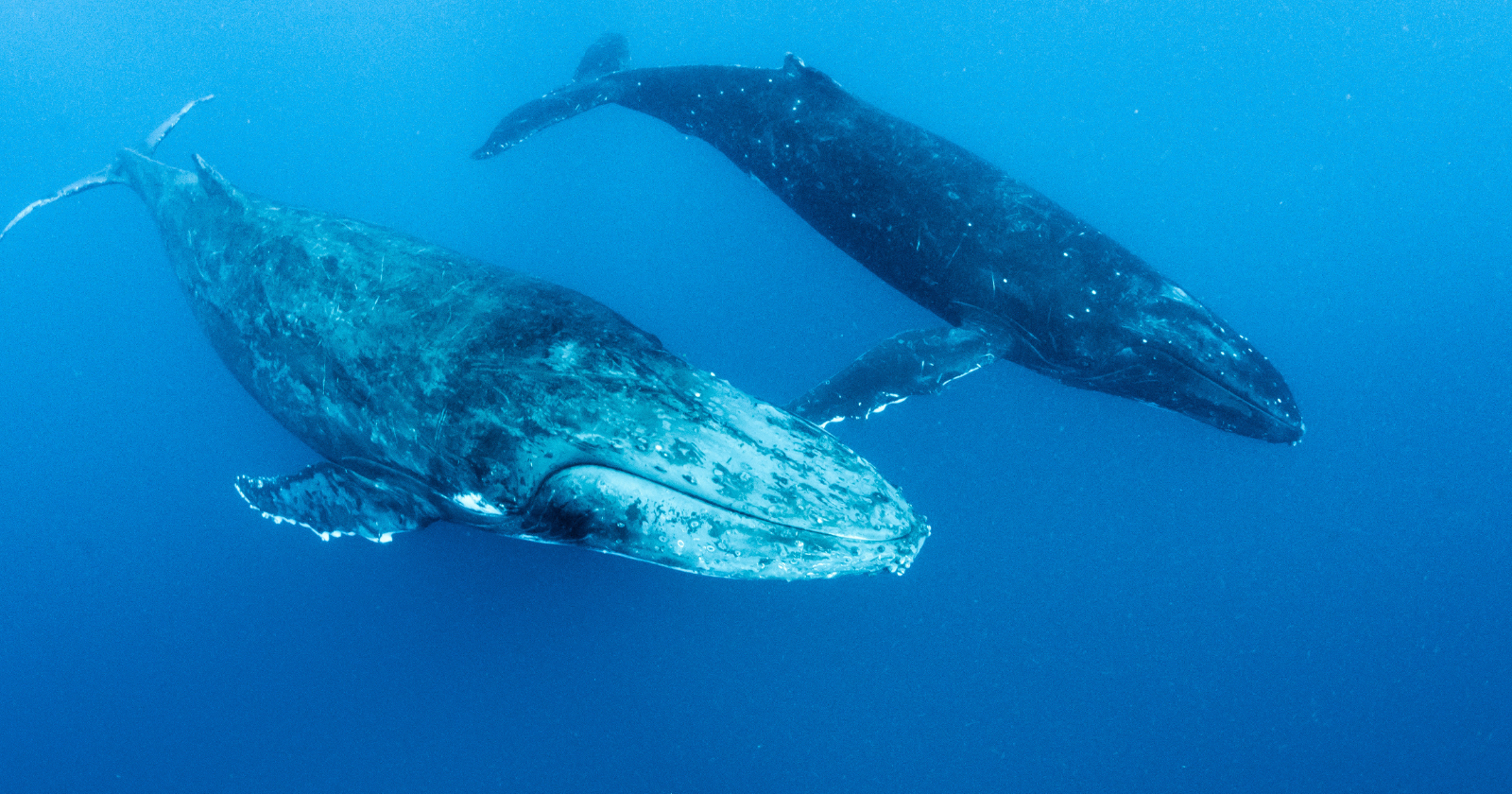
Sound travels about four times faster underwater than it does through air — which is why whale songs can travel hundreds of miles across the ocean, and why early submarine sonar operators sometimes picked up the calls of distant whales communicating from hundreds of miles away

Sound in air travels at about 343 metres per second, the figure that fighter pilots cross when they break the sound barrier. Sound in seawater travels at about 1,500 metres per second. The ratio is roughly 4.3 to 1. The reason is straightforward physics: sound waves propagate through a medium by transferring vibrational energy between adjacent molecules, and the denser and stiffer the medium, the faster that transfer happens. Water is roughly 800 times denser than air, with much smaller intermolecular distances, and it transmits acoustic energy with much less loss per metre than air does. The same whale call that would fade to nothing within a kilometre in air can carry for hundreds of kilometres through the deep ocean.

According to NOAA’s Ocean Service reference on underwater sound, the speed of sound in seawater varies between roughly 1,450 and 1,540 metres per second depending on temperature, salinity and pressure. The first reasonably accurate measurement was made in 1826 on Lake Geneva by the Swiss physicist Jean-Daniel Colladon and the French mathematician Charles-François Sturm, who used an underwater bell, a flash of gunpowder for synchronisation, and two boats positioned ten miles apart. Their figure was within a few percent of the modern measurement, despite the relatively crude instruments available.

Why whale songs cross oceans

The speed of sound in water is only part of what makes long-distance whale communication possible. The other part is the way sound bends in the ocean. Sound speed in seawater depends on temperature and pressure, and these vary with depth. Near the surface, the water is warm and the sound speed is high. Below the warm surface layer, the temperature drops sharply through the thermocline, and the sound speed drops with it. Below the thermocline, the temperature is nearly constant but pressure continues to rise, and the sound speed begins to climb again.

The result is a minimum in the sound speed at roughly 1,000 metres depth in mid-latitudes, with faster speeds both above and below. According to the Discovery of Sound in the Sea reference, an academic resource maintained by oceanographers at the University of Rhode Island and elsewhere, this minimum creates a natural waveguide. A sound wave emitted at or near 1,000 metres depth that strays upward into faster water gets bent back down. A sound wave that strays downward into faster water gets bent back up. The wave is trapped, channelled by the gradients of temperature and pressure, and propagates horizontally with almost no energy loss to absorption.

This is the SOFAR channel — Sound Fixing and Ranging — discovered toward the end of the Second World War by Maurice Ewing and Joseph Worzel at the Woods Hole Oceanographic Institution. A low-frequency sound emitted into the SOFAR channel can travel thousands of kilometres before its energy dissipates. Blue whales, fin whales and other large baleen whales produce calls below 20 hertz, on the edge of human hearing or below it, and these low-frequency calls couple efficiently into the SOFAR channel. Researchers led by Christopher Clark at Cornell University have tracked individual whales across entire ocean basins using the long-distance propagation that the SOFAR channel makes possible.

The “Jezebel Monster”

The Cold War history of underwater sound is where the popular framing of “sonar operators filtering out whale noise” comes from. Beginning in 1950, the US Navy developed a global underwater listening network called the Sound Surveillance System, or SOSUS, designed to detect Soviet submarines by their low-frequency acoustic signatures travelling through the SOFAR channel. According to the Discovery of Sound in the Sea account of SOSUS history, the system was very successful at detecting noisy diesel and nuclear Soviet submarines. It was also picking up sounds that no one initially knew how to classify.

One particularly persistent unknown source was labelled the “Jezebel Monster” by SOSUS analysts. The sounds were low-frequency, came from no known submarine, and could be heard from enormous distances. They turned out to be the calls of blue and fin whales, propagating through the SOFAR channel exactly as Soviet submarines would have been, and detected by SOSUS arrays exactly as Soviet submarines would have been. The whales were not being filtered out in the everyday sense of being a routine nuisance. They were being identified as a category of acoustic source that the Navy had not previously known to look for. Once identified, the calls became valuable rather than confusing: they confirmed that the SOFAR channel was working as predicted, and they later became the basis of the most comprehensive long-distance whale-tracking research ever conducted.

At the end of the Cold War, the Navy declassified the technical operation of SOSUS sufficiently to allow civilian researchers with security clearances to use the system. The result has been a generation of marine biology research that would have been impossible without the Cold War infrastructure. Whales communicating across thousands of kilometres of ocean are now routinely tracked by hydrophone arrays that were originally listening for Soviet ballistic-missile submarines. The same physics, the same channel, the same long-distance propagation.

How loud is loud, under the ocean

Whale calls below 20 hertz are produced at source levels of up to 188 decibels relative to one microPascal at one metre — a figure that does not directly map onto the decibel scale used for air-based sound, because the reference pressures are different, but that corresponds to one of the loudest sustained biological sounds on Earth. A blue whale’s call at source can be heard at a level above background ocean noise for hundreds of kilometres in unmodified ocean conditions. The 2012 paper by Denise Risch and colleagues in PLOS One documented the inverse case: humpback whales in the Stellwagen Bank National Marine Sanctuary off Cape Cod measurably reduced their singing during an Ocean Acoustic Waveguide Remote Sensing experiment 200 kilometres away. The whales could detect the experiment, and modify their behaviour in response, from a distance comparable to the route between London and Paris.

The modern problem is anthropogenic noise. Shipping traffic, oil-and-gas exploration, military sonar, and underwater construction now produce so much low-frequency noise that the effective range over which whales can communicate with each other has shrunk substantially. Christopher Clark has estimated that the acoustic environment in which whales operate has been reduced to a small fraction of what it was a century ago, because human noise occupies the same frequency band as whale calls. The physics of underwater sound has not changed. What has changed is the level of competing noise sharing the channel. The whales are still singing. The ocean is just no longer quiet enough for the songs to travel as far as they once did.

The post Sound travels about four times faster underwater than it does through air — which is why whale songs can travel hundreds of miles across the ocean, and why early submarine sonar operators sometimes picked up the calls of distant whales communicating from hundreds of miles away appeared first on Space Daily.

Oxford University is older than the Aztec Empire — teaching at Oxford began in 1096, while the Aztec capital Tenochtitlán was founded in 1325, which means Oxford was already more than two centuries old by the time the civilization that built one of the most sophisticated cities of the medieval world had even begun

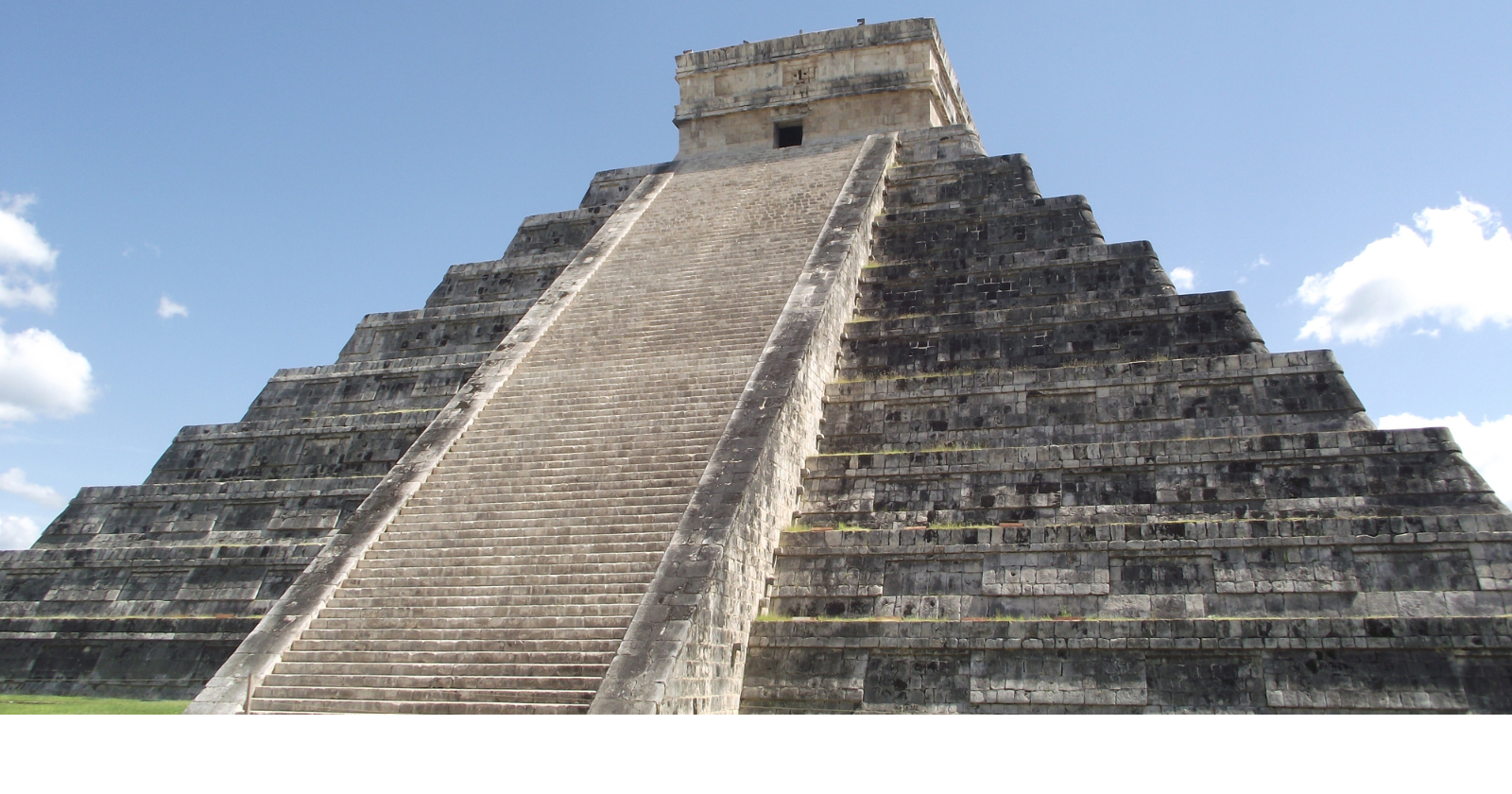
In 1096, scholars were already teaching in the streets of Oxford, in the kingdom of William II, the son of William the Conqueror. England had been under Norman rule for thirty years, the Domesday Book had been compiled ten years earlier, and the First Crusade had just been declared by Pope Urban II at Clermont. Across the Atlantic, in the central highlands of what is now Mexico, the Aztec people would not arrive in the Valley of Mexico for another two hundred years. They would not see the omen of the eagle, the cactus and the snake that, according to tradition, told them where to build their capital, until 1325. By the time the first stones of Tenochtitlán were laid on a small island in Lake Texcoco, Oxford had been a centre of teaching for 229 years.

The comparison is one of those facts that everyone half-remembers as plausibly true and few people stop to verify. A 2024 Smithsonian Magazine piece by Meilan Solly documented the contrast in some detail. The dates check out. The cultural intuition about which institution feels older does not.

Oxford does not actually have a founding date

The 1096 date for Oxford is the earliest documented evidence of teaching activity in the town, not the formal foundation of the university. According to Oxford’s own history page, “there is no clear date of foundation but teaching existed at Oxford in some form in 1096.” The university grew rapidly from 1167, when Henry II banned English students from attending the University of Paris during his ongoing feud with Thomas Becket, sending a generation of English scholars home to study in Oxford instead. By 1188, the historian and royal clerk Gerald of Wales was giving public readings to assembled Oxford dons. By around 1190, the first known overseas student, Emo of Friesland, had arrived. By 1248, Henry III had issued the university a royal charter. By 1264, three original colleges — University, Balliol and Merton — were operating as residential institutions for students. The institution emerged over the course of a century and a half, not in any single founding moment.

The other claimants for “oldest university” are older still. The University of Bologna, generally regarded as the oldest in continuous operation, dates to 1088. The University of Paris emerged around 1150. These three institutions, together with a small handful of others, laid the foundations for the European university system that the rest of the world eventually adopted. Oxford is the second-oldest university in continuous operation in the world, and the oldest in the English-speaking world.

Tenochtitlán: the city founded on an omen

The Aztec people, who called themselves the Mexica, arrived in the Valley of Mexico in the early 14th century after a long migration from a homeland in the northwest of Mexico called Aztlán. According to Britannica’s account of the city, the founding of Tenochtitlán in 1325 followed a long pilgrimage during which the Mexica’s patron god Huitzilopochtli instructed them to settle wherever they saw an eagle perched on a prickly pear cactus, eating a snake. They saw the omen on a small island in Lake Texcoco, in the Valley of Mexico. The image is preserved on the modern Mexican flag.

The city the Mexica built on that island grew rapidly. Originally confined to two small islands, Tenochtitlán was extended through the construction of artificial islands, called chinampas, until the city covered more than five square miles of the lake. It was connected to the mainland by causeways, supplied with fresh water by aqueducts, and traversed by a network of canals. Estimates of its peak population vary considerably. The Britannica entry gives a figure of about 400,000 people in 1519, “the largest residential concentration in Mesoamerican history” and larger than any contemporary European city, including Paris, London, or Rome. Other scholarly sources give more conservative figures in the range of 200,000 to 300,000. By any measure, it was among the most populous cities in the world at the time of Spanish contact.

The Aztec Empire as a political entity dates not from the founding of the city but from the formation of the Triple Alliance in 1428, when Tenochtitlán joined with the neighbouring cities of Texcoco and Tlacopán to dominate central Mexico. By that point, Oxford had been operating as a university for over three centuries, had survived multiple plague outbreaks, had produced Roger Bacon and John Wycliffe, and had been teaching the Latin classics to clerics, lawyers and merchants’ sons for so long that the institution was already considered ancient by its own English contemporaries.

What the comparison actually changes

The intuition that gets disrupted is not about Oxford. Most people are aware that the university is old. The intuition that gets disrupted is about the Aztecs. Aztec civilization tends to feel anchored in the distant past, in the same general mental category as Egyptian pharaohs, Mesopotamian temples, or ancient Greece. The actual historical position of Tenochtitlán is much closer to the modern present. The city was founded 229 years after Oxford began teaching, conquered by Cortés in 1521, and razed within the lifetime of people who were born in the same year as William Shakespeare’s grandparents. Aztec civilization, in the sense of Tenochtitlán-centered Mexica society, existed for less than two hundred years before its destruction. The empire proper, dating from the Triple Alliance, existed for less than a century.

Oxford has, by contrast, existed continuously through every European event from the Crusades through the Reformation, the Industrial Revolution, two world wars, and the digital age. The same town, the same general institution, the same broad teaching tradition has been operating without interruption for over 900 years. The Aztecs were latecomers to history. Oxford was already producing graduates when the first Mexica arrived in the Valley of Mexico, and was already a chartered university when the first stones of the Templo Mayor were laid. The mental image of which civilization belongs to the deeper past, in this comparison, is almost exactly reversed.

The post Oxford University is older than the Aztec Empire — teaching at Oxford began in 1096, while the Aztec capital Tenochtitlán was founded in 1325, which means Oxford was already more than two centuries old by the time the civilization that built one of the most sophisticated cities of the medieval world had even begun appeared first on Space Daily.

We talk about anxiety as if it starts in the mind — but for some people, the eyes may be the first place it shows up

1 June 2026 at 21:00

The first sign was never a thought.

It was visual. Something in the way the room looked. The walls would seem slightly farther away than they had been a moment before. Colours stayed, shapes stayed, the furniture stayed in exactly the right places — and yet something about the scene lost a quality I can only describe as immediacy. The world was still there. It just stopped feeling available.

This would happen before I felt afraid. Before I could name what was coming. Before any thought had formed that I could call anxious. Something changed in the way I was receiving the world through my eyes, and only later — sometimes much later — would the rest of the experience catch up.

I spent years not knowing what to call this.

I tried “dizzy,” which wasn’t right. I tried “tired,” which was too soft. I tried “dissociating,” which felt too clinical for something that happened in quiet moments, not only in crises. What I was looking for was a word for the way the world could go slightly flat. Not dark. Not frightening in any obvious way. Just — less textured. Less arrived. As if someone had turned the resolution of reality down just slightly, and I was the only one in the room who noticed.

The world went flat before I had words for it

What I was experiencing had a name. Derealization — the sense that the external world has become unreal, distant, or visually altered — is a well-documented symptom that occurs frequently in anxiety and panic, and in the broader condition known as depersonalization-derealization disorder. It affects a surprising number of people, though most, like me, spend a long time describing it badly before they discover it has a name at all.

What I did not expect, once I found the name, was to realize how early in the anxiety sequence it was arriving for me.

Most descriptions of anxiety lead with thought. The worry, the spiral, the catastrophizing. The racing mind. And for many people that may be accurate — the cognitive element comes first, and the body follows. But for me, the sequence ran differently. The visual alteration came before the worry. My eyes created distance before my mind could explain why. By the time I was consciously afraid, I had already been looking at the world through a kind of filter for several minutes. Sometimes longer.

The world went flat before I had words for what was happening.

Once I recognized this, I started paying attention to it differently. Not as a malfunction, but as a signal. Something my system was doing before it had time to speak.

Before anxiety had language, it had a way of altering sight

The neuroscience here is not fully settled, but the broad shape of it makes sense.

The brain does not passively receive visual information and then decide what it means. It actively constructs perception, using prior experience, expectation, and internal state to shape what we experience as seeing. When the nervous system is in a state of hyperarousal — even before that state is consciously registered — the way the brain builds the visual world can shift. Attention narrows. Certain details flatten. The sense of depth and richness that makes the world feel real can diminish, because the system is already doing something else with its resources.

The amygdala, which processes emotional and threat-relevant stimuli, is thought to receive threat-relevant signals very rapidly — in some models, before the slower analytical pathways that give us conscious perception have fully resolved what we’re seeing. This means the body’s threat response can activate before the thinking mind has noticed anything. The alarm goes off, the nervous system reorganizes, and the first sign you have — if you are paying attention to your body rather than your thoughts — might be something as subtle as the way the room looks.

That was my experience. I didn’t first think anxiety. I saw it.

The first thing anxiety stole, reliably, was the texture of the world.

Learning to read the signal

For years, the visual shift frightened me in its own right. The unreality was unsettling before any worry arrived to explain it. There were moments when I genuinely questioned whether I was losing something — my grip on reality, my trust in my own perception, something I couldn’t name. The derealization felt like a symptom without a cause, which is one of the lonelier things you can experience.

It is also disorienting in a specific way: when perception itself becomes the thing you can’t trust, you lose the ground you’d normally stand on to figure out what is wrong. You can’t think your way out of a problem that is currently happening in your thinking. You can’t look clearly at something when it is your looking that has shifted.

What changed was noticing the pattern.

Not during the episode, but afterward. Tracing the sequence: where had I been, what had I been carrying before I noticed the flatness, what came before the flatness itself. And what I found, slowly, was that the visual shift was not random. It was a leading indicator. Something had already been building in my nervous system — a stress response, a low-grade overwhelm I hadn’t consciously registered — and my eyes were the first thing that showed it. Before my thoughts caught up. Before my chest tightened. Before I would have said, if anyone had asked, that anything was wrong.

My eyes were filtering the world before I knew I needed a filter.

Maybe it was never malfunction

I am careful about what I claim here. I am not saying anxiety lives in the eyes, or that this is how it works for everyone. What I am saying is something smaller and, to me, more useful: for some people, the first felt experience of anxiety may be visual. Perceptual. Something that shows up in how the world looks before it shows up in what the mind thinks.

And if that is true — even sometimes, even for some people — then it changes where you learn to look for the early signs.

I used to search for the anxious thought. The belief I could challenge, the worry I could reframe, the cognitive distortion I could name and dispute. These have their place. But I kept arriving at them too late, after the nervous system had already been organizing itself around something I hadn’t consciously noticed. I was looking for the fire after the smoke had already been there for a while.

Now I know to check in with what I’m seeing. Whether the room feels arrived. Whether the world has its texture. Whether reality is still emotionally available, or whether it has quietly started to step back — a little flatter, a little more distant, a little less like itself — without explanation.

Those were never signs that something was wrong with my eyes.

They were signs that something in me was trying to protect itself before I understood what from. The nervous system, doing what nervous systems do — adjusting the aperture, reducing the input, creating a small buffer between me and a world it had decided, for some reason, was temporarily too much.

That is not a disorder. That is a system trying to survive.

It just took me a long time to recognize the signal for what it was, instead of fearing it as one more thing that was wrong.

This article reflects personal experience and is for informational purposes only. It is not a substitute for professional mental health advice. If you are experiencing symptoms of derealization or anxiety, consider speaking with a qualified professional.

The post We talk about anxiety as if it starts in the mind — but for some people, the eyes may be the first place it shows up appeared first on Space Daily.

Thought of the day from Stoic philosopher Marcus Aurelius: “Each of us lives only now, this brief instant. The rest has been lived already, or is impossible to see.”

1 June 2026 at 19:36

The kettle is doing its thing. Light is coming in sideways across the kichen table, the way it does early, catching the steam coming off the cup. Outside there’s a motorbike, then another, then the muffled start of the street waking up.

And I am not in any of it.

I am three emails ahead, rehearsing a sentence I’ll say later, or mulling over something that happened last week and cannot be changed. The coffee goes cold. The light moves on. I drink it lukewarm and barely taste it. This is the scene most mornings, if I am being honest.

A quick note before I go further: I’m not a psychologist or a therapist, and this is a piece of reading and reflection, not advice. The one study I lean on below is observational, which means it describes a pattern across a lot of people, not a rule about you or any single morning of your life.

The line that keeps pulling me back to that cold cup is from Marcus Aurelius, the Roman emperor who wrote a private notebook to himself that we now call Meditations. In Gregory Hays’s translation, Book 3.10, he writes: “Each of us lives only now, this brief instant. The rest has been lived already, or is impossible to see.” Just before it, he tells himself: “Forget everything else. Keep hold of this alone and remember it.”

Read it slowly and it’s almost a piece of accounting. The past is spent, gone, unrecoverable. The future is not yet here and most of it you’ll never see anyway. The only thing you actually have, the only ground you can stand on, is this instant. He isn’t being mystical about it. 

This is a philosophical claim about how to hold your attention, not a settled scientific fact about how consciousness works but as a way to frame a morning, I find it hard to argue with. The cold coffee was real. The email I was rehearsing wasn’t, not yet. I traded the thing that was happening for two things that weren’t.

I read Meditations properly a few years ago, during a stretch of failure and confusion when I was rooting around for something solid to hold. What struck me most wasn’t the advice. It was the continuity. Here is a man who ran an empire, and his private worries are my not unlike my worries. Reputation. Mortality. What other people think. Whether the work matters. Two thousand years, and the furniture of the human head has barely been rearranged.

Knowing the present is all you have, and actually living there, are two completely different skills. The mind has its own gravity, pulling backward and forward, almost never down into the now.

There’s one study I keep coming back to on this. In 2010, the Harvard psychologists Matthew Killingsworth and Daniel Gilbert built an iPhone app that pinged 2,250 volunteers at random moments and asked what they were doing, how they felt, and whether their minds were on the task in front of them. The volunteers reported their minds wandering 46.9 percent of the time. Nearly half of waking life, somewhere other than here. Killingsworth’s summary was that “our mental lives are pervaded, to a remarkable degree, by the nonpresent.”

This is one study, not settled consensus, and the effect it found was modest rather than enormous. What made it stick with me is what it suggested about mood. Killingsworth has said that how often our minds leave the present, and where they go, predicted happiness better than the activity people were actually doing. Drifting seems to drag mood down. The phrase the researchers used, which is a little too neat for a single study but lodges anyway, was “a wandering mind is an unhappy mind.”

I am bad at this. I have not solved anything. But a few small things have nudged me, on good days, closer to enjoying the cup of coffee and further from the imaginary email.

The first is novelty, and I learned it by accident. My first year living in Vietnam felt enormous. The city, the noise on the streets, food I’d never eaten, a language I couldn’t read, the person I was slowly turning into. In retrospect that year is longer and richer than most years since. Nothing was automatic, so nothing got skipped. The brain can’t autopilot through what it doesn’t recognize yet. I can’t move to a new country every year, but I can walk a route I don’t know, and it pulls me back into the present the way a comfortable routine never does.

The second is duller and more reliable: noticing one physical thing on purpose. The heat of the cup. The actual taste of the first mouthful. It sounds almost too small to count, and it isn’t a cure for a wandering mind. It’s just a handle. A way to land for a second before the gravity takes over again.

The third is lowering the bar. Marcus wasn’t writing a finished man’s manual. He was talking himself into it, the same exhortation over and over, because he kept failing at it too. That’s the part I find oddly comforting. The point was never to live perfectly in the present. It’s to come back, again, when you notice you’ve drifted.

If any of this is landing closer to home than it is interesting, and the pull away from the present feels less like a habit and more like something heavier, a qualified counsellor or therapist is worth talking to.

Now read this next: Psychology suggests people who browse social media but never post or comment aren’t passive — they’ve simply opted out of the performance while retaining access to the information, which is a sign of quiet self-awareness

The post Thought of the day from Stoic philosopher Marcus Aurelius: “Each of us lives only now, this brief instant. The rest has been lived already, or is impossible to see.” appeared first on Space Daily.

Cats can’t taste sweetness — evolution turned off the relevant gene in their distant ancestors when they became obligate carnivores, and without working sweet receptors, a cat is as indifferent to sugar as a person is to ultraviolet light

Cats are notoriously indifferent to sweet things. Pour syrup near a dog and the dog will investigate. Pour syrup near a cat and the cat will ignore it. Veterinarians and cat-food companies have long noted that cats show no preference for sugar in feeding tests, no matter how much sugar is presented. The reason is not a behavioural quirk or a learned aversion. It is genetic, and it traces back tens of millions of years to the point at which the ancestors of modern cats became obligate carnivores, eating only meat. The gene that produces a working sweet receptor on the tongue, called Tas1r2, has been broken in cats for so long that it no longer functions at all. A cat looking at a sugar cube is in the same sensory position as a human looking at an ultraviolet light source: the signal exists, but the receptor that would detect it does not.

What the genetic evidence shows

The molecular discovery came in 2005 from a team led by Xia Li and Joseph Brand at the Monell Chemical Senses Center in Philadelphia, in collaboration with colleagues at the Waltham Centre for Pet Nutrition in the United Kingdom. Their paper in PLOS Genetics, titled “Pseudogenization of a Sweet-Receptor Gene Accounts for Cats’ Indifference toward Sugar,” established that the cat sweet receptor is not just inefficient. It is, at the genetic level, non-functional.

The mammalian sweet receptor is formed by two protein subunits, called T1R2 and T1R3, encoded by the genes Tas1r2 and Tas1r3. Both have to be present and functional for the receptor to assemble correctly on the taste cell membrane. The Monell team sequenced both genes in domestic cats, tigers, and cheetahs, comparing them with the equivalent sequences in dogs, mice, rats, and humans. Tas1r3 was intact in cats. Tas1r2 was not. The cat version of the gene carried a 247-base-pair deletion in one of its critical exons, plus additional disabling mutations, all of which prevented the gene from being translated into a working protein. The researchers further found no detectable Tas1r2 messenger RNA in cat taste tissue, no Tas1r2 protein in cat taste buds, and no evidence that the gene was being expressed at all. In every cat species tested, the gene was the same kind of broken in roughly the same place. It had become a “pseudogene”: a relic of an ancestral working gene, accumulating mutations because it no longer faced selective pressure to remain intact.

Why this happened

The evolutionary logic is straightforward. Sweet receptors exist in most mammals because their ancestors ate sugar-rich plant material at some point in their evolutionary history. Detecting sweetness was useful because sweetness in nature is a reliable proxy for accessible carbohydrate, an important food source for animals that eat plants or mixed diets. For an obligate carnivore that consumes only animal tissue, sweetness is irrelevant. Meat contains very little carbohydrate. A receptor that detected sweetness in such an animal would be metabolically expensive to maintain without conferring any survival advantage. Mutations that disabled the receptor would not be selected against, and over enough generations, random mutations would accumulate until the gene was non-functional.

This is precisely what appears to have happened in the felid lineage. The pseudogenization of Tas1r2 in cats is estimated to have occurred some tens of millions of years ago, well before the divergence of the modern cat species. Every member of the cat family Felidae, from the smallest domestic tabby to the largest Siberian tiger, shares the same broken gene.

Not unique to cats

The cat finding turned out to be the first identified case of what is now understood to be a widespread phenomenon across obligate carnivores. In 2012, the Monell-led group, working with colleagues at the University of Zurich, published a follow-up paper in PNAS titled “Major taste loss in carnivorous mammals.” The team sequenced Tas1r2 in 12 species from the order Carnivora, looking for the same kind of pseudogenization. Seven of those species, all exclusive meat eaters, had also independently lost functional Tas1r2.

The animals affected included the California sea lion, the southern fur seal, the Pacific harbor seal, the Asian small-clawed otter, the spotted hyena, the fossa (Madagascar’s largest carnivore), and the banded linsang. Crucially, the disabling mutations in each of these species occurred in different places within the Tas1r2 gene, indicating that the losses happened independently in each lineage, not via inheritance from a common ancestor. The same evolutionary pressure that turned off the gene in cats turned it off, separately, in at least seven other carnivorous lineages over the same broad timeframe. Behavioural testing of two of the genotyped species — the Asian small-clawed otter (broken Tas1r2) and the spectacled bear (intact Tas1r2, and predominantly herbivorous despite its order) — confirmed the pattern. The otter showed no preference for sweet compounds. The bear preferred sugars and even some non-caloric sweeteners.

The pattern across these species, summarised in a 2015 review in the journal Flavour co-authored by some of the same researchers, suggests that the loss of sweet taste is a general feature of mammalian carnivory rather than a quirk of cats specifically. Wherever a lineage of mammals has committed strictly to meat eating for long enough, the sweet receptor has tended to disappear.

What cats can still taste

Cats are not generally taste-impaired. They retain functional receptors for bitter, sour, salty, and umami tastes, and a 2015 PLOS One study identified at least seven functional bitter-taste receptor genes in domestic cats, with response profiles that overlap considerably with those of humans. The umami receptor, which detects the amino acids characteristic of protein-rich foods, is particularly relevant to cat behaviour: it is the receptor that allows a cat to distinguish meat from non-meat, and it is presumed to be doing a lot of the heavy lifting in a cat’s sensory evaluation of food. What cats lack is specifically the modality that would allow them to perceive sugar.

The implications for cat feeding are practical. Sweet ingredients in cat food, such as the high-fructose corn syrup or sucrose sometimes added to commercial products, are not adding palatability from the cat’s perspective. Cats select food based on protein content, fat content, amino acid profile, and texture, not on sweetness. Owners who notice their cat licking ice cream or showing interest in a bowl of cereal are usually witnessing a response to the fat or protein content, not the sugar. The sugar is, to the cat, sensory noise. The signal it carries to a human tongue is, for a feline, simply absent.

The post Cats can’t taste sweetness — evolution turned off the relevant gene in their distant ancestors when they became obligate carnivores, and without working sweet receptors, a cat is as indifferent to sugar as a person is to ultraviolet light appeared first on Space Daily.

In a 1999 experiment, people were asked to watch a short video and count how many times a basketball was passed. Around half of them completely failed to notice a person in a gorilla suit stroll into the middle of the scene 

1 June 2026 at 15:30

In 1999, psychologists showed people a short video of a basketball being passed around, asked them to count the passes, and then watched as about half of them failed to see a person in a gorilla suit walk straight into the middle of the scene. 

Not a subtle gorilla. Not a gorilla tucked away in a corner. A person in a full gorilla suit, dead center. And roughly one in two viewers, eyes open and pointed at the screen, simply did not see it.

Before going further, a small note. I am not a psychologist or a neuroscientist, and this is one person reading the research and reflecting on it, not advice about your attention or your mind. The studies here are findings from particular groups of people, not laws about how every individual works.

What Simons and Chabris found

The experiment belongs to Daniel Simons and Christopher Chabris, who published it under the title “Gorillas in our midst.” Two teams (mostly students), one in white shirts and one in black, pass basketballs around. You are told to count the passes made by the white team. While you are busy counting, the gorilla strolls in.

The detail that has always stuck with me is not just the missing. It is the certainty. People are sure they would have caught it. As Simons has put it, “What’s interesting is not just that people miss things, but that people are convinced that they would see it.” Tell someone about the experiment and they nod along, quietly confident they are in the half that notices. Most of us are not as immune as we feel.

The name for this is inattentional blindness, the failure to perceive something fully visible because your attention is committed elsewhere. The gorilla is right there. The photons are hitting your retina. But seeing, it turns out, is not the same as looking. Simons argues the harder conclusion is the one worth sitting with. He told LiveScience: “Although people do still try to rationalize why they missed the gorilla, it’s hard to explain such a failure of awareness without confronting the possibility that we are aware of far less of our world than we think.”

That last phrase is his interpretation, not a settled fact. But it lands.

Why a working brain misses a gorilla

The reflex is to call this a failure. A glitch. Something a sharper, more present person would not do. I do not think that is right. The brain is not broken when it misses the gorilla. It is doing exactly what attention is built to do, which is to choose.

You cannot take in everything. The world offers far more than any mind can hold at once, so attention works by selection, which means it works by exclusion. Counting passes is the task you were given, and your brain quietly drops everything that does not serve it. The gorilla is not the task. So the gorilla is gone.

What makes this hard to dismiss as a quirk of bored undergraduates is that it holds up in people whose entire job is looking carefully. In 2013, the attention researcher Trafton Drew and his colleagues inserted a small image of a gorilla into lung CT scans and asked radiologists to search for nodules. Most missed the gorilla, even though eye-tracking showed they had looked right at it. As the researchers   put it, “When engaged in a demanding task, attention can act like a set of blinders, making it possible for salient stimuli to pass unnoticed right in front of our eyes.”

This is one study with a small sample, not the final word on expertise. But Drew’s explanation of the mechanism is the part I keep returning to. The radiologists, he told NPR, “look right at it, but because they’re not looking for a gorilla, they don’t see that it’s a gorilla.” Expertise did not protect them. In a way, it made the blinders narrower.

The gorillas in an ordinary week

I went looking for the milk last week and could not find it. Opened the fridge, looked for about four seconds, concluded we had run out, and closed the door. My wife found it thirty seconds later, sitting on the second shelf, exactly where it always lives. I had looked directly at it. I had not seen it because we usually get a carton, and what was in front of me was a bottle. The bottle was not in my search pattern, so my brain filed it under absent.

It is such a small and stupid example that I almost did not include it in this piece but I think the small examples are the ones worth paying attention to, because they catch you without your defences up. You cannot tell yourself you were stressed or overloaded. You were just a person looking for milk, and you missed it.

The bigger version of this is what happens outside. I walk a lot, between cafes mostly, or just to clear my head between things. And I have noticed, over a long time of walking, that what I see on any given day is very heavily shaped by what I am already carrying. On the days I am working through a problem I walk through the world like a person watching television with the sound off. There are streets and buildings and other people, and they register at some level, but they do not really arrive. I have walked past things I later could not describe at all.

The days I am not carrying anything in particular are different. A tree I must have passed four hundred times suddenly has a detail I have never clocked. The light on a wet footpath does something I cannot explain. A bird is doing something faintly ridiculous on a bin. None of this is revelation. But it is there, continuously there, and it only shows up when I am not already looking for something else.

I think this is the version of inattentional blindness that costs the most and gets talked about the least: the ordinary, ambient failure to see the things that are not in your task stack. Not a gorilla in a lab video. Just the day, going past.

Someone you speak to every week is struggling, and you do not see it. Not because you are callous, and not because they are hiding it especially well, but because you are looking at them through whatever frame you already have. You have a model of this person — fine, capable, the one who sorts things out — and so when you look at them you see the model and not quite the person. The gorilla is there. Your eyes are open. The frame is doing the work.

I have been on both sides of this, missed and misser, and I am not sure which one leaves the stranger feeling. Missing someone feels, in retrospect, like something that happened behind your back. You were not ignoring them. You were simply not looking for what was actually there.

Attention is a trade, not a flaw

It would be easy to read all this as a story about how oblivious we are, and to leave a little ashamed of our own narrow eyes. I do not think that is the useful reading. The gorilla experiment is not proof that we are stupid. It is proof that attention costs something, and that the cost is always paid in everything you are not attending to.

Every time you lock onto one thing, you are quietly agreeing not to see a hundred others. That is not a malfunction. That is the deal. The only conclusion I can find, after sitting with this for a while, is a small and slightly humbling one. Since I cannot see everything, it is worth occasionally asking what I have decided not to look at, and whether I picked the right thing to count.

The gorilla is almost always somewhere in the frame. The question is never whether you are missing something. You are. The question is whether the thing you chose to watch was worth the things you didn’t.

The post In a 1999 experiment, people were asked to watch a short video and count how many times a basketball was passed. Around half of them completely failed to notice a person in a gorilla suit stroll into the middle of the scene  appeared first on Space Daily.

❌