Login
Login
Another Way Browsers Can Spy on You: Listening to Your Hard Drive
29 May 2026 at 14:25
 Researchers show a browser attack that can infer open sites and apps.
 Researchers show a browser attack that can infer open sites and apps.
In the rapidly evolving domain of subsurface reservoir engineering, a groundbreaking study has emerged, promising to revolutionize how pressure transients are analyzed in complex geological settings. The recent research by Abdollahfard, Hamzei, Shokoohi, and their colleagues introduces a novel hybrid methodology that synergizes deep learning techniques with an advanced data assimilation process known as Ensemble Smoother with Multiple Data Assimilation (ES-MDA) to invert pressure transient data specifically in radial composite reservoirs. These reservoirs, characterized by varying petrophysical properties across their radius, pose significant challenges for conventional analysis methods, often leading to inaccurate estimates of reservoir properties and consequently inefficient resource extraction strategies.
At the heart of this innovative approach lies the integration of deep neural networks, which excel at identifying non-linear patterns in vast and complex datasets, with the robust statistical framework offered by ES-MDA, designed to iteratively update model parameters by assimilating dynamic pressure data over multiple stages. This hybrid model addresses the inherent uncertainties and heterogeneities present in composite reservoirs, allowing for more precise inversion results. The pressure transient inversion process essentially aims to decode the subsurface characteristics from pressure measurements taken during reservoir testing, which is crucial for well performance analysis, reservoir characterization, and planning enhanced recovery methods.
The research highlights how traditional inversion methods often suffer from limitations such as convergence to local minima, sensitivity to initial guesses, and inadequate representation of reservoir heterogeneities. By embedding deep learning architectures into the inversion workflow, the authors have effectively circumvented these bottlenecks. They trained deep networks on synthetic datasets that mirror the complex physics of pressure propagation in radial composite reservoirs, enabling the model to learn intricate relationships between observed pressure transients and underlying reservoir parameters like permeability, skin factors, and fluid properties. The ES-MDA component then refines these predictions by sequentially assimilating actual field data, refining reservoir models progressively without the pitfalls of overfitting.
One of the standout aspects of this methodology is its adaptability to real-time data acquisition during well testing, offering operators a dynamic tool that evolves its predictions as new pressure measurements become available. This contrasts sharply with static models that rely solely on pre-acquired data and offer limited responsiveness to changing reservoir conditions. The ability to continuously update parameter estimations ensures that development decisions, such as well placement and stimulation design, can be optimized promptly, maximizing hydrocarbon recovery while minimizing operational costs.
Further technical scrutiny reveals that the team meticulously designed the deep learning model architecture to balance complexity with generalizability. They employed convolutional neural network layers to capture spatial dependencies of reservoir properties and recurrent units to handle temporal sequences of pressure data. This combination enabled the model to effectively assimilate both spatial heterogeneities and temporal dynamics inherent in pressure transient responses, a feat rarely achieved with conventional algorithms. The training phase leveraged an extensive suite of simulated data scenarios, ensuring robustness against noise, data sparsity, and variations in reservoir conditions.
Another profound benefit of the hybrid deep learning and ES-MDA framework is its inherent uncertainty quantification capability. The Bayesian nature of ES-MDA facilitates probabilistic interpretations of reservoir parameters, allowing engineers to gauge the confidence level of inversion outcomes. Such probabilistic frameworks are critical in decision-making processes, where understanding the risk associated with parameter uncertainty can influence investments in field development projects. The researchers demonstrated that their approach effectively captured posterior distributions of reservoir parameters, highlighting regions of high uncertainty and guiding future data acquisition efforts.
The implications of this research extend beyond pressure transient inversion. The hybrid framework can potentially be adapted to other subsurface monitoring applications, such as seismic inversion or electromagnetic surveys, where interpreting complex, noisy data remains a pervasive challenge. The integration of machine learning with established data assimilation techniques presents a powerful paradigm shift, promoting more intelligent and adaptive reservoir management strategies.
Moreover, the scalability of this approach is particularly relevant in the era of digital oilfield technologies, where continuous data streams from sensor networks generate vast quantities of real-time measurements. The computational efficiency achieved through their hybrid model facilitates near real-time processing, which is paramount for rapid decision-making in operations. This confluence of artificial intelligence with traditional reservoir engineering augments the capabilities of human experts, empowering them with sharper, data-driven insights.
Environmental sustainability also stands to benefit from advances such as this. More precise reservoir characterization enables optimized recovery pathways that minimize unnecessary drilling and reduce the ecological footprint of hydrocarbon production. By improving the accuracy of pressure transient analysis, the hybrid model discourages redundant water or gas injections, promoting efficient utilization of reservoir volumes and mitigating the risks of unintended reservoir damage.
Importantly, the study meticulously validated the hybrid approach using both synthetic test cases and field data, reinforcing its practical applicability. Results showcased significant improvements in parameter recovery accuracy compared to conventional inversion techniques, especially in scenarios with sharp contrasts in reservoir properties. This robustness underlines the method’s potential for deployment in diverse geologic settings, ranging from tight formations to heterogeneous fluvial reservoirs.
The underlying physics incorporated within the pressure transient simulation is grounded in Darcy flow models adapted for composite radial systems involving multiple zones with distinct permeabilities and storativities. The inversion process accounted for these non-uniformities, which are often oversimplified or neglected in traditional analyses. This fidelity to physical realism ensures that the inversion results are not only mathematically consistent but also physically interpretable, resonating well with practical reservoir management objectives.
Innovations in this study further include the fusion of the neural network outputs as priors within the ES-MDA algorithm. This strategic linkage creates a feedback loop where deep learning infers complex mappings, and ES-MDA assures their compliance with observed physics through data assimilation constraints. Such hybridization represents a promising trend in reservoir engineering research, bridging the gap between data-driven and physics-based modeling paradigms.
The scientific community has already taken note of the transformative potential of this approach, recognizing that it addresses a critical bottleneck in reservoir characterization workflows. By democratizing the ability to tackle nonlinear inversion problems with unprecedented accuracy and efficiency, it empowers engineers and geoscientists to unravel subsurface complexities that have traditionally impeded resource exploitation strategies.
Ultimately, the convergence of deep learning with ES-MDA heralds a new chapter in reservoir engineering, emphasizing intelligent, adaptive, and physics-informed data processing pipelines. The successful application of this methodology to radial composite reservoirs provides a compelling proof-of-concept for its broader adoption across energy sectors seeking to optimize resource extraction in challenging environments.
As the hydrocarbon industry faces mounting pressures to enhance recovery rates while reducing environmental impact, innovations such as the hybrid pressure transient inversion method proposed by Abdollahfard and colleagues stand at the forefront of the technological response. Their work exemplifies the synergetic power of artificial intelligence and traditional engineering disciplines converging to tackle complex geo-energy challenges, setting a benchmark for future research and operational paradigms.
The study’s publication in Scientific Reports in 2026 marks an important milestone, attracting attention from both academic circles and industry stakeholders eager to integrate cutting-edge machine learning tools into subsurface characterization workflows. The open-access nature of the journal further ensures widespread dissemination, fostering collaborations and rapid technological advancement that could reshape reservoir engineering practices globally.
Subject of Research: Pressure transient inversion in radial composite reservoirs using hybrid deep learning and data assimilation techniques.
Article Title: Hybrid deep learning and ES-MDA for pressure transient inversion in radial composite reservoirs.
Article References:
Abdollahfard, Y., Hamzei, A., Shokoohi, A.A. et al. Hybrid deep learning and ES-MDA for pressure transient inversion in radial composite reservoirs. Sci Rep (2026). https://doi.org/10.1038/s41598-026-55349-4
Image Credits: AI Generated
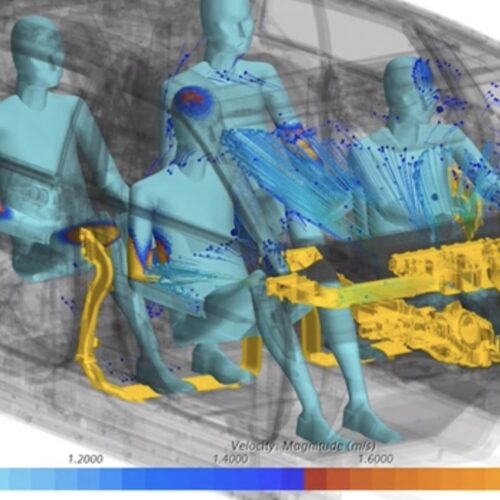
When we met Sterling Anderson in 2024, he was the chief product officer of Aurora, the self-driving startup he cofounded in 2016 after several years at Tesla. Just over a year ago, though, Anderson decamped from the startup world for something a little more established, taking over as chief product officer at General Motors, the nation's largest automaker. Since then, he's had a good view of how GM is entering what he calls the third epoch of engineering and design.
"There was a time when humans looked at birds and were like, 'OK, those wings seem to work pretty well. Let's go and design something that looks like them.'" Anderson said, describing the first age of engineering. "And they just kind of iterated their way to something that was marginally feasible."
The first few hundred years of inventing "was this era of highly empirical iterative design development and engineering," he said. "And by that I mean humans largely started with what we know or had seen, built prototypes of something that kind of looked like it and maybe tweaked some things, hoping to make it perform better, tested it, iterated, and kind of went through this slow guess-and-check process until we got to something that marginally worked."
© General Motors
When we met Sterling Anderson in 2024, he was the chief product officer of Aurora, the self-driving startup he cofounded in 2016 after several years at Tesla. Just over a year ago, though, Anderson decamped from the startup world for something a little more established, taking over as chief product officer at General Motors, the nation's largest automaker. Since then, he's had a good view of how GM is entering what he calls the third epoch of engineering and design.
"There was a time when humans looked at birds and were like, 'OK, those wings seem to work pretty well. Let's go and design something that looks like them.'" Anderson said, describing the first age of engineering. "And they just kind of iterated their way to something that was marginally feasible."
The first few hundred years of inventing "was this era of highly empirical iterative design development and engineering," he said. "And by that I mean humans largely started with what we know or had seen, built prototypes of something that kind of looked like it and maybe tweaked some things, hoping to make it perform better, tested it, iterated, and kind of went through this slow guess-and-check process until we got to something that marginally worked."
© General Motors
When it comes to excuses from the front office, Jets fans have heard it all. The beleaguered New York franchise continues to hold the longest playoff drought of all major-league men’s sports teams, a situation which has been blamed on everything from management and coaching to players and locker room culture. Fans have likewise heard all the promises of hare-brained schemes sold as the team’s salvation, from the short-lived Sam Darnold rebuild to the infamous Aaron Rodgers gamble.
Now, the organization has hatched a new plot to snap their historic dry spell: going all-in on AI.
New reporting by the Sports Business Journal revealed the Jets front office has been making a concerted push to embrace AI in their day-to-day work. According to Iwao Fusillo, the Jets’ recently appointed chief data and analytics officer, roughly 91 percent of front office staffers are now daily users of Microsoft Copilot.
“I call that level one, or horizon one, which is adoption,” Fusillo told Sports Business. “Do we have large business gains from that level one? Not really. But have we changed the culture of the entire front office? Yes. To think AI-first.”
During department-level AI workshops led by the digital consulting firm Next League, Sports Business reports staffers “generated” a whopping 60 ideas about where to deploy AI throughout the front office, and “probably double that” for the football side.
Of course, the real question is whether any of those ideas were good. Writ large, it remains a mystery how simply adopting AI is supposed change the depressing reality of life in the Jets organization.
The AI initiative and Fusillo’s appointment are the brainchild of Jets owner Woody Johnson, great-grandson of Robert Wood Johnson, founder of the eponymous Johnson & Johnson. Often described as easily influenced by agreeable toadies and public sentiment, the Jets mogul evidently isn’t aware that the infamously sycophantic tech will probably just tell him whatever he wants to hear. Johnson’s long-suffering fanbase, however, lacks that particular feature.
“Jets finally acknowledging they need to outsource for intelligence as there is none in the building itself,” one Redditor quipped. “We’re going 0-17,” a fan wrote on X-formerly-Twitter.
“Lol I asked ChatGPT [to] ‘make the Jets a Superbowl contender’ and the short of it was literally just get rid of any and everybody from the Jets,” one New York Giants fan shared in a Reddit post. “Some of its top recommendations were to change the coaching staff completely and somehow get a top 10 offense by year two.”
More on AI in sports: NBA Commissioner Announces Plans to Let AI Take Over for Lazy Referees
The post Fans Aghast as New York Jets Say They’re Switching to AI appeared first on Futurism.


AI agents used to be all the rage, the supposed next hit product category after generative AI failed to generate productive returns. Now, the bill on all that hype is coming due.
According to some estimates, up to 79 percent of US corporate execs have some type of AI agent in the making — but one Gartner prediction found 40 percent of these projects will implode due to poor risk controls.
In a nutshell, AI agents are capable of inflicting tremendous amounts of damage on a company when instructed to complete critical tasks. One particularly glaring example, outlined by network consulting engineer Sayali Patil in VentureBeat, involves AI agents designed to fix slow network connections when they detect problems.
That sounds like a reasonable task to automate, like unplugging your router when your wifi starts acting up. But while these AI agents can technically get the job done, Patil says she’s had incidents where they shut down the server while three other important services are handling a rush of web traffic.
When the agent goes ahead and restarts that server anyway, it leads to disaster for those other three services. In the end, the chaotic network event becomes far more disruptive than the initial slowdown. Worse yet, the critical failure becomes too much for the AI tool to understand, or as Patil puts it, a “cascade the agent was never designed to model.”
“The blast radius of that agent action was not the service restart. It was everything downstream of the restart, in a system state the agent had no complete picture of,” Patil writes.
Even if engineers were able to account for every pitfall, AI agents still present some horrifying security vulnerabilities. Stress tests of AI agents equipped with email privileges revealed some major pain points, like where agents obey strangers from outside their network or transfer data to unauthorized personnel.
This gap between performance expectations and production reality is precisely why AI agents aren’t the one-size-fits-all tool the tech industry desperately wants them to be. Whether that changes in the long view is anyone’s guess — but today’s reality is falling way behind the hype.
More on AI in the workplace: 99 Percent of CEOs Are Preparing to Lay Off Workers and Replace Them With AI Within Two Years, Survey Finds
The post Companies That Adopted AI Agents Alarmed to Discover They’re Botching Incredibly Important Tasks appeared first on Futurism.

Imagine this scenario: your algorithm has pulled up a background YouTube video, or maybe a podcast. Unbeknownst to you, hackers have embedded inaudible sounds in it, designed to hijack your smart speaker or phone’s AI assistant — meaning the cybercriminals can now access your private photos, bank accounts, or any other personal information you’ve hooked up to your AI system.
It sounds like an also-ran episode of “Black Mirror,” but it’s exactly what researchers have shown is possible in new research being presented this week at the IEEE Symposium on Security and Privacy.
Basically, a team of researchers in China and Singapore found that they can construct “adversarial audio,” completely undetectable to the human ear, that tricks voice AI models into doing things they shouldn’t. Then it’s a breeze to hide it in innocent-sounding audio — a song, a movie, or anything else that unsuspecting targets might play in the background — and lay in wait for users to accidentally compromise their digital lives.
“It takes just half an hour to train this signal, and then, because this signal is context-agnostic, you can use it to attack the target model whenever you want, no matter what the user says,” lead author Meng Chen, a PhD candidate at China’s Zhejiang University, told IEEE Spectrum of the work. “These single-point defenses struggle to resist our attack because we found it’s very hard for these models to distinguish the normal user intent and our adversary attack.”
One catch, at least for now: the technique required the hackers to have access to the full weights of the AI model they’re targeting, meaning they were only able to attack open source models. But because many commercial AI systems are built on open source models, that meant that their exploit was effective against mainstream products by Microsoft and Mistral.
Mistral didn’t respond to IEEE‘s request for comment, but Microsoft issued a statement that should probably give anyone pause before connecting any important information whatsoever to one of the company’s voice AI models.
“We appreciate the researchers’ work to advance understanding of this type of technique,” it read. “This study evaluates model resilience through controlled, direct interactions with the model itself, which helps inform our approach to building model resiliency. In practice, AI models are often integrated into user applications, and we offer developers tools and guidance they can use to implement additional layers of protection that help safeguard users.”
More on AI: Researchers Alarmed by AI That Can Self-Replicate Into Another Machine
The post Hackers Find That Inaudible Sounds Hidden in Podcasts or Random Videos Can Hijack Your AI Voice Chatbot appeared first on Futurism.
The long awaited Democratic Party “autopsy” of the 2024 election failure has finally been released, and it’s riddled with errors.
Facing mounting pressure to release the report, Democratic National Convention chairman Ken Martin finally relented, sharing an “unfinished’ draft with CNN.
Though Martin caveated to CNN that the report wasn’t ready for public consumption — despite having two years to prepare it — the DNC chair figured the spectacle he created by delaying its release is now more embarrassing than the spectacle that would’ve been created had the party just shared the thing in the first place, as promised way back in 2024.
Indeed, it’s pretty rough-hewn. It’s short on citations and chock full of errors, many of which fit the profile of hallucinations from a large language model like ChatGPT. While a few incongruities are to be expected with any rough draft, some of them are beyond the pale, drawing into question why they would have been included in the document to begin with.
In the postmortem’s analysis of the North Carolina gubernatorial election, for example, CNN points out that the document incorrectly lists Republican candidate Mark Robinson as having won both 45 percent and 42.7 percent of the vote. Neither figure is actually correct: in reality, he won 40.1 percent in his 2024 loss to Democratic candidate Josh Stein.
Numerous names are misspelled, like that of former Kentucky Governor Matt Bevin, listed as Matt “Brevin,” and former New Jersey Governor “John” Corzine, whose name is really spelled without the “h.”
There’s also some inconsistent analysis in the document, like in the case of Washington-state Democratic candidate Bob Ferguson. Some portions of the autopsy heap praise on Ferguson, lauding him for running “on a platform of housing affordability, reducing costs for families throughout the state, and improving public safety.”
Later on in the document, however, it chastises Ferguson for underperforming presidential candidate Kamala Harris. Though Ferguson won his election and Harris lost, the document nonetheless makes it clear that “Ferguson underperformed Harris in Democratic strongholds,” demonstrating that “anti-Trump sentiment alone was insufficient to motivate voters.”
That would be a perfectly reasonable criticism of Harris, but it directly counters the earlier claim that Ferguson won his election by choosing a platform based on affordability and public safety.
Whether any of this was AI isn’t clear. LLMs are notoriously horrid at consistently citing correct numbers. They likewise struggle to maintain cohesive narratives when generating long-form text, which could easily explain the inconsistent messaging around Ferguson’s electoral campaign.
The DNC has not responded to Futurism’s request for comment on the use of AI in the document. Given how long it took them to release the postmortem in the first place, there’s no telling if we’ll ever get our answer — or if Democratic functionaries will learn any lessons from the bloodbath that was 2024.
More on AI and politics: Democrats Warned Not to Upset Multi-Million Dollar AI Lobbyists, Even Though It’d Be a Slam Dunk With Voters
The post Democrats’ 2024 Election Autopsy Shows Signs of Sloppy AI Generation appeared first on Futurism.
Researchers show a browser attack that can infer open sites and apps.