Nour Haydar speaks with Christopher Knaus about the BHP files – the cache of internal documents leaked to the Guardian and the ABC’s Four Corners – which show that the world’s biggest miner has war-gamed ways to massively delay decarbonisation
Additional audio in this episode was sourced by Financial Times Live
Exclusive: Mining giant says technology is not yet advanced enough to run a fully electrified fleet but experts say it is hooked on federal fuel tax credits
BHP has continued to spend hundreds of millions of dollars buying diesel trucks in the Pilbara despite internal documents suggesting it would increase emissions and be “misaligned” with its decarbonisation goals.
The mining giant is Australia’s biggest consumer of diesel and trucks are its biggest single source of diesel emissions. Replacing the fleet with battery-electric trucks is considered a critical step in the multinational’s efforts to decarbonise.
After more than a half a century of growth, the use of gas in Australia has peaked in all sectors and entered a “structural decline”. But use will need to fall fast to meet climate targets, according to new research from an influential thinktank.
The Grattan Institute warned the government had failed to acknowledge the decline and instead needed policies to further reduce gas use and avoid the need for expensive carbon capture technologies to meet net zero targets.
Australia is pioneering a revolution in home renewables and battery use, proving what is possible with the right policies
The timing was rich with symbolism. As intense heatwaves pummelled Europe and Asia, and oil markets around the world leapt and sputtered, the two big chimneys of one of Australia’s largest power stations were being demolished. Meanwhile, the Australian energy minister was holding a media conference to hail a fall of up to 10% in the benchmark electricity price in parts of the country.
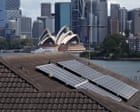
Quietly, and with surprisingly little fanfare from the rest of the world, Australia is pioneering a revolution in home renewables and battery use, proving what is possible with the right policies. The country was already one of the global leaders in domestic solar power, with panels on one in three homes. It also remains, however, a major contributor to the climate crisis through its vast fossil fuel exports.But it is batteries that are giving Australia a new burst of speed.
While companion robots are being introduced and virtual experiences hope to ‘take loneliness away’, one expert agrees tech should never replace the human element
Renters make up nearly a third of Australian households yet many are missing out on energy upgrades – such as insulation, appliances and rooftop solar – that could slash their power bills and improve home comfort.
The problem, according to the Institute for Energy Economics and Financial Analysis (IEEFA), is landlords’ lack of motivation.
The independent senator David Pocock says leaked BHP documents show that the mining giant is “laughing” at Australia’s key climate policy while pocketing hundreds of millions of dollars through a generous diesel tax break.
Exclusive: Cache of internal documents leaked to the Guardian and the ABC’s Four Corners show multinational has war-gamed ways to massively delay decarbonisation
The world’s biggest miner has halted or delayed projects to cut vast amounts of emissions and has quietly war-gamed options to push major climate investments in its Western Australian iron ore operations into the next two decades, internal documents show.
An exclusive investigation based on documents leaked to the Guardian and the ABC’s Four Corners can reveal that BHP, one of Australia’s biggest historic emitters, has dumped plans for a facility that could have significantly reduced emissions and has put on ice renewable projects designed to power its iron ore operations in the vast, resource-rich Pilbara region.
Exclusive: BHP once dubbed climate change an ‘existential’ threat. But leaked documents show it has backtracked on decarbonisation at a vast network of mines

 Login
Login