Login
Login
How the “Perfectionism Pandemic” Is Crushing Young People
1 June 2026 at 22:00
Our current achievement economy may deserve the blame
The post How the “Perfectionism Pandemic” Is Crushing Young People appeared first on Nautilus.


Our current achievement economy may deserve the blame
The post How the “Perfectionism Pandemic” Is Crushing Young People appeared first on Nautilus.

The first sign was never a thought.
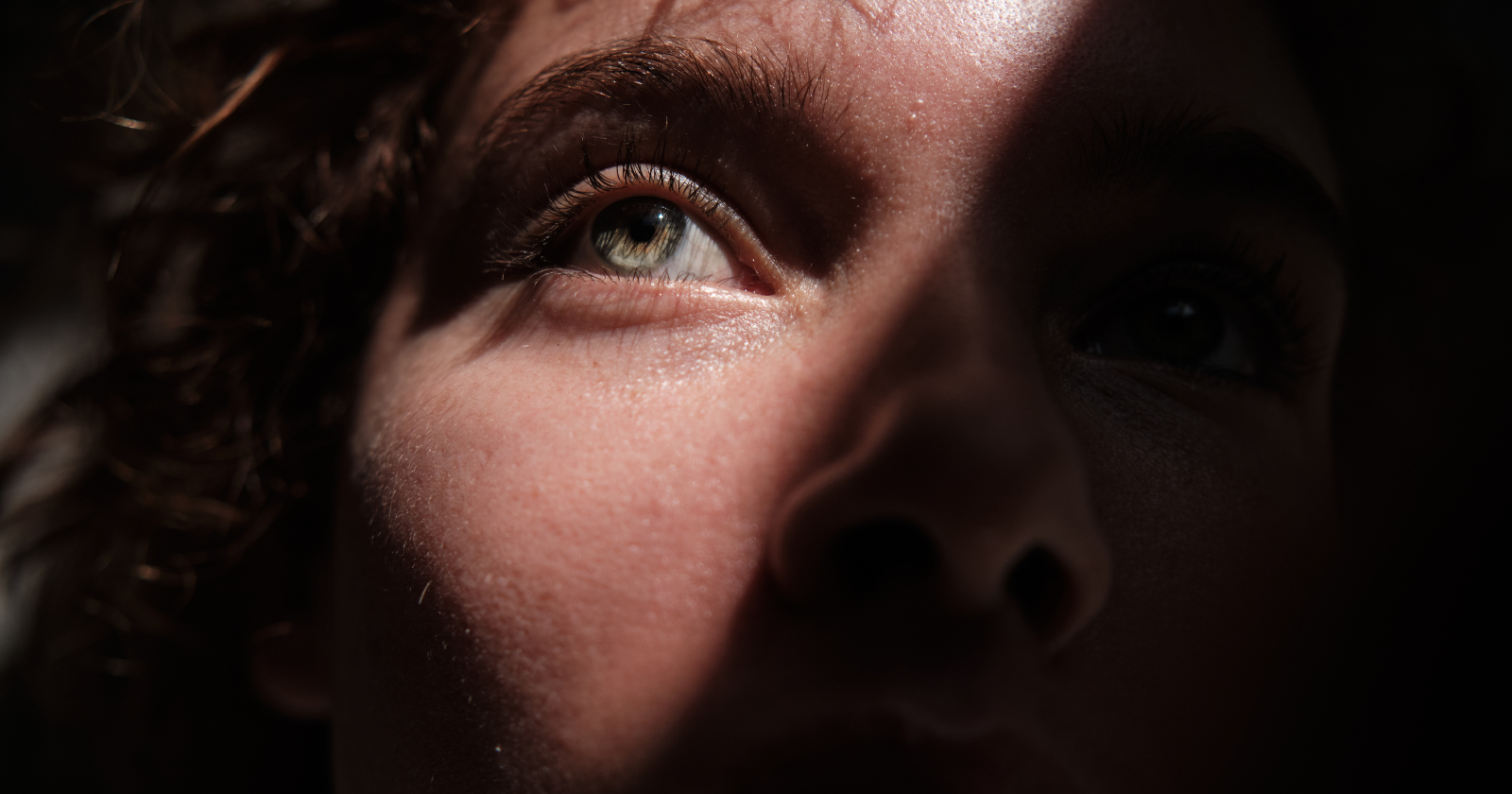
It was visual. Something in the way the room looked. The walls would seem slightly farther away than they had been a moment before. Colours stayed, shapes stayed, the furniture stayed in exactly the right places — and yet something about the scene lost a quality I can only describe as immediacy. The world was still there. It just stopped feeling available.
This would happen before I felt afraid. Before I could name what was coming. Before any thought had formed that I could call anxious. Something changed in the way I was receiving the world through my eyes, and only later — sometimes much later — would the rest of the experience catch up.
I spent years not knowing what to call this.
I tried “dizzy,” which wasn’t right. I tried “tired,” which was too soft. I tried “dissociating,” which felt too clinical for something that happened in quiet moments, not only in crises. What I was looking for was a word for the way the world could go slightly flat. Not dark. Not frightening in any obvious way. Just — less textured. Less arrived. As if someone had turned the resolution of reality down just slightly, and I was the only one in the room who noticed.
What I was experiencing had a name. Derealization — the sense that the external world has become unreal, distant, or visually altered — is a well-documented symptom that occurs frequently in anxiety and panic, and in the broader condition known as depersonalization-derealization disorder. It affects a surprising number of people, though most, like me, spend a long time describing it badly before they discover it has a name at all.
What I did not expect, once I found the name, was to realize how early in the anxiety sequence it was arriving for me.
Most descriptions of anxiety lead with thought. The worry, the spiral, the catastrophizing. The racing mind. And for many people that may be accurate — the cognitive element comes first, and the body follows. But for me, the sequence ran differently. The visual alteration came before the worry. My eyes created distance before my mind could explain why. By the time I was consciously afraid, I had already been looking at the world through a kind of filter for several minutes. Sometimes longer.
The world went flat before I had words for what was happening.
Once I recognized this, I started paying attention to it differently. Not as a malfunction, but as a signal. Something my system was doing before it had time to speak.
The neuroscience here is not fully settled, but the broad shape of it makes sense.
The brain does not passively receive visual information and then decide what it means. It actively constructs perception, using prior experience, expectation, and internal state to shape what we experience as seeing. When the nervous system is in a state of hyperarousal — even before that state is consciously registered — the way the brain builds the visual world can shift. Attention narrows. Certain details flatten. The sense of depth and richness that makes the world feel real can diminish, because the system is already doing something else with its resources.
The amygdala, which processes emotional and threat-relevant stimuli, is thought to receive threat-relevant signals very rapidly — in some models, before the slower analytical pathways that give us conscious perception have fully resolved what we’re seeing. This means the body’s threat response can activate before the thinking mind has noticed anything. The alarm goes off, the nervous system reorganizes, and the first sign you have — if you are paying attention to your body rather than your thoughts — might be something as subtle as the way the room looks.
That was my experience. I didn’t first think anxiety. I saw it.
The first thing anxiety stole, reliably, was the texture of the world.
For years, the visual shift frightened me in its own right. The unreality was unsettling before any worry arrived to explain it. There were moments when I genuinely questioned whether I was losing something — my grip on reality, my trust in my own perception, something I couldn’t name. The derealization felt like a symptom without a cause, which is one of the lonelier things you can experience.
It is also disorienting in a specific way: when perception itself becomes the thing you can’t trust, you lose the ground you’d normally stand on to figure out what is wrong. You can’t think your way out of a problem that is currently happening in your thinking. You can’t look clearly at something when it is your looking that has shifted.
What changed was noticing the pattern.
Not during the episode, but afterward. Tracing the sequence: where had I been, what had I been carrying before I noticed the flatness, what came before the flatness itself. And what I found, slowly, was that the visual shift was not random. It was a leading indicator. Something had already been building in my nervous system — a stress response, a low-grade overwhelm I hadn’t consciously registered — and my eyes were the first thing that showed it. Before my thoughts caught up. Before my chest tightened. Before I would have said, if anyone had asked, that anything was wrong.
My eyes were filtering the world before I knew I needed a filter.
I am careful about what I claim here. I am not saying anxiety lives in the eyes, or that this is how it works for everyone. What I am saying is something smaller and, to me, more useful: for some people, the first felt experience of anxiety may be visual. Perceptual. Something that shows up in how the world looks before it shows up in what the mind thinks.
And if that is true — even sometimes, even for some people — then it changes where you learn to look for the early signs.
I used to search for the anxious thought. The belief I could challenge, the worry I could reframe, the cognitive distortion I could name and dispute. These have their place. But I kept arriving at them too late, after the nervous system had already been organizing itself around something I hadn’t consciously noticed. I was looking for the fire after the smoke had already been there for a while.
Now I know to check in with what I’m seeing. Whether the room feels arrived. Whether the world has its texture. Whether reality is still emotionally available, or whether it has quietly started to step back — a little flatter, a little more distant, a little less like itself — without explanation.
Those were never signs that something was wrong with my eyes.
They were signs that something in me was trying to protect itself before I understood what from. The nervous system, doing what nervous systems do — adjusting the aperture, reducing the input, creating a small buffer between me and a world it had decided, for some reason, was temporarily too much.
That is not a disorder. That is a system trying to survive.
It just took me a long time to recognize the signal for what it was, instead of fearing it as one more thing that was wrong.
The post We talk about anxiety as if it starts in the mind — but for some people, the eyes may be the first place it shows up appeared first on Space Daily.
The New York Times described the stunning behavior over 100 years ago.
The kettle is doing its thing. Light is coming in sideways across the kichen table, the way it does early, catching the steam coming off the cup. Outside there’s a motorbike, then another, then the muffled start of the street waking up.
And I am not in any of it.
I am three emails ahead, rehearsing a sentence I’ll say later, or mulling over something that happened last week and cannot be changed. The coffee goes cold. The light moves on. I drink it lukewarm and barely taste it. This is the scene most mornings, if I am being honest.
A quick note before I go further: I’m not a psychologist or a therapist, and this is a piece of reading and reflection, not advice. The one study I lean on below is observational, which means it describes a pattern across a lot of people, not a rule about you or any single morning of your life.
The line that keeps pulling me back to that cold cup is from Marcus Aurelius, the Roman emperor who wrote a private notebook to himself that we now call Meditations. In Gregory Hays’s translation, Book 3.10, he writes: “Each of us lives only now, this brief instant. The rest has been lived already, or is impossible to see.” Just before it, he tells himself: “Forget everything else. Keep hold of this alone and remember it.”
Read it slowly and it’s almost a piece of accounting. The past is spent, gone, unrecoverable. The future is not yet here and most of it you’ll never see anyway. The only thing you actually have, the only ground you can stand on, is this instant. He isn’t being mystical about it.
This is a philosophical claim about how to hold your attention, not a settled scientific fact about how consciousness works but as a way to frame a morning, I find it hard to argue with. The cold coffee was real. The email I was rehearsing wasn’t, not yet. I traded the thing that was happening for two things that weren’t.
I read Meditations properly a few years ago, during a stretch of failure and confusion when I was rooting around for something solid to hold. What struck me most wasn’t the advice. It was the continuity. Here is a man who ran an empire, and his private worries are my not unlike my worries. Reputation. Mortality. What other people think. Whether the work matters. Two thousand years, and the furniture of the human head has barely been rearranged.
Knowing the present is all you have, and actually living there, are two completely different skills. The mind has its own gravity, pulling backward and forward, almost never down into the now.
There’s one study I keep coming back to on this. In 2010, the Harvard psychologists Matthew Killingsworth and Daniel Gilbert built an iPhone app that pinged 2,250 volunteers at random moments and asked what they were doing, how they felt, and whether their minds were on the task in front of them. The volunteers reported their minds wandering 46.9 percent of the time. Nearly half of waking life, somewhere other than here. Killingsworth’s summary was that “our mental lives are pervaded, to a remarkable degree, by the nonpresent.”
This is one study, not settled consensus, and the effect it found was modest rather than enormous. What made it stick with me is what it suggested about mood. Killingsworth has said that how often our minds leave the present, and where they go, predicted happiness better than the activity people were actually doing. Drifting seems to drag mood down. The phrase the researchers used, which is a little too neat for a single study but lodges anyway, was “a wandering mind is an unhappy mind.”
I am bad at this. I have not solved anything. But a few small things have nudged me, on good days, closer to enjoying the cup of coffee and further from the imaginary email.
The first is novelty, and I learned it by accident. My first year living in Vietnam felt enormous. The city, the noise on the streets, food I’d never eaten, a language I couldn’t read, the person I was slowly turning into. In retrospect that year is longer and richer than most years since. Nothing was automatic, so nothing got skipped. The brain can’t autopilot through what it doesn’t recognize yet. I can’t move to a new country every year, but I can walk a route I don’t know, and it pulls me back into the present the way a comfortable routine never does.
The second is duller and more reliable: noticing one physical thing on purpose. The heat of the cup. The actual taste of the first mouthful. It sounds almost too small to count, and it isn’t a cure for a wandering mind. It’s just a handle. A way to land for a second before the gravity takes over again.
The third is lowering the bar. Marcus wasn’t writing a finished man’s manual. He was talking himself into it, the same exhortation over and over, because he kept failing at it too. That’s the part I find oddly comforting. The point was never to live perfectly in the present. It’s to come back, again, when you notice you’ve drifted.
If any of this is landing closer to home than it is interesting, and the pull away from the present feels less like a habit and more like something heavier, a qualified counsellor or therapist is worth talking to.
The post Thought of the day from Stoic philosopher Marcus Aurelius: “Each of us lives only now, this brief instant. The rest has been lived already, or is impossible to see.” appeared first on Space Daily.
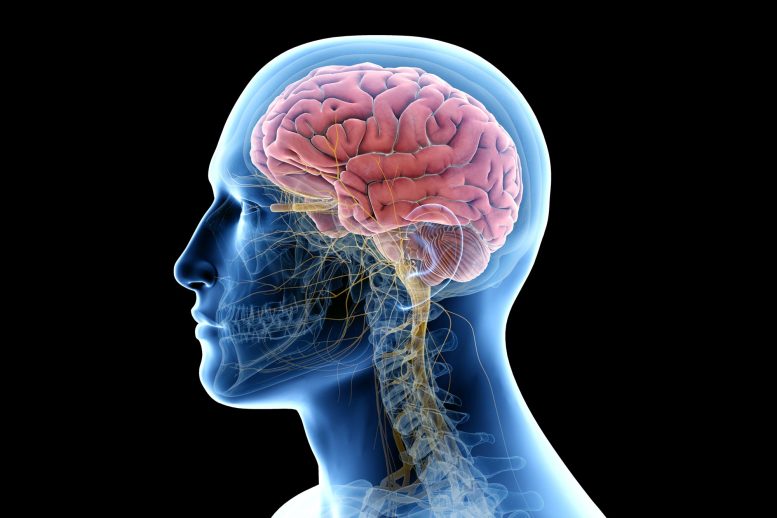 Researchers suggest that old psychoanalytic ideas and modern brain science may be describing the same mental processes from different angles. More than a century after Sigmund Freud developed his influential theories of the mind, some researchers believe modern neuroscience may be arriving at surprisingly similar conclusions. A new paper published in the neurocognitive journal Entropy [...]A new study challenges the widely accepted idea that word meanings are organized around emotion. After analyzing billions of words, scientists found that language may be shaped by something more basic: the need for safety. Researchers at the University of Vermont have found a new way to understand language, challenging a major assumption in psychology, [...]Parents in rural, low-income households who maintained strong family routines reported fewer behavior problems and ADHD symptoms in their children. Starting elementary school is an important step for children, but the shift can be challenging. Some children experience separation anxiety, while others have difficulty adjusting to classroom rules and daily school structure. A Penn State-led [...]
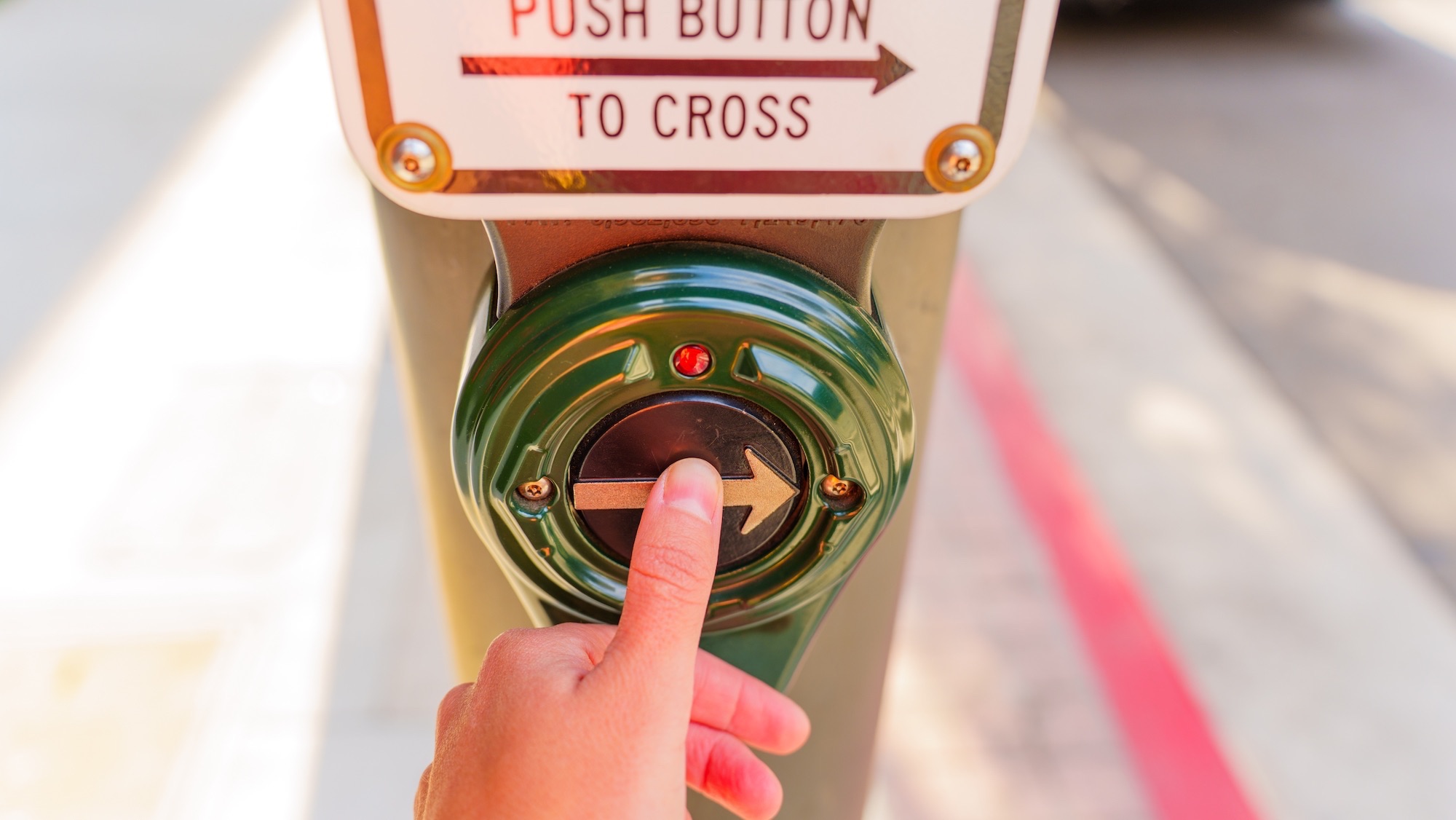
Have you ever pressed a crosswalk button and wondered if it actually does anything? You might be onto something.
Called placebo buttons, controls that don’t do anything exist everywhere. Sometimes it’s because of accidents of history; sometimes they’re installed specifically to trick people into feeling an illusion of control. Either way, they’re hard to notice. Here are a few buttons you press every day that might not actually work.
In New York City, an official told CNN that only around 100 of the 1,000 crosswalk buttons in that city actually do anything. The Boston Globe has reported that the buttons in and around downtown areas of that city aren’t functional. And in the UK, the BBC has reported that the buttons in downtown London are completely superfluous during the day when pedestrian traffic is high—the lights trigger on the same timed routine, regardless of any button presses. The buttons do, however, work in the evening, when pedestrian traffic slows down.
Why is this? Timing. Modern traffic lights are designed to allow the flow of traffic to be consistent. The general idea is that cars driving at the speed limit should more-or-less hit green lights as they go. Regularly timed pedestrian crossings make this math a lot simpler in places with a lot of pedestrian traffic, so most cities opt for them in downtown areas.
The situation is different if you live in a small town, suburb, or anywhere else with infrequent pedestrian traffic. In such areas, pressing the button may be necessary to trigger the walk light.
The problem: It’s not always clear whether the button you see triggers the walk light or not. If you press the button and the light changes, you’ll naturally assume pressing the button worked even if it’s the timer that triggers it. But if pressing the button is necessary, well, then the only way to find out involves waiting longer than necessary at a cross walk (which might be interesting, scientifically, but only if you’re not in a rush).
My personal solution: I just press the button. If it works, great, and if not I’ll never know.
Have you ever pressed the “close door” button on an elevator and noticed the door didn’t immediately close? There’s a reason for that, at least in the United States: the Americans with Disabilities Act (ADA).
This law, passed in 1990, set specific rules for elevators, including how long the door needs to stay open. The regulations state that elevator doors “shall remain fully open in response to a car call for 3 seconds minimum.” There’s another rule that adds more time based on how far the call button in the hallway is from the elevator entrance, assuming a walking speed of 1.5 feet per second. For example: If the button is 10 feet from the door, that means the door needs to stay open for 6.67 seconds.
What’s this have to do with the close door button? Well, in theory someone could press the button to close the door earlier than the code dictates is legally required. Some elevators are designed so that the close door button does nothing until enough time has passed, but in some cases the button is just disabled entirely for the sake of simplicity (generally because the door automatically closes after the required wait time).
That’s why, in many situations, pressing the close door button on an elevator doesn’t do anything. That doesn’t stop a certain kind of guy from repeatedly mashing it, though.
A 2003 article published by the Wall Street Journal revealed something many office workers already suspected: some office thermostats don’t actually do anything. The article includes a widely cited claim— from a single HVAC installer—that up to 90 percent of office thermostats are fake. That’s almost certainly not true, and the article itself notes that other experts say the number is below two percent.
But what is certain is that at least some fake thermostats exist. Why? To reduce complaints. A 2022 article published by Propmodo, a real estate trade publication, quotes an HVAC installer who claims to have installed a fake thermostat after a number of complaints from office workers. “Our service calls disappeared, and to my knowledge, the system is still set up and working as it has since 1987,” said Vaughn Langless, an electrical inspector from Rochester, New York.
It’s a good story, and points to a psychological reality: Being able to make choices about our environment is psychologically beneficial. A 1976 study by psychologists Judith Rodin and Ellen Langer gave some nursing home residents control over small things in their environment—which plants they want to care for, for example, or when to watch a movie. Another floor was told staff would make those choices. The residents able to make choices were more alert, active, and even died at a lower rate. There is decades of similar research, showing that control over your environment leads to real benefits.
Placebo buttons are what happens when designers notice this psychological reality and try to get the benefit on the cheap. A working office thermostat would require either letting employees actually change the temperature (which costs money) or running a more responsive HVAC system. But a button that looks like it works costs basically nothing. That may be brilliant, or evil, or both—it’s all a matter of perspective. Regardless, placebo buttons lurk all around us.
The post 3 buttons that don’t actually do anything appeared first on Popular Science.
 Social media isn't all that neutral when it comes to politics.